
Affiliate disclosure As an Amazon Associate we earn from qualifying purchases, at no extra cost to you.
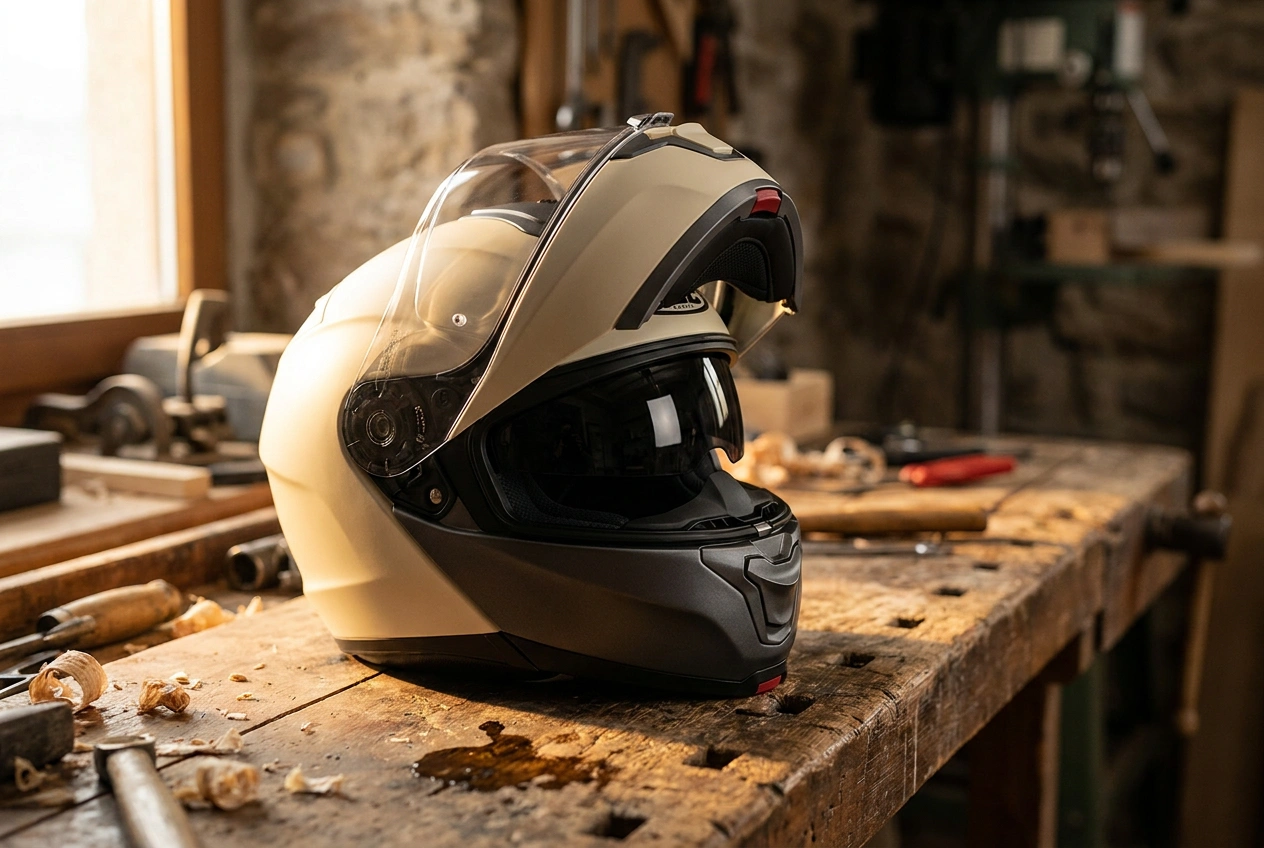
The HJC IS-MAX II is a budget-friendly polycarbonate modular helmet with a flip-up chin bar and integrated drop-down sun visor. DOT-certified, lightweight, and comfortable for daily commuting, it delivered solid value during its production run. The IS-MAX II has since been superseded by the HJC i91 and C91, but used examples remain popular and parts are still available.
Modular helmets used to mean spending serious money for the flip-up convenience. The HJC IS-MAX II changed that conversation when it launched, proving that a drop-down sun visor, a ratcheting chin bar, and a washable interior did not have to cost a fortune. For commuters who wanted full-face protection on the highway and open-face access at petrol stations, it hit a sweet spot that competitors struggled to match at the same price.
This 2026 review revisits the IS-MAX II with fresh eyes. The helmet is no longer in production, but thousands of used examples circulate, and the spec sheet still holds up for riders who prioritize practicality over the latest shell technology. We break down exactly what you are getting, where the compromises show, and who should still consider one in 2026.
Build Quality and Shell Construction
HJC built the IS-MAX II around an advanced polycarbonate composite shell using CAD-optimized geometry. That means the outer shell is shaped for aerodynamic stability rather than just squeezed to fit an EPS liner. The result is a helmet that feels more planted at speed than a basic single-density polycarbonate shell would suggest.
The chin bar locks firmly in both open and closed positions via a double-detent ratchet. There is a noticeable click in each direction and very little wobble when locked down. The flip mechanism uses a left-side lever that is accessible with gloves on, though thick winter gloves can make it fiddly. The HJ-17 polycarbonate face shield offers good optical clarity and 99% UV protection; it changes tool-free via a RapidFire system. An optional Pinlock insert slot keeps the shield fog-free in cold conditions.
- Polycarbonate composite shell with CAD shaping
- Double-detent chin bar locks securely open and closed
- HJ-17 shield with RapidFire tool-free removal
- Pinlock-pin-prepared for anti-fog inserts
- Drop-down smoked sun visor integrated in crown
Fit, Comfort, and Interior
The IS-MAX II fits an intermediate-oval head shape, which suits the majority of adult riders in North America and Europe. Sizing runs slightly narrow through the temples compared to some Japanese-oval competitors, so anyone between sizes should try before buying. HJC offered the helmet in XS through 3XL, with two shell sizes covering the full range.
The interior uses a moisture-wicking Nylex liner that pulls sweat away from the scalp on warm days. Cheek pads are removable and washable, and interchangeable pads across sizes allow a fine-tuned fit. Glasses grooves cut into the cheek pads make eyewear comfortable for most frame profiles. The chin curtain, sold separately, significantly reduces wind noise at highway speeds and is worth adding if you commute regularly. Overall noise levels are acceptable for a modular at this price, though audiophiles will still want earplugs above 80 mph.
Head-fit note: because the IS-MAX II is no longer in production, sizing varies by seller. Always verify the return policy before purchasing a used example. See our guide on how a motorcycle helmet should fit to confirm your measurements before committing.
Ventilation
HJC's Advanced Channeling Ventilation System runs intake vents at the forehead and exhaust vents at the rear. In practice, the IS-MAX II breathes well for a modular at this price point. The chin vent opens with a glove-friendly slider and delivers noticeable airflow to the face shield on warmer days. The top vent is a two-position toggle that works smoothly even in heavy rain.
Where the system shows its age is in summer heat above 30 C. The modular chin bar creates more turbulence around the lower face than a full-face shell, which reduces the efficiency of the rear exhaust extraction. Riders in hot climates report that the helmet becomes uncomfortable on rides longer than 90 minutes in peak summer conditions. For cooler climates or mixed-season riding, ventilation is more than adequate.
Sun Visor and Features
The integrated drop-down sun visor is the IS-MAX II's standout feature. A slider on the left side of the crown deploys a dark-smoke tinted visor that covers the full eye port without touching the primary shield. Deployment and retraction are smooth and single-handed. The visor is anti-scratch coated and optical-quality enough for highway use, though it is not interchangeable with aftermarket inserts.
The IS-MAX II does not include a Bluetooth speaker pocket system, a limitation compared to the later HJC C91 and i91 successors. However, the cheek pad cavity is deep enough to accommodate most slim aftermarket systems. The chin strap uses a double-D ring closure, which adds a small weight penalty over quick-release buckles but is proven reliable and DOT-compliant.
Want to understand why certification markings matter for modular helmets specifically? Our explainer on ECE 22.06 vs 22.05 covers how the latest standard tests flip-up helmets differently from full-face designs. The IS-MAX II carries DOT FMVSS 218 certification for US road use.
Value in 2026
The IS-MAX II launched at around $150 USD and could frequently be found on sale for under $130. At that price, it undercut most competing modulars by $50 to $100 while offering a similar feature set. In the used market in 2026, clean examples sell for $60 to $100 depending on condition and graphic design.
The value case in 2026 depends on one critical check: helmet age. Any helmet older than five years should be treated with caution regardless of visible condition, and any helmet that has been in a crash should be retired immediately. The IS-MAX II was manufactured until approximately 2022. A new-old-stock example purchased today would be at the edge of the recommended replacement window within a year or two.
For new-helmet buyers, HJC's current i91 carries the same polycarbonate modular DNA with improved ventilation and Bluetooth-ready speaker pockets. It is the natural upgrade path and typically sells for $180 to $220 new. Check current price on Amazon.
For context on how the IS-MAX II sits in the wider modular category, see our full guide to modular motorcycle helmets. And to understand the DOT certification on the chin strap label, the Virginia Tech helmet ratings explainer covers how independent testing compares to government minimums.
HJC IS-MAX II Specifications
| Spec | Detail |
|---|---|
| Shell material | Advanced polycarbonate composite |
| Certification | DOT FMVSS 218 |
| Shell sizes | 2 (XS-M, L-3XL) |
| Size range | XS to 3XL |
| Face shield | HJ-17, RapidFire tool-free removal, Pinlock-pin prepared |
| Sun visor | Integrated drop-down, dark smoke tinted |
| Chin bar | Flip-up, double-detent ratchet lock |
| Chin strap | Double-D ring |
| Interior liner | Moisture-wicking Nylex, removable and washable |
| Bluetooth ready | No (aftermarket slim units fit cheek cavity) |
| Production years | Approx. 2013-2022 |
DOT vs ECE vs Snell vs MIPS, how to pick the right lid in 60 seconds, and when to replace it. One page, no fluff.
Frequently Asked Questions
Is the HJC IS-MAX II still made?
No. HJC discontinued the IS-MAX II around 2022. The direct successors in the same price bracket are the HJC C91 and i91, both of which carry the same polycarbonate modular construction with updated ventilation and Pinlock-ready shields.
Is the HJC IS-MAX II DOT certified?
Yes. The IS-MAX II carries DOT FMVSS 218 certification for road use in the United States. It does not carry ECE 22.05 or ECE 22.06 certification for European markets.
What face shield fits the HJC IS-MAX II?
The IS-MAX II uses the HJ-17 shield, which is shared with several other HJC modular models including the CL-MAX 2 and SY-MAX 3. Aftermarket suppliers also produce compatible visors. Verify compatibility before purchase.
How heavy is the HJC IS-MAX II?
HJC did not publish an official weight, but independent measurements of the IS-MAX II consistently fall between 1,550 g and 1,650 g depending on size, which is typical for a budget polycarbonate modular helmet.
Can I still buy the HJC IS-MAX II new?
New-old-stock units occasionally appear from closeout retailers. Any new-old-stock example manufactured before 2021 would reach the five-year recommended replacement threshold by 2026. Factor that into your buying decision and check the manufacture date on the chin strap label.
