
Affiliate disclosure As an Amazon Associate we earn from qualifying purchases, at no extra cost to you.
Riding in summer heat is a different beast from cool-weather cruising. The helmet on your head is not just a safety device -- it is the single biggest factor in whether you arrive drenched in sweat or relatively comfortable. The key is matching the type of helmet to how you actually ride in the heat.
Full-face helmets with aggressive ventilation work brilliantly at highway speeds, but crack open that chin bar at a red light and you remember just how stuffy they get when airflow stops. Open-face and 3/4 helmets breathe freely at any speed. Modular (flip-up) designs split the difference -- full protection on the move, open-face comfort at stops. Adventure and dual-sport helmets add a peak visor to block direct sun, a feature that matters more than people expect on long summer days.
In this guide, the Research Desk focuses on that broader hot-weather strategy: we have rounded up picks across helmet types so you can choose based on your riding style, not just ventilation count. If you specifically want a ventilated full-face helmet at any speed, see our companion guide: Best Ventilated Motorcycle Helmets. The picks below are all distinct from that list.
Every helmet here was selected for heat-relevant criteria: moisture-wicking liner fabric, meaningful airflow in a realistic riding scenario, sun protection (drop-down visor or UV-rated shield), and a weight that does not add to neck fatigue during long summer rides.
Key Takeaways
- Helmet type matters as much as vent count -- open-face breathes best at low speeds; modular gives you flip-up relief at stops; adventure peaks block direct sun on long rides.
- Moisture-wicking liner fabric (KwikWick, CoolMax, or similar) does more for comfort in traffic than any single additional vent.
- Light-colored or white shells absorb less solar heat than matte black -- a simple upgrade that costs nothing extra in many product lines.
- Drop-down internal sun visors eliminate the need to fumble with sunglasses under a helmet and protect eyes from UV glare on exposed roads.
- DOT + ECE 22.06 dual certification is the current gold standard -- ECE requires a wider range of tests than DOT alone, so look for both marks when available.
| ScorpionEXO GT930 Transformer |  |
Best Overall | Type: Modular / Transformer (open or full-face) | Certification: DOT FMVSS 218 + ECE 22.06 P/J | Size Range: XS to 3XL | VIEW LATEST PRICE | Read Our Analysis |
| Bell SRT-Modular |  |
Best Premium Modular | Type: Modular / Flip-up | Certification: DOT FMVSS 218 + ECE 22.06 | Fit: Round oval -- runs slightly narrow | VIEW LATEST PRICE | Read Our Analysis |
| LS2 Advant II Modular | 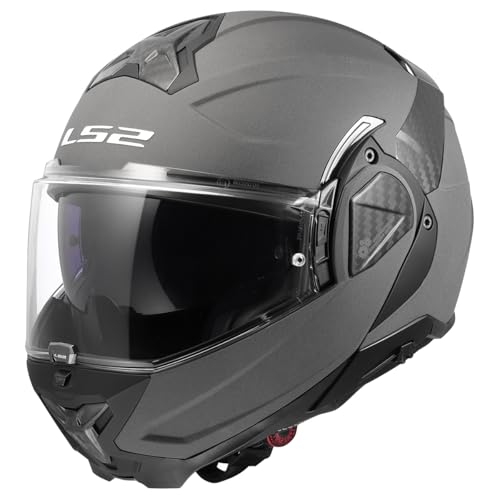 |
Best Value Modular | Type: Modular / Flip-up | Certification: DOT FMVSS 218 | Cheek Pads: Laser-cut foam, removable | VIEW LATEST PRICE | Read Our Analysis |
| ILM WS902 Dual Sport Adventure |  |
Best Adventure / Dual Sport | Type: Adventure / Dual Sport (full-face with peak) | Certification: DOT FMVSS 218 | Chin: Quick-release clasp + removable chin curtain | VIEW LATEST PRICE | Read Our Analysis |
| TRIANGLE 3/4 Open Face Retro | 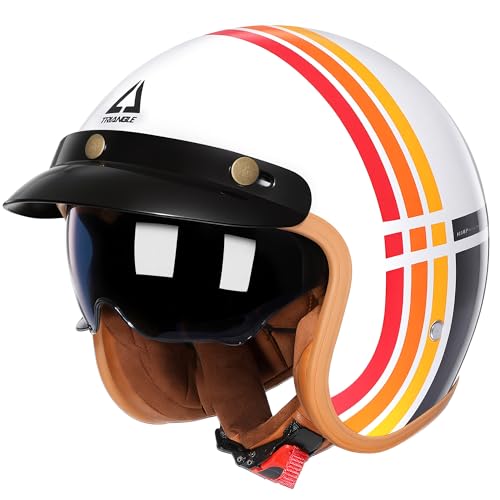 |
Best Open Face - Retro Style | Type: 3/4 Open Face (retro jet style) | Certification: DOT FMVSS 218 | Included: Storage bag | VIEW LATEST PRICE | Read Our Analysis |
| TCMT 3/4 Open Face Dual Visor |  |
Best Adjustable-Vent Open Face | Type: 3/4 Open Face | Certification: DOT FMVSS 218 | Extra: Adjustable top vent switch, spare tinted visor included | VIEW LATEST PRICE | Read Our Analysis |
| BEON 3/4 Open Face Dual Visor Helmet |  |
Best Dual-Certified Open Face | Type: 3/4 Open Face | Certification: DOT FMVSS 218 + ECE 22.05 | Closure: Click-n-Secure quick-release buckle | VIEW LATEST PRICE | Read Our Analysis |
More Details on Our Top Picks
ScorpionEXO GT930 Transformer
The GT930 earns its spot at the top of this list because it adapts to summer riding better than nearly anything else at its price. Flip the chin bar up at stops for open-face airflow, lower it on the highway for full-face protection -- and the dual P/J homologation means you are fully certified in either position.
ScorpionEXO's KwikWick C liner is genuinely moisture-wicking rather than just marketing copy. On a 90-degree day, that fabric difference is noticeable within the first 20 minutes. The closeable intake vents on top force cool air in while exhaust vents move hot air out, which gives you real control over airflow rather than fixed vents that are always open or always closed.
The internal SpeedView drop-down sun visor draws consistently positive owner comments for how smoothly it deploys, which is not a given in this price bracket. It operates with one gloved finger and blocks 95% of UV-A and UV-B. The included peak visor is a bonus for any commuter dealing with low morning sun, and it removes in seconds if you prefer the cleaner profile for highway runs.
Size range from XS to 3XL with three shell sizes is rare at this price point and means the fit quality scales properly rather than cramming an XL head into an L shell. The 5-year warranty adds real value. This is the helmet we would buy if we could only have one for summer riding.
- Type:Modular / Transformer (open or full-face)
- Certification:DOT FMVSS 218 + ECE 22.06 P/J
- Shell:Advanced polycarbonate
- Liner:KwikWick C moisture-wicking, removable/washable
- Sun Visor:Internal drop-down SpeedView visor
- Bluetooth Ready:Yes (speaker pockets)
- Included:Free peak visor + aero skirt
- Size Range:XS to 3XL
Bell SRT-Modular
Bell's SRT-Modular is the modular pick for riders who want a fiberglass composite shell rather than polycarbonate -- the lightweight construction pays dividends on full-day rides where neck fatigue compounds the discomfort of summer heat.
The Panovision shield with Class 1 optics is noticeably better than a standard polycarbonate shield on bright days. Class 1 means distortion-free optics across the full field of view, which matters when you are scanning traffic in direct sunlight. The drop-down internal sun visor handles high-glare situations without you needing to stop and swap shields.
Bell's eyewear arm pockets are one of the most underrated features in summer riding. If you wear prescription glasses or prefer sunglasses under your helmet, most modular designs press the arms against your temples uncomfortably. The SRT-Modular's liner is cut specifically to route eyewear arms without pressure points, which adds to wearability on long hot days.
The ECE 22.06 certification (alongside DOT) gives riders heading to track days or riding in ECE-mandatory markets confidence that the helmet has cleared a more rigorous test suite. For everyday riders, it is simply a benchmark of build quality that justifies the premium price.
- Type:Modular / Flip-up
- Certification:DOT FMVSS 218 + ECE 22.06
- Shell:Lightweight fiberglass composite
- Optics:Panovision shield, Class 1 optics
- Eyewear:Eyewear arm pockets in liner
- Sun Visor:Drop-down internal sunshield
- Weight:Approx. 1,500g (medium)
- Fit:Round oval -- runs slightly narrow
LS2 Advant II Modular
The LS2 Advant II hits a sweet spot for riders who want a proper modular helmet with a CoolMax liner and Pinlock-ready shield without paying premium-brand prices. CoolMax is a certified moisture-management fabric -- it moves sweat away from skin faster than standard textile liners, which translates to a noticeably cooler interior on hot days.
LS2 uses three shell sizes across the full size run (XS-S, M-L, XL-3XL), which is the right approach for a modular helmet. The shell geometry matters for aerodynamics and noise -- oversized shells create turbulence and wind noise that compounds fatigue. At highway speeds in summer, wind noise is a real comfort factor alongside temperature.
The Pinlock 120 MaxVision insert compatibility is a winter-weather feature that carries a summer benefit: fog-free optics when you transition from cool morning air into humid heat. The retractable sun visor operates cleanly and the locking mechanism holds position reliably at speed -- a detail that budget modulars often get wrong.
For a budget-conscious summer upgrade from a basic full-face, the Advant II is the Research Desk's first recommendation. It outperforms its price class on liner quality and shield optics, the two things that matter most for comfort in heat.
- Type:Modular / Flip-up
- Certification:DOT FMVSS 218
- Shell Material:KPA thermoplastic (3 shell sizes)
- Liner:CoolMax moisture-wicking, removable/washable
- Sun Visor:Integrated retractable sun visor
- Shield:Pinlock 120 MaxVision ready
- Weight:Approx. 1,750g (medium)
- Cheek Pads:Laser-cut foam, removable
ILM WS902 Dual Sport Adventure
Adventure and dual-sport helmets deserve more attention in summer-riding discussions. The elevated peak visor that defines the category does double duty: it redirects airflow upward through the helmet interior and blocks direct overhead sun from hitting your visor and eyes. On long desert-highway or summer-touring runs, that sun block is a meaningful comfort factor.
The ILM WS902 delivers the dual-sport format at a price that makes it practical as a dedicated summer helmet even for riders who have other helmets for other seasons. The oversize outer visor gives wide peripheral vision, and the internal drop-down sun visor means you can manage glare without stopping to swap anything.
Seven adjustable ventilation positions give you real control over airflow rather than a single on/off toggle. The removable chin curtain is worth keeping installed in summer -- it redirects wind up through the eye port rather than straight into the chin, which improves the thermal draft through the helmet at speed. Remove it in low-speed urban riding for maximum airflow.
The liner design emphasizes fewer seam lines against the scalp, which matters during multi-hour summer sessions when sweat makes pressure points from liner seams genuinely uncomfortable. Removable and washable lining is non-negotiable for any summer helmet -- we would not recommend anything else.
- Type:Adventure / Dual Sport (full-face with peak)
- Certification:DOT FMVSS 218
- Shell:ABS + EPS foam
- Visor System:Oversize removable outer + internal drop-down sun visor
- Pinlock:Compatible (Pinlock 30, not included)
- Vents:7-position adjustable ventilation
- Liner:Removable, washable, fewer seams
- Chin:Quick-release clasp + removable chin curtain
TRIANGLE 3/4 Open Face Retro
If your summer riding leans toward cruisers, bobbers, or urban commuting at speeds under 60 mph, an open-face 3/4 helmet gives you the best thermal comfort of any helmet type. There is simply no shell wrapping your chin and jaw, so ambient airflow reaches your face directly regardless of speed. At slow-city speeds where a full-face helmet becomes genuinely stifling, a 3/4 shell stays comfortable.
The TRIANGLE 3/4 Retro adds two features that make it more practical than a bare-bones open face: a retractable drop-down sun visor that blocks 99% of UV rays without you needing sunglasses, and a removable peak brim that blocks overhead sun on low-elevation morning and evening runs. Use both, one, or neither depending on conditions.
The quick-release buckle is especially welcome on hot days when you are stopping frequently and every minute of extra ventilation matters. ABS construction keeps weight low, which reduces neck strain during long summer riding sessions. The storage bag keeps the shell and visor scratch-free between rides.
The tradeoff versus a full-face is clear: you accept less facial protection in exchange for dramatically better airflow and sun access. For urban summer commuting and weekend cruiser rides, the Research Desk considers that a reasonable trade. For highway speeds or sport riding, move up to one of the modular picks above.
- Type:3/4 Open Face (retro jet style)
- Certification:DOT FMVSS 218
- Shell:High-impact ABS, lightweight
- Sun Visor:Built-in retractable drop-down (99% UV block)
- Peak:Removable peak / brim
- Closure:Quick-release buckle
- Liner:Removable, washable
- Included:Storage bag
TCMT 3/4 Open Face Dual Visor
Most open-face helmets vent passively. Air goes where the shell lets it, and your only real control is how fast you ride. The TCMT is the exception on this list: its listing describes an adjustable top vent switch working alongside front and rear vents, so you can open the crown wide when traffic stops moving on a hot afternoon and close it down when an evening ride turns cool.
The visor package is the other reason it earns a slot in a hot-weather roundup. A clear outer visor plus a built-in drop-down sun visor covers the day-to-night range without a shield swap, and the listing includes a third tinted visor as a spare. On a summer ride that starts in glare and ends after dark, that is one less thing to carry.
The shell is ABS over EPS foam, DOT certified, in four sizes the listing charts from 55 cm to 62 cm. The liner is a removable, washable non-woven fabric, which is the baseline requirement for a summer helmet. Dedicated speaker recesses are moulded in for a communication system, which is not standard at this level, though the unit itself is not included.
The trade-off is the one every open face carries into summer: no chin bar. You get airflow across your whole face and nothing between it and the road. For city speeds and slow cruising that is a reasonable trade. For highway pace or sport riding, move up to one of the modular picks above.
- Type:3/4 open face
- Certification:DOT
- Shell:ABS with EPS foam
- Ventilation:Adjustable top vent switch plus front and rear vents
- Visors:Clear outer visor, built-in drop-down sun visor, spare tinted visor included
- Liner:Removable, washable non-woven fabric
- Comms:Dedicated speaker recesses, unit not included
- Sizes:S 55-56 cm to XL 61-62 cm per listing
- Weight:Not specified by manufacturer
BEON 3/4 Open Face Dual Visor Helmet
The BEON is the pick here for riders who want the certification paperwork covered twice. The listing states it meets or exceeds both DOT FMVSS 218 and ECE 22.05, which is a stronger claim than the DOT-only wording on the other open-face picks in this guide.
The visor setup is two-part. Per the listing, the outer visor is clear and anti-scratch, with a retractable anti-UV inner sun visor, and an additional long outer visor is included. The manufacturer also states the metal visor base can be screwed or unscrewed by hand without tools, which makes swapping visors a roadside job rather than a workshop one.
The shell is described as thermoplastic over high-density EPS, with a soft mesh inner liner that is removable and washable. The Click-n-Secure quick-release buckle is stated to release with one gloved hand.
The styling is retro, and the listing frames it for cruiser, scooter, cafe racer and commuter use. It is an open-face helmet with no chin or face protection, and the listing makes no specific ventilation claims, so it is not the adjustable-vent choice in this guide (that is the TCMT), nor the retro-jet alternative (the TRIANGLE).
- Type:3/4 Open Face
- Certification:DOT FMVSS 218 + ECE 22.05
- Shell:Thermoplastic, high-density EPS
- Liner:Soft mesh, removable/washable
- Visors:Clear anti-scratch outer, retractable anti-UV sun visor, extra long outer visor included
- Closure:Click-n-Secure quick-release buckle
How to Choose a Motorcycle Helmet for Hot Weather Riding
Most hot-weather helmet guides focus exclusively on ventilation count -- how many intake vents, how many exhaust ports. That single metric misses the bigger picture. Five other factors matter just as much.
1. Match Helmet Type to Your Riding Profile
Start here before looking at any other spec. Open-face and 3/4 helmets deliver the best airflow at low and moderate speeds -- they are the natural choice for urban commuters, cruiser riders, and scooter riders. Modular (flip-up) helmets are the best all-rounder: full-face protection at highway speeds, open-face relief when you stop. Adventure and dual-sport helmets add a peak visor that blocks direct sun -- underrated on long summer tours where overhead glare compounds fatigue. If your primary goal is maximum airflow in a full-face format, our companion guide on ventilated full-face helmets covers that angle in depth.
2. Liner Fabric Is the Real Summer Variable
Ventilation channels move air. Liner fabric manages sweat. Both matter, but liner fabric matters more in stop-and-go conditions where airflow is minimal. Look for moisture-wicking technologies: KwikWick, CoolMax, and similar fabrics actively pull moisture away from skin and allow it to evaporate. Generic "breathable" or "comfort" liner descriptions without a named fabric technology are marketing language for standard textile -- it works, but not as well. See our guide on how a motorcycle helmet should fit for tips on sizing the liner correctly -- a poorly fitted liner presses against your scalp and reduces airflow regardless of how good the fabric is.
3. Sun Protection Is Not Optional
A drop-down internal sun visor is the single most useful feature for summer riding. It blocks UV glare without requiring you to wear sunglasses under the helmet (which creates pressure points) and without stopping to swap shields. Look for visors rated to block at least 95% of UV-A and UV-B. Light-colored shells are a secondary sun-protection measure -- they absorb less solar radiation than matte black shells, which can make a 3-5 degree difference in interior shell temperature on a parked bike. Color choice is covered in more detail in our guide to motorcycle helmet color selection.
4. Weight Compounds Over Time
A 200g difference between two helmets feels trivial in a shop. After three hours in summer heat, that same difference has been pressing on your neck through every head movement. Heavier helmets also create more wind resistance at speed, which increases neck muscle effort. For long summer touring, fiberglass composite and carbon fiber shells earn their premium price in reduced fatigue. For city commuting where ride segments are short, ABS polycarbonate is adequate and significantly cheaper.
5. Certification Tells You More Than You Think
DOT FMVSS 218 is the U.S. baseline. ECE 22.06 (the current European standard) requires a wider range of tests than DOT, including tests for rotational impact forces that DOT does not mandate. Helmets with both marks have cleared a more complete test suite. For a deeper breakdown of what the numbers mean, see our guide to motorcycle helmet types and standards. When it is time to retire your summer helmet, our replacement timeline guide gives you the indicators to watch for.
A Note on Open-Face Tradeoffs
The 3/4 and open-face picks in this guide offer superior hot-weather comfort in exchange for less facial protection than a full-face or modular in closed position. That is an honest tradeoff that each rider must weigh against their riding environment, speed profile, and personal risk tolerance. The Research Desk presents both options without advocacy for one over the other -- our job is to make sure you have the information to choose deliberately rather than by default.
Hot-Weather Motorcycle Helmet for 2026 Comparison
| Helmet | Type | Certification | Sun Visor | Best For |
|---|---|---|---|---|
| ScorpionEXO GT930 Transformer | Modular / Transformer (open or full-face) | DOT FMVSS 218 + ECE 22.06 P/J | Internal drop-down SpeedView visor | Best Overall |
| Bell SRT-Modular | Modular / Flip-up | DOT FMVSS 218 + ECE 22.06 | Drop-down internal sunshield | Best Premium Modular |
| LS2 Advant II Modular | Modular / Flip-up | DOT FMVSS 218 | Integrated retractable sun visor | Best Value Modular |
| ILM WS902 Dual Sport Adventure | Adventure / Dual Sport (full-face with peak) | DOT FMVSS 218 | - | Best Adventure / Dual Sport |
| TRIANGLE 3/4 Open Face Retro | 3/4 Open Face (retro jet style) | DOT FMVSS 218 | Built-in retractable drop-down (99% UV block) | Best Open Face - Retro Style |
| TCMT 3/4 Open Face Dual Visor | 3/4 Open Face | DOT | Adjustable top vent switch, dual visor plus spare | Best Adjustable-Vent Open Face |
| BEON 3/4 Open Face Dual Visor Helmet | 3/4 Open Face | DOT FMVSS 218 + ECE 22.05 | Retractable sun visor, extra long outer visor | Best Dual-Certified Open Face |
DOT vs ECE vs Snell vs MIPS, how to pick the right lid in 60 seconds, and when to replace it. One page, no fluff.
A drop-down sun visor is the other feature riders want in summer. We list the helmets that have one in our guide to motorcycle helmets with a built-in sun visor.
Frequently Asked Questions
What type of motorcycle helmet is best for hot weather?
It depends on your riding speed and style. Open-face and 3/4 helmets deliver the most airflow at low and moderate speeds -- ideal for urban commuting and cruiser riding. Modular (flip-up) helmets are the best all-rounder: they offer full-face protection at highway speeds and open-face ventilation at stops. Adventure helmets with peak visors add overhead sun protection for long summer tours. The Research Desk recommends starting with helmet type before looking at ventilation specs.
Are ventilated full-face helmets good for summer?
Yes, with a caveat: ventilated full-face helmets work best at highway speeds where incoming airflow activates the vent channels. In slow city traffic or at stops, they can feel stuffy. If you primarily ride at speed with few stops, a ventilated full-face is a strong choice -- our ventilated full-face guide covers the best options for that use case.
Does helmet color affect heat in summer?
Yes, measurably. Light-colored shells (white, silver, light grey) absorb significantly less solar radiation than dark shells (matte black especially). The interior temperature difference between a white and a matte black shell sitting in direct sun for an hour can reach 5-8 degrees. Light colors also tend to be more visible to other road users, adding a secondary safety benefit. Our helmet color guide covers this in full.
What should I look for in a helmet liner for summer riding?
Look for moisture-wicking liner fabric by name -- KwikWick, CoolMax, or equivalent branded technologies. These fabrics actively move sweat away from skin and allow evaporation, which keeps the interior cooler than standard textile or foam liners. Any liner should also be removable and washable, since summer riding means regular washing is practical rather than optional. A liner that cannot be removed is a deal-breaker for serious summer use.
How often should I replace my summer motorcycle helmet?
The general guidance is five years from manufacture date for a helmet in regular use, regardless of visible damage. Summer riding compounds liner wear because of sweat exposure -- the EPS liner and padding both degrade faster under repeated moisture cycles. Check the manufacture date on the inside sticker. Our helmet replacement guide covers all the indicators in detail.
