
Affiliate disclosure As an Amazon Associate we earn from qualifying purchases, at no extra cost to you.
Cruiser riding is a completely different animal from sport-bike commuting. You sit upright, you cruise at 60-75 mph for hours, and the wind hits your helmet at a different angle than it does on a tucked-in sportbike. That means the helmet criteria shift too: low-profile shells that don't catch wind, internal sun visors so you're not fumbling with clip-ons on a long straight, enough acoustic insulation that conversation-speed wind roar doesn't fatigue you by mile 100, and classic styling that fits the aesthetic of a Harley, a Royal Enfield, or any other cruiser without looking like you borrowed a racing helmet from a different decade.
The Research Desk spent time working through the Amazon catalog to find full-face helmets that actually address those needs. We prioritized retro and low-profile shell shapes, DOT and ECE certification, internal drop-down sun visors (a near-essential feature at highway speeds), lightweight construction, and brands with a track record of consistent sizing. Below are seven picks worth your attention - with honest notes on where each one fits and where it falls short.
If you are comparing full-face options in general, see our best full-face motorcycle helmet guide. For Harley-Davidson riders specifically, our best full-face helmet for Harley riders page covers HD-specific fit and style considerations.
Key Takeaways
- Internal sun visor is a cruiser priority - upright seating puts the sun squarely in your eyes on afternoon rides; a drop-down visor is faster than pulling over to swap shields.
- Shell profile matters - low-profile or vintage-shaped shells reduce wind noise and look proportionate on a cruiser; aggressive sport-style wings and vents create drag and feel out of place.
- Lightweight builds reduce neck fatigue - cruiser ergonomics keep your head fully upright for hours; every extra ounce compounds. Fiberglass shells save 150-200 g over comparable ABS.
- DOT is the minimum; ECE 22.06 adds confidence - DOT is self-certified, ECE requires independent lab testing. Dual-certified helmets are worth the slight price premium for long-distance riders.
- Retro and vintage styles are purpose-built for this market - smooth shells, classic color options, and restrained venting suit a cruiser's look without the compromises of a half-helmet.
| TORC T1 Retro Full-Face Helmet |  |
Best Overall | Shell: Fiberglass tri-composite | Certifications: DOT + ECE 22.5 | Best For: Retro cruiser riders wanting a lightweight dual-cert lid | VIEW LATEST PRICE | Read Our Analysis |
| Daytona Helmets Retro Full-Face Helmet | 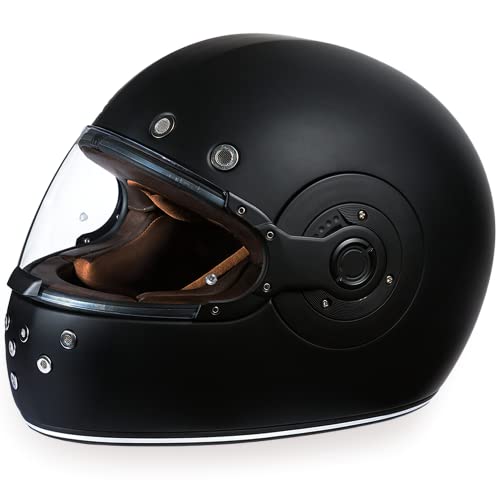 |
Best Low-Profile Fit | Shell: ABS with 2 shell sizes | Certifications: DOT FMVSS 218 | Best For: Riders who want the smallest DOT-approved full-face profile | VIEW LATEST PRICE | Read Our Analysis |
| ILM Vintage Full-Face Helmet with Inner Visor (Z502) | 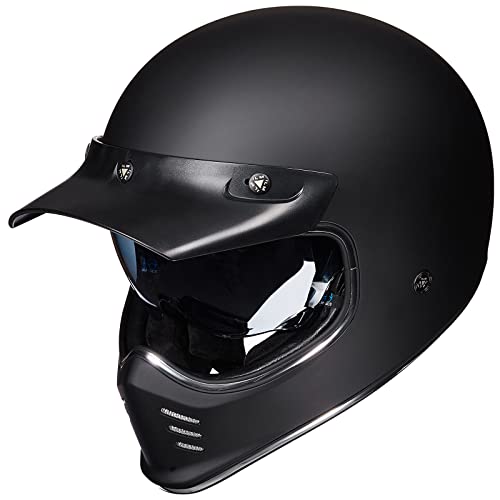 |
Best Internal Sun Visor | Shell: ABS | Certifications: DOT + ECE 22.06 | Best For: Sun visor, dual cert, vintage look on a budget | VIEW LATEST PRICE | Read Our Analysis |
| ILM Retro Full-Face Helmet Pinlock (Z503) |  |
Best Retro Style with Anti-Fog | Shell: ABS | Certifications: DOT FMVSS 218 | Best For: Clean retro aesthetics, Pinlock anti-fog, wide field of view | VIEW LATEST PRICE | Read Our Analysis |
| KYPARA Full-Face Helmet with Internal Tinted Visor |  |
Best Style Statement | Shell: ABS | Certifications: DOT FMVSS 218 | Best For: Riders who want aggressive retro styling with a sun visor | VIEW LATEST PRICE | Read Our Analysis |
| LEM Retro Vintage Full-Face Helmet |  |
Best Lightweight Fiberglass Alternative | Shell: Fiberglass | Certifications: DOT | Best For: Cafe racer / cruiser crossover riders wanting a fiberglass shell | VIEW LATEST PRICE | Read Our Analysis |
| GLX GX11 Compact Full-Face Helmet |  |
Best for Quiet Riding | Shell: ABS (GLX shell molding tech) | Certifications: DOT FMVSS 218 | Best For: Quieter highway cruising, streamlined compact shell | VIEW LATEST PRICE | Read Our Analysis |
More Details on Our Top Picks
TORC T1 Retro Full-Face Helmet
The TORC T1 is the standout pick here because of its fiberglass tri-composite shell - a construction you rarely see at this price point. Fiberglass absorbs and dissipates impact energy differently from ABS, and it shaves meaningful weight from a lid you will wear upright for hours at a time.
The shell is proportioned in a classic retro shape: no aggressive rear spoilers, no sport-bike chin extensions. It sits low and clean on the head, which suits the visual line of a cruiser without looking mismatched. The front chin vents include metal mesh intake grilles - a durability detail that holds up better than plastic tabs over time.
Dual DOT + ECE 22.5 certification means this shell has passed independent lab testing, not just self-declaration. The anti-fog, anti-scratch shield is removable without tools. One honest caveat the brand itself flags: the T1 runs large, so size down if you are between sizes.
Where the T1 falls short for some cruiser riders is the absence of an internal sun visor. You get a single clear shield with strong anti-fog coating, which works well but means a visor swap or sunglass routine for afternoon rides. If a drop-down visor is non-negotiable, look at the ILM Z502 below.
- Shell:Fiberglass tri-composite
- Certifications:DOT + ECE 22.5
- Weight:Approx. 3.2 lb
- Internal Sun Visor:No (clear anti-fog shield)
- Closure:D-ring
- Best For:Retro cruiser riders wanting a lightweight dual-cert lid
Daytona Helmets Retro Full-Face Helmet
Daytona leans into something rare in the affordable full-face segment: two distinct shell sizes across their six padding increments (XS through 2XL). That proportionate approach means a size-small rider does not get the same oversized shell as a size-XL rider - the helmet actually fits your head, which matters for both wind noise and visual proportions on a cruiser.
The retro styling is genuine rather than cosmetic. Smooth outer finish, restrained venting, leather interior accents, and a Bluetooth-compatible cavity all suggest a brand that understands the cruiser audience. The Pinlock 70-R anti-fog lens system is included, which is a meaningful upgrade over budget helmets that include a plain shield.
The moisture-wicking liner is removable and hand-washable - important for riders doing multi-day trips where helmet hygiene becomes a real concern by day three. The included drawstring bag protects the shell finish during storage.
The primary limitation is DOT-only certification (no ECE), and no internal sun visor. This is the right pick if shell proportions and low-profile aesthetics are your top priority - particularly for smaller or larger head sizes that generic one-shell designs fit poorly.
- Shell:ABS with 2 shell sizes
- Certifications:DOT FMVSS 218
- Weight:Not listed (compact shell)
- Internal Sun Visor:No (single clear Pinlock-ready shield)
- Closure:Nylon strap D-ring
- Best For:Riders who want the smallest DOT-approved full-face profile
ILM Vintage Full-Face Helmet with Inner Visor (Z502)
The ILM Z502 is the pick for cruiser riders who spend real time on afternoon highway runs and need a sun visor built in. The drop-down inner lens adjusts across 7 snapping positions so you can dial in exactly how much coverage you want without flipping between full-down and full-up. It ships with a dark black inner visor; clear and silver options are sold separately for different light conditions.
The ECE 22.06 certification alongside DOT puts this in a small group at its price tier. ECE 22.06 is the current revision of the European standard and is notably stricter than the older 22.05 - it includes oblique impact testing that DOT does not require. For a cruiser rider who logs significant highway miles, that extra certification layer is worth flagging.
The vintage shell shape is genuinely low-profile - smooth curves, no sport-bike spoilers, and an eyeglasses-friendly fit that accommodates riders who wear corrective lenses. There are reserved pockets inside for small devices. The suede-feel liner is fully replaceable and washable.
The quick-release metal buckle is a welcome detail on a helmet this accessible - D-ring closures are more secure but harder to manage with gloved hands. If you do not want to spend the extra on a Shoei or Arai but want sun-visor convenience and dual cert, the Z502 hits those notes consistently.
- Shell:ABS
- Certifications:DOT + ECE 22.06
- Weight:Not listed
- Internal Sun Visor:Yes - drop-down with 7-position adjustment
- Closure:Metal quick-release buckle
- Best For:Sun visor, dual cert, vintage look on a budget
ILM Retro Full-Face Helmet Pinlock (Z503)
The Z503 is ILM's retro-styled take that prioritizes outer visor quality over an internal drop-down. The enlarged visor gives a wider field of vision than most helmets in this segment - a genuine benefit on cruiser rides where you're scanning wide open roads rather than tucked over a tank.
Pinlock compatibility is the technical headline. The Pinlock anti-fog system works by trapping a layer of air between the outer visor and a silicone-sealed inner insert, eliminating the temperature differential that causes fogging. On cool-morning canyon rides or dawn commutes, this is a real quality-of-life upgrade over standard anti-fog coatings that degrade with cleaning.
The shell shape is a clean retro profile: metal air vents at mouth, top, and rear keep airflow moving without the oversized intake scoops found on sport helmets. The ABS construction with eyeglasses-friendly interior and removable/washable liner covers the practical basics well.
This is the Z503's Medium-size listing; the same shell is available in other sizes directly from ILM. Choose the Z502 above if an internal sun visor matters more than Pinlock compatibility - the two are complements, not identical picks.
- Shell:ABS
- Certifications:DOT FMVSS 218
- Weight:Not listed
- Internal Sun Visor:No (enlarged single visor, Pinlock compatible)
- Closure:Side visor locking system
- Best For:Clean retro aesthetics, Pinlock anti-fog, wide field of view
KYPARA Full-Face Helmet with Internal Tinted Visor
The KYPARA stands apart visually. While most retro full-face helmets go for clean, minimalist lines, the KYPARA leans into a more dramatic aesthetic - the Samurai Spirit finish includes graphic elements that make it a conversation piece at rest stops and bike meets. For cruiser riders who treat their gear as an extension of the bike's personality, this matters.
Technically it covers the cruiser essentials: DOT certification, internal drop-down sun visor (useful for afternoon rides without a separate visor swap), quick-release buckle for gloved hands, and a washable microfibre interior lining that manages perspiration on warm rides.
The aerodynamic rear wing and oversized ventilation scoops give it a slightly more aggressive profile than a pure vintage shell - it splits the difference between retro and modern styling. If you want a completely understated shell, the Daytona or TORC above fit better. If you want something with presence, the KYPARA delivers it.
One note: the KYPARA catalog does not list weight. Based on the ABS construction and sizing, it is likely in the 3.4-3.7 lb range typical for ABS full-face helmets. For context, the TORC T1's fiberglass shell comes in lighter. Both have internal sun visors as a shared feature; differentiation here is purely styling preference and visor adjustment mechanism.
- Shell:ABS
- Certifications:DOT FMVSS 218
- Weight:Not listed
- Internal Sun Visor:Yes - drop-down tinted visor
- Closure:Quick-release buckle
- Best For:Riders who want aggressive retro styling with a sun visor
LEM Retro Vintage Full-Face Helmet
The LEM is one of the few helmets in this price tier to use a genuine fiberglass shell with DOT certification. Fiberglass construction produces a harder, stiffer outer layer that can absorb impact energy differently from ABS thermoplastic - and it allows manufacturers to achieve a thinner, lighter shell profile that reduces the bulky appearance common in budget full-face helmets.
The LEM lists 1,687 g (approximately 3.7 lb) - about average for a fiberglass shell at this tier, though the listing notes this as a lightweight design. The combination of fiberglass outer and hexagonal fabric lining with 3D fixed padding offers a more personalized fit feel than the generic cut-and-sew liners common at this price.
The anti-fog system here works from the inside: a large external lens with reinforced scratch resistance combined with an internal anti-fog coating. There is also a windproof nose mask to help maintain anti-fog performance in cold or rainy conditions - a useful detail for riders who live in climates where temperature swings are common.
The LEM targets the cafe racer and cruiser crossover market explicitly, and the red retro colorway available suits that niche. If your cruiser leans toward the classic Triumph or Royal Enfield aesthetic rather than American V-twin, the LEM fits the visual grammar better than some of the more HD-adjacent picks on this list.
- Shell:Fiberglass
- Certifications:DOT
- Weight:Approx. 3.7 lb (1,687 g per listing)
- Internal Sun Visor:No (large anti-fog lens, internal anti-fog coating)
- Closure:Not specified
- Best For:Cafe racer / cruiser crossover riders wanting a fiberglass shell
GLX GX11 Compact Full-Face Helmet
GLX is a Southern California brand founded in 2002, and the GX11 reflects a deliberate design goal: wind-tunnel-tested ventilation that reduces cabin noise. For cruiser riders who spend hours at 65-70 mph in an upright position, wind roar is a constant companion. The GX11's three adjustable air intakes and four exhaust outlets are designed to move air through the helmet without the turbulence that creates low-frequency roar.
The compact shell profile is the other cruiser-relevant detail. The GX11 does not have the extended chin and forehead venting scoops common on sport helmets - the shell sits closer to the head and presents less surface area to crosswinds. At cruiser speeds where you're not tucked in, that translates to a more stable ride and less buffeting.
The shield system uses reinforced ribs for rigidity and a quick-change mechanism - useful if you prefer to swap between the included tinted visor for daytime and a clear shield for low-light riding. The multi-density EPS liner and fully removable/adjustable interior are baseline features covered well.
The GX11 is DOT-certified only and does not include an internal sun visor; the tinted outer visor is the sun management solution here. For riders who specifically want a quieter helmet and a compact shell without paying premium prices, the GX11 is the Research Desk's pick in that niche.
- Shell:ABS (GLX shell molding tech)
- Certifications:DOT FMVSS 218
- Weight:Not listed (compact shell)
- Internal Sun Visor:Tinted visor included (external)
- Closure:Not specified
- Best For:Quieter highway cruising, streamlined compact shell
How to Choose a Full-Face Helmet for Your Cruiser
Most full-face helmet buying guides treat all motorcycles as interchangeable. They are not. Here is what actually differs when you are buying for a cruiser.
Shell Profile: Low-Profile vs. Sport-Aggressive
Sport helmets are designed with the assumption that you are leaning forward and tucked in. Their rear spoilers and forehead vents are positioned to work with that posture. On a cruiser, you sit upright, and those same features create unnecessary drag, unwanted wind noise, and a visual mismatch with the bike's aesthetic. Look for vintage, retro, or "compact" shell shapes - smooth curves, restrained venting, no rear wings. The TORC T1, Daytona Retro, and GLX GX11 are good examples of helmets designed with upright riding in mind.
Internal Sun Visor: More Important Than You Think
When you ride upright on long straight roads in the afternoon, the sun hits your face at a consistent angle for hours. A built-in drop-down visor lets you manage that without pulling over, without removing your helmet, and without the fogging risk of cheap tinted shields clipped to the outside. The ILM Z502 and KYPARA both include drop-down inner visors. If you typically ride with sunglasses, this matters less - but eyeglasses riders in particular benefit from the visor option rather than trying to stack glasses inside a helmet. See our full-face vs. open-face safety comparison if you're weighing whether full-face is right for your riding style.
Weight and Upright Ergonomics
A sportbike rider's body supports helmet weight partly through the natural forward lean - neck muscles share the load differently. On a cruiser, your head is directly over your spine and the helmet's weight transfers straight down through your neck for the entire ride. Even 200 g (about 7 oz) of difference between a fiberglass and ABS shell adds up over a four-hour ride. Fiberglass-shell options like the TORC T1 and LEM are worth the price premium if you ride distances over an hour regularly. Riders who want the flip-up convenience of a modular instead of a one-piece full-face should expect an even bigger weight tradeoff - see our guide to the lightest modular motorcycle helmets for which flip-up designs keep that penalty smallest. Check our helmet fit guide for how to properly measure and test fit before buying.
Noise at Cruiser Speeds
Cruiser riding speed is typically 55-75 mph - not the 90-100 mph track speeds for which sport helmets are optimized. At cruiser speeds, the key noise factor is shell turbulence and vent design, not aerodynamic peak drag. Helmets with large, open intake scoops can actually be louder at highway speeds than smooth-shell designs, because the vents create turbulence at an angle that produces resonance inside the helmet. The GLX GX11's wind-tunnel-tested vent placement specifically addresses this. A well-fitted helmet is also quieter than one that has gaps at the cheeks - see our sizing guide above.
Certification: DOT vs. ECE 22.06
DOT certification is self-reported by the manufacturer - there is no mandatory pre-sale testing. ECE 22.06, the current European standard, requires independent lab testing before a helmet can carry the label. Helmets with both certifications have been externally validated. Among our picks, the TORC T1 (DOT + ECE 22.5) and ILM Z502 (DOT + ECE 22.06) are dual-certified. If you are riding distances where a safety margin matters, dual cert is a meaningful consideration - not just a marketing label.
Full-Face Helmet for Cruiser Riders Comparison
| Helmet | Shell | Certifications | Internal Sun Visor | Best For |
|---|---|---|---|---|
| TORC T1 Retro Full-Face Helmet | Fiberglass tri-composite | DOT + ECE 22.5 | No (clear anti-fog shield) | Retro cruiser riders wanting a lightweight dual-cert lid |
| Daytona Helmets Retro Full-Face Helmet | ABS with 2 shell sizes | DOT FMVSS 218 | No (single clear Pinlock-ready shield) | Riders who want the smallest DOT-approved full-face profile |
| ILM Vintage Full-Face Helmet with Inner Visor (Z502) | ABS | DOT + ECE 22.06 | Yes - drop-down with 7-position adjustment | Sun visor, dual cert, vintage look on a budget |
| ILM Retro Full-Face Helmet Pinlock (Z503) | ABS | DOT FMVSS 218 | No (enlarged single visor, Pinlock compatible) | Clean retro aesthetics, Pinlock anti-fog, wide field of view |
| KYPARA Full-Face Helmet with Internal Tinted Visor | ABS | DOT FMVSS 218 | Yes - drop-down tinted visor | Riders who want aggressive retro styling with a sun visor |
| LEM Retro Vintage Full-Face Helmet | Fiberglass | DOT | No (large anti-fog lens, internal anti-fog coating) | Cafe racer / cruiser crossover riders wanting a fiberglass shell |
| GLX GX11 Compact Full-Face Helmet | ABS (GLX shell molding tech) | DOT FMVSS 218 | Tinted visor included (external) | Quieter highway cruising, streamlined compact shell |
DOT vs ECE vs Snell vs MIPS, how to pick the right lid in 60 seconds, and when to replace it. One page, no fluff.
Frequently Asked Questions
Do full-face helmets work well for cruiser riding?
Yes - and the Research Desk would argue they work better for long-distance cruiser riding than open-face or half helmets. Full-face shells provide chin and jaw protection that 3/4 helmets skip entirely, and at highway speeds, that matters in a crash. The trade-off is heat retention at low speeds and in traffic. If you are doing primarily highway cruising, a well-ventilated full-face is cooler than you might expect - and quieter than an open-face design, which channels wind noise directly into the helmet. Read our full-face safety overview for the research behind that.
What shell material is best for a cruiser helmet?
For distance cruiser riding, fiberglass or composite shells are worth the price premium over ABS. They are lighter, which reduces neck fatigue on long rides, and they tend to produce a thinner, lower-profile shell that suits the visual proportions of a cruiser better than bulky ABS designs. On a budget, a well-fitted ABS shell from a reputable brand is entirely adequate for safety - the difference is weight and proportions, not protection quality.
Is an internal sun visor worth it on a cruiser helmet?
For most cruiser riders: yes. Upright seating puts the sun at a consistent angle across your face for the duration of an afternoon ride. A drop-down inner visor solves that without requiring a stop or a shield swap. It is particularly valuable for riders who wear prescription eyeglasses and cannot easily layer sunglasses underneath. Look for helmets with multi-position drop-down adjustment (like the ILM Z502's 7-snap system) rather than simple up/down toggles.
How is this list different from a generic full-face helmet guide?
We filtered specifically for cruiser-relevant criteria: low-profile or retro shell shapes (not sport-bike aggressive designs), internal sun visor availability, lightweight builds that suit upright ergonomics, and quiet vent design. We also cross-reference our general full-face guide and our Harley-specific guide to avoid repeating identical picks without reason - some overlap is unavoidable in a limited Amazon pool, but the buying guide framing here is specific to cruiser ergonomics and aesthetics.
What is the lightest full-face helmet option for a cruiser?
Among our picks, the TORC T1's fiberglass tri-composite shell is the lightest-class construction. The LEM also uses fiberglass. Both are meaningfully lighter than the ABS alternatives on this list. For riders doing extended highway miles or who experience neck fatigue on long rides, fiberglass is the practical recommendation - the weight saving is real and cumulative over hours.
