
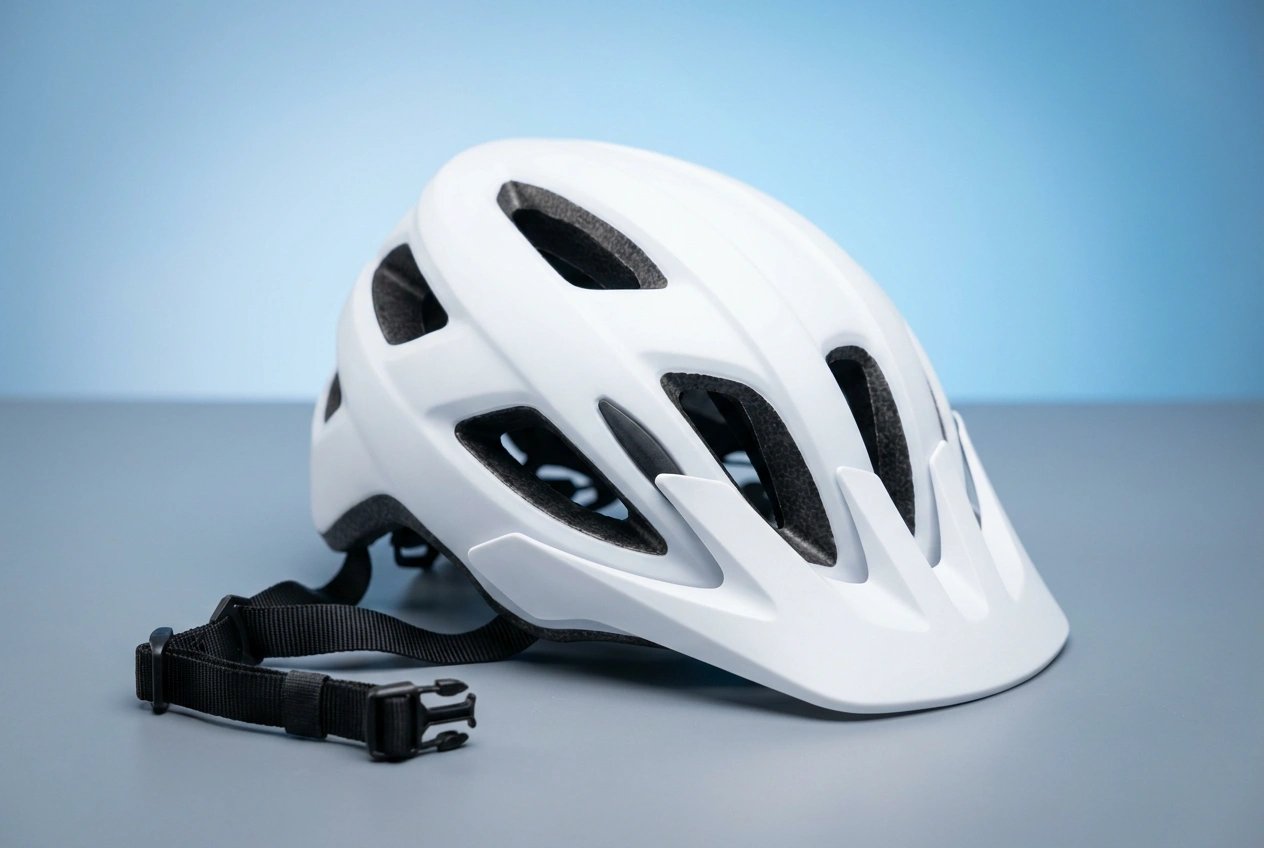
Virginia Tech's STAR ratings score helmets from 1 to 5 stars using lab impact tests that measure both linear and rotational head acceleration, weighted by how often real riders hit their heads. A lower STAR number and more stars mean better protection. Use the ratings to compare certified helmets against each other, not as a replacement for a CPSC, DOT, or ECE pass.
Every helmet on a store shelf has already passed a government certification, so on paper they all look equally safe. They are not. Two CPSC-stickered bike lids can absorb very different amounts of energy, and certification alone will never tell you which one rattles your brain less in a typical crash.
That gap is where the Virginia Tech Helmet Lab earns its place in a buying decision. The lab runs independent, university-funded impact tests and boils each helmet down to a single STAR score and a 1 to 5 star rating. Our Research Desk reads that data the same way you should: as a ranking tool to separate good helmets from great ones, not as a safety law. Here is what the stars actually measure, how VT differs from certification, and why a pile of helmets lost stars in the 2025 update without changing one bit physically.
What the STAR rating actually measures
STAR stands for Summation of Tests for the Analysis of Risk. The lab mounts each helmet on a drop tower tuned to mimic real head impacts, then runs a fixed battery of tests at multiple speeds and head locations. For bicycle helmets that means 24 impacts spread across 6 locations at medium and high energies. Every impact records two things that matter for concussion: linear acceleration (the straight-line jolt) and rotational velocity (the twist), because the twist is what tears brain tissue - the same mechanism covered in depth in our explainer on how motorcycle helmets prevent concussions.
The clever part is the weighting. Each lab impact is multiplied by how often a real rider would actually experience a hit like it, so common low and medium impacts count more than rare extreme ones. All the weighted concussion-risk values are summed into one STAR number. A lower STAR number means lower predicted injury risk, and helmets are then sorted into 1 to 5 stars.
- Lower STAR score equals better, and more stars equal better.
- It measures both linear jolt and rotational twist, not just one.
- Tests are weighted toward the impacts riders hit most often.
- The lab is run as a university service mission, funded by donations and grants, and is independent of helmet makers. It is not pay-to-play.
- STAR ratings exist for many sports: cycling, football and youth/flag football, soccer, hockey, snow sports, whitewater, and equestrian.
VT ratings vs DOT/ECE/CPSC certification
Certifications such as CPSC for bike helmets, or DOT and ECE for motorcycle helmets, are pass/fail legal minimums. A helmet either clears the bar to be sold or it does not. That tells you it should help prevent a skull fracture, but it says nothing about how much one certified helmet outperforms another on concussion risk. This is exactly the blind spot the STAR system fills with more impacts, more locations, and rotational measurement.
The two systems answer different questions. Certification asks "is this legal to sell?" VT asks "of the helmets that already passed, which protect best?" A helmet can be fully CPSC-certified and still score low on VT, because passing a minimum and topping a ranking are not the same thing.
The 2025 recalibration: why ratings moved
In July 2025 the lab updated how bicycle helmet stars are assigned, and a lot of helmets dropped. The reason is encouraging rather than alarming: helmets have gotten so much safer that the old fixed thresholds had become too easy to clear. When VT launched bike ratings in 2018, only about 4 of 30 tested helmets earned 5 stars. By 2025 a large majority of the field was hitting 5 stars, so the label had stopped separating good from great.
The fix was to move from fixed cutoffs to relative ones. Under the refreshed method a helmet now has to land in the top half of all tested models to earn 4 or 5 stars, with 5 stars reserved for those closest to the best performers. When the new thresholds were applied, the number of 5-star bike helmets fell sharply, by published accounts from roughly 167 down to fewer than 40, with reports citing around 139 helmets losing their 5-star status.
The key point for anyone holding a downgraded helmet: nothing physical changed. Your helmet absorbs energy exactly as it did before. The bar for top-tier simply rose. A 4-star helmet under the 2025 system still represents strong, above-median protection, and the ratings now do a better job of pointing toward the genuine standouts.
How to read a Virginia Tech rating
| Stars | What it means | How to use it |
|---|---|---|
| 5 stars | Top-tier protection, scoring closest to the best-performing helmets in VT's testing under the 2025 thresholds. | A safe shortlist if the helmet also fits you and is certified for your sport. Confirm the rating is current, since 2025 raised the bar. |
| 4 stars | Above-median performance, in the upper half of all tested helmets. VT still recommends 4 stars and up. | A solid, defensible choice. Many strong helmets sit here after the 2025 reset, so do not dismiss it as second best. |
| 1-2 stars | Lower-ranked in VT testing, with higher predicted concussion risk relative to the field, though still certified to be sold. | Treat as a comparison flag, not a recall. Prefer a higher-rated option in the same category if one fits and suits your budget. |
DOT vs ECE vs Snell vs MIPS, how to pick the right lid in 60 seconds, and when to replace it. One page, no fluff.
If you would rather start from helmets that already score well, our MIPS roundup lists the verified star rating for each pick.
Frequently Asked Questions
Does a low Virginia Tech rating mean a helmet is unsafe?
No. Every helmet VT rates has already passed its required certification, so it meets the legal safety minimum. A lower star count means it ranks behind better performers on VT's concussion-risk testing, not that it is dangerous. The stars are a comparison tool between certified helmets, not a pass/fail verdict.
Why did my helmet lose stars in 2025 if nothing changed?
The helmet did not change; the scoring did. In July 2025 VT switched bike helmet ratings to relative thresholds, where a helmet must land in the top half of the field to earn 4 or 5 stars. Because helmets across the board have improved, the bar for top-tier rose and many previously 5-star helmets moved to 4 stars. Your helmet protects exactly as it did before.
Is the Virginia Tech Helmet Lab paid by helmet manufacturers?
No. The lab operates as part of Virginia Tech's university service mission and is funded by donations and research grants. Its published position is that the ratings are independent and free of manufacturer funding or influence, which is what makes them useful as a neutral reference. It is not a pay-to-rate program.
What is the difference between STAR ratings and CPSC, DOT, or ECE certification?
Certifications are pass/fail legal minimums that decide whether a helmet can be sold. STAR ratings are a comparative ranking that scores how well certified helmets reduce injury risk, including rotational forces. A helmet can be certified and still score low on VT. Buy certified first, then use the stars to choose among the options.
Which helmet types does Virginia Tech rate?
The program started with football and has expanded over the years to cycling, youth and flag football, soccer, hockey, snow sports, whitewater, and equestrian helmets, with more categories in development. Each sport uses its own STAR protocol tuned to the impacts riders and players actually face in that activity.
