
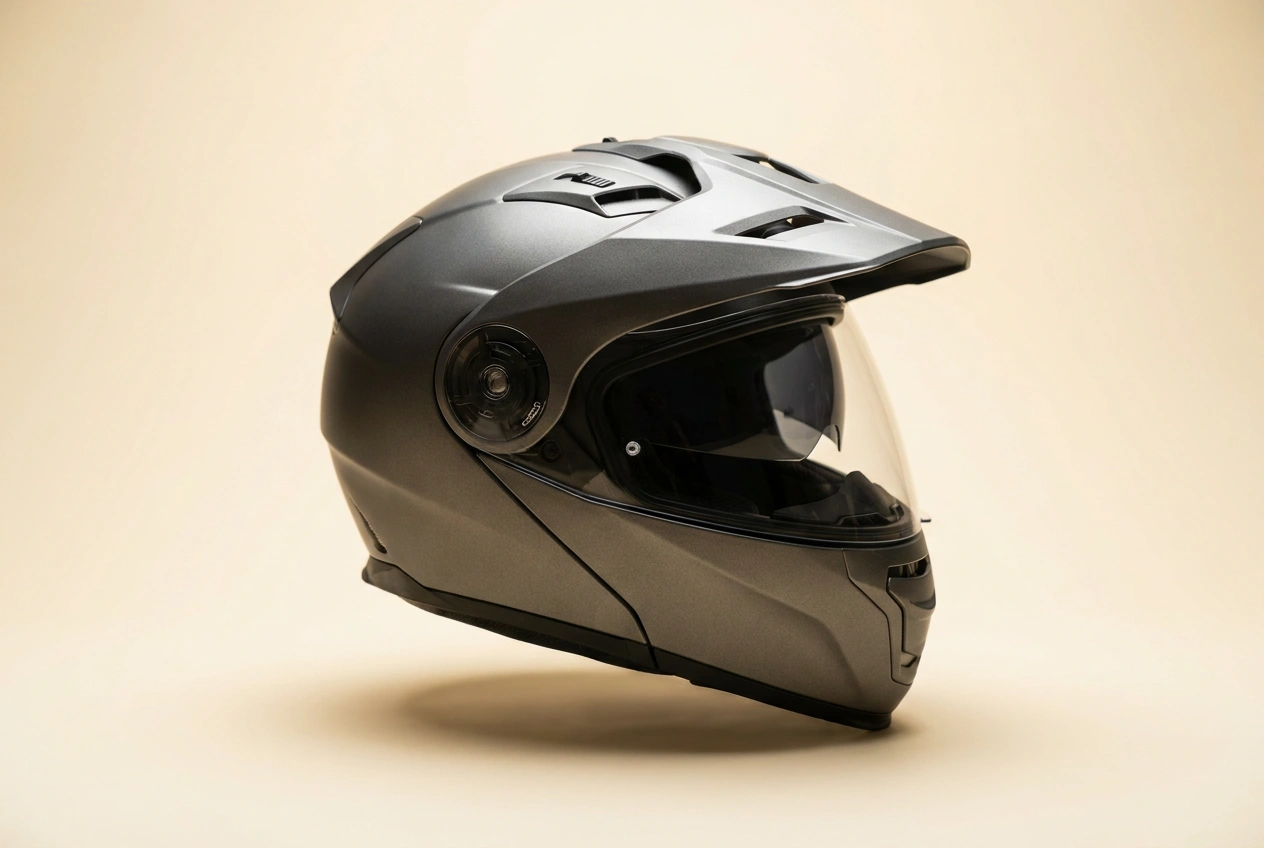
There are six main types of motorcycle helmet: full-face (maximum coverage), modular/flip-up (openable chin bar), open-face / three-quarter (no chin bar), half helmet (skull-cap, least coverage), dual-sport / ADV (full-face with a peak visor), and off-road / motocross (goggle-ready, no shield). All should carry DOT or ECE 22.06 certification.
Walk into any dealership or scroll any gear site and the helmet wall looks like a UX experiment gone wrong: six distinct shapes, a dozen price tiers, and zero explanation of why any of it matters. Our research desk broke them apart by coverage, certification, and riding style so you can ignore the one you will never use and focus on the two you should actually be comparing.
Every type below can be found with a DOT or ECE 22.06 rating (we recommend ECE 22.06 where available: it requires independent lab testing rather than manufacturer self-certification). The right type depends first on the kind of riding you do, and only then on budget and brand. Here is how each one is built, and who it is really for.
Full-Face Helmets
A full-face helmet wraps a single rigid shell around the entire head: forehead, temples, cheeks, chin, and back of the skull. A fixed chin bar is part of that shell, not a separate piece, and a clear or tinted visor drops down to seal the face. This is the design that protects the most surface area in a crash. Every major independent safety study (SHARP, Virginia Tech STAR) uses the full-face as its baseline.
Pros: highest overall protection, best wind and noise buffering at speed, most options at every price point. Cons: you have to take it off to eat, drink, or have a quick conversation, which is either a minor annoyance or a dealbreaker depending on how you ride. The chin bar is why this type remains the default choice for sport, touring, and everyday street riding.
Who it suits: road riders who prioritize safety above convenience, track day riders, long-distance tourers, and anyone riding above 60 mph regularly. Cruiser riders looking for a full-face will find dedicated picks in our best full-face cruiser helmet guide.
Modular / Flip-Up Helmets
Modular helmets start with a full-face shell and add a hinged chin bar that rotates up over the forehead. When closed, you get coverage close to a full-face; when flipped open, you get the ventilation and conversation access of an open-face. It is a genuine engineering compromise rather than a marketing one. The hinge mechanism adds weight (typically 200-300 g over a comparable full-face) and introduces a structural joint that is not present in a single-piece shell.
Pros: real versatility for touring and commuting. Stop for fuel, flip it open, pay, flip it closed and go. Many models are rated for riding in the open position, though that rating varies by brand and standard. Cons: heavier, more complex, and the chin bar protection in a direct chin impact is generally lower than a fixed full-face at the same price point because part of the budget goes into the hinge hardware.
Who it suits: tourers, commuters in urban traffic, and riders who wear glasses. A flipped-open chin bar makes putting the helmet on with glasses dramatically easier. If you find full-face helmets too enclosed, a modular is often the practical solution - see our notes on the best helmets for claustrophobic riders. For a concrete example of what a well-engineered modular looks like in practice, read our HJC IS-MAX II review. We cover the best options in our guide to modular helmets for glasses wearers.
Open-Face / Three-Quarter Helmets
The open-face (also called three-quarter) helmet covers the forehead, ears, and back of the skull (roughly three quarters of the head) but leaves the face completely exposed. Most come with an optional snap-on visor or accept aftermarket shields; some accept a face shield that clips around the opening, though none has the structural chin bar of a full-face.
Pros: excellent all-around visibility, easier communication, and a classic aesthetic that fits cafe racer and cruiser culture well. Ventilation is natural rather than engineered. Cons: the face is unprotected. Research from COST 327 and real-world crash data consistently shows the chin and jaw as high-impact zones, and an open-face offers nothing there. A neck gaiter and quality sunglasses help with wind and UV; they do not help with pavement.
Who it suits: low-speed urban riders, scooter commuters, classic and cruiser riders who accept the trade-off, and anyone who finds full-face helmets genuinely claustrophobic. Open-face helmets are a natural fit for summer riding too - see our best hot-weather motorcycle helmet guide for picks that balance airflow and protection in warm conditions. See our picks in our open-face helmets guide.
Half Helmets
The half helmet (sometimes called a skull cap or brain bucket) covers only the top of the skull, sitting above the ears and stopping well short of the back of the head. It is the legal minimum in most US states that have any helmet law at all, and it is also the minimum in terms of what it actually protects.
Pros: maximum airflow, minimum weight, and a look that works with some cruiser and bobber aesthetics. Very easy to put on. Cons: the ears, the sides of the face, the chin, jaw, and most of the back of the skull are fully exposed. In an impact, wind blast, insects, road debris, and in a crash the pavement itself reach all of those areas. You can meet DOT with a half helmet; you cannot replicate what a full-face does with one.
Who it suits: low-speed cruiser and custom bike riders in jurisdictions where it is legal, typically combined with goggles, a bandana, or a balaclava for wind protection. Our roundup covers the best-built options in our half-shell helmets guide.
Dual-Sport / ADV Helmets
Dual-sport helmets borrow the full-face shell and chin bar, then add a peak visor above the eye port and a ventilation layout designed to work at both highway speeds and in the dirt. The peak deflects roost and low-hanging branches on trail, and most dual-sport helmets accept goggles as well as having a built-in visor. The shell profile is taller than a road full-face, which creates some wind noise at motorway speeds (a genuine trade-off rather than a design flaw).
Pros: the most flexible format for riders who genuinely split time between tarmac and gravel or trail. One helmet covers both without compromise in either environment. Cons: the taller profile and peak generate more buffeting at high speed than a dedicated road helmet, and the visor is often not optical-grade glass. Not ideal if 90% of your riding is highway.
Who it suits: adventure motorcyclists on mixed terrain, overlanders, and gravel road explorers. Our guide covers the best in our off-road and dual-sport helmets guide.
Off-Road / Motocross Helmets
Off-road and motocross helmets are purpose-built for closed-course competition and aggressive trail riding. They share the extended chin bar geometry of a full-face but have no built-in visor; they are designed to be paired with dedicated motocross goggles. The shell is lightweight (often fibreglass composite or polycarbonate tuned for weight), the face opening is wide to accommodate goggle frames, the chin bar is exaggerated for chin and jaw protection in falls, and aggressive venting runs throughout because off-road riders generate significant heat without highway airflow to help.
Pros: very light for the protection level, excellent ventilation, strong chin protection without the weight of a road-spec chin bar system. Cons: no visor means no rain or wind protection without goggles, and they are genuinely loud at road speeds. Most carry ECE 22.06 or DOT; confirm before buying for any road use.
Who it suits: motocross riders, enduro competitors, trail riders, and dual-sport riders who spend most of their time off tarmac. See our picks in our motocross helmets under $300 guide.
Certification: What Every Type Should Carry
Regardless of which type you choose, the certification sticker tells you whether the helmet was independently tested or simply self-declared. Here is the practical breakdown:
- DOT (USA): self-certification. The manufacturer declares conformity, and spot-checks happen, but no independent pre-sale lab test is required. Minimum for US road legality; not a quality guarantee on its own.
- ECE 22.06 (Europe, adopted widely worldwide): requires independent laboratory testing before sale, covers linear and rotational impact (a significant update from 22.05), and includes both visor and retention system tests. The most credible widely available certification.
- Snell M2025 (USA voluntary): independent, rigorous, tested to higher impact velocities than DOT or ECE. Common on premium sport helmets. Not required for road use but indicates serious engineering.
- CPSC / ASTM F2040 (helmets crossing into snow sport and cycling niches): different test protocols for different hazard profiles. These apply to ski, snow, and some EUC helmets, not motorcycle helmets.
Virginia Tech's STAR ratings cross-test helmets regardless of the above certifications and publish per-model scores. A useful secondary check for any type you are seriously considering.
Motorcycle Helmet Types at a Glance
| Type | Coverage | Best for | Our guide |
|---|---|---|---|
| Full-face | Full head + face + chin bar, sealed visor | Sport, touring, everyday street | Coming soon |
| Modular / flip-up | Full-face when closed; open-face when flipped | Touring, commuting, glasses wearers | Modular for glasses |
| Open-face / three-quarter | Head, ears, back of skull; face open | Urban, scooter, cruiser/cafe low speed | Open-face guide |
| Half / skull cap | Top of skull only | Low-speed cruiser, bobber (where legal) | Half-shell guide |
| Dual-sport / ADV | Full-face + peak visor, goggle-compatible | Mixed road/trail adventure riding | Off-road / dual-sport guide |
| Off-road / motocross | Full chin bar, wide eye port, no visor or shield | Closed-course racing, enduro, trail | Motocross under $300 |
DOT vs ECE vs Snell vs MIPS, how to pick the right lid in 60 seconds, and when to replace it. One page, no fluff.
Frequently Asked Questions
What are the main types of motorcycle helmets?
The six main types are full-face, modular/flip-up, open-face (three-quarter), half helmet, dual-sport/ADV, and off-road/motocross. Each covers a different amount of the head and suits a different riding style. Full-face offers the most protection; half helmets the least.
Which type of motorcycle helmet is safest?
Full-face helmets consistently show the best protection in independent testing (SHARP, Virginia Tech STAR) because they cover the chin and jaw, which are high-impact zones in real crashes. Modular helmets when closed are close but introduce a hinge joint. Certification level matters more than brand: ECE 22.06 requires independent testing, DOT does not.
Can you wear an off-road helmet on the road?
Many off-road and motocross helmets carry ECE 22.06 or DOT certification and are technically road-legal, but they generate significant wind noise at road speed and offer no rain or visor protection without goggles. Dual-sport helmets are the practical middle ground for riders splitting time between tarmac and trail.
What is the difference between a dual-sport and an off-road helmet?
A dual-sport helmet adds a built-in visor and road-speed aerodynamics to an off-road shape, making it practical on the motorway as well as the trail. An off-road or motocross helmet has a wider goggle-only eye port, no visor, and is optimised for ventilation at low speed. Fine for the track or trail; loud and exposed on the road.
Do all helmet types need to be certified?
Yes. Any helmet sold for motorcycle use should carry at minimum a DOT sticker (USA) or ECE 22.06 approval (Europe and beyond). ECE 22.06 is the stronger standard because it requires independent laboratory testing before sale. Snell M2025 is an optional but rigorous additional certification common on sport-focused helmets.
