
Affiliate disclosure As an Amazon Associate we earn from qualifying purchases, at no extra cost to you.
A full-face helmet gives you the most coverage of any street lid: a fixed chin bar, a sealed faceshield, and a shell that wraps the whole head. For most riders that is the right default, and it is why we built the Research Desk around it. The chin bar alone protects a region that takes a large share of impact energy in real crashes, which is the single biggest reason we steer new riders here first.
The helmets below sit in the budget-to-midrange band, where the trade-offs are real and worth understanding before you spend. We looked at certification, fit and head-shape, weight, ventilation, the faceshield system, and noise. None of these are race-grade lids, and we say so plainly where it matters. What they do offer is honest DOT-certified coverage at a price that gets a helmet on your head today rather than next month.
Key Takeaways
- Full-face is the only street configuration that protects the chin and jaw, which is why we treat it as the baseline rather than an upgrade.
- Every pick here carries DOT FMVSS-218 certification; if you ride in or import to Europe, confirm an ECE 22.06 label before you buy.
- Fit beats price. A helmet one shape wrong for your head will be unsafe and miserable no matter how good the spec sheet reads.
- Budget shells run heavier and louder than midrange ones. Expect 1,500 to 1,800 grams and plan on earplugs at highway speed.
- A dual-visor kit (clear plus tinted) and a Pinlock-ready or anti-fog shield matter more for daily comfort than vent count on paper.
| ILM Full Face Helmet Model ILM-313 | 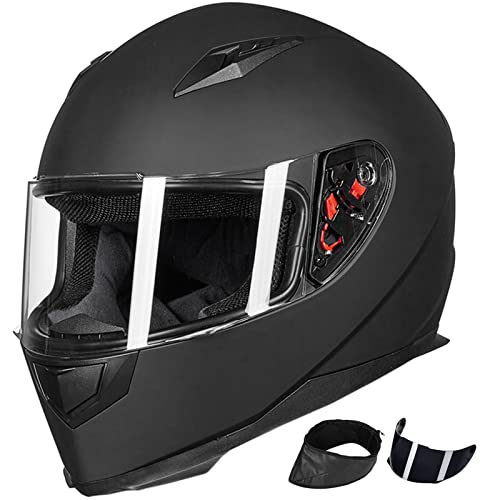 |
Best Budget Pick | Type: Full-face street | Certification: DOT FMVSS-218 | Best For: First helmet on a tight budget | VIEW LATEST PRICE | Read Our Analysis |
| GLX GX11 Compact Full Face Helmet |  |
Best for Ventilation | Type: Full-face street | Certification: DOT approved | Best For: Warm-weather and city riding | VIEW LATEST PRICE | Read Our Analysis |
| TRIANGLE Full Face Racing Helmet |  |
Best Value Dual-Visor | Type: Full-face street/sport | Certification: DOT FMVSS-218 | Best For: Riders wanting both shields in the box | VIEW LATEST PRICE | Read Our Analysis |
| Auboa AU-T801 Lightweight Full Face Helmet |  |
Best Lightweight Option | Type: Full-face street | Certification: DOT FMVSS-218 | Best For: Reducing neck fatigue on longer rides | VIEW LATEST PRICE | Read Our Analysis |
| CYRIL Full Face Helmet with Dual Visors |  |
Best Faceshield System | Type: Full-face street/track | Certification: DOT FMVSS-218 | Best For: All-weather commuting and fog control | VIEW LATEST PRICE | Read Our Analysis |
| VEVOR Full Face Helmet with Dual Visor | 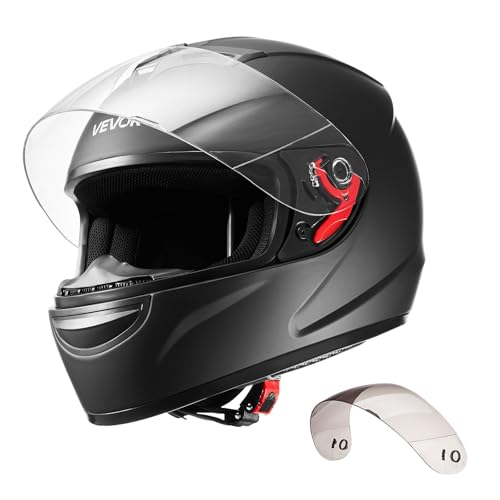 |
Best Everyday Commuter | Type: Full-face street | Certification: DOT approved | Best For: No-fuss daily commuting | VIEW LATEST PRICE | Read Our Analysis |
| ILM Model 902 Modular Full Face Helmet | 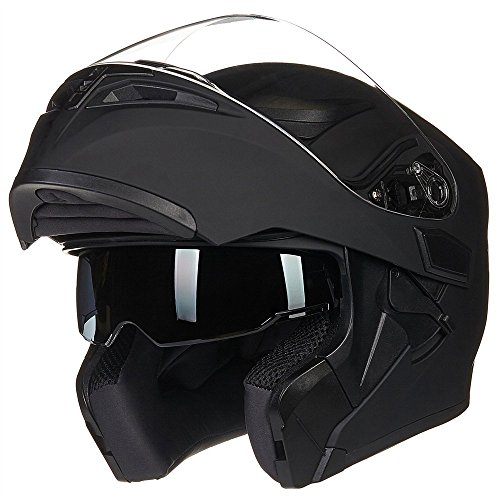 |
Best Flip-Up Convenience | Type: Modular full-face | Certification: DOT FMVSS-218 | Best For: Glasses wearers and stop-start riding | VIEW LATEST PRICE | Read Our Analysis |
More Details on Our Top Picks
ILM Full Face Helmet Model ILM-313
The ILM-313 is the one we hand to riders who need a certified full-face today and cannot stretch past entry-level money. The two included visors and a removable winter neck scarf give it more all-season usefulness than most lids at this price, and the inner pads pull out for washing.
The ABS shell keeps the cost down and the weight reasonable, but ABS is the give-away that this is a budget build. It will not feel as planted or as quiet as a polycarbonate-composite midrange helmet, and the visor seal is good rather than great.
Fit runs to an intermediate-oval head shape and on the snug side, so we suggest sizing by measured head circumference rather than guessing. Cheek pads pack out a little after the first few rides, which is normal at this tier.
On the road expect noticeable wind noise above 50 mph and some buffeting on a naked bike. For commuting, learning, and short rides it does the job; for long touring days you will want earplugs and modest expectations.
- Type:Full-face street
- Certification:DOT FMVSS-218
- Shell:Lightweight ABS
- Faceshield:Clear + smoked visors included
- Extras:Removable winter neck scarf
- Best For:First helmet on a tight budget
GLX GX11 Compact Full Face Helmet
The GX11 is the airflow pick here. Three adjustable intakes feeding four rear exhausts move real air through the shell, and on hot-weather city rides that difference is easy to feel. The multi-density EPS liner is a step up from the single-density foam common at this price.
The shield swaps quickly and gives a wide field of view, though the bundled tinted visor means you will want to buy a clear one before riding at night. The quick-change mechanism is genuinely tool-free, which we appreciate.
Head shape leans round-oval and the shell is on the compact side, so riders with a long oval head may find it pinches at the forehead. As always, measure first.
Open vents trade quiet for cooling: this is not the helmet for a silent highway slog. It is the one we reach for when the priority is staying cool in traffic rather than droning along an interstate.
- Type:Full-face street
- Certification:DOT approved
- Shell:GLX shell molding, multi-density EPS
- Ventilation:3 intakes, 4 exhausts
- Faceshield:Wide-view tinted, quick-change
- Best For:Warm-weather and city riding
TRIANGLE Full Face Racing Helmet
TRIANGLE packs a tinted shield, a clear shield, and a carrying bag into one budget price, which is the main reason it earns a spot. Getting both visors out of the box means you are covered for day and night without a second order.
The ABS shell and EPS liner are standard budget fare, and the four-vent layout does enough to cut fogging on mild days. The washable, moisture-wicking liner is a nice touch at this money.
Sizing skews intermediate-oval and slightly small; the brand publishes a head-circumference chart and we recommend following it rather than your usual hat size. Cheek pads start firm and settle in.
The honest trade-off is noise and finish. Quick-release visors are convenient but the seal lets in more wind hiss than a midrange lid, so plan on earplugs for longer rides.
- Type:Full-face street/sport
- Certification:DOT FMVSS-218
- Shell:ABS, energy-absorbing EPS
- Ventilation:4 intake/exhaust vents
- Faceshield:Tinted + clear, quick-release
- Best For:Riders wanting both shields in the box
Auboa AU-T801 Lightweight Full Face Helmet
The AU-T801 leans on an integrated fin-and-shell design to keep weight down, and a lighter helmet is the kind of thing your neck thanks you for two hours into a ride. It is one of the lighter budget full-faces we looked at.
It ships with a colored visor plus a clear replacement, and the visor-lock detail helps cut wind noise while adding a small security margin. Multiple vents handle ventilation adequately for the price.
Liners are removable and washable, and the fit reads intermediate-oval. New riders are a clear target here, so first-timers should still size by measurement rather than assuming a medium.
Being light and ABS-based, it can feel less stable in crosswinds than a heavier composite helmet, and noise control is average. The weight saving is the real selling point; treat the rest as competent budget spec.
- Type:Full-face street
- Certification:DOT FMVSS-218
- Shell:ABS with integrated fin
- Faceshield:Colored + clear replacement visor
- Ventilation:Multi-vent, visor lock
- Best For:Reducing neck fatigue on longer rides
CYRIL Full Face Helmet with Dual Visors
CYRIL puts its effort into the shield and venting, and that is exactly where daily comfort lives. A five-port layout, including a chin vent, pushes air across the visor to keep it clear, and the tool-free swap between clear and tinted shields is quick once you learn the catch.
Sizing runs from S to XXL, the widest range in this group, which makes it easier to dial in a fit for larger or smaller heads. The clear visor is pre-installed, so you can ride at night straight out of the box.
Shell and liner are standard ABS and high-density EPS, with hypoallergenic, machine-washable padding. The chin vent and forced-air path do a real job on visor fogging in cool, damp weather.
It is still a budget helmet: noise control is ordinary and the finish will not match a premium lid. But for a rider who wants the most usable faceshield-and-vent package at this price, it is the one we point to.
- Type:Full-face street/track
- Certification:DOT FMVSS-218
- Shell:Heavy-duty ABS, high-density EPS
- Ventilation:5-port aero (2 top, 2 side, 1 chin)
- Faceshield:Tool-free swappable clear + tinted
- Best For:All-weather commuting and fog control
VEVOR Full Face Helmet with Dual Visor
VEVOR aims squarely at the everyday commuter who wants a certified full-face without thinking too hard about it. The clear-plus-tinted visor pair covers day and night, and the wide-angle shield design helps trim blind spots in traffic.
The ABS shell over soft EPS foam is a balanced, comfort-first build, and VEVOR makes a point of even weight distribution to reduce shoulder and neck strain on longer sits. The liner detaches for washing.
Front and top vents handle airflow and keep wind noise and drag in check for the price. Fit reads intermediate-oval; size by measurement, and expect the cheek pads to break in over the first week.
It will not surprise anyone on spec, and that is the point. As a dependable, low-drama commuter lid at a budget price, it does what is asked; for spirited highway miles a quieter midrange helmet earns its premium.
- Type:Full-face street
- Certification:DOT approved
- Shell:ABS with soft EPS foam
- Faceshield:Clear + dark-tinted, wide-angle
- Ventilation:Multiple front and top vents
- Best For:No-fuss daily commuting
ILM Model 902 Modular Full Face Helmet
The 902 is the modular option here: the chin bar flips up, which is a real convenience for glasses wearers, riders who stop often, and anyone who wants to talk or drink without removing the helmet. An internal drop-down sun visor adds quick glare control.
Its anti-scratch, anti-fog main shield and micrometric strap are the practical touches that make daily use easier. The liner and cheek pads pull out for washing, and the ABS shell keeps the price accessible.
Be clear-eyed about the configuration trade-off: a modular hinge adds weight and a structural seam that a one-piece full-face does not have. For maximum chin protection a fixed full-face is still the stronger choice, and we say so.
Fit runs intermediate-oval and the helmet is heavier than the fixed lids on this list, so neck fatigue can show up sooner. Choose it for the flip-up convenience, not as your most protective option.
- Type:Modular full-face
- Certification:DOT FMVSS-218
- Shell:High-resistance ABS
- Faceshield:Anti-scratch, anti-fog, wide-view
- Sun Visor:Internal drop-down dual visor
- Best For:Glasses wearers and stop-start riding
How to Choose a Full-Face Motorcycle Helmet
A full-face helmet is the most protective street configuration because it covers the chin and jaw, the areas a half or open-face lid leaves exposed. Once you have committed to full-face, the job is matching certification, fit, and features to how you actually ride. Here is how we work through it on the Research Desk.
Certification: DOT, ECE 22.06, and Snell
In the United States, DOT FMVSS-218 is the legal minimum and every helmet here carries it. The standards are not interchangeable, and the differences matter: read our breakdown of DOT vs ECE vs Snell before you decide what is enough for your riding. If you ride in Europe or import a helmet there, you need an ECE label, and the current version raises the bar in real ways, which we cover in ECE 22.06 explained. Snell is an extra, voluntary standard aimed mostly at track use.
Fit and head shape
Fit is the part of the buying decision that the spec sheet cannot tell you. A helmet that is the wrong shape for your head, intermediate-oval, round-oval, or long-oval, will be unsafe and uncomfortable no matter how good its rating. Measure your head circumference, check the brand's chart, and learn what a correct fit feels like in our guide to how a helmet should fit. A new helmet should be snug with no pressure points and should not shift when you move your head.
Weight
Budget full-faces typically land between 1,500 and 1,800 grams. A heavier helmet is more tiring on a long ride and puts more load on your neck in a crash. The lighter picks here, such as the Auboa, trade a little stability for less fatigue; modular lids like the ILM 902 run heavier because of the hinge.
Ventilation
Vents move heat and clear fog, but more vents also mean more noise. Adjustable intakes paired with rear exhausts, as on the GLX and CYRIL, do the most useful work. For hot-climate or city riding, prioritize airflow; for cold or fast highway riding, you will close the vents most of the time anyway.
Faceshield and anti-fog
A dual-visor kit (clear plus tinted) saves you a second purchase and covers day and night. Pinlock-ready shields and anti-fog coatings are the features that prevent your visor from clouding in cold, damp conditions, which is a safety issue, not a luxury. A tool-free quick-change mechanism makes swapping shields far less of a chore.
Noise
Budget shells are louder than midrange ones, full stop. Visor seals, neck-roll design, and shell aerodynamics all feed into how much wind hiss reaches your ears. None of the helmets here are quiet by premium standards; for a sense of what a premium sport-touring full-face achieves, see our Shoei RF-1200 review. We plan on earplugs for any sustained highway riding regardless of which one you pick.
Budget vs midrange: the honest trade-off
The helmets on this list get a DOT-certified full-face on your head for entry-level money, and for commuting, learning, and shorter rides that is a sound, safe choice. Stepping up to midrange buys you a lighter composite shell, a quieter ride, better visor seals, and Pinlock support. Our budget vs premium helmet comparison walks through exactly what that extra money buys. If you ride daily or log long highway days, that premium pays for itself in comfort and fatigue; if you ride occasionally and locally, a budget lid here is a reasonable place to start. One brand that sits solidly in the midrange is Scorpion EXO, which makes composite full-face shells with Pinlock-ready shields and integrated sun visors at accessible prices - our Scorpion EXO helmet roundup covers the model range in detail.
Full-Face Motorcycle Helmet Comparison
| Helmet | Type | Certification | Faceshield | Best For |
|---|---|---|---|---|
| ILM Full Face Helmet Model ILM-313 | Full-face street | DOT FMVSS-218 | Clear + smoked visors included | First helmet on a tight budget |
| GLX GX11 Compact Full Face Helmet | Full-face street | DOT approved | Wide-view tinted, quick-change | Warm-weather and city riding |
| TRIANGLE Full Face Racing Helmet | Full-face street/sport | DOT FMVSS-218 | Tinted + clear, quick-release | Riders wanting both shields in the box |
| Auboa AU-T801 Lightweight Full Face Helmet | Full-face street | DOT FMVSS-218 | Colored + clear replacement visor | Reducing neck fatigue on longer rides |
| CYRIL Full Face Helmet with Dual Visors | Full-face street/track | DOT FMVSS-218 | Tool-free swappable clear + tinted | All-weather commuting and fog control |
| VEVOR Full Face Helmet with Dual Visor | Full-face street | DOT approved | Clear + dark-tinted, wide-angle | No-fuss daily commuting |
| ILM Model 902 Modular Full Face Helmet | Modular full-face | DOT FMVSS-218 | Anti-scratch, anti-fog, wide-view | Glasses wearers and stop-start riding |
DOT vs ECE vs Snell vs MIPS, how to pick the right lid in 60 seconds, and when to replace it. One page, no fluff.
Frequently Asked Questions
Is a full-face helmet really safer than an open-face?
Yes. A full-face helmet adds a fixed chin bar that covers the chin and jaw, a region that takes a large share of impact energy in real-world crashes. An open-face or half helmet leaves that area exposed, which is why we treat full-face as the baseline for street riding rather than an upgrade.
What does DOT certification actually guarantee?
DOT FMVSS-218 is the U.S. legal minimum for street helmets and every pick on this list carries it. It sets impact, penetration, and retention requirements, but it is a self-certified standard, so look for a genuine DOT sticker and a reputable seller. For how it compares to ECE and Snell, see our guide to DOT vs ECE vs Snell linked above.
Do I need an ECE 22.06 helmet?
If you ride in or import to Europe, yes, you need an ECE label, and the current 22.06 version tests for more impact points and rotational forces than the older 22.05 did. In the United States DOT is the legal requirement, but many riders prefer a helmet that also meets ECE 22.06 for the broader testing. Our ECE 22.06 explained article walks through the differences.
How should a full-face helmet fit?
Snug all the way around with no pressure points, and it should not shift when you shake your head. Match the helmet to your head shape (intermediate-oval, round-oval, or long-oval) and size by measured circumference, not hat size. Cheek pads break in slightly over the first week, so start firm rather than loose. See our full guide to how a helmet should fit.
Why are budget helmets so much louder?
Budget shells use ABS construction with simpler visor seals and neck rolls, all of which let more wind noise reach your ears than a midrange composite lid does. None of the helmets here are quiet by premium standards, so we recommend earplugs for any sustained highway riding regardless of which one you choose.
