
Affiliate disclosure As an Amazon Associate we earn from qualifying purchases, at no extra cost to you.
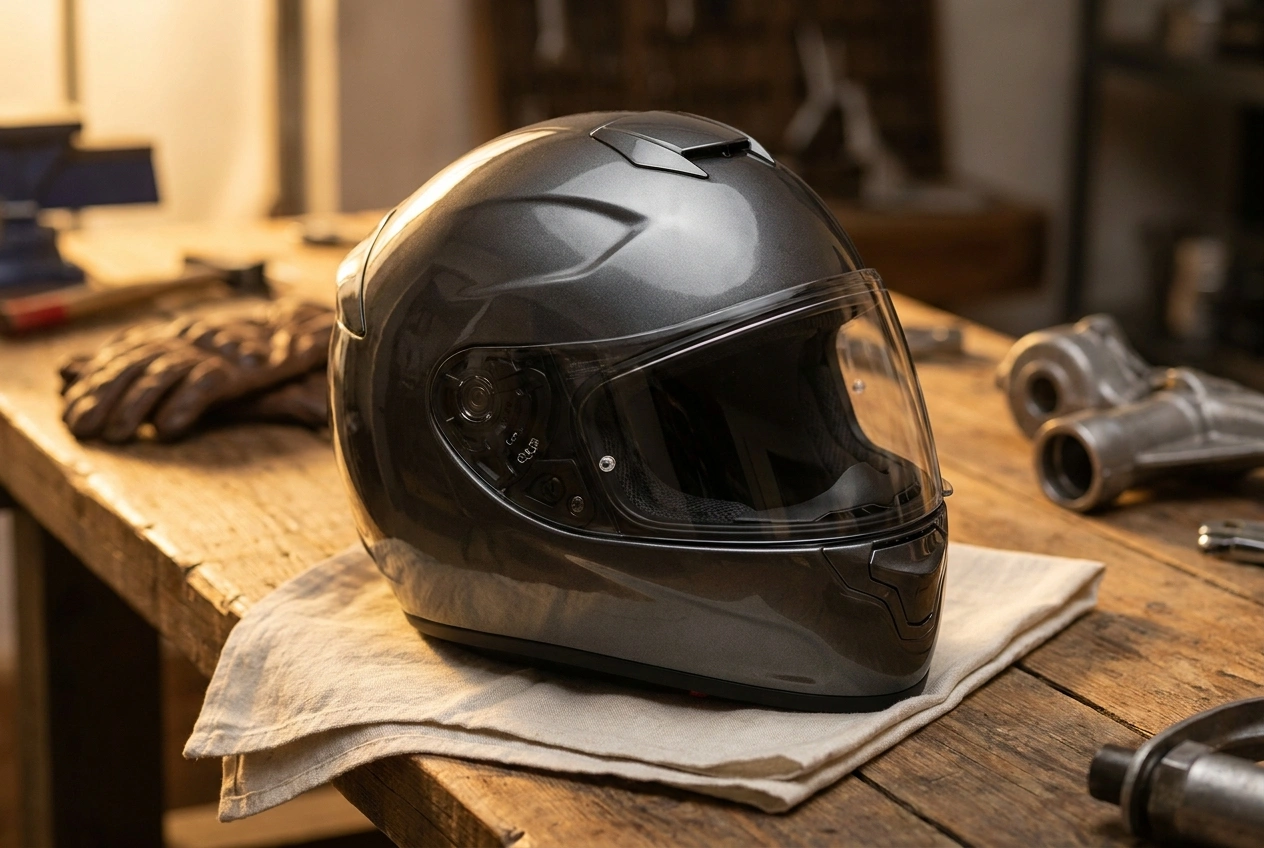
The Shoei RF-1200 was a benchmark full-face sport-touring helmet from roughly 2015 to 2021, built on the AIM+ composite shell with Snell M2015 and DOT approval, Pinlock-ready CWR-1 shield, and a 3D Max-Dry interior. It has been discontinued and superseded by the RF-1400. If you are shopping in 2026, the RF-1400 is the current model and the right buy.
The Shoei RF-1200 spent the better part of a decade as the flagship full-face helmet in Shoei's US lineup. Street riders trusted it for long-haul comfort, a quiet aerodynamic shell, and the kind of fit consistency Shoei had spent decades refining. Our research desk spent time with multiple size samples of the RF-1200 before the model was phased out.
Honest framing for 2026: Shoei discontinued the RF-1200 when the RF-1400 launched. New-in-box RF-1200 units still surface from time to time through third-party sellers, but Shoei no longer produces them and Amazon does not carry them as a first-party listing. If you are comparing models for a purchase, the RF-1400 is the current version of this helmet and is what we recommend. This page exists as a reference for riders who already own an RF-1200 or are evaluating used examples.
Safety Standards and Shell Construction
The RF-1200 used Shoei's Advanced Integrated Matrix Plus (AIM+) shell construction, a hand-laid composite laminate of fiberglass and organic fibers. Shoei produced it in three shell sizes to reduce unnecessary weight across the size run. At the time of sale the helmet carried both Snell M2015 and DOT (FMVSS 218) certification.
The AIM+ approach distributes impact energy across the shell rather than concentrating it at the strike point. The dual-layer multi-density EPS liner works in tandem: softer outer foam absorbs initial deceleration, denser inner foam arrests the residual force before it reaches the rider's skull.
One important note for current owners: EPS foam degrades over time even without a crash. If your RF-1200 is more than five years old, the liner has aged past its design life. Shoei's own recommendation is a seven-year replacement window from manufacture date, not purchase date.
- AIM+ multi-ply composite shell (fiberglass and organic fibers)
- Dual-layer multi-density EPS liner
- Three shell sizes across the size run
- Snell M2015 and DOT certified (legacy standard; RF-1400 carries Snell M2020)
- Emergency Quick-Release cheek pads for first-responder access
Riders researching helmet safety standards more broadly can find our breakdown at Are Full-Face Helmets Safer? and our certification explainer at Types of Motorcycle Helmet.
Fit, Interior, and Comfort
Shoei helmets are engineered around an intermediate oval head shape, which fits the majority of Western riders without pressure points. The RF-1200 offered five distinct shell and EPS configurations across XS through XXL, meaning sizing down is rarely necessary just to get a quieter fit.
The 3D Max-Dry System II interior was removable and machine-washable, an underrated feature on a helmet at this price point. The moisture-wicking liner kept long-distance riders comfortable even in warm conditions. Cheek pads came in three thickness options so you could fine-tune the fit after purchase.
One consistent user report: the RF-1200 runs slightly narrow through the cheeks during the first few rides. This is normal break-in for Shoei; the EPS and cheek pads compress to your specific head shape over roughly 10 to 15 hours of use. If you are buying a used RF-1200, ask about prior owner head shape and how many hours are on the helmet.
- 3D Max-Dry System II removable and washable liner
- Multi-thickness cheek pad options (available as spare parts)
- Intermediate oval head shape target
- Secure D-ring retention with easy one-hand operation
For guidance on dialing in the fit of any full-face helmet, see How a Motorcycle Helmet Should Fit.
Aerodynamics and Wind Noise
The RF-1200 shell profile was Shoei's most refined sport-touring shape when it launched. Wind tunnel development produced a compact profile that sits close to the head and generates less turbulence than more upright touring-oriented shells. At highway speeds the helmet tracked straight without requiring the rider to fight buffeting.
Wind noise was low by the standards of its era, though not silent. At sustained speeds above 75 mph (120 km/h) some riders reported wind roar around the chin bar and neck roll. Pairing the RF-1200 with a well-fitted neck gaiter reduced this significantly. The CWR-1 shield seal was effective when fully closed but the RF-1200 predates the airtight window-bead system Shoei introduced on the RF-1400.
For reference, Shoei's own data for the RF-1400 claims a 4% reduction in drag and a 6% reduction in lift compared to the RF-1200, so aerodynamic improvement did carry forward to the successor.
Ventilation System
The RF-1200 shipped with a five-position top intake vent, two brow vents, and dual rear exhaust ports. In warm weather with vents fully open the airflow was noticeable and effective at highway speeds; at slow city speeds ventilation was modest, as is typical for helmets in this class.
The channel system through the EPS liner routed air from the brow vents across the top of the head toward the rear exhausts. Riders in consistently hot climates ranked this as one of the stronger ventilation setups in the $400-600 price range at the time.
- Five-position adjustable top intake vent
- Two brow vents
- Dual rear exhaust outlets
- EPS channeling routes airflow across the crown
Where the RF-1200 Stands in 2026
The RF-1200 was discontinued when the RF-1400 arrived. Shoei no longer manufactures it, and Amazon does not list new RF-1200 helmets as a first-party product. Third-party marketplace units do occasionally appear, but we cannot verify their manufacture date, storage history, or whether the EPS is still within its service life. We do not recommend purchasing a new-in-box RF-1200 from an unknown third-party seller in 2026 for that reason.
For riders who already own an RF-1200: it remains a well-built helmet. Check the manufacture date on the interior label and apply Shoei's seven-year guideline. Replacement parts including cheek pads, liners, and CWR-1 shields are still available on Amazon and through Shoei dealers.
For riders shopping now: the RF-1400 is the current model. It builds on the RF-1200's foundation with a lighter AIM+ shell, Snell M2020 certification (the current standard), improved aerodynamics, and the new CWR-F2 shield system. The affiliate link below points to the RF-1400 because that is the product available for purchase. We have noted this plainly so there is no confusion.
Shoei RF-1200 Specifications at a Glance
| Feature | Detail |
|---|---|
| Shell construction | AIM+ multi-ply composite (fiberglass and organic fibers) |
| Shell sizes | Three sizes across XS-XXL |
| Safety certifications | Snell M2015, DOT (FMVSS 218) |
| Weight (approx.) | Approximately 3.3 lb (1.5 kg) in size Medium |
| Face shield | CWR-1 Pinlock-ready (Pinlock 70 insert included) |
| Interior | 3D Max-Dry System II, removable and washable |
| Retention system | Double D-ring |
| Ventilation | 5-position top intake, 2 brow vents, 2 rear exhausts |
| Cheek pad options | Multiple thicknesses available |
| Emergency system | Quick-Release cheek pads (EQR) |
| Production status | Discontinued; superseded by RF-1400 (Snell M2020) |
Also worth reading from our research desk:
- Are Full-Face Helmets Safer?
- How a Motorcycle Helmet Should Fit
- Types of Motorcycle Helmet
DOT vs ECE vs Snell vs MIPS, how to pick the right lid in 60 seconds, and when to replace it. One page, no fluff.
Frequently Asked Questions
Is the Shoei RF-1200 still available to buy?
No. Shoei discontinued the RF-1200 and it is not sold as a new product through Amazon or Shoei's authorized dealers in 2026. Occasional third-party marketplace listings exist but we cannot verify manufacture dates or storage conditions on those units. The current model is the RF-1400.
What is the difference between the Shoei RF-1200 and RF-1400?
The RF-1400 carries Snell M2020 certification (versus M2015 on the RF-1200), claims 4% less drag and 6% less lift, features the newer CWR-F2 shield with Vortex Generator technology for reduced turbulence, and includes an airtight window-bead seal. It is also the lightest Snell-certified helmet in Shoei's lineup as of 2024.
How long does the Shoei RF-1200 last?
Shoei's guideline is seven years from the manufacture date stamped inside the helmet. EPS foam degrades over time even without a crash. If your RF-1200 is past that window, replace it regardless of visible condition.
What helmet certifications does the RF-1200 have?
The RF-1200 was certified to Snell M2015 and DOT (FMVSS 218). Snell M2015 was the current voluntary standard at the time but has since been superseded by M2020. The RF-1400 carries Snell M2020 and DOT.
Can I still get replacement parts for the RF-1200?
Yes. Interior liners, cheek pads in multiple thicknesses, and CWR-1 face shields remain available through Amazon and Shoei's authorized parts network as of 2026. The CWR-1 shield is also compatible with the RF-SR and some other Shoei models.
