
Affiliate disclosure As an Amazon Associate we earn from qualifying purchases, at no extra cost to you.
A dual-sport helmet asks one shell to do two jobs: cut wind on the highway with a faceshield, then shrug off roost on the trail behind a peak. The expensive models from the big adventure brands do this gracefully, but the helmets most riders actually buy sit far lower on the price ladder. Our Research Desk pulled together the budget-tier ADV lids that real buyers keep coming back to, then read the spec sheets, owner reports, and certification labels against each other so you do not have to.
We do not crash-test helmets ourselves. What we do is synthesize: we compare shell materials, certification marks, peak design, visor systems, and weight across the field, and we flag where a cheap helmet cuts a corner you might care about. Every pick below is DOT-certified, carries both a flip-down sun shield and a peak, and can be had for far less than a name-brand adventure helmet.
One honest caveat up front. At this price, you are buying ABS or thermoplastic shells and FMVSS 218 compliance, not Snell or carbon weave. These helmets earn their keep on commutes, fire roads, ATV trails, and weekend dual-sport loops. If you ride fast highway miles every day, read the weight and noise notes carefully before you decide.
Key Takeaways
- Every helmet here is DOT FMVSS 218 certified; the O'Neal Sierra adds an ECE 22.05 mark, the only dual-homologated lid in this value group.
- All seven carry a dual-visor setup: a flip-down internal sun shade plus a clear outer faceshield, so you skip swapping goggles when the light changes.
- Peak aerodynamics is the real budget tradeoff. A large fixed peak lifts and buffets above roughly 55-60 mph, so look for an adjustable or removable peak if you log highway miles.
- Weight runs from about 1,590 g (O'Neal Sierra) and up; lighter is kinder on your neck over long ATV and trail days.
- Spend more only where it buys something concrete here: Pinlock readiness, an intercom slot, or a removable peak, rather than brand name alone.
| 1Storm Dual Sport Dual Visor Helmet | 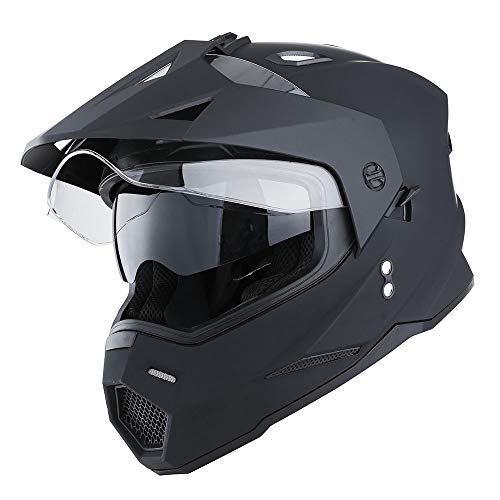 |
Best Value Overall | Type: Dual-sport (peak + faceshield) | Certifications: DOT FMVSS 218 | Best For: Mixed commuting and light trail | VIEW LATEST PRICE | Read Our Analysis |
| ILM WS902 Adventure Helmet |  |
Best for Highway Miles | Type: Dual-sport adventure | Certifications: DOT FMVSS 218 | Best For: Long road and adventure days | VIEW LATEST PRICE | Read Our Analysis |
| O'Neal Sierra Helmet |  |
Best Certification (DOT + ECE) | Type: Dual-sport | Certifications: DOT FMVSS 218 + ECE 22.05 | Best For: Riders who want a known brand | VIEW LATEST PRICE | Read Our Analysis |
| Orthrus X100 Dual Sport Helmet | 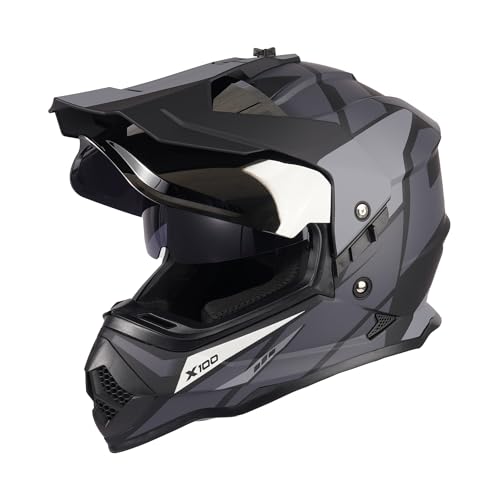 |
Best for Intercom Users | Type: Dual-sport adventure | Certifications: DOT certified | Best For: Riders running a Bluetooth headset | VIEW LATEST PRICE | Read Our Analysis |
| TRIANGLE Dual Sport Helmet |  |
Best Ventilation | Type: Dual-sport / ADV | Certifications: DOT certified | Best For: Hot-weather and high-exertion riding | VIEW LATEST PRICE | Read Our Analysis |
| ILM 606V Dual Sport Helmet | 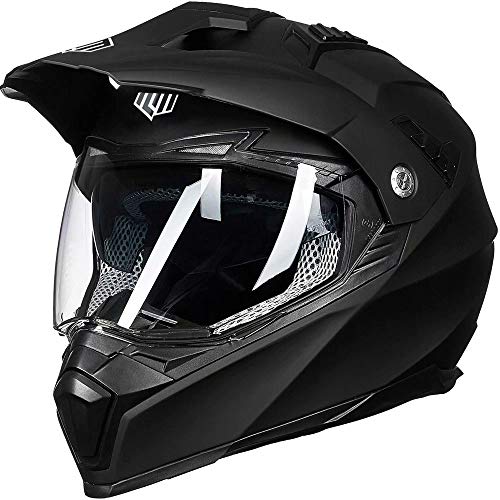 |
Best Multi-Use Pick | Type: Dual-sport / off-road | Certifications: DOT approved (FMVSS-218) | Best For: Riders who want one multi-use helmet | VIEW LATEST PRICE | Read Our Analysis |
| Orthrus Youth Dual Sport Helmet |  |
Best for Young Riders | Type: Youth dual-sport | Certifications: DOT certified, street legal | Best For: Teens riding street and trail | VIEW LATEST PRICE | Read Our Analysis |
More Details on Our Top Picks
1Storm Dual Sport Dual Visor Helmet
The 1Storm is the helmet that shows up first in most budget dual-sport searches, and the reason is straightforward: it pairs a genuine dual-visor layout with a thermoplastic alloy shell at a price that undercuts almost everything with a brand badge. The inner smoked drop-down handles glare without you reaching for sunglasses, while the outer clear shield keeps wind and bugs off your face on the road.
Owners consistently praise the comfort of the cushioned, removable, washable liner and the glossy UV-stable finish that holds up to sun better than the matte budget rivals. For a rider who splits time between paved commutes and the occasional fire road, this is the lid that does the most for the least money in our group.
The honest weaknesses are noise and peak lift. The fixed aerodynamic peak is calmer than a true motocross visor, but it still catches air and buffets once you push past highway speeds, and wind noise is noticeable without earplugs. There is no Pinlock provision, so the shield can fog in cold, damp conditions.
We rank it best value overall because it covers the dual-sport brief completely at the lowest credible price point. If your riding tops out around backroad speeds and easy trails, the 1Storm gives you very little to complain about for the money.
- Type:Dual-sport (peak + faceshield)
- Certifications:DOT FMVSS 218
- Shell:Thermoplastic alloy
- Visor System:Inner smoked sun shield + outer clear shield
- Peak:Fixed aerodynamic visor
- Best For:Mixed commuting and light trail
ILM WS902 Adventure Helmet
The ILM WS902 is the most road-minded helmet in our group, and it earns that label with two features the cheaper lids skip. First, the outer visor is Pinlock 30 compatible, so you can fit an anti-fog insert and ride cold mornings without the shield clouding over. Second, the oversized outer peak is removable, which lets you strip it off entirely for fast highway stretches where any peak just adds drag.
An ultra-wide eye port gives a wide field of view, and the seven-position vent system moves real air at speed. The removable inner lining is built with fewer seams to cut down on scalp pressure points over long days, and a quick-release clasp plus removable chin curtain round out the touring-friendly details.
The catch is that the Pinlock insert is not included, so budget for that separately if you want the anti-fog benefit. The ABS shell and EPS construction is solid for the price but adds a little weight versus the lightest options here, which you may feel on all-day trail rides.
For a rider whose dual-sport leans toward connecting trails by highway, the WS902 is the one we reach for. The removable peak and Pinlock readiness are genuinely useful upgrades that justify spending a bit more than the rock-bottom picks.
- Type:Dual-sport adventure
- Certifications:DOT FMVSS 218
- Shell:ABS shell with EPS foam
- Visor System:Removable outer peak + internal drop-down sun shield
- Ventilation:Seven-position vent system
- Best For:Long road and adventure days
O'Neal Sierra Helmet
The O'Neal Sierra is the only helmet in this value group that carries both a DOT and an ECE 22.05 mark, which matters if you want a wider safety baseline or ride where European homologation is recognized. O'Neal is a known off-road name, and the Sierra brings that brand reassurance to a price that still sits firmly in budget territory.
The integrated face shield is height-adjustable, so you can dial the peak-and-shield relationship to suit your sight line, and the double-D ring chin strap is the retention system most experienced riders prefer over a micro-ratchet. The polycarbonate/ABS shell and air-channeled, moisture-wicking liner are tuned more for off-road use than long highway droning.
Two things to weigh. The Sierra runs toward the firmer, more dirt-focused end of the comfort scale, so very long pavement stints can feel less plush than a touring-oriented lid. It also leans on goggles for serious off-road dust rather than relying solely on the shield, which is normal for this style but worth knowing.
We give it the certification nod because the dual DOT and ECE label is rare at this price, and the double-D retention is a real plus. If brand recognition and a broader homologation matter to you, the Sierra is the value pick that delivers both.
- Type:Dual-sport
- Certifications:DOT FMVSS 218 + ECE 22.05
- Shell:Polycarbonate/ABS
- Visor System:Integrated, height-adjustable face shield
- Retention:Double-D ring chin strap
- Best For:Riders who want a known brand
Orthrus X100 Dual Sport Helmet
The Orthrus X100 is built for riders who want to wire in communication. Its liner includes dedicated headphone storage slots, so you can install a Bluetooth intercom without carving out padding or creating pressure points against your ears. For anyone who rides in a group or wants navigation prompts on the trail, that is a meaningful, purpose-built advantage at this price.
The peak is adjustable and shaped to stay stable at higher speeds, which is a step up from the fixed peaks on the cheapest helmets here. A UV-protected outer shield blocks wind, dust, and rain, while the hidden inner sun visor drops down fast when glare hits. The plush liner is fully removable and washable, with ergonomic neck support aimed at long days in the saddle.
The 3-point ventilation moves heat away during hard ATV or motocross efforts, though it is a simpler vent layout than the ILM's seven positions. As with most helmets in this bracket, the shell and padding are value-grade rather than premium, so set expectations accordingly on noise and long-term plushness.
If you already run or plan to run a headset, the X100 is the obvious choice. The built-in intercom provision plus an adjustable peak make it the most communication-ready helmet in our value lineup.
- Type:Dual-sport adventure
- Certifications:DOT certified
- Shell:High-strength shell
- Visor System:UV outer shield + hidden inner sun visor, adjustable peak
- Ventilation:3-point (top, front, rear)
- Best For:Riders running a Bluetooth headset
TRIANGLE Dual Sport Helmet
The TRIANGLE makes airflow its headline feature, with multiple intake and exhaust vents including a large top vent and a chin vent that keep air moving through the shell. On hot days or during high-exertion trail riding, that ventilation is the difference between a comfortable ride and a sweaty, fogged-up one, and it is the strongest vent setup in our group alongside the ILM.
It also pairs a multi-layer composite shell and reinforced chin bar with an adjustable, removable peak, so you can pull the visor off for highway runs and refit it for the dirt. The drop-down sun visor and clear anti-scratch outer shield cover the dual-visor brief, and a moisture-wicking, removable, washable liner handles the sweat the vents do not.
The retention here is a micro-ratchet buckle rather than double-D rings. Plenty of riders find the ratchet quicker and easier with gloves, but purists prefer the D-ring for its proven simplicity, so factor in your own preference. Noise is average for the category, meaning earplugs are still a good idea at speed.
We single it out for ventilation because that is where it clearly leads. If you ride in heat or work hard on technical trails, the TRIANGLE's airflow and removable peak make it a smart value buy.
- Type:Dual-sport / ADV
- Certifications:DOT certified
- Shell:Multi-layer composite
- Visor System:Drop-down sun visor + clear anti-scratch shield
- Peak:Adjustable and removable
- Best For:Hot-weather and high-exertion riding
ILM 606V Dual Sport Helmet
The ILM 606V is built around versatility. Per the listing, it can be used as a rally helmet, a full-face helmet or an off-road helmet, aimed at dirt bike, motorcycle, mountain bike, dual sport and other outdoor riding. It is listed as DOT approved, meeting or exceeding FMVSS-218.
The dual-visor setup pairs a wide-angle clear lens, which the manufacturer says increases peripheral vision, with a sun visor that can be rotated slightly to follow the direction of the sun. An inner tinted visor is also included, so you can adapt to changing light without swapping goggles.
An aerodynamic air intake system is listed to bring fresh air in and push hot air out. The top liner and ear pads are detachable and washable, and a quick-release strap makes the helmet easier to put on and take off.
If you want one DOT-listed helmet that can switch between full-face, rally and off-road use, the ILM 606V is the pick. Note that the listing gives no weight, so check the size and fit details on the product page before ordering.
- Type:Dual-sport / off-road
- Certifications:DOT approved (FMVSS-218)
- Visor System:Wide-angle clear lens + rotating sun visor + inner tinted visor
- Ventilation:Aerodynamic air intake system
- Liner:Detachable, washable top liner and ear pads
- Best For:Riders who want one multi-use helmet
Orthrus Youth Dual Sport Helmet
The Orthrus Youth fills a real gap: a DOT-certified, street-legal dual-sport helmet sized for younger riders, with a built-in sun visor so a teen does not need a separate set of goggles to handle glare. Unlike dirt-only youth lids, it is genuinely designed for both paved and off-road use, which suits a young rider who moves between trails and neighborhood streets.
It uses lightweight materials and a balanced fit with built-in vents to reduce strain on a young rider's neck and shoulders, an important consideration since kids tire faster under a heavy helmet. The aerodynamic shell shape helps keep airflow smooth during faster or windier stretches, and the built-in visor cuts glare and keeps dust out of the rider's line of sight.
The tradeoffs are the same value-grade ones as the adult helmets here, plus the obvious need to measure carefully for a correct youth fit. A helmet that is too large will not protect properly, so take the time to size it against a current head measurement rather than guessing, and replace it as the rider grows.
For a parent shopping a dual-sport helmet that works on the street and the trail, this is the value pick we would point to. The removable, washable liner also makes it easy to keep clean after muddy rides, which matters with kids.
- Type:Youth dual-sport
- Certifications:DOT certified, street legal
- Shell:Lightweight full-face
- Visor System:Built-in sun visor, no goggles needed
- Peak:Aerodynamic fixed shape
- Best For:Teens riding street and trail
How to Choose a Value Dual-Sport Helmet
A dual-sport helmet is a compromise by design. It tries to be a road touring helmet and a dirt helmet at once, and at the budget end of the market the corners that get cut are usually weight, noise, and peak aerodynamics. Our Research Desk reads the spec sheets so you can match a cheap lid to the riding you actually do, rather than the riding the marketing copy imagines. The single most useful question to ask before you buy is simple: what is the split between highway miles and trail miles in your typical ride?
Certification: DOT, and Sometimes ECE
Every helmet in this roundup meets DOT FMVSS 218, the United States legal minimum. That is a real, testable standard, not a sticker. The O'Neal Sierra goes further with an ECE 22.05 mark, which is the European baseline and a slightly broader test regime. None of these value helmets carry Snell or the newer ECE 22.06, which is normal for the price. If you want to understand how much helmet you are giving up versus a sealed road lid, our breakdown of a dual-sport helmet vs full-face design lays out where each one wins.
Peak Aerodynamics at Highway Speed
The peak is what makes a dual-sport helmet look the part, and it is also the feature most likely to annoy you on the road. A large fixed peak catches air and starts to lift and buffet your head once you push past roughly 55 to 60 mph. If you log real highway miles, prioritize a helmet with an adjustable or fully removable peak, like the ILM WS902 or the TRIANGLE, so you can angle it down or pull it off. Helmets built for pure dirt accept a tall fixed peak because trail speeds rarely reach the buffeting zone, which is why our look at the best off-road helmets treats the peak very differently.
Goggle vs Internal Sun Shield
Every pick here has a flip-down internal sun shield plus a clear outer faceshield, which is the dual-sport advantage: you change light conditions without ever touching a pair of goggles. That setup is ideal on the road and on fast, low-dust trails. In heavy dust or aggressive motocross conditions, though, a sealed pair of goggles still seals out grit better than a faceshield, and many riders run goggles off-road regardless of the built-in shield. If your riding is mostly hard dirt, a dedicated motocross lid plus goggles may serve you better, and our guide to the best motocross helmets covers that path. Riders splitting time between tarmac and dirt sections may also want to see our supermoto helmet guide, which covers the same dual-sport shells in a motard context.
Ventilation and Weight
Ventilation and weight are where long days are won or lost. Look for a layout with a top intake and a clear rear exhaust path, not just a couple of token vents; the ILM's seven-position system and the TRIANGLE's large top-and-chin vents lead this group. On weight, the difference between a 1,590 g helmet and one closer to 1,700 g is felt in your neck after a few hours on the trail, so lighter helmets like the O'Neal Sierra earn their keep on long rides. Pinlock readiness, found on the ILM WS902, is the one cold-weather extra worth chasing if you ride in damp or freezing conditions.
Value Dual-Sport Helmet Comparison
| Helmet | Certification | Shell | Peak | Best For |
|---|---|---|---|---|
| 1Storm Dual Sport Dual Visor Helmet | DOT FMVSS 218 | Thermoplastic alloy | Fixed aerodynamic visor | Mixed commuting and light trail |
| ILM WS902 Adventure Helmet | DOT FMVSS 218 | ABS shell with EPS foam | - | Long road and adventure days |
| O'Neal Sierra Helmet | DOT FMVSS 218 + ECE 22.05 | Polycarbonate/ABS | - | Riders who want a known brand |
| Orthrus X100 Dual Sport Helmet | DOT certified | High-strength shell | - | Riders running a Bluetooth headset |
| TRIANGLE Dual Sport Helmet | DOT certified | Multi-layer composite | Adjustable and removable | Hot-weather and high-exertion riding |
| ILM 606V Dual Sport Helmet | DOT approved (FMVSS-218) | - | - | Riders who want one multi-use helmet |
| Orthrus Youth Dual Sport Helmet | DOT certified, street legal | Lightweight full-face | Aerodynamic fixed shape | Teens riding street and trail |
DOT vs ECE vs Snell vs MIPS, how to pick the right lid in 60 seconds, and when to replace it. One page, no fluff.
Frequently Asked Questions
Are budget dual-sport helmets actually safe?
Yes, within their tier. Every helmet in this roundup is certified to DOT FMVSS 218, the United States legal minimum, and the O'Neal Sierra adds an ECE 22.05 mark. That is a genuine, lab-tested standard. What you give up at this price is the higher impact margin and weight savings of premium shells, plus Snell or ECE 22.06 certification. For commuting, ATV use, and weekend trail riding, a DOT-certified value helmet is appropriate; for daily high-speed highway riding, consider spending more for a lighter, quieter, higher-rated lid.
Will the peak cause problems at highway speed?
It can. A large fixed peak catches air and starts to lift and buffet your head above roughly 55 to 60 mph, which is tiring on long road stretches. If you ride highways often, choose a helmet with an adjustable or removable peak, such as the ILM WS902 or the TRIANGLE, so you can angle it down or take it off entirely. Helmets with smaller, more aerodynamic fixed peaks like the 1Storm are calmer but still benefit from earplugs at speed.
Do I still need goggles with a dual-sport helmet?
Not for road riding or light trail use. The internal sun shield and clear faceshield on these helmets handle changing light and wind without goggles, which is the whole point of the dual-sport design. In heavy dust or hard motocross conditions, a sealed pair of goggles still keeps grit out better than a faceshield, so many riders carry goggles for the dirtiest sections even when the helmet has a built-in shield.
What does Pinlock compatible mean, and do I need it?
Pinlock refers to an anti-fog insert that mounts to pins inside the faceshield, creating a sealed inner lens that resists fogging in cold, damp weather. The ILM WS902 is Pinlock 30 compatible, though the insert is sold separately. You need it only if you ride in cold or humid conditions where the shield fogs; for warm, dry-weather riding it is an optional extra rather than a must-have.
How much should I spend on a dual-sport helmet?
Spend the least that covers your actual riding. Every helmet here delivers a certified shell, a dual-visor system, and a peak at the bottom of the price ladder. Pay a little more only when it buys something concrete you will use: Pinlock readiness and a removable peak on the ILM for highway-heavy riding, an intercom slot on the Orthrus X100 if you run a headset, or the dual DOT and ECE certification on the O'Neal Sierra. Brand name alone is not a reason to spend more in this tier.
