
Affiliate disclosure As an Amazon Associate we earn from qualifying purchases, at no extra cost to you.
Supermoto is the discipline that cannot decide what it wants to be, and that is the whole appeal. You take a dirt bike, bolt on sticky road tires, and then ride it like you stole it across a circuit that mixes tarmac corners with a dirt section. Motard riders inherit that split personality at the helmet level too: most run a motocross lid with goggles, the rest run a dual-sport helmet with a flip-down visor, and both camps are correct depending on where they ride. There is no dedicated "supermoto helmet" sold as a category, which is exactly why a roundup like this exists.
For this list our research desk worked from the way supermoto riders actually kit themselves out rather than from a marketing label that does not exist on any box. We cross-referenced DOT FMVSS 218 and ECE certification data, pulled the spec sheets for the MX and dual-sport helmets that supermoto and motard riders mention most often, and split the picks into the two real options: a peaked MX shell paired with goggles, or a dual-sport shell with an integrated visor. Every ASIN and image below was copied verbatim from live Amazon product data.
Key Takeaways
- The Fox V Core MIPS is our best overall pick. It pairs ECE 22.06 and DOT certification with a MIPS rotational liner and a goggle-ready MX shell, which is the configuration most track-day supermoto riders default to.
- Two valid setups, not one. Supermoto helmets are either MX lids run with goggles or dual-sport lids run with a built-in visor. Pick based on whether you want the open airflow and lens-swap of goggles or the convenience of a flip-down shield.
- Certification is the line that matters. DOT FMVSS 218 is manufacturer self-certification; ECE 22.06 requires independent lab testing. The Fox V Core and Alpinestars SM3 carry ECE, while most budget dual-sport lids stop at DOT.
- Ventilation is not optional for motard. Supermoto is high-effort riding with frequent stops at lights and in paddocks, so a shell that moves air from intake to exhaust beats one with passive holes punched in it.
- Goggle fit is part of the helmet decision. An MX shell with a wide eye port takes goggles cleanly; check the eye-port shape before assuming your current goggles will seat without gaps.
| Fox Racing V Core MIPS |  |
Best Overall | Certification: DOT FMVSS 218 + ECE 22.06 | Type: MX / supermoto | Sizes: S-XL (4 shell / 5 EPS) | VIEW LATEST PRICE | Read Our Analysis |
| Alpinestars SM3 Solid |  |
Best MX Shell for Goggles | Certification: DOT + ECE 22.06 | Type: MX / supermoto | Sizes: S-XL | VIEW LATEST PRICE | Read Our Analysis |
| O'Neal Sierra |  |
Best Dual-Sport with Visor | Certification: DOT FMVSS 218 + ECE 22.05 | Type: Dual-sport / supermoto | Sizes: S-XL | VIEW LATEST PRICE | Read Our Analysis |
| TRIANGLE Dual Sport ADV Helmet |  |
Best Drop-Down Sun Visor | Certification: DOT FMVSS 218 | Type: Dual-sport / supermoto | Sizes: S-XXL | VIEW LATEST PRICE | Read Our Analysis |
| ILM WS902 Dual Sport |  |
Best Dual-Visor Value | Certification: DOT FMVSS 218 | Type: Dual-sport / supermoto | Sizes: M-XXL | VIEW LATEST PRICE | Read Our Analysis |
| 1Storm Dual Sport Helmet | 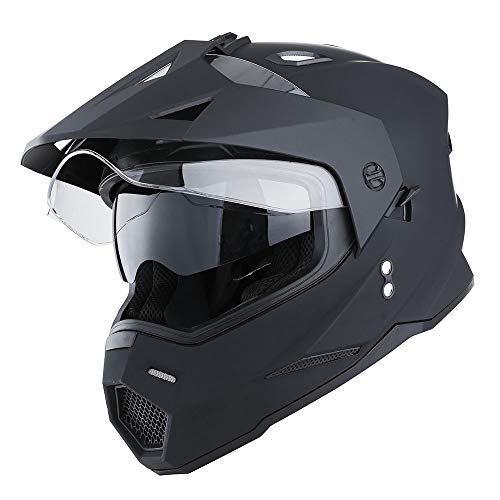 |
Best Entry-Level Pick | Certification: DOT FMVSS 218 | Type: Dual-sport / supermoto | Sizes: S-XXL | VIEW LATEST PRICE | Read Our Analysis |
| NENKI Dual Sport Helmet |  |
Best Flip-Up Visor Budget | Certification: DOT FMVSS 218 + ECE R22.05 | Type: Dual-sport / supermoto | Sizes: S-XL | VIEW LATEST PRICE | Read Our Analysis |
More Details on Our Top Picks
Fox Racing V Core MIPS
The Fox V Core MIPS is the helmet we put at the top for supermoto because it carries the configuration most motard riders converge on: a lightweight MX shell, a wide goggle-ready eye port, and the certification record to back it up. It meets DOT FMVSS 218 and carries ECE 22.06, the current independently-tested European standard, which is more than most helmets in this price band can claim.
The MIPS liner is the reason it earns the overall spot rather than just the value spot. Supermoto crashes tend to be angled low-sides where the head meets tarmac at a glancing angle, and MIPS adds a slip-plane that lets the shell rotate slightly against the head to shed some of that rotational energy. The injection-molded polycarbonate and ABS shell comes in four shell and five EPS sizes, so the fit scales with your head rather than padding out a single shell.
Airflow is the other reason it suits motard riding. Nine intake and four exhaust vents keep air moving during the high-effort, frequent-stop rhythm of supermoto, where you are braking hard, hauling the bike upright, and then sitting at a light cooking inside the shell. The magnetic visor release is a genuine safety detail: the peak is built to detach in a crash rather than catching and wrenching your neck.
The honest limitation is that this is a goggle helmet, not a visor helmet. There is no integrated shield, so if you want to flip something down at a stoplight and not carry goggles, this is the wrong tool and you should look at the O'Neal Sierra or the dual-sport picks below. Fox also runs snug, so if you measure between sizes the size guide's advice to size up is worth following.
- Certification:DOT FMVSS 218 + ECE 22.06
- Type:MX / supermoto
- Eyewear:Goggles (wide MX eye port)
- MIPS:Yes
- Best for:Track-day and street supermoto
- Sizes:S-XL (4 shell / 5 EPS)
Alpinestars SM3 Solid
The Alpinestars SM3 is the pick for riders who want a name-brand MX shell built specifically around goggle use and aggressive riding. It uses a thermo-injected shell with variable thickness designed to manage impact energy across the head, and it carries both DOT and ECE 22.06 certification, which puts it in the small group of helmets here that have actually been through an independent lab.
Alpinestars built this one around the goggle, not around a shield. The eye port is engineered for motocross goggles to seat stably and stay put during hard riding, which is exactly the requirement for supermoto where you are loading the front end into tarmac corners and do not want a goggle creeping down your face. There is no integrated visor, which is the correct call for a dedicated goggle helmet.
Weight and comfort are where the Alpinestars name earns the price. The optimized shell construction keeps overall weight down to reduce neck fatigue across a long track session, and the removable, washable interior padding holds a secure fit during extended riding. For motard riders who do repeated sprint sessions, that fatigue reduction is real rather than marketing.
The trade-offs are the price relative to the budget dual-sport lids in this list, and the lack of MIPS, which the Fox V Core includes at a comparable certification level. If a rotational liner is your priority, the Fox is the more complete safety package; if you want the Alpinestars fit and shell quality and run goggles regardless, the SM3 is the more focused tool.
- Certification:DOT + ECE 22.06
- Type:MX / supermoto
- Eyewear:Goggles (goggle-ready eye port)
- MIPS:No
- Best for:Aggressive motard and track use
- Sizes:S-XL
O'Neal Sierra
The O'Neal Sierra is our pick for supermoto riders who want the peak-visor MX look but would rather flip down a shield than carry goggles around town. It is a dual-sport helmet with a polycarbonate and ABS shell, an integrated height-adjustable face shield, and a peak visor, which together cover the street side of motard riding without the goggle management.
Certification is DOT FMVSS 218 plus ECE 22.05. That is the previous-generation ECE standard rather than the current 22.06, but it still required independent testing and remains accepted across most markets. The Double-D ring closure is the retention system with the longest track record in helmet safety research, and the Sierra includes a goggle traction pad on the side so you can still run goggles when you want them.
The height-adjustable shield is what makes this a genuine dual-purpose lid: drop it for road sections, and the eye port is shaped to take goggles when you ditch the shield for a dirt section or a dusty paddock. The moisture-wicking, removable and washable liner handles the sweat load of high-effort riding, which matters more on a supermoto than on a relaxed tourer.
The shield itself is functional rather than premium, and in gritty conditions it can pick up fine scratches over time, a common note in dual-sport forums. There is no MIPS and no Pinlock anti-fog system at this tier. For riders who value the integrated-visor convenience over a rotational liner, the Sierra is the sensible middle of this list; for pure goggle use, the Fox or Alpinestars are the more targeted MX shells.
- Certification:DOT FMVSS 218 + ECE 22.05
- Type:Dual-sport / supermoto
- Eyewear:Integrated visor + goggle-compatible port
- MIPS:No
- Best for:Street supermoto without goggles
- Sizes:S-XL
TRIANGLE Dual Sport ADV Helmet
The TRIANGLE dual-sport helmet earns its spot for supermoto riders who ride through changing light and want a built-in sunshield rather than swapping goggle lenses. It is a dual-visor design: a clear anti-scratch outer shield, plus an integrated drop-down sun visor you flip down when the sun is low through a corner. For street motard that does both morning and afternoon runs, that is genuine convenience.
Construction is a multi-layered composite shell with a reinforced chin bar, and it meets DOT FMVSS 218. The peak visor is adjustable and removable, so you can run the full motard look or strip the peak for less wind drag if your riding includes faster road sections. The micro-ratchet buckle is the quick-adjust style rather than a Double-D ring, which some riders prefer for speed of use and others trust less.
Ventilation is a real strength here for the money. A large top vent and a chin vent feed multiple intake and exhaust ports, which is what you want for the stop-start heat load of supermoto riding. The interior is moisture-wicking, removable, and washable, and an adjustable fit system helps dial in the seat of the helmet across a range of head sizes.
The honest limitation is the DOT-only certification, with no independent ECE 22.06 lab record and no MIPS. The dual-visor and drop-down sunshield are the draw, and they work well for the price, but if certification depth is your priority the O'Neal Sierra adds ECE and the Fox V Core adds both ECE 22.06 and MIPS. Treat this as the convenience pick, not the safety-spec leader.
- Certification:DOT FMVSS 218
- Type:Dual-sport / supermoto
- Eyewear:Dual visor + internal drop-down sunshield
- MIPS:No
- Best for:Mixed-light street motard
- Sizes:S-XXL
ILM WS902 Dual Sport
The ILM WS902 is the value pick for supermoto riders who want a dual-visor setup without paying brand-MX money. It runs a genuine dual-visor system: a Pinlock-compatible outer shield over a wide eye port, plus an inner drop-down sun visor that handles glare independently. For a street motard helmet under most riders' budgets, that combination is more than the price tag suggests.
The shell is ABS over EPS foam and meets DOT FMVSS 218. The eye port is oversized for excellent peripheral vision, which matters in supermoto where you are reading corner entry quickly, and it is wide enough to run goggles for dustier dirt sections if you prefer them over the shield. A quick-release clasp and a removable chin curtain round out the practical features.
Ventilation is handled by a seven-position vent system, which gives more airflow adjustment than most helmets in this price range offer, useful for the heat that builds up during high-effort motard riding. The inner lining pads are removable with fewer seams to reduce scalp pressure points, and the outer visor's Pinlock compatibility means you can add an anti-fog insert if you ride in cool or damp conditions.
As with the other budget dual-sport lids here, the limitation is DOT-only certification with no ECE 22.06 and no MIPS. The Pinlock-ready outer shield is a step up from helmets with no anti-fog provision, and for US street motard the WS902 delivers real value, but riders who want independent lab certification should move up to the O'Neal Sierra or the Fox V Core.
- Certification:DOT FMVSS 218
- Type:Dual-sport / supermoto
- Eyewear:Pinlock-ready outer + inner sun visor; goggle port
- MIPS:No
- Best for:Budget street motard with visor
- Sizes:M-XXL
1Storm Dual Sport Helmet
The 1Storm Dual Sport is the entry point for anyone trying supermoto and not yet ready to commit MX-helmet money. It is a dual-visor design with a smoked inner visor and a clear outer shield, a thermoplastic alloy shell, and the lowest price of any full-face here. It is the helmet that shows up in "what do I get for my first motard" threads, usually right before someone reminds you to check the fit.
Certification is DOT FMVSS 218. The dual-visor format does the core job for street supermoto: smoked inner visor for sun management dropping down behind a clear outer shield for protection. The interior is removable and washable, and the glossy UV-protective finish holds up reasonably for a budget shell sitting in the sun between sessions.
The aerodynamic thermoplastic shell is light, and for low-speed street motard around town the lid does what it needs to. The dual-visor convenience at this price is the main reason it earns a place, and the peak visor gives it the motard look that riders coming from a dirt bike expect.
The honest shortcomings are real: thermoplastic alloy flexes more than the polycarbonate and ABS construction in the helmets a step up, ventilation is minimal compared to the TRIANGLE or ILM, and there is no ECE 22.06 and no MIPS. Treat this as the try-before-you-upgrade helmet. Once the riding habit sticks, the O'Neal Sierra, ILM WS902, or Fox V Core are the sensible next steps.
- Certification:DOT FMVSS 218
- Type:Dual-sport / supermoto
- Eyewear:Smoked inner visor + clear outer shield
- MIPS:No
- Best for:First supermoto-style helmet on a budget
- Sizes:S-XXL
NENKI Dual Sport Helmet
The NENKI dual-sport helmet is the budget pick that still carries an ECE rating, which sets it apart from most of the sub-premium dual-sport lids in this list. It meets DOT FMVSS 218 and ECE R22.05, the previous-generation European standard, which means it has been through independent testing rather than relying on self-certification alone, a meaningful distinction at this price.
The flip-up visor design lets you lift the shield for more air without removing the whole helmet, handy at lights and in the paddock between supermoto sessions. The eye port is wide enough to run goggles if you prefer them for a dustier dirt section, so it covers both the visor and goggle approaches that motard riders split between.
Build is an ABS shell with high-pressure thermoplastic technology over high-density EPS foam, and the helmet is reasonably light for the category. Multiple vents handle the heat of high-effort riding, a quick-release buckle makes it easy to get on and off, and the microfiber liner is washable and replaceable. A removable breath guard helps cut shield fogging in cooler conditions.
The limitations are the older ECE 22.05 standard rather than the current 22.06, and no MIPS. The flip-up visor mechanism is convenient but adds moving parts that a fixed-shield helmet does not have. For riders who want a budget motard lid with an actual independent-lab certification, though, the NENKI is the value-with-ECE option; for the current standard plus a rotational liner, step up to the Fox V Core.
- Certification:DOT FMVSS 218 + ECE R22.05
- Type:Dual-sport / supermoto
- Eyewear:Flip-up visor; goggle-compatible port
- MIPS:No
- Best for:Budget motard wanting ECE-rated shell
- Sizes:S-XL
How to Choose a Supermoto Helmet
There is no helmet sold with "supermoto" stamped on the box, which is the first thing to understand before you shop. Motard is a crossover discipline that runs a dirt bike on road tires across mixed tarmac and dirt, and the helmet you want comes from one of two existing categories: a motocross lid you run with goggles, or a dual-sport lid you run with a built-in visor. Both are correct. The decision is about how you ride and what you want to manage at a stoplight, not about a label. If you are coming from the dirt side, our guide to off-road helmets covers the wider category these picks are drawn from.
MX with goggles vs dual-sport with visor
An MX shell like the Fox V Core MIPS or Alpinestars SM3 has a wide open eye port, an aggressive peak, and serious ventilation, and it assumes you will run goggles. Goggles give you superior dust sealing, the ability to tear off or swap lenses by condition, and a foam seal that does not fog the way a shield can. The cost is that you have to carry and manage them, and an MX helmet on the road without goggles leaves you with an exposed eye port in the wind. If your supermoto is mostly track or aggressive riding, the goggle setup is the one to run, and these are the same shells used on motocross helmets.
A dual-sport shell like the O'Neal Sierra, ILM WS902, or NENKI keeps the motard peak but adds an integrated shield you can flip down, so you skip the goggle management for street riding. The eye port on most of these still takes goggles when you want them, which is why a dual-sport lid is the more flexible choice for riders who split time between town and trail. The trade is that a shield picks up grit and scratches faster than a goggle lens and is more prone to fogging without a Pinlock insert. For a deep look at value dual-sport lids, our best dual-sport helmets for the money covers the same shells at length.
Certification and ventilation
Two certifications show up across this list. DOT FMVSS 218 is manufacturer self-certification: the brand tests the helmet and applies the sticker. ECE, in either the older 22.05 form or the current 22.06, requires an independent lab to test the helmet before it can carry the mark. The Fox V Core and Alpinestars SM3 carry the current ECE 22.06; the O'Neal Sierra and NENKI carry the older ECE 22.05; the budget dual-sport lids stop at DOT. If you ride in Europe or simply want a lab-tested standard, that distinction is the one worth paying for.
Ventilation is not a luxury on a supermoto helmet. Motard is high-effort riding with constant braking, hauling the bike upright, and then sitting in heat at lights and in the paddock. A shell that actively moves air from intake vents through channels to rear exhaust ports beats one with passive holes. The Fox V Core's nine-intake, four-exhaust layout and the TRIANGLE's large top and chin vents are built for that load.
Fit and goggle compatibility
A helmet that does not fit correctly is not safe regardless of its certification, so measure your head circumference and match it to each model's size chart rather than guessing from your usual size. Many MX shells, the Fox included, run snug and advise sizing up if you are between sizes. The helmet should be firm against your cheeks and brow with no pressure points, and it should not rotate freely on your head.
If you plan to run goggles, the eye-port shape matters as much as the head fit. A wide MX eye port like the Alpinestars SM3's takes most motocross goggles cleanly, but a narrower dual-sport port may leave gaps at the top or sides with certain goggle frames. Test your actual goggles against the eye port before committing, and check our guide to helmet goggle compatibility for how to spot a poor seal before it becomes a faceful of dust mid-corner.
Supermoto Helmet Comparison
| Helmet | Certification | Type | Eyewear | Best For |
|---|---|---|---|---|
| Fox Racing V Core MIPS | DOT FMVSS 218 + ECE 22.06 | MX / supermoto | Goggles (wide MX eye port) | Track-day and street supermoto |
| Alpinestars SM3 Solid | DOT + ECE 22.06 | MX / supermoto | Goggles (goggle-ready eye port) | Aggressive motard and track use |
| O'Neal Sierra | DOT FMVSS 218 + ECE 22.05 | Dual-sport / supermoto | Integrated visor + goggle-compatible port | Street supermoto without goggles |
| TRIANGLE Dual Sport ADV Helmet | DOT FMVSS 218 | Dual-sport / supermoto | Dual visor + internal drop-down sunshield | Mixed-light street motard |
| ILM WS902 Dual Sport | DOT FMVSS 218 | Dual-sport / supermoto | Pinlock-ready outer + inner sun visor; goggle port | Budget street motard with visor |
| 1Storm Dual Sport Helmet | DOT FMVSS 218 | Dual-sport / supermoto | Smoked inner visor + clear outer shield | First supermoto-style helmet on a budget |
| NENKI Dual Sport Helmet | DOT FMVSS 218 + ECE R22.05 | Dual-sport / supermoto | Flip-up visor; goggle-compatible port | Budget motard wanting ECE-rated shell |
DOT vs ECE vs Snell vs MIPS, how to pick the right lid in 60 seconds, and when to replace it. One page, no fluff.
Frequently Asked Questions
What kind of helmet do you wear for supermoto?
There is no dedicated supermoto helmet category, so riders use one of two existing types. Most run a motocross helmet with goggles, like the Fox V Core MIPS or Alpinestars SM3, which gives open airflow and lens-swap convenience. Others run a dual-sport helmet with an integrated flip-down visor, like the O'Neal Sierra, which skips the goggle management for street riding. Both are valid; the choice comes down to whether you prefer goggles or a built-in shield.
Do I need goggles or a visor for a supermoto helmet?
Either works, and it depends on your helmet. An MX shell has no integrated shield, so you run goggles, which seal out dust better and let you tear off or swap lenses by condition. A dual-sport shell has a flip-down visor you can drop for road sections without carrying goggles, though the eye port on most still accepts goggles for dirt. Goggles are the better call for aggressive or dusty riding; a visor is more convenient for street motard around town.
Does a supermoto helmet need DOT or ECE certification?
In the US, DOT FMVSS 218 is the legal minimum and every helmet in this list carries it. ECE, in either the 22.05 or current 22.06 form, is required in Europe and many other markets and, importantly, requires independent lab testing rather than the manufacturer self-certification that DOT uses. The Fox V Core and Alpinestars SM3 carry ECE 22.06; the O'Neal Sierra and NENKI carry the older ECE 22.05. If you ride in Europe or want a lab-tested standard, look for an ECE mark.
Can I use a motocross helmet for supermoto?
Yes, and many supermoto riders do exactly that. A DOT-certified MX helmet like the Fox V Core MIPS is a common motard choice because it is light, ventilated, and built around goggle use. The main consideration is that an MX helmet has no integrated shield, so you must run goggles, and the peak visor generates some drag at higher road speeds. For track-focused or aggressive street supermoto, an MX shell with goggles is the standard setup.
How should a supermoto helmet fit?
It should fit like any motorcycle helmet: firm against your cheeks and brow with no pressure points, and it should not rotate freely on your head. Measure your head circumference and match it to each model's size chart, since MX shells like the Fox often run snug and advise sizing up if you are between sizes. If you plan to run goggles, also check that the eye port takes your goggles without gaps at the top or sides before you commit to a size.
