

Affiliate disclosure As an Amazon Associate we earn from qualifying purchases, at no extra cost to you.
Most riders discover the difference between a dual-sport helmet and a pure dirt lid the hard way - usually about thirty minutes into a gravel road that was labeled "paved" on Google Maps. A peak visor that catches crosswind at highway speed is a different problem from a sealed shield that fogs up the moment you stop to let the sheep cross. The off-road helmet category stretches from stripped-down MX lids built for goggle-and-tear-off racing to fully shielded adventure tourers that commute on Monday and endure a fire road on Saturday. Knowing which end of that spectrum you actually ride is the decision before any product comparison starts.
For this roundup our research desk cross-referenced DOT FMVSS 218 and ECE 22.06 certification data, forum consensus from r/advrider and r/Dirtbikes, and the spec sheets for every helmet that showed up consistently in buyer conversations. We ran PA-API searches across "off road motorcycle helmet," "dual sport helmet," "adventure motorcycle helmet," and brand-specific queries, then filtered down to eight helmets that cover the full spectrum - from a lightweight pure-dirt racer to a modular ADV tourer with Bluetooth pockets. Every image and ASIN was verified against live Amazon data.
Two are purpose-built MX dirt lids, four are dual-sport or dual-visor designs that bridge road and trail, and two are adventure tourers built for long-distance gravel. We are honest below about which category each one actually belongs to, and where the marketing tends to blur that line.
Key Takeaways
- The Bell MX-9 Adventure MIPS is the ADV-touring benchmark: DOT + ECE 22.06 dual-certified, MIPS slip-plane liner, and a removable peak visor for riders who split time between tarmac and trail.
- Pure-dirt riders who run goggles should look at the Fly Racing Kinetic Crest or Fly Racing Kinetic - both carry ECE 22.06 and DOT, with True Functional Ventilation and goggle-ready wide eye ports.
- The GMAX GM-11 hits the dual-sport sweet spot: DOT certified, goggle-compatible eye port, cold-weather kit compatible, and priced well below the Bell.
- Modular riders who want one helmet for ADV touring and weekend dirt should look at the ScorpionEXO AT960 - its flip-up chin bar and Everclear fog-free shield span road to gravel.
- Budget dual-visor designs like the 1Storm and ILM WS902 give you an inner tinted visor plus an outer shield for under $100, but ECE certification matters - check the label before checkout.
| Bell MX-9 Adventure MIPS |  |
Best ADV Touring Helmet | Type: ADV touring / dual-sport | Certifications: DOT FMVSS 218 + ECE 22.06 | Best for: Mixed on-road / ADV gravel touring | VIEW LATEST PRICE | Read Our Analysis |
| Fly Racing Kinetic Crest MX Helmet |  |
Best Pure-Dirt Helmet | Type: Pure dirt / motocross | Certifications: DOT FMVSS 218 + ECE 22.06 | Best for: Motocross and enduro with goggles | VIEW LATEST PRICE | Read Our Analysis |
| Fly Racing Kinetic Off-Road Helmet | 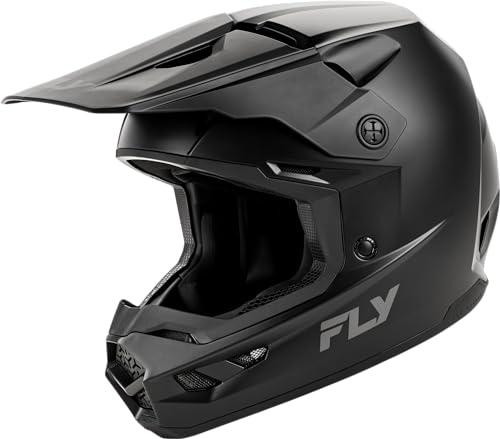 |
Best Value Dual-Certified Dirt Helmet | Type: Pure dirt / motocross | Certifications: DOT FMVSS 218 + ECE 22.06 | Best for: Budget-conscious dirt riders who want ECE certification | VIEW LATEST PRICE | Read Our Analysis |
| GMAX GM-11 Dual Sport Helmet |  |
Best Budget Dual-Sport | Type: Dual-sport | Certifications: DOT FMVSS 218 | Best for: Dual-sport riders on a budget who want year-round versatility | VIEW LATEST PRICE | Read Our Analysis |
| ScorpionEXO AT960 Modular Adventure Helmet |  |
Best Modular ADV Helmet | Type: Modular ADV touring | Certifications: DOT + ECE 22.06 | Best for: ADV tourers who want a modular lid for mixed road and gravel | VIEW LATEST PRICE | Read Our Analysis |
| O'Neal Sierra Helmet |  |
Best Dual-Sport with Integrated Shield | Type: Dual-sport | Certifications: DOT FMVSS 218 + ECE 22.05 | Best for: Dual-sport riders who want an integrated shield at a mid-range price | VIEW LATEST PRICE | Read Our Analysis |
| ILM WS902 Dual Sport Adventure Helmet |  |
Best Dual-Visor ADV Under $150 | Type: Dual-sport / ADV touring | Certifications: DOT FMVSS 218 | Best for: Budget ADV and dual-sport riders who want dual-visor convenience | VIEW LATEST PRICE | Read Our Analysis |
| 1Storm Dual Sport Motorcycle Helmet | 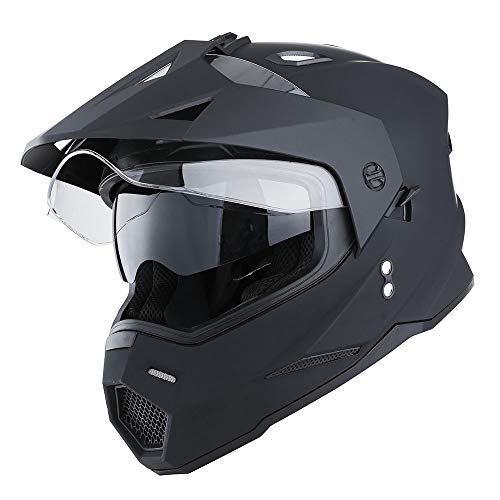 |
Best Entry-Level Dual Visor | Type: Dual-sport | Certifications: DOT FMVSS 218 | Best for: First dual-sport helmet on a tight budget | VIEW LATEST PRICE | Read Our Analysis |
More Details on Our Top Picks
Bell MX-9 Adventure MIPS
The Bell MX-9 Adventure MIPS has earned its reputation as the default ADV-touring helmet for riders who want a single lid from the commute to the weekend fire road. It carries both DOT FMVSS 218 and ECE 22.06 certification - the latter an independent lab test that most budget dual-sport helmets skip - and adds a MIPS slip-plane liner to address the rotational forces in the angled off-camber falls that ADV riding tends to produce.
Bell uses three shell sizes rather than one shell stuffed with extra padding, which is the approach that actually gets you a correctly proportioned fit across the size run. The Ionic+ padding manages sweat during long-distance days and resists the odor that builds up when your helmet spends eight hours inside a riding jacket. There is also a speaker pocket cutout for riders who run a communication system - a small thing, but one less reason to buy a separate touring helmet.
The peak visor is removable, which matters when you hit sustained highway sections where it acts as a sail rather than a sun shade. The eye port works with goggles for dusty single-track, and the shield provides adequate road coverage in mixed conditions. The weight - roughly 1,580 grams in a medium - sits on the heavier end for a dual-sport lid, which riders notice on long days in the saddle.
For riders who spend the majority of time on tarmac with occasional dirt detours, the MX-9 Adventure MIPS is the most defensible single-helmet purchase in this category. Dedicated enduro or MX riders who stay on dirt all day will find the ventilation insufficient and the weight unnecessary - scroll down to the Fly Racing picks for that use case.
- Type:ADV touring / dual-sport
- Certifications:DOT FMVSS 218 + ECE 22.06
- Rotational:MIPS
- Shell sizes:3
- Padding:Ionic+ quick-dry anti-odor
- Eyewear:Removable peak visor; goggle-compatible port
- Weight:Approx. 1,580 g (size M)
- Best for:Mixed on-road / ADV gravel touring
Fly Racing Kinetic Crest MX Helmet
The Fly Racing Kinetic Crest is a pure motocross helmet built for goggle-and-visor dirt riding, and it earns the top dirt-only spot by carrying both DOT FMVSS 218 and ECE 22.06 - an important distinction because many budget MX helmets stop at DOT self-certification. Fly Racing uses a lightweight polymer shell across four shell and four EPS sizes, so the fit geometry actually scales with the size rather than just adding foam.
The True Functional Ventilation system is the real differentiator for warm-weather or hard-effort riding: intake vents at the front push air through channels and out rear exhaust ports, keeping airflow moving rather than just providing openings. Tear-off posts and goggle compatibility are standard, with a nose guard integrated into the molded rubber trim.
There is no integrated shield, which is the right call for a dedicated dirt helmet - you will run goggles, and a shield only adds weight and goggle-fitment complexity. The removable liner and cheek pads are fully washable, and Fly Racing includes a fleece helmet bag, which is a minor but appreciated detail.
The con is the obvious one: this is a single-use tool. Take it on road without goggles and you have a large, exposed eye port and no shield. For riders who keep road and dirt miles firmly separate, that is a fine trade. For anyone who commutes to the trailhead, look at the GMAX GM-11 or the Bell instead.
- Type:Pure dirt / motocross
- Certifications:DOT FMVSS 218 + ECE 22.06
- Shell:Lightweight polymer polycarbonate
- Shell sizes:4 shell / 4 EPS sizes
- Ventilation:TFV (True Functional Ventilation)
- Eyewear:Goggle-ready wide eye port; no integrated shield
- Liner:Removable, washable comfort liner + cheek pads
- Best for:Motocross and enduro with goggles
Fly Racing Kinetic Off-Road Helmet
The Fly Racing Kinetic is the step below the Kinetic Crest in the Fly lineup, and it covers the same DOT FMVSS 218 and ECE 22.06 dual-certification base at a lower price point. The polymer alloy shell uses three shell sizes across four EPS sizes, and the True Functional Ventilation system is the same active airflow design as the Crest.
The quick-release cheek pads pull out for washing without any tool fumbling - a small detail that matters on a helmet that is going to spend time in mud. The moisture-wicking liner handles the sweat load of hard single-track without the foam becoming a biology experiment.
Compared to the Kinetic Crest, this trim is a touch less refined in terms of finish and included accessories - no fleece bag, and the shell count is one fewer. But the safety spec is substantively the same, and for a rider building out a kit on a budget, the dual ECE certification is what actually counts.
For new dirt riders or those upgrading from an uncertified helmet, the Kinetic slots in as the most defensible entry point that does not sacrifice the ECE 22.06 test record. Riders who want a peak visor and integrated shield for mixed road-and-trail use should look at the GMAX GM-11 or the Bell MX-9 Adventure.
- Type:Pure dirt / motocross
- Certifications:DOT FMVSS 218 + ECE 22.06
- Shell:Polymer alloy
- Shell sizes:3 shell / 4 EPS sizes
- Ventilation:TFV (True Functional Ventilation)
- Eyewear:Goggle-ready; no shield
- Liner:Moisture-wicking; quick-release cheek pads
- Best for:Budget-conscious dirt riders who want ECE certification
GMAX GM-11 Dual Sport Helmet
The GMAX GM-11 is the practical answer for riders who want a genuine dual-sport helmet at a price that does not require a second mortgage. DOT FMVSS 218 certified, with a large goggle-compatible eye port and an integrated face shield, it covers the design brief for mixed-terrain riding: open it up on dirt with goggles, close the shield on road sections.
The COOLMAX interior is fully removable and washable, and GMAX sells a cold-weather kit that converts the GM-11 into a winter-ready lid - a useful option for riders who push the season into November. The multi-port ventilation is adequate for moderate-pace trail riding, though it does not match the active airflow of Fly Racing's TFV system.
The limitation here is the DOT-only certification. ECE 22.06 requires independent lab testing; DOT is manufacturer self-certification under FMVSS 218. For riders who spend significant time in countries that require ECE, or who simply want the added peace of a lab-tested standard, the Bell MX-9 Adventure carries both. For domestic US riding at this price point, the GM-11 represents strong value.
The GMAX is the helmet that appears most often in "what dual-sport helmet under $150" threads for good reason. It is not glamorous, but it is competent, versatile, and priced to let you spend the remaining budget on better boots.
- Type:Dual-sport
- Certifications:DOT FMVSS 218
- Shell:Polycarbonate/ABS
- Ventilation:Multi-port vent system
- Eyewear:Goggle-compatible port + integrated shield option
- Interior:COOLMAX removable, washable
- Cold weather:Compatible with GMAX cold-weather kit
- Best for:Dual-sport riders on a budget who want year-round versatility
ScorpionEXO AT960 Modular Adventure Helmet
The ScorpionEXO AT960 is designed for adventure tourers who want the convenience of a modular chin bar alongside the durability spec of a dedicated ADV helmet. It carries both DOT and ECE 22.06 certification, and the advanced polycarbonate shell is engineered to be lightweight for its class rather than simply spec'd from a budget part bin.
Scorpion's Everclear shield is the comfort story on the road side: fog-free coatings, 95% UV-A and UV-B protection, and an anti-scratch hardened outer surface. The flip-up chin bar opens with a single lever - useful at fuel stops and trail junctions where removing a full-face is an unnecessary production. There are speaker pockets sized for Bluetooth communication systems built into the liner.
At roughly 1,858 grams in a medium, the AT960 is on the heavy end of this roundup, which is the inherent trade-off with modular lids. The mechanism adds structure and weight, and that is physics rather than a design shortcut. Riders who prioritize pure dirt performance or run a full enduro pace should look at the Fly Racing Kinetic or the O'Neal Sierra instead.
For the ADV touring rider who splits a 500-mile ride between motorway, mountain pass, and afternoon gravel, the AT960 earns its place as the most functionally versatile lid in this list. The modular format genuinely changes the experience of a long day's riding.
- Type:Modular ADV touring
- Certifications:DOT + ECE 22.06
- Shell:Advanced polycarbonate
- Chin bar:Flip-up modular
- Shield:Everclear fog-free, UV-A/UV-B, anti-scratch
- Eyewear:Integrated shield; flip-up chin for goggle runs
- Weight:Approx. 1,858 g (size M)
- Best for:ADV tourers who want a modular lid for mixed road and gravel
O'Neal Sierra Helmet
The O'Neal Sierra is a dual-sport helmet that covers the middle ground between a stripped-down MX lid and a full ADV tourer. It carries DOT FMVSS 218 and ECE 22.05 certification - the previous generation of the ECE standard, which still requires independent testing and remains accepted across most markets - with a polycarbonate and ABS shell construction.
The height-adjustable integrated face shield is the feature that separates this from a pure-dirt helmet. It offers enough coverage for road riding without the full ADV-tourer weight penalty, and the eye port dimensions are compatible with goggles when you prefer to ditch the shield on dusty single-track. O'Neal uses a Double-D ring closure, which is the retention standard with the longer track record in helmet safety research.
The shield mechanism is functional rather than premium - it adjusts to multiple heights but is not as polished as a Pinlock-compatible system. In dusty conditions the shield can pick up fine grit that scratches the surface over time, which is a common complaint in dual-sport forums. Replacement shields are available and inexpensive.
The O'Neal Sierra has been a consistent recommendation in dual-sport communities because it hits the right balance of certification, versatility, and price. If the shield quality matters more to you than the cost delta, the Bell MX-9 Adventure moves up a level in both certification and fit quality.
- Type:Dual-sport
- Certifications:DOT FMVSS 218 + ECE 22.05
- Shell:Polycarbonate / ABS
- Shield:Integrated; height-adjustable
- Closure:Double-D ring
- Eyewear:Shield standard; goggle-port available
- Strap:Padded chin strap with Double-D safety lock
- Best for:Dual-sport riders who want an integrated shield at a mid-range price
ILM WS902 Dual Sport Adventure Helmet
The ILM WS902 is a dual-sport helmet built around a genuine dual-visor system: a Pinlock-compatible outer shield plus an inner tinted sun visor that drops independently. For riders who switch between bright morning light and overcast afternoon without wanting to carry a separate tinted visor, that convenience is worth real money at this price tier.
The ABS shell meets DOT FMVSS 218, the quick-release clasp makes one-handed lid removal straightforward, and the seven-position ventilation system gives more airflow adjustment than most helmets in this price range offer. The removable chin curtain helps manage buffeting on highway sections. ILM includes a wide goggle-compatible eye port for off-road use without the inner visor.
The DOT-only certification is the honest limitation here. ECE 22.06 requires a third-party lab to test the helmet before the sticker appears; DOT is manufacturer self-certification. For riders who prioritize the Pinlock dual-visor convenience and primarily ride in the US, the WS902 delivers genuine value. For riders who need ECE compliance, the GMAX GM-11 or Bell MX-9 Adventure are the better calls.
The WS902 is the helmet that shows up as the "I just want something that works" recommendation in dual-sport budget threads. The dual-visor implementation is more thoughtful than most competitors at the price, the ventilation is better than it looks on paper, and the quick-release clasp gets used more than you expect.
- Type:Dual-sport / ADV touring
- Certifications:DOT FMVSS 218
- Shell:ABS + EPS
- Visor system:Dual: Pinlock-compatible outer + inner tinted sun visor
- Ventilation:7-position vent system
- Closure:Quick-release clasp
- Eyewear:Integrated dual visor; goggle-compatible wide eye port
- Best for:Budget ADV and dual-sport riders who want dual-visor convenience
1Storm Dual Sport Motorcycle Helmet
The 1Storm Dual Sport is the entry-level dual-visor option in this list: DOT FMVSS 218 certified, thermoplastic alloy shell, and the dual-visor format - smoked inner visor plus clear outer shield - at the lowest price point of any full-face here. It is the helmet that appears in "help, I need something for my first dual-sport" threads, usually followed by "just make sure it fits correctly."
The removable and washable interior is the baseline expectation met without fuss. The gloss UV-protective finish holds up reasonably well for a budget shell. The dual visor system works as advertised for the core use case: inner visor for sun management, outer clear shield for protection.
The honest shortcomings: the DOT-only standard, and the thermoplastic alloy shell is more flex-prone than the polycarbonate and ABS construction in helmets a step up. The strap hardware is functional but not premium. Ventilation is minimal compared to the Fly Racing Kinetic or GMAX GM-11.
The 1Storm earns its place as the true budget entry point in this roundup. If you are not sure whether you will keep riding dual-sport or are building a borrowed-bike kit for an occasional rider, this is the honest first helmet before an upgrade. Once the miles confirm the habit, the GMAX, ILM, or Bell become the sensible next steps.
- Type:Dual-sport
- Certifications:DOT FMVSS 218
- Shell:Thermoplastic alloy
- Visor system:Dual: smoked inner visor + clear outer shield
- Interior:Removable, washable
- Finish:Gloss UV protective
- Eyewear:Dual visor; goggle-port available
- Best for:First dual-sport helmet on a tight budget
How to Choose an Off-Road Helmet
The off-road helmet category is wider than any single "best" list can capture, because the word "off-road" covers everything from a suburban dual-sport commuter to a two-week ADV expedition to a regional MX series. Getting the category wrong - buying a pure-dirt lid when you actually need a touring shell, or vice versa - is a more expensive mistake than getting the brand wrong.
Dirt vs. Dual-Sport vs. ADV: Know What You Actually Ride
A pure-dirt or motocross helmet - like the Fly Racing Kinetic Crest or Fly Racing Kinetic - has a large, open eye port for goggles, a pronounced peak visor, and aggressive ventilation. It has no integrated shield, because the assumption is you will run goggles. Take it on road and you have an exposed eye port and limited aerodynamics at highway speed. These helmets live at the MX-track and enduro end of the spectrum.
A dual-sport helmet - like the GMAX GM-11, O'Neal Sierra, or 1Storm - bridges the gap with an integrated shield and goggle-compatible eye port. You can run the shield on road sections and goggles on dirt. The peak visor is present but usually less aggressive, reducing aerodynamic drag at highway speed. These are the most versatile helmets for riders who split miles roughly evenly between surfaces. For a detailed look at when to choose a dual-sport shell over a full-face, see our dual-sport vs. full-face off-road helmet comparison.
An ADV or adventure touring helmet - like the Bell MX-9 Adventure MIPS or ScorpionEXO AT960 - prioritizes road capability with off-road competence. Typically heavier, better noise management, and higher-grade shields. For riders who ride motocross exclusively, these are overkill. For riders whose "off-road" is mostly gravel and forest roads, they are the right tool.
Peak Visor and Aerodynamics: More Trade-off Than You Think
The peak visor deflects roost, mud, and low sun at trail speeds - and acts as a low-speed airbrake at highway speed. Most dual-sport helmets design the peak visor to break away under high wind load rather than snapping your neck, but if you are consistently above 70 mph, an ADV-style removable visor (like the MX-9 Adventure's) is a practical option. Removing the visor entirely and running the shell clean is always an option on helmets where it detaches, as on the Bell.
Goggles vs. Integrated Shield
On a pure-dirt helmet, goggles are the only option and they provide superior dust protection, tear-off capability, and the ability to swap lenses by condition. On a dual-sport or ADV helmet, the integrated shield is more convenient on road and adequate on moderate trail riding, but it will pick up grit and scratches faster than a goggle lens. Pinlock inserts - as on the ILM WS902's outer shield - address fogging in cool or wet conditions. If you know you will mostly ride road-connected dirt, an integrated shield saves the hassle of managing a separate set of goggles. If your typical ride involves sustained technical single-track, goggles are worth the management overhead.
It is also worth understanding the certification behind your choice: the DOT FMVSS 218 standard is manufacturer self-certification - the brand tests the helmet and applies the sticker. ECE 22.06, which the Bell MX-9 Adventure MIPS and Fly Racing Kinetic carry, requires independent lab testing. That distinction matters if you are making a safety argument, not just a price argument.
Ventilation and Weight
A dirt helmet that is never ridden hard in heat can tolerate mediocre ventilation. A dual-sport helmet ridden on a July afternoon through a series of technical trail switchbacks needs to breathe. The Fly Racing Kinetic's True Functional Ventilation actively moves air from intake to exhaust rather than relying on passive openings. The Bell MX-9 Adventure MIPS uses Ionic+ padding to manage sweat on long touring days. Weight matters on extended rides - the ScorpionEXO AT960's modular mechanism adds roughly 300 grams over a fixed-chin dual-sport lid, which is noticeable at hour six.
When to Replace
Any off-road helmet that has taken a real impact - including the tumble that looked minor but hit the ground first - should be replaced. EPS foam compresses once and does not recover. For helmets with no impact history, most manufacturers recommend replacement every three to five years as foam, adhesives, and strap webbing degrade with UV exposure and sweat. If you cannot remember when you bought it, assume it is due.
Off-Road Helmet Comparison
| Helmet | Type | Certifications | Eyewear | Best For |
|---|---|---|---|---|
| Bell MX-9 Adventure MIPS | ADV touring / dual-sport | DOT FMVSS 218 + ECE 22.06 | Removable peak visor; goggle-compatible port | Mixed on-road / ADV gravel touring |
| Fly Racing Kinetic Crest MX Helmet | Pure dirt / motocross | DOT FMVSS 218 + ECE 22.06 | Goggle-ready wide eye port; no integrated shield | Motocross and enduro with goggles |
| Fly Racing Kinetic Off-Road Helmet | Pure dirt / motocross | DOT FMVSS 218 + ECE 22.06 | Goggle-ready; no shield | Budget-conscious dirt riders who want ECE certification |
| GMAX GM-11 Dual Sport Helmet | Dual-sport | DOT FMVSS 218 | Goggle-compatible port + integrated shield option | Dual-sport riders on a budget who want year-round versatility |
| ScorpionEXO AT960 Modular Adventure Helmet | Modular ADV touring | DOT + ECE 22.06 | Integrated shield; flip-up chin for goggle runs | ADV tourers who want a modular lid for mixed road and gravel |
| O'Neal Sierra Helmet | Dual-sport | DOT FMVSS 218 + ECE 22.05 | Shield standard; goggle-port available | Dual-sport riders who want an integrated shield at a mid-range price |
| ILM WS902 Dual Sport Adventure Helmet | Dual-sport / ADV touring | DOT FMVSS 218 | Integrated dual visor; goggle-compatible wide eye port | Budget ADV and dual-sport riders who want dual-visor convenience |
| 1Storm Dual Sport Motorcycle Helmet | Dual-sport | DOT FMVSS 218 | Dual visor; goggle-port available | First dual-sport helmet on a tight budget |
DOT vs ECE vs Snell vs MIPS, how to pick the right lid in 60 seconds, and when to replace it. One page, no fluff.
Frequently Asked Questions
What is the difference between a dual-sport helmet and an ADV helmet?
A dual-sport helmet is designed to split comfortably between road and dirt - integrated shield, goggle-compatible eye port, and a moderate peak visor. An ADV or adventure touring helmet leans toward road capability with off-road competence: better noise management, heavier construction, and a shield quality suited to highway miles. The GMAX GM-11 is a dual-sport; the Bell MX-9 Adventure MIPS is an ADV tourer. Both work on gravel roads, but the Bell is more comfortable on a 400-mile day.
Do I need ECE certification on an off-road motorcycle helmet?
In the US, DOT FMVSS 218 is the legal minimum, and most helmets in this list carry it. ECE 22.06 is required in the EU and many other markets and - importantly - requires independent third-party lab testing before the sticker appears, unlike DOT's manufacturer self-certification model. If you plan to ride in Europe or want the added confidence of a lab-tested standard, look for helmets that carry both. The Bell MX-9 Adventure MIPS and Fly Racing Kinetic helmets carry both DOT and ECE 22.06. For more on this, our DOT certification explainer walks through what each standard actually tests.
Can I use a motocross helmet on the road?
Legally, a DOT-certified MX helmet like the Fly Racing Kinetic Crest meets road use requirements in the US. Practically, it lacks an integrated shield (you will have an open eye port in the wind without goggles), the peak visor generates significant drag at highway speed, and the ventilation design assumes you are working hard at trail speeds rather than sitting in cruise. For occasional road-to-trail connections it is workable. For any meaningful road mileage, a dual-sport or ADV helmet is the better tool.
I want one helmet for commuting and weekend trail riding. What should I get?
The honest answer depends on how your miles break down. If 80% is road and 20% is gravel-type trail, the Bell MX-9 Adventure MIPS handles both ends well - removable peak visor, MIPS, ECE 22.06. If the split is closer to even, the GMAX GM-11 or ILM WS902 offer dual-visor convenience at lower cost without the ADV-tourer weight. If most miles are trail with occasional road connections, the O'Neal Sierra or a pure-dirt Fly Racing helmet with a separate face shield for road is the more targeted approach.
How often should I replace an off-road motorcycle helmet?
Replace any helmet immediately after a significant impact - EPS foam compresses once and the damage is not visible from the outside. Without an impact, manufacturers generally recommend replacement every three to five years as the foam, adhesives, and strap webbing degrade. Helmets used in dusty or sweaty conditions may age faster than a road-only lid. Our full guide on when to replace a motorcycle helmet covers the signs to watch for.
