
Affiliate disclosure As an Amazon Associate we earn from qualifying purchases, at no extra cost to you.
Snell M2020 is the certification most riders have heard of and few can explain. Here is the short version: it is a voluntary standard run by an independent foundation, and it tests for things DOT does not, including multiple impacts to the same spot and a stricter penetration threshold. Nobody makes a helmet manufacturer submit to it. When a brand puts that sticker on a lid, it is a choice, and the ones that earn it tend to be serious about it.
Our research desk compiled this guide for two audiences: track-day riders who want the highest independently verified protection available, and street riders who have read the fine print on DOT and want something that goes further. We cross-referenced what Snell has actually published about its M2020 standard, what the difference between DOT, ECE and Snell testing actually means, and which helmets on Amazon carry genuine M2020 or M2020D certification for motorcycle use (not SA2020/SA2025, which are auto-racing standards and are explicitly not approved for street or motorcycle use).
Eight helmets made the cut, spanning a MotoGP race weapon, a sport-touring daily, an adventure lid, a Bluetooth-ready street helmet, a budget carbon fiber option, and a few picks for specific rider types. All eight carry Snell M2020 or M2020D certification verified from the product listings themselves.
Key Takeaways
- Snell M2020 is voluntary and independent. DOT is manufacturer self-certification; Snell sends helmets to an independent lab and publishes the results. That distinction matters for track-day requirements.
- The DOT vs Snell gap is real but nuanced. Snell adds multi-impact testing and stricter penetration resistance; ECE 22.06 adds rotational impact testing, which Snell M2020 does not cover. For a full side-by-side of what each standard actually covers, see our guide on whether motorcycle helmet safety ratings can save your life.
- SA2020/SA2025 is NOT for street motorcycle use. Those are auto-racing standards. Verify your helmet says M2020 or M2020D, not SA, before riding on public roads.
- The Shoei X-Fifteen is the race-tier pick with triple certification (Snell M2020R, DOT, ECE R22.06); the HJC i10 is the value entry point that still passes the same independent M2020 test.
- Adventure riders have a Snell option. Both the Shoei Hornet X2 and the ILM M2020D carry Snell M2020D (the dual-sport variant), giving off-road-capable riders independent certification coverage.
| Shoei X-Fifteen |  |
Best Overall (Track and Street) | Type: Full-face | Certifications: Snell M2020R + DOT FMVSS 218 + ECE R22.06 | Best for: Track days and serious sport riders wanting maximum certification | VIEW LATEST PRICE | Read Our Analysis |
| Shoei RF-1400 |  |
Best Sport-Touring Snell Pick | Type: Full-face | Certifications: Snell M2020 + DOT FMVSS 218 | Best for: Sport-touring riders wanting Snell without full race ergonomics | VIEW LATEST PRICE | Read Our Analysis |
| Shoei RF-1400 Beaut | 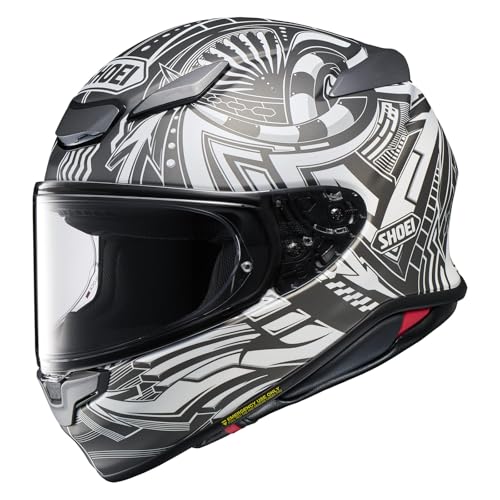 |
Best Graphic Snell Helmet | Type: Full-face | Certifications: Snell M2020D + DOT FMVSS 218 | Best for: Riders who want Snell certification with a non-plain colorway | VIEW LATEST PRICE | Read Our Analysis |
| Shoei Hornet X2 Invigorate |  |
Best Adventure Helmet with Snell | Type: Full-face adventure/dual-sport | Certifications: Snell M2020D + DOT FMVSS 218 | Best for: ADV and dual-sport riders wanting independent certification | VIEW LATEST PRICE | Read Our Analysis |
| HJC i10 | 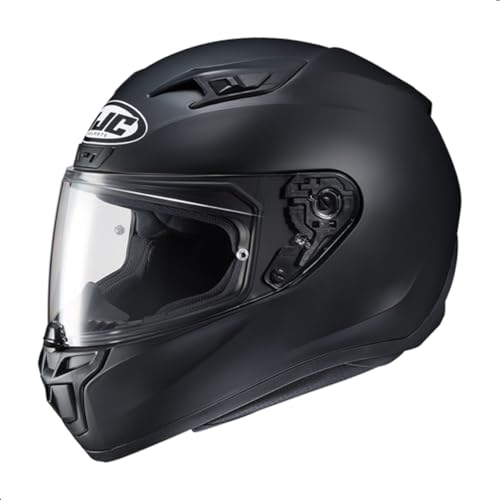 |
Best Value Snell Helmet | Type: Full-face | Certifications: Snell M2020 + DOT FMVSS 218 | Best for: Riders who want Snell certification without a premium price | VIEW LATEST PRICE | Read Our Analysis |
| HJC i10 (Pearl White) |  |
Best High-Visibility Snell Option | Type: Full-face | Certifications: Snell M2020 + DOT FMVSS 218 | Best for: Riders who want Snell in a high-contrast color for daytime visibility | VIEW LATEST PRICE | Read Our Analysis |
| ScorpionEXO R420 |  |
Best Street Helmet with Snell and Bluetooth | Type: Full-face | Certifications: DOT FMVSS 218 + Snell Approved | Best for: Daily street riders wanting Snell certification with Bluetooth integration | VIEW LATEST PRICE | Read Our Analysis |
| ILM Carbon Fiber M2020D |  |
Best Budget Carbon Fiber Snell Helmet | Type: Full-face adventure/dual-sport | Certifications: Snell M2020D + DOT FMVSS 218 | Best for: Budget-conscious riders wanting Snell M2020D in a carbon fiber shell | VIEW LATEST PRICE | Read Our Analysis |
More Details on Our Top Picks
-
Shoei X-Fifteen
The X-Fifteen is Shoei's MotoGP race helmet brought to the street, and it carries all three major certifications simultaneously: Snell M2020R, DOT FMVSS 218, and ECE R22.06. That triple stack is rare and it is the reason this lid shows up at track days, club races, and in the gear bags of riders who want independent verification and then some.
The shell is Shoei's multi-ply matrix construction combining hand-laid fiberglass with organic fibers, the same architecture used in their race-only lids. The CWR-F2R racing shield has a double lock to prevent unexpected opening under aero loads at speed, and the Emergency Quick Release System (E.Q.R.S.) lets medical personnel remove the helmet without moving the neck, which is a feature that matters in the scenarios you would rather not think about.
The practical catch: this is a track-oriented lid at a corresponding price, and the interior is tuned for sport-riding postures. Riders who spend most of their miles upright on touring bikes may find the aerodynamics optimized for a tuck rather than a sit. Sizing tends to run slightly narrow in the oval, consistent with Shoei's sport-fit tradition.
For riders who need Snell certification for a track organization's requirements, or who want the highest independently tested motorcycle protection available on Amazon, the X-Fifteen is the answer. It is not overkill if the certification and construction are your benchmark.
- Type:Full-face
- Certifications:Snell M2020R + DOT FMVSS 218 + ECE R22.06
- Shell:Multi-ply matrix fiberglass + organic fiber composite
- Weight:~1,300 g (size dependent)
- Shield:CWR-F2R racing shield, double shield lock, Pinlock ready
- Emergency System:E.Q.R.S. quick-release
- Best for:Track days and serious sport riders wanting maximum certification
-
Shoei RF-1400
The RF-1400 is Shoei's mainstream sport lid, and it carries Snell M2020 and DOT certification without the full race-focused ergonomics of the X-Fifteen. That distinction matters: the RF sits a bit more upright, has a wider field of view through the CWR-F2 shield, and runs Shoei's AIM+ shell construction (the same fiberglass/organic fiber matrix, just tuned for street use rather than a tuck position).
Aerodynamics were refined through wind-tunnel testing with a reported 4% drag reduction over the previous RF-1200, and Shoei redesigned the spoiler shell to quiet wind noise at highway speeds. Ventilation is a 3-stage system with adjustable intake positions, which works well for the varying riding conditions a sport-tourer encounters.
What it lacks versus the X-Fifteen: ECE R22.06 certification and the racing-specific shield mechanism. What it gains: a more versatile riding position, slightly better day-to-day wearability, and usually a more accessible price. The 3D Max-Dry interior is removable and washable, which you will appreciate after a summer of daily riding.
If you want genuine Snell M2020 protection for street and occasional track use without committing to a full race-spec lid, the RF-1400 is the natural choice in the Shoei lineup. It is the helmet that earns the certification without making every ride feel like qualifying.
- Type:Full-face
- Certifications:Snell M2020 + DOT FMVSS 218
- Shell:AIM+ (multi-ply matrix fiberglass and organic fibers)
- Weight:~1,350 g
- Shield:CWR-F2 wide-view face shield, Pinlock ready
- Ventilation:3-stage multi-position vents
- Best for:Sport-touring riders wanting Snell without full race ergonomics
-
Shoei RF-1400 Beaut
The RF-1400 Beaut is the graphic-colorway variant of Shoei's sport-touring full-face. Underneath the livery, the certification stack is the same: Snell M2020D and DOT FMVSS 218, with the AIM+ multi-ply shell and the CWR-F2 Pinlock-ready shield. The structural helmet is identical to the solid-color RF-1400 reviewed above.
The reason to highlight this separately is practical: most Snell-certified helmets default to black or white solids, and riders who want a visually distinctive lid without stepping down to DOT-only certification have limited options. The Beaut graphic gives high-contrast visibility on the road, which is a passive safety benefit the certification numbers do not capture.
As with the standard RF-1400, the interior uses Shoei's 3D Max-Dry System II, which wicks moisture and is fully removable and washable. The fit runs sport-oval, so long-oval heads should size up. Snell M2020D on a graphic helmet is an unusual combination that is harder to find than the solid colorways.
If your reason for wanting Snell is protection performance and not just track-day compliance, and you would rather not ride in an all-black lid, this is the RF-1400 variant to consider. Same helmet, better visibility.
- Type:Full-face
- Certifications:Snell M2020D + DOT FMVSS 218
- Shell:AIM+ fiberglass composite
- Graphics:Multi-color Beaut graphic livery
- Shield:CWR-F2 Pinlock ready
- Interior:3D Max-Dry System II, removable/washable
- Best for:Riders who want Snell certification with a non-plain colorway
-
Shoei Hornet X2 Invigorate
Snell M2020D is the dual-sport variant of the M2020 standard, covering the specific use patterns of adventure and motocross helmets. The Shoei Hornet X2 Invigorate carries Snell M2020D and DOT FMVSS 218 in an adventure shell with the AIM+ construction used across Shoei's premium line, making it one of the few independently Snell-certified options in the adventure segment.
The Hornet X2 ships with both a face shield and a visor designed for off-road use. The CNS-2 shield is Pinlock-prepared for anti-fog performance on road sections, while the V-460 adventure visor has been aerodynamically tuned to reduce lift at highway speeds rather than acting as a sail. The visor geometry also accommodates goggles for proper off-road use.
Ventilation runs from upper intake and rear exhaust ports plus a large lower air intake with defroster function, calibrated for the mixed on-road/off-road pace of adventure riding rather than pure street or pure track. The interior uses the 3D Max-Dry System II and the E.Q.R.S. emergency release is included.
For ADV riders who run track days, participate in organized dual-sport events with helmet certification requirements, or simply want the added assurance of independent testing on a helmet they wear in technical terrain, the Hornet X2 closes a certification gap that most adventure helmet buyers do not realize exists.
- Type:Full-face adventure/dual-sport
- Certifications:Snell M2020D + DOT FMVSS 218
- Shell:AIM+ multi-ply matrix fiberglass and organic fibers
- Visor:V-460 adventure visor, aerodynamically optimized, goggle-compatible
- Shield:CNS-2 face shield, Pinlock prepared
- Emergency System:E.Q.R.S. quick-release
- Best for:ADV and dual-sport riders wanting independent certification
-
HJC i10
The HJC i10 answers a real question: what is the least expensive genuinely Snell-certified motorcycle helmet available? The answer is this one. For context on what you are actually gaining over a budget lid, see our guide on what paying more for a helmet actually buys. The listing explicitly states Snell M2020 and DOT FMVSS 218 certification, and HJC's feature copy breaks down what M2020 specifically tested: impact energy management beyond DOT minimums. At a fraction of the Shoei price, that certification covers the same independent lab test.
The shell is polycarbonate rather than fiberglass, which is the expected construction choice at this price tier. HJC used CAD modeling to optimize the shell geometry, and the ventilation system uses their Advanced Channeling design with forward intake and rear exhaust to move air through the liner. The HJ-31 shield is Pinlock-ready, which matters if you ride in temperature variance or rain.
The interior is HJC's Multicool fabric, moisture-wicking, removable, and washable. For connectivity, the i10 is Smart HJC ready, meaning the shell has integrated speaker pockets for the Sena 20B or 10B Bluetooth systems without aftermarket cutting or fitment hacks.
Where it lands: this is the right helmet for a new track-day rider who needs Snell certification to meet the event requirement and does not want to spend Shoei money before knowing if track days will become a regular habit. The certification is real, the construction is appropriate, and the price leaves room in the budget for the other gear track days require.
- Type:Full-face
- Certifications:Snell M2020 + DOT FMVSS 218
- Shell:Advanced polycarbonate (CAD-designed)
- Shield:HJ-31 Pinlock ready, 99% UV protection
- Interior:HJC Multicool, removable and washable
- Connectivity:Smart HJC ready (Sena 20B/10B compatible)
- Best for:Riders who want Snell certification without a premium price
-
HJC i10 (Pearl White)
Same helmet as the i10 reviewed above, different colorway, and the difference is worth a separate note. The Pearl White colorway is the most visible option in the i10 lineup in daylight conditions, and visibility is a safety variable that the Snell sticker does not address. Riding in a light-colored full-face makes the rider more conspicuous to drivers approaching from the front and sides.
The certification stack is identical: Snell M2020 and DOT FMVSS 218, the same polycarbonate shell and Multicool interior. If you are specifically looking for a white or light-colored Snell-certified lid rather than the more common black, this is one of the fewer options in that combination at this price point.
The practical limitation is the same as the semi-flat black version: it is a polycarbonate shell at an entry-level Snell price, not a premium fiberglass build. For riders who want to maximize both independent certification and on-road visibility without a flagship budget, the Pearl White i10 threads that needle.
White helmets also show dirt and road grime more readily, which is the tradeoff worth knowing up front. The liner is removable and washable, which helps, but the shell will require more frequent cleaning than a dark colorway.
- Type:Full-face
- Certifications:Snell M2020 + DOT FMVSS 218
- Shell:Advanced polycarbonate
- Color:Pearl White (high-visibility light colorway)
- Shield:HJ-31 Pinlock ready
- Interior:HJC Multicool, removable/washable
- Best for:Riders who want Snell in a high-contrast color for daytime visibility
-
ScorpionEXO R420
The ScorpionEXO R420 is a street-oriented full-face with Snell approval and DOT FMVSS 218 certification, built around practical daily-riding features. The polycarbonate shell is aero-tuned rather than generic, with three shell sizes for better fit distribution across head sizes. The EverClear anti-fog shield with EllipTec II quick-release is the mechanism most Scorpion fans cite as a standout, allowing single-motion shield changes with gloves on.
The ventilation uses Scorpion's Ram-Air intake linked to a three-port exhaust spoiler with EPS-channeled internal airflow, which moves more air than the typical intake-and-exhaust layout. For a street helmet worn at urban and highway speeds, that makes a practical difference in summer comfort.
The integrated Bluetooth speaker pockets accommodate most communication systems without modification, and the EMT-friendly emergency release cheek pads are a feature borrowed from race-spec construction. The 5-year warranty is longer than most of the competition at this certification level.
Where the R420 sits in the lineup: it is the Snell-certified answer for the rider who spends most miles on street and wants a connected helmet without giving up independent certification. It is not the lightest lid here and it is not fiberglass, but for a daily-ride Snell helmet with a practical feature set, the R420 makes the case clearly.
- Type:Full-face
- Certifications:DOT FMVSS 218 + Snell Approved
- Shell:Advanced polycarbonate, aero-tuned
- Ventilation:Ram-Air intake, 3-port exhaust spoiler, EPS channels
- Shield:EverClear anti-fog, EllipTec II quick-release, 95% UV protection
- Bluetooth:Integrated speaker pockets for most comm systems
- Best for:Daily street riders wanting Snell certification with Bluetooth integration
-
ILM Carbon Fiber M2020D
The ILM M2020D is one of the least expensive carbon fiber helmets on Amazon that carries a genuine Snell M2020D motorcycle certification alongside DOT compliance. Carbon fiber shells reduce weight while maintaining impact dispersal properties, and finding that combination below a certain price usually means compromising either the shell material or the certification. This one lists both explicitly.
The visor adjusts in three positions and includes a plated lens as standard, with a lens lock to hold the visor stable over rough surfaces. Speaker pockets accommodate communication systems. The closure is a magnetic Double D-ring, which is an unusual pairing: D-rings provide race-proven retention security, while the magnetic assist eases single-handed operation when gloved.
What to account for: ILM is a budget brand with less independent long-term data than Shoei or Scorpion, so the Snell M2020D certification does most of the validation work here. The construction quality and finish will not match a premium lid, and the warranty and support infrastructure is more limited. The certification is the argument for this helmet.
For a rider who needs Snell M2020D for an adventure event or dual-sport requirement and does not want to spend Shoei Hornet X2 money, the ILM M2020D is the value entry point. The carbon construction is a genuine spec, the certification is real, and the gap to the premium options is primarily in refinement rather than the core safety performance the lab measures.
- Type:Full-face adventure/dual-sport
- Certifications:Snell M2020D + DOT FMVSS 218
- Shell:Carbon fiber (GFRP composite)
- Weight:Lightweight (carbon construction)
- Visor:3-position adjustable, plating lens included
- Closure:Magnetic Double D-ring + Emergency Quick Release
- Best for:Budget-conscious riders wanting Snell M2020D in a carbon fiber shell
How to Choose a Snell-Rated Helmet
Snell certification is a meaningful filter, but it is not the only one. Here is what to weigh once you have confirmed a helmet is genuinely Snell M2020 certified for motorcycle use.
What Snell Tests vs. DOT and ECE
The gap between standards is worth understanding before spending the premium. DOT FMVSS 218 is a minimum requirement for road-legal helmets in the US, but it is self-certified: the manufacturer tests its own product and affixes the sticker. Nobody independently verifies it before the helmet ships. Snell M2020 is voluntary and independent: helmets are submitted to the Snell Memorial Foundation, tested at an independent lab, and the results are published in their public database. Snell adds multi-impact testing (hitting the same spot twice) and stricter penetration resistance compared to DOT. The DOT certification process is outlined in detail in our separate explainer if you want to go deeper on the comparison.
ECE R22.06 (the current European standard) independently tests for rotational impact forces, which neither DOT nor Snell M2020 require. The Shoei X-Fifteen is the only helmet in this guide with all three certifications simultaneously, which is why it is the pick for riders who want maximum independent coverage across all test dimensions.
Why Track Riders Specifically Want Snell
Most organized track days in the US require Snell certification, not just DOT. Some events accept ECE R22.06 instead, but Snell M2020 is the standard most track-day organizations specify explicitly. If you are preparing for a track day, check the specific event rules before buying. Snell also publishes its approved-helmet list at snell.org, where you can verify any specific model and size combination. A DOT-only helmet, regardless of how well-built it looks, will turn you around at the gate at most organized events.
Shell Materials and What They Mean
The helmets in this guide use two primary shell materials. Polycarbonate (HJC i10, Scorpion R420) is a thermoplastic that absorbs energy through controlled deformation. It is heavier than composite materials and performs reliably across the Snell test range. Fiberglass composite and carbon fiber shells (Shoei AIM+, ILM M2020D) distribute impact energy differently, typically allowing more precise tuning of flex and rigidity across the shell surface. Both can and do pass Snell M2020. Carbon fiber adds weight reduction on top of the composite advantages. For riders with larger head sizes, fiberglass composites often give a better fit through shell-size distribution. The premium in price for composite shells buys weight, fit precision, and construction quality, not a fundamentally different Snell result.
Fit and Helmet Oval Shape
A Snell-certified helmet worn incorrectly provides less protection than a well-fitted DOT lid. Measure your head circumference with a soft tape at the widest point just above the eyebrows. Shoei helmets run intermediate-oval and tend narrow in the temporal area; HJC runs a slightly rounder oval. The i10 and RF-1400 fit differently on the same head. For riders dealing with fit challenges, our guide on motorcycle helmets for big heads covers shell sizing and oval-type selection in more detail. Replace any helmet immediately after a significant impact, even if it looks undamaged, as the EPS liner crushes once and does not recover. Our separate guide covers when to replace a motorcycle helmet in full.
Snell-Rated Helmet Comparison
| Helmet | Type | Certifications | Shell | Best For |
|---|---|---|---|---|
| Shoei X-Fifteen | Full-face | Snell M2020R + DOT FMVSS 218 + ECE R22.06 | Multi-ply matrix fiberglass + organic fiber composite | Track days and serious sport riders wanting maximum certification |
| Shoei RF-1400 | Full-face | Snell M2020 + DOT FMVSS 218 | AIM+ (multi-ply matrix fiberglass and organic fibers) | Sport-touring riders wanting Snell without full race ergonomics |
| Shoei RF-1400 Beaut | Full-face | Snell M2020D + DOT FMVSS 218 | AIM+ fiberglass composite | Riders who want Snell certification with a non-plain colorway |
| Shoei Hornet X2 Invigorate | Full-face adventure/dual-sport | Snell M2020D + DOT FMVSS 218 | AIM+ multi-ply matrix fiberglass and organic fibers | ADV and dual-sport riders wanting independent certification |
| HJC i10 | Full-face | Snell M2020 + DOT FMVSS 218 | Advanced polycarbonate (CAD-designed) | Riders who want Snell certification without a premium price |
| HJC i10 (Pearl White) | Full-face | Snell M2020 + DOT FMVSS 218 | Advanced polycarbonate | Riders who want Snell in a high-contrast color for daytime visibility |
| ScorpionEXO R420 | Full-face | DOT FMVSS 218 + Snell Approved | Advanced polycarbonate, aero-tuned | Daily street riders wanting Snell certification with Bluetooth integration |
| ILM Carbon Fiber M2020D | Full-face adventure/dual-sport | Snell M2020D + DOT FMVSS 218 | Carbon fiber (GFRP composite) | Budget-conscious riders wanting Snell M2020D in a carbon fiber shell |
DOT vs ECE vs Snell vs MIPS, how to pick the right lid in 60 seconds, and when to replace it. One page, no fluff.
Frequently Asked Questions
Is Snell certification better than DOT?
Better is not quite the right framing. Snell M2020 is more rigorous in specific areas: it adds multi-impact testing and stricter penetration resistance compared to DOT, and it is independently verified rather than self-certified. ECE R22.06 covers rotational impact, which Snell M2020 does not. The Shoei X-Fifteen carries all three simultaneously, which is the most thoroughly tested option in this guide. For most street riders, a well-made DOT helmet is legal and functional. For track-day riders, Snell certification is typically required by event organizers.
What is the difference between Snell M2020 and SA2020?
Snell M2020 is the motorcycle standard. SA2020 is the automobile racing standard. They use different test protocols optimized for their respective sports, and the SA variants are explicitly marked as not DOT-approved for street or public-road use. If you see SA2025 on a helmet and plan to ride a motorcycle on public roads, that helmet is not legal for street use. Always confirm the M designation before purchasing. For a practical example of SA-rated helmets picked by protection level, see our demolition derby helmet guide.
Do I need a Snell helmet for track days?
Most organized track days in the US specify Snell M2020 certification as their minimum requirement, though some accept ECE R22.06 as an equivalent. Check the specific event's rules before buying. Snell publishes a searchable database of all certified helmets at snell.org, including specific model names and sizes. A DOT-only helmet will not clear technical inspection at most US track days.
I want a Snell helmet but my head is large. What should I consider?
Several helmets in this guide run up to XXL in the Snell-certified configuration (the HJC i10 explicitly). Shoei's RF-1400 and X-Fifteen use multiple shell sizes, which gives better proportional fit at larger head sizes. Our guide on motorcycle helmets for big heads covers fit mechanics in more detail, including oval type matching.
How long does a Snell-certified helmet last?
Snell recommends replacing helmets every five years from the date of first use, regardless of visible condition. The EPS foam and shell materials degrade over time with UV exposure, temperature cycling, and the chemistry of skin oils and cleaning products. Replace any Snell-certified helmet immediately after a real impact, even one that looks minor externally, because the EPS liner is a one-use material. Our full guide on when to replace a motorcycle helmet covers the timeline and signs in more detail.
