
Affiliate disclosure As an Amazon Associate we earn from qualifying purchases, at no extra cost to you.
If your head measures 64 cm or more, the fix for a helmet that will not fit is not a bigger XL. Most motorcycle helmet brands build one shell for XS through XL and then stretch the padding to reach XXL, and that trick runs out of road right where 3XL and 4XL sizing needs to start: a genuinely larger outer shell, not thinner foam inside the same one. Below 3XL, padding tricks mostly work. Above it, they do not, and a helmet that is really an XL shell wearing a 3XL sticker is a safety problem, not a comfort one.
Our big-head roundup covers XL through XXL and is the right stop for most riders in that range. This guide is narrower on purpose: every helmet below is one where the manufacturer's own listing states a genuine 3XL, 4XL, or 3X-Large/4X-Large size, not something we inferred from a size chart or a forum post. That distinction matters, because brands that publish an XXXL on paper sometimes mean "XL shell, more foam" and sometimes mean a real molded-larger shell, and only the product listing itself tells you which.
Eight helmets made the cut here, covering full-face, modular, modular with an integrated sun shield, open-face, and MX/off-road, plus a budget option and two helmets that reach a genuine 4XL. If you have not measured your head yet, do that first. If your head is closer to XXL, our big-head guide has more options; if you are unsure whether your issue is size or shape, our head-shape guide covers that separately.
Key Takeaways
- 3XL and 4XL are not standardized across brands. One manufacturer's 3XL shell is molded larger than an XL; another's is the same shell with thicker padding removed. Check the listing for a stated shell-size range, not just a size label.
- The ScorpionEXO R430 is explicitly sized to 4X-Large, with the manufacturer noting 3XL-4XL ship as DOT-only rather than dual-homologated.
- The O'NEAL 5 SRS MX is one of the few off-road helmets that lists a genuine 4X-Large, useful for riders who need face protection past what most dirt helmets size to.
- A too-big helmet is a rotation and retention failure waiting to happen, not just a loose fit. If a helmet is sized correctly but still moves on your head, the fix is a thinner cheek pad, never a size up.
- An oversized shell adds real weight and wind noise at speed, which is the trade-off for accommodating a larger head; there is no way around it, only helmets that manage it better than others.
| ScorpionEXO R430 Full Face | 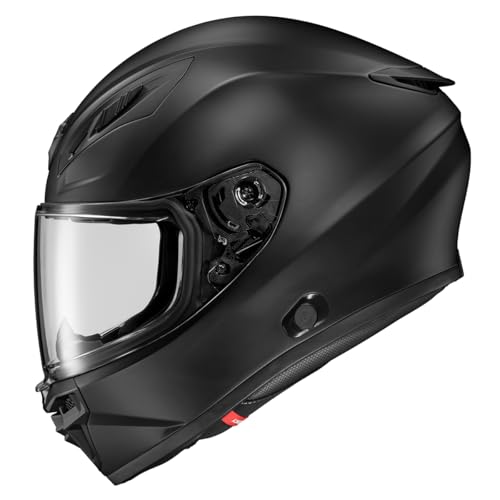 |
Best Overall | Type: Full-face | Max size: 4X-Large | Best for: Riders who want the widest genuine size range in a street full-face | VIEW LATEST PRICE | Read Our Analysis |
| LS2 Advant II Modular W/SunShield | 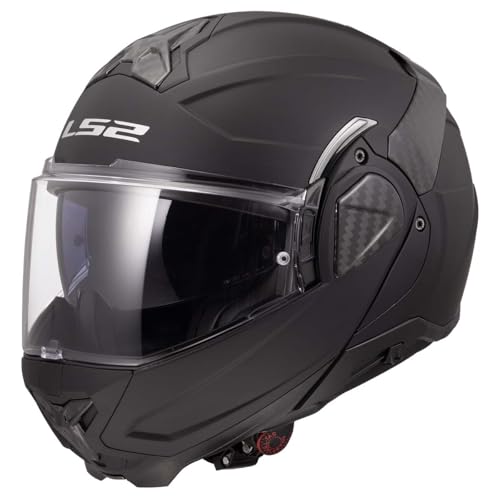 |
Best Modular with Sun Shield | Type: Modular (flip-up) | Max size: 3X-Large | Best for: Touring riders who want a flip-chin helmet with a built-in tint | VIEW LATEST PRICE | Read Our Analysis |
| ScorpionEXO GT930 Modular |  |
Best Dual-Certified Modular | Type: Modular (flip-up) | Max size: 3X-Large | Best for: Riders who specifically want ECE 22.06 in a 3XL modular | VIEW LATEST PRICE | Read Our Analysis |
| O'NEAL 5 SRS MX Helmet |  |
Best MX/Off-Road | Type: MX / off-road (open-face, no visor) | Max size: 4X-Large | Best for: Off-road riders who need genuine 4XL coverage | VIEW LATEST PRICE | Read Our Analysis |
| Daytona Open Face Cruiser Helmet | 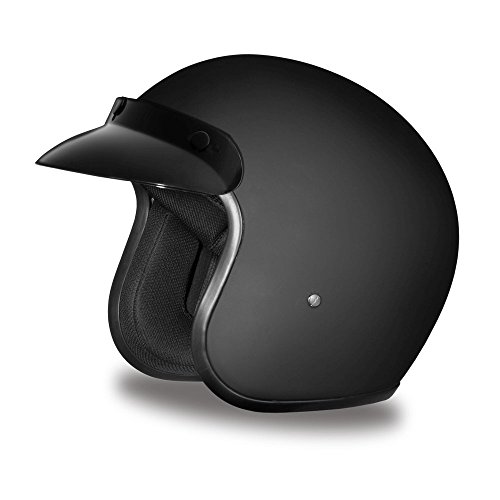 |
Best Open-Face | Type: Open-face (half shell) | Max size: XXX-Large | Best for: Cruiser riders who want minimal coverage that still fits large | VIEW LATEST PRICE | Read Our Analysis |
| CYCKING Full Face with Sunshield |  |
Best Budget | Type: Full-face with drop-down sunshield | Max size: XXXL | Best for: Riders who need a certified 3XL and do not want to spend three figures on it | VIEW LATEST PRICE | Read Our Analysis |
| LS2 Centric Full Face | 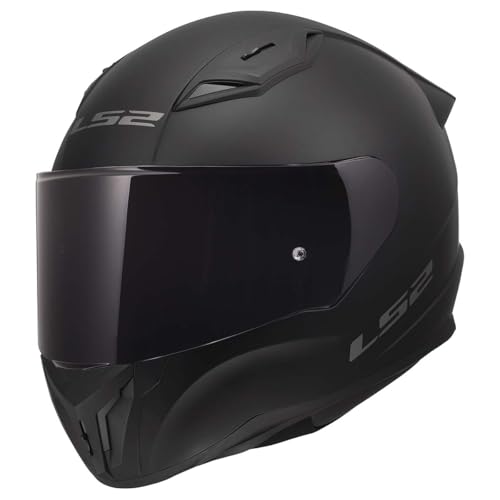 |
Best ECE 22.06 Full-Face | Type: Full-face | Max size: 3X-Large | Best for: Riders who want ECE 22.06 in a full-face without a modular chin bar | VIEW LATEST PRICE | Read Our Analysis |
| Flip-Up Bluetooth Modular Helmet |  |
Best Modular with Built-In Bluetooth | Type: Modular (flip-up) | Max size: 3XL, 65-66 cm | Best for: Riders who want communication hardware pre-installed rather than bolted on | VIEW LATEST PRICE | Read Our Analysis |
More Details on Our Top Picks
ScorpionEXO R430 Full Face
The manufacturer's own listing states the R430 runs XS through 4X-Large, and specifically flags that the 3XL and 4XL versions ship as DOT-only rather than dual-homologated. That is the kind of disclosure a buyer in this size range needs and rarely gets: most listings just print a size and move on.
Underneath the sizing, it is a conventional street full-face with a polycarbonate shell, an Optical Class 1 no-fog shield, and an integrated port for Scorpion's own EXO-COM communication system. The mouth vent is adjustable, which matters more on a helmet with more internal volume to keep clear of fog.
Because the 3XL and 4XL shells are DOT-only, riders who specifically want ECE 22.06 in this size range should look elsewhere on this list; Scorpion is explicit that dual homologation applies to the smaller shells, not these.
For a rider whose head genuinely measures into 4XL territory and wants a full-face from a brand with an established size chart, the R430 is the safest default entry point on this list.
- Type:Full-face
- Max size:4X-Large
- Certifications:DOT FMVSS 218 (3XL-4XL ship DOT-only per manufacturer)
- Shell:Polycarbonate, CAD-refined aero profile
- Visor:Optical Class 1, anti-scratch, UV coated
- Comms:Integrated EXO-COM communication port
- Weight:Not specified by manufacturer
- Best for:Riders who want the widest genuine size range in a street full-face
LS2 Advant II Modular W/SunShield
LS2 states outright that the Advant II is built on three separate shell molds (XS-S, M-L, and XL-3XL), which is the exact multi-shell construction that separates a real big-size helmet from a stretched-padding one. The 3XL sits at the top of that third shell, not stitched onto a fourth one.
The built-in retractable sun shield is the headline feature: no separate tinted visor to carry or swap, just a flip-down internal lens for changing light. The Pinlock-ready main shield and CoolMax liner round out a genuinely touring-oriented spec sheet.
It carries DOT FMVSS 218 certification; the listing does not state ECE 22.06 for this model, so treat it as DOT-only unless LS2's documentation says otherwise for your specific unit.
For long days where you are flipping the chin bar at gas stops and the sun shield at every cloud change, the Advant II earns its premium price with two conveniences most 3XL helmets do not bother including.
- Type:Modular (flip-up)
- Max size:3X-Large
- Certifications:DOT FMVSS 218
- Shell:KPA composite, 3 shell sizes (XS-S, M-L, XL-3XL)
- Sun shield:Integrated, retractable
- Liner:CoolMax, removable and washable
- Weight:~1,750 g (manufacturer figure)
- Best for:Touring riders who want a flip-chin helmet with a built-in tint
ScorpionEXO GT930 Modular
The GT930 is one of the few helmets on this list where the manufacturer explicitly states dual homologation to both DOT FMVSS 218 and ECE 22.06 P/J across its stated size range of XS to 3XL. ECE 22.06 involves independent lab testing before the helmet ships, which is a meaningfully different bar than the self-certified DOT standard.
It also includes a retractable internal sun visor, a free open-face peak visor, and Scorpion's tool-less Ellip-Tec shield-change system. The double D-ring retention is a more positive closure than the quick-release buckles found on some competitors here.
It is EXO-COM ready rather than including a communicator, so budget separately if you want intercom. Fit runs to Scorpion's own chart, which the brand describes as accommodating the full XS-3XL range without a separate wide-fit version.
For a rider who specifically wants the ECE 22.06 certification in a modular at this size, the GT930 is the clearest documented option on this list.
- Type:Modular (flip-up)
- Max size:3X-Large
- Certifications:DOT FMVSS 218 + ECE 22.06 P/J
- Shell:Polycarbonate, dual-density EPS
- Sun shield:Integrated, retractable (SpeedView)
- Retention:Double D-ring
- Weight:Not specified by manufacturer
- Best for:Riders who specifically want ECE 22.06 in a 3XL modular
O'NEAL 5 SRS MX Helmet
Most MX and off-road helmets size out at XL or XXL, which leaves large-headed dirt riders with fewer options than street riders have. The O'NEAL 5 SRS is listed explicitly at 4X-Large, making it one of the only off-road-specific helmets on this list to reach that size at all.
It is built around goggle use rather than an integrated visor, with multiple vents for airflow during exertion and a Coolmax liner that pulls moisture away on long motos. The shell is a polycarbonate/ABS blend rather than a lightweight composite, which is standard at this price point in the category.
O'Neal states a shell weight of roughly 1,380 grams for a size Large; the listing does not give a separate figure for the 4X-Large shell, and a larger shell in the same material will weigh more than that number in practice.
For riders who need a certified DOT off-road helmet and have been stuck sizing down to street helmets for lack of options, the 5 SRS at 4XL is a rare fit.
- Type:MX / off-road (open-face, no visor)
- Max size:4X-Large
- Certifications:DOT FMVSS 218
- Shell:Polycarbonate/ABS
- Liner:Coolmax, removable and washable
- Goggle compatible:Yes (designed for MX goggles)
- Weight:~1,380 g at size Large per manufacturer (not stated for 4XL)
- Best for:Off-road riders who need genuine 4XL coverage
Daytona Open Face Cruiser Helmet
Daytona's own listing calls this out as built for "small & big heads," and the product title states the size directly: XXX-Large. That is a genuine top-tier size for a half-shell, a category where most models cap out well below 3XL because there is less shell to begin with.
It is a true low-profile open-face design, meeting DOT FMVSS 218 with an adjustable chin strap position that Daytona specifically markets as accommodating beards without pinching. There is no face or chin protection, by design.
Certification and finish claims are self-reported by the manufacturer rather than independently documented in the listing beyond the DOT statement, and there is no stated shell weight or shell-tier breakdown the way some full-face competitors here provide.
For a cruiser rider who wants the classic half-shell look and needs a size that most open-face helmets simply do not offer, this is the option on the list.
- Type:Open-face (half shell)
- Max size:XXX-Large
- Certifications:DOT FMVSS 218
- Shell:Not specified by manufacturer
- Chin strap:Adjustable forward/back position
- Warranty:90-day manufacturer guarantee
- Weight:Not specified by manufacturer
- Best for:Cruiser riders who want minimal coverage that still fits large
CYCKING Full Face with Sunshield
The listing states the size directly as XXXL, with a DOT FMVSS 218 claim and a construction spec of ABS shell over multi-density EPS foam in three layers. It is a generic-brand helmet rather than an established motorcycle-gear company, which is reflected in the price rather than in the certification claim.
It includes a built-in smoked sunshield that flips down independently of the main clear visor, a feature that costs considerably more on some of the branded helmets on this list. The liner is removable and washable.
There is no independent lab data (SHARP, Virginia Tech, Snell) available for this specific model, which is common for newer or smaller-volume brands. DOT is a self-certification standard, so treat this as a budget entry point rather than a top safety pick if independent verification matters to you.
If your priority is simply finding a certified 3XL helmet at a price that will not sting if it turns out not to fit, this is the reasonable place to start before spending more.
- Type:Full-face with drop-down sunshield
- Max size:XXXL
- Certifications:DOT FMVSS 218
- Shell:ABS engineering plastic
- Liner:Multi-density EPS foam, three-layer protection
- Sunshield:Smoked, flip-down
- Weight:Not specified by manufacturer
- Best for:Riders who need a certified 3XL and do not want to spend three figures on it
LS2 Centric Full Face
LS2 states the Centric meets or exceeds both ECE 22.06 and DOT FMVSS standards and is built across three separate shell sizes, with the 3X-Large sitting at the top tier. The listing also names AREM, LS2's rotational energy management layer, which functions similarly to MIPS-style slip systems on the bicycle and MTB side.
LS2 describes the fit as intermediate oval, which is useful information many listings skip entirely; riders with a distinctly round or long-oval head shape should weigh that against their own head shape before buying.
At roughly 1,550 grams it sits mid-pack for a full-face at this size, heavier than a lightweight sport shell but lighter than some of the modular helmets on this list, which is typical since flip-chin mechanisms add weight full-face shells do not carry.
For a fixed-chin full-face with independently verified ECE 22.06 testing behind it, the Centric is the pick on this list.
- Type:Full-face
- Max size:3X-Large
- Certifications:DOT FMVSS 218 + ECE 22.06
- Shell:Kinetic Polymer Alloy (KPA), 3 shell sizes
- Rotational:AREM rotational energy management
- Fit:Intermediate oval (per manufacturer)
- Weight:~1,550 g ±50 g (manufacturer figure)
- Best for:Riders who want ECE 22.06 in a full-face without a modular chin bar
Flip-Up Bluetooth Modular Helmet
This is the one helmet on the list with a listed centimeter range rather than only a letter size: the manufacturer states 3XL corresponds to 65-66 cm, and the full range runs M through XXXL, 57-66 cm. That kind of explicit cm-to-size mapping is exactly what buyers in this size range should be looking for and rarely get.
Unlike every other modular on this list, Bluetooth communication is built in rather than added through a separate comm-system port, covering calls, music, and GPS voice prompts. The dual-visor system adds an integrated inner sun visor alongside the main clear shield.
It is a newer, generic-brand entry without the size-tier and shell-material documentation that LS2 or Scorpion provide, and there is no independent lab rating available. Fit is described as liner-dependent, meaning a different liner thickness can be swapped in if the shell size is right but the fit is not.
For riders who specifically want intercom hardware without adding a third-party unit, and who have a head that lands in the stated 65-66 cm band, this is the most electronics-forward option here.
- Type:Modular (flip-up)
- Max size:3XL, 65-66 cm
- Certifications:DOT FMVSS 218
- Shell:ABS, high-density EPS liner
- Visor:Dual visor (clear outer + integrated inner sun visor)
- Comms:Built-in Bluetooth (calls, music, GPS)
- Weight:Not specified by manufacturer
- Best for:Riders who want communication hardware pre-installed rather than bolted on
How Do I Know If I Need a 3XL or 4XL Motorcycle Helmet?
You need this size range once your head circumference measures roughly 64 cm or larger, which is where most brands' XXL shells run out of room even with minimal padding. Wrap a soft cloth tape measure around your head about one inch (2.5 cm) above your eyebrows, level across the back at the widest point, and take the reading in centimeters. Measure twice and use the larger number; heads are rarely perfectly round, and guessing low is how riders end up returning a helmet that pinches at the temples.
Why Is a Bigger Shell Different from More Padding?
Because impact protection depends on the empty space between your skull and the inside of the shell being filled with EPS foam of a consistent, engineered thickness. A brand that only makes one shell size and calls its largest padding configuration "3XL" is thinning that foam layer to fit a bigger head into a smaller shell, which reduces the energy-absorbing material exactly where a larger, heavier head needs more of it, not less. A brand that tools a second or third shell mold, like the LS2 Advant II's stated three-shell construction or the LS2 Centric's three shells, keeps the foam thickness roughly consistent across sizes instead.
Why Isn't "3XL" the Same Size Across Brands?
Because there is no regulatory standard that defines what a manufacturer's 3XL or 4XL label has to measure in centimeters. DOT FMVSS 218 and ECE 22.06 test impact performance, not size labeling, so two helmets both marked 3XL can differ by a full size band in actual fit. That is why this guide only included helmets where the product listing itself states an explicit size (a size name like 3X-Large, or, better, a stated centimeter range like the 65-66 cm figure on the Flip-Up Bluetooth modular) rather than helmets we assumed would fit based on a generic size chart. Always cross-check the specific listing's size chart for the exact model and color you are buying, since size charts can vary between versions of the same helmet.
Does an Oversized Shell Add Weight and Noise?
Yes, and there is no way around it. A larger shell has more frontal and side surface area, which catches more wind at speed and increases noise inside the helmet, and it holds a proportionally larger EPS liner, which adds weight. A 3XL or 4XL full-face will consistently weigh and sound different from the same helmet's medium size; riders moving up from a standard size should expect a noticeably different highway experience, not treat it as a minor footnote. Modular helmets add further weight from the flip-chin mechanism, which is one reason the fixed-chin full-face options on this list (the ScorpionEXO R430, CYCKING, and LS2 Centric) tend to run lighter than the modular picks at a comparable size.
Is a Too-Big Helmet Actually Dangerous, or Just Uncomfortable?
It is dangerous, not just uncomfortable. A helmet that is sized too large for your head, even if you can technically get it on, will rotate and shift on impact instead of staying planted, which is exactly the failure mode certification testing assumes will not happen. The classic warning sign is a helmet that visibly tips or twists when you shake your head side to side with the strap fastened; if that happens, the shell is the wrong size, and no amount of extra padding fixes it safely. The correct fix for a helmet that is a hair too big is a thinner or thicker cheek pad within the same shell size, never sizing up the shell to compensate for width you do not actually need. If you are between two shell sizes, size down and check the padding options before sizing up.
What Should I Check Before Buying?
Confirm three things on the specific listing before ordering: the stated size (ideally in centimeters, not just a letter), the certification (DOT is the US legal floor; ECE 22.06 means independent lab testing occurred before the helmet shipped), and whether the manufacturer states a separate shell mold for that size tier or just a single shell across the whole range. All eight helmets above were checked against exactly those three points before making this list.
3XL and 4XL Motorcycle Helmet Comparison
| Helmet | Type | Max size | Certifications | Weight | Best For |
|---|---|---|---|---|---|
| ScorpionEXO R430 Full Face | Full-face | 4X-Large | DOT FMVSS 218 (3XL-4XL ship DOT-only per manufacturer) | Not specified by manufacturer | Riders who want the widest genuine size range in a street full-face |
| LS2 Advant II Modular W/SunShield | Modular (flip-up) | 3X-Large | DOT FMVSS 218 | ~1,750 g (manufacturer figure) | Touring riders who want a flip-chin helmet with a built-in tint |
| ScorpionEXO GT930 Modular | Modular (flip-up) | 3X-Large | DOT FMVSS 218 + ECE 22.06 P/J | Not specified by manufacturer | Riders who specifically want ECE 22.06 in a 3XL modular |
| O'NEAL 5 SRS MX Helmet | MX / off-road (open-face, no visor) | 4X-Large | DOT FMVSS 218 | ~1,380 g at size Large per manufacturer (not stated for 4XL) | Off-road riders who need genuine 4XL coverage |
| Daytona Open Face Cruiser Helmet | Open-face (half shell) | XXX-Large | DOT FMVSS 218 | Not specified by manufacturer | Cruiser riders who want minimal coverage that still fits large |
| CYCKING Full Face with Sunshield | Full-face with drop-down sunshield | XXXL | DOT FMVSS 218 | Not specified by manufacturer | Riders who need a certified 3XL and do not want to spend three figures on it |
| LS2 Centric Full Face | Full-face | 3X-Large | DOT FMVSS 218 + ECE 22.06 | ~1,550 g ±50 g (manufacturer figure) | Riders who want ECE 22.06 in a full-face without a modular chin bar |
| Flip-Up Bluetooth Modular Helmet | Modular (flip-up) | 3XL, 65-66 cm | DOT FMVSS 218 | Not specified by manufacturer | Riders who want communication hardware pre-installed rather than bolted on |
Frequently Asked Questions
What head measurement counts as 3XL or 4XL for a motorcycle helmet?
There is no single regulated cutoff, and brands do not agree on one. Sizing charts differ enough that a 3XL from one manufacturer can be a full centimetre off another, which is exactly why a letter size on its own is not enough to buy from. The only reliable number is the one on the specific product's own size chart; the Flip-Up Bluetooth modular on this list states its 3XL directly as 65-66 cm, which is the kind of precision to look for.
Are 3XL motorcycle helmets just XL helmets with extra padding?
Sometimes, and that is the problem this guide is built around. A helmet is only reliably scaled up if the manufacturer states a separate shell size or shell mold for that size tier, like the LS2 Advant II's stated three shell sizes. A listing that only changes a padding thickness while keeping one shell is not a true big-head helmet, even if the label says 3XL.
Does a bigger helmet shell affect crash protection?
A correctly sized bigger shell does not reduce protection; it is built with proportionally more EPS foam to match the larger head inside it. The risk is the opposite case: an undersized shell stuffed with thin padding to reach a 3XL label, which leaves less energy-absorbing material where a larger head needs more of it.
Can I just buy a size up if a helmet feels slightly tight?
No. If a helmet is close to the right size but feels tight in specific spots, the fix is different cheek pads or liner thickness within that same shell, not a larger shell overall. Sizing up the shell to solve a padding problem leaves the helmet loose enough to rotate on impact, which is a safety failure, not a comfort trade-off.
Do 3XL and 4XL motorcycle helmets weigh more than standard sizes?
Yes. A larger shell has more surface area and holds a proportionally larger foam liner, so 3XL and 4XL helmets consistently weigh more than the same model in a medium or large, and modular (flip-chin) designs add further weight on top of that from the hinge mechanism.
DOT vs ECE vs Snell vs MIPS, how to pick the right lid in 60 seconds, and when to replace it. One page, no fluff.
