

Affiliate disclosure As an Amazon Associate we earn from qualifying purchases, at no extra cost to you.
Search "motorcycle helmet for hearing aids" and the results are Reddit threads and hearing-aid forum posts, not a buyer's guide - because there is no such thing as a hearing-aid helmet. No manufacturer builds a shell around a behind-the-ear (BTE) device. What actually changes the experience for a rider who wears aids is a handful of ordinary helmet features: how the liner and cheek pads sit against the ear, whether the shell has a speaker pocket deep enough for a Bluetooth intercom driver, and how much wind noise reaches the ear canal to begin with.
This guide is built around those features, not a marketing claim. Every pick below earns its spot for a specific accommodation: a liner that will not rake an aid off on the way on, a molded speaker pocket sized for a comm unit, a shell that runs quiet at highway speed, or a chin bar you can pull back for faster access at a stop. The buying guide below covers the noise science, the aids-versus-intercom question, and links to our companion guides on quiet shells and Bluetooth comms.
Key Takeaways
- There is no dedicated "hearing aid helmet." The right choice comes down to cheek pad depth, liner design, and speaker-pocket sizing - not a marketed feature.
- Liner fit matters most. A behind-the-ear (BTE) aid gets knocked loose by a liner or cheek pad that drags across the ear on the way on or off, not by the shell shape.
- Deep, well-shaped speaker pockets let a rider run a Bluetooth intercom for turn-by-turn directions or calls instead of straining to catch ambient sound.
- Wind noise at highway speed commonly runs 95-105 dB inside a helmet, loud enough to mask residual hearing and, by OSHA's occupational noise limits, loud enough to risk further damage on its own. A quiet shell plus earplugs still matters, aids or not.
- Modular and convertible designs make it faster to insert or remove an aid at a stop without taking the whole helmet off, which matters most on multi-stop rides.
| Shoei Neotec II Modular Motorcycle Helmet |  |
Best Overall | Type: Modular (flip-up chin bar) | Weight: Approx. 1,750 g (size M) | Best For: Riders who want the Sena SRL2 speaker kit built around a quiet modular shell | VIEW LATEST PRICE | Read Our Analysis |
| Sena Outrush 2 Modular Smart Motorcycle Helmet |  |
Best Built-In Bluetooth Speakers | Type: Modular, factory-integrated Bluetooth | Weight: 1,800 g +/- 50 g (DOT version, size M) | Best For: Riders who want the intercom pre-installed instead of retrofitted | VIEW LATEST PRICE | Read Our Analysis |
| Shoei GT-Air II Aperture Full Face Motorcycle Helmet |  |
Best Quiet Touring Full-Face | Type: Full-face, fixed chin bar | Weight: Approx. 1,700 g with Sena SRL2 installed | Best For: Riders who want a fixed-chin-bar shell built for quiet plus comm speakers | VIEW LATEST PRICE | Read Our Analysis |
| HJC RPHA 91 Modular Motorcycle Helmet | 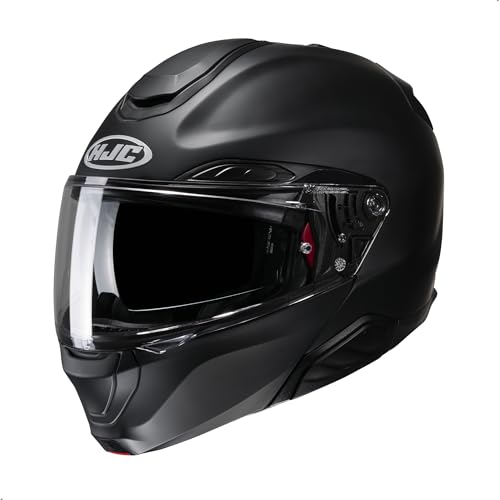 |
Best Modular With Removable Liner | Type: Modular (flip-up chin bar) | Weight: Approx. 1,740 g +/- 50 g (size M) | Best For: Riders who want a genuinely removable liner at mid-tier pricing | VIEW LATEST PRICE | Read Our Analysis |
| ScorpionEXO Covert 2 Open-Face 3/4 Convertible Helmet |  |
Best Open-Face for Easy Aid Access | Type: Convertible full-face / 3/4 open-face | Speaker Pockets: 50 mm x 50 mm, 4 mm depth | Best For: Riders who want the fastest at-a-stop access to an ear | VIEW LATEST PRICE | Read Our Analysis |
| ILM 902BT MAX Bluetooth Modular Motorcycle Helmet |  |
Best Budget Bluetooth-Integrated | Type: Modular, factory Bluetooth intercom | Talk Time: 12 hrs phone / 8 hrs intercom | Best For: Budget-conscious riders trying built-in Bluetooth for the first time | VIEW LATEST PRICE | Read Our Analysis |
| HJC i91 Modular Motorcycle Helmet |  |
Best Budget Modular | Type: Modular, entry price point | Weight: Approx. 1,827 g (3.8 lb) | Best For: Lowest-cost entry into a genuinely removable-liner modular | VIEW LATEST PRICE | Read Our Analysis |
| Sena Momentum Lite Bluetooth Full-Face Helmet |  |
Best Full-Face With Integrated Speakers | Type: Full-face, factory-integrated Bluetooth | Weight: Approx. 1,750-1,800 g | Best For: Fixed-chin-bar equivalent of the Outrush 2's built-in speakers | VIEW LATEST PRICE | Read Our Analysis |
More Details on Our Top Picks
Shoei Neotec II Modular Motorcycle Helmet
The Neotec II earns Best Overall because it pairs a fully removable, washable liner with cheek pads sold in multiple thicknesses, so a rider who wears a behind-the-ear aid can size the fit until the pad stops pressing the aid into the ear canal instead of just tolerating it. Shoei's Emergency Quick Release System also means a first responder can pull the cheek pads without dragging an aid loose during an accident.
The shell is built around Sena's SRL2 communication kit, with molded recesses on both sides of the liner sized for the SRL2's 31.9 mm driver units - install the SRL2 (sold separately) and the intercom speakers sit flush against the ear instead of floating loose inside a generic pocket.
Owner reports on r/motorcycles and hearing-aid forums consistently flag the Neotec II's shell as quiet for a modular, which matters because a modular's flip-up seam is usually the first place wind noise leaks in. A quieter shell means less strain on whatever hearing a rider has left, aid or no aid.
At roughly 1,750 g it is not the lightest modular on this list, and the SRL2 kit is an added cost on top of the helmet. For riders who want the speaker integration closest to plug-and-play rather than aftermarket-fitted, it is the helmet we would start with.
- Type:Modular (flip-up chin bar)
- Weight:Approx. 1,750 g (size M)
- Speaker Pockets:Molded for Sena SRL2 driver units (31.9 mm, sold separately)
- Cheek Pads:Removable, washable, multiple thickness options
- Liner:Fully removable and washable
- Chin Bar Release:Emergency Quick Release System (E.Q.R.S.)
- Certification:DOT and ECE, dual-homologated (P/J)
- Best For:Riders who want the Sena SRL2 speaker kit built around a quiet modular shell
Sena Outrush 2 Modular Smart Motorcycle Helmet
The Outrush 2 skips the separate comm-unit step entirely: Sena builds 2nd Generation HD speakers into the shell at the factory, positioned in a shaped acoustic chamber rather than a generic foam pocket. For a rider who wants to run turn-by-turn directions or phone calls through the helmet instead of straining to catch ambient speech, that is one less thing to fit and align.
Mesh Intercom 3.0 gives a 1.2 km range with its own group-call handling, and the helmet runs Bluetooth 5.2 with a claimed 20-hour talk time - long enough for a full day of riding without a mid-ride battery swap.
It is a modular, which also helps at stops: flip the chin bar up, adjust or remove an aid, flip it back down. The liner is removable and washable like the rest of the field here, and Sena's P/J dual-homologation means riding with the chin bar up is certified, not just tolerated.
The trade-off for built-in electronics is weight - about 1,800 g in size M for the DOT version - and less flexibility if a rider already owns a different comm brand. For riders starting from zero on Bluetooth, it removes the guesswork of matching a helmet to a separately purchased intercom.
- Type:Modular, factory-integrated Bluetooth
- Weight:1,800 g +/- 50 g (DOT version, size M)
- Speaker Pockets:Built-in 2nd Gen HD speakers (factory-installed)
- Intercom:Mesh Intercom 3.0, 1.2 km range, Bluetooth 5.2
- Battery:20-hour talk time, 2.5-hour charge
- Liner:Removable and washable
- Certification:DOT, ECE, KC; P/J dual-homologated
- Best For:Riders who want the intercom pre-installed instead of retrofitted
Shoei GT-Air II Aperture Full Face Motorcycle Helmet
A fixed chin bar has one structural advantage over a modular for noise: no flip-up seam for wind to find. The GT-Air II Aperture is Shoei's sport-touring full-face, and it carries Sena-compatible speaker chambers on both sides of the liner sized for the SRL2 driver units, so a comm unit sits close to the ear rather than in a generic void.
Three intake and five exhaust vents keep the shell from turning stuffy on hot rides, and the removable, washable 3D Max-Dry interior dries faster than a standard nylon liner - relevant for anyone whose aid batteries do not tolerate a damp ear canal.
With the SRL2 kit installed, the shell weighs approximately 1,700 g; hearing-aid and motorcycle forum posts on the GT-Air II tend to focus on the shell being noticeably quieter than the average sport-touring lid at highway speed, which is the feature that matters most here.
The US-market Aperture colorway is DOT-certified only, not ECE or Snell-rated, which is standard for Shoei's US lineup and worth checking if you also ride outside the US. For a rider who wants a fixed-chin-bar shell built around comm-speaker integration rather than a modular, this is the pick.
- Type:Full-face, fixed chin bar
- Weight:Approx. 1,700 g with Sena SRL2 installed
- Speaker Pockets:Sena SRL2-compatible chambers, both sides
- Liner:Removable, washable 3D Max-Dry system
- Ventilation:3 intake / 5 exhaust vents
- Certification:DOT (US-market Aperture; not ECE or Snell)
- Best For:Riders who want a fixed-chin-bar shell built for quiet plus comm speakers
HJC RPHA 91 Modular Motorcycle Helmet
HJC's mid-tier modular pairs a fully removable and washable liner with removable, washable cheek pads, which means the fit around the ear is fully adjustable rather than fixed - useful for dialing in clearance around a BTE aid without buying a different helmet.
The speaker pockets are molded into the shell for HJC's 2nd Generation Smart HJC Bluetooth system or Setcom headsets, keeping the aerodynamic profile clean instead of relying on a speaker taped or velcroed into a generic recess.
At approximately 1,740 g (size M, plus or minus 50 g) it sits in the middle of this list's weight range, and it ships with an HJ-37 Pinlock-ready shield included rather than sold separately.
The US-market version is DOT FMVSS 218 certified, and an ECE 22.06 homologated version is sold in other markets. For riders who want modular convenience and a genuinely removable liner without stepping up to Shoei or Sena pricing, the RPHA 91 is the practical middle option.
- Type:Modular (flip-up chin bar)
- Weight:Approx. 1,740 g +/- 50 g (size M)
- Speaker Pockets:Molded for 2nd Gen Smart HJC or Setcom headsets
- Liner:Fully removable and washable
- Cheek Pads:Removable and washable
- Shield:HJ-37 Pinlock-ready, included
- Certification:DOT FMVSS 218 (ECE 22.06 version also sold)
- Best For:Riders who want a genuinely removable liner at mid-tier pricing
ScorpionEXO Covert 2 Open-Face 3/4 Convertible Helmet
The Covert 2 is not a traditional modular - it is a full-face shell with a magnetically attached mouth and chin piece that pulls off entirely, converting the helmet into a 3/4 open-face in seconds. That is the fastest way on this list to reach an ear at a stoplight or gas stop to reseat or remove an aid, with no chin-bar hinge to fight.
Scorpion publishes exact speaker pocket dimensions for the Covert 2: 50 mm by 50 mm with 4 mm of depth, sized to fit most Bluetooth communication system speakers rather than a one-size-fits-most guess.
The shell is built in three sizes across an XS-3XL range specifically so smaller and larger heads are not stretching or swimming in a one-size shell. Fit around the ear varies by head size more than most riders expect, and sizing the shell itself rather than just the padding is a genuine fit advantage.
Because it runs open when the mouth piece is off, it is not the quietest helmet on this list - riders who want maximum quiet should look at the Neotec II or GT-Air II instead. For a rider who values fast access over outright silence, the Covert 2's convertible design is the reason it makes this list.
- Type:Convertible full-face / 3/4 open-face
- Speaker Pockets:50 mm x 50 mm, 4 mm depth
- Liner:KwikWick C Comfort Liner, removable and washable
- Shell Sizes:3 shell sizes across XS-3XL
- Shield:EverClear anti-fog Pinlock-ready, plus removable magnetic mouth piece
- Certification:DOT FMVSS 218
- Best For:Riders who want the fastest at-a-stop access to an ear
ILM 902BT MAX Bluetooth Modular Motorcycle Helmet
ILM builds the 902BT MAX around a factory-installed Bluetooth intercom rather than leaving comm integration to an aftermarket kit, which keeps the total cost well under helmets that require a separate Sena or Cardo purchase on top of the shell.
The built-in unit is rated for 12 hours of phone talk time and 8 hours of intercom talk time on a full charge, with a claimed 500-meter intercom range across up to three paired riders - numbers ILM publishes directly rather than leaving to a third-party estimate.
It is a flip-up modular with a dual-visor system (clear shield plus an integrated sun shield) and a replaceable liner, so the same at-a-stop access advantage of any modular applies: flip the chin bar, adjust the aid, flip it back down.
This is a budget pick, not a premium one - the shell and comm hardware will not match Sena or Shoei build quality, and owner reports on rider forums are mixed on long-term durability of the electronics. For a rider who wants to try built-in Bluetooth before committing to a premium helmet, it is a low-risk way in.
- Type:Modular, factory Bluetooth intercom
- Talk Time:12 hrs phone / 8 hrs intercom
- Intercom Range:Up to 500 m, 3-rider pairing
- Shield:Dual visor (clear shield plus integrated sun shield)
- Liner:Replaceable
- Certification:DOT
- Best For:Budget-conscious riders trying built-in Bluetooth for the first time
HJC i91 Modular Motorcycle Helmet
The i91 is HJC's entry-level modular, and importantly for this guide, it does not cut the removable-liner feature to hit its price point - the interior is fully removable with interchangeable cheek pads, not a fixed pad glued to the shell.
HJC also molds glasses grooves into the liner, a feature aimed at eyewear that has the side effect of leaving more clearance around the temple and ear generally. Owner reports on hearing-aid forums note it as a comfort plus for BTE aids too, even though the feature was not designed for that purpose.
At approximately 1,827 g it is the heaviest helmet on this list, a common trade-off for budget-tier polycarbonate composite shells, and it ships with an HJ-33 Pinlock-ready shield included rather than sold separately.
It is Bluetooth-compatible with HJC's 2nd Generation Smart HJC unit, sold separately, so a rider can add comm hardware later rather than paying for it up front. For the lowest-cost entry into a genuinely removable-liner modular, the i91 is the pick.
- Type:Modular, entry price point
- Weight:Approx. 1,827 g (3.8 lb)
- Liner:Fully removable, interchangeable cheek pads, integrated glasses grooves
- Speaker Pockets:Molded, Bluetooth-compatible with 2nd Gen Smart HJC (sold separately)
- Shield:HJ-33 Pinlock-ready, included
- Certification:DOT FMVSS 218
- Best For:Lowest-cost entry into a genuinely removable-liner modular
Sena Momentum Lite Bluetooth Full-Face Helmet
Like the Outrush 2, the Momentum Lite builds Sena's Bluetooth hardware into the shell at the factory rather than requiring an aftermarket kit. The difference here is a fixed chin bar instead of a modular, which trims weight and closes off the flip-up seam that lets wind noise into modulars.
Sena positions the speakers in the shell with what it calls Advanced Noise Control, aimed at keeping intercom or call audio intelligible over wind noise rather than just louder - the more relevant metric for a rider trying to catch turn-by-turn directions over residual hearing.
Bluetooth 4.1 and a claimed 27-hour talk time mean it will outlast a full riding day, and up to four Sena users can link into the same intercom group at a claimed 1.6 km (1 mile) range. The liner is removable and washable independent of the speaker wiring, so cleaning it does not mean disturbing the electronics.
At approximately 1,750 to 1,800 g it is comparable in weight to the Outrush 2 despite the fixed chin bar, since the trade-off shifts to the built-in electronics rather than the shell. For a rider who wants integrated speakers without a flip-up mechanism, the Momentum Lite is the fixed-chin-bar equivalent of the Outrush 2.
- Type:Full-face, factory-integrated Bluetooth
- Weight:Approx. 1,750-1,800 g
- Speaker Pockets:Built-in speakers with Advanced Noise Control (factory-installed)
- Liner:Quick-dry laser-cut foam, removable and washable independent of speakers
- Battery:27-hour talk time, Bluetooth 4.1
- Intercom Range:1.6 km (1 mile), up to 4 Sena users
- Certification:DOT FMVSS 218
- Best For:Fixed-chin-bar equivalent of the Outrush 2's built-in speakers
How to Choose a Motorcycle Helmet When You Wear Hearing Aids
None of the helmets above were designed around a hearing aid. What they share is a set of ordinary features - liner design, speaker-pocket sizing, shell noise, and chin-bar or mouth-piece access - that happen to matter more once a behind-the-ear (BTE) aid is part of the equation. Here is what to check before you buy, roughly in the order it affects a rider who wears aids.
There Is No "Hearing Aid Helmet" - Only Features That Accommodate One
Search hearing-aid and motorcycle forums and you will find riders solving this problem one feature at a time, not one product at a time: a looser liner here, a deeper speaker pocket there, a different cheek-pad thickness on the ear side. No manufacturer markets a helmet as built for hearing aids, and treating a listing that claims otherwise as anything but marketing language is the first mistake to avoid. The honest approach is shopping the features in this guide against your specific aid style (behind-the-ear versus in-the-canal) and your own ear shape.
Liner and Cheek Pad Fit: The Part That Actually Touches the Aid
A BTE aid sits on top of and behind the ear, directly in the path of a helmet's cheek pad and liner edge on the way on and off. A liner that is too tight, or shaped with a hard edge right where the aid sits, can knock it loose or press it painfully into the ear canal on every ride. Helmets with removable, multi-thickness cheek pads (the Neotec II, RPHA 91, and i91 in this guide) let you swap in a thinner pad on the ear side without changing the rest of the fit. If your aid tends to shift during helmet removal, put it in after the helmet is on and take it out before the helmet comes off, not the other way around.
Speaker Pockets: Room for an Intercom Instead of Straining to Hear
Once wind noise and a hearing aid are both in the mix, many riders find it easier to run a Bluetooth intercom for turn-by-turn directions and calls than to rely on ambient hearing at speed. That only works if the helmet has a speaker pocket deep and wide enough for an intercom driver to sit flush against the ear - a shallow or oddly shaped pocket leaves the speaker floating an inch away, which is nearly as bad as no speaker at all. Scorpion publishes exact pocket dimensions for the Covert 2 (50 mm by 50 mm, 4 mm deep); Shoei and HJC mold pockets sized for their own comm partners' hardware instead. If you already own a comm unit, check its driver diameter against the helmet's published pocket size before buying either one. For a broader comparison of stand-alone units, see our Bluetooth intercom roundup.
Shell Noise: Why Quiet Matters Even More With Hearing Aids
Wind noise inside a motorcycle helmet commonly runs in the 95 to 105 dB range at highway speed, and a typical shell only cuts that by about 5 to 7 dB - nowhere near enough to get under a safe exposure threshold. OSHA treats 90 dB as an 8-hour occupational noise limit, with safe exposure time roughly halving for every 5 dB above that, which means a rider spending hours at highway speed is well past the point where hearing, aided or not, is at risk. A quieter shell is not a comfort feature at that point - it is the difference between residual hearing lasting longer and it not. This guide's quiet picks (the Neotec II and GT-Air II) are chosen with that math in mind; for shells outside the hearing-aid context specifically, our quietest motorcycle helmets guide covers the field more broadly.
Should You Wear Hearing Aids While Riding, or Rely on Intercom Audio?
There is no single right answer, and owner reports on r/motorcycles and hearing-aid forums split roughly along these lines: riders with mild to moderate loss often keep their aids in and add a quiet helmet plus foam earplugs underneath, since the aid still helps with everyday sound (traffic, sirens, a passenger talking at a stop) that an intercom will not carry. Riders with more significant loss, or whose aids whistle or feed back under a snug liner, more often remove the aids entirely and rely on a helmet-integrated or add-on intercom routed to a phone or GPS for the specific information they need, accepting reduced ambient environmental sound either way. If you are unsure which camp you fall into, try a ride with the aids in and the intercom off before assuming you need the electronics.
Modular and Convertible Designs for Faster Access at Stops
A full-face helmet with no chin-bar hinge means pulling the entire helmet off to adjust or remove an aid at a stop. A modular's flip-up chin bar, or the Covert 2's fully removable mouth piece, gets you to the ear in a few seconds without disturbing hair, glasses, or a comm headset mount. If you make frequent stops - commuting, city riding, group rides where you are constantly talking - that access speed adds up over a full riding season, even if it costs a small amount of shell quiet compared to a fixed-chin-bar helmet.
Earplugs Still Matter, Aids or Not
Foam earplugs and hearing aids are not mutually exclusive. Riders who wear BTE aids can generally still use foam plugs in the canal below the aid's microphone, and doing so reduces the wind-noise load on whatever hearing remains, aided or not. If your aid style makes plugs impractical, prioritize the quietest shell you can afford instead - the noise-reduction math in the section above applies whether or not a plug is physically an option for you.
Motorcycle Helmet for Hearing Aid Wearers Comparison
| Helmet | Speaker Pockets | Liner Removable | Certification | Best For |
|---|---|---|---|---|
| Shoei Neotec II Modular Motorcycle Helmet | Molded for Sena SRL2 driver units (31.9 mm, sold separately) | Fully removable and washable | DOT and ECE, dual-homologated (P/J) | Riders who want the Sena SRL2 speaker kit built around a quiet modular shell |
| Sena Outrush 2 Modular Smart Motorcycle Helmet | Built-in 2nd Gen HD speakers (factory-installed) | Removable and washable | DOT, ECE, KC; P/J dual-homologated | Riders who want the intercom pre-installed instead of retrofitted |
| Shoei GT-Air II Aperture Full Face Motorcycle Helmet | Sena SRL2-compatible chambers, both sides | Removable, washable 3D Max-Dry system | DOT (US-market Aperture; not ECE or Snell) | Riders who want a fixed-chin-bar shell built for quiet plus comm speakers |
| HJC RPHA 91 Modular Motorcycle Helmet | Molded for 2nd Gen Smart HJC or Setcom headsets | Fully removable and washable | DOT FMVSS 218 (ECE 22.06 version also sold) | Riders who want a genuinely removable liner at mid-tier pricing |
| ScorpionEXO Covert 2 Open-Face 3/4 Convertible Helmet | 50 mm x 50 mm, 4 mm depth | KwikWick C Comfort Liner, removable and washable | DOT FMVSS 218 | Riders who want the fastest at-a-stop access to an ear |
| ILM 902BT MAX Bluetooth Modular Motorcycle Helmet | - | Replaceable | DOT | Budget-conscious riders trying built-in Bluetooth for the first time |
| HJC i91 Modular Motorcycle Helmet | Molded, Bluetooth-compatible with 2nd Gen Smart HJC (sold separately) | Fully removable, interchangeable cheek pads, integrated glasses grooves | DOT FMVSS 218 | Lowest-cost entry into a genuinely removable-liner modular |
| Sena Momentum Lite Bluetooth Full-Face Helmet | Built-in speakers with Advanced Noise Control (factory-installed) | Quick-dry laser-cut foam, removable and washable independent of speakers | DOT FMVSS 218 | Fixed-chin-bar equivalent of the Outrush 2's built-in speakers |
Frequently Asked Questions
Can you wear hearing aids under a motorcycle helmet?
Yes, most riders with behind-the-ear (BTE) or in-the-canal aids can wear them under a helmet, though fit varies by helmet and aid style. The main risk is a liner or cheek pad edge pressing directly on the aid or knocking it loose during helmet removal - helmets with removable, adjustable-thickness cheek pads make it easier to create clearance on the ear side. Insert the aid after the helmet is on and remove it before the helmet comes off to reduce the chance of it shifting.
Is there a motorcycle helmet actually designed for hearing aids?
No. No major manufacturer builds a helmet marketed specifically for hearing aid wearers. The practical approach is choosing a helmet on the features that matter for your situation - removable cheek pads and liner, a well-sized speaker pocket if you plan to run a Bluetooth intercom, and a quiet shell - rather than looking for a product category that does not exist.
Should I remove my hearing aids before riding a motorcycle?
It depends on your level of hearing loss and how your aids handle wind noise and helmet pressure. Riders with mild to moderate loss often keep aids in under a quiet helmet plus foam earplugs. Riders with aids that whistle, feed back, or shift under a snug liner more often remove them and rely on a Bluetooth intercom for calls and turn-by-turn directions instead. Neither approach is universally correct - it comes down to what your specific aids and hearing level tolerate.
How loud is wind noise inside a motorcycle helmet?
Wind noise inside a helmet commonly measures 95 to 105 dB at highway speeds of 60 to 70 mph, and a typical helmet shell only reduces outside noise by about 5 to 7 dB. OSHA's occupational noise standard treats 90 dB as an 8-hour exposure limit, with safe exposure time roughly halving for every 5 dB increase above that, so sustained highway riding routinely exceeds levels considered safe for unprotected hearing, regardless of whether a rider wears hearing aids.
What is the difference between a helmet's speaker pockets and a built-in Bluetooth intercom?
Speaker pockets are molded recesses in the liner sized to hold a comm unit's speaker drivers - you still need to buy and install a compatible intercom, like a Sena SRL2, separately. A helmet with a factory-integrated intercom, like the Sena Outrush 2 or Momentum Lite, ships with the speakers and electronics already installed, so there is nothing extra to buy or fit.
DOT vs ECE vs Snell vs MIPS, how to pick the right lid in 60 seconds, and when to replace it. One page, no fluff.
