
Affiliate disclosure As an Amazon Associate we earn from qualifying purchases, at no extra cost to you.
If you're choosing a protective helmet for yourself, a child, or someone you care for who lives with epilepsy, another seizure disorder, or a fall risk from a condition like Parkinson's or cerebral palsy, this guide is a starting point, not a diagnosis or a treatment plan. Talk with the person's neurologist, physician, or occupational therapist before you buy. They know the seizure type, the typical fall pattern, and the specific areas that need the most padding - details that decide which style of helmet actually fits the situation, and this article can't replace that conversation.
What this guide can do is lay out, honestly and without drama, what's actually available: soft knit caps that pass for ordinary headwear and are built to be worn all day, sturdier soft-shell helmets with more coverage, and hard-shell helmets for when a clinician has recommended a more structured option. There's no single safety standard that governs this whole category, so the styles below are organized by what they are - shell type, coverage area, sizing, comfort features - not by any protection rating, because in most cases no such rating exists to report.
Key Takeaways
- This list is a starting point, not medical advice. The right helmet depends on seizure type, fall pattern, and the wearer's needs - work with a neurologist, physician, or occupational therapist before choosing one.
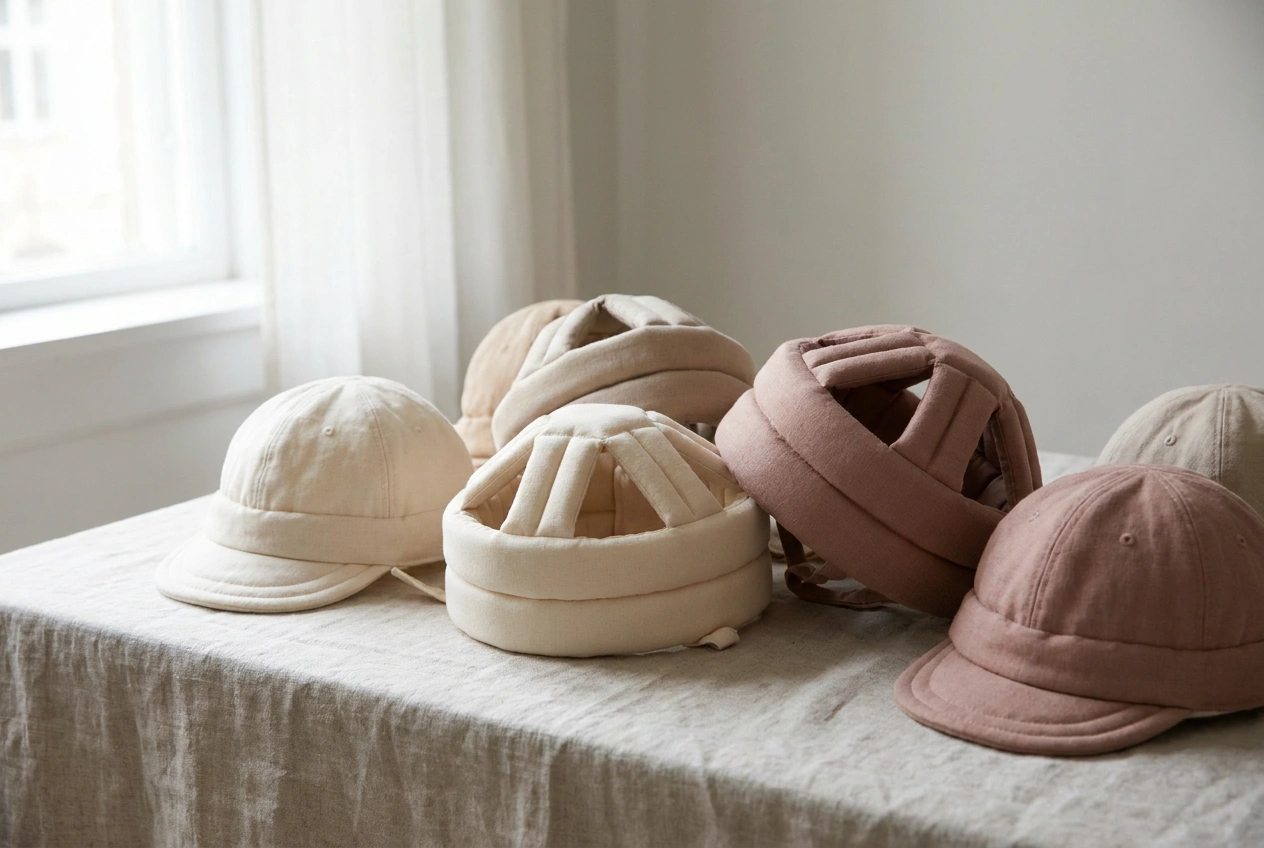
- Coverage generally scales with shell type. Soft knit caps like the Ribcap styles cover the crown and sides in a discreet, hat-like shape; hard-shell helmets like the Danmar Hard Shell with Face-Guard cover more of the head and face in a visibly sturdier structure.
- There is no single certification standard for this category. Most soft protective caps here don't carry a formal safety rating; the Forcefield headband is the one product in this list whose listing cites ASTM and CE testing.
- Child sizing is not the same as a small adult helmet. Ribcap's Lenny Kids line and Danmar's soft-shell helmets both offer child-specific size charts based on head circumference, which is what should guide sizing - not age alone.
- All-day comfort features vary by style. The knit Ribcap caps are built with moisture-wicking, breathable interiors for daily wear, while the hook-and-loop budget caps and hard-shell helmet trade some of that breathability for lower cost or more structured coverage.
| Ribcap Billie |  |
Best Overall - Discreet All-Day Wear | Type: Soft-shell, bucket-hat silhouette | Coverage: Crown, temples, and back of head; the bucket-hat shape extends down over the ears | Best For: Everyday wear that reads as a knit hat rather than medical equipment | VIEW LATEST PRICE | Read Our Analysis |
| Ribcap Baseball Cap |  |
Most Casual, Cap-Style Look | Type: Soft-shell, baseball-cap silhouette | Coverage: Crown and forehead in a structured cap shape, with a brim over the face | Best For: Wearers who want the silhouette of an ordinary baseball cap | VIEW LATEST PRICE | Read Our Analysis |
| Ribcap Lenny Kids |  |
Best for Children | Type: Soft-shell, beanie silhouette, child-specific sizing | Coverage: Crown and back of head in a knit beanie shape | Best For: Children who need a size built for a kid's head, not a scaled-down adult cap | VIEW LATEST PRICE | Read Our Analysis |
| Danmar Soft Shell Helmet |  |
Best Adjustable Fit Across Ages | Type: Soft-shell, vinyl construction | Coverage: Crown and back of head | Best For: Families who want one helmet style available across a full child-to-adult size run | VIEW LATEST PRICE | Read Our Analysis |
| Danmar Full Coverage Helmet |  |
Best Higher-Coverage Soft Shell | Type: Soft-shell, extended coverage | Coverage: Described by the manufacturer as full coverage - crown, back of head, and sides | Best For: Wearers who want more head coverage than a cap-style helmet without moving to a hard shell | VIEW LATEST PRICE | Read Our Analysis |
| Danmar Hard Shell Helmet with Face-Guard |  |
Best Hard-Shell, Maximum Structured Coverage | Type: Hard-shell with an attached face-guard | Coverage: Full head coverage plus a guard bar across the front of the face | Best For: Situations where a caregiver or clinician has recommended more structured, rigid coverage | VIEW LATEST PRICE | Read Our Analysis |
| Forcefield Protective Headband |  |
Best Lightweight, Minimal-Coverage Option | Type: Headband, minimal coverage | Coverage: Forehead and temple band only; does not cover the crown or back of the head | Best For: Low-profile coverage at the forehead and temples rather than all-day, full-head wear | VIEW LATEST PRICE | Read Our Analysis |
| Elderly Protective Helmet (Gray Mesh Inner) |  |
Best Budget Pick for Seniors and Recovery Use | Type: Soft-shell cap, one-size-adjustable | Coverage: Crown, back of head, and sides; open, vented top panel | Best For: A lower-cost, easy on/off option for seniors or short-term post-surgical recovery use | VIEW LATEST PRICE | Read Our Analysis |
More Details on Our Top Picks
Ribcap Billie
The Billie is built as a bucket hat first and a protective cap second - the outer layer is a water-resistant knit fabric, and the padding sits underneath a Coolmax interior designed to wick moisture during long stretches of daily wear. The shape covers the crown, temples, and back of the head, extending down far enough to sit over the top of the ears.
Padding is made from a polyurethane foam that Ribcap formulates specifically for this product line, layered with extra ventilation channels between the internal pads so the helmet doesn't trap heat the way a solid foam liner would. A removable chin strap holds the cap in place; take it off and the Billie sits like an ordinary knit hat.
Sizing runs S through L by head circumference (20.8 inches to 24.0 inches), with Ribcap's own guidance to size up if you fall between measurements. The knitted fabric is described by the manufacturer as easy to keep clean, though Ribcap doesn't publish machine-wash instructions on this listing, so hand care is the safer default.
Ribcap markets the Billie's use cases broadly - the listing references epilepsy, Parkinson's, autism, cerebral palsy, and general fall and injury prevention among the conditions people shop this style for, alongside general elder care. None of that changes what the product physically is: a soft, padded knit cap, not a piece of medical equipment with its own clinical rating.
- Type:Soft-shell, bucket-hat silhouette
- Coverage:Crown, temples, and back of head; the bucket-hat shape extends down over the ears
- Outer Material:Water-resistant knit fabric over polyurethane foam padding
- Closure:Removable chin strap
- Interior:Coolmax lining with moisture-wicking, breathable knit fabric
- Size Range:S: 20.8-21.6" · M: 22.0-22.8" · L: 23.2-24.0" head circumference
- Weight:Not specified by manufacturer
- Best For:Everyday wear that reads as a knit hat rather than medical equipment
Ribcap Baseball Cap
Where the Billie is shaped like a bucket hat, this version of the Ribcap line is cut like a standard baseball cap, complete with a brim over the face. The outer shell is a breathable cotton, with the same Coolmax and moisture-wicking interior lining used across Ribcap's product range.
The padded structure sits inside the cap's crown, built from the same specially formulated foam Ribcap uses on its other styles, and a removable chin strap keeps the cap seated during normal activity. Because the shape closely follows an everyday cap, it's a style some wearers choose specifically to avoid looking like they're wearing headgear at all.
Two size bands cover a wide range of head circumferences - S/M for roughly 20.8 to 22.8 inches, and L/XL for 23.2 to 25.6 inches - with Ribcap again recommending the larger size for anyone between measurements.
Because the cap shape offers less coverage over the ears and back of the head than the Billie's bucket-hat cut, it's worth weighing coverage area against the more casual look when deciding between the two - a conversation that's easiest to have with the wearer's clinician alongside this guide.
- Type:Soft-shell, baseball-cap silhouette
- Coverage:Crown and forehead in a structured cap shape, with a brim over the face
- Outer Material:Breathable cotton outer with a Coolmax inner lining
- Closure:Removable chin strap
- Interior:Moisture-wicking knit lining
- Size Range:S/M: 20.8-22.8" · L/XL: 23.2-25.6" head circumference
- Weight:Not specified by manufacturer
- Best For:Wearers who want the silhouette of an ordinary baseball cap
Ribcap Lenny Kids
Lenny Kids is Ribcap's beanie-style cap sized specifically for children, built with a natural wool exterior and Ribcap's Fuegosoft lining rather than the synthetic knit used on the adult Billie and Baseball Cap styles. The beanie shape covers the crown and back of the head.
The padding underneath follows the same construction as Ribcap's adult line - the company's own polyurethane foam formulation, sewn into the cap so it reads as a knit hat from the outside. A removable chin strap is included to keep it seated during play.
Sizing is broken into three child-specific bands (Mini, Midi, Maxi) covering roughly 18.5 to 21.6 inches of head circumference, which matters because a small adult helmet is not the same fit as a helmet designed around a child's head shape and proportions from the start.
As with the adult Ribcap styles, the wool-and-knit construction is built for repeated daily wear rather than occasional use, though Ribcap doesn't publish specific wash instructions on this listing - hand-cleaning the wool exterior is the more conservative approach.
- Type:Soft-shell, beanie silhouette, child-specific sizing
- Coverage:Crown and back of head in a knit beanie shape
- Outer Material:Natural wool exterior with a Fuegosoft interior lining
- Closure:Removable chin strap
- Interior:Breathable knit construction
- Size Range:Mini: 18.5-19.3" · Midi: 19.7-20.5" · Maxi: 20.8-21.6" head circumference
- Weight:Not specified by manufacturer
- Best For:Children who need a size built for a kid's head, not a scaled-down adult cap
Danmar Soft Shell Helmet
Danmar's soft shell helmet is a lightweight vinyl-shell design that the manufacturer describes as fully ventilated, built to cover the crown and back of the head without the bulk of a hard-shell design. It's manufactured in the USA and sold in a range of colors.
The chinstrap uses a snap-closure that's adjustable for fit, and Danmar sizes the helmet from X-Small through X-Large - a size range that covers children through adults in the same basic design, which is useful for households where more than one person needs a similarly styled helmet.
Because the shell is vinyl rather than knit fabric, it has a more visibly medical, equipment-like look than the Ribcap styles above - a tradeoff some buyers accept in exchange for a wider size range and a design purpose-built for head protection use rather than adapted from everyday headwear.
Danmar doesn't publish a listed weight or specific washing instructions for this model on the current listing; the vinyl shell surface is typically easier to wipe down than a knit or wool exterior, though buyers should check current manufacturer care guidance directly.
- Type:Soft-shell, vinyl construction
- Coverage:Crown and back of head
- Outer Material:Vinyl outer shell, fully ventilated
- Closure:Snap-adjustable chinstrap
- Made In:USA
- Size Range:Sold from X-Small through X-Large, spanning child to adult head circumferences (this listing: Medium)
- Weight:Not specified by manufacturer
- Best For:Families who want one helmet style available across a full child-to-adult size run
Danmar Full Coverage Helmet
Danmar names this model the Full Coverage Helmet, and the listing describes a soft, lightweight shell built from shock-absorbent foam that extends further around the head than the company's standard soft-shell design - covering more of the crown, back of the head, and sides.
It stays in the soft-shell category rather than moving to a rigid hard shell, so it sits between the discreet knit caps above and the structured hard-shell helmet below in both bulk and coverage area.
This particular listing is sized Medium, fitting a head circumference of roughly 21.5 to 22.25 inches; Danmar sells the Full Coverage Helmet in other sizes as separate listings, so buyers should confirm the exact circumference for the size they need before ordering.
The manufacturer's listing doesn't specify closure hardware, weight, or washing instructions for this model, so anyone comparing it against the Ribcap or standard Danmar soft-shell styles above should check current product details directly with Danmar or the seller.
- Type:Soft-shell, extended coverage
- Coverage:Described by the manufacturer as full coverage - crown, back of head, and sides
- Outer Material:Soft, lightweight shell built from shock-absorbent foam
- Closure:Not specified by manufacturer
- Size Range:This listing: Medium, 21.5"-22.25" head circumference; other sizes sold separately
- Weight:Not specified by manufacturer
- Best For:Wearers who want more head coverage than a cap-style helmet without moving to a hard shell
Danmar Hard Shell Helmet with Face-Guard
This is the most visibly protective, medical-equipment-looking helmet in this guide: a rigid hard shell that covers the full head, with an attached face-guard bar extending across the front. Danmar markets it as a special-needs helmet, distinct from the vinyl or foam soft-shell styles above.
The hard shell is a different construction category from every other product in this guide - where the Ribcap and standard Danmar soft-shell helmets flex and pack down, a hard shell holds its structure, which is part of why it looks and feels closer to a conventional protective helmet than to headwear.
The listing covers the Medium size specifically; Danmar sells this hard-shell-with-face-guard design across a range of sizes as separate product listings, so confirm head circumference against Danmar's current size chart before ordering.
Because this is the most structured and least discreet option here, it tends to come up in conversations with a neurologist or occupational therapist when daily fall risk or seizure pattern calls for more rigid, full facial and head coverage than a soft cap provides - which is exactly the kind of decision this guide defers to that clinician rather than making for you.
- Type:Hard-shell with an attached face-guard
- Coverage:Full head coverage plus a guard bar across the front of the face
- Outer Material:Rigid hard-shell outer construction
- Closure:Not specified by manufacturer
- Size Range:This listing: Medium; Danmar offers this style in other sizes as separate listings
- Weight:Not specified by manufacturer
- Best For:Situations where a caregiver or clinician has recommended more structured, rigid coverage
Forcefield Protective Headband
The Forcefield headband is a different product category from the caps and helmets above - it's a padded band that wraps the forehead and temples rather than a cap or shell that covers the crown and back of the head. Ventilated, hook-and-loop adjustable, and built to go on and off quickly.
It's the only product in this guide whose Amazon listing cites specific third-party testing: the manufacturer states the headband is tested to ASTM and FIFA protective headgear standards and carries CE II marking, standards more commonly associated with sports headgear than with medical fall-risk products.
Because it only covers the forehead and temple area, it leaves the crown, back of the head, and sides unpadded - a tradeoff some caregivers and wearers accept for a much lower-profile, easier-to-wear option during specific activities rather than continuous full-head coverage.
This listing covers one size (Large), and the manufacturer markets it for teens through adults; there's no child-specific version of this exact product in this guide's research, so families needing coverage for a younger child should look to the Ribcap or Danmar sizing above instead.
- Type:Headband, minimal coverage
- Coverage:Forehead and temple band only; does not cover the crown or back of the head
- Outer Material:Polymeric padding at the front and sides, hook-and-loop adjustable band
- Certifications Listed:Manufacturer lists testing to ASTM and FIFA protective headgear standards and CE II marking
- Interior:Vented, moisture-wicking band construction
- Size Range:This listing: one size, Large; marketed for teens through adults
- Weight:Not specified by manufacturer
- Best For:Low-profile coverage at the forehead and temples rather than all-day, full-head wear
Elderly Protective Helmet (Gray Mesh Inner)
This is a budget-tier soft cap built around a single adjustable size rather than a size chart - a hook-and-loop closure lets the fit stretch from 19.7 inches up to 28.8 inches of head circumference (50 to 75 cm), which the manufacturer positions as covering most adult and senior head sizes.
The outer fabric is a soft cotton-and-polyester blend over a high-density sponge fill, with an open, hollow top panel intended to keep the wearer cooler than a fully enclosed cap during long periods of wear. The mesh inner lining referenced in this listing's name sits against the scalp.
Care instructions on the listing are specific: hand-wash only, with the manufacturer advising against machine washing, bleaching, dry cleaning, or ironing - worth knowing before buying if daily laundering is part of the plan for a caregiving routine.
The listing markets the cap toward seniors with limited mobility, post-surgical recovery, and general fall-related use. It's a simpler, less structured design than the Ribcap or Danmar options above, at a noticeably lower price point, which is part of why it shows up often in caregiver shopping searches for this category.
- Type:Soft-shell cap, one-size-adjustable
- Coverage:Crown, back of head, and sides; open, vented top panel
- Outer Material:Soft outer fabric over high-density sponge padding
- Closure:Hook-and-loop adjustable strap
- Washability:Manufacturer recommends hand-washing only; advises against machine washing, bleaching, dry cleaning, or ironing
- Size Range:One-size-adjustable, fits 19.7"-28.8" (50-75 cm) head circumference
- Weight:Not specified by manufacturer
- Best For:A lower-cost, easy on/off option for seniors or short-term post-surgical recovery use
How to Choose a Protective Helmet for Seizures or Fall Risk
Every helmet in this guide does one of two basic jobs: it either pads the head in a shape that tries to disappear into everyday clothing, or it pads the head as visibly and thoroughly as the design allows. Neither approach is correct in the abstract - the right one depends on the wearer's specific seizure type, fall pattern, and how much coverage their care team has recommended. Here's what actually differs between the options above.
Soft-Shell vs. Hard-Shell: The Core Tradeoff
Soft-shell caps - the Ribcap Billie, Baseball Cap, and Lenny Kids, plus Danmar's standard soft-shell and Full Coverage models - use knit, wool, vinyl, or foam construction that flexes and packs down. They're built to be worn for long stretches without the bulk or visual weight of a rigid design. Hard-shell helmets, like the Danmar Hard Shell with Face-Guard, hold a fixed structure and generally offer more complete, structured coverage, including the face-guard bar in that specific model. The tradeoff is straightforward: softer and more discreet, or more structured and more visible as protective equipment. Which side of that line makes sense is a question for the wearer's neurologist, physician, or occupational therapist, not a call to make from a product listing alone.
Coverage Zones: What Part of the Head Is Actually Padded
Not every product here covers the same area. Cap-style helmets like the Ribcap Baseball Cap pad the crown and forehead; bucket-hat and beanie shapes like the Billie and Lenny Kids extend further down over the ears and the back of the head; the Danmar Full Coverage and Hard Shell models extend coverage further around the sides and back. The Forcefield headband is the outlier - it pads only the forehead and temple band and leaves the crown and back of the head open. Match the coverage zone to where the wearer's falls or seizure-related movements actually put the head at risk, again in consultation with their clinician.
All-Day Wear: Breathability and Washability
A helmet that's worn for a few hours occasionally has different requirements than one worn most of the day, every day. The Ribcap styles are built around moisture-wicking Coolmax or Fuegosoft interiors specifically for repeated daily wear, and Danmar's soft-shell design is described as fully ventilated. The budget elderly-focused cap includes explicit hand-wash-only care instructions, worth checking before it becomes part of a daily caregiving routine. If a helmet is going to be worn for extended periods, breathability and how easily it can be cleaned are practical, everyday concerns as much as the padding itself.
Discreetness and Dignity
Several of the products above exist specifically because a knit cap or baseball cap shape reads as ordinary headwear rather than medical equipment - Ribcap markets its entire product line around that idea. Whether that matters more than maximum coverage is a personal and often situational decision: some wearers and caregivers prioritize a low-profile look for school, work, or public settings, while others prioritize the more complete coverage of a hard-shell design regardless of how it looks. Both are legitimate priorities, and neither should be assumed on someone else's behalf without asking them directly.
Adult Sizing vs. Child Sizing
A child's head is not simply a smaller version of an adult's, which is why Ribcap sells its Lenny style in dedicated child sizes (Mini, Midi, Maxi) rather than scaling down the adult version, and why Danmar's soft-shell helmet is sold across a full X-Small-to-X-Large run built for children through adults. Always size by measured head circumference against the manufacturer's current chart rather than by age or by comparing to a helmet the wearer has outgrown.
Work With the Wearer's Care Team
This bears repeating: the products above are organized by shell type, coverage area, and comfort features because that's what can be verified from the manufacturer's own listings. None of it substitutes for guidance from the person's neurologist, physician, or occupational therapist, who can weigh seizure type, fall pattern, and daily routine in a way a product roundup cannot. If a care team has already specified a coverage area or shell type, use that recommendation to narrow this list rather than starting from price or appearance alone.
Protective Helmet for Seizures and Epilepsy Comparison
| Helmet | Shell Type | Coverage | Weight | Best For |
|---|---|---|---|---|
| Ribcap Billie | Soft-shell, bucket-hat silhouette | Crown, temples, and back of head; the bucket-hat shape extends down over the ears | Not specified by manufacturer | Everyday wear that reads as a knit hat rather than medical equipment |
| Ribcap Baseball Cap | Soft-shell, baseball-cap silhouette | Crown and forehead in a structured cap shape, with a brim over the face | Not specified by manufacturer | Wearers who want the silhouette of an ordinary baseball cap |
| Ribcap Lenny Kids | Soft-shell, beanie silhouette, child-specific sizing | Crown and back of head in a knit beanie shape | Not specified by manufacturer | Children who need a size built for a kid's head, not a scaled-down adult cap |
| Danmar Soft Shell Helmet | Soft-shell, vinyl construction | Crown and back of head | Not specified by manufacturer | Families who want one helmet style available across a full child-to-adult size run |
| Danmar Full Coverage Helmet | Soft-shell, extended coverage | Described by the manufacturer as full coverage - crown, back of head, and sides | Not specified by manufacturer | Wearers who want more head coverage than a cap-style helmet without moving to a hard shell |
| Danmar Hard Shell Helmet with Face-Guard | Hard-shell with an attached face-guard | Full head coverage plus a guard bar across the front of the face | Not specified by manufacturer | Situations where a caregiver or clinician has recommended more structured, rigid coverage |
| Forcefield Protective Headband | Headband, minimal coverage | Forehead and temple band only; does not cover the crown or back of the head | Not specified by manufacturer | Low-profile coverage at the forehead and temples rather than all-day, full-head wear |
| Elderly Protective Helmet (Gray Mesh Inner) | Soft-shell cap, one-size-adjustable | Crown, back of head, and sides; open, vented top panel | Not specified by manufacturer | A lower-cost, easy on/off option for seniors or short-term post-surgical recovery use |
Frequently Asked Questions
Do seizure or fall-risk helmets need a doctor's recommendation?
It's strongly recommended. The right helmet depends on the wearer's seizure type, typical fall pattern, and specific needs - factors a neurologist, physician, or occupational therapist is best placed to assess. This guide organizes protective helmets by what they physically are (shell type, coverage, sizing) so that conversation has concrete options to work from, not as a replacement for it.
What's the difference between a soft-shell and a hard-shell protective helmet?
Soft-shell helmets, like the Ribcap knit caps and Danmar's standard soft-shell and Full Coverage models, use flexible knit, wool, vinyl, or foam construction built for discreet, all-day wear. Hard-shell helmets, like the Danmar Hard Shell with Face-Guard, use a rigid structure that generally offers more complete, structured coverage but looks and feels more like visible protective equipment. Neither is universally better - it comes down to the coverage a clinician recommends versus how much the wearer prioritizes a discreet, everyday look.
Is there an official safety standard for seizure or fall-risk helmets?
No single certification governs this entire product category the way DOT or ECE ratings apply to motorcycle helmets. Most of the soft protective caps in this guide don't carry a formal third-party safety rating on their listings. The Forcefield headband is the exception here - its listing states testing to ASTM and FIFA protective headgear standards with CE II marking - but that's a sports-headgear standard, not a medical device certification, and it only covers a headband-style product with limited coverage.
How should a protective helmet be sized for a child?
Measure the child's head circumference and match it against the manufacturer's current size chart for a child-specific model - Ribcap's Lenny Kids line uses its own Mini/Midi/Maxi sizing built around children's proportions, and Danmar's soft-shell helmet is sold in sizes from X-Small through X-Large that span children through adults. Avoid simply buying the smallest adult size, since a scaled-down adult shape doesn't necessarily match a child's head shape.
Can these helmets be worn all day, every day?
Some are built with that in mind and some aren't. The Ribcap styles use moisture-wicking, breathable interior linings specifically for repeated daily wear, and Danmar describes its soft-shell helmet as fully ventilated. Budget options may trade away some of that breathability for a lower price. Whether continuous daily wear makes sense for a given person - and for how long each day - is a question to bring to their physician or occupational therapist alongside the comfort features listed here.
DOT vs ECE vs Snell vs MIPS, how to pick the right lid in 60 seconds, and when to replace it. One page, no fluff.
