
Affiliate disclosure As an Amazon Associate we earn from qualifying purchases, at no extra cost to you.
Equestrian riding puts a rider's head at risk in a way that is genuinely different from cycling or motorcycling: falls happen from height, often onto hard-packed arena footing or open ground, and a spooked or bolting horse can add speed and unpredictability that a bicycle rarely will. English, Western, and trail riders all need a helmet built and certified specifically for equestrian impact patterns, not a repurposed bike or skate helmet. The right lid should meet a recognized equestrian safety standard, fit snugly without pressure points, and stay out of the way of visibility and comfort during a two-hour lesson or a long trail ride.
The Research Desk worked through the Amazon equestrian helmet catalog to find seven riding helmets worth a closer look. We prioritized helmets that reference ASTM F1163 (the US equestrian standard) or comparable safety construction, adjustable fit-dial systems, ventilation for arena and summer trail work, and low-profile shells that suit English and Western disciplines alike. If you want the deeper technical background on how these standards compare, our helmet certifications guide breaks down what ASTM F1163, SEI, PAS 015, and VG1 actually test for.
Independent lab testing has also expanded beyond basic pass/fail certification. Virginia Tech's helmet lab, known for its motorcycle and bicycle STAR ratings, now publishes STAR ratings for equestrian helmets as well, giving riders a comparative safety score rather than a simple certified or not-certified label. Below, we cover seven picks with honest notes on fit systems, ventilation, and where each one is best suited.
Key Takeaways
- ASTM F1163 is the baseline US standard: it is the equestrian-specific impact and retention test that separates a real riding helmet from a repurposed bike or skate helmet.
- A fit dial beats foam-pad guessing: a rear adjustment wheel lets you fine-tune circumference in small increments, which matters more for equestrian helmets since a loose helmet can shift on impact.
- MIPS is an option, not a given, in this category: most budget-friendly equestrian helmets do not include MIPS; check the listing directly rather than assuming it is standard.
- Ventilation matters for arena and summer riding: lessons and schooling sessions often run 45 to 90 minutes in direct sun, so vent count and airflow design affect whether you actually want to keep the helmet on.
- Low-profile shells suit both English and Western riders: a deep, full-coverage but streamlined shape avoids the bulky, sport-helmet look that clashes with either discipline's tack and turnout.
| Troxel Spirit Full Coverage Horse Riding Helmet |  |
Best Overall | Shell Type: Full-coverage, low-profile design | Fit System: DialFit soft-touch adjustment dial | Best For: Riders wanting an adjustable, all-purpose everyday schooling helmet | VIEW LATEST PRICE | Read Our Analysis |
| Troxel Sport 2.0 Injection Molded Horse Riding Helmet |  |
Best Durability | Shell Type: Injection-molded shell with integrated visor | Construction: Sturdy injection-molded build for durability and precise fit | Best For: Riders who want a more rigid, durable shell for regular lesson use | VIEW LATEST PRICE | Read Our Analysis |
| OVATION Deluxe Schooler Riding Helmet | 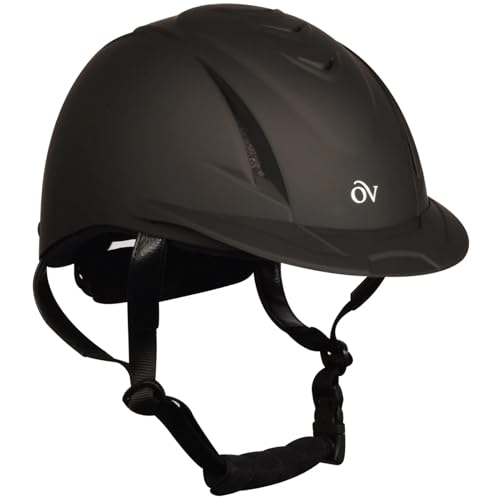 |
Best for Everyday Schooling | Shell Type: Lightweight, low-profile streamlined construction | Fit System: Adjustable rear dial with extra-strong adjustment teeth | Best For: Arena training, schooling sessions, and regular horseback riding | VIEW LATEST PRICE | Read Our Analysis |
| OutdoorMaster Equestrian Helmet with Sun Visor |  |
Best ASTM-Certified Value | Shell: High-strength ABS shell with high-density EPS inner core | Certification: Meets ASTM F1163-15 standard | Best For: Budget-conscious riders who want a specifically ASTM-certified helmet | VIEW LATEST PRICE | Read Our Analysis |
| XIWAMA Horse Riding Helmet for Adults |  |
Best Lightweight Budget Pick | Shell: Tough PC (polycarbonate) outer shell | Coverage: Full coverage design | Best For: Adult riders wanting a simple, lightweight, budget-friendly option | VIEW LATEST PRICE | Read Our Analysis |
| Almpal Equestrian Set: Helmet and Gloves |  |
Best Bundled Value | Shell Material: High-strength PC (polycarbonate) with force-absorbing EPS | Included Items: Helmet, gloves, and elbow pads | Best For: New riders or gift buyers who want helmet plus protective gear in one purchase | VIEW LATEST PRICE | Read Our Analysis |
| Troxel Spirit Full Coverage Helmet, Pink Dreamscape |  |
Best Style Option | Shell Type: Full-coverage, low-profile design | Fit System: DialFit soft-touch adjustment dial | Best For: Younger or smaller-headed riders who want a distinctive colorway | VIEW LATEST PRICE | Read Our Analysis |
More Details on Our Top Picks
Troxel Spirit Full Coverage Horse Riding Helmet
The Troxel Spirit is our top overall pick because it covers the fundamentals well without overcomplicating the fit process. The DialFit system lets you dial in circumference with a soft-touch rear wheel rather than swapping foam pads, which is a real time-saver in a barn where the same helmet might get shared or adjusted for a growing junior rider.
The full-coverage, low-profile shell shape is designed to work across a range of head shapes rather than a single mold, and Troxel offers it across multiple sizes and colorways, including the Black Duratec finish shown here. That range matters in a category where fit variance between riders is significant.
Ventilation is handled through strategically placed airflow vents paired with a removable, washable headliner using what Troxel calls Air-Channel technology, aimed at keeping the inside of the helmet from becoming a heat trap during a summer lesson.
The Spirit is ASTM F1163 / SEI certified, in keeping with Troxel's position as one of the leading makers of ASTM/SEI-certified riding helmets. Riders who compete should still confirm the current standard edition against their discipline's competition rules, since certification editions and requirements are updated periodically.
- Shell Type:Full-coverage, low-profile design
- Certification:ASTM F1163 / SEI certified
- Fit System:DialFit soft-touch adjustment dial
- Ventilation:Strategically placed airflow vents
- Liner:Removable, washable headliner with Air-Channel technology
- Sizing:Medium (7 to 7-3/8), also offered in additional sizes
- Best For:Riders wanting an adjustable, all-purpose everyday schooling helmet
Troxel Sport 2.0 Injection Molded Horse Riding Helmet
The Sport 2.0 steps up the shell construction from a standard molded design to a sturdy injection-molded shell with an integrated visor, which Troxel positions as a durability upgrade over softer-shell alternatives. For a helmet that gets tossed in a tack trunk and handled daily around a barn, that added shell rigidity is a practical plus.
Seven large vents are built into the shell for airflow, which is a meaningfully higher vent count than some full-coverage designs manage while keeping a clean, integrated visor line at the front. The matte finish comes in a range of solid colors, which suits riders who want a helmet that reads as functional gear rather than a fashion statement.
The removable, washable headliner is standard across the line and makes hygiene upkeep simple for a helmet used several times a week. Troxel positions the Sport 2.0 as an all-purpose option suitable for lessons, leisure riding, and competition, and it is ASTM F1163 / SEI certified.
One consideration: the injection-molded build trades some of the deeper full-coverage shape of the Spirit for a more streamlined, integrated-visor silhouette. Riders who specifically want maximum coverage at the temples and back of the head may prefer the Spirit; those who want a more durable, lower-maintenance shell for daily lesson wear will likely prefer the Sport 2.0.
- Shell Type:Injection-molded shell with integrated visor
- Certification:ASTM F1163 / SEI certified
- Construction:Sturdy injection-molded build for durability and precise fit
- Ventilation:Seven large vents
- Liner:Removable, washable headliner
- Fit:Lightweight adjustable design
- Best For:Riders who want a more rigid, durable shell for regular lesson use
OVATION Deluxe Schooler Riding Helmet
Ovation built the Deluxe Schooler specifically around the everyday lesson-barn use case, and it shows in the details. The lightweight, low-profile shell is designed to feel unobtrusive during repetitive arena work, where a bulky or heavy helmet becomes a distraction over a 45 to 60 minute lesson.
The adjustable rear dial system uses what Ovation describes as extra-strong adjustment teeth, aimed at holding a consistent fit across repeated put-on and take-off cycles rather than loosening over time, which matters for a helmet used multiple times a week by the same rider or shared across a lesson program.
High-flow ventilation is spread across multiple vents rather than concentrated at the front, and the removable, machine-washable liner keeps the helmet from becoming an odor problem in a shared or high-frequency use setting. The rubberized outer shell is also genuinely easy to wipe down between lessons.
The removable breakaway visor and YKK buckle hardware are the kind of small, unglamorous details that indicate attention to daily-use durability. This is not a helmet built around a marquee safety feature like MIPS, but it is ASTM F1163 / SEI certified and a solid, purpose-built schooling helmet for riders who need reliable daily wear rather than a showpiece.
- Shell Type:Lightweight, low-profile streamlined construction
- Certification:ASTM F1163 / SEI certified
- Fit System:Adjustable rear dial with extra-strong adjustment teeth
- Ventilation:Multiple high-flow vents
- Liner:Removable, machine-washable soft interior liner
- Outer Shell:Rubberized, easy-to-clean finish
- Closure:YKK adjuster clip and buckle with removable breakaway visor
- Best For:Arena training, schooling sessions, and regular horseback riding
OutdoorMaster Equestrian Helmet with Sun Visor
The OutdoorMaster is the pick to reach for if ASTM certification is your first filter. The listing explicitly states it meets the ASTM F1163-15 standard, the equestrian-specific impact and retention test referenced throughout this guide, which is not something every budget helmet in this space states outright.
Construction pairs a high-strength ABS outer shell with a high-density EPS inner core, the same basic sandwich structure used across most certified riding and cycling helmets, built to absorb and dissipate impact energy rather than transmit it directly to the rider's head.
The adjustable dial system combined with straps gives a two-point fit adjustment, and 9 ventilation holes plus a removable, washable liner keep the helmet workable through warm-weather rides. The built-in sun visor is a nice add for riders who spend time on open trail rather than strictly indoor arena work.
The manufacturer lists specific per-size weights, from 470 grams in Small up to 530 grams in Large, which is useful transparency that not all competitors in this category provide. The tradeoff is a simpler, more basic aesthetic than some of the fashion-forward Troxel colorways; this is a straightforward, certification-first choice.
- Shell:High-strength ABS shell with high-density EPS inner core
- Certification:Meets ASTM F1163-15 standard
- Fit System:Adjustable dial system plus straps
- Ventilation:9 ventilation holes
- Extra Feature:Built-in sun visor
- Sizing:S (470g), M (520g), L (530g), per manufacturer listing
- Best For:Budget-conscious riders who want a specifically ASTM-certified helmet
XIWAMA Horse Riding Helmet for Adults
The XIWAMA is a straightforward, no-frills entry in the lightweight budget tier. Its polycarbonate outer shell is a common and reasonably durable material choice for this price point, and the full-coverage shape follows the same general design language as the pricier Troxel and Ovation options above.
Ventilation is handled through multiple ventilation holes across the shell, and the removable, washable headliner uses the same Air-Channel liner concept seen on other helmets in this roundup, which suggests a shared or licensed liner supplier rather than a unique design.
Sizing is listed as fitting 22 to 24 inches, or 56 to 61cm, which covers a fairly broad range of adult head circumferences in one shell, so riders near either edge of that range should check current buyer sizing feedback before ordering.
The honest caveat here is that the listing does not reference ASTM, SEI, or any specific equestrian safety certification standard in its feature text. Riders who need certified equestrian protection for competition entry or peace of mind should lean toward the OutdoorMaster above; this is best suited to casual, low-stakes riding where budget is the deciding factor.
- Shell:Tough PC (polycarbonate) outer shell
- Coverage:Full coverage design
- Ventilation:Fully ventilated with ventilation holes
- Liner:Removable, washable headliner with Air-Channel technology
- Sizing:Fits 22 to 24 inches / 56 to 61cm head circumference
- Best For:Adult riders wanting a simple, lightweight, budget-friendly option
Almpal Equestrian Set: Helmet and Gloves
The Almpal set stands apart from the rest of this list because it is not just a helmet, it is a bundled protective kit that includes a riding helmet, gloves, and elbow pads. For a new rider outfitting for the first time, or a parent buying for a child just starting lessons, that bundled approach removes some of the guesswork around matching separate gear purchases.
The helmet itself uses the same high-strength PC shell and force-absorbing EPS core construction found across most of the helmets in this roundup, so the core protective approach is consistent with the standalone options above, not a corner-cutting alternative.
The included gloves and elbow pads use anti-slip designs aimed at better rein grip and fall protection for the forearms, which is a genuinely useful addition for beginner riders who fall more often while learning balance and seat position.
The tradeoff with any bundled set is that the helmet is not the singular focus of the product, so riders who want to select their helmet and gloves independently based on individual fit preferences may prefer buying pieces separately. For a first full kit purchase, though, the bundled value here is real.
- Shell Material:High-strength PC (polycarbonate) with force-absorbing EPS
- Included Items:Helmet, gloves, and elbow pads
- Ventilation:Carefully designed ventilation across helmet and pads
- Grip:Anti-slip gloves and elbow pads
- Fit:Adjustable design for quick, easy wearing and removal
- Best For:New riders or gift buyers who want helmet plus protective gear in one purchase
Troxel Spirit Full Coverage Helmet, Pink Dreamscape
This is the same Troxel Spirit platform as our overall pick above, offered here in the Pink Dreamscape colorway and a smaller size range. We are including it separately because color and print options genuinely matter to a large share of equestrian buyers, particularly younger riders and juniors, and Troxel's Spirit line covers that ground well without changing the underlying safety construction.
All the core features carry over: the DialFit soft-touch adjustment dial, strategically placed airflow vents, the removable, washable Air-Channel headliner, and the same ASTM F1163 / SEI certification. Riders choosing between colorways are not trading away any functional feature to get a more expressive look.
The smaller sizing here, 6-1/2 to 6-7/8, makes this a practical option for younger or smaller-headed riders specifically, rather than a one-size-fits-all listing. Parents outfitting a child for their first lessons should still measure head circumference directly rather than guessing from age alone.
The one honest tradeoff of picking a helmet primarily for its colorway is that fashion-forward finishes can go out of production or become harder to restock than core black colorways. If long-term availability of an exact match matters for a barn uniform requirement, confirm current stock before committing to a specific print.
- Shell Type:Full-coverage, low-profile design
- Certification:ASTM F1163 / SEI certified
- Fit System:DialFit soft-touch adjustment dial
- Ventilation:Strategically placed airflow vents
- Liner:Removable, washable headliner with Air-Channel technology
- Sizing:Small (6-1/2 to 6-7/8)
- Best For:Younger or smaller-headed riders who want a distinctive colorway
How to Choose an Equestrian Helmet
Equestrian helmets are a distinct safety category from bike, motorcycle, or ski helmets. They are tested against a different impact profile, one built around falls from horseback height onto varied footing, and riders should understand what the relevant certifications and features actually mean before choosing.
ASTM F1163, SEI, PAS 015, and VG1: What the Certifications Mean
ASTM F1163 is the primary equestrian helmet safety standard used in the United States. It specifies impact attenuation, penetration resistance, and retention system (chin strap) requirements specific to equestrian falls. SEI, the Safety Equipment Institute, is the independent third-party body that certifies helmets against the ASTM F1163 standard, meaning an SEI-certified label indicates the helmet was tested by an outside lab rather than only self-declared by the manufacturer. In Europe, PAS 015 (British Standard) and VG1 01.040 2014-12 are the comparable equestrian helmet certifications, each with their own impact and retention testing protocols. Note that EN 1384 (2023) is now the current European equestrian helmet standard; helmets already certified to VG1 or PAS 015 remain valid, but newer helmets are increasingly tested to EN 1384. If you are shopping across US and European brands, look for the certification relevant to your region, or a helmet that carries multiple certifications for broader validation. For a deeper breakdown of how these standards differ from motorcycle and bicycle certifications, see our full certifications guide.
MIPS: An Option Worth Understanding, Not Assuming
MIPS (Multi-directional Impact Protection System) is a low-friction layer inside a helmet designed to reduce rotational forces transmitted to the brain during an angled impact, which is common in falls rather than straight-on impacts. MIPS is standard in many premium cycling and ski helmets, but it is far less universal in the equestrian helmet category, particularly at budget and mid-range price points. None of this should be read as a guarantee that any specific product includes MIPS; always check the current product listing and manufacturer specification page directly, since helmet lines are updated and MIPS availability varies by model and size.
The Fit Dial: Why It Matters More for Equestrian Helmets
A rear adjustment wheel, often called a fit dial or dial-fit system, lets a rider fine-tune helmet circumference in small increments rather than relying on swappable foam pads alone. This matters in equestrian riding because a helmet that shifts even slightly during a fall can fail to protect the intended impact zone. A properly dialed-in fit should sit level on the head, low on the forehead (roughly one to two finger-widths above the eyebrows), and should not rock front-to-back or side-to-side when you shake your head gently with the chin strap fastened.
Ventilation and Comfort for Arena and Trail Riding
Lessons and schooling sessions frequently run 45 minutes to an hour in direct sun, and trail rides can extend much longer. Vent count and placement affect whether a helmet stays comfortable enough that a rider does not start loosening the chin strap or removing the helmet between exercises, which defeats the purpose of wearing it. Look for multiple vents distributed across the shell rather than concentrated at the front, and a removable, washable liner, since equestrian helmets get worn in hot, sweaty conditions far more consistently than most other helmet categories.
Low-Profile Design Across English and Western Disciplines
A low-profile, full-coverage shell shape works across both English and Western riding without looking out of place against either discipline's tack, turnout, and show conventions. Bulkier, sport-style shells with aggressive venting scoops or added length at the back can look mismatched at a Western show barn or an English hunter ring alike. Most of the picks in this guide use a smooth, low-profile shape for exactly that reason.
Virginia Tech STAR Ratings for Equestrian Helmets
Virginia Tech's helmet lab, widely cited for its bicycle and motorcycle STAR rating system, has extended independent lab testing to equestrian helmets as well, publishing comparative star ratings rather than a simple pass or fail certification label. This gives riders a way to compare helmets that have all cleared baseline certification but may still perform differently under lab testing. See our Virginia Tech helmet ratings explainer for how the STAR methodology works and how to read the published equestrian ratings.
When to Replace an Equestrian Helmet
The core safety principle behind helmet replacement is the same across every helmet category: a helmet's impact-absorbing foam is designed to crush and dissipate energy exactly once. After any fall or impact strong enough to be felt, the internal EPS liner can be compromised even if the outer shell shows no visible damage, and the helmet should be replaced rather than reused. Our helmet replacement guide covers this impact-based replacement principle in more depth; the same one-impact-and-replace logic applies to equestrian helmets even though that guide is written primarily for motorcycle riders.
Equestrian Helmet for Riders Comparison
| Helmet | Shell | Certification | Fit System | Ventilation | Best For |
|---|---|---|---|---|---|
| Troxel Spirit Full Coverage Horse Riding Helmet | - | ASTM F1163 / SEI | DialFit soft-touch adjustment dial | Strategically placed airflow vents | Riders wanting an adjustable, all-purpose everyday schooling helmet |
| Troxel Sport 2.0 Injection Molded Horse Riding Helmet | - | ASTM F1163 / SEI | - | Seven large vents | Riders who want a more rigid, durable shell for regular lesson use |
| OVATION Deluxe Schooler Riding Helmet | - | ASTM F1163 / SEI | Adjustable rear dial with extra-strong adjustment teeth | Multiple high-flow vents | Arena training, schooling sessions, and regular horseback riding |
| OutdoorMaster Equestrian Helmet with Sun Visor | High-strength ABS shell with high-density EPS inner core | ASTM F1163-15 | Adjustable dial system plus straps | 9 ventilation holes | Budget-conscious riders who want a specifically ASTM-certified helmet |
| XIWAMA Horse Riding Helmet for Adults | Tough PC (polycarbonate) outer shell | Not stated | - | Fully ventilated with ventilation holes | Adult riders wanting a simple, lightweight, budget-friendly option |
| Almpal Equestrian Set: Helmet and Gloves | - | Not stated | - | Carefully designed ventilation across helmet and pads | New riders or gift buyers who want helmet plus protective gear in one purchase |
| Troxel Spirit Full Coverage Helmet, Pink Dreamscape | - | ASTM F1163 / SEI | DialFit soft-touch adjustment dial | Strategically placed airflow vents | Younger or smaller-headed riders who want a distinctive colorway |
Frequently Asked Questions
What certification should I look for in an equestrian helmet?
In the United States, look for ASTM F1163 certification, ideally with SEI (Safety Equipment Institute) verification, which means an independent lab tested the helmet rather than relying solely on the manufacturer's own claim. In Europe, the comparable certifications are PAS 015 and VG1 01.040 2014-12, though EN 1384 (2023) is now the current European equestrian standard; helmets already certified to VG1 or PAS 015 remain valid. Some helmets carry multiple certifications for riders who compete or travel across regions. Always check the specific product listing rather than assuming a certification, since not every helmet in a brand's lineup carries the same certification status.
Do equestrian helmets need MIPS to be safe?
No. MIPS is a rotational-impact-reduction technology that many premium cycling and ski helmets include, but it is not a requirement for a helmet to meet ASTM F1163 or other equestrian safety standards. MIPS is available on some equestrian helmets but far from universal in this category, especially at budget and mid-range prices. It is a feature worth considering if available and within budget, not a baseline safety requirement.
How should an equestrian helmet fit?
A properly fitted equestrian helmet sits level on the head, low on the forehead, roughly one to two finger-widths above the eyebrows, and should not shift or rock when you gently shake your head with the chin strap fastened snugly. A fit dial system, found on most of the helmets in this guide, allows fine-tuned circumference adjustment beyond what foam pads alone can achieve. If a helmet only fits well in one strap position with no adjustment range left, size up or down rather than forcing the fit.
What is the Virginia Tech STAR rating for equestrian helmets?
Virginia Tech's helmet lab, known for independent bicycle and motorcycle helmet testing, now publishes STAR ratings for equestrian helmets as well. Rather than a simple certified or not-certified label, the STAR system scores helmets comparatively based on lab impact testing, giving riders a way to compare relative performance among helmets that have all cleared baseline certification. See our dedicated Virginia Tech ratings guide for the full methodology and current equestrian results.
When should I replace my equestrian helmet?
Replace an equestrian helmet immediately after any fall or impact, even if the outer shell shows no visible cracking or damage. The impact-absorbing EPS foam inside is designed to crush and dissipate force during a single impact event, and that protection is not reliable a second time even if damage is not visible externally. Manufacturers also generally recommend replacing helmets after a number of years due to material degradation from UV exposure, sweat, and general wear, regardless of impact history; check your specific helmet's manufacturer guidance for its recommended service life.
Are Western and English riders looking for different helmet features?
The core safety requirements, certification standards, fit systems, and impact protection are the same regardless of discipline. The main difference tends to be styling preference: Western riders often favor a lower-profile, less sport-styled shell that sits well with Western tack and show conventions, while English disciplines are generally more accepting of a broader range of shell shapes and colors. Functionally, a certified equestrian helmet with a good fit-dial system and adequate ventilation serves both disciplines equally well.
DOT vs ECE vs Snell vs MIPS, how to pick the right lid in 60 seconds, and when to replace it. One page, no fluff.
