

Affiliate disclosure As an Amazon Associate we earn from qualifying purchases, at no extra cost to you.
A full-face helmet that feels like it disappears on your head is not a marketing gimmick - it is a shell made from a stiffer, lighter material, built with fewer grams of foam and plastic doing the same protective job. We went through current listings for full-face helmets that publish an actual weight figure, not a "lightweight" adjective with no number behind it, and kept only the ones we could back with a manufacturer-stated gram or pound count. Anything that only claimed to be light without a figure to check got left off, no matter how well-known the brand.
The seven helmets below range from 1,150 g to 1,699 g (about 2.5 to 3.75 lb), which is a real spread once you have been wearing one for two hours on the highway. Carbon fiber shells take most of the lightest spots, because a stiffer weave lets the manufacturer use less material for the same energy-absorbing job a heavier composite or polycarbonate shell does. That said, weight is not the only thing that matters, so we noted each helmet's DOT and ECE certification status next to its number, because a lighter shell is only a good trade if it still passes the same impact tests.
One honest caveat before the list: every weight here is the manufacturer's own figure, usually quoted for a size medium shell. Your actual helmet will weigh a bit more or less depending on the shell size you order and what you bolt onto it - a Pinlock insert, a Bluetooth speaker kit, or a tinted spare visor all add grams the spec sheet does not count. We cover that, plus how carbon fiber compares to composite and polycarbonate shells, in the buying guide below the picks.
Key Takeaways
- Weight ranges from 1,150 g to 1,699 g (about 2.5 to 3.75 lb) across these seven helmets - all figures are the manufacturer's own listed weight, not an estimate.
- Carbon fiber shells take the lightest spots - the kaESE, LS2 Dragon Carbon, ScorpionEXO Covert FX Carbon, R1 Air Carbon, and XT9000 all use a carbon weave to cut mass versus a fiberglass or polycarbonate shell of similar strength.
- Certification does not track with weight - the ScorpionEXO and LS2 Rapid III picks carry both DOT and ECE 22.06, while the two lightest and cheapest carbon shells (kaESE, LEM) list DOT only, with no independent ECE test behind them.
- Quoted weights are for a size medium shell - most of these helmets ship in 2-3 shell sizes, so an XS or 3XL of the same model can run heavier or lighter than the number on the box, and add-ons like Pinlock inserts or comm speakers add more.
- Lighter does not automatically mean quieter - a thinner shell can flex and buzz at speed, and some of the lightest helmets here trade a bit of wind-noise control for the weight savings. If low noise is your priority over raw grams, see our quietest motorcycle helmet picks instead.
| kaESE Carbon Fiber Full-Face Helmet |  |
Lightest Full-Face Overall | Weight: 1,150 g (2.54 lb), per the manufacturer listing | Shell Material: Carbon fiber | Liner: Removable, washable mesh liner | VIEW LATEST PRICE | Read Our Analysis |
| LS2 Dragon Carbon |  |
Best Carbon Value | Weight: 1,280 g ± 50 g (2.82 lb), per the manufacturer listing | Shell Material: 6K carbon fiber, 3 shell sizes (XS-S, M-L, XL-3XL) | Chin Strap: Double D-ring buckle with an emergency-release cheek pad system | VIEW LATEST PRICE | Read Our Analysis |
| ScorpionEXO Covert FX Carbon Fiber | 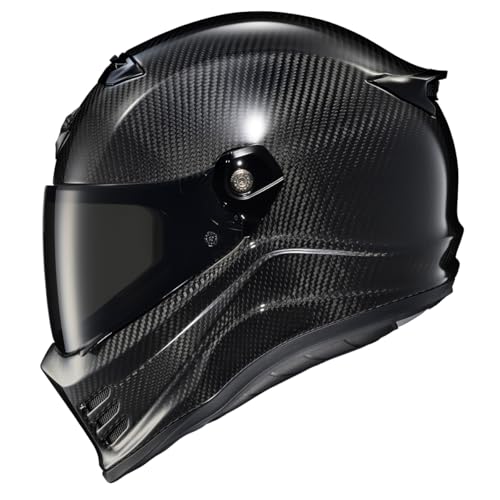 |
Best Streetfighter-Style Carbon | Weight: 1,348 g / 2.9 lb (size medium), per the manufacturer listing | Shell Material: TCT-U 3K carbon fiber, 2 shell sizes | Extras: Comm-ready speaker pockets, tool-less shield removal | VIEW LATEST PRICE | Read Our Analysis |
| LS2 Rapid III |  |
Best Budget Lightweight Pick | Weight: 1,350 g ± 50 g (2.98 lb), per the manufacturer listing | Shell Material: High Pressure Thermoplastic Technology (HPTT), 3 shell sizes | Cheek Pads: 3D laser-cut, multiple thicknesses available | VIEW LATEST PRICE | Read Our Analysis |
| ScorpionEXO R1 Air Carbon |  |
Best Sport/Track Carbon | Weight: 1,383 g / 3.05 lb (size medium), per the manufacturer listing | Shell Material: TCT-U 3K carbon fiber, 3 shell sizes | Extras: Comm-ready speaker pockets, Airfit cheek pad inflation system | VIEW LATEST PRICE | Read Our Analysis |
| ScorpionEXO XT9000 Carbon Fiber Adventure |  |
Best Adventure/Touring Carbon | Weight: 1,580 g / 3.48 lb (size medium), per the manufacturer listing | Shell Material: TCT-Ultra 3K carbon fiber | Extras: Action-cam mounting plate included | VIEW LATEST PRICE | Read Our Analysis |
| LEM Full-Face Helmet with DVS Dual Ventilation |  |
Best Budget Touring Pick | Weight: 1,699 g (3.75 lb), per the manufacturer listing | Shell Material: Fiberglass | Chin Strap: Double D-ring buckle | VIEW LATEST PRICE | Read Our Analysis |
More Details on Our Top Picks
kaESE Carbon Fiber Full-Face Helmet
At 1,150 g, this is the lightest helmet on our list by a comfortable margin, and it gets there with a carbon fiber shell instead of the fiberglass or ABS most budget full-face helmets use. If a single number is your priority, this is the one to beat, and the aerodynamic spoiler and vented shell are built around keeping that low weight stable at speed rather than just shaving grams and hoping for the best.
The catch, and we will say it plainly, is that kaESE is not a name with the track record of AGV, Shoei, or Scorpion. The listing states DOT FMVSS 218 compliance, which is a self-certification standard the manufacturer signs off on itself - there is no ECE 22.06 rating, which would mean an independent lab actually tested the shell. That does not mean the helmet fails to protect, but it does mean you are trusting the brand's word on both the weight figure and the safety claim, with no third-party check on either one.
Day to day, the mesh liner is removable and washable, and the shell includes front and rear vents feeding a high-density EPS liner. Bluetooth speaker pockets are built in for riders who run a comm system, and the rear spoiler is a genuine aerodynamic feature on this shell rather than a cosmetic add-on, since a lighter shell is more prone to lift and buffet at highway speed without one.
This is the pick for a rider who wants the lowest weight number available and is comfortable with a DOT-only, lesser-known brand to get it. If you want that same low-weight carbon construction backed by a name with a longer safety record and an independent ECE test, the ScorpionEXO and LS2 picks below cost more but close that gap.
- Weight:1,150 g (2.54 lb), per the manufacturer listing
- Shell Material:Carbon fiber
- Certifications:DOT FMVSS 218 only - no ECE rating listed
- Visor:Clear anti-scratch shield with integrated rear spoiler
- Ventilation:Front and rear vents with a high-density EPS liner underneath
- Liner:Removable, washable mesh liner
LS2 Dragon Carbon
LS2 has been building helmets long enough to have a real track record, which puts the Dragon Carbon in a useful middle ground: a 1,280 g 6K carbon shell from an established brand, at a price well under the flagship Scorpion and premium racing helmets further down this list. The 3-shell-size construction (XS-S, M-L, XL-3XL) also means the weight figure stays closer to accurate across a wider range of head sizes than a single-shell design would.
The internal sun shield is a genuine daily-riding convenience that some of the pure-carbon race shells skip, and the X-Static silver liner is marketed for moisture control on longer rides, not just comfort padding. The double D-ring buckle with emergency-release cheek pads is the same safety-focused hardware you would expect on a helmet twice the price.
Certification-wise, the listing states DOT FMVSS 218 only. LS2 does sell ECE-rated versions of some models in other markets, but this specific US listing does not carry that stamp, so treat it the same way as the other DOT-only picks here: compliant with the US standard, not independently lab-tested against the European one.
If you want a name-brand carbon shell without paying Scorpion or Shoei money, this is the pick. If ECE 22.06 certification specifically matters to you, the ScorpionEXO Covert FX Carbon and R1 Air Carbon below both carry it at a similar or slightly higher price.
- Weight:1,280 g ± 50 g (2.82 lb), per the manufacturer listing
- Shell Material:6K carbon fiber, 3 shell sizes (XS-S, M-L, XL-3XL)
- Certifications:DOT FMVSS 218 - no ECE rating listed
- Visor:Pinlock 120 MaxVision shield with an integrated sun shield
- Liner:X-Static silver moisture-wicking liner, removable and washable
- Chin Strap:Double D-ring buckle with an emergency-release cheek pad system
ScorpionEXO Covert FX Carbon Fiber
The Covert FX Carbon is Scorpion's streetfighter-styled shell, and at 1,348 g for a size medium it lands right in the middle of this list's weight range while carrying both DOT FMVSS 218 and ECE 22.06 certification. That dual stamp matters: ECE 22.06 is tested by an accredited lab rather than self-certified by the manufacturer, and it is the newer, broader version of the standard that adds rotational-impact testing DOT does not require at all.
Scorpion's TCT-U 3K carbon fiber shell construction is the same family of material used across its higher-end lineup, built in two shell sizes so the weight figure holds reasonably steady whether you order a small or an XL. The included spare dark-smoke shield is a genuinely useful extra for riders who switch between daylight and dusk without carrying a second helmet.
Venting is more modest here than on the touring-oriented picks - a top intake vent and an adjustable, closable mouth vent - which is part of how Scorpion kept the shell light. Comm-ready speaker pockets and a tool-less shield swap round out the practical features.
This is the pick if you want an ECE-certified carbon shell with a distinct streetfighter look rather than a track-focused profile. If you specifically want the most airflow for hot-weather riding, the XT9000 further down this list is built with more adjustable venting at the cost of extra weight.
- Weight:1,348 g / 2.9 lb (size medium), per the manufacturer listing
- Shell Material:TCT-U 3K carbon fiber, 2 shell sizes
- Certifications:DOT FMVSS 218 and ECE 22.06
- Visor:EverClear anti-fog shield; spare dark-smoke shield included
- Ventilation:Top intake vent with an adjustable dual-position mouth vent
- Extras:Comm-ready speaker pockets, tool-less shield removal
LS2 Rapid III
The Rapid III is not a carbon helmet, and that is the point of including it here: it proves you do not need a carbon shell to hit a competitive weight. At 1,350 g ± 50 g, it lands within a few grams of the carbon-shelled Covert FX above, using a High Pressure Thermoplastic Technology (HPTT) shell instead, at a fraction of the price of any carbon pick on this list.
Both DOT FMVSS 218 and ECE 22.06 certification are listed, matching the coverage of the pricier ScorpionEXO helmets above and below it, which is not something every budget shell can claim. The 3-shell-size construction (with 5 EPS sizes and 7 liner sizes, per the listing) is aimed at getting a closer individual fit than a single universal shell size allows.
The A-Class polycarbonate shield with double-injected rubber edging is built to keep water and debris out rather than just look clear, and the technical fabric liner is removable and washable for regular cleaning. None of this is exotic - it is a well-specified, mainstream budget helmet that happens to also be light.
Pick this one if the budget is the deciding factor and you still want a genuinely light, dual-certified full-face rather than the heavier ABS shells that dominate this price range. If shaving another 50-100 g matters more than price, the carbon picks above get you there at roughly triple the cost.
- Weight:1,350 g ± 50 g (2.98 lb), per the manufacturer listing
- Shell Material:High Pressure Thermoplastic Technology (HPTT), 3 shell sizes
- Certifications:DOT FMVSS 218 and ECE 22.06
- Visor:A-Class polycarbonate shield with double-injected rubber sealing
- Liner:Removable, washable technical fabric liner
- Cheek Pads:3D laser-cut, multiple thicknesses available
ScorpionEXO R1 Air Carbon
The R1 Air Carbon is Scorpion's sport-oriented shell, built around a venturi-effect ventilation system that channels air front to back through dual ram-air intakes and a spoiler-integrated exhaust. At 1,383 g for a size medium, it is a touch heavier than the Covert FX above, which is the trade-off for the more aggressive ventilation and track-focused aerodynamics this shell is designed around.
Both DOT FMVSS 218 and ECE certification are listed, and the shell comes in three sizes rather than two, which should keep the weight figure more consistent from a small through an XL than a single-shell or two-shell design. The Airfit inflation system lets you fine-tune cheek pad pressure without swapping to a different pad size, which is a feature usually reserved for helmets well above this price.
The included spare dark-smoke shield and the standard MaxVision Pinlock-ready clear shield cover both daylight and low-light riding without buying a second visor separately. Comm-ready speaker pockets are built into the liner for riders running a Bluetooth system.
This is the pick for spirited canyon riding or track days, where the extra ventilation earns its keep and the weight is still well under a typical modular or ADV helmet. For pure highway touring where wind noise matters more than airflow, weigh this against the quieter, heavier options on our quietest full-face helmet list.
- Weight:1,383 g / 3.05 lb (size medium), per the manufacturer listing
- Shell Material:TCT-U 3K carbon fiber, 3 shell sizes
- Certifications:DOT FMVSS 218 and ECE
- Visor:MaxVision Pinlock-ready shield; spare dark-smoke shield included
- Ventilation:Dual ram-air intakes with spoiler-integrated exhaust
- Extras:Comm-ready speaker pockets, Airfit cheek pad inflation system
ScorpionEXO XT9000 Carbon Fiber Adventure
The XT9000 is the heaviest helmet on this list at 1,580 g, and we included it anyway because it is still lighter than most full-face adventure and touring helmets on the market, carbon or not, and it is dual-certified to DOT and ECE 22.06. The extra weight versus the sport-oriented R1 Air above buys a taller, wider eye port built to fit most goggles and a chin bar vent you can remove without tools for more airflow to the face.
TCT-Ultra 3K carbon fiber is Scorpion's shell designation for this model, paired with multi-layer EPS foam that the listing describes as having strategically placed channels to increase airflow through the impact liner itself, not just the shell vents. The included action-cam mounting plate is a genuinely useful extra for riders who record their touring routes.
Comm-ready speaker pockets and a tool-less shield system carry over from the rest of the Scorpion lineup here, along with a spare Pinlock 100% MaxVision shield and anti-fog insert included in the box.
Choose this one if your riding is mixed pavement and gravel, or long-distance touring where the wider field of view and extra ventilation matter more than shaving the last 200 g. For pure street or track riding, the lighter Covert FX or R1 Air above will feel noticeably less top-heavy.
- Weight:1,580 g / 3.48 lb (size medium), per the manufacturer listing
- Shell Material:TCT-Ultra 3K carbon fiber
- Certifications:DOT FMVSS 218 and ECE 22.06
- Visor:MaxVision Pinlock-ready shield; wide eye port fits most goggles
- Ventilation:Adjustable, tool-free chin bar vent plus closable top intake and exhaust vents
- Extras:Action-cam mounting plate included
LEM Full-Face Helmet with DVS Dual Ventilation
The LEM is the heaviest helmet on this list at 1,699 g, and it earns its spot for a different reason than the carbon picks above: it is a fiberglass full-face, which is usually heavier than carbon or thermoplastic construction, that still comes in noticeably lighter than a comparable modular or ADV helmet, at a fraction of the price of anything else here.
Fiberglass has a long track record as a shell material, predating carbon fiber in motorcycle helmets by decades, and this one is built with a DVS (dual ventilation system) that adjusts between a defrost setting and open airflow. The Pinlock-ready anti-fog shield and multi-language manual suggest this is made for a global market rather than a single region's certification requirements.
Only DOT FMVSS 218 is listed here, with no ECE rating, so treat the certification the same way as the kaESE pick: compliant with the self-certified US standard, not independently lab-tested. LEM is not a household name in North America, so factor that into how much you weigh the certification gap.
This is the pick if your budget rules out every carbon option above and you still want a full-face that will not fatigue your neck as badly as a heavier ABS shell on a long ride. If neck fatigue specifically is what is driving the purchase, also see our picks for riders with neck pain, which weigh comfort and fit alongside raw weight.
- Weight:1,699 g (3.75 lb), per the manufacturer listing
- Shell Material:Fiberglass
- Certifications:DOT FMVSS 218 only - no ECE rating listed
- Visor:Pinlock-ready anti-fog shield with DVS dual ventilation
- Liner:3D contoured, removable and washable
- Chin Strap:Double D-ring buckle
How to Choose a Lightweight Full-Face Helmet
Every helmet on this list is lighter than a typical full-face shell, but "lightest" is not a single number you can shop by in isolation. Shell material, certification, and how the weight is actually measured all change what that gram figure means in practice. Here is what to check before you buy on weight alone.
Why Helmet Weight Matters
A helmet is not a static weight sitting on your head - it is a mass your neck muscles have to stabilize through every acceleration, braking event, and gust of wind for as long as you are riding. On a short commute that difference is barely noticeable. On a multi-hour highway run or a full day at the track, an extra few hundred grams adds up to real muscular fatigue, and any aerodynamic lift the shell generates at speed gets added on top of the static weight. That is the whole case for a lighter shell: less mass, less fatigue, over the course of a long ride.
Carbon Fiber vs. Composite vs. Polycarbonate Shells
Carbon fiber is stiff relative to its weight, which lets a manufacturer use a thinner shell to hit the same impact-energy-absorption target a thicker fiberglass or polycarbonate shell needs to reach. That is why five of the seven helmets on this list use a carbon weave - it is currently the most reliable way to cut shell weight without cutting the amount of energy the shell and EPS liner together are built to absorb. It is not magic, though, and it is not free: carbon shells generally cost more to manufacture, which is reflected in the price gap between our carbon picks and the LS2 Rapid III's thermoplastic shell or the LEM's fiberglass one. Both of those non-carbon picks prove a lighter weight is achievable without carbon, just with a smaller margin and a lower ceiling on how light the shell can get.
How Weight Is Measured - and the Size-M Catch
Every weight figure in this guide comes directly from the manufacturer's own product listing, and almost all of them are explicitly quoted for a size medium shell. Helmets built in multiple shell sizes (most of the picks above use 2-3 shell sizes across their size range) will weigh somewhat more in an XS or 3XL than the number quoted for a mid-range size, because a smaller or larger shell still needs enough material to pass the same impact test. On top of that, anything you bolt onto the helmet after it leaves the factory - a Pinlock anti-fog insert, a Bluetooth comm speaker kit, a tinted spare visor - adds weight the spec sheet does not include. Treat every number here as a starting point, not the exact weight of the helmet that arrives at your door.
Weight vs. Noise and Venting Tradeoffs
A lighter shell is not automatically a quieter or better-vented one, and sometimes it is the opposite. Thinner carbon shells can flex slightly at speed in a way a thicker composite shell will not, which can translate into more buzz or drone on the highway. More venting also usually means more shell material removed, which cuts weight but can let more wind noise in through the vent openings themselves - the streetfighter-style Covert FX above keeps venting modest partly for this reason, while the touring-oriented XT9000 accepts more noise and weight for more airflow. If low noise matters more to you than the lowest possible gram count, our quietest motorcycle helmet picks prioritize that trade-off differently.
Certification Does Not Take a Backseat to Weight
None of the weight savings on this list come at the expense of certification for the helmets that carry ECE 22.06 alongside DOT - the ScorpionEXO Covert FX Carbon, R1 Air Carbon, XT9000, and LS2 Rapid III all pass both. DOT FMVSS 218 is a self-certification standard: the manufacturer tests to the standard and signs off on compliance itself, with no independent lab check required. ECE 22.06 is tested by an accredited third-party lab and includes rotational-impact testing that DOT does not require at all. The two lightest and least expensive picks here, the kaESE and the LEM, list DOT only. That does not mean they fail to protect, but it does mean there is one less independent check behind both the safety claim and the weight figure on those two specifically - weigh that against the lower price and lower gram count before you decide.
Lightest Full-Face Motorcycle Helmet Comparison
| Helmet | Weight | Shell | Certification | Best For |
|---|---|---|---|---|
| kaESE Carbon Fiber Full-Face Helmet | 1,150 g (2.54 lb), per the manufacturer listing | Carbon fiber | DOT FMVSS 218 only - no ECE rating listed | Lightest Full-Face Overall |
| LS2 Dragon Carbon | 1,280 g ± 50 g (2.82 lb), per the manufacturer listing | 6K carbon fiber, 3 shell sizes (XS-S, M-L, XL-3XL) | DOT FMVSS 218 - no ECE rating listed | Best Carbon Value |
| ScorpionEXO Covert FX Carbon Fiber | 1,348 g / 2.9 lb (size medium), per the manufacturer listing | TCT-U 3K carbon fiber, 2 shell sizes | DOT FMVSS 218 and ECE 22.06 | Best Streetfighter-Style Carbon |
| LS2 Rapid III | 1,350 g ± 50 g (2.98 lb), per the manufacturer listing | High Pressure Thermoplastic Technology (HPTT), 3 shell sizes | DOT FMVSS 218 and ECE 22.06 | Best Budget Lightweight Pick |
| ScorpionEXO R1 Air Carbon | 1,383 g / 3.05 lb (size medium), per the manufacturer listing | TCT-U 3K carbon fiber, 3 shell sizes | DOT FMVSS 218 and ECE | Best Sport/Track Carbon |
| ScorpionEXO XT9000 Carbon Fiber Adventure | 1,580 g / 3.48 lb (size medium), per the manufacturer listing | TCT-Ultra 3K carbon fiber | DOT FMVSS 218 and ECE 22.06 | Best Adventure/Touring Carbon |
| LEM Full-Face Helmet with DVS Dual Ventilation | 1,699 g (3.75 lb), per the manufacturer listing | Fiberglass | DOT FMVSS 218 only - no ECE rating listed | Best Budget Touring Pick |
Ride a flip-up instead? A modular helmet's hinge and second visor add weight, so the lightest ones are a different shortlist. See our lightest modular motorcycle helmets guide.
Frequently Asked Questions
How much does a lightweight motorcycle helmet weigh?
Among current full-face helmets that publish an actual weight figure, our picks range from 1,150 g to 1,699 g (about 2.5 to 3.75 lb), most quoted for a size medium shell. A typical uncertified-weight full-face helmet, by comparison, often runs closer to 1,700-1,900 g once you add a heavier ABS or polycarbonate shell and modular hardware, so anything under about 1,400 g counts as genuinely light for a full-face design.
Does a lighter helmet mean less protection?
Not by itself. DOT and ECE certification tests measure how well a helmet's shell and EPS liner absorb and manage impact energy, not how much the finished helmet weighs. A carbon shell can hit the same certified impact-absorption target as a heavier fiberglass or polycarbonate shell using less material, because carbon fiber is stiffer relative to its weight. What weight does affect is neck fatigue over a long ride and, to a smaller degree, how the helmet feels in a low-speed tip-over, which is a different question from certified impact performance.
Why do carbon fiber motorcycle helmets cost more than fiberglass or polycarbonate ones?
Carbon fiber weave is more expensive to source and lay up into a helmet shell than fiberglass or injection-molded polycarbonate, and it typically requires more precise manufacturing to maintain consistent strength. That cost shows up directly in price: the carbon-shelled helmets on this list generally cost two to five times as much as the LS2 Rapid III's thermoplastic shell or the LEM's fiberglass shell, both of which still land in a competitive weight range without the carbon premium.
Does helmet weight change between sizes?
Yes. Most of the helmets on this list are built in 2-3 different shell sizes to cover their full size range, and the weight figure manufacturers publish is almost always for a size medium shell specifically. A smaller or larger shell in the same model will weigh somewhat more or less than that quoted number, and features you add afterward - a Pinlock anti-fog insert, a Bluetooth comm speaker kit, a tinted spare visor - all add grams the spec sheet does not count.
Is a lighter motorcycle helmet automatically quieter?
No, and sometimes it is the opposite. A thinner carbon shell can flex slightly at highway speed in a way a thicker composite shell resists better, which can add buzz or drone rather than reduce it. More ventilation cuts weight by removing shell material, but vent openings are also a common path for wind noise to enter the helmet. If quiet is your top priority, see our quietest motorcycle helmet picks, which are chosen for noise control specifically rather than weight.
DOT vs ECE vs Snell vs MIPS, how to pick the right lid in 60 seconds, and when to replace it. One page, no fluff.
