
Affiliate disclosure As an Amazon Associate we earn from qualifying purchases, at no extra cost to you.
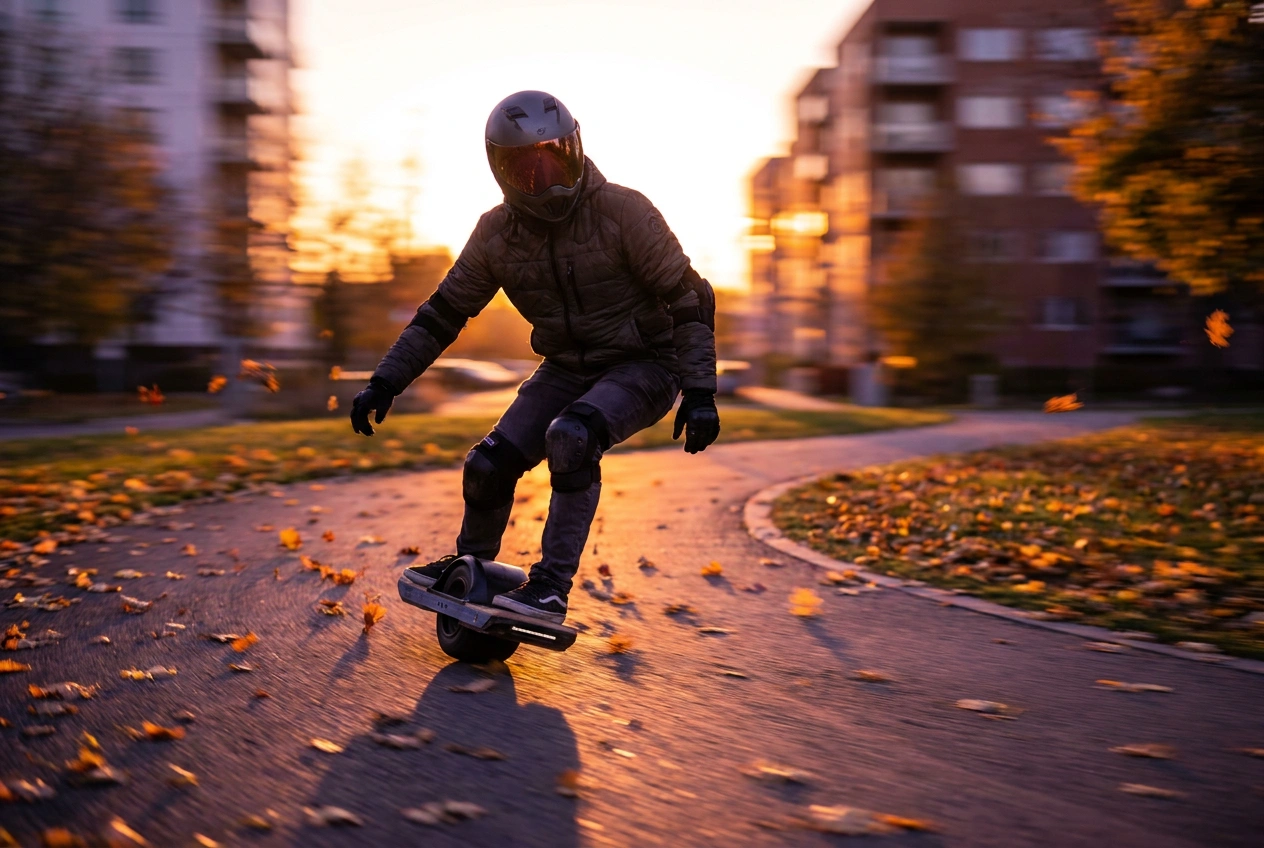
Most people buy a onewheel first and a proper helmet about four faceplants later. That is the wrong order, and it is a common one. So before that happens, here is the short version: a onewheel throws you forward, onto your face, faster than your hands can save you, which is exactly why the experienced-rider crowd treats a full-face as the default rather than the upgrade.
For this guide our research desk cross-referenced what riders actually run on r/onewheel and the EUC forums, the safety standards each helmet is certified to (ASTM F1952, EN 1078, CPSC and friends), and which models you can actually buy on Amazon instead of from a boutique with a six-week wait. We started with the community's usual suspects and ended with eight helmets that cover every speed and budget, from a 980-gram fiberglass race lid to a certified cruising bucket.
Five are full-face, three are half-shell, and we are honest below about when each one is the right call. Let's get into it.
Key Takeaways
- The TSG Pass Pro is the rider-favorite full-face: 980 g, fiberglass, and dual-certified to ASTM F1952 and EN 1078. It even lists "E-Onewheeling" on the box.
- Want rotational (MIPS) protection without boutique pricing? The Bell Sanction 2 DLX MIPS is the value full-face, with a one-handed Fidlock magnetic buckle.
- The Demon Podium X MIPS is the lightest full-face here at 710 g with 20+ vents, the comfort pick for long or warm rides.
- Onewheel crashes are usually forward faceplants, so a full-face protects the part you most want to keep. Save half-shells for genuinely low speeds.
- The best certified half-shells (S1 Lifer, Triple Eight Gotham MIPS) carry dual or triple safety ratings, not the single-standard foam of a big-box skate bucket.
| TSG Pass Pro Full-Face Helmet |  |
Best Overall | Type: Full-face | Certifications: ASTM F1952 + EN 1078 | Best for: Fast onewheel and EUC riding | VIEW LATEST PRICE | Read Our Analysis |
| Bell Sanction 2 DLX MIPS |  |
Best Value Full-Face | Type: Full-face (DH bike) | Rotational: MIPS Essential | Best for: Riders who want MIPS without the premium price | VIEW LATEST PRICE | Read Our Analysis |
| Demon United Podium X MIPS |  |
Best Lightweight Full-Face | Type: Full-face | Rotational: MIPS | Best for: Long sessions and warm-weather riders | VIEW LATEST PRICE | Read Our Analysis |
| Maxfind Cyber Full-Face Helmet |  |
Best Made-for-PEV | Type: Full-face | Shell: Fiberglass | Best for: EUC and e-skate riders who want a purpose-built lid | VIEW LATEST PRICE | Read Our Analysis |
| ILM Full Face MTB BMX Helmet (HT58) | 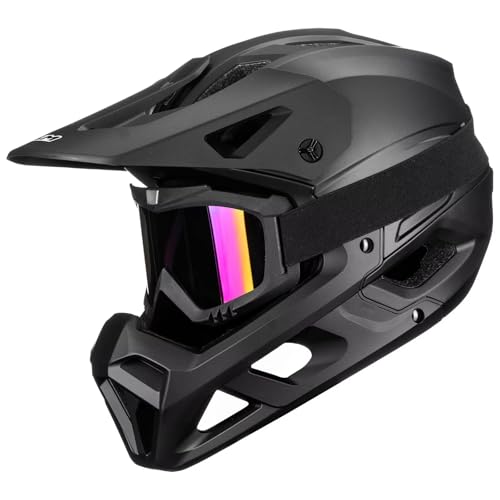 |
Best Budget Full-Face | Type: Full-face | Certifications: ASTM F1447 + CPSC | Best for: Cheapest certified full-face | VIEW LATEST PRICE | Read Our Analysis |
| S1 Lifer Helmet |  |
Best Half-Shell for Cruising | Type: Half-shell | Foam: EPS Fusion (multi-impact) | Best for: Low-speed cruising with real protection | VIEW LATEST PRICE | Read Our Analysis |
| Triple Eight Gotham MIPS |  |
Best Half-Shell with MIPS | Type: Half-shell | Rotational: MIPS | Best for: Commuters who want rotational protection in a half-shell | VIEW LATEST PRICE | Read Our Analysis |
| Triple Eight Certified Sweatsaver |  |
Best Budget Half-Shell | Type: Half-shell | Foam: EPS + dual-density soft foam | Best for: Cheapest properly certified bucket | VIEW LATEST PRICE | Read Our Analysis |
More Details on Our Top Picks
TSG Pass Pro Full-Face Helmet
If you spend ten minutes on r/onewheel, the TSG Pass shows up in roughly every other helmet thread, and the Pass Pro is the upgraded version of that cult favorite. The fiberglass shell is rated to both ASTM F1952 (the US downhill-MTB standard) and EN 1078, which is exactly the dual-certification pairing the PEV safety crowd looks for in a high-speed full-face.
It is genuinely light for a hardshell full-face at 980 g, and TSG actually lists "E-Onewheeling" in the product description, which is rare honesty from a helmet brand. You get two spherical visors (clear and mirrored), an anti-fog coating, and a little exhalation baffle around the nose so your own breath stops fogging the shield at a stop light.
The catch is the same one owners mention constantly: the Double D-ring strap is more fiddly than a buckle when you are gloved up, and ventilation is fine but not arctic in July. Sizing also runs a touch small, so if your head is near the top of a size range, order up.
For riders going above 20 mph who want the helmet the experienced crowd actually wears, this is the one to start with. The community's other darling, the Predator DH6-XG, is lighter still but is sold direct rather than on Amazon.
- Type:Full-face
- Certifications:ASTM F1952 + EN 1078
- Shell:Fiberglass
- Weight:980 g (2.16 lb)
- Visors:2 included (clear + mirrored, anti-fog)
- Closure:Double D-ring
- Ventilation:Air-Flow vent system
- Best for:Fast onewheel and EUC riding
Bell Sanction 2 DLX MIPS
Bell's Sanction 2 is a downhill mountain-bike helmet, and that is exactly why it works for onewheeling: it is built for low-speed-to-moderate faceplants on hardpack, which is most of what ends a onewheel session. The DLX trim adds MIPS, the slip-plane liner designed to bleed off the rotational forces that cause concussions in angled hits.
The Fidlock magnetic buckle is the quiet hero here. Clicking a magnet shut one-handed, instead of threading a D-ring with gloves on, is the kind of small thing owners rave about. The Ionic+ padding fights the funk that every well-used helmet eventually develops.
It is not the lightest lid in this list and the fit leans round-oval, so long-oval heads may feel pressure at the forehead. Bell's sizing chart is accurate, so measure and trust it rather than guessing.
For most riders who want real rotational protection without paying boutique-PEV prices, the Sanction 2 DLX is the sensible pick. If you do not need MIPS, the standard Sanction 2 saves you money.
- Type:Full-face (DH bike)
- Rotational:MIPS Essential
- Buckle:Fidlock magnetic
- Padding:Ionic+ anti-odor
- Visor:Flying Bridge
- Weight:~1,000 g
- Sizes:XS-XL
- Best for:Riders who want MIPS without the premium price
Demon United Podium X MIPS
At 710 g, the Podium X is the lightest full-face here, and your neck notices on a long ride. Demon added MIPS and a genuinely serious 20-plus vent layout, so it breathes far better than the sealed-up race helmets.
The fit pads come in multiple thicknesses and pop out for washing, which is how you actually dial a full-face to your head instead of buying three sizes and returning two. The visor is removable if you mount a light or camera up top.
Demon is a budget-friendly brand and the finish shows it next to a TSG, but the safety hardware (MIPS, downhill rating, multi-density foam) is the part that matters in a crash, and that is all present.
If you overheat in a sealed helmet or ride trails where you pedal-or-push back uphill, the Podium X's weight and venting make it the comfortable choice.
- Type:Full-face
- Rotational:MIPS
- Weight:710 g
- Vents:20+
- Visor:Removable
- Padding:Removable, washable, multiple thicknesses
- Sizes:S/M, L/XL
- Best for:Long sessions and warm-weather riders
Maxfind Cyber Full-Face Helmet
Most full-faces we recommend for onewheeling are borrowed from downhill MTB. The Maxfind Cyber is one of the few designed from the start around EUC, e-skate and e-bike use, with a fiberglass shell and multi-density EPS at a sane 900 g.
The wide polycarbonate visor gives you the big field of view you want when you are scanning pavement for the pothole that is going to ruin your day, and the whole liner is removable and washable.
Maxfind is better known for boards than helmets, so there is less independent crash-lab data on this one than on a Bell or TSG. The listing leans on construction specs rather than a headline certification number, so treat it as a comfort-and-fit pick rather than a lab-proven one.
If you specifically want a helmet built around PEV riding and ergonomics rather than a repurposed bike helmet, the Cyber is the most on-the-nose option on Amazon.
- Type:Full-face
- Shell:Fiberglass
- Weight:900 g
- Liner:Multi-density EPS
- Visor:Polycarbonate
- Interior:Removable, washable
- Sizes:M/L/XL
- Best for:EUC and e-skate riders who want a purpose-built lid
ILM Full Face MTB BMX Helmet (HT58)
ILM is the budget-helmet brand that shows up under dozens of product photos, and the HT58 is its current full-face MTB/BMX lid, sold with a pair of goggles included. The reason it earns a spot: the listing states it is tested to ASTM F1447 and CPSC standards, which is real crash-lab certification most cheap full-faces skip.
The shell is EPS foam with an EPP-reinforced chin bar for impact absorption, and the fit comes from an adjustable buckle plus a dial-style size adjuster rather than fixed shell sizes. The visor repositions for changing light, and the liner is removable and washable.
You are not getting MIPS or a fiberglass shell here, and ILM does not publish a weight figure for this model. But a certified full-face that protects your face beats an uncertified half-shell that leaves your chin exposed, every single time.
If you are new to onewheeling and not ready to spend TSG money before you know you will stick with it, this is the honest budget entry point. Upgrade later; protect your teeth now.
- Type:Full-face
- Certifications:ASTM F1447 + CPSC
- Shell:EPS foam shell; EPP-reinforced chin bar
- Weight:Not specified by manufacturer
- Visor:Adjustable
- Includes:Goggles
- Fit:Adjustable buckle + dial size adjuster
- Best for:Cheapest certified full-face
S1 Lifer Helmet
Not everyone rides a onewheel at 20 mph, and if you are pootling around the neighborhood, a full-face can be overkill. The S1 Lifer is the half-shell the skate world trusts because its EPS Fusion foam is certified for both multi-impact (ASTM) and high-impact (CPSC).
That dual certification is the whole point. Most cheap skate buckets are single-standard foam; the Lifer's deeper fit and thicker certified foam are why S1 claims it is several times more protective than a standard skate helmet.
It is still a half-shell, so the chin and face are on their own. For onewheel specifically, where the classic crash is a forward faceplant, it is best kept to lower speeds, or for riders who genuinely trust their nosedive instincts.
As the certified bucket for cruising, the Lifer is the one to choose over any unrated skate helmet from a big-box store.
- Type:Half-shell
- Foam:EPS Fusion (multi-impact)
- Certifications:ASTM (multi-impact) + CPSC (high-impact)
- Fit:Deep-fit shell + sizing liners
- Weight:~430 g
- Sizes:XS-XXL
- Best for:Low-speed cruising with real protection
Triple Eight Gotham MIPS
If you want the slip-plane benefit of MIPS but cannot live with a full-face for a daily commute, the Triple Eight Gotham is the half-shell answer. It stacks MIPS on top of a triple certification (CPSC plus ASTM F1447 and F1492).
The dial-fit system and two sets of pads make it easy to get a no-wobble fit, which matters more than people think: a helmet that shifts on your head is doing half its job. The vented ABS shell keeps it cool for city riding.
It is a heavier, chunkier-looking half-shell than a minimalist skate lid, and that brim-and-shell styling is not for everyone. But you are buying it for the rotational protection, not the runway look.
For a low-to-moderate-speed onewheel commuter who refuses a full-face, the Gotham is the most protective half-shell on this list.
- Type:Half-shell
- Rotational:MIPS
- Certifications:CPSC + ASTM F1447 + ASTM F1492
- Fit:Dial adjust + fit pads
- Shell:Vented ABS
- Warranty:180 days
- Sizes:XS/S-L/XL
- Best for:Commuters who want rotational protection in a half-shell
Triple Eight Certified Sweatsaver
The Sweatsaver is the helmet that taught a generation of skaters what a comfortable certified bucket feels like, and it is still the value benchmark. The triple certification (CPSC, ASTM F1447, F1492) is the same as the pricier Gotham; what you give up is MIPS.
The Sweatsaver liner is the comfort story: plush, moisture-wicking, and it ships with two pad sets so you can break it in to your exact head. New, it fits snug; after a few hours it settles into place.
There is no rotational-protection layer and no chin bar, so this is firmly a low-speed, cruiser-and-commuter choice rather than a fast-rider's helmet.
If you want the cheapest helmet on this list that still meets real safety standards, this is it. Pair it with the certainty that you are riding at sensible speeds.
- Type:Half-shell
- Foam:EPS + dual-density soft foam
- Certifications:CPSC + ASTM F1447 + ASTM F1492
- Liner:Sweatsaver, two pad sets
- Weight:~390 g
- Sizes:XS/S-XL/XXL
- Best for:Cheapest properly certified bucket
How to Choose a Onewheel Helmet
A onewheel is not a bicycle and it is not a motorcycle, which is why helmet advice for those does not map cleanly onto it. Here is what actually matters.
Full-Face vs. Half-Shell: Be Honest About Your Speed
The signature onewheel crash is a nosedive: the board pitches forward, stops, and you keep going face-first. That is why riders who push past 15-20 mph almost universally run full-face lids like the TSG Pass Pro or Bell Sanction 2. A half-shell such as the S1 Lifer is a fine choice for slow neighborhood cruising, but it leaves your chin, teeth and jaw completely exposed. Match the helmet to your real top speed, not your average one.
Certifications Are Not All Equal
For high-speed PEV use, the gold pairing is ASTM F1952 (the US downhill-MTB standard, the same one used for downhill longboard helmets) plus EN 1078, which is what the TSG Pass Pro carries. For half-shells, look for foam that is certified multi-impact (ASTM) as well as high-impact (CPSC), like the S1 Lifer's EPS Fusion. A single CPSC sticker on a bargain skate helmet means it is rated for one bike-style hit and a single foam density. There is no onewheel-specific helmet standard yet, so you are borrowing from MTB and skate, and you want the stricter borrow.
MIPS and Rotational Protection
Most onewheel impacts are angled, not dead-straight, and angled hits create the rotational forces linked to concussion. MIPS (and similar slip-plane systems) let the shell rotate slightly against your head to bleed off that energy. The Bell Sanction 2 DLX, Demon Podium X and Triple Eight Gotham all include it. It is not magic and it is not a standard, but the lab data is good enough that the small premium is worth paying.
Weight and Ventilation
A heavy full-face on a long ride is a literal pain in the neck, and a sweaty one comes off at the worst moment. The Demon Podium X (710 g, 20+ vents) is the comfort benchmark here; the sealed-up TSG runs warmer in summer. If you ride long sessions or in heat, weigh comfort heavily, because the safest helmet is the one you keep wearing.
Fit and Sizing
Measure your head circumference with a soft tape just above the eyebrows, and check each brand's chart rather than guessing. Full-faces like the TSG run small, so size up if you are between sizes. A helmet that shifts when you shake your head is too loose; cheek pads should hug without crushing. Models with removable pad sets (Demon, Triple Eight) let you fine-tune the fit after the fact.
Onewheel Helmet Comparison
| Helmet | Type | Certification / Rotational | Weight | Best For |
|---|---|---|---|---|
| TSG Pass Pro Full-Face Helmet | Full-face | ASTM F1952 + EN 1078 | 980 g (2.16 lb) | Best Overall |
| Bell Sanction 2 DLX MIPS | Full-face (DH bike) | MIPS Essential | ~1,000 g | Best Value Full-Face |
| Demon United Podium X MIPS | Full-face | MIPS | 710 g | Best Lightweight Full-Face |
| Maxfind Cyber Full-Face Helmet | Full-face | - | 900 g | Best Made-for-PEV |
| ILM Full Face MTB BMX Helmet (HT58) | Full-face | ASTM F1447 + CPSC | Not specified | Best Budget Full-Face |
| S1 Lifer Helmet | Half-shell | ASTM (multi-impact) + CPSC (high-impact) | ~430 g | Best Half-Shell for Cruising |
| Triple Eight Gotham MIPS | Half-shell | CPSC + ASTM F1447 + ASTM F1492 | - | Best Half-Shell with MIPS |
| Triple Eight Certified Sweatsaver | Half-shell | CPSC + ASTM F1447 + ASTM F1492 | ~390 g | Best Budget Half-Shell |
DOT vs ECE vs Snell vs MIPS, how to pick the right lid in 60 seconds, and when to replace it. One page, no fluff.
Riding a scooter rather than a onewheel? The standards differ, and our electric scooter helmet guide explains why NTA 8776 covers more than a plain bike helmet.
Frequently Asked Questions
Do I really need a full-face helmet for a onewheel?
If you ride above roughly 15-20 mph, yes. Onewheel nosedives throw you forward onto your face before your hands can react, and a half-shell does nothing for your chin or teeth. At slow cruising speeds a certified half-shell like the S1 Lifer is a reasonable compromise, but the full-face is the default among experienced riders for a reason.
What helmet certification should a onewheel helmet have?
There is no onewheel-specific standard, so riders borrow from downhill MTB and skate. For full-face, look for ASTM F1952 and EN 1078 (the TSG Pass Pro has both). For half-shells, look for foam certified to both ASTM (multi-impact) and CPSC (high-impact). Avoid uncertified novelty helmets entirely.
Is the TSG Pass Pro worth it over a cheaper full-face?
For fast riders, the dual certification, fiberglass shell, 980 g weight and twin anti-fog visors justify the price, and it is the helmet you will actually see on experienced onewheelers. If you are new and unsure you will stick with the hobby, a certified budget full-face like the ILM HT58 protects your face just as completely while you decide.
How often should I replace my onewheel helmet?
Replace it immediately after any real impact, even if the shell looks fine, because the EPS foam crushes once and does not recover. Absent a crash, most manufacturers suggest every three to five years as foam and straps age. If you cannot remember when you bought it, it is probably time.
Can I use a motorcycle helmet for onewheeling?
You can, and some fast EUC riders do, but a DOT/ECE motorcycle helmet is heavier and built for much higher-energy impacts, which can mean more neck strain for the lower-speed falls typical on a onewheel. A downhill-rated PEV or MTB full-face like the ones above is usually the better balance of protection and weight.
