
Affiliate disclosure As an Amazon Associate we earn from qualifying purchases, at no extra cost to you.
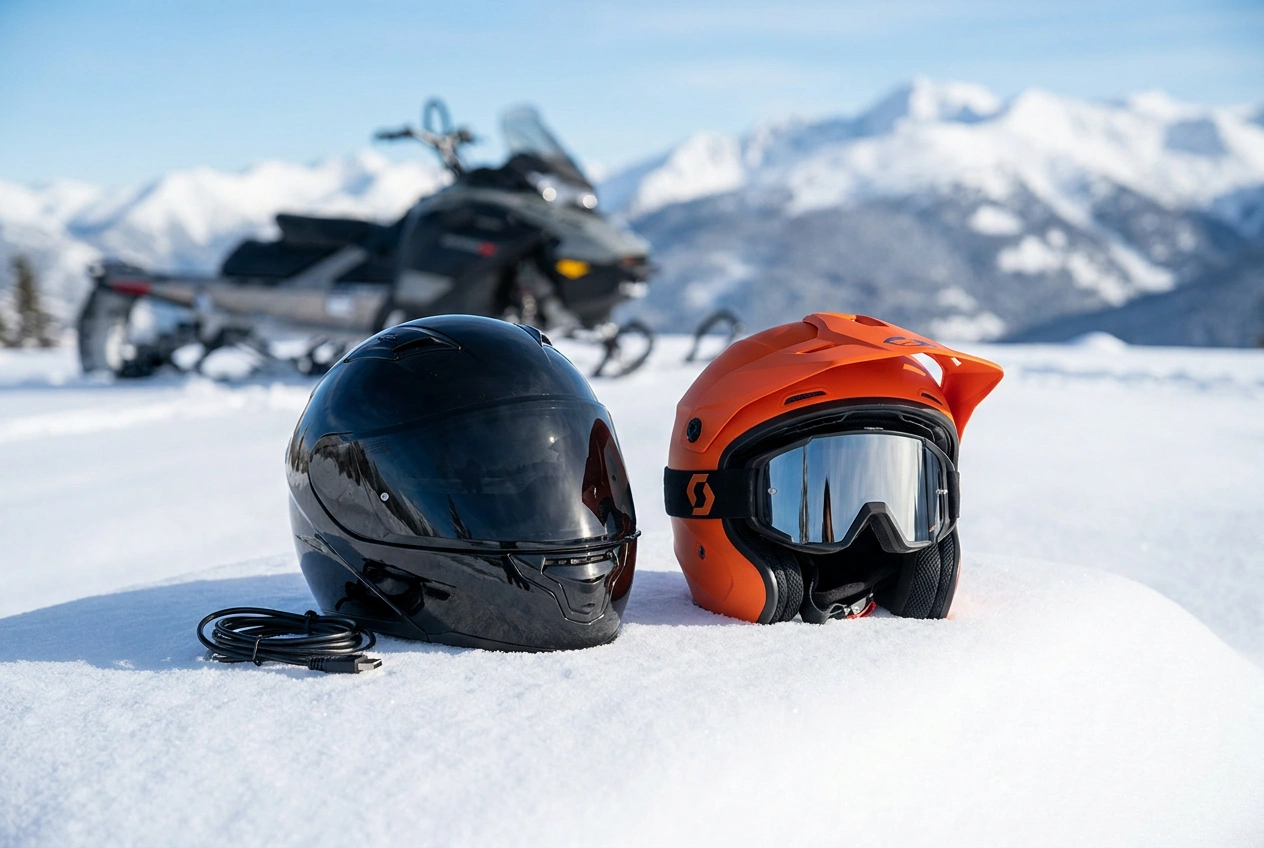
Pick by riding style, not brand loyalty. 509's Delta R4 Ignite is the trail rider's answer: a powered dual-pane heated shield that stays fog-free in sub-zero air, plus warmth and a sealed front. Klim's F3 Carbon is the backcountry tool: a featherweight carbon shell with an oversized eye port built to run goggles and dump heat while you climb. Shield warmth versus goggle airflow is the real choice.
This is one of the cleaner brand splits in winter helmets, because the two companies solved different problems. 509 built an ecosystem around a heated electric shield. Klim built a backcountry helmet around goggles and ventilation. Both are good. They are good at opposite things.
Our Research Desk read the published standards, the manufacturer spec sheets, and a stack of owner reports rather than handing you a hot-lap opinion. The question worth answering is not which brand wins. It is whether you ride pinned trail miles in the cold or claw up a mountain sweating into your goggles, because that decides everything.
509: the heated-shield system

The 509 Delta R4 Ignite is a full-face trail helmet built around 509's signature feature: the Ignite dual-pane heated shield. Power runs to the shield from a 12-volt source, and the heated dual-pane glass keeps fog and ice off the inside in sub-zero conditions. That is the whole pitch, and for trail riders who hate stopping to wipe a foggy visor at 30 below, it lands. The Delta carries a flip-up sun shield with a glove-friendly button, climate-control venting, dual-density EPS, and the Fidlock magnetic strap buckle that you can work with mittens on.
It is DOT approved and meets the FMVSS 218 standard. The trade-off is that this is a warm, sealed, shield-first helmet. You are carrying a powered system and a cord, and owners do report the occasional fussy shield connection. For going fast and staying warm with clear vision, that is a fair price.
- You ride trail and groomed miles more than you climb
- You want fog-free vision without stopping to wipe a visor
- Cold-soak warmth and a sealed front matter to you
- You are fine running a power cord to the shield
- You want a flip sun shield and glove-friendly controls
Klim: the backcountry goggle setup

The Klim F3 Carbon goes the other direction. There is no integrated shield. You run goggles, and the helmet exists to be light, ventilated, and out of your way. The shell is hand-laid carbon fiber, which makes it one of the lightest snow helmets in its class, and the oversized eye port gives you a wide field of view with your goggles seated. Ventilation is the headline: large intakes and exhaust paths designed to pull heat out, including while you are working at low speed or stopped, which is exactly when a backcountry rider overheats.
The F3 Carbon and its Carbon Pro sibling carry ECE certification, and the Pro variant adds Koroyd energy-absorbing structure for impact management. The sister F5 Koroyd line adds MIPS and ECE/DOT. If you climb, sidehill, and sweat, the light weight and airflow are the point. The catch is that you live and die by your goggle setup, and you give up the heated-shield anti-fog convenience entirely.
- You ride mountain and backcountry, not groomed trail
- You already run a goggle system you trust
- Low weight on a long climb matters more than warmth
- You overheat and need real venting at low speed
- You want carbon construction and a wide eye port
Which should you buy?
Match the helmet to where you actually ride. Trail and groomed-mile riders who want clear vision in the cold without babysitting a visor should take the 509 Delta R4 Ignite and its heated shield. Backcountry and mountain riders who run goggles, climb, and overheat should take the Klim F3 Carbon for the weight and airflow. There is no wrong answer here, only a mismatched one, and a heated trail helmet on a sweaty mountain day is the classic mismatch.
509 vs Klim snow helmets
| Feature | 509 (Delta / Altitude) | Klim (F3 / F5) |
|---|---|---|
| Best for | Trail and groomed riding in deep cold | Backcountry and mountain climbing |
| Shield vs goggles | Heated electric shield | Goggle-based |
| Anti-fog | Powered dual-pane heated shield | Depends on your goggle setup |
| Weight / ventilation | Heavier, sealed, warmth-focused | Light carbon, high-airflow venting |
| Certification | DOT (FMVSS 218) | ECE; F5 Koroyd adds ECE/DOT |
| Riding style | Trail | Backcountry / mountain |
DOT vs ECE vs Snell vs MIPS, how to pick the right lid in 60 seconds, and when to replace it. One page, no fluff.
Frequently Asked Questions
Does the 509 heated shield actually stop fog at very low temperatures?
That is its core function. The Ignite dual-pane shield runs on 12-volt power and heats the glass to keep fog and ice off the inside in sub-zero air. It is the main reason trail riders choose the Delta R4 Ignite. You do need to keep it powered, and some owners note the shield connection can be finicky, so seat it carefully.
Why does the Klim F3 Carbon not come with a face shield?
By design. The F3 Carbon is a backcountry MTN helmet meant to run goggles, so it uses an oversized eye port instead of a shield. That keeps weight down and airflow up, which is what mountain riders want when they are climbing and sweating. Your anti-fog performance then depends on the goggles you pair with it.
Are these helmets certified to the same safety standard?
Not identically. The 509 Delta R4 Ignite is DOT approved and meets FMVSS 218. The Klim F3 Carbon line is ECE certified, and the F5 Koroyd adds ECE/DOT plus MIPS. Standards vary by exact model and year, so confirm the marking on the specific helmet and size you buy before you ride.
Can I use the 509 Delta with goggles, or the Klim F3 with a shield?
Most riders run the Delta with its shield and the F3 with goggles, because each was engineered around its own system. You can wear goggles under many full-face snow helmets, but the Delta's value is the heated shield, and the F3 has no shield to add. Use each the way it was built and you get the most out of it.
Which brand is better for sweating on long backcountry climbs?
Klim, in this comparison. The F3 Carbon is light hand-laid carbon with ventilation tuned to pull heat out even at low or no speed, which is exactly when backcountry riders overheat. The 509 Delta is built for warmth and a sealed front, which is great on the trail and a liability when you are working hard uphill.
