
Affiliate disclosure As an Amazon Associate we earn from qualifying purchases, at no extra cost to you.
Wearing glasses on a sled is a two-problem situation, and most helmet guides cover only one of them. Problem one: most full-face helmets are designed for people who can just slide their head straight in - if you wear eyeglasses, a flip-up modular chin bar is the difference between a five-second put-on and a comedy of frames, cold fingers, and creative swearing in the parking lot. Problem two: eyeglasses create a second fog layer. Your shield fogs, your lenses fog in sympathy, and suddenly you are navigating a trail at speed through two layers of cloud. A dual-pane or heated/electric shield stops the shield from fogging, which also eliminates the temperature differential that fogs the glasses behind it. Solve both and cold-weather riding gets a lot more pleasant.
Our research desk cross-referenced rider reports from snowmobile forums, Amazon reviews from verified glasses-wearing sledders, and each helmet's actual features: modular chin bar mechanics (does it stay up while you don, and does it lock open hands-free?), eyeglass channel depth in the cheek padding, and whether the shield is genuinely dual-pane or heated electric rather than single-layer with an anti-fog coating that wears off by February. Eight helmets made the cut. All are modular or purpose-built full-face electric, every single one has a DOT certification, and all eight solve at least one of the two glasses problems - most solve both.
One thing we will save you the scroll on: the best snowmobile helmet for glasses is a modular. The chin bar flips up, you drop in your glasses, the chin bar comes back down, and you are done. Any "glasses channel" carved into cheek padding helps inside a fixed full-face, but it is a workaround - the modular is the answer. What follows is the best of them, ranked by how well they cover the dual fog problem too.
Key Takeaways
- Modular (flip-up) helmets are the practical choice for glasses wearers - the chin bar flips open for easy donning and dropping in frames without wrestling them past cheek pads.
- Dual-pane and heated/electric shields are critical - eyeglasses create a second fog layer inside the helmet; stopping shield fog (with a dual-pane or electric shield) also eliminates the temperature differential that fogs your lenses.
- The Castle X CX950 V2 is the top modular electric pick: purpose-built for snowmobiling with heated-ready wiring, a breath box, and a flip-up chin bar that locks open.
- ScorpionEXO GT930 and AT960 offer dual-pane or heated electric variants in a tried-and-tested adventure-modular shell - the glasses channel in the cheek pads is a genuine feature, not just marketing.
- Budget pick: the GMAX MD-01S with electric shield gives you the glasses-friendly modular format plus electric fog elimination at the lowest price on this list - the best value proposition for a heated snowmobile modular.
| Castle X CX950 V2 Modular Electric Snow Helmet | 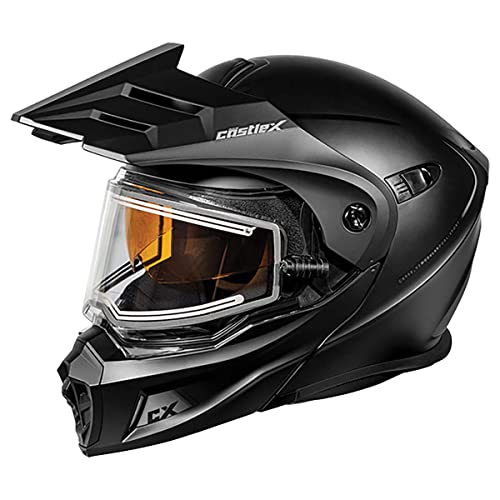 |
Best Overall for Glasses Wearers | Type: Modular (flip-up) | Glasses-friendly feature: Flip-up chin bar + eyeglass channels in cheek pads | Best for: Glasses wearers wanting full electric fog elimination | VIEW LATEST PRICE | Read Our Analysis |
| ScorpionEXO GT930 Modular Snowmobile Helmet Dual Pane Shield |  |
Best Dual-Pane Shield Pick | Type: Modular (flip-up) | Glasses-friendly feature: Flip-up chin bar + molded eyeglass channels | Best for: Glasses wearers who ride off-grid without sled power access | VIEW LATEST PRICE | Read Our Analysis |
| ScorpionEXO AT960 Modular Snowmobile Helmet Dual Pane Shield |  |
Best Premium Modular | Type: Modular (flip-up) | Glasses-friendly feature: Flip-up chin bar + recessed eyeglass channels | Best for: Riders who split time between trail and adventure touring | VIEW LATEST PRICE | Read Our Analysis |
| GMAX MD-01S Modular Snow Helmet Electric Shield |  |
Best Budget Electric Modular | Type: Modular (flip-up) | Glasses-friendly feature: Flip-up chin bar + quick release buckle | Best for: Budget-conscious glasses wearers who still want electric shield fog elimination | VIEW LATEST PRICE | Read Our Analysis |
| Typhoon TH158 Dual Visor Modular Snowmobile Helmet |  |
Best Value Dual Visor | Type: Modular (flip-up) | Glasses-friendly feature: Flip-up chin bar + dual-pane shield with retractable tinted sun visor | Best for: Glasses wearers who want a flip-up with a dual-pane shield and sun visor at an entry price | VIEW LATEST PRICE | Read Our Analysis |
| 509 Delta R4 Ignite Heated Shield Snowmobile Helmet |  |
Best Premium Heated Full-Face | Type: Full-face (non-modular) | Glasses-friendly feature: Wide eyeglass channels, wide eye port for easy frame positioning | Best for: Glasses wearers who prioritize premium shield quality over modular ease | VIEW LATEST PRICE | Read Our Analysis |
| CKX Contact Full-Face Electric Double Shield Helmet |  |
Best Full-Face Double Shield Budget | Type: Full-face (non-modular) | Glasses-friendly feature: Molded eyeglass channels in cheek padding, wide eye port | Best for: Budget full-face with electric double-shield fog protection for glasses wearers | VIEW LATEST PRICE | Read Our Analysis |
| ILM Modular Snowmobile ATV Helmet with Pinlock Anti-Fog Visor |  |
Best Budget Modular for Glasses | Type: Modular (flip-up, 3-in-1) | Glasses-friendly feature: Flip-up chin bar with large lock-release button | Best for: Budget glasses wearers who want a modular with Pinlock fog protection | VIEW LATEST PRICE | Read Our Analysis |
More Details on Our Top Picks
Castle X CX950 V2 Modular Electric Snow Helmet
The CX950 V2 is the helmet that comes up first when glasses-wearing sledders ask which modular actually works in deep cold. Castle X built it specifically for snowmobiling - not a motorcycle modular with a "snow" sticker - so the electric shield wiring routes properly through the chin bar, the breath box is integrated rather than an afterthought clip-on, and the cheek pads have genuine eyeglass channels pressed into them rather than the usual unbroken foam wall.
The modular chin bar is the key feature for glasses wearers. It flips up and locks open, so you can don the helmet, drop your glasses into position, and bring the chin bar back down without the usual pinch-and-hope routine of a fixed full-face. That lock-open feature is underrated on cold mornings with thick gloves - you want the bar staying up while you work, not threatening to snap back on your frames.
The electric shield is where the CX950 V2 solves the second problem. A heated shield eliminates the temperature differential across the visor surface, which means no fogging on the shield - and without a cold-inner-surface shield, the glasses behind it stay clearer too. You still need to connect the shield to a power source (12V sled power or a battery pack), which is the one operational step to plan for.
The polycarbonate shell is heavier than fiberglass but keeps the cost accessible for a full-featured electric modular. Fit runs slightly round-oval; long-oval heads should size up and try before a long day on the trails. For glasses-wearing snowmobilers who want the most complete answer to both the donning problem and the fog problem, this is our first recommendation.
- Type:Modular (flip-up)
- Glasses-friendly feature:Flip-up chin bar + eyeglass channels in cheek pads
- Shield:Electric heated (wiring routed to chin bar)
- Certification:DOT FMVSS No. 218
- Breath box:Yes - integrated
- Shell:Polycarbonate
- Sizes:S-3XL
- Best for:Glasses wearers wanting full electric fog elimination
ScorpionEXO GT930 Modular Snowmobile Helmet Dual Pane Shield
The GT930 is ScorpionEXO's purpose-built snowmobile modular, and the dual-pane shield variant is specifically the right choice for glasses wearers who trail-ride without easy access to sled power. A dual-pane shield works like a thermopane window: the dead air gap between two lenses prevents the inner surface from dropping to outside temperature, so fogging stops without any wiring. No battery pack, no connection to remember, just get on and ride.
ScorpionEXO includes actual eyeglass channels in the cheek padding - a molded relief that lets the arms of your glasses sit without pressure points across a full day of riding. Combined with the flip-up chin bar (which locks open), the GT930 is a practical glasses-on, glasses-off helmet in a way that fixed full-faces simply are not. The breath box is removable, useful if you also ride in milder weather.
The polycarbonate shell and DOT certification are standard for this segment. The fit is a comfortable medium-oval that most riders find accommodating, and the chin bar mechanism on ScorpionEXO modulars has a good reputation for long-term durability compared to some budget flip-up competitors that loosen over two seasons.
The one honest caveat: the dual-pane shield will not match a heated electric shield in extreme cold - below around -20 Celsius, temperature differential can still win. For most North American trail conditions, it handles the fog problem cleanly. If you regularly ride in severe arctic cold, step up to the GT930's electric-shield sibling.
- Type:Modular (flip-up)
- Glasses-friendly feature:Flip-up chin bar + molded eyeglass channels
- Shield:Dual-pane anti-fog (no power required)
- Certification:DOT FMVSS No. 218
- Breath box:Yes - removable
- Shell:Polycarbonate
- Sizes:XS-3XL
- Best for:Glasses wearers who ride off-grid without sled power access
ScorpionEXO AT960 Modular Snowmobile Helmet Dual Pane Shield
The AT960 is ScorpionEXO's adventure-touring variant of the snowmobile modular line - taller eye port, slightly more upright riding position geometry, and the same dual-pane shield and flip-up chin bar that makes the GT930 work for glasses wearers. If you also use this helmet for adventure motorcycle touring in the off-season, the AT960 transitions better than the dedicated sled-specific shell.
The eyeglass channel design is deeper on the AT960 than on the GT930, which glasses wearers on taller, wider frame styles will appreciate. Thick-framed glasses that just barely fit in the GT930 typically have more clearance here. The chin bar locks open firmly, and the release mechanism works with winter gloves - both important when you have a face full of cold and are trying to drop in progressives without dropping them in the snow.
The dual-pane shield covers the fog problem for most trail conditions. The integrated breath box routes exhaled air down and away from the shield effectively, which means less moisture loading on the inner pane than you get with cheaper breath-box designs. At the premium end of the dual-pane modular segment, the AT960 has earned a strong reliability record among sledders who have run it through two or three seasons.
The trade-off versus the GT930 is a slightly larger shell and marginally higher weight - the adventure-touring geometry adds bulk. It is not a fatigue issue for day trips, but riders sensitive to neck strain on long hauls may prefer the GT930's more compact profile. Either way, both share the core glasses-friendly features that matter most.
- Type:Modular (flip-up)
- Glasses-friendly feature:Flip-up chin bar + recessed eyeglass channels
- Shield:Dual-pane anti-fog with adventure ventilation
- Certification:DOT FMVSS No. 218
- Breath box:Yes - included
- Shell:Polycarbonate with adventure-touring geometry
- Sizes:XS-3XL
- Best for:Riders who split time between trail and adventure touring
GMAX MD-01S Modular Snow Helmet Electric Shield
GMAX builds helmets with the same certification and functional feature set as premium brands at a noticeably lower price, and the MD-01S with electric shield is the best argument for that positioning in the glasses-wearer segment. You get the flip-up modular chin bar for easy donning over frames, an electric heated shield to kill the fog, and a proper breath box - the full package - for significantly less than a Castle X or ScorpionEXO equivalent.
The quick-release buckle is an underrated feature for glasses wearers who are already managing frames on the way in. One-handed release on the chin strap is noticeably faster than a double-D ring when you have gloves on and cold fingers. The chin bar locks in both open and closed positions, so it stays where you put it during donning.
The electric shield works the same way the Castle X's does - you connect it to a power source to run resistance heating across the inner surface. GMAX rates it for DOT compliance, the same standard that applies to the rest of the market. The fit tends round-oval and runs true to size on most head shapes, but long-oval heads have reported some frontal pressure after extended wear.
Where the GMAX shows its price point is in interior comfort and fit-system refinement versus a ScorpionEXO or Castle X. The padding is serviceable but less plush on multi-hour days. As a workhorse glasses-friendly snowmobile modular at an accessible price, though, it is genuinely hard to beat.
- Type:Modular (flip-up)
- Glasses-friendly feature:Flip-up chin bar + quick release buckle
- Shield:Electric heated
- Certification:DOT FMVSS No. 218
- Breath box:Included
- Shell:Polycarbonate
- Sizes:XS-3XL
- Best for:Budget-conscious glasses wearers who still want electric shield fog elimination
Typhoon TH158 Dual Visor Modular Snowmobile Helmet
Typhoon's TH158 is the entry-point modular snowmobile helmet here, and per the listing it combines a double-pane shield with anti-fog coating (not heated) with a retractable tinted sun visor. For glasses wearers, the sun visor means you can handle bright-sun days without swapping shields, which helps when you are managing both glare and fog on the same ride.
The flip-up chin bar is the primary glasses feature: get the bar up, get the glasses in, close and go. The listing also includes an adjustable breath box and chin skirt, which direct exhaled air away from the shield, and a front flow ventilation system described as channeled for venting.
The shield is not heated, so there is no electric fog elimination here. A double-pane shield with anti-fog coating and a breath box is the passive route, and the glasses-fogging problem behind the shield is best handled by keeping that breath box adjusted and the chin skirt in place. It ships with two shields, a single-lens shield for summer and a dual-lens shield for winter.
The manufacturer states it meets the DOT standard (FMVSS 218). If you want a heated shield, look at the electric picks above; the TH158 is the value option for riders who prefer to skip the wiring.
- Type:Modular (flip-up)
- Glasses-friendly feature:Flip-up chin bar + dual-pane shield with retractable tinted sun visor
- Shield:Dual-pane with anti-fog coating (not heated)
- Certification:DOT FMVSS 218
- Breath box:Adjustable, with chin skirt
- Sizes:S-2XL
- Best for:Glasses wearers who want a flip-up with a dual-pane shield and sun visor at an entry price
509 Delta R4 Ignite Heated Shield Snowmobile Helmet
The 509 Delta R4 Ignite is the non-modular on this list - the one full-face inclusion - because the Ignite heated shield system is genuinely best-in-class and the glasses channels in the R4 shell are deeper than most competitors at this price. If you prioritize getting the absolute best fogging performance over modular ease-of-donning, the R4 Ignite is the answer. The ProTint photochromic coating also auto-adjusts for bright sun conditions, which glasses wearers dealing with glare appreciate.
The ClearView integrated breath deflector is 509's answer to both the standard fog problem and the glasses-wearer's secondary fog problem. It routes exhaled breath downward more aggressively than a clip-on breath box, keeping warm moist air away from both the inner shield surface and, by extension, away from your lenses. Sledders who run the R4 Ignite in cold conditions consistently report it as the best fog management they have experienced in a snowmobile helmet.
The practical trade-off for glasses wearers is the non-modular format. The R4's eye port is wide and the cheek padding has proper eyeglass channels, which makes donning with frames more manageable than a typical fixed full-face - but it still requires more care than flipping up a chin bar. If you wear glasses that are easy to fold or have a narrow frame, this is a manageable routine. If you wear larger progressive or reading-glasses-style frames, the modular options above are more practical day-to-day.
509 is a premium sled-specific brand and the pricing reflects that. The Ignite shield system, the ProTint coating, and the R4's long-term durability track record justify the premium for riders who want the best fog defense available in a full-face snowmobile helmet. Worth flagging: the non-modular shell is typically more aerodynamically stable at speed than a modular, relevant on long open-lake runs.
- Type:Full-face (non-modular)
- Glasses-friendly feature:Wide eyeglass channels, wide eye port for easy frame positioning
- Shield:Electric heated Ignite with ProTint
- Certification:DOT FMVSS No. 218
- Breath box:Integrated ClearView breath deflector
- Shell:Injected polycarbonate
- Sizes:XS-3XL
- Best for:Glasses wearers who prioritize premium shield quality over modular ease
CKX Contact Full-Face Electric Double Shield Helmet
CKX is a Canadian snowmobile-specialist brand that does not get the same Amazon visibility as GMAX or Castle X but builds helmets specifically for sled use rather than adapting street-motorcycle designs. The Contact's electric double-shield system - solid outer shell plus a separate heated inner shield - gives you fog elimination in a full-face format at a price that undercuts the 509 significantly.
The eyeglass channels in the cheek padding are noticeably generous for a full-face at this price point. CKX appears to have actually designed for the glasses-wearing segment here rather than treating it as an afterthought. Combined with the wide eye port, getting frames positioned inside the helmet before final snugging is manageable - not as easy as a modular flip-up, but better than most fixed full-faces.
The electric double shield works by heating the inner shield surface to prevent fogging. Combined with the breath box routing exhaled air downward, glasses wearers report significantly less secondary lens fogging than with single-layer anti-fog shields. The solid outer shield also provides UV protection and can be swapped for a tinted version on high-glare days.
CKX's reputation among Canadian trail riders is strong for build quality relative to price - this is not the same build quality as a 509 or ScorpionEXO, but it holds up through seasons of regular use. The main practical gap for glasses wearers is the fixed full-face format: donning and doffing requires more care than a modular. As a budget electric full-face with genuine eyeglass consideration, it earns its spot.
- Type:Full-face (non-modular)
- Glasses-friendly feature:Molded eyeglass channels in cheek padding, wide eye port
- Shield:Electric double shield (solid inner + outer)
- Certification:DOT
- Breath box:Yes - included
- Shell:Polycarbonate
- Sizes:S-2XL
- Best for:Budget full-face with electric double-shield fog protection for glasses wearers
ILM Modular Snowmobile ATV Helmet with Pinlock Anti-Fog Visor
ILM's three-in-one modular covers the glasses-wearer basics at the most accessible price point on this list: the chin bar flips up and locks open via a large button that is genuinely usable with winter gloves, and the Pinlock EVO fog-resistant insert gives you a dual-pane-style fog solution without the heated-shield power requirement. Pinlock is a well-established insert system - a silicone-sealed inner lens creates a dead-air gap against the outer shield, the same principle as a dual-pane window.
The flip-up mechanism is where the ILM earns its place in a glasses roundup. The locking system holds the chin bar up while you place your glasses, and ILM specifically designed the release button for gloved-hand use - a genuinely functional feature rather than marketing copy. The chin bar also prevents the bar from dropping unexpectedly when flipped open, which is the failure mode that makes cheap modulars frustrating.
The Pinlock insert does its job in typical trail temperatures. It is not a heated shield - in extreme cold below about -15 to -20 Celsius, the temperature differential can eventually overwhelm a Pinlock insert as the outer visor gets very cold. For most North American trail riding conditions, though, it handles fog reliably. The breath guard routes exhaled air away from the shield and is removable for warmer riding.
The ILM is the entry point for glasses-wearing sledders who want the modular format and meaningful fog protection without the Castle X or ScorpionEXO price. Build quality is budget-tier - the interior comfort and strap hardware reflect what it costs. Certified, functional, and genuinely designed with glasses wearers in mind, it is the honest recommendation when budget is the primary constraint.
- Type:Modular (flip-up, 3-in-1)
- Glasses-friendly feature:Flip-up chin bar with large lock-release button
- Shield:Pinlock EVO fog-resistant insert (dual-pane insert system)
- Certification:DOT FMVSS No. 218
- Breath box:Breath guard included
- Shell:PC shell
- Sizes:M-XL
- Best for:Budget glasses wearers who want a modular with Pinlock fog protection
How to Choose a Snowmobile Helmet for Glasses
Choosing a snowmobile helmet as a glasses wearer involves two distinct problems that most guides treat as one, or ignore entirely. Here is the full picture, and what to actually look for when you are comparing specs.
Why Modular Helmets Are the Practical Solution
A fixed full-face snowmobile helmet requires you to squeeze glasses frames past the cheek pads while rotating the helmet onto your head - in a parking lot, in the cold, with gloves on. Some fixed full-faces carve eyeglass channels into the cheek padding to help, and it does help, but it is still a workaround. A modular snowmobile helmet solves it at the source: flip the chin bar up and lock it open, drop your frames into place while the helmet is already on your head, then bring the chin bar down. Five seconds instead of thirty, and no risk of scratched lenses or bent frames. The flip-up chin bar that locks in the open position (not all do) is the specific feature to confirm before buying - a chin bar that wants to snap back down is a problem with gloves on and cold fingers.
Eyeglass Channels in the Cheek Pads
Whether you go modular or fixed full-face, the cheek pad design matters. Premium snowmobile helmets at the ScorpionEXO and Castle X level machine actual relief channels into the EPS foam behind the cheek pad fabric - a groove that lets the temple arm of your glasses sit without a pressure point across a full day of riding. Cheaper helmets often just have a uniform foam block. You can feel the difference immediately: put on the helmet with your glasses in place and press a finger along the temple arm's path - there should be clearance. Extended rides reveal pressure headaches in helmets that look fine during a ten-minute test. If you wear larger or thicker frames (progressives, wrap-arounds), prioritize helmets with documented eyeglass channel design.
Dual-Pane and Heated Shields Stop Glasses from Fogging Too
The fog problem for glasses wearers is not just the shield - it is that a fogged shield creates a cold inner surface, and that cold surface drops the temperature inside the helmet just enough to also fog the lenses of your glasses. Stop the shield from fogging and you remove the secondary effect on your glasses. A dual-pane shield (two layers with a sealed air gap, like a thermopane window) or a heated electric shield (resistance heating on the inner surface, connected to 12V sled power) both prevent the inner surface from reaching dew-point temperature. Single-layer anti-fog coatings degrade over a season and only slow fogging rather than stopping it. For glasses wearers, the shield spec is not optional - it is part of the glasses solution. See also our notes on snowmobile communication systems, which often integrate with the same helmet wiring harness that runs your heated shield.
The Breath Box: The Overlooked Piece
A breath box (also called a breath deflector or chin curtain) routes your exhaled air downward out of the helmet instead of upward toward the shield. Without one, every breath is a mini fog machine pointed at the inner surface of your visor. With one, that warm moist air goes elsewhere - which means both the shield and your glasses stay clearer. Most purpose-built snowmobile helmets include a breath box as standard. Motorcycle modulars adapted for sled use sometimes treat it as an add-on accessory. Confirm it is included, not just compatible - you do not want to find out on your first cold ride that the breath box is a separate purchase.
When to Replace Your Snowmobile Helmet
EPS foam compresses in an impact and does not recover - a helmet that has taken a real hit is done, even if the shell looks intact. Replace any helmet after a serious impact. Absent crashes, the general guideline is every three to five years as the foam, liner padding, and retention system age. Heated shield wiring and connectors should be inspected each season for cracking or corrosion - damaged wiring is both a fog problem and a safety hazard.
Snowmobile Helmet for Glasses Wearers Comparison
| Helmet | Type | Glasses-friendly feature | Shield | Best for |
|---|---|---|---|---|
| Castle X CX950 V2 Modular Electric Snow Helmet | Modular (flip-up) | Flip-up chin bar + eyeglass channels in cheek pads | Electric heated (wiring routed to chin bar) | Glasses wearers wanting full electric fog elimination |
| ScorpionEXO GT930 Modular Snowmobile Helmet Dual Pane Shield | Modular (flip-up) | Flip-up chin bar + molded eyeglass channels | Dual-pane anti-fog (no power required) | Glasses wearers who ride off-grid without sled power access |
| ScorpionEXO AT960 Modular Snowmobile Helmet Dual Pane Shield | Modular (flip-up) | Flip-up chin bar + recessed eyeglass channels | Dual-pane anti-fog with adventure ventilation | Riders who split time between trail and adventure touring |
| GMAX MD-01S Modular Snow Helmet Electric Shield | Modular (flip-up) | Flip-up chin bar + quick release buckle | Electric heated | Budget-conscious glasses wearers who still want electric shield fog elimination |
| Typhoon TH158 Dual Visor Modular Snowmobile Helmet | Modular (flip-up) | Flip-up chin bar + dual-pane shield with retractable tinted sun visor | Dual-pane with anti-fog coating (not heated) | Glasses wearers who want a flip-up with a dual-pane shield and sun visor at an entry price |
| 509 Delta R4 Ignite Heated Shield Snowmobile Helmet | Full-face (non-modular) | Wide eyeglass channels, wide eye port for easy frame positioning | Electric heated Ignite with ProTint | Glasses wearers who prioritize premium shield quality over modular ease |
| CKX Contact Full-Face Electric Double Shield Helmet | Full-face (non-modular) | Molded eyeglass channels in cheek padding, wide eye port | Electric double shield (solid inner + outer) | Budget full-face with electric double-shield fog protection for glasses wearers |
| ILM Modular Snowmobile ATV Helmet with Pinlock Anti-Fog Visor | Modular (flip-up, 3-in-1) | Flip-up chin bar with large lock-release button | Pinlock EVO fog-resistant insert (dual-pane insert system) | Budget glasses wearers who want a modular with Pinlock fog protection |
DOT vs ECE vs Snell vs MIPS, how to pick the right lid in 60 seconds, and when to replace it. One page, no fluff.
Frequently Asked Questions
What is the best helmet type for glasses wearers on a snowmobile?
A modular (flip-up) helmet is the most practical choice. The chin bar flips open and locks, letting you position your glasses comfortably before closing the helmet - no wrestling frames past cheek pads in the cold with gloves on. Make sure the chin bar has a lock-open feature; some budget modulars lack it, and a bar that snaps back on your frames is a problem.
Why do my glasses fog inside a snowmobile helmet?
Two reasons work together. First, exhaled breath rises toward the shield - a breath box deflects this downward and helps. Second, a cold shield inner surface drops the temperature inside the helmet slightly, creating a dew-point condition on your lenses. Solving the shield fog (with a dual-pane or heated electric shield) eliminates that second effect. A dual-pane shield requires no power; a heated electric shield connects to 12V sled power for the most reliable fog elimination in extreme cold.
Do heated shields really help glasses wearers specifically?
Yes, more than for non-glasses riders. A heated shield keeps the inner surface warm, which prevents shield fogging and also removes the cold-surface temperature differential inside the helmet that causes secondary fogging on your lenses. Riders who switch from a single-layer anti-fog shield to a heated shield typically report both problems - shield fog and lens fog - largely disappearing.
What are eyeglass channels in a snowmobile helmet?
Eyeglass channels are grooves or reliefs molded into the EPS foam behind the cheek pads, designed to create a path for the temple arms of your glasses to sit without a pressure point. Better helmets (ScorpionEXO, Castle X) machine these in as part of the shell design. Budget helmets often use uniform foam blocks that apply continuous pressure to the temples over a long ride, leading to discomfort or headaches. If you wear thick or wide frames, eyeglass channel depth is worth confirming before purchasing.
I wear my glasses on a snowmobile - do I need special glasses or contact lenses?
Contacts are a workable alternative if you can tolerate them in cold and dry conditions - many serious sledders switch for long trail days. If you prefer glasses, a modular helmet with proper eyeglass channels and a heated or dual-pane shield handles the practical issues well. Anti-reflective and anti-fog coatings on the glasses lenses themselves add an extra layer of protection and are worth considering if you ride frequently.
