
Affiliate disclosure As an Amazon Associate we earn from qualifying purchases, at no extra cost to you.
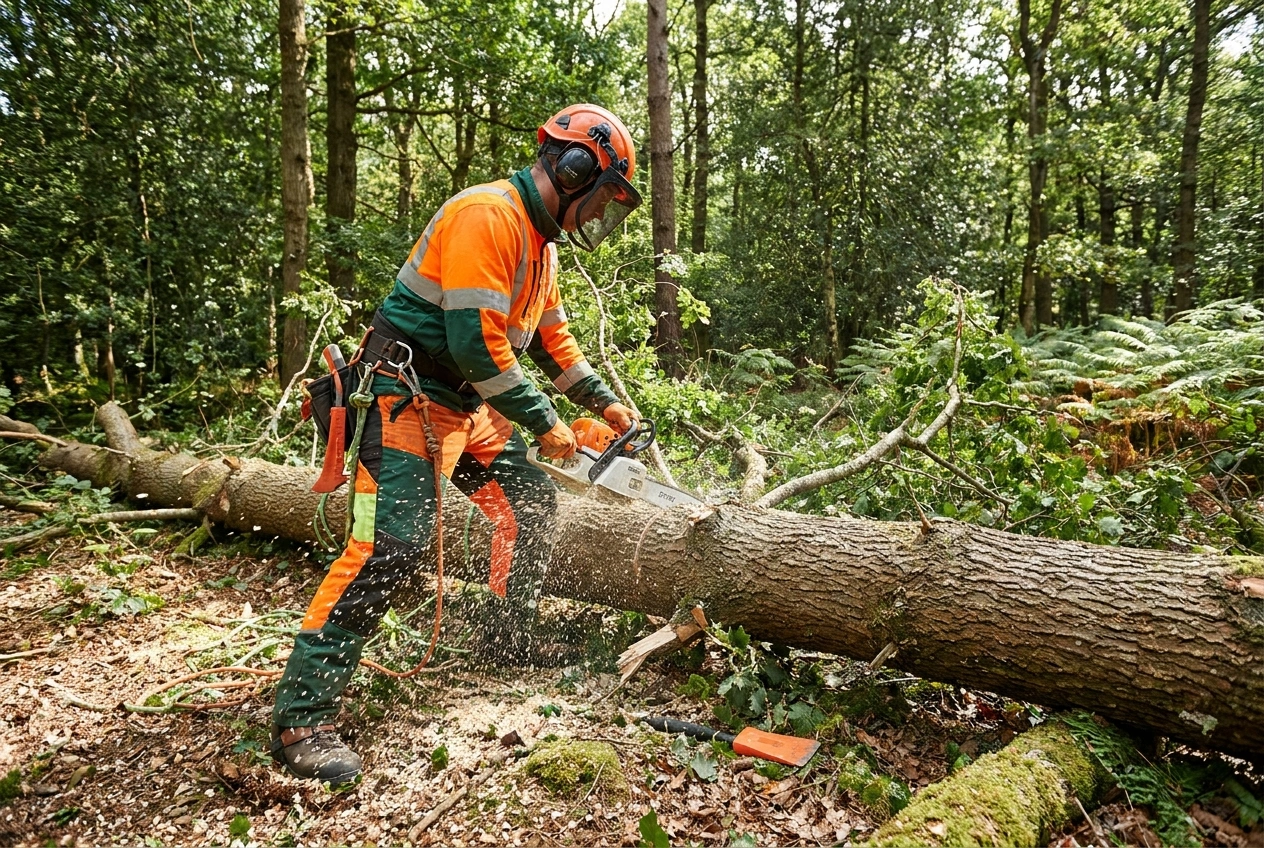
Forestry PPE occupies a peculiar corner of the safety gear world: the category is genuinely standardized, genuinely important, and yet a surprising number of people running a chainsaw in 2026 are still wearing a hard hat borrowed from a construction site and some foam earplugs from a drug store. Our research desk went through the actual standards documents, the professional arborist forums, and what certified professionals in North America and Europe consistently reach for. Eight systems made the cut, from a dual-certified climbing helmet favored by tree surgeons to solid-value ground-crew kits that cover the head, ears, and face in one purchase.
The key concept here is system. A chainsaw helmet is not just a hard hat with a visor bolted on - it is a coordinated assembly of three components rated under separate standards: a helmet shell (ANSI Z89.1 or EN 397 for ground crews; EN 12492 for climbing arborists), integrated or attached ear defenders rated by NRR in the US or SNR in Europe, and a face screen - either steel mesh (EN 1731) or polycarbonate. Each component can fail independently, so the quality of the integration matters as much as the individual parts. We flagged the standards on each pick below so you know exactly what you are getting.
One thing the spec sheet will never tell you: a chainsaw helmet is not cut-rated. No helmet - no matter the brand, the certification, or the price - stops a running chainsaw chain. That is what chainsaw chaps and chainsaw gloves are for. What these helmets do is protect against the two hazards that actually injure loggers and arborists most often: falling objects, wood chips and kickback debris hitting the face, and the cumulative hearing loss that creeps up after seasons of unprotected engine noise. On those two fronts, the right system makes a measurable difference.
Key Takeaways
- A chainsaw helmet is a system: shell (ANSI Z89.1 / EN 397 for ground crews, EN 12492 for climbing arborists) + ear defenders (rated NRR or SNR) + face screen (mesh EN 1731 or polycarbonate). Verify all three components before buying.
- The Husqvarna Technical Forest MIPS is the top pro pick: one of the first forestry helmets with a MIPS rotational-motion layer, plus a quick-swap visor system and a UV expiry indicator baked in.
- For climbing arborists working aloft, the Pfanner Protos Integral is the benchmark - dual-certified to both EN 397 (impact) and EN 12492 (climbing), with side and rear impact protection no standard ground-crew helmet provides.
- Mesh visors vent better and resist fog; polycarbonate visors stop finer particles (dust, sprays). The NoCry 6-in-1 ships with both, letting you swap for the task.
- Replace the entire helmet system after any significant impact and check manufacturer guidance on UV ageing - most shells are rated for 3-5 years from date of first use, not date of purchase.
| Husqvarna Technical Forest Helmet with MIPS | 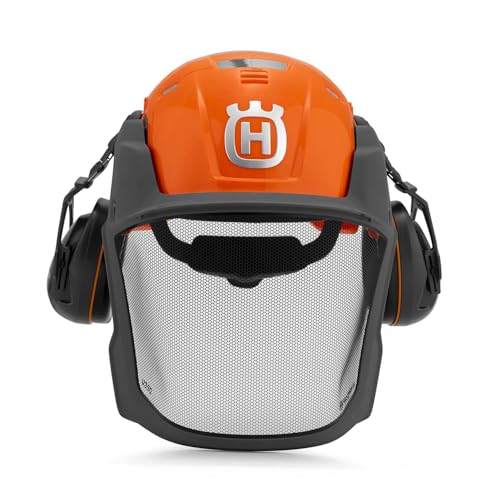 |
Best Overall | Type: Ground crew (EN 397) | Visor: Etched mesh, quick-swap | Best for: Professional ground crews wanting rotational protection | VIEW LATEST PRICE | Read Our Analysis |
| Pfanner Protos Integral Arborist Helmet |  |
Best for Climbing Arborists | Type: Climbing arborist (EN 12492 + EN 397) | Visor: Mesh (integrated, swept-back frame) | Best for: Climbing arborists working aloft | VIEW LATEST PRICE | Read Our Analysis |
| Husqvarna 592752601 Chainsaw Helmet |  |
Best Pro Ground-Crew Value | Type: Ground crew (ANSI Z89.1) | Visor: Metal mesh (flip up/down) | Best for: Professional ground crews and serious homeowners | VIEW LATEST PRICE | Read Our Analysis |
| Husqvarna Technical Forest Helmet with Ratchet |  |
Best UV Safety Feature | Type: Ground crew (EN 397 / ANSI Z89.1) | Visor: Mesh with free-view upper position | Best for: Users who want the UV indicator without MIPS premium | VIEW LATEST PRICE | Read Our Analysis |
| Oregon Chainsaw Safety Helmet with Visor Combo |  |
Best Straightforward Ground Kit | Type: Ground crew (ANSI Z89.1) | Visor: Stainless steel mesh (flip up/down) | Best for: Homeowners and light commercial users wanting a clean, no-frills system | VIEW LATEST PRICE | Read Our Analysis |
| NoCry 6-in-1 Industrial Chainsaw Helmet |  |
Best Dual-Visor System | Type: Ground crew (ANSI Z89.1) | Visor: Mesh + polycarbonate (both included) | Best for: Users who need both mesh and polycarbonate visor options | VIEW LATEST PRICE | Read Our Analysis |
| Green Devil Forestry Safety Helmet 3-in-1 |  |
Best Budget Value Kit | Type: Ground crew (ANSI Z89.1) | Visor: Flip-up metal mesh | Best for: Budget-conscious buyers needing a certified full system | VIEW LATEST PRICE | Read Our Analysis |
| TR Industrial Forestry Safety Helmet | 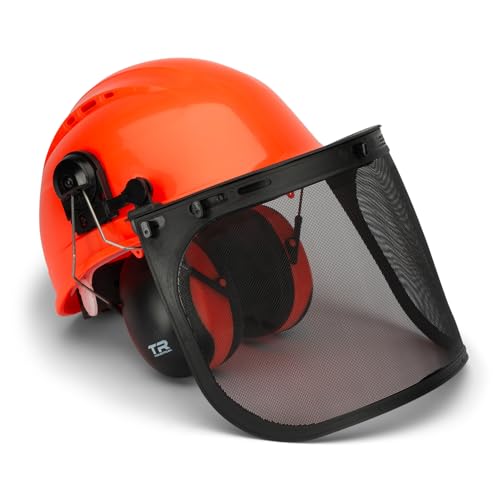 |
Best Value with Dual Visors | Type: Ground crew (ANSI Z89.1) | Visor: Plastic (polycarbonate) + mesh (both included) | Best for: Budget buyers who want both visor types without paying NoCry prices | VIEW LATEST PRICE | Read Our Analysis |
More Details on Our Top Picks
Husqvarna Technical Forest Helmet with MIPS
MIPS in a forestry helmet is a relatively new development, and Husqvarna was among the first to bring it to a production chainsaw system. The slip-plane liner is designed to redirect rotational energy during angled impacts - which is exactly the mechanics of a kickback or a side-swipe from a falling branch, not the dead-vertical drops that EN 397 is optimized for. The combination does not replace EN 397 compliance; it adds a layer on top of it.
The quick-swap visor system is the other standout feature. Swapping between the etched mesh screen and a spare visor takes seconds without tools, which matters on a professional site where the task can change between morning and afternoon. The etched visor sits in the upper position without obstruction when flipped, giving a genuinely clear field of view rather than the narrow sightline some competing designs impose.
Husqvarna's UV expiry indicator is a feature that sounds minor until you pick up a six-year-old helmet from the shed and genuinely cannot remember when it was bought. The indicator darkens progressively with cumulative UV exposure, giving you a physical cue independent of purchase date. For professional users who track equipment lifecycles this is a minor thing; for homeowners who use the kit once a season, it could be the reason they replace it on time.
The cons: integrated ear defenders vary in NRR depending on configuration, and Husqvarna does not always publish the exact rating prominently in the US listing - worth confirming with the retailer for OSHA compliance documentation. And like all integrated systems, if the ear defenders wear out before the shell, you are replacing more than the cups. At the premium end of the market, it earns the price for professional use.
- Type:Ground crew (EN 397)
- Visor:Etched mesh, quick-swap
- Hearing:Integrated ear defenders
- Standards:ANSI Z89.1 / EN 397 + MIPS
- UV Indicator:Yes - built-in expiry indicator
- Weight:Approx. 680 g (shell + defenders)
- Sizes:54-62 cm adjustable
- Best for:Professional ground crews wanting rotational protection
Pfanner Protos Integral Arborist Helmet
The distinction between a ground-crew helmet and a climbing arborist helmet matters more than most product pages make clear. EN 397 covers impacts from above - falling objects, the threat model on the ground. EN 12492 is the climbing standard: it adds requirements for side and rear impacts and mandates a retaining chin strap rated to keep the helmet on the head during a fall. The Protos Integral is one of the few commercial helmet systems certified to both, which is why it dominates the professional arborist market in Europe and has a strong following in North America.
The design priority is function at height. The "swept back" shell profile was engineered specifically to improve field of view when looking up into the canopy, which is the direction climbing arborists spend most of their time looking. The low-profile integrated ear defenders do not protrude in a way that catches on branches or ropes. All primary adjustments - hearing protection, face shield, helmet fit, and vents - can be operated with two fingers through gloves.
The adjustable vent flow is a detail that separates professional-grade helmets from the rest: you can close vents in wet or cold conditions to maintain warmth and reopen them in summer heat. A discrete chin-strap channel prevents the strap from slipping under the ear protector during a fall arrest, which is a failure mode that has injured climbers in cheaper systems.
The Protos Integral is not cheap, and for pure ground-crew work it is more helmet than the task requires. But for anyone working aloft with a chainsaw on a rope system, spending elsewhere is a false economy. The arborist community's endorsement of this helmet is one of the more consistent signals our research desk has encountered in professional PPE.
- Type:Climbing arborist (EN 12492 + EN 397)
- Visor:Mesh (integrated, swept-back frame)
- Hearing:Integrated low-profile ear defenders
- Standards:EN 397 + EN 12492 (dual certified)
- Side Impact:Yes - unique rear and side protection
- Weight:Approx. 760 g
- Chin Strap:4-point (EN 12492 requirement)
- Best for:Climbing arborists working aloft
Husqvarna 592752601 Chainsaw Helmet
Husqvarna is the brand that runs the most chainsaws in the world, and the 592752601 is their flagship ground-crew system for the North American market. It checks the boxes that professional users and safety officers actually verify: ANSI Z89.1-2014 Type I, Class E shell (the electrical-insulation rating, which is the more demanding class), documented 24 dB NRR ear muffs tested to ANSI S3.19-1974, and a 6-point textile suspension rather than a pin-ratchet that can loosen under vibration.
The metal mesh visor flips up completely clear and locks at multiple angles. Husqvarna includes a sun peak (detachable brim) as standard equipment, which is a meaningful inclusion: direct sun in the visor reflections creates glare that masks hazards during crosscut and bucking work. The Egyptian cotton sweatband is PH neutral and dermatologically tested, details that matter on multi-hour shifts in summer.
Two things worth knowing before ordering: first, the neck guard (important for felling, less so for pruning) is sold separately. Second, the ear muffs on this model are rated to the older ANSI S3.19-1974 standard rather than the current S12.6; the 24 dB NRR number is still valid, but for OSHA paperwork some contractors prefer current-standard documentation.
For a professional ground-crew purchase where documentation, brand support, and part availability matter, this is the natural first choice on Amazon. Homeowners who use a chainsaw regularly will also find the system well-thought-out compared to the cheaper alternatives, though it does not include the MIPS layer of the Technical Forest above.
- Type:Ground crew (ANSI Z89.1)
- Visor:Metal mesh (flip up/down)
- Hearing:24 dB NRR ear muffs (ANSI S3.19-1974)
- Standards:ANSI Z89.1-2014 Type I, Class E
- Shell:HDPE with 6-point textile suspension
- Sweatband:Egyptian cotton, PH neutral
- Accessories:Sun peak included; neck guard sold separately
- Best for:Professional ground crews and serious homeowners
Husqvarna Technical Forest Helmet with Ratchet
This is Husqvarna's non-MIPS Technical Forest - the same shell architecture and UV expiry indicator as the MIPS model above, at a lower price point. The one-hand ratchet adjustment is engineered to be operated while wearing the helmet, which matters when you are between cuts and need to tighten up quickly without putting down your saw.
The free-view visor design is the same as the MIPS variant: the mesh screen parks in the upper position completely out of the field of vision, rather than sitting at the brow line as it does in simpler designs. The visor wraps around the face for wider lateral coverage than a flat mesh panel.
The all-angle reflective areas are a genuine safety feature for dawn and dusk operations, or for ground crew working under a canopy where ambient light is low. It is the sort of specification detail that rarely appears in budget alternatives.
The practical case for this over the 592752601: if the UV indicator matters to you (it should) and the MIPS premium does not fit the budget, this is the sensible middle position. For homeowners who use a chainsaw seasonally over many years, knowing when the shell has degraded beyond its rated life is arguably more valuable than the rotational-protection layer.
- Type:Ground crew (EN 397 / ANSI Z89.1)
- Visor:Mesh with free-view upper position
- Hearing:Integrated ear protection
- Standards:EN 397 / ANSI Z89.1 compliant
- UV Indicator:Yes - darkens with cumulative UV exposure
- Adjustment:One-hand ratchet (can be operated while wearing)
- Reflectives:All-angle reflective areas
- Best for:Users who want the UV indicator without MIPS premium
Oregon Chainsaw Safety Helmet with Visor Combo
Oregon makes the chainsaw chains that many of the saws above run, so their name in forestry PPE is not a random extension. The combo set is a clean, no-extras system: HDPE shell, stainless steel mesh visor (wider and more durable than the thin mesh screens on budget alternatives), articulated ear cups that adjust both vertically and laterally, and a detachable sun peak.
The ANSI Z89.1-2009 Type I, Class C rating covers the head impact requirement for most residential and light commercial chainsaw work. Class C is the non-electrical version; if you are working around power lines, step up to the Husqvarna above which carries Class E. For standard felling, limbing, and firewood cutting, Class C is the correct specification.
The stainless steel mesh is the key detail separating this from generic alternatives. Cheaper mesh screens are often thin mild steel that rusts and distorts after a season. Oregon's stainless construction holds its geometry longer, which matters for a screen that needs to stop a wood chip traveling at chainsaw-chip velocity.
Cons: NRR for the ear cups is not prominently documented in Oregon's product listing - this is a notable omission for OSHA compliance purposes. The system is listed as meeting ANSI standards generally, but contractors who need an auditable NRR figure for their safety program should confirm with Oregon directly or choose the Husqvarna or NoCry instead.
- Type:Ground crew (ANSI Z89.1)
- Visor:Stainless steel mesh (flip up/down)
- Hearing:Cap-mounted articulated ear cups
- Standards:ANSI Z89.1-2009 Type I, Class C
- Ventilation:6 ventilation holes in shell
- Harness:6-point, easy-adjust
- Sun Peak:Detachable
- Best for:Homeowners and light commercial users wanting a clean, no-frills system
NoCry 6-in-1 Industrial Chainsaw Helmet
The mesh-vs-polycarbonate visor debate comes up in every forestry forum thread, and the honest answer is that each has a legitimate use case. Mesh ventilates better and resists fog, which matters during sustained cutting in humid conditions. Polycarbonate stops finer particles - sawdust, spray from herbicide or oil, and debris too small for mesh gaps - and is the requirement in some jurisdictions for pesticide application work. The NoCry ships with both visors, which sidesteps the debate entirely.
The three-standard combination - ANSI Z89.1 for the shell, ANSI Z87.1 for both face screens, ANSI S3.19 for the ear muffs - is the most completely documented multi-component system in this list. The stated 25.9 dB SNR figure is the European signal-to-noise rating; the ANSI S3.19 compliance gives US contractors an auditable hearing protection value.
Six configurations sounds like marketing language, but the practical upside is real: you can run the mesh screen for felling (ventilation, debris) and swap to polycarbonate for brush clearing or spraying, rotating ear muffs to the back when working in lower-noise situations. The system fits over glasses without pressure, which is a non-trivial consideration for roughly a third of the workforce.
The NoCry is not the most rugged system on this list - the components feel somewhat lighter than the Husqvarna. But the standards documentation is complete, the dual-visor inclusion is genuinely useful, and the price sits comfortably below the pro brands. For a homeowner or occasional-use professional who wants full flexibility without paying for redundant components, it is the most practical single purchase.
- Type:Ground crew (ANSI Z89.1)
- Visor:Mesh + polycarbonate (both included)
- Hearing:25.9 dB SNR / ANSI S3.19 ear muffs
- Standards:ANSI Z89.1 (hard hat) + ANSI Z87.1 (visors) + ANSI S3.19 (ears)
- Configurations:6 (visor + ear muff combos)
- Fit Range:21.2" - 24.4" head circumference
- Compatibility:Fits over glasses
- Best for:Users who need both mesh and polycarbonate visor options
Green Devil Forestry Safety Helmet 3-in-1
Green Devil has become one of the more visible budget forestry helmet brands on Amazon, and the 3-in-1 is where most buyers start. The claim worth verifying: ANSI Z89.1-2014 Type I compliance on the shell, 25 dB NRR on the ear muffs, and CE approval that references EN standards for the visor. If those numbers hold - and the listing reproduces them consistently - this is a legitimately certified system at a price point well below the Husqvarna and Oregon kits.
The ABS shell is a step down from HDPE in durability under prolonged UV and impact cycling, which is part of why the professional brands use HDPE. For occasional homeowner use or a property with a modest chainsaw program, the practical difference is small. For commercial daily-use situations, the shell material matters over a multi-year service life.
The 25 dB NRR figure is prominently stated and is one of the better-documented specs in the budget tier. A running chainsaw typically produces 100-115 dB(A) at the operator's ear; at 25 dB NRR (applied at the standard 50% OSHA derating, giving roughly 12.5 dB effective protection) you land around 88-103 dB depending on the saw - still meaningful protection, though professional crews running saws for hours should look at the higher-rated options above.
The one-handed ratchet adjustment is a genuine convenience feature, and the sliding vent holes (open for summer, closed for cold or wet) mirror what the pro brands offer at a fraction of the cost. The main caveat: build quality consistency in the budget tier is variable, and the ear muff cup seals on cheaper systems degrade faster than on pro alternatives. Inspect the ear cups periodically and replace the system if the seal foam compresses permanently.
- Type:Ground crew (ANSI Z89.1)
- Visor:Flip-up metal mesh
- Hearing:25 dB NRR ear muffs
- Standards:ANSI Z89.1-2014 Type I + CE approved
- Shell:ABS construction
- Suspension:6-point adjustable
- Sweatband:Egyptian cotton core, porous coating
- Best for:Budget-conscious buyers needing a certified full system
TR Industrial Forestry Safety Helmet
TR Industrial offers the dual-visor configuration at a lower price than the NoCry, and the spec sheet is reasonably complete: ANSI Z89.1 on the shell, ANSI S12.42 (the current standard, equivalent to S3.19) on the ear muffs, and a documented 22 dB NRR. The 22 dB figure is slightly lower than the NoCry's 25.9 dB SNR, which at OSHA 50% derating translates to roughly 11 dB effective protection - still meaningful for occasional use, and within the range most homeowner chainsaw programs produce.
Both visors - the polycarbonate and the mesh - flip to 90 degrees, meaning they park fully out of the field of view rather than hanging at brow level. The ratchet knob adjusts fit without removing the helmet, which is the ergonomic baseline for any helmet used with gloves.
The plastic visor is marketed as providing "ultimate visibility and shielding from debris" while the mesh gives "excellent ventilation and air flow." That is accurate marketing for once: the polycarbonate does offer more optical clarity and finer particle protection; the mesh ventilates significantly better. Having both in the box removes the need to choose before you know your conditions.
The honest limitation: TR Industrial is a generalist safety equipment brand rather than a specialist forestry brand, and the ear muff ear-cup design is noticeably simpler than the articulated cups on the Husqvarna or Oregon. For full-day professional use, ear cup fit degrades faster on simpler designs. As a home-use or backup system, the TR Industrial is a solid buy; for an eight-hour commercial program, the extra spend on the Husqvarna 592752601 is justified.
- Type:Ground crew (ANSI Z89.1)
- Visor:Plastic (polycarbonate) + mesh (both included)
- Hearing:22 dB NRR (ANSI S12.42 / S3.19)
- Standards:ANSI Z89.1 Type I Class C + ANSI S12.42
- Ventilation:6 ventilation slots
- Fit:Ratchet-style knob adjustment
- Visor Flip:90-degree flip-up on both visors
- Best for:Budget buyers who want both visor types without paying NoCry prices
How to Choose a Chainsaw Helmet
The forestry helmet market looks straightforward until you start comparing specifications and realize that half the products on the first page of Amazon are listing the same three acronyms without explaining what they mean or what they cover. Here is the framework our research desk uses.
Ground Crew vs. Climbing Arborist: Two Different Standards
This is the first decision, and most buyers skip it. EN 397 (or its US equivalent, ANSI Z89.1) is the industrial hard-hat standard: tested for vertical impact from above. It covers every ground-crew application - felling, bucking, limbing from the ground, firewood operations. EN 12492 is the climbing standard: it adds side and rear impact zones, mandates a four-point chin strap rated to keep the helmet on during a fall arrest, and is the legal requirement in most jurisdictions for arborists working aloft. The Pfanner Protos Integral is the standout dual-certified option in this list, carrying both ratings. If your work involves leaving the ground with a chainsaw on a rope system, EN 12492 is not optional - a standard hard hat does not meet the specification. For a head-to-head look at how the Pfanner and Husqvarna systems compare across professional use cases, see our Pfanner Protos vs. Husqvarna comparison.
Mesh vs. Polycarbonate Face Screen
Mesh visors (rated to EN 1731 in Europe, ANSI Z87.1 in the US for the screen construction) ventilate freely and do not fog - the main practical advantage in sustained cutting work. Polycarbonate solid visors stop finer particles: fine sawdust, oil mist from bar oil, and spray from any herbicide or chemical work. Both the NoCry 6-in-1 and the TR Industrial ship with both types, which is the most flexible answer. If you only buy one visor: mesh for felling and timber work, polycarbonate for brush clearing or pesticide application. Do not use a mesh visor for grinding or disc cutting - those sparks pass straight through.
Hearing Protection Ratings: NRR vs. SNR
US product listings use NRR (Noise Reduction Rating, ANSI S3.19 or S12.42). European listings use SNR (Signal-to-Noise Ratio, EN 352). SNR is not directly interchangeable with NRR - SNR values typically run slightly higher for equivalent real-world protection. OSHA requires you to halve the stated NRR to get the estimated effective protection in field conditions. A chainsaw typically produces 100-115 dB(A) at the operator ear; at 25 dB NRR halved to 12.5 dB, you land around 88-103 dB - within the range where hearing damage occurs over time at the higher end. Professional crews doing multi-hour programs should prioritize the higher-rated systems (Husqvarna at 24 dB NRR, NoCry at 25.9 dB SNR). The ear muffs on any helmet system should be replaced when the foam ear-cup seals compress permanently or crack - the NRR of a degraded seal is not the NRR on the label.
Helmet Ageing and UV Replacement Schedules
Most chainsaw helmet shells carry a service-life rating of three to five years from first use (not from date of manufacture). The plasticizers that give the shell its energy-absorbing flexibility degrade under UV, heat cycles, and chemical exposure - even when the shell shows no visible damage. This is why Husqvarna's UV expiry indicator (present on both the Technical Forest with Ratchet and the Technical Forest MIPS) is a genuinely useful feature rather than a marketing tick: it gives you a physical signal independent of your memory of the purchase date. For budget shells without an indicator, mark the purchase date with a permanent marker inside the shell and replace the entire system at the manufacturer's recommended interval - not just when it looks worn. Any helmet that has taken a significant impact should be retired immediately, regardless of age, even if external damage is not visible.
Integration Quality and Serviceability
Integrated ear defenders and face screens that clip directly to the shell are more convenient than add-on clip systems, but they create a replacement question: if the ear cups wear out before the shell, can you replace the cups alone? Husqvarna and Pfanner both offer replacement parts through professional distributors. Budget brands on Amazon often do not. If you are buying for a professional program where one component wearing out should not force a full-system replacement, factor parts availability into the purchase decision - or budget for a full replacement at each service interval.
Chainsaw Helmet Comparison
| Helmet | Type | Visor | Hearing | Best For |
|---|---|---|---|---|
| Husqvarna Technical Forest Helmet with MIPS | Ground crew (EN 397) | Etched mesh, quick-swap | Integrated ear defenders | Professional ground crews wanting rotational protection |
| Pfanner Protos Integral Arborist Helmet | Climbing arborist (EN 12492 + EN 397) | Mesh (integrated, swept-back frame) | Integrated low-profile ear defenders | Climbing arborists working aloft |
| Husqvarna 592752601 Chainsaw Helmet | Ground crew (ANSI Z89.1) | Metal mesh (flip up/down) | 24 dB NRR ear muffs (ANSI S3.19-1974) | Professional ground crews and serious homeowners |
| Husqvarna Technical Forest Helmet with Ratchet | Ground crew (EN 397 / ANSI Z89.1) | Mesh with free-view upper position | Integrated ear protection | Users who want the UV indicator without MIPS premium |
| Oregon Chainsaw Safety Helmet with Visor Combo | Ground crew (ANSI Z89.1) | Stainless steel mesh (flip up/down) | Cap-mounted articulated ear cups | Homeowners and light commercial users wanting a clean, no-frills system |
| NoCry 6-in-1 Industrial Chainsaw Helmet | Ground crew (ANSI Z89.1) | Mesh + polycarbonate (both included) | 25.9 dB SNR / ANSI S3.19 ear muffs | Users who need both mesh and polycarbonate visor options |
| Green Devil Forestry Safety Helmet 3-in-1 | Ground crew (ANSI Z89.1) | Flip-up metal mesh | 25 dB NRR ear muffs | Budget-conscious buyers needing a certified full system |
| TR Industrial Forestry Safety Helmet | Ground crew (ANSI Z89.1) | Plastic (polycarbonate) + mesh (both included) | 22 dB NRR (ANSI S12.42 / S3.19) | Budget buyers who want both visor types without paying NoCry prices |
DOT vs ECE vs Snell vs MIPS, how to pick the right lid in 60 seconds, and when to replace it. One page, no fluff.
Ground-level cutting and climbing are different jobs with different helmets. Our arborist helmet systems guide covers the climbing-rated end of the range.
Frequently Asked Questions
Does a chainsaw helmet protect against a running chainsaw chain?
No. This is one of the most important things to understand before buying any forestry PPE. No helmet - including the most expensive professional models - is rated to stop a running chainsaw chain. The helmet system protects against the hazards that actually injure most forestry workers: falling objects, flying wood chips and debris, and noise-induced hearing loss. Chain-contact protection for the legs and hands comes from chainsaw chaps (ASTM F1897 / EN ISO 11393) and chainsaw gloves respectively. A complete forestry PPE system includes both.
What is the difference between EN 397 and EN 12492 for arborist helmets?
EN 397 is the European industrial safety helmet standard, testing for vertical impact from above - the threat model for ground-crew work where falling objects are the primary hazard. EN 12492 is the mountaineering and tree-climbing standard: it adds lateral and rear impact tests, and requires a four-point chin strap rated to retain the helmet during a fall. If you work aloft with a chainsaw on a rope system, EN 12492 compliance is typically a legal requirement, not a preference. The Pfanner Protos Integral is the only helmet in this list certified to both standards. Our EN 397 vs. EN 12492 explainer covers the technical differences between the two standards in full.
What NRR should I look for in chainsaw helmet ear defenders?
A running chainsaw typically produces 100-115 dB(A) at the operator ear. OSHA's standard method is to halve the labeled NRR and subtract the result from the ambient noise level. At 25 dB NRR (halved to 12.5 dB effective), you arrive at roughly 88-103 dB depending on the saw - within the range where prolonged exposure causes damage at the upper end. For multi-hour professional programs, maximize the NRR within the integrated system (the Husqvarna models at 24 dB NRR and the NoCry at 25.9 dB SNR are the documented leaders in this list). For occasional homeowner use, 22-25 dB NRR covers most scenarios adequately.
When should I replace a chainsaw helmet?
Replace immediately after any significant impact, even if the shell shows no visible damage - the EPS or polypropylene foam inside crushes to absorb energy and does not recover. Absent an impact, most manufacturers rate their shells for three to five years from first use; some budget shells carry shorter ratings. UV exposure, heat cycling, and chemical contact (bar oil, fuel, herbicides) all accelerate shell degradation. The same principle that applies to motorcycle helmets applies here: an old helmet that looks fine is not necessarily a safe helmet. Mark the date of first use inside the shell and follow the manufacturer's replacement schedule.
Can I use a construction hard hat for chainsaw work?
A standard construction hard hat (ANSI Z89.1 or EN 397) covers the head impact requirement, but it does not include the face screen or ear defenders that chainsaw work requires. A bare hard hat leaves your face and hearing completely unprotected from two of the primary chainsaw injury mechanisms. A proper chainsaw helmet system adds both components in a coordinated, standardized assembly. If you already own a quality ANSI/EN-rated hard hat, some manufacturers sell clip-on mesh visors and cap-mounted ear defenders separately - but verify that the clip system is rated for your specific shell before trusting it in the field.
