
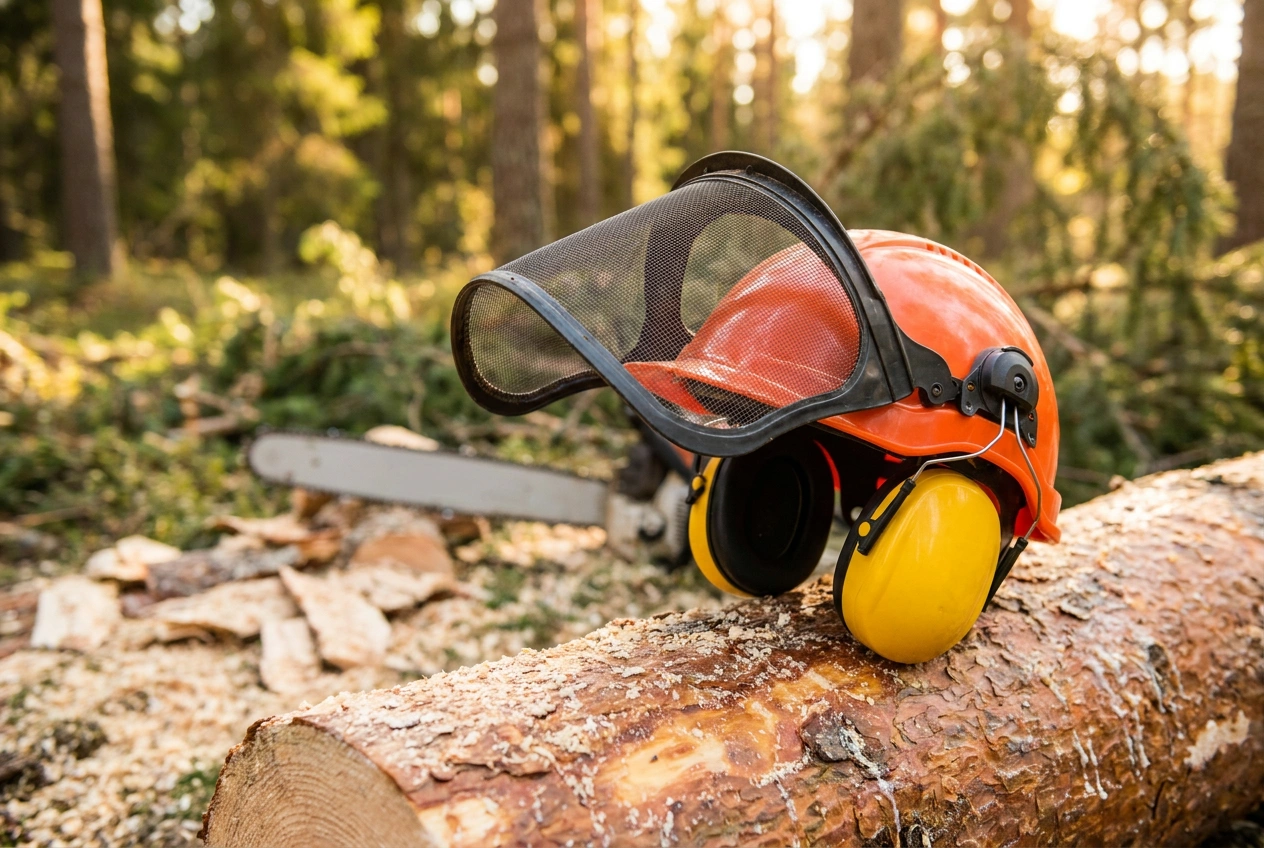
EN 397 is the industrial safety-helmet standard built for ground-level work: it protects against falling objects and its chin strap is designed to release under load so the helmet cannot strangle you if it snags. EN 12492 is the mountaineering standard for work at height: it adds side, front and rear impact protection and a chin strap that holds at 500 N so the helmet stays on during a fall. Ground-based chainsaw work points to EN 397; climbing arborists need EN 12492.
The standard printed inside a forestry helmet decides one thing that matters more than any feature on the box: whether the helmet is built to stay on your head, or to come off it. That sounds backwards until you understand what each standard was written for. We pulled both protocols apart so you can match the helmet to the work instead of the marketing.
This is the question behind every "why won't my chinstrap tighten properly" thread in arborist forums, and the answer is almost always that the helmet was certified to the wrong standard for the job.
EN 397: the industrial hard hat
EN 397 is the European standard for industrial safety helmets, the classic hard hat. It is the traditional certification for ground-based forestry and chainsaw work, and it is what you will find on most combination forestry kits that bundle a shell with a mesh visor (EN 1731) and ear defenders (EN 352).
EN 397 is built around one main threat: objects falling from above. It tests top impact, penetration resistance, and flame resistance. The detail that defines it, though, is the chin strap. Under EN 397 the strap is designed to release between 150 N and 250 N of force. That is deliberate. If a ground worker's helmet snags on a branch or machine, the standard wants the helmet to come off rather than choke the wearer. For someone standing on the ground, a helmet that falls off is a minor problem. A helmet that strangles you is not.
- Designed for falling-object protection from above
- Chin strap releases at 150 to 250 N (anti-strangulation)
- Standard certification for ground-level chainsaw and forestry work
- Usually paired with EN 1731 mesh visor and EN 352 ear defenders
EN 12492: the mountaineering helmet
EN 12492 is the standard for mountaineering and climbing helmets, and it is written for a completely different threat model: you, falling, with the helmet needing to stay exactly where it is and protect more than the top of your head.
It tests impact from the front, sides and rear, not just the crown, because a climber who falls can hit anything at any angle. And its chin strap requirement is the mirror image of EN 397: the retention system must hold to at least 500 N and not stretch more than 25 mm. The helmet is built to stay on. For a worker suspended in a tree, that is the entire point, because a helmet that releases mid-fall is no helmet at all.
- Tests front, side and rear impact, not only the top
- Chin strap holds at 500 N and will not release in a fall
- The relevant standard for climbing arborists and work at height
- Lighter shells, but less falling-object rating than a hard hat
EN 12492 is not only for tree work at height. It is also the standard behind via ferrata helmets, where the same front/side/rear impact testing and hold-under-load chin strap protect against rockfall and a sideways swing into the rock face rather than a chainsaw-specific hazard. Our via ferrata helmet roundup covers EN 12492/UIAA 106 picks built specifically for that use case.
Which one do you actually need?
The job decides, and it comes down to your feet. If they are on the ground, EN 397 is the right call: the main risk is something falling on you, and the anti-strangulation strap is a safety feature, not a flaw. If you leave the ground, whether you are climbing on rope or working off a platform, you need EN 12492 so the helmet survives a fall and stays put while it does.
Modern arborist helmets solve this by building on the EN 12492 platform and then adding the forestry accessories, mesh visor and ear defenders, on top. Some shells carry both certifications. When a helmet lists EN 12492 and EN 397 together, read the fine print, because a few are dual-rated and many simply meet one standard while accepting accessories designed for the other.
EN 397 vs EN 12492 at a glance
| Feature | EN 397 (industrial) | EN 12492 (mountaineering) |
|---|---|---|
| Built for | Falling objects, ground work | Falls and impacts at height |
| Impact zones tested | Top (crown) | Front, sides, rear and top |
| Chin strap behavior | Releases at 150 to 250 N | Holds to at least 500 N |
| Best job fit | Ground-based chainsaw and forestry | Climbing arborists, work at height |
| Typical extras | EN 1731 visor, EN 352 ear defenders | Same accessories, fitted to a climbing shell |
| Falling-object rating | Strong | Lower than a hard hat |
DOT vs ECE vs Snell vs MIPS, how to pick the right lid in 60 seconds, and when to replace it. One page, no fluff.
To see which helmets actually carry each of these standards, see our arborist and forestry helmet roundup.
Frequently Asked Questions
Can I use an EN 397 forestry helmet for tree climbing?
No. EN 397 chin straps are designed to release at 150 to 250 N to prevent strangulation during ground work. That is the opposite of what a climber needs. For work at height you want EN 12492, whose strap holds to at least 500 N so the helmet stays on during a fall.
Why does an EN 397 chin strap come off so easily?
It is intentional. EN 397 is for ground-based work where a snagged helmet that strangles the wearer is a real hazard, so the standard requires the strap to release under moderate load. It is a safety feature for that environment, not a defect.
Is EN 12492 better than EN 397?
Neither is better in the abstract; they protect against different things. EN 12492 tests side and rear impact and keeps the helmet on in a fall, which matters at height. EN 397 gives stronger falling-object protection for ground work. The right one depends entirely on whether you leave the ground.
What standards should a complete chainsaw helmet meet?
A ground forestry kit typically combines EN 397 for the shell, EN 1731 for the mesh face visor, and EN 352 for the ear defenders. A climbing arborist swaps the shell standard to EN 12492 while keeping the same visor and hearing-protection certifications.
Are any helmets certified to both EN 397 and EN 12492?
A small number of arborist helmets are dual-rated, but most are not. Many list both numbers only because the shell meets one standard and accepts accessories associated with the other. Always read the certification line carefully rather than assuming a helmet does both jobs.
