
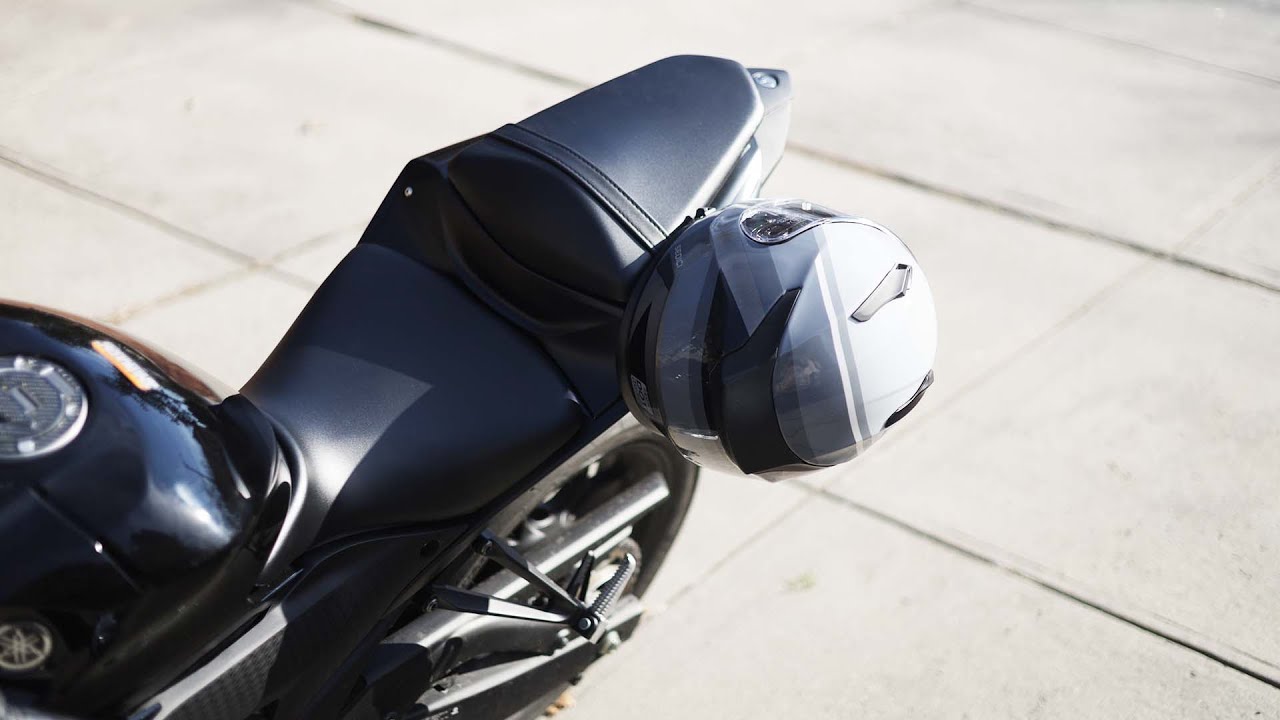
The most secure ways to carry a passenger helmet on a motorcycle are a top case (weatherproof, theft-resistant) or a helmet lock and cable looped through the chin bar (cheap but exposes the helmet). Tail bags, backpacks, and carrier straps are solid middle-ground options. Bungee cords work in a pinch but require care to avoid EPS damage.
Every dual-rider setup eventually produces the same awkward moment: your passenger hops off, and now you are sitting on a motorcycle with a spare helmet and nowhere obvious to put it. Strapping a full-face to a grab rail with a bungee cord and hoping for the best is one approach. It is not, however, a good one.
Our research desk went through the practical options, cross-referenced what seasoned tourers and commuters actually use, and ranked them by security, weather protection and convenience. Here is what we found.
Method 1: Helmet lock or security cable
Most modern motorcycles have a helmet lock built into the frame or under the seat: a small hook that the chin bar snaps onto. If yours does not, an aftermarket cable lock looped through the D-ring or chin bar and locked to a frame point does the same job for under $15.
The lock keeps the helmet attached to the bike but leaves it exposed. That means weather (rain, UV) and a determined thief can still walk off with the shell. For a quick stop, it is fine. Overnight parking in an exposed lot is a different calculation.
Method 2: Top case (top box)
A top case is the gold standard for carrying a spare helmet. A 50-litre box will swallow most full-face helmets; 45 litres handles many modular and open-face lids. The helmet sits protected from rain, road spray and UV, and a decent case locks solidly enough to deter casual theft.
The trade-off is bulk and cost. A quality Givi or Shad top case runs $150-300, and the mount plate adds mass even when the box is off. Riders who use their bike for touring already have one; commuters sometimes balk at the look.
If your motorcycle is being used for regular two-up riding, a top case is the most convenient long-term solution, handling helmets, rain gear and groceries in the same trip.
Method 3: Tail bag or tank bag
A soft tail bag or expandable tank bag can accommodate a helmet if sized right. Open-face and half-shell helmets tend to fit more easily than full-face lids. The bag usually straps to the pillion seat or rear rack and compresses when not needed, which is useful for riders who do not want permanent luggage.
The downside is that a soft bag offers no meaningful theft protection, and in heavy rain you are relying on the bag's waterproofing rather than a hard lid. For short, dry-weather trips this works well enough. For touring, a top case is more practical.
Method 4: Backpack or dedicated helmet carrier bag
Wearing the spare helmet in a large backpack or a purpose-made helmet carry bag puts the weight on the rider rather than the bike. This approach works especially well for urban commuters who are already carrying a bag (no extra hardware needed for the motorcycle at all).
Purpose-built helmet carrier bags (some with a clip-on handle, others with backpack straps) are designed to protect the visor and shell during transport. The awkwardness is proportional to your commute distance: wearing a 1.5 kg extra load for a 10-minute city trip is fine; an hour on the motorway is less comfortable.
Method 5: Helmet carrier strap or grab-rail clip
Several aftermarket systems (Ventura, Rok Straps and similar) sell helmet-specific carrier straps designed to clip or strap to the grab rails, passenger seat hooks or subframe. They hold the helmet more securely than a loose bungee but leave it exposed to the elements, similar to a helmet lock.
These work best as a lightweight option for riders who already run a luggage system on those rails. The clips are usually rated for the weight and keep the helmet from bouncing, which matters more than it sounds on longer rides.
Method 6: Bungee cords or cargo net (last resort)
Bungee cords and cargo nets are the fallback when nothing else is available. They can work, but they require attention to do safely. Run the cord or net over the shell only, not across the visor (scratches) and not pressing into the EPS through the vent openings. Secure the helmet so it cannot bounce or rotate on rough roads.
For a regular two-rider setup, bungee cords are a one-time solution, not a system. Invest in a proper method before it becomes a habit.
One thing people forget: the passenger helmet has to actually fit
Carrying a spare helmet is only useful if it fits the person wearing it. A helmet that is too loose provides dramatically less protection in a crash, and one that is too tight becomes a pain issue in minutes. Before every two-up ride, confirm the passenger's helmet fits correctly. Our guide to how a motorcycle helmet should fit covers the key checks in plain language.
If you are regularly carrying the same passenger, they should have their own fitted helmet rather than a generic spare. If you do carry a shared spare, aim for a size that covers the middle of the head-size range your likely passengers fall into, and always check the fit before moving.
Helmet carry methods compared
| Method | Pros | Cons |
|---|---|---|
| Helmet lock or cable | Cheap ($5-20), no extra bulk, works on any bike | Helmet exposed to weather and theft; stress risk if hung incorrectly |
| Top case / top box | Most secure, fully weatherproof, doubles as general luggage | Upfront cost ($150-300+), permanent bulk, mount plate needed |
| Tail bag or tank bag | Compact when deflated, no permanent hardware | Limited space, soft bag = no theft protection, weather relies on bag quality |
| Backpack or helmet carrier bag | No bike modification, visor protected, works off the bike | Rider carries the weight, awkward on long motorway runs |
| Grab-rail carrier strap | Lightweight system, integrates with existing luggage rails | Helmet exposed to weather; brand/bike compatibility matters |
| Bungee cords or cargo net | Universally available, zero cost | Helmet exposed, risk of visor scratches, EPS damage if near exhaust, not a long-term system |
DOT vs ECE vs Snell vs MIPS, how to pick the right lid in 60 seconds, and when to replace it. One page, no fluff.
If you would rather leave the spare helmet with the bike than carry it, see our motorcycle helmet lock picks and what a cable lock realistically protects against.
Frequently Asked Questions
How do I carry a passenger helmet on a motorcycle?
The most common methods are a helmet lock or cable loop (cheap, leaves helmet exposed), a top case (secure and weatherproof, but costs $150-300), a tail bag, a backpack or helmet bag worn by the rider, or a grab-rail carrier strap. Bungee cords work as a last resort but require care to avoid visor scratches and EPS damage.
Can I use a bungee cord to carry a motorcycle helmet?
You can, but with caution. Route the cord over the shell only, keep it away from the visor and any vent openings, and make sure the helmet cannot bounce or shift. Keep it far from the exhaust, as radiated heat degrades EPS foam and shell adhesives. Treat bungee cords as a one-off solution, not a regular system.
Is it safe to hang a helmet from a helmet lock?
Yes, if done correctly. Use a cable lock or lock hook through the chin bar opening or a D-ring, not looped around or over the chin strap itself, which can stress the retention hardware over time. The helmet will be exposed to weather and light theft risk, so a helmet lock is best for short stops rather than overnight parking.
Will carrying a helmet near the exhaust damage it?
It can. The EPS foam, shell adhesives and comfort liner all degrade faster under sustained heat. Keep any stored helmet clear of the exhaust pipe and header, as even radiated heat at close range adds up on longer rides. If you suspect heat damage, read our guide on when to replace a motorcycle helmet.
I carry a passenger regularly. What is the best long-term setup?
A top case is the most practical long-term solution. A 45-50 litre box holds most helmet sizes, locks securely and keeps the lid weatherproof. If you prefer a lighter setup, a tail bag with a dedicated helmet compartment is the next best option. Either way, make sure the passenger's helmet actually fits them correctly before each ride.
