
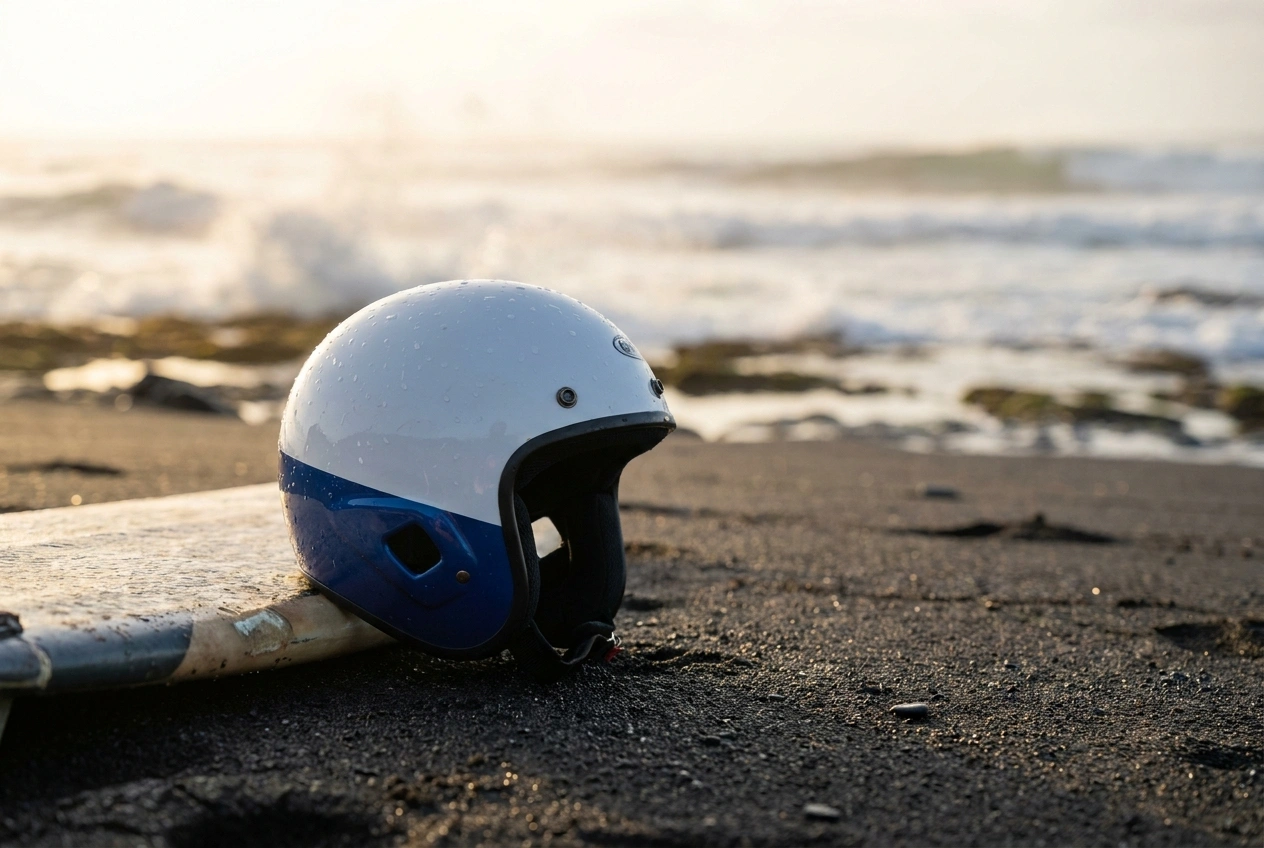
No. There is no surfing-specific helmet safety standard. No ASTM or EN test was ever written for the way a surfer hits a board, fin, or reef. When a surf helmet carries a mark at all, it is usually a borrowed watersports standard such as CE EN 1385, originally written for canoe and whitewater paddling. Many surf helmets carry no formal impact certification whatsoever, and that is normal for the category.
Walk into any other helmet aisle and a sticker tells the story. Bicycle helmets meet CPSC, snow helmets meet ASTM F2040, motorcycle lids meet DOT or ECE. Surfing has none of that. Our research found no standards body has ever published an impact test built around surfing, which leaves the whole category running on borrowed marks and honest guesswork.
That sounds alarming until you look at how surfers actually get hurt, and at what a surf helmet is really being asked to do. The hazards here are not the ones the big crash-test rigs were designed to model, so the absence of a dedicated standard is less a scandal than a reflection of the sport itself. Here is what surfers lean on instead.
Why no surfing-specific helmet standard exists
Writing a safety standard takes a clear, common injury mechanism to test against. Surfing does not hand testers an obvious one. The deadliest risk in the water is drowning, not a crown impact, and a helmet does little for that. The most frequent injuries are lacerations from your own board and fins, plus reef cuts, which are slicing and grazing forces rather than the blunt vertical drop a crash rig measures. Historically, almost no surfers wore helmets at all, so there was never the volume of head-impact data or market demand that pushed cycling and motorsport toward mandatory testing. The result is a gap nobody filled.
- Drowning, not head impact, is the leading cause of surfing fatalities, and a helmet does not prevent it.
- The common injuries are board and fin lacerations plus reef cuts, which are cutting forces, not the blunt impacts standards test.
- Helmet adoption in surfing has been low for decades, so there was little data or commercial pressure to write a test.
- No standards body (ASTM, CEN, Snell) has published an impact protocol built around surfing-specific hazards.
What surf helmets actually meet, when they meet anything
Because no surf standard exists, makers either borrow a watersports standard or sell with no formal certification at all. The most commonly borrowed mark is CE EN 1385, the European standard for canoeing and whitewater helmets in class I to IV rapids. It checks shock absorption (an impact of at least 15 joules), retention strap stretch, how far the helmet shifts on the head, and buoyancy after a four-hour soak. Useful, but it was written around striking underwater rocks in a river, not around a fin to the skull in the surf. Some brands also cite Surf Life Saving Australia approval or, more recently, independent Virginia Tech Helmet Lab star ratings, which add rotational data that genuinely applies to surfing.
What surfers actually optimize for
Strip away the certification debate and a surf helmet is judged on a different list of jobs than a road or trail helmet. Crown impact protection matters mainly against your board, your fins, and shallow reef, not against a 20 mph car crash. Beyond impact, the priorities are about staying functional and comfortable in moving water, where a helmet that floats off, fills up, or numbs your ears is worse than no helmet.
- Impact against board, fin and reef, the realistic surf hazards, rather than high-speed blunt force.
- Secure fit and retention in water, so a duck-dive or a wipeout does not rip it off.
- Drainage, so the shell sheds water fast instead of dragging your head back.
- Low profile and light weight, so it does not catch the lip or strain your neck on every turn.
- Ear protection options, which is about warmth and surfer's ear, not impact (see below).
Surfer's ear is not an impact problem
Buyers often conflate ear coverage with impact safety, and they are unrelated. Surfer's ear, medically exostosis, is abnormal bone growth in the ear canal triggered by repeated cold water and wind exposure, not by blows to the head. Cold-water surfers develop it at far higher rates than warm-water surfers. A helmet with ear flaps can help by shielding the canal from cold water and wind, but the evidence points to fitted earplugs (often combined with a wetsuit hood) as the more effective prevention. So if ear health is your reason for buying, you are shopping for warmth and water exclusion, not for a higher impact rating.
Standards a surf helmet might carry, and what each was actually written for
| Mark or rating | Originally written for | What surfers should know |
|---|---|---|
| (none) | Not applicable | Common in the category. Legal to sell, but tells you nothing about tested performance. Judge it on design and owner reports. |
| CE EN 1385 | Canoeing and whitewater, class I to IV rapids | The most commonly borrowed mark. Tests ~15 J impact, retention, fit shift, and buoyancy. Built around river-rock impacts, not surf hazards. |
| Surf Life Saving Australia approval | Surf rescue and watersports use in Australia | A watersports approval some brands cite, often alongside EN 1385. Not a globally recognized impact standard. |
| Virginia Tech Helmet Lab stars | Independent lab rating across helmet types | Not a pass/fail certification. Adds rotational-impact data that genuinely applies to surfing. A useful comparison signal where available. |
| CPSC, ASTM F2040, DOT, ECE | Bicycles, snow sports, motorcycles | Designed for other sports. A surf helmet will almost never carry these, and they are not the right test for surf forces anyway. |
DOT vs ECE vs Snell vs MIPS, how to pick the right lid in 60 seconds, and when to replace it. One page, no fluff.
Frequently Asked Questions
Do surf helmets have a safety standard?
No. There is no surfing-specific helmet standard from any standards body. When a surf helmet is certified at all, it usually meets a borrowed watersports standard such as CE EN 1385, and many surf helmets carry no formal impact certification.
What is CE EN 1385 and is it made for surfing?
EN 1385 is the European standard for canoeing and whitewater helmets in class I to IV rapids. It tests impact absorption, retention, fit and buoyancy. It is the mark most often borrowed by surf helmets, but it was written around river paddling hazards, not surfing impacts.
Are GATH surf helmets certified?
It depends on the model. GATH built its name on field-proven design, and historically many of its surf models carried no formal impact certification. Newer models reference standards like EN 1385, Surf Life Saving Australia protocols, and Virginia Tech ratings. Always check the specific standard listed for the specific helmet.
Does a surf helmet help with surfer's ear?
Indirectly at best. Surfer's ear (exostosis) is bone growth caused by cold water and wind, not impact. A helmet with ear coverage can shield the ear canal, but fitted earplugs, often with a wetsuit hood, are generally the more effective prevention.
If there is no standard, is a surf helmet worth wearing?
For many surfers, yes, especially in shallow reef breaks or crowded lineups where board, fin and reef strikes are the real risk. The lack of a dedicated standard reflects the sport's hazards, not a flaw in the helmets. Judge a helmet on fit, retention, drainage, low profile and any borrowed certification it carries.
