
Affiliate disclosure As an Amazon Associate we earn from qualifying purchases, at no extra cost to you.
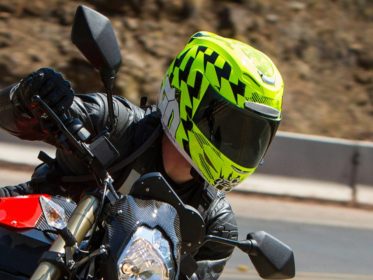
White and bright fluorescent colors (yellow, orange, hi-viz green) are the most conspicuous helmet choices in daylight. Matte black and dark colors are the least visible, particularly at dusk and night. For all-day riding, a white or hi-viz shell paired with reflective trim gives the broadest safety margin. Color is one factor; lights, gear, and lane position matter equally.
Every few months someone posts in a motorcycle forum asking whether helmet color genuinely matters for safety, and the reply is always split: half the thread says "ride like nobody can see you regardless," and the other half cites a study from New Zealand and calls it case closed. Both camps are partly right. Color does affect how easily drivers notice you, but it is one variable among several, and the gains depend heavily on conditions.
Our research desk looked at the conspicuity literature, the practical difference between fluorescent and reflective materials, and what riders typically trade away for a blacked-out lid. Here is what actually matters, without the forum hyperbole.
Why helmet color affects how other drivers see you
A motorcycle is already a small target in traffic. A rider's helmet sits at roughly eye height for drivers in SUVs and trucks, which means it is often the first part of the bike that a driver's eye catches. High-contrast colors create a larger apparent visual target and help the brain register "vehicle" faster, which is the goal of conspicuity research.
The most widely cited work in this area is a New Zealand study by Wells and colleagues, published in the journal Injury Prevention. The study found an association between light-colored or white helmets and lower crash-injury risk compared with black helmets. The researchers did not claim color alone was causal; riding behavior, visibility conditions and other factors were in play. The direction of the data was consistent: lighter helmets correlated with better outcomes. The result aligns with broader road-safety research showing that high-contrast clothing and equipment reduce the likelihood of being overlooked by other road users.
The best helmet colors for daytime visibility
In daylight, the visual property that matters most is luminance contrast: how much the helmet stands out against its background, which for a rider is usually a mix of sky, buildings, and tarmac. Fluorescent pigments work by absorbing UV light and re-emitting it as visible light, making the surface appear brighter than a standard painted surface in the same conditions. This makes them particularly effective on overcast days, in rain, and at dawn and dusk when ambient light is already reduced.
- White: high luminance in most light conditions, catches peripheral vision well, widely associated with lower injury risk in conspicuity studies.
- Fluorescent yellow and hi-viz yellow-green: peak fluorescent efficiency; the same color used for high-visibility workwear for exactly this reason. Excellent in low-angle or overcast light.
- Fluorescent orange: strong contrast against both sky and dark road surfaces; very effective in mixed urban and rural riding.
- Bright red and silver: useful, though not as reliably high-contrast as white or fluorescent options in all lighting conditions.
- Matte black and dark colors: absorb light rather than reflecting it, blend into shadowed backgrounds, and are consistently the lowest-conspicuity choice in daylight research.
Night visibility: reflective is different from fluorescent
Fluorescent pigments are nearly useless after dark because they need ambient light to activate. At night, the property that matters is retroreflectivity: the ability to bounce a driver's headlights back toward the source. This is a completely different mechanism, and it is why a matte black helmet with a good retroreflective strip can outperform a plain hi-viz yellow helmet in a dark road scenario.
Most manufacturers now include small reflective logos or trim on their helmets, but the coverage is often minimal. For riders who commute or tour at night, there are practical upgrades:
- Reflective sticker kits applied to the rear and sides of the shell; inexpensive and visible from several car lengths.
- Helmets with integrated reflective panels: some tourers (the Shoei GT-Air 3, AGV Tourmodular, and a few Schuberth models) build larger reflective sections into the liner trim.
- High-visibility vests or jackets worn over riding gear: the largest reflective surface you can add; makes the torso visible from a much greater distance than any helmet trim.
For dedicated night riding, a helmet with deliberate reflective integration matters more than the shell color chosen for daytime looks.
Retrofitting an existing dark helmet does not require a repaint or a new lid. Genuine 3M retroreflective tape kits apply straight to the shell in about fifteen minutes and put material exactly where headlights hit at night: the rear, the sides, and the crown. For the torso, which is a bigger target than any helmet will ever be, a dedicated reflective vest worn over a jacket adds more usable surface area than shell trim can match, and it works with whatever color helmet you already own.
The safety-vs-style trade-off: what riders actually choose
Black is, by a large margin, the best-selling motorcycle helmet color. Matte black in particular has become a near-default for the sport and naked-bike crowd. Riders know this is not the optimal conspicuity choice, and most accept that trade-off deliberately. That is fine, as long as it is a conscious decision rather than an assumption that color does not matter.
There are a few practical ways to close the gap if you prefer a darker helmet:
- Choose a helmet with prominent reflective logos on the back and sides rather than ones with purely decorative graphics.
- Pair it with a high-visibility jacket or vest on long-distance or night rides.
- Run your headlight on full beam during the day (always legal, and the most effective single step for being seen).
- Use lane position deliberately; riding in the portion of the lane most visible in a driver's mirror is worth more than almost any gear choice.
If you are shopping and visibility is the priority, a solid white shell such as the HJC C10 makes the conspicuity choice easy without sacrificing modern fit and certification options, since white is the one color the conspicuity research keeps landing on regardless of lighting condition.
Color matters less than fit and certification
A well-fitted ECE 22.06 or Snell-certified helmet in matte black protects you far better than a white helmet that does not fit properly or carries only a self-certified DOT sticker. Conspicuity improves your odds of not being hit; a correctly certified, properly fitting helmet is what protects you when a collision happens anyway. Both matter, but certification and fit are not negotiable starting points.
Our guides on related subjects:
- How to get the right shell for your skull shape and riding style: how a helmet should fit.
- If you wear prescription glasses: helmets for glasses wearers.
- If wind noise is the priority on long rides: quietest touring helmets.
Helmet color at a glance: daytime vs. night visibility
| Color | Daytime visibility | Night visibility | Notes |
|---|---|---|---|
| White | Excellent | Moderate (depends on reflective trim) | Most consistently high-contrast across lighting conditions; associated with lower crash-injury risk in conspicuity research |
| Fluorescent yellow / hi-viz | Excellent (top performer) | Poor without reflective trim | Best fluorescent choice for overcast, rain, and low-angle light; same class as high-vis workwear |
| Fluorescent orange | Very good | Poor without reflective trim | Strong contrast against both sky and road; popular with adventure and dual-sport riders |
| Bright red / silver | Good | Poor without reflective trim | Better than dark colors; less consistent than white or fluorescent options |
| Matte black / dark colors | Poor (lowest conspicuity) | Poor without reflective trim | Most popular seller; lowest-visibility choice in daylight and at night without added reflective material |
DOT vs ECE vs Snell vs MIPS, how to pick the right lid in 60 seconds, and when to replace it. One page, no fluff.
Frequently Asked Questions
What color motorcycle helmet is safest?
White and fluorescent colors (hi-viz yellow, orange, and yellow-green) are the most conspicuous in daylight and are associated with better outcomes in conspicuity research, including a widely cited New Zealand study. For night riding, reflective material on any color shell matters more than the base color itself.
Is a white motorcycle helmet safer than a black one?
Research suggests white helmets are associated with lower crash-injury risk compared with black helmets, likely because they are more conspicuous to other drivers. However, the difference reflects one risk factor among many. Fit, certification, lane position, and lighting all have independent effects on overall safety.
Does fluorescent yellow really help on a motorcycle?
Yes. Fluorescent pigments perform measurably better than standard bright colors in low light, overcast conditions, and rain because they emit additional visible light by converting UV. They lose this advantage after dark, where reflective strips take over. If you want maximum daytime conspicuity, fluorescent yellow or hi-viz options are the best choice.
I have a black helmet. What can I do to be more visible?
Add retroreflective sticker strips to the rear and sides, pair the helmet with a high-visibility jacket or vest, run your headlight on full beam during the day, and use a lane position that keeps you visible in drivers' mirrors. These steps address visibility more directly than swapping the helmet color. If you do want to change the look of your existing lid - adding wraps, decals, or a paint job - our guide on how to customize your helmet covers the options that do not compromise the shell integrity.
Does helmet color affect heat inside the helmet?
Dark shells absorb more solar radiation than light or white shells, which can raise interior temperature on slow or stationary riding in direct sun. At speed, airflow dominates and the color difference becomes negligible. If you ride frequently in hot, sunny conditions and spend time in traffic, a lighter shell has a minor thermal advantage.
