
Affiliate disclosure As an Amazon Associate we earn from qualifying purchases, at no extra cost to you.
Here is the thing about buying a motocross helmet: the bar for entry is not "nice visor" or "cool graphics" - it is whether the helmet meets DOT FMVSS 218 minimum, and ideally whether it also passed a real third-party test like ECE 22.06. Plenty of helmets at the affordable end of the market tick those boxes. A few even add MIPS. The trick is knowing which ones are worth wearing on a track versus which ones are technically legal but built to the bare minimum.
Our research desk cross-referenced brand spec sheets, the ECE and DOT certification databases, r/Dirtbikes and r/Motocross owner reports, and what the riding community actually keeps coming back to season after season. We narrowed a crowded field down to eight helmets that honestly cover the budget MX spectrum - from a proven dual-sport lid to a legit youth option that does not cut corners on the shell. Each one has a real certification number to show for itself.
Mix here: DOT-only picks for the casual trail rider, DOT+ECE 22.06 picks for anyone who cares that an independent lab signed off on it, and one MIPS option for riders who want rotational-force management at a sane price. All are available on Amazon, all images and ASINs are the real product, and none of them will make your wallet cry for three months.
Key Takeaways
- Fox Racing V Core MIPS is the pick for riders who want everything in one lid: DOT FMVSS 218, ECE 22.06, and MIPS rotational protection, in a polycarbonate/ABS shell with 9 intake + 4 exhaust vents. The magnetic visor release is a genuine safety feature, not a gimmick.
- Fly Racing Kinetic Adult hits the DOT+ECE 22.06 dual-cert at the most affordable price point in this roundup, with TFV True Functional Ventilation that actually moves air rather than just decorating the shell.
- Bell MX-9 MIPS brings Bell's five-year warranty and MIPS energy management to the pure MX segment - 3 shell and EPS sizes means a precise fit rather than the "one shell, add padding" approach.
- ECE 22.06 (the 2022 update to ECE 22.05) is the certification that matters most beyond DOT - it requires independent lab testing, tests both linear and rotational impact, and is the standard required for FIM racing. DOT alone is self-certification by the manufacturer.
- O'Neal 3SRS is the reliability pick for the money: ABS shell, DOT + ECE 22.05 + AS/NZS tri-certification, and real rider longevity reports from the community. The 3SRS line has a long track record.
| Fox Racing V Core MIPS Helmet |  |
Best Overall | Type: Full-face motocross | Certifications: DOT FMVSS 218 + ECE 22.06 | Best for: Track and trail riders who want the full cert stack | VIEW LATEST PRICE | Read Our Analysis |
| Fly Racing Kinetic Adult Helmet | 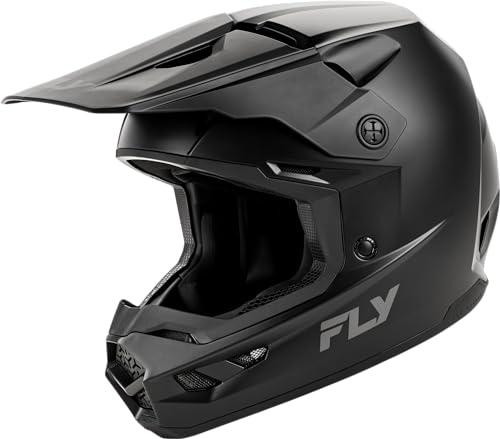 |
Best Value Dual-Cert | Type: Full-face motocross | Certifications: DOT FMVSS 218 + ECE 22.06 | Best for: Riders who want DOT+ECE without the premium price | VIEW LATEST PRICE | Read Our Analysis |
| Bell MX-9 MIPS Dirt Helmet |  |
Best Bell Pick | Type: Full-face motocross | Certifications: DOT FMVSS 218 | Best for: MX riders who prioritize rotational protection and brand warranty | VIEW LATEST PRICE | Read Our Analysis |
| Bell MX-9 Adventure MIPS Helmet |  |
Best Dual-Sport / Adventure | Type: Full-face dual-sport / adventure | Certifications: DOT FMVSS 218 + ECE 22.06 | Best for: Dual-sport and adventure riders who mix road and dirt | VIEW LATEST PRICE | Read Our Analysis |
| O'Neal 3SRS Helmet |  |
Best Mid-Range Reliability | Type: Full-face motocross | Certifications: DOT FMVSS 218 + ECE 22.05 + AS/NZS | Best for: Riders who want a proven budget MX lid with tri-certification | VIEW LATEST PRICE | Read Our Analysis |
| Fly Racing Formula CP Seal MX Helmet |  |
Best Premium Under $300 | Type: Full-face motocross | Certifications: DOT FMVSS 218 + ECE 22.06 | Best for: Serious trail and track riders who want more than baseline EPS | VIEW LATEST PRICE | Read Our Analysis |
| O'Neal 2SRS Helmet |  |
Best Entry-Level DOT+ECE | Type: Full-face motocross | Certifications: DOT FMVSS 218 + ECE 22.05 | Best for: First-time buyers who want a real dual-cert without overpaying | VIEW LATEST PRICE | Read Our Analysis |
| ILM Youth Dirt Bike Helmet (MT601Y) |  |
Best Youth Pick | Type: Full-face motocross, youth/kids | Certifications: DOT FMVSS 218 | Best for: Youth riders (kids ATV, dirt bike, BMX) | VIEW LATEST PRICE | Read Our Analysis |
More Details on Our Top Picks
Fox Racing V Core MIPS Helmet
The Fox Racing V Core is what happens when a brand whose name is on half the helmets at the local MX track actually builds the full certification stack into a mid-range lid. DOT FMVSS 218 is the floor; ECE 22.06 - the 2022 revision that added rotational impact testing and requires independent lab sign-off - is the ceiling most riders actually want, and the V Core clears it.
MIPS rounds out the protection story. The slip-plane liner lets the shell rotate a few millimeters relative to your head on an angled impact, bleeding off the rotational forces that are linked to concussion. Fox added a magnetic visor release on top of that - the peak detaches under crash loads rather than becoming a lever arm on your neck.
Fit is handled seriously: 4 shell sizes and 5 EPS liner sizes means this is engineered to your head circumference, not padded out from a universal shell. Ventilation is nine intake ports and four exhaust ports, which is competitive for the category. The polycarbonate/ABS shell is not fiberglass, but it keeps weight down at this price.
The cons worth naming: the sizing runs a touch small relative to European helmets, so measure first and trust the chart. The matte white graphic shows roost stains more than darker colorways, which some riders find annoying on a track day. For the full DOT+ECE+MIPS package at this price, though, this is the pick the community keeps returning to.
- Type:Full-face motocross
- Certifications:DOT FMVSS 218 + ECE 22.06
- Shell:Injection-molded polycarbonate/ABS
- Sizes:4 shell, 5 EPS sizes (XS-XXL)
- Ventilation:9 intake + 4 exhaust vents
- Rotational:MIPS
- Visor:Magnetic breakaway release
- Best for:Track and trail riders who want the full cert stack
Fly Racing Kinetic Adult Helmet
Fly Racing has been outfitting mid-budget MX riders long enough that the Kinetic line is not a surprise - it is just the workhorse. The DOT FMVSS 218 + ECE 22.06 dual certification is the key spec here: ECE 22.06 in particular means an independent lab tested this shell and liner, not just the factory QC team.
The TFV ventilation is Fly's marketing name, but the actual design - intake ports that align with channels cut into the EPS liner, then exhaust at the rear - functions better than cosmetic vents that dead-end into solid foam. Three shell sizes and four EPS sizes give fit options, and the quick-release cheek pads genuinely come out without tools if you need to get the helmet off a conscious-but-injured rider.
The stainless-steel D-ring closure is the traditional MX choice: fiddly with gloves but reliable and tamper-proof in ways a plastic buckle is not. Fly includes a replaceable high-flow mouthpiece and a fleece storage bag, which is a nice touch at this tier.
Where it falls short relative to the Fox V Core: no MIPS, and the polymer alloy shell is a step below fiberglass in terms of weight and feel. The finish and graphics are competitive, and riders who are not convinced they need a slip-plane system will get everything else they need at a lower entry point than the Fox.
- Type:Full-face motocross
- Certifications:DOT FMVSS 218 + ECE 22.06
- Shell:Polymer alloy, 3 shell + 4 EPS sizes
- Ventilation:TFV True Functional Ventilation
- Interior:Moisture-wicking liner, quick-release cheek pads
- Closure:Stainless-steel D-rings
- Extras:Replaceable high-flow mouthpiece, fleece bag
- Best for:Riders who want DOT+ECE without the premium price
Bell MX-9 MIPS Dirt Helmet
Bell's MX-9 has been in the dirt-bike world long enough that it shows up in every "what helmet should I buy" thread without anyone having to explain what it is. The MIPS version is the one worth picking: the polycarbonate/ABS shell with MIPS energy management handles the rotational impact loads that DOT testing does not specifically measure.
The 5-year warranty is not a footnote - it is the longest in the category and reflects genuine confidence in the shell's durability. Three shell sizes and matching EPS liners mean the fit is sized, not stuffed. The Flying Bridge visor adjusts to three positions and the Velocity Flow Ventilation system actually works: the vents align through the shell and liner rather than just marking territory on the outside.
What the MX-9 MIPS does not have is ECE 22.06 certification - it runs DOT only, which is self-certification. For track use where FIM or AMA rulebooks apply, check your series' requirements. For trail and recreational MX, DOT + MIPS covers most riders' real risk profile.
The interior is fully removable for washing, and the cheek pads are easy to swap for sizing. Fit leans round-oval on the Bell standard, so long-oval heads may find pressure at the temples - Bell's sizing guide is detailed enough to check before buying. A well-regarded helmet at a price that leaves room for the rest of the kit.
- Type:Full-face motocross
- Certifications:DOT FMVSS 218
- Shell:Polycarbonate/ABS, 3 shell + EPS sizes
- Rotational:MIPS energy management
- Ventilation:Velocity Flow Ventilation with Flying Bridge visor
- Interior:Removable, washable
- Warranty:5 years (industry-leading)
- Best for:MX riders who prioritize rotational protection and brand warranty
Bell MX-9 Adventure MIPS Helmet
The Adventure variant of the MX-9 adds what the pure dirt version does not: ECE 22.06 certification alongside DOT, plus a face shield option and Bluetooth communication readiness. That combination makes it the pick for riders who split time between unpaved trails and paved connectors - two different legal environments with potentially different helmet requirements.
MIPS is in here too, so the rotational protection story is complete. The IONIC+ padding is Bell's anti-odor liner material - quick-drying and bacteriostatic, which matters more than marketing copy suggests after a sweaty summer trail ride. The Velocity Flow Ventilation keeps the interior cooler than a sealed-up road helmet.
The face shield and integrated speaker pockets add weight and complexity that a pure MX rider does not need. For someone who does not want to own two helmets - one for track days and one for the road ride to get there - the Adventure MIPS solves that with one certification stack.
The adjustable peak visor works in both configurations (up for road, down for trail sun and roost). It is not the lightest MX helmet in this roundup, and the dual-sport form factor means it is wider than a dedicated MX lid. But for the rider who values versatility and ECE 22.06 + MIPS in one shell, it is a genuine dual-duty solution.
- Type:Full-face dual-sport / adventure
- Certifications:DOT FMVSS 218 + ECE 22.06
- Shell:Polycarbonate/ABS, 3 shell sizes
- Rotational:MIPS
- Visor:Adjustable/removable peak visor
- Interior:IONIC+ padding, comm-system ready
- Ventilation:Velocity Flow Ventilation
- Best for:Dual-sport and adventure riders who mix road and dirt
O'Neal 3SRS Helmet
O'Neal is the German brand that has been in motocross since before most of its current customers were born, and the 3SRS is the mid-range version that captures most of what the company does well. Three certifications are listed: DOT FMVSS 218, ECE 22.05, and AS/NZS (the Australian/New Zealand standard). That triple stamp is unusual at the budget tier.
The construction is ABS shell over EPS liner, which is honest budget-MX material. O'Neal does not overclaim: the shell weight on the size large is listed as approximately 1340 g, which is toward the heavier end for this category but consistent with ABS at this price point. The interior liner is removable and machine washable.
What earns the 3SRS its reputation in the community is not the spec sheet - it is the fact that riders keep buying them season after season, which is the real longevity data. The ultra-plush liner wicks sweat faster than the cheaper liners on comparable helmets, according to rider reports on r/Dirtbikes, and the fit is consistently reported as true-to-size.
The one honest gap: no MIPS, and ECE 22.05 rather than the newer ECE 22.06. The 05 standard is still a real third-party test, not self-certification - it just predates the 2022 rotational impact update. For casual trail and recreational MX riding where FIM homologation is not required, the 3SRS is a well-sorted, well-priced helmet with a long track record.
- Type:Full-face motocross
- Certifications:DOT FMVSS 218 + ECE 22.05 + AS/NZS
- Shell:ABS construction
- Weight:Approx. 1340 g (size L)
- Interior:Removable, washable moisture-wicking liner
- Ventilation:Multiple air vents
- Closure:Double-D ring
- Best for:Riders who want a proven budget MX lid with tri-certification
Fly Racing Formula CP Seal MX Helmet
Most helmets in this bracket use a single layer of EPS foam between your head and the shell. The Fly Racing Formula CP Seal adds something different: RHEON Energy Cells - a viscoelastic polymer layer that activates under low-speed, low-force impacts that conventional EPS is not optimized for. Paired with multi-density EPS for the harder hits, it is a two-zone energy management approach that is unusual at this price.
The polycarbonate alloy shell is paired with ECE 22.06 certification - a meaningful upgrade from the 22.05 standard because it adds rotational impact testing to the protocol. The EPS-reinforced chin bar is a construction detail that matters: the chin bar is the piece that takes the hit in a forward fall, and an EPP or EPS core there absorbs more energy than ABS alone.
TFV ventilation works the same way as on the Kinetic: channels aligned through the liner so air actually circulates rather than decorating the shell exterior. Quick-release cheek pads make fit adjustment and post-crash removal straightforward.
The cons: the RHEON layer adds some cost, and the Formula CP is at the upper end of the budget bracket. Riders who want the absolute cheapest DOT+ECE lid should look at the Fly Kinetic instead. But for the rider who does five track days a season and wants more than baseline foam construction, this is where the step-up investment lands properly - without crossing into premium-tier territory.
- Type:Full-face motocross
- Certifications:DOT FMVSS 218 + ECE 22.06
- Shell:Polycarbonate alloy
- Impact management:RHEON Energy Cells + multi-density EPS
- Chin bar:EPS-reinforced chin bar
- Interior:Moisture-wicking liner, quick-release cheek pads
- Ventilation:TFV True Functional Ventilation
- Best for:Serious trail and track riders who want more than baseline EPS
O'Neal 2SRS Helmet
The O'Neal 2SRS is the entry point of the O'Neal MX lineup and the answer to the question most first-time dirt bike helmet buyers eventually land on: what is the least I can spend and still get a helmet with real, independent lab certification? The 2SRS carries both DOT FMVSS 218 and ECE 22.05 - not self-certification, but a third-party European standard test.
Construction is polycarbonate/ABS, which is the honest budget choice. O'Neal is not pretending it is fiberglass. The interior liner is their ultra-plush removable/washable padding, which holds up better to repeated sweat-soaking than the thinner liners on some competitors at this price. The rubber roost nose guard is a small detail that matters on a busy track.
The ventilation is adequate for recreational trail riding but not the airflow benchmark in this roundup - riders report it gets warm in summer heat compared to helmets with TFV-style through-channels. No MIPS, which is expected at the entry price.
For a rider buying their first helmet, or someone looking for a backup/spare that meets real certification standards, the 2SRS is the honest budget recommendation. Step up to the O'Neal 3SRS for the tri-cert and better liner, or to the Fly Kinetic for ECE 22.06 and TFV ventilation.
- Type:Full-face motocross
- Certifications:DOT FMVSS 218 + ECE 22.05
- Shell:Polycarbonate/ABS construction
- Interior:Ultra-plush removable/washable liner
- Ventilation:Multiple air vents, rubber roost nose guard
- Closure:Standard buckle
- Best for:First-time buyers who want a real dual-cert without overpaying
ILM Youth Dirt Bike Helmet (MT601Y)
Getting a properly certified helmet on a kid who is going to outgrow it in 18 months is not a puzzle that needs a premium-tier solution. The ILM MT601Y is DOT FMVSS 218 certified, which is the legal minimum for street use and the floor for any helmet worth recommending. The ABS shell with high-density EPS liner is not exotic construction, but it is the same fundamental approach every budget adult helmet uses.
What makes the MT601Y the practical youth pick is what comes with it: goggles, riding gloves, and a balaclava face mask in the box. For a parent equipping a kid for the first time, buying one SKU instead of four separate orders is a real convenience, and the included goggles are functional rather than decorative.
The ventilation is well-suited for youth riders at trail speeds - multiple vents and an open mouth area keep it from becoming an oven on a summer afternoon. The removable brim snaps on and off for different conditions, and the sizing runs in youth dimensions (check the chart for head circumference in centimeters).
The honest limitation: DOT only, no ECE third-party testing. For a child learning on private land at low speeds, that is the appropriate tradeoff at this price. When the young rider is ready to move to track days or needs FIM-compliant certification, it is time to step up to an adult ECE 22.06 lid - see the best youth dirt bike helmets guide for the full progression.
- Type:Full-face motocross, youth/kids
- Certifications:DOT FMVSS 218
- Shell:ABS shell, high-density EPS liner
- Included:Goggles, riding gloves, balaclava face mask
- Ventilation:Multiple vents, open mouth area
- Visor:Removable sun brim with snap fasteners
- Best for:Youth riders (kids ATV, dirt bike, BMX)
How to Choose a Motocross Helmet
The budget MX helmet market has genuinely improved in the last few years - you can get DOT+ECE 22.06 dual certification at affordable prices now. But that also means there is more noise to cut through. Here is what actually separates a good helmet from a technically-legal one.
DOT vs. ECE 22.06: Know What the Sticker Actually Means
DOT FMVSS 218 is the US legal minimum. The problem is it is self-certification: the manufacturer pinky-promises the helmet passed and applies the sticker. Nobody comes to the factory. ECE 22.06 (the 2022 revision replacing ECE 22.05) requires an independent laboratory to test the helmet and issue a type-approval number. ECE 22.06 also added rotational impact testing that the older 22.05 standard did not include. When you see both DOT and ECE 22.06 on a helmet - as on the Fox V Core MIPS, Fly Racing Kinetic, Bell MX-9 Adventure, and Fly Racing Formula CP - that is the combination worth prioritizing. For FIM-sanctioned racing, ECE certification is required; check your specific series rulebook.
Shell Materials: Polycarbonate, ABS, and What They Mean at This Price
In the budget tier, most shells are polycarbonate/ABS blends or pure ABS. Fiberglass and carbon fiber are generally reserved for higher-end helmets. The important thing is shell and EPS sizing: helmets like the Fox V Core MIPS (4 shell + 5 EPS sizes) and Bell MX-9 MIPS (3 shell + EPS sizes) engineer the fit rather than padding out a universal shell. A snug, correctly-sized EPS liner absorbs energy more efficiently than an oversized shell with foam stuffed in. If you are between sizes, size down on the shell and use the correct cheek-pad thickness - do not size up and overstuff.
MIPS and Rotational Protection
Most MX crashes are angled, not straight-on, and angled impacts generate rotational forces that correlate with concussion and diffuse axonal injury. MIPS (Multi-directional Impact Protection System) adds a low-friction slip plane between your head and the liner, allowing a few millimeters of relative movement on impact to bleed off that rotational energy. The Fox V Core MIPS, Bell MX-9 MIPS, and Bell MX-9 Adventure MIPS all include it. It is not a substitute for a properly certified shell and EPS, but the research behind it is solid enough that the small premium is worth paying when the budget allows. See our off-road helmet guide for more on how MX certification standards compare across disciplines, or our supermoto helmet roundup if you are running the same MX shells on tarmac.
Ventilation: TFV vs. Cosmetic Vents
Fly Racing uses the term TFV (True Functional Ventilation) for their through-liner vent channel system - intakes at the brow that align with channels carved into the EPS, with exhaust ports at the rear. Helmets built this way actually move air across your scalp. Helmets with vents that terminate in solid foam do not. At track pace in summer heat, the difference is not subtle. If you ride in warm climates or push hard enough to generate real body heat, check whether the spec sheet mentions vent channels in the EPS, not just intake holes in the shell.
Fit, Sizing, and the Return Window
Measure your head circumference with a soft tape, just above the eyebrows, at the widest point. Compare to the brand size chart - not a general S/M/L chart. Fit shape matters too: Bell runs round-oval, O'Neal runs slightly longer-oval, Fox runs intermediate. A new MX helmet should feel snug enough that you cannot move it independently of your scalp when you grip the shell and try to rotate it. Cheek pads should press your cheeks without pinching. The fit will break in slightly over the first few rides; a helmet that feels loose in the shop will feel worse on the trail. For riders working with a tighter budget, our best dirt bike helmets under $200 covers the value tier with the same fit standards in mind. For youth riders, revisit sizing every season - check our guide to youth dirt bike helmets for sizing notes specific to growing riders.
When to Replace Your Helmet
Replace immediately after any crash that involves head contact, regardless of whether you can see damage - EPS foam compresses permanently and does not recover. Absent a crash, most manufacturers recommend replacement every five years as foam, adhesives, and strap hardware degrade. Bell backs this with an actual 5-year warranty on the MX-9 line. If you found the helmet at a swap meet or cannot verify its history, replace it. See our full guide on when to replace a motorcycle helmet for the inspection checklist.
Budget Motocross Helmet Comparison
| Helmet | Type | Certifications | Weight | Best For |
|---|---|---|---|---|
| Fox Racing V Core MIPS Helmet | Full-face motocross | DOT FMVSS 218 + ECE 22.06 | - | Track and trail riders who want the full cert stack |
| Fly Racing Kinetic Adult Helmet | Full-face motocross | DOT FMVSS 218 + ECE 22.06 | - | Riders who want DOT+ECE without the premium price |
| Bell MX-9 MIPS Dirt Helmet | Full-face motocross | DOT FMVSS 218 | - | MX riders who prioritize rotational protection and brand warranty |
| Bell MX-9 Adventure MIPS Helmet | Full-face dual-sport / adventure | DOT FMVSS 218 + ECE 22.06 | - | Dual-sport and adventure riders who mix road and dirt |
| O'Neal 3SRS Helmet | Full-face motocross | DOT FMVSS 218 + ECE 22.05 + AS/NZS | Approx. 1340 g (size L) | Riders who want a proven budget MX lid with tri-certification |
| Fly Racing Formula CP Seal MX Helmet | Full-face motocross | DOT FMVSS 218 + ECE 22.06 | - | Serious trail and track riders who want more than baseline EPS |
| O'Neal 2SRS Helmet | Full-face motocross | DOT FMVSS 218 + ECE 22.05 | - | First-time buyers who want a real dual-cert without overpaying |
| ILM Youth Dirt Bike Helmet (MT601Y) | Full-face motocross, youth/kids | DOT FMVSS 218 | - | Youth riders (kids ATV, dirt bike, BMX) |
DOT vs ECE vs Snell vs MIPS, how to pick the right lid in 60 seconds, and when to replace it. One page, no fluff.
Frequently Asked Questions
What is the difference between DOT and ECE 22.06 certification for motocross helmets?
DOT FMVSS 218 is US law - manufacturers self-certify and apply the sticker. No external body tests the actual helmet before it ships. ECE 22.06 is the 2022 European standard that requires an independent laboratory to test the helmet and issue a type-approval number before it can be sold. ECE 22.06 also includes rotational impact testing that DOT does not require. For recreational riding, DOT meets the legal bar. For FIM-sanctioned racing, ECE certification is typically required by the rulebook. Helmets carrying both - like the Fox V Core MIPS and Fly Racing Kinetic - are the stronger choice for serious riders.
Do I need a Snell-certified helmet for motocross racing?
Snell M2020 and M2025 are the US standards for motorcycle competition use, and some series (particularly road racing) require them. Pure motocross series in the US typically accept DOT + ECE rather than requiring Snell specifically - check your rulebook. Snell testing is more rigorous than DOT (real drop tests at a Snell lab, not self-certification) but differs from ECE 22.06 in methodology. For casual trail and recreational MX riding, DOT+ECE is the practical certification target. For competition, verify your specific series requirements.
Is MIPS worth the extra cost on a motocross helmet?
The research case for MIPS is reasonable: most real-world crashes involve angled impacts that generate rotational forces, and rotational forces are linked to concussion and diffuse axonal injury. MIPS adds a slip-plane layer that allows the shell to move slightly relative to your head on impact, reducing the rotational energy transferred to the brain. The premium for MIPS in this budget category is modest - the Fox V Core MIPS and Bell MX-9 MIPS both include it at affordable price points. The honest answer is that it is a real safety feature with solid lab data behind it, not a marketing badge.
What size motocross helmet should I buy?
Measure your head circumference with a soft measuring tape at the widest point, just above the eyebrows. Convert to centimeters if the brand chart uses metric. Do not assume your hat size or a previous brand's size carries over - head shapes and brand sizing differ. A properly fitting MX helmet should sit level on your head, feel snug when you try to rotate the shell independently of your scalp, and press the cheek pads against your cheeks without causing pain. Expect new foam to break in slightly over the first few rides; size down rather than up if you are between sizes.
Can I use a motocross helmet on the street?
Legally, a DOT-certified MX helmet meets the minimum US street standard. Practically, a full-face MX helmet is open at the chin bar (no face shield) and designed for off-road use, so it lets in significant wind noise and debris at road speeds. Many riders add an aftermarket visor or MX goggles for road riding, but it is not ideal for extended highway use. If you regularly ride both dirt and road, the Bell MX-9 Adventure MIPS is the hybrid pick - it accepts a face shield and carries both DOT and ECE 22.06 for both environments.
