Affiliate disclosure As an Amazon Associate we earn from qualifying purchases, at no extra cost to you.
E-bikes change the math on helmet selection. A Class 1 or Class 2 e-bike that tops out around 20 mph rides a lot like a fast pedal bike, and a solid CPSC-certified commuter helmet covers that use case fine. But a Class 3 e-bike or a speed pedelec that can hit 28 mph, or higher on some models, closes the gap with a small moped, and a crash at that speed hits harder and involves more of the back of the head than the standard bike-helmet test protocol assumes. The Research Desk built this list specifically for that gap: helmets that address higher commuting speeds, low-light visibility, and rear-of-head coverage, not just a repackaged mountain bike helmet with an ebike sticker on the box.
We pulled from the Amazon catalog and prioritized features that matter for e-bike commuting specifically: certifications that go beyond baseline CPSC where the listing supports it, integrated LED lighting for dawn/dusk/night visibility, extended rear-head coverage, and reflective or high-visibility elements. Below are seven picks with honest notes on where each fits and where it falls short, plus a section on when you actually need the stricter speed-pedelec standard versus when CPSC is fine. We also cross-checked every pick against the independent Virginia Tech helmet lab ratings.
If you're new to helmet shopping in general, start with our how to choose a bike helmet guide for fit and sizing basics. Budget-conscious mountain riders should also see our best MTB helmet under $100 roundup, and anyone confused by the alphabet soup of DOT, ECE, and other labels should read our helmet certifications explainer before buying.
Key Takeaways
- Speed class determines the standard you actually need - Class 1/2 e-bikes (20 mph or under) are well served by a CPSC-certified commuter helmet; Class 3 e-bikes and speed pedelecs (up to 28 mph or faster) are the use case the NTA 8776 standard was built for.
- NTA 8776 tests for higher-speed, higher-mass impacts - it's the Dutch standard written specifically for speed pedelecs, with a larger coverage area at the back of the head and impact testing at higher energy levels than standard bicycle-helmet certification.
- Integrated lighting is not a gimmick on an e-bike - e-bikes let you cover more distance after dark on the same commute, and a built-in rear LED is more reliably present than a clip-on light you might forget to charge or attach.
- Rear-head coverage matters more at e-bike speeds - a harder, faster fall lands differently than a slow-speed tip-over; look for a deeper rear shell, not just a thin ring of foam at the base of the skull.
- CPSC alone is not a downgrade for most riders - if you're commuting on a Class 1 or Class 2 e-bike at pedal-assist speeds, a well-fitted CPSC helmet with good ventilation and visibility features is a sound, honest choice; NTA 8776 is an upgrade for a specific higher-speed use case, not a universal requirement.
- Lab results add what certification labels cannot - Virginia Tech's independent helmet lab scores impact performance in stars and recommends 4 or 5; its E-bike (NTA) group shows that an NTA 8776 label alone does not guarantee a top score, so check the lab rating alongside the certification.
| XNITO Helmet |  |
Best for Speed Pedelecs | Type: Urban/commuter, Class 3 e-bike rated | Certifications: CPSC + NTA 8776 (dual certified) | Best For: Riders on Class 3 e-bikes or speed pedelecs who want the stricter standard | VIEW LATEST PRICE | Read Our Analysis |
| ILM Adult Bike Helmet with USB Rechargeable LED Lights | 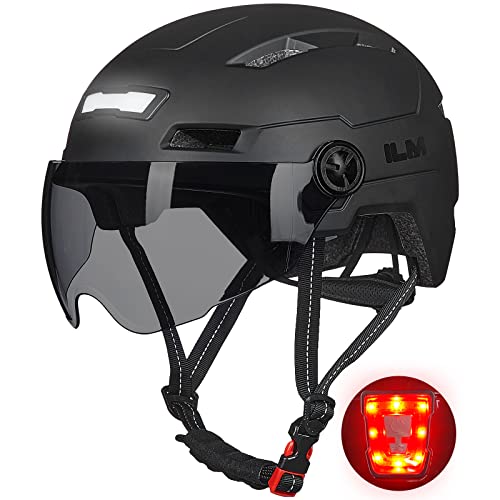 |
Best Integrated Lighting | Type: Road/commuter with front and rear LED | Certifications: ASTM, CPSC, CE, EN1078 | Best For: Riders who want built-in, rechargeable visibility lighting | VIEW LATEST PRICE | Read Our Analysis |
| BOTHLIKE Lightweight E-Bike Helmet with LED Light |  |
Best Lightweight Pick | Type: E-bike commuter helmet | Weight: Approx. 10.25 oz | Best For: Riders who want the lightest shell with visibility features | VIEW LATEST PRICE | Read Our Analysis |
| Retrospec Lennon Adult Bike Helmet with LED Safety Light |  |
Best Commuter Styling | Type: Commuter/road helmet | Lighting: Built-in 5-LED safety light, 3 functions | Best For: Everyday commuters who want a clean, non-sporty look with a built-in taillight | VIEW LATEST PRICE | Read Our Analysis |
| Thousand Chapter MIPS Adult Bike Helmet |  |
Lab-Rated CPSC Pick | Type: Retro urban commuter helmet with MIPS | Lab rating: Virginia Tech 4 stars (CPSC) | Best For: Class 1/2 commuters who want style, a lock channel and a taillight | VIEW LATEST PRICE | Read Our Analysis |
| ABUS Pedelec 2.0 MIPS Urban Helmet |  |
Best Urban Style With NTA 8776 | Type: Urban e-bike helmet with MIPS and LED lights | Lab rating: Virginia Tech 4 stars; CPSC + NTA 8776 | Best For: Class 3 riders who want a lab-rated urban helmet with lights | VIEW LATEST PRICE | Read Our Analysis |
| UNIT 1 Aura Smart E-Bike Helmet |  |
Best Smart Visibility | Type: Smart urban helmet with front and rear lights | Lab rating: Virginia Tech 5 stars; CPSC + NTA 8776 | Best For: Night commuters who want the highest-rated helmet here | VIEW LATEST PRICE | Read Our Analysis |
More Details on Our Top Picks
XNITO Helmet
The XNITO is the pick on this list built specifically for higher-speed e-bikes, and it is dual certified to CPSC and NTA 8776, the latter being the credential that matters most here. NTA 8776 is the Dutch standard developed for speed pedelecs, the class of e-bike that can assist up to roughly 28 mph or more, and it tests at higher impact energies with more rear-head coverage than standard bicycle-helmet protocols.
If you're commuting on a Class 3 e-bike or a true speed pedelec, that distinction is not marketing fluff. Standard bicycle helmet testing was written around slow-speed falls where the rider's own body weight generates most of the impact energy. A speed pedelec crash happens faster and can involve more force, and NTA 8776's testing regime reflects that with a design intent closer to a low-power moped helmet than a pure bicycle lid.
Away from the certification headline, it covers commuter basics well: in-mold construction that keeps weight under a pound (0.83 lb), 10 vents feeding internal cooling channels, a detachable fabric visor, and custom-integrated front and rear LED lights (USB-rechargeable, up to 10 hours, three modes) that add real night-time visibility. Sizing runs M through XL across roughly a 54-64 cm range, which covers most adult heads.
The honest caveat: always verify current certification claims on the actual product listing before you buy, since Amazon listings change over time and NTA 8776 is still a less common credential in the US market. But among the pool of e-bike-marketed helmets we reviewed, this is the one explicitly built around the higher-speed standard rather than just adding an LED light to a standard commuter shell.
Lab check: Virginia Tech's helmet lab lists a model called the XNITO Old School (CPSC and NTA 8776) at 2 stars, below the 4 or 5 stars it recommends. We could not confirm that the listing linked here is that same model, so read NTA 8776 as a speed-rating credential, not a lab ranking, and compare it with the lab-rated picks below before you buy.
- Type:Urban/commuter, Class 3 e-bike rated
- Certifications:CPSC + NTA 8776 (dual certified)
- Ventilation:10 vents
- Visor:Detachable fabric visor
- Sizing:M/L/XL, 54-64 cm
- Best For:Riders on Class 3 e-bikes or speed pedelecs who want the stricter standard
ILM Adult Bike Helmet with USB Rechargeable LED Lights
E-bikes make it easy to cover a longer commute after work, which often means riding home after dark more often than you would on a pedal-only bike. The ILM addresses that directly with a USB-rechargeable LED system built into the shell itself, front and rear, with steady, flashing, and blinking modes you cycle through with a single button.
The advantage of an integrated light over a clip-on unit is reliability: it's always attached, always charged if you remember to plug it in at home, and positioned by the manufacturer rather than wherever a strap happens to sit. The rear light in particular is the one that matters most for being seen by traffic approaching from behind, which is exactly the angle a clip-on taillight is most likely to slip out of position.
Certification-wise, this one lists ASTM, CPSC, CE, and EN1078, which covers the standard bicycle-helmet bases for Class 1 and Class 2 e-bike speeds. It does not claim a speed-pedelec-specific standard like NTA 8776, so if you're riding a Class 3 e-bike at higher assisted speeds regularly, the XNITO above is the more appropriate choice.
Ten vents keep things reasonably cool, and the removable tinted lens is a nice add for daytime glare without needing separate sunglasses. One honest limitation: like most helmets in this price tier, the manufacturer doesn't publish independent third-party lab data beyond the certification marks themselves, so treat the certifications as a baseline pass, not a performance ranking.
Lab check: Virginia Tech has not rated this exact model, the E3-10L. It has rated a different ILM model, the E3-12LS, at 2 stars, and a lab result does not carry across model versions. Treat it as a reason to compare this pick with the lab-rated options below, not as a verdict on this one.
- Type:Road/commuter with front and rear LED
- Certifications:ASTM, CPSC, CE, EN1078
- Lighting:USB rechargeable front and rear LED, 3 modes
- Ventilation:10 vents
- Visor:Removable tinted goggle/lens
- Best For:Riders who want built-in, rechargeable visibility lighting
BOTHLIKE Lightweight E-Bike Helmet with LED Light
The BOTHLIKE is marketed explicitly as an e-bike helmet, and at roughly 10.25 ounces the shell is notably light for a helmet carrying a PC outer layer, EPS foam middle layer, and a thick removable liner. That weight matters more on an e-bike than you might expect, since a heavier bike encourages longer rides at higher average speed, and a heavier or poorly balanced helmet becomes more noticeable over an extended commute.
Twenty-one vents is a generous count for heat dissipation, which pairs well with the extra effort-free speed an e-bike motor provides, since you're generating less of your own cooling airflow from pedaling exertion alone. The included magnetic goggles are a genuinely useful add for riders who don't want to carry separate sunglasses or a face shield.
The built-in USB-rechargeable rear LED covers the same low-light visibility need as the ILM above, positioned specifically at the back where oncoming traffic from behind needs to see you. The magnetic attachment on the goggles is a nice touch for quick removal without fumbling with straps at a red light.
The main thing this listing does not claim is a speed-pedelec-specific certification. Treat this as a strong lightweight option for Class 1/2 e-bike commuting where standard bicycle-helmet certification is the appropriate bar, not a Class 3 or speed-pedelec pick.
- Type:E-bike commuter helmet
- Weight:Approx. 10.25 oz
- Ventilation:21 vents
- Lighting:USB rechargeable rear LED
- Visor:Magnetic goggles included
- Best For:Riders who want the lightest shell with visibility features
Retrospec Lennon Adult Bike Helmet with LED Safety Light
Retrospec's Lennon leans into commuter styling rather than a sport or mountain-bike aesthetic, which matters if you're locking your e-bike up outside an office and walking in wearing the helmet or carrying it. The shell shape is understated compared to the more aggressively vented options on this list.
The built-in 5-LED safety light with three functions covers the same after-dark visibility need as the lighting-focused picks above, and the ErgoKnob-2 dial system gives a genuinely easy one-hand fit adjustment, useful if you're pulling the helmet on one-handed while holding your e-bike's handlebar with the other.
Fifteen vents with internal air channels are a middling but adequate ventilation count. This isn't the most breathable helmet on the list, but it's not designed for aggressive summer exertion rides either. It's built for the moderate-effort, motor-assisted commute where you're not drenched in sweat by the time you arrive.
As with the ILM and BOTHLIKE, this is a standard commuter-certified helmet without a speed-pedelec-specific rating. It's a strong choice if your e-bike commute stays in Class 1/2 territory and you want something that looks like a normal bike helmet rather than a piece of safety equipment.
- Type:Commuter/road helmet
- Lighting:Built-in 5-LED safety light, 3 functions
- Ventilation:15 vents with internal air channels
- Fit System:ErgoKnob-2 dial adjustment
- Visor:Removable
- Best For:Everyday commuters who want a clean, non-sporty look with a built-in taillight
Thousand Chapter MIPS Adult Bike Helmet
The Thousand Chapter MIPS is the pick for riders on Class 1 and Class 2 e-bikes who want a helmet that does not look like sports gear and still scores well in an independent lab. Virginia Tech's helmet lab rates the Chapter MIPS at 4 stars (entry dated 2021, listed as CPSC-certified), inside the 4 to 5 star range the lab recommends.
According to the listing, it adds MIPS, a rotational-impact layer, and includes a 30 lumen USB-rechargeable taillight that attaches magnetically. It has eight vents feeding internal cooling channels and a visor offered in several finishes, including hand-painted tortoise shell, matte black and metallic rose gold. The standout commuter feature is the Secret PopLock, a hidden channel behind the logo that lets you thread a U-lock or chain lock through the helmet when you park, backed by what Thousand calls its Anti-Theft Guarantee.
What it is not is a speed-pedelec helmet. The lab lists the Chapter MIPS under CPSC only, outside its E-bike (NTA) group, so if you ride a Class 3 e-bike or a speed pedelec that assists up to 28 mph, look at the ABUS Pedelec 2.0 MIPS or UNIT 1 Aura below instead. The lab's ratings also apply to the version it tested, so treat 4 stars as a strong sign for the Chapter MIPS rather than a guarantee for every later revision or colorway.
- Type:Retro urban commuter helmet
- Lab rating:Virginia Tech 4 stars (entry dated 2021)
- Certification:CPSC (per the lab's listing)
- Rotational protection:MIPS
- Lighting:Included magnetic USB-rechargeable taillight (30 lumens per the listing)
- Ventilation:8 vents
- Special Feature:PopLock hidden channel for a U-lock or chain lock
- Best For:Class 1/2 commuters who want style, a lock channel and a taillight
ABUS Pedelec 2.0 MIPS Urban Helmet
The ABUS Pedelec 2.0 MIPS is a lab-rated option for riders who need the speed-pedelec standard and prefer a city-helmet shape. Virginia Tech's helmet lab lists it as certified to CPSC, EN 1078, NTA 8776 and ASTM and rates it at 4 stars (entry dated 2023), which puts it among the 23 helmets in the lab's E-bike (NTA) group that score 4 or 5 stars. The Amazon listing does not spell out that certification list, so the lab's entry is our source for it.
According to the listing, it combines MIPS with an in-mold build in which the EPS foam liner is fused to the outer shell, plus reflectors and LED lights described as having 180-degree visibility. The Zoom Ace dial adjusts the fit, and four air inlets and nine outlets handle ventilation. It is sold as an urban helmet, so the shape is closer to a city helmet than a trail one.
One practical check: the listing titles for different sizes and colors mention different accessories (some name a rain hood and a rechargeable light, others only a tail light and reflectors), so confirm what is included for the exact size and color you pick before you buy.
- Type:Urban e-bike helmet
- Lab rating:Virginia Tech 4 stars (entry dated 2023)
- Certifications:CPSC, EN 1078, NTA 8776, ASTM (per the lab's listing)
- Rotational protection:MIPS
- Lighting:LED lights and reflectors
- Ventilation:4 air inlets, 9 air outlets
- Fit System:Zoom Ace turn-dial
- Best For:Class 3 riders who want a lab-rated urban helmet with lights
UNIT 1 Aura Smart E-Bike Helmet
The UNIT 1 Aura has the best lab result on this list. Virginia Tech's helmet lab rates it at 5 stars (entry dated 2025) and lists it as certified to CPSC, EN 1078 and NTA 8776, so it sits in the lab's E-bike (NTA) group and pairs a 5-star rating with the visibility focus that e-bike commuting calls for.
According to the listing, the Aura integrates front and rear lights and includes MIPS, with 14 vents, a rear fit dial and a magnetic buckle. It connects to the UNIT 1 app to personalize the light settings, and with Crash Alert set up and a connected phone, a detected crash starts an app countdown; if you do not respond, the app can send your location to the emergency contact you chose. Turn-signal buttons and automatic brake lighting need the separately sold Remote, which the listing says is required for those functions.
Two cautions. This is a connected helmet, so Crash Alert, the turn signals and the automatic brake light depend on pairing and app setup, and the listing tells you to pair your devices and check their operation before riding. And UNIT 1 sells a related Aura Hybrid on the same Amazon page, while the lab's entry is named simply UNIT 1 AURA, so check the model name for the variant you choose.
- Type:Smart urban e-bike helmet
- Lab rating:Virginia Tech 5 stars (entry dated 2025)
- Certifications:CPSC, EN 1078, NTA 8776 (per the lab's listing)
- Rotational protection:MIPS
- Lighting:Integrated front and rear lights
- Turn signals and brake light:Require the separately sold Remote
- Ventilation:14 vents
- Best For:Night commuters who want the highest-rated helmet here
What Virginia Tech's Helmet Lab Says About These Picks
Certification labels tell you which standard a helmet was built to; they do not tell you how well it performed. The Virginia Tech Helmet Lab runs independent impact tests on bicycle helmets and turns the results into a 0 to 5 star rating, and it recommends choosing a helmet with 4 or 5 stars. Its public list has a separate E-bike (NTA) group for helmets that carry the NTA 8776 certification. In the list we checked on October 29, 2026, that group held 34 helmets, 23 of which scored 4 or 5 stars and 11 of which scored 3 stars or lower.
Here is where the seven picks stand:
- UNIT 1 Aura: 5 stars (entry dated 2025; CPSC, EN 1078, NTA 8776)
- ABUS Pedelec 2.0 MIPS: 4 stars (entry dated 2023; CPSC, EN 1078, NTA 8776, ASTM)
- Thousand Chapter MIPS: 4 stars (entry dated 2021; CPSC)
- XNITO: the lab rated a model it calls the XNITO Old School at 2 stars; we could not confirm it is the same helmet as the listing
- ILM: the lab rated a different ILM model, the E3-12LS, at 2 stars; this E3-10L is not rated
- BOTHLIKE and Retrospec Lennon: not in the lab's list
In October 2026 we compared this guide with the lab's data and replaced three earlier picks that it had scored at 0 or 1 star (the Schwinn Thrasher, Thousand Heritage 2.0 and Retrospec Dakota) with the lab-rated models above. For a full explanation of how the stars work, see our guide to Virginia Tech helmet ratings.
Two limits are worth knowing. The lab rates the specific model version it tested, so a rating does not automatically carry to another model or a later revision. And a star rating is a lab result for impact performance, not a prediction for any individual crash, so it works best as one input next to fit, certification and the speed you actually ride.
How to Choose an E-Bike Helmet
E-bikes blur the line between a bicycle and a low-power moped, and helmet shopping should account for that instead of treating every e-bike the same as a pedal bike. Here's what actually changes.
Know Your E-Bike Class Before You Shop
In the US, e-bikes are generally grouped into three classes: Class 1 (pedal-assist only, tops out at 20 mph), Class 2 (throttle-assist, also capped around 20 mph), and Class 3 (pedal-assist, capped around 28 mph, often requiring the rider to be older and sometimes restricted from certain bike paths). A speed pedelec, common in Europe, can assist even higher. Your helmet decision should start with which class you're actually riding, not just "I have an e-bike." If you're not sure which class your bike is, check the manufacturer spec sheet or the sticker near the motor housing.
CPSC vs. NTA 8776: What's the Real Difference
CPSC (the US Consumer Product Safety Commission bicycle helmet standard) is the baseline legal requirement for helmets sold as bicycle helmets in the United States, and it's built around the impact energy of a gravity drop test. NTA 8776 is a Dutch standard written specifically for speed pedelecs. It requires testing at higher impact energy, a larger area of coverage at the back of the head (since higher-speed falls more often involve the rear of the skull), and a lower field-of-view requirement so the helmet shell is deeper overall. If you ride a Class 1 or Class 2 e-bike, a well-fitted CPSC helmet is genuinely adequate; you are not under-protected by choosing one. If you regularly ride a Class 3 e-bike or a true speed pedelec at 25-28+ mph, a helmet certified to NTA 8776 or an equivalent higher-speed standard is a meaningful upgrade worth seeking out, similar in spirit to choosing a helmet with a higher certification tier for higher-risk riding.
MIPS and Rotational Impact Protection
MIPS (Multi-directional Impact Protection System) is a low-friction layer inside a helmet designed to let the shell slide slightly relative to your head on an angled impact, reducing the rotational force transmitted to your brain. It's not unique to e-bike helmets, but it's worth prioritizing for e-bike commuting specifically, since higher speeds increase the odds of an angled, glancing impact rather than a straight-on hit. Not every helmet on this list includes MIPS; check the current listing for the specific model and colorway you're buying, since manufacturers sometimes offer MIPS as an upgrade tier within the same helmet line.
Integrated Lighting and Rear Visibility
E-bikes extend your practical commuting range and make it more likely you'll be riding at dawn, dusk, or after dark on a regular basis. A built-in rear LED, ideally USB rechargeable so it doesn't rely on disposable batteries, solves the single biggest visibility gap: being seen from behind by a driver approaching at speed. A helmet-mounted light sits higher and more consistently than a seatpost or rack-mounted taillight and doesn't get blocked by cargo or panniers.
Rear-Head and Coverage Considerations
Standard road and commuter helmets are often cut relatively high at the back of the head to save weight and improve ventilation. At higher e-bike speeds, a fall is more likely to involve impact further back and lower on the skull than a typical slow-speed bicycle tip-over. Look for helmets described as having extended or deep rear coverage, and check the fit guide on our how to choose a bike helmet page to make sure the helmet sits low enough at the back of your head, not tipped back to show your forehead.
Commuters often ask about two add-ons. For sun and rain, see our guide to bike helmets with a visor, which includes e-bike rated options with NTA 8776. For a rear view without turning your head, see our guide to bike helmet mirrors.
E-Bike Helmet for Commuters Comparison
| Helmet | Certifications | Virginia Tech lab rating | Lighting | Ventilation | Best For |
|---|---|---|---|---|---|
| XNITO Helmet | CPSC + NTA 8776 (dual) | 2 stars for the lab's XNITO Old School (not confirmed to be this listing) | Front & rear LED | 10 vents | Riders on Class 3 e-bikes or speed pedelecs who want the stricter standard |
| ILM Adult Bike Helmet with USB Rechargeable LED Lights | ASTM, CPSC, CE, EN1078 | Not rated (a different ILM model, E3-12LS: 2 stars) | USB rechargeable front and rear LED, 3 modes | 10 vents | Riders who want built-in, rechargeable visibility lighting |
| BOTHLIKE Lightweight E-Bike Helmet with LED Light | Confirm CPSC label | Not rated | USB rechargeable rear LED | 21 vents | Riders who want the lightest shell with visibility features |
| Retrospec Lennon Adult Bike Helmet with LED Safety Light | Confirm CPSC label | Not rated | Built-in 5-LED safety light, 3 functions | 15 vents with internal air channels | Everyday commuters who want a clean, non-sporty look with a built-in taillight |
| Thousand Chapter MIPS Adult Bike Helmet | CPSC (per the lab) | 4 stars | Magnetic USB-rechargeable taillight | 8 vents | Class 1/2 commuters who want style, a lock channel and a taillight |
| ABUS Pedelec 2.0 MIPS Urban Helmet | CPSC, EN 1078, NTA 8776, ASTM (per the lab) | 4 stars | LED lights and reflectors | 4 inlets, 9 outlets | Class 3 riders who want a lab-rated urban helmet with lights |
| UNIT 1 Aura Smart E-Bike Helmet | CPSC, EN 1078, NTA 8776 (per the lab) | 5 stars | Integrated front and rear lights | 14 vents | Night commuters who want the highest-rated helmet here |
If you want the light built into the shell rather than clipped on, see our picks for the best bike helmets with built-in lights.
Frequently Asked Questions
Do I need a special helmet for an e-bike?
It depends on your e-bike's class and top assisted speed. If you ride a Class 1 or Class 2 e-bike that tops out around 20 mph, a standard CPSC-certified bicycle helmet is genuinely adequate and not a compromise. If you ride a Class 3 e-bike or a speed pedelec capable of 25-28 mph or more, a helmet certified to a higher-speed standard like NTA 8776 is a meaningful upgrade, since it's tested at higher impact energies with more rear-head coverage. Check your e-bike's spec sheet to confirm its class before assuming either way.
What is NTA 8776 and do I actually need it?
NTA 8776 is a Dutch certification standard written specifically for speed pedelecs, the class of e-bike that can assist well beyond typical bicycle speeds. It requires impact testing at higher energy levels and mandates more coverage at the back of the head compared to standard bicycle helmet certification. You need it, or an equivalent, mainly if your e-bike is genuinely capable of speed-pedelec-range speeds on a regular basis. For a typical Class 1/2 pedal-assist commute, standard CPSC certification is the appropriate and honest choice, not an under-protection risk.
Is integrated LED lighting worth it on a bike helmet?
For e-bike commuters, yes, especially if your commute extends into dawn, dusk, or evening hours. E-bikes make longer, faster commutes practical, which often means riding in lower light more regularly than on a pedal-only bike. A built-in, USB-rechargeable rear light is more reliable than a clip-on accessory you have to remember to attach and charge separately, and it sits at a consistent, visible height for drivers approaching from behind.
Do e-bike helmets need MIPS?
MIPS is not exclusive to e-bike helmets, but it's a worthwhile feature to prioritize for e-bike commuting because higher speeds increase the likelihood of an angled, glancing impact rather than a straight-on hit. MIPS is designed to reduce the rotational force transmitted to the brain in exactly that kind of impact. Check whether MIPS is included in the specific listing and colorway for the helmet you're considering, since it's sometimes offered as an upgrade tier.
What's the difference between Class 1, 2, and 3 e-bikes for helmet purposes?
Class 1 e-bikes are pedal-assist only and cap out around 20 mph. Class 2 e-bikes add a throttle but are also capped around 20 mph. Class 3 e-bikes are pedal-assist and capped around 28 mph, and some jurisdictions restrict where they can be ridden. The higher the class and the higher your actual typical riding speed, the more seriously you should weigh a helmet with a higher-speed-rated certification like NTA 8776 rather than relying on standard bicycle-helmet certification alone.
Which e-bike helmets does Virginia Tech rate best?
Virginia Tech's helmet lab recommends 4 or 5 stars. In its E-bike (NTA) group, 15 helmets scored 5 stars in the list we checked on October 29, 2026, including the urban-style UNIT 1 Aura, UNIT 1 Neon and Specialized Mode, and mountain-style models such as the Fox Racing Dropframe Pro (2023 version) and 6D ATB-2T. Another 8 scored 4 stars, including the ABUS Pedelec 2.0 MIPS and MET Terrae. Check the lab's own list for the current ratings before you buy, since it is updated as new helmets are tested.
Does an NTA 8776 label mean a helmet scores well in lab tests?
No. NTA 8776 says a helmet meets that standard's requirements. Virginia Tech's star rating is a separate lab result for how well a helmet reduces head impact in tests meant to represent real-world bicycle crashes, and more stars are associated with lower concussion risk in those scenarios. In the lab's E-bike (NTA) group, 11 of 34 helmets scored 3 stars or lower, including the XNITO Old School and the ILM E3-12LS at 2 stars each. So check the rating as well as the certification.
How is this different from a general bike helmet guide?
This list is filtered specifically for e-bike commuting: integrated visibility lighting, rear-head coverage, and awareness of the speed-pedelec certification gap that a generic bike helmet guide typically doesn't address. For fit and sizing fundamentals that apply to any bike helmet, see our how to choose a bike helmet guide.
DOT vs ECE vs Snell vs MIPS, how to pick the right lid in 60 seconds, and when to replace it. One page, no fluff.
