
Affiliate disclosure As an Amazon Associate we earn from qualifying purchases, at no extra cost to you.
A standard bike helmet is certified to survive a fall at around 20 km/h (roughly 14 mph), because that is the impact speed CPSC's own drop test simulates. A lot of electric scooters cruise faster than that on a flat road before you even factor in a downhill or a pothole, which means the helmet doing the reassuring on your head may be rated for a slower crash than the one you are capable of having.
NTA 8776 is the answer the Netherlands built for exactly this gap. It is a Dutch standard, developed for speed pedelecs and adopted by a growing number of e-bike and e-scooter helmet makers, that raises the coverage and lowers the force ceiling compared with a standard bicycle helmet. It is not a scooter-specific law and it is not required outside the Netherlands, but it is the closest thing to a purpose-built standard this category has.
We built this list around that distinction: helmets that carry an NTA 8776 claim from the manufacturer, plus a couple of honest CPSC-only budget options for riders who keep their scooter to a slow commute. Certifications below are exactly what each product listing states, nothing inferred from the brand name.
Key Takeaways
- A standard bike helmet is certified (CPSC 16 CFR 1203) to a roughly 20 km/h (about 14 mph) impact; NTA 8776 is written for the faster falls and different fall angles common on e-scooters and speed pedelecs.
- NTA 8776 also extends tested coverage to the temples and back of the head, about 10 percent more shell area than a standard bicycle helmet, and caps peak force at 250 g versus CPSC's 300 g.
- NTA 8776 is a Dutch standard, not a scooter-specific law. In the Netherlands it is legally required for speed pedelecs on public roads; everywhere else, including for e-scooters, it is a voluntary upgrade a manufacturer chooses to certify to.
- The Lumos Ultra and XNITO are the most established NTA 8776-certified picks here; the BATFOX is the cheapest helmet on this list carrying an NTA 8776 claim.
- If an NTA 8776 helmet is not available or affordable, a CPSC-certified helmet like the ILM or innamoto is still far better than no helmet, it is just built around a slower impact than a scooter can produce.
| Lumos Ultra E-Bike Smart Helmet | 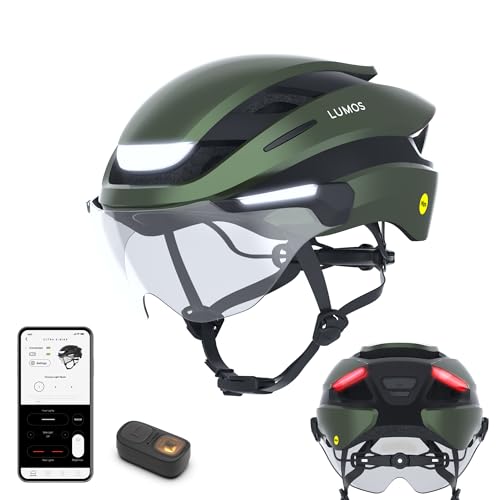 |
Best Overall | Type: Commuter e-bike/scooter helmet with retractable face shield | Certifications: NTA 8776 (per listing); complies with CPSC bicycle helmet standard | Best for: Riders who want MIPS and an NTA 8776 claim in one helmet | VIEW LATEST PRICE | Read Our Analysis |
| XNITO Bike Helmet with LED Lights |  |
Best Ventilated NTA 8776 | Type: Urban e-bike/scooter commuter helmet | Certifications: CPSC and NTA 8776, dual certified per listing | Best for: Riders who want NTA 8776 coverage without the smart-helmet price | VIEW LATEST PRICE | Read Our Analysis |
| ASIEVIE Smart Commuter E-Bike Helmet |  |
Best Smart Features | Type: Smart commuter e-bike/scooter helmet | Certifications: NTA8776, CPSC 1203 & EN 1078 per listing | Best for: Riders who want fall detection and brake alerts alongside NTA 8776 | VIEW LATEST PRICE | Read Our Analysis |
| JARSH Commute Smart EBike Helmet |  |
Best Night Visibility | Type: Commuter e-bike/scooter helmet | Certifications: NTA-8776 (Dutch regulation) plus CPSC, ASTM and CE per listing | Best for: Riders who commute in low light and want the most LED coverage | VIEW LATEST PRICE | Read Our Analysis |
| LUMDEER Smart E Bike Helmet |  |
Best Value NTA 8776 | Type: Smart e-bike/scooter helmet | Certifications: NTA-8776, CPSC and EN 1078 per listing | Best for: Riders who want a photochromic visor at a mid-range price | VIEW LATEST PRICE | Read Our Analysis |
| BATFOX NTA 8776 E-Bike & Mountain Bike Helmet |  |
Best Budget NTA 8776 | Type: E-bike / mountain bike crossover helmet | Certifications: CPSC, CE, EN1078 and NTA 8776 per listing | Best for: Cheapest NTA 8776-labeled helmet on this list | VIEW LATEST PRICE | Read Our Analysis |
| ILM Adult Bike Helmet with USB Rechargeable LED | 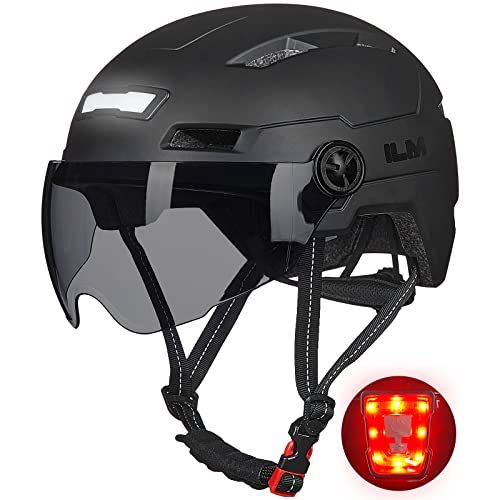 |
Best Budget CPSC-Only | Type: Commuter bike/scooter helmet | Certifications: ASTM, CPSC, CE and EN1078 per listing (no NTA 8776 claim) | Best for: Riders who want a budget CPSC helmet and don't need NTA 8776 | VIEW LATEST PRICE | Read Our Analysis |
| innamoto Skateboard Helmet for Adults | 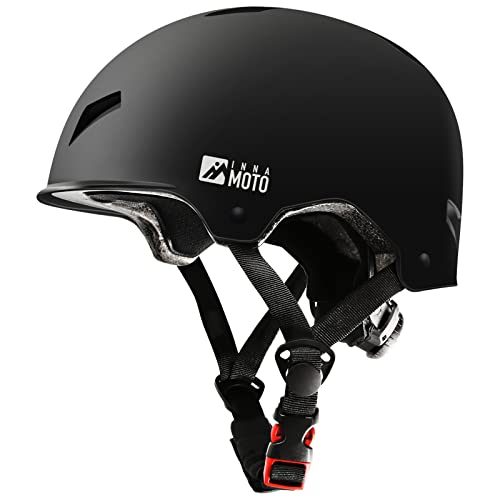 |
Cheapest Certified Option | Type: Skate-style multi-sport helmet | Certifications: CPSC 1203 & ASTM F1492 per listing (no NTA 8776 claim) | Best for: Cheapest certified option for short, slow scooter trips | VIEW LATEST PRICE | Read Our Analysis |
More Details on Our Top Picks
Lumos Ultra E-Bike Smart Helmet
Lumos built its name on bike-turn-signal helmets before e-scooters were a mainstream category, and the Ultra is the version aimed squarely at faster e-bike and scooter riders. The listing states an NTA 8776 certification alongside compliance with the U.S. CPSC bicycle helmet standard, and it is one of the few helmets on this list that also carries MIPS for rotational impact protection.
The retractable face shield and app-controlled LED turn signals are aimed at commuters riding in traffic, not off-road, and the wireless handlebar remote means you are not fumbling with a phone at a red light. Fit covers 54 to 61 cm, a wide enough range for most adult heads.
It is the most expensive helmet on this list, and Lumos does not publish a weight figure in the listing, so if a light helmet matters more to you than the smart features, weigh that against the XNITO below. As with every NTA 8776 claim here, the certification is what the manufacturer states in the listing, not something we lab-verified ourselves.
For a rider who wants the strongest certification story on this list, MIPS included, and does not mind paying for it, the Ultra is the one to start with.
- Type:Commuter e-bike/scooter helmet with retractable face shield
- Certifications:NTA 8776 (per listing); complies with CPSC bicycle helmet standard
- Rotational protection:MIPS
- Lighting:Front & rear LED, wireless remote turn signals, app control
- Weight:Not specified by manufacturer
- Fit range:54-61 cm (21.25-24 in)
- Best for:Riders who want MIPS and an NTA 8776 claim in one helmet
XNITO Bike Helmet with LED Lights
XNITO built its whole catalog around the NTA 8776 story, and the listing is specific about it: dual certified to CPSC and NTA-8776, designed for protection up to 28 mph, with extra coverage over the temples and rear of the head and a thicker EPS liner than a standard bike helmet.
At a claimed 0.83 lb it is one of the lighter helmets here, and the 10-vent aerodynamic shell is built to move air at commuting speed rather than trap heat. The detachable visor and dial-fit sizing are aimed at daily riders, not weekend racers.
It does not have MIPS and it does not have the app-connected features of the Lumos, so treat it as the straightforward, no-frills version of an NTA 8776 helmet. Sizing runs in three bands (medium to extra-large), so check your head circumference against the listing before you buy.
If your priority is the NTA 8776 claim itself at a lower price than the Lumos, without giving up integrated lighting, the XNITO is the pick.
- Type:Urban e-bike/scooter commuter helmet
- Certifications:CPSC and NTA 8776, dual certified per listing
- Speed rating:Up to 28 mph per listing
- Lighting:Integrated front/rear LED, USB rechargeable, up to 10 hr runtime
- Weight:0.83 lb (about 376 g) per listing
- Vents:10
- Best for:Riders who want NTA 8776 coverage without the smart-helmet price
ASIEVIE Smart Commuter E-Bike Helmet
The ASIEVIE is the most electronics-heavy helmet on this list. The listing states certification to NTA8776, CPSC 1203 and EN 1078, rated for protection up to 28 mph, and layers on fall detection, an automatic brake light, and Bluetooth 5.3 for hands-free calls and voice assist.
At a claimed 410 g it is lighter than it looks given how much hardware is packed in, and the FIDLOCK magnetic buckle is a genuine convenience upgrade over a standard clip when you are wearing gloves.
It is also the most expensive helmet on this list, and a helmet with this much electronics is a helmet with a battery to remember to charge, plus more that can eventually stop working than a helmet with no wiring in it at all. That is a fair trade for some riders and not for others.
If turn signals, a brake light and fall detection sound like features you would actually use on a daily commute, this is the smart-helmet pick over the Lumos.
- Type:Smart commuter e-bike/scooter helmet
- Certifications:NTA8776, CPSC 1203 & EN 1078 per listing
- Speed rating:Up to 28 mph (45 km/h) per listing
- Lighting:360-degree LED, auto brake warning, remote turn signals, fall detection
- Weight:410 g per listing
- Connectivity:Bluetooth 5.3, hands-free calls and voice assist
- Best for:Riders who want fall detection and brake alerts alongside NTA 8776
JARSH Commute Smart EBike Helmet
JARSH leans hard into the night-riding use case. The listing claims certification with Dutch NTA-8776 regulation for e-bike use up to 45 km/h and 28 mph, alongside CPSC, ASTM and CE, and pairs that with 54 built-in LEDs across the front and rear.
The handlebar remote also reports which lights are running in real time, and dual USB-C charging on both the helmet and remote means you are not hunting for two different cable types.
Forty hours of pulse-mode runtime is a strong claim, but battery-powered lighting on any helmet degrades over charge cycles the way every rechargeable battery does, so treat the number as a starting point rather than a permanent spec. Weight is not published in the listing.
For riders whose commute includes real darkness, before-dawn or after-sunset stretches, the LED coverage here beats every other helmet on this list.
- Type:Commuter e-bike/scooter helmet
- Certifications:NTA-8776 (Dutch regulation) plus CPSC, ASTM and CE per listing
- Speed rating:Up to 45 km/h / 28 mph per listing
- Lighting:54 built-in LEDs, wireless handlebar remote with turn signals and status readout
- Battery:Up to 40 hr runtime in pulse mode per listing
- Weight:Not specified by manufacturer
- Best for:Riders who commute in low light and want the most LED coverage
LUMDEER Smart E Bike Helmet
LUMDEER sits in the middle of this list on price while still carrying the full certification claim: NTA-8776, CPSC and EN 1078 per the listing, built for what it describes as higher-speed e-bike use up to 28 mph.
The photochromic visor is the standout feature. It darkens automatically in bright sun and clears up at dusk or night, which is a genuinely useful trick if your commute spans different light conditions and you do not want to swap visors mid-ride.
Nineteen hours of claimed LED runtime is on the lower end of the smart helmets here, and like most of this list, LUMDEER does not publish a weight figure, so if weight is a deciding factor for you, compare against the XNITO or ASIEVIE first.
For a rider who wants NTA 8776 plus one genuinely clever feature (the auto-tinting visor) without paying Lumos or ASIEVIE money, this is the value pick.
- Type:Smart e-bike/scooter helmet
- Certifications:NTA-8776, CPSC and EN 1078 per listing
- Speed rating:Up to 28 mph per listing
- Visor:Removable magnetic photochromic visor
- Lighting:Front/rear LED, turn signals, auto brake light
- Weight:Not specified by manufacturer
- Best for:Riders who want a photochromic visor at a mid-range price
BATFOX NTA 8776 E-Bike & Mountain Bike Helmet
BATFOX is a budget mountain-bike helmet brand rather than an e-mobility specialist, which makes it a bit of an outlier here, but its listing explicitly states certification by CPSC, CE, EN1078 and NTA 8776 in the product's own feature text, not just the title, so it clears the bar we set for including a certification claim.
It has none of the electronics on the smart helmets above: no lights, no app, no Bluetooth, just a polycarbonate shell, 17 vents and a detachable visor across a wide 51 to 61 cm fit range.
Given the price gap between this and the next-cheapest NTA 8776 helmet on this list, it is worth being a realist: a smaller brand's certification claim on a low-cost helmet deserves the same scrutiny as a bigger brand's, and we have not independently lab-tested any helmet on this page. Treat the claim as manufacturer-stated, same as every other NTA 8776 entry here.
If budget is the deciding factor and you still want an NTA 8776 claim rather than CPSC alone, this is the cheapest way to get one.
- Type:E-bike / mountain bike crossover helmet
- Certifications:CPSC, CE, EN1078 and NTA 8776 per listing
- Vents:17
- Visor:Detachable
- Weight:Not specified by manufacturer
- Fit range:51-61 cm
- Best for:Cheapest NTA 8776-labeled helmet on this list
ILM Adult Bike Helmet with USB Rechargeable LED
The ILM is a straightforward, well-reviewed commuter helmet, and its listing is honest in the way that matters most here: it claims ASTM, CPSC, CE and EN1078, and it does not claim NTA 8776. That absence is worth more than it sounds, because it means the helmet is not stretching for a certification it was not built or tested for.
USB-rechargeable front and rear lights with three modes and a detachable tinted lens cover the basics a commuter actually uses, and the removable, washable lining is a small quality-of-life feature that matters more than it looks on a helmet you wear daily.
This is a helmet built to a roughly 20 km/h impact standard, the same as any CPSC-certified bike helmet, so if you routinely ride your scooter faster than that, it is worth the honest math on whether an NTA 8776 helmet above is the better call.
For slower commutes and a tighter budget where NTA 8776 is not on the table, the ILM is a sensible, honestly labeled choice.
- Type:Commuter bike/scooter helmet
- Certifications:ASTM, CPSC, CE and EN1078 per listing (no NTA 8776 claim)
- Lighting:USB rechargeable front/rear LED, 3 modes
- Vents:10
- Extras:Detachable tinted lens, removable/washable lining
- Weight:Not specified by manufacturer
- Best for:Riders who want a budget CPSC helmet and don't need NTA 8776
innamoto Skateboard Helmet for Adults
The innamoto is marketed as a skateboard helmet first, and that is actually a point in its favor for scooter riders: its listing states dual certification to CPSC 1203 (the bike helmet standard) and ASTM F1492, which is the specific U.S. standard for skateboarding and in-line skating helmets. Between the two, it covers both the rolling-fall and rotational scenarios common to board sports and low-speed scooters better than a generic bike helmet does on its own.
It is the cheapest helmet on this list by a wide margin, with a rounded skate-style shell, two swappable liners for fit, and nothing electronic to charge or fail.
It does not claim NTA 8776 and it is not built for e-bike or fast-scooter speeds. Like the ILM, this is a standard-impact helmet, appropriate for a slow neighborhood scooter ride, not a 25 mph commute.
If you need a certified helmet today at the lowest possible price for occasional, low-speed scooter use, this is the one to grab.
- Type:Skate-style multi-sport helmet
- Certifications:CPSC 1203 & ASTM F1492 per listing (no NTA 8776 claim)
- Shell:ABS outer shell, EPS foam liner
- Liners:Two removable, washable interior liners
- Weight:Not specified by manufacturer
- Fit:Adjustable straps, interchangeable padding
- Best for:Cheapest certified option for short, slow scooter trips
What Is NTA 8776 and Why Does It Matter for E-Scooters?
NTA 8776 is a Dutch helmet standard, published by NEN (the Dutch Standardization Institute), written specifically for speed pedelecs and other faster e-mobility, and it matters for e-scooter riders because it is the only widely available certification built around higher-speed falls instead of a slow bicycle spill.
How Is NTA 8776 Different From a Standard Bike Helmet Certification?
A standard bicycle helmet in the U.S. is certified under CPSC's 16 CFR 1203, which drops a helmeted headform from about 2 meters onto a flat anvil to hit at roughly 22 km/h (about 14 mph), and caps the force that reaches the head at 300 g. NTA 8776 uses a similar drop-test method but raises the bar in two specific ways: it lowers the maximum allowed force to 250 g, and it extends the tested area about 10 percent further down the temples and rear of the head, zones a standard bike helmet's test lines do not reach. It is written around speed pedelecs that can assist up to 45 km/h (28 mph), so the standard is tuned for a rider who is falling harder and from more angles than a typical cyclist, even though the raw drop-test speed itself is not dramatically higher than CPSC's. Coverage and force ceiling, not headline speed, are where NTA 8776 actually earns its keep.
Is NTA 8776 Legally Required for E-Scooters?
No, not for e-scooters, and only in one specific case for anything else. In the Netherlands, a speed pedelec (an e-bike that assists up to 45 km/h, officially called an S-EPAC) legally needs an NTA 8776-approved helmet, carrying a mark of approval certified by VIAS Institute, Telefication or CSI, to be ridden on public roads. That is the one place NTA 8776 is a hard legal requirement, and it applies to speed pedelecs, not e-scooters. Everywhere else, including for e-scooters in the Netherlands itself, NTA 8776 is a voluntary certification that a small but growing list of manufacturers, XNITO, Lumos, ASIEVIE and others among them, have chosen to test to because there is no scooter-specific standard yet. Treat an NTA 8776 label as a meaningful upgrade signal, not a legal mandate wherever you happen to ride.
How Fast Do E-Scooters Actually Go?
Most consumer e-scooters top out between 15 and 25 mph (24 to 40 km/h), and shared rental scooters in many cities are speed-limited closer to 15 mph, but plenty of privately owned scooters sold on Amazon and elsewhere are rated well past that. Either way, a 20 to 25 mph top speed already sits above the roughly 14 mph impact a standard bike helmet is certified for, which is the entire case for stepping up to an NTA 8776 helmet if your scooter can hit those numbers.
Do You Need a Full-Face Helmet for an E-Scooter?
Only if you are consistently riding above about 30 to 35 mph, the speed range where our EUC helmet guide recommends stepping up to a downhill-style full-face or a DOT motorcycle helmet. Below that, an open-face NTA 8776 or CPSC helmet with good temple and rear coverage is the standard choice for e-scooter riders, and it is what every helmet on this list is. E-scooter falls tend to be forward and low-speed compared with an EUC or a fast e-bike, so the extra weight and heat of a full-face is usually not worth it unless your specific scooter is genuinely fast.
What Should You Look for Besides Certification?
Certification is the floor, not the whole decision. Integrated lighting matters more on a scooter than a bike, because you sit lower and are harder for drivers to spot; several helmets here (JARSH, ASIEVIE, XNITO) build lights directly into the shell instead of relying on a separate clip-on. Rotational protection like MIPS, found here only on the Lumos Ultra, is not part of any certification standard but has real independent lab data behind it. And fit beats every spec on this list: a certified helmet that sits loose or tilts back off your forehead protects you worse than a well-fitted one a size down, so check the manufacturer's head-circumference range before you buy rather than guessing from S/M/L. Our bike helmet fit guide and onewheel helmet guide cover the same fit-first logic for other PEV categories.
What We Did (and Did Not) Test First-Hand
We did not crash-test or lab-test any helmet on this page ourselves; no independent blogger has that equipment. What we did is read each product's Creators API listing text directly and state only the certifications and specs that text actually contains, cross-check the NTA 8776 standard itself against NEN's published scope and industry reporting (LEVA-EU, CONEBI and multiple e-bike helmet manufacturers' own explainer pages), and compare that against the publicly documented CPSC 16 CFR 1203 test method. Where a listing did not state a weight or a spec, we marked it "Not specified by manufacturer" rather than estimate one.
Electric Scooter Helmet Comparison
| Helmet | Type | Certification | Weight | Best For |
|---|---|---|---|---|
| Lumos Ultra E-Bike Smart Helmet | Commuter e-bike/scooter helmet with retractable face shield | NTA 8776 (per listing); complies with CPSC bicycle helmet standard | Not specified by manufacturer | Riders who want MIPS and an NTA 8776 claim in one helmet |
| XNITO Bike Helmet with LED Lights | Urban e-bike/scooter commuter helmet | CPSC and NTA 8776, dual certified per listing | 0.83 lb (about 376 g) per listing | Riders who want NTA 8776 coverage without the smart-helmet price |
| ASIEVIE Smart Commuter E-Bike Helmet | Smart commuter e-bike/scooter helmet | NTA8776, CPSC 1203 & EN 1078 per listing | 410 g per listing | Riders who want fall detection and brake alerts alongside NTA 8776 |
| JARSH Commute Smart EBike Helmet | Commuter e-bike/scooter helmet | NTA-8776 (Dutch regulation) plus CPSC, ASTM and CE per listing | Not specified by manufacturer | Riders who commute in low light and want the most LED coverage |
| LUMDEER Smart E Bike Helmet | Smart e-bike/scooter helmet | NTA-8776, CPSC and EN 1078 per listing | Not specified by manufacturer | Riders who want a photochromic visor at a mid-range price |
| BATFOX NTA 8776 E-Bike & Mountain Bike Helmet | E-bike / mountain bike crossover helmet | CPSC, CE, EN1078 and NTA 8776 per listing | Not specified by manufacturer | Cheapest NTA 8776-labeled helmet on this list |
| ILM Adult Bike Helmet with USB Rechargeable LED | Commuter bike/scooter helmet | ASTM, CPSC, CE and EN1078 per listing (no NTA 8776 claim) | Not specified by manufacturer | Riders who want a budget CPSC helmet and don't need NTA 8776 |
| innamoto Skateboard Helmet for Adults | Skate-style multi-sport helmet | CPSC 1203 & ASTM F1492 per listing (no NTA 8776 claim) | Not specified by manufacturer | Cheapest certified option for short, slow scooter trips |
Frequently Asked Questions
What is NTA 8776 certification?
NTA 8776 is a Dutch helmet standard published by NEN, written for speed pedelecs and other faster e-mobility. It extends the tested coverage area to the temples and back of the head and lowers the maximum allowed impact force to 250 g, compared with a standard bicycle helmet's 300 g under CPSC's 16 CFR 1203.
Is NTA 8776 required for e-scooters?
No. NTA 8776 is a legal requirement only in the Netherlands, and only for speed pedelecs (e-bikes that assist up to 45 km/h) ridden on public roads. For e-scooters, everywhere including the Netherlands, it is a voluntary certification some manufacturers choose to test to.
Can I use a regular bike helmet on an electric scooter?
You can, and it is far better than no helmet, but a standard bike helmet is certified under CPSC to survive an impact around 20 km/h (about 14 mph). Many e-scooters exceed that speed, which is the reason NTA 8776-certified or motorcycle-grade helmets exist for faster riders.
What speed do you need a full-face helmet for an e-scooter?
Around 30 to 35 mph and above, the range where our EUC helmet guide recommends stepping up to a downhill-style full-face or a DOT motorcycle helmet. Below that, an open-face NTA 8776 or CPSC helmet with good rear and temple coverage is the standard choice.
Does NTA 8776 replace CPSC certification in the US?
No. NTA 8776 is a Dutch standard, not a US regulation, and CPSC compliance is still the baseline federal requirement for bicycle-style helmets sold in the US. Several helmets on this list, including the XNITO and ASIEVIE, are certified to both standards at once.
Is MIPS the same thing as NTA 8776?
No. MIPS is a rotational-impact slip-plane technology, not a certification standard, and it is not part of the NTA 8776 test protocol. The Lumos Ultra on this list carries both an NTA 8776 claim and MIPS, but a helmet can have either one without the other.
DOT vs ECE vs Snell vs MIPS, how to pick the right lid in 60 seconds, and when to replace it. One page, no fluff.
