
Affiliate disclosure As an Amazon Associate we earn from qualifying purchases, at no extra cost to you.
A snowmobile fogs goggles that never fog on a chairlift, and that single fact should drive the whole buying decision. A sled is slow and stop-and-start at the trailhead, idles at gas stops, and runs a rider's own body heat and breath straight up into the goggle without the steady 20+ mph airflow a downhill ski run provides. Goggles rated fine for skiing can fog solid the moment a sled idles at a trail intersection.
So instead of ranking these eight by brand, our research desk built this guide around the two decisions that actually determine whether a pair works on a sled: how it handles fog (dual-pane lens, venting, or an electric heated lens), and whether it fits over glasses if you wear them. We pulled the Amazon Creators API listing data for each pick, cross-checked every heated, dual-pane, and OTG claim against the manufacturer's own title and feature text, and left out anything the listing doesn't actually say.
One honest caveat before the picks: how a goggle seals against a snowmobile helmet is specific to that helmet's foam and brow shape, not something a spec sheet can predict. A goggle that leaves a forehead gap on one shell seals cleanly on another. See our goggle-to-helmet fit guide before you assume any goggle here will seal against the helmet you already own.
Key Takeaways
- Fogging, not impact protection, is the real snowmobile goggle problem: low speed, engine heat, and stop-and-start riding trap moisture that a ski run's steady airflow would clear.
- Heated (electric) lenses, like the Castle X Coil and HeatVue HeatWave, solve fog directly but add battery weight, a charging routine, and a real price jump over a dual-pane lens.
- Dual-pane construction and active venting (509's Frogzskin vents, shuttered frame scoops) are the non-electric fog defense, and several picks here rely on that instead.
- If you wear glasses, look for a listing that explicitly says OTG (Over The Glasses); several picks below, including the budget-priced Raider 26-MX, state it directly.
- Goggle-to-helmet seal is helmet-specific. No spec sheet predicts it; check our goggle-to-helmet compatibility guide against the shell you actually own.
| Castle X Coil Heated Snow Goggles |  |
Best Heated Overall | Lens system: Dual-pane lens with magnetic mounting for quick lens changes | Fog control: Heated anti-fog dual-pane lens using I.T.O. film technology | Best for: Riders who want the longest stated heat range and don't mind paying the most on this list | VIEW LATEST PRICE | Read Our Analysis |
| HeatVue HeatWave Heated Snow Goggles |  |
Best Value Heated | Lens system: Dual lens with an easy-change lens design | Fog control: Electric heating is described as eliminating fog rather than just resisting it | Best for: Riders who want heated fog control without Castle X money and the longest low-setting runtime here | VIEW LATEST PRICE | Read Our Analysis |
| 509 Sinister X7 Snow Goggle |  |
Best Premium OTG Non-Heated | Lens system: 5MAG lens retention system with a soft goggle frame | Fog control: Not specified by manufacturer; no heated or anti-fog coating claim in the listing | Best for: Glasses wearers who want adjustable venting on a premium non-heated frame | VIEW LATEST PRICE | Read Our Analysis |
| 509 Kingpin Fuzion Flow Goggle |  |
Best Active Venting | Lens system: Quick-change lens technology | Fog control: Not specified by manufacturer; no anti-fog coating claim in the listing | Best for: Riders who prioritize active airflow venting over paying for a heated lens | VIEW LATEST PRICE | Read Our Analysis |
| 509 Sinister XL6 Goggle |  |
Best Quick-Change Lens | Lens system: FLLS Fast Lens Loading System with front-loading lens and outrigger latch | Fog control: PC outer lens with anti-scratch coating and a super anti-fog inner lens | Best for: Riders who want the fastest stated lens swap in 509's non-heated snowmobile lineup | VIEW LATEST PRICE | Read Our Analysis |
| OutdoorMaster Ski Goggles PRO |  |
Best OTG for Glasses | Lens system: Frameless, spherical lens design | Fog control: Anti-fog coated lenses; the listing does not claim a dual-pane construction for this model | Best for: Glasses wearers who want a swappable lens system at a mid-range price | VIEW LATEST PRICE | Read Our Analysis |
| Raider 26-MX Snowmobile Goggles | 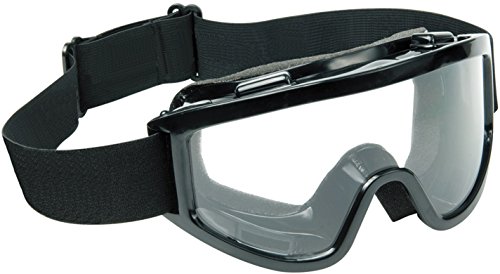 |
Best Budget | Lens system: Impact-resistant polycarbonate lens, clear tint | Fog control: Anti-fog coating | Best for: Budget-first riders and anyone who wants a spare pair; listing explicitly names snowmobiles as a compatible vehicle type | VIEW LATEST PRICE | Read Our Analysis |
| SKIWARRIOR Smart Wireless Ski Goggles |  |
Best Tech Pick | Lens system: Double-layer cylindrical Zeiss lenses with magnetic interchangeable mounting | Fog control: Outer REVO Zeiss lens is fog-resistant; inner Italian anti-fog lens carries a cotton-derived anti-oil, waterproof coating | Best for: Riders who want group comms and audio built into the goggle rather than a heated lens | VIEW LATEST PRICE | Read Our Analysis |
More Details on Our Top Picks
Castle X Coil Heated Snow Goggles
The Castle X Coil is the most fully specified heated goggle we found for this guide. It runs a dual-pane lens with heating built into the film itself (I.T.O. film technology, per the listing) rather than a coating that only slows fog down, and the listing spells out three heat settings tied to specific runtimes: Low at 7 hours, Medium at 5, High at 4, off a 7,000 mAh Li-Ion battery.
It's also built for glasses wearers: the frameless design is described as OTG-fit, and the triple-layer foam includes a sinus relief zone, a detail aimed at all-day comfort rather than a quick trail lap. The magnetic lens mount is meant to make lens swaps fast without tools.
None of that comes free. A 7,000 mAh battery and heating film add real weight and bulk over a standard dual-pane goggle, and at roughly two and a half times the price of the mid-tier 509 picks below, it's the priciest goggle here. Anyone who only rides a couple of weekends a season is paying for capability they won't use often.
For riders who idle a lot, run cold, and would rather charge a goggle than wipe it, the Coil is the heated pick with the most detail behind its claims.
- Lens system:Dual-pane lens with magnetic mounting for quick lens changes
- Fog control:Heated anti-fog dual-pane lens using I.T.O. film technology
- Heated lens:Yes, 7,000 mAh Li-Ion battery with 3 heat settings (Low 7 hrs, Medium 5 hrs, High 4 hrs)
- OTG compatible:Yes, frameless design with OTG fit for glasses
- Venting:Frameless design for a wide field of vision; triple-layer foam with a sinus relief zone
- Included kit:Vented carry case, charging cables, microfiber storage bag, cleaning cloth
- Best for:Riders who want the longest stated heat range and don't mind paying the most on this list
HeatVue HeatWave Heated Snow Goggles
HeatVue's pitch is straightforward: an electric-heated dual lens at roughly two-thirds the price of the Castle X Coil, with a stated lens temperature range of 95 to 107°F and a USB-C rechargeable battery. On its lowest heat mode the listing claims 24 hours of runtime, which is the longest low-setting figure of any heated pair in this guide.
The listing frames the whole feature set around one job: stop fogging electrically instead of managing it with venting or coatings, which is exactly the pitch that matters at a stop-and-start trailhead where airflow-based fog control struggles most.
The listing doesn't specify OTG compatibility, venting design, or what's included beyond the goggle and battery, so glasses wearers and anyone who cares about frame venting should confirm those details directly with the seller before buying.
If the case for a heated lens makes sense to you but the Castle X price doesn't, this is the more affordable way into the same core fix.
- Lens system:Dual lens with an easy-change lens design
- Fog control:Electric heating is described as eliminating fog rather than just resisting it
- Heated lens:Yes, rechargeable USB-C battery with 3 heat modes (High 7 hrs, Medium 12 hrs, Low 24 hrs); lens temperature range 95-107°F
- OTG compatible:Not specified by manufacturer
- Venting:Not specified by manufacturer
- Included kit:Not specified by manufacturer
- Best for:Riders who want heated fog control without Castle X money and the longest low-setting runtime here
509 Sinister X7 Snow Goggle
The Sinister X7 skips electric heating and instead leans on mechanical fog control: a shuttered vent in the frame that a rider can open to scoop in airflow or close off at a stop, plus a soft frame built around the 5MAG lens retention system for quick swaps.
It's explicitly listed as OTG compatible, which puts it in the same fit category as the budget-priced picks below despite the premium price and lens options: polarized, HCS, and photochromatic tints are all available on this frame per the listing.
509 doesn't make a heated or anti-fog-coating claim for this specific model in the listing text we checked, so treat fog resistance here as coming from the shuttered venting and lens quality rather than any additional coating.
For a glasses wearer who wants adjustable venting and premium lens options without the battery, cable, and price of a heated model, the X7 is the strongest non-heated OTG pick here.
- Lens system:5MAG lens retention system with a soft goggle frame
- Fog control:Not specified by manufacturer; no heated or anti-fog coating claim in the listing
- Heated lens:No
- OTG compatible:Yes, described as Over The Glasses compatible
- Venting:Shuttered venting in the frame that scoops air in or closes off flow
- Lens options:Polarized, HCS (High Contrast Spectrum), and photochromatic tints also available
- Best for:Glasses wearers who want adjustable venting on a premium non-heated frame
509 Kingpin Fuzion Flow Goggle
509 built the Kingpin Fuzion Flow around Frogzskin lens vents, a venting system aimed specifically at moving air through the lens rather than just around the frame edge, which is the mechanical answer to the same fogging problem a heated lens solves electrically.
Lens swaps use 509's quick-change system, and HCS (High Contrast Spectrum) tint options are available for the frame, which matters more on overcast trail days than most riders expect.
The listing doesn't make an OTG or anti-fog coating claim for this specific model, so glasses wearers and anyone comparing fog resistance against the coated or heated picks here should treat those as unconfirmed for this exact listing.
If you'd rather manage fog by moving air through the lens than by charging a battery, the Fuzion Flow's venting is the more direct mechanical answer.
- Lens system:Quick-change lens technology
- Fog control:Not specified by manufacturer; no anti-fog coating claim in the listing
- Heated lens:No
- OTG compatible:Not specified by manufacturer
- Venting:Lens vents with Frogzskin Technology
- Lens options:HCS (High Contrast Spectrum) technology lens options
- Best for:Riders who prioritize active airflow venting over paying for a heated lens
509 Sinister XL6 Goggle
509 leads the Sinister XL6 with lens-swap speed: the listing's FLLS Fast Lens Loading System pairs a front-loading lens with what 509 calls a unique outrigger latch, aimed at changing lenses without extra tools.
The frame combines a rigid Phantom outer shell, stated to give an optimal lens seal, with a soft inner frame for fit. The lens itself is a PC outer lens with an anti-scratch coating over a super anti-fog inner lens rather than a heated element.
A contoured, removable nosemask and a silicone-lined Rigger Lock strap round out the stated comfort features, both aimed at keeping the goggle sealed against a helmet without slipping.
For a rider who wants the fastest stated lens swap in 509's non-heated snowmobile line and doesn't need a heated lens, the XL6 is the pick to check first.
- Lens system:FLLS Fast Lens Loading System with front-loading lens and outrigger latch
- Fog control:PC outer lens with anti-scratch coating and a super anti-fog inner lens
- Heated lens:No
- Frame:Rigid Phantom outer frame stated to give an optimal lens seal, paired with a soft inner frame for fit
- Nosemask:Contoured, removable nosemask included
- Strap:Silicone-lined Rigger Lock strap
- Best for:Riders who want the fastest stated lens swap in 509's non-heated snowmobile lineup
OutdoorMaster Ski Goggles PRO
The Ski Goggles PRO is built around two things: an explicit OTG design that lets glasses sit under the frame, and an interchangeable lens system with a stated 20-plus compatible replacement lenses sold separately for swapping tints between conditions.
The frameless, spherical lens is meant to widen the field of view, and the listing states all lenses carry an anti-fog coating with 100% UV400 protection, though it doesn't claim the dual-pane construction some other picks here list explicitly.
There's no heated element and the listing doesn't detail venting, so treat this as a coating-and-shape approach to fog control rather than the active-venting or electric-heat approaches used elsewhere in this guide.
For a glasses wearer who wants lens flexibility without stepping up to 509 or heated pricing, this is the mid-range OTG option worth checking first.
- Lens system:Frameless, spherical lens design
- Fog control:Anti-fog coated lenses; the listing does not claim a dual-pane construction for this model
- Heated lens:No
- OTG compatible:Yes, described as an OTG design that lets you wear glasses under the goggles
- Venting:Not specified by manufacturer
- Lens options:Interchangeable lens system; compatible with 20+ replacement lenses sold separately
- Best for:Glasses wearers who want a swappable lens system at a mid-range price
Raider 26-MX Snowmobile Goggles
The Raider 26-MX is the budget entry on this list, and it's the rare goggle at this price whose listing directly names Snowmobiles among its compatible vehicle types, alongside ATVs, off-road motorcycles, and personal watercraft.
It covers the fundamentals: an impact-resistant polycarbonate lens with an anti-fog coating, high-density face foam, and an OTG design stated to fit over eyeglasses, all with a double-loop strap for adjustment.
There's no heated element, no stated venting system, and no interchangeable lens option, so fog control here rests entirely on the coating. In stop-and-start, humid conditions that's the weakest defense in this guide.
As a low-cost primary pair for occasional riders, or a backup goggle to keep in the sled bag, the 26-MX covers the basics for a fraction of the heated picks' price.
- Lens system:Impact-resistant polycarbonate lens, clear tint
- Fog control:Anti-fog coating
- Heated lens:No
- OTG compatible:Yes, described as an OTG design that fits over eyeglasses
- Venting:Not specified by manufacturer
- Lens options:Not specified by manufacturer
- Best for:Budget-first riders and anyone who wants a spare pair; listing explicitly names snowmobiles as a compatible vehicle type
SKIWARRIOR Smart Wireless Ski Goggles
SKIWARRIOR's angle isn't fog control, it's built-in electronics: the listing title advertises a walkie-talkie, music, and call function alongside a double-layer Zeiss lens system with magnetic interchangeable lenses.
Fog resistance comes from coatings rather than heat: an outer REVO Zeiss lens the listing describes as fog-resistant, and an inner Italian anti-fog lens with a cotton-derived anti-oil, waterproof coating, the same dual-lens logic other goggles here use without the wireless extras.
The listing doesn't specify OTG compatibility or venting, so glasses wearers should confirm fit before buying, and riders who just want the clearest possible fog control should look at the heated picks above instead.
For a group of riders who want trail comms and music without a separate intercom system strapped to a helmet, this is the goggle built around that instead of pure fog performance.
- Lens system:Double-layer cylindrical Zeiss lenses with magnetic interchangeable mounting
- Fog control:Outer REVO Zeiss lens is fog-resistant; inner Italian anti-fog lens carries a cotton-derived anti-oil, waterproof coating
- Heated lens:No, fog control is coating-based rather than electric heating
- OTG compatible:Not specified by manufacturer
- Venting:Not specified by manufacturer
- Extra features:Built-in walkie-talkie, music, and call function, per the listing title
- Best for:Riders who want group comms and audio built into the goggle rather than a heated lens
How to Choose Snowmobile Goggles
Snowmobile goggles fail in a different way than ski or snowboard goggles, and the fix depends on which failure mode you're actually solving for: fogging, or fit over glasses.
Why Do Ski Goggles Fog on a Snowmobile?
A snowmobile is a low-speed, high-humidity, stop-and-start machine, and that combination is worse for fogging than downhill skiing or snowboarding. A ski run gives a goggle steady airflow at 20 mph or more; a sled idles at trailheads, crawls through tight sections, and runs engine heat and rider breath into a goggle that may see almost no airflow for minutes at a time. A lens that never fogged on a chairlift can fog solid at a snowmobile trail intersection.
Dual-Pane Lenses and Venting: The First Line of Defense
Most non-heated goggles fight fog with two tools: a dual-pane lens, which traps an insulating air gap between an inner and outer layer the way a double-glazed window does, and active venting, like the shuttered frame scoop on the 509 Sinister X7 or the Frogzskin lens vents on the 509 Kingpin Fuzion Flow. Anti-fog coatings on the inner lens add a second layer of defense but wear off with cleaning over a season or two.
Heated (Electric) Lenses: What They Actually Fix, and What They Cost You
A heated lens, like the ones on the Castle X Coil and HeatVue HeatWave, solves fogging directly by keeping the inner lens surface above the dew point electrically, instead of relying on airflow or an insulating air gap. That works even at a dead stop with the engine idling, which is exactly when passive dual-pane and venting designs struggle most.
It isn't free. A heated lens needs a battery (rechargeable, usually USB-C, and one more thing to remember to charge before a ride), sometimes a cable running to a power source on longer-runtime models, and the added weight of that battery and heating element on your face for the whole ride. Expect a heated pair to cost roughly two to three times what a comparable dual-pane, non-heated goggle from the same tier runs. For riders who mostly ride moving trail with decent airflow, that premium buys less than it does for someone who idles a lot at gas stops or waits on a group.
OTG Fit: Wearing Goggles Over Glasses
If you wear prescription glasses, look for a listing that explicitly says OTG (Over The Glasses), not just a large fit or foam depth. An OTG-labeled frame is shaped and foamed with room for glasses arms and lenses underneath; a non-OTG goggle can pinch glasses against your temples or push them into your face on impact. Several picks here, including the 509 Sinister X7, OutdoorMaster Ski Goggles PRO, and the budget-priced Raider 26-MX, state OTG compatibility directly in their listings. Our companion guide to the best snowmobile helmets for glasses wearers covers the helmet side of the same problem.
Goggle-to-Helmet Fit Is Helmet-Specific
A goggle that seals perfectly against one helmet's brow foam can leave a gap on another, and no spec sheet on either product predicts it. Helmet shell shape, brow-vent placement, and foam depth all vary by model, which is exactly why a modular helmet like the ones in our best modular snowmobile helmets guide can seal one goggle cleanly and gap on another that looks similar on paper. If your helmet uses a breath box to route exhaled air away from the shield, check our breath box helmet guide, since that airflow routing also affects how much moisture reaches your goggle in the first place. Read the full mechanics of the fit problem in our helmet and goggle compatibility guide before assuming any goggle here will seal against your specific shell.
What We Did (and Didn't) Test
We did not physically test any of these goggles on snow. What's below is a synthesis of each product's Amazon Creators API listing data (title, manufacturer feature text, and current buyable-offer status), cross-checked so that every heated, dual-pane, OTG, and venting claim traces back to language the manufacturer itself published for that exact ASIN. Where a listing didn't make a claim, we say so directly rather than inferring a feature from a model name or a similar product in the same line.
Snowmobile & Ski Goggle Comparison
| Helmet | Lens system | Fog control | Heated lens | OTG compatible | Best for |
|---|---|---|---|---|---|
| Castle X Coil Heated Snow Goggles | Dual-pane lens with magnetic mounting for quick lens changes | Heated anti-fog dual-pane lens using I.T.O. film technology | Yes, 7,000 mAh Li-Ion battery with 3 heat settings (Low 7 hrs, Medium 5 hrs, High 4 hrs) | Yes, frameless design with OTG fit for glasses | Riders who want the longest stated heat range and don't mind paying the most on this list |
| HeatVue HeatWave Heated Snow Goggles | Dual lens with an easy-change lens design | Electric heating is described as eliminating fog rather than just resisting it | Yes, rechargeable USB-C battery with 3 heat modes (High 7 hrs, Medium 12 hrs, Low 24 hrs); lens temperature range 95-107°F | Not specified by manufacturer | Riders who want heated fog control without Castle X money and the longest low-setting runtime here |
| 509 Sinister X7 Snow Goggle | 5MAG lens retention system with a soft goggle frame | Not specified by manufacturer; no heated or anti-fog coating claim in the listing | No | Yes, described as Over The Glasses compatible | Glasses wearers who want adjustable venting on a premium non-heated frame |
| 509 Kingpin Fuzion Flow Goggle | Quick-change lens technology | Not specified by manufacturer; no anti-fog coating claim in the listing | No | Not specified by manufacturer | Riders who prioritize active airflow venting over paying for a heated lens |
| 509 Sinister XL6 Goggle | FLLS Fast Lens Loading System with front-loading lens and outrigger latch | PC outer lens with anti-scratch coating and a super anti-fog inner lens | No | Not specified by manufacturer | Riders who want the fastest stated lens swap in 509's non-heated snowmobile lineup |
| OutdoorMaster Ski Goggles PRO | Frameless, spherical lens design | Anti-fog coated lenses; the listing does not claim a dual-pane construction for this model | No | Yes, described as an OTG design that lets you wear glasses under the goggles | Glasses wearers who want a swappable lens system at a mid-range price |
| Raider 26-MX Snowmobile Goggles | Impact-resistant polycarbonate lens, clear tint | Anti-fog coating | No | Yes, described as an OTG design that fits over eyeglasses | Budget-first riders and anyone who wants a spare pair; listing explicitly names snowmobiles as a compatible vehicle type |
| SKIWARRIOR Smart Wireless Ski Goggles | Double-layer cylindrical Zeiss lenses with magnetic interchangeable mounting | Outer REVO Zeiss lens is fog-resistant; inner Italian anti-fog lens carries a cotton-derived anti-oil, waterproof coating | No, fog control is coating-based rather than electric heating | Not specified by manufacturer | Riders who want group comms and audio built into the goggle rather than a heated lens |
Frequently Asked Questions
Do heated snowmobile goggles need a battery?
Yes. Every heated goggle in this guide, including the Castle X Coil and HeatVue HeatWave, runs on a rechargeable battery (Li-Ion or USB-C, per their listings) that needs charging separately from the sled. There is no heated goggle that draws power directly from the vehicle in this lineup.
Can I wear regular ski goggles on a snowmobile?
You can, but a goggle that never fogged while skiing can fog solid on a sled because of the low speed and stop-and-start riding. A dual-pane lens with active venting, like the 509 Sinister X7 or Kingpin Fuzion Flow, or an electric heated lens, handles that better than a single-pane ski goggle built around steady downhill airflow.
What does OTG mean on ski and snowmobile goggles?
OTG stands for Over The Glasses. It means the goggle's frame and foam are shaped with extra room so prescription glasses fit underneath without pinching your temples. Look for a listing that states OTG compatibility directly, as several picks in this guide, including the budget-priced Raider 26-MX, do.
Will any goggle in this guide fit my snowmobile helmet?
Not automatically. Goggle-to-helmet seal depends on that specific helmet's brow shape and foam depth, which varies by model even within the same brand. Check our helmet and goggle compatibility guide against the exact helmet you own before assuming a seal.
Are heated goggles worth the extra cost over a dual-pane lens?
It depends on how you ride. Heated lenses fix fog even at a dead stop with the engine idling, which passive dual-pane and vented goggles struggle with. If you mostly ride moving trail with decent airflow, that premium buys less than it does for someone who idles often at gas stops or waits on a group.
DOT vs ECE vs Snell vs MIPS, how to pick the right lid in 60 seconds, and when to replace it. One page, no fluff.
