
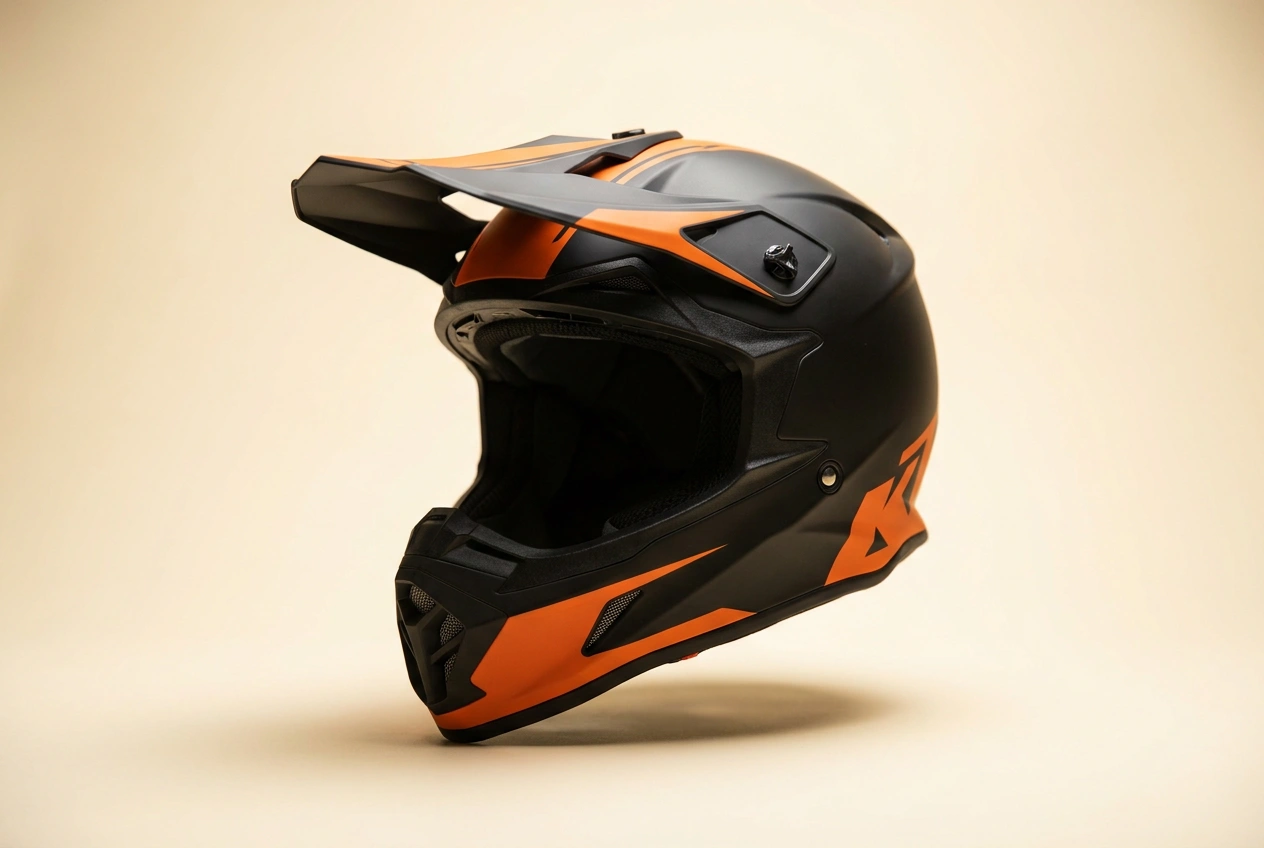
A dirt bike helmet should fit snug and even all around, with cheeks firmly cupped and no rocking when you nod or shake your head. It should feel slightly tight when new - the liner beds in over the first few rides. Goggles must sit flush in the eye port with no gap at the top and no pressure on the nose bridge.
Dirt bike helmet fit is unforgiving in a way that street lids are not. Off-road riding means more head movement, more vibration, and the constant presence of goggles - a variable that most fit guides quietly ignore. Get the size wrong and the best helmet in the world is just expensive foam.
Our research desk pulled together what the fit standards, goggle manufacturers, and experienced MX riders consistently agree on, so you can confirm a helmet is right before you ride, not after the first faceplant.
How to measure your head for a dirt bike helmet
Measuring correctly takes about thirty seconds and saves a lot of returns. Wrap a soft tape measure around the widest part of your head - roughly one inch (2.5 cm) above your eyebrows and just above the ears. Round up to the nearest 0.5 cm. If you fall between sizes, go down - MX helmets are designed to bed in and loosen slightly, not tighten.
Helmet sizing is not universal. A Large from Bell may match a Medium from Fox. Always cross-reference your measurement against the brand's own size chart before buying, and note whether your head is round oval, intermediate oval, or long oval - that shape affects which brands will suit you more than the number alone.
- Use a cloth tape (a steel one can slide and give you a false reading).
- Measure two or three times and take the largest reading.
- If you are between sizes, size down - the liner will break in; too big does not fix itself.
The snug fit test: cheeks, forehead, and crown
Put the helmet on and run through these checks before touching the chin strap. A correct fit passes all three.
Cheek pads: The pads should cup your cheeks firmly. Your skin should compress slightly - this is not a street lid where you want a conversational gap. Most riders describe the feeling as noticeably snug but not painful. If you can slide a finger easily between your cheek and the pad, the helmet is too big.
Forehead: Press two fingers against your forehead inside the front of the helmet. You should feel definite resistance from the foam. No contact at all means the helmet is sitting too high - likely a size large or a fit shape that does not match your skull.
Crown: There should be no gap between the top of your head and the helmet interior. A gap at the crown means the helmet is either too large or the wrong oval shape for your head, and it will rotate down over your forehead on impact.
The roll-and-shake test (and why it matters more off-road)
This is the most important functional check and the one most people skip. Fasten the chin strap, then do the following:
- Nod forward aggressively - the helmet should not rotate down and obscure your vision or roll toward your nose.
- Shake your head side to side hard - the helmet should move with you, not lag behind your head or rock independently.
- Grip the chin bar with both hands and try to roll the helmet forward - if it moves more than about an inch, the fit is marginal for off-road use.
Off-road riding generates far more head movement than road riding - head checks through corners, looking down at rutted tracks, bracing for impacts - and a helmet that passes a street-fit check can still float around in technical terrain. MX helmets also have an extended chin bar and a lower rear shell, which changes how the pivot point sits. Run all three checks.
Goggle compatibility: the check most buyers miss
A dirt bike helmet opens at the face for goggles, not a built-in visor. That difference means goggle fit is part of helmet fit - a helmet that fits your head perfectly but does not seal with your goggles creates a gap that lets in roost, dirt, and UV.
When trying a helmet with goggles, check three things:
- No gap at the top of the eye port: the goggle frame should sit flush against the foam frame of the eye port with no light showing above the nose bridge. A gap funnels debris straight at your eyes.
- No pressure on the nose bridge: goggles pushed down by a tight eye port will dig into your nose during a ride and cause pain on longer stages. This usually means the helmet is too small or the goggle frame is too large for that brand's port.
- Strap clears the peak visor: the goggle strap should route cleanly over or under the peak visor without bunching or creating a point of contact that will lever the goggles off on a jump.
Not all goggles work with all helmets. Smith, 100%, Oakley, and Leatt all produce models engineered to work with specific shell designs. Check the manufacturer's compatibility list if you are pairing premium goggles with a specific brand. For our picks on helmets that pair well with a wide range of goggles, see our guide to off-road and dual-sport helmets.
Signs the helmet is too big or too small
A helmet that is wrong in either direction is not just uncomfortable - it is less protective. Here is what to look for on both ends.
Signs it is too big:
- The helmet rocks or rotates when you shake your head with the chin strap done up.
- You can fit more than two fingers between your cheek and the pad with no compression.
- There is daylight between the crown of your head and the top of the helmet interior.
- The front rim drops toward your nose when you nod forward.
Signs it is too small:
- You feel concentrated pressure points - typically on the temples or the sides of the head - that do not fade after five minutes. Even pressure all around is normal; a hot spot is not.
- You cannot get it onto your head without significant force and discomfort at the ears, not just the cheek pads.
- The liner is so compressed on first wear that there is nowhere left for break-in to go.
If you are unsure whether a snug fit is correct or just too small, try the helmet on for ten minutes. Normal break-in pressure stays uniform and fades slightly. A pressure point that intensifies over time is a red flag. For street helmet fit principles that overlap with MX, our street helmet fit guide covers the shared fundamentals.
Break-in: how tight is right and what to expect
MX helmet liners are firmer and slower to break in than road helmet liners, partly because they are designed for more aggressive use and partly because the shorter rides typical of off-road tracks mean the liner sees less sustained heat and sweat than a touring helmet.
Expect the following during break-in:
- Cheek pads will soften noticeably after five to ten hours of riding, roughly equivalent to two or three track days.
- The crown liner compresses a little, which can open up the feel of the helmet overall - if it feels slightly too big after break-in, you sized up too early.
- The forehead foam settles into your brow line, which is normal and does not affect protection.
Some manufacturers offer optional thicker or thinner cheek pads for their MX helmet lines. If a helmet fits correctly everywhere except the cheeks, swapping to a thicker pad is a legitimate solution - it is exactly what they are sold for.
How MX helmet fit differs from street helmet fit
Dirt bike helmets are built around a different use case. A few differences matter for fit:
- Open eye port: there is no face shield. The eye port is engineered for goggles, which means the face opening is smaller and the top of the port has a defined foam seal that the goggle frame must mate with.
- Extended chin bar: MX chin bars protrude further than street full-face bars, which changes the bite and roll-off characteristic. The chin bar should not touch your chin or mouth when you open your jaw.
- Peak visor: the visor is designed to be shed on impact. Make sure it is seated correctly and not creating uneven front-heavy weight that pulls the helmet down on your forehead.
- Lighter shell, less padding: MX helmets run lighter with less interior padding than touring lids. The fit therefore feels less cushioned and more direct - some riders interpret this as too small when the helmet is actually correctly sized.
If you are coming from a street full-face background, the difference in feel is real. For a broader comparison of how off-road helmets relate to street standards, check our roundup of best motocross helmets.
Dirt bike helmet fit check: pass or fail
| Check | Pass | Fail - what it means |
|---|---|---|
| Cheek pad contact | Cheeks cupped firmly, slight skin compression, two-finger slide not possible | Easy finger gap = too big; intense, localized pain = too small |
| Forehead foam contact | Definite resistance on forehead when pressing with two fingers | No contact = helmet sitting too high, likely too large |
| Crown clearance | No gap between crown of head and helmet interior | Gap at top = too large or wrong oval shape |
| Nod test (chin strap done up) | Helmet does not drop toward nose or roll back | Rotation on nod = too large or wrong shape |
| Side-shake test | Helmet moves with head, no independent rocking | Lags or rocks = too big |
| Chin bar clearance | Chin bar clears chin and mouth when jaw is opened | Contact on jaw = chin bar too low or helmet too small |
| Goggle top seal | Goggle frame sits flush in eye port, no gap above nose bridge | Gap at top = goggle/helmet size mismatch or wrong brand pairing |
| Goggle nose bridge | No pressure on nose bridge from goggle being pushed down | Nose pressure = eye port too small for that goggle frame |
| Five-minute pressure test | Even, mild pressure fades slightly after five minutes | Pressure point intensifies = wrong fit, not break-in |
DOT vs ECE vs Snell vs MIPS, how to pick the right lid in 60 seconds, and when to replace it. One page, no fluff.
Frequently Asked Questions
How should a dirt bike helmet fit?
A dirt bike helmet should fit snug with even pressure all around, cheeks firmly cupped, and no movement when you nod or shake your head. It should feel slightly tight when new - the liner beds in over the first several rides. There should be no gap between the crown of your head and the helmet interior, and the chin bar should clear your chin when you open your jaw.
Should a motocross helmet be tight?
Yes - snugly tight when new, with even all-around pressure rather than isolated pressure points. MX helmets are designed to bed in, so a helmet that feels firmly snug on first wear is usually correctly sized. A helmet that feels loose straight out of the box will only get looser with use and will not protect you the way it should.
How do I know if my dirt bike helmet is too big?
Fasten the chin strap and shake your head - a too-big helmet will rock or rotate independently. You can also check by trying to fit more than two fingers easily between your cheek and the pad. If the front rim drops toward your nose when you nod forward, the helmet is too large or the wrong oval shape for your head.
Do I need to try goggles with a new helmet?
Yes. Goggle fit is part of helmet fit for any open-face dirt bike lid. Try your actual goggles with any helmet before buying - the goggle frame should sit flush in the eye port with no gap at the top and no pressure on your nose bridge. Not all goggle brands pair cleanly with all helmet brands.
How long does it take for an MX helmet to break in?
Most MX helmets soften noticeably after five to ten hours of riding. The cheek pads do most of the bedding in - the crown and forehead liners change less. If a helmet still has painful pressure points after that riding time, it is the wrong size or shape, not just stiff padding.
