
Affiliate disclosure As an Amazon Associate we earn from qualifying purchases, at no extra cost to you.
No football helmet can prevent concussions. A helmet lowers the risk of skull fracture and severe impact, and a better-rated one can reduce (not eliminate) concussion risk. To choose a safer helmet, pick a model with a high Virginia Tech STAR rating, confirm it is NOCSAE certified, and make sure it fits snugly with the air bladders inflated. Fit and play matter as much as the model.
If a coach, a salesperson or a product page tells you a helmet will prevent concussions, that claim is not supported by the evidence. Helmets are protective equipment, not a shield against brain injury. Our research desk works through what the independent testing data and the published research actually show, so you can make a decision based on facts rather than marketing.
Here is the honest version. A football helmet does a good job of reducing skull fractures and the most severe head impacts. The best-rated models also lower the odds of a concussion compared with weaker ones, but none of them remove that risk. We walk through how the ratings work, what genuinely makes one helmet safer than another, and the things off the field that protect a player's brain more than the helmet itself.
Can a football helmet prevent concussions?
No. This is the single most important point on the page. A helmet's hard shell and padding are very effective at spreading impact energy and reducing skull fractures and the most catastrophic head injuries. That is what helmets were originally designed to do, and they do it well. Concussion is a different problem. A concussion is caused by the brain moving and twisting inside the skull, and much of that motion comes from rotational (twisting) forces that a helmet can only partly absorb.
The research bears this out. Studies of head impacts in football find that concussive hits carry far higher rotational acceleration than non-injury hits, and helmets are still built primarily to handle straight-line (linear) forces. Newer models reduce a meaningful share of rotational force in lab testing, but only a share. Real-world concussion rates in high school football have fallen over recent years, which is encouraging, but they have not dropped to zero, and they have not fallen as steeply as helmet test improvements alone would predict. That gap is the proof that the helmet is one factor among several.
What actually makes a helmet safer
If no helmet prevents concussions, the practical question becomes: which one shifts the odds the most, and how do you tell? Two independent reference points do most of the work, and one factor that has nothing to do with the model can undo both of them.
The Virginia Tech STAR ratings are the most useful independent comparison available. Virginia Tech's lab subjects each helmet to dozens of impacts across multiple locations and energy levels, measures both linear and rotational head acceleration, and weights the results by how often players experience similar hits. Lower predicted risk earns more stars, with five stars reserved for the best performers. Separately, NOCSAE is the certification body for football helmets in the US. NOCSAE certification is a pass or fail safety floor, not a ranking, so a helmet can be NOCSAE certified and still rate poorly on STAR. You want both: NOCSAE certified for the baseline, and a high STAR rating to compare models above that baseline.
- A Virginia Tech 5-star (or at minimum 4-star) STAR rating for the player's level
- Current NOCSAE certification printed on the shell or liner
- A snug fit with no rocking or sliding, and air bladders inflated to the manufacturer's spec
- The right helmet for the player's age and division, including youth-specific and position-specific models where offered
- A shell within its service life, reconditioned and recertified on schedule rather than aged out
- Modern liner technology, such as flexible shell panels or rotational management systems where available, treated as a bonus on top of rating and fit
Worth stressing: a properly fitted mid-rated helmet protects a player better than a top-rated helmet worn loose with flat bladders. One study found athletes in properly fitted helmets were far less likely to lose consciousness during a concussion, yet a large share of players never reinflate their air bladders across a season. Fit is not a detail. It is part of the protection.
What matters more than the helmet
This is the part the equipment industry rarely leads with. The biggest reductions in football head and neck injuries have come from changes to how the game is played, not from the helmet on the player's head. The 1976 rule changes that banned leading with the head to tackle (spearing) cut head and spine injuries dramatically, and that single behavioral shift outperformed decades of shell engineering.
Three things off the equipment spec sheet carry more weight than which model a player wears. First, tackling technique: teaching players to keep the head up and out of contact, including drills that practice tackling form without leading with the helmet. Second, rules and their enforcement: targeting penalties, limits on full-contact practice time, and similar measures reduce the number and severity of head impacts a player absorbs over a season. Third, and most important, removing a player from play after a suspected hit. A diagnosed concussion that is not allowed to heal before the next impact is how a manageable injury becomes a serious one. No helmet substitutes for an athletic trainer or coach pulling a player and following a proper return-to-play protocol.
How to choose a safer football helmet
| Factor | What to look for | Why |
|---|---|---|
| Rating | Virginia Tech 5-star (4-star minimum) | Independent lab testing of linear and rotational force; lower predicted concussion risk earns more stars and lets you compare models directly |
| Certification | Current NOCSAE certification | The pass or fail safety floor for US football helmets; required, but a baseline rather than a ranking of one model against another |
| Fit | Snug, no rocking, air bladders inflated | A loose helmet or flat bladders undercut even a top-rated shell; proper fit is strongly linked to fewer severe concussion outcomes |
| Age and service life | Recertify and recondition on schedule; replace when aged out | Helmets are typically recertified up to ten years old; shells degrade, and an out-of-life helmet no longer performs to its rating |
Which football helmets are actually worth buying?
The models below are current, in-stock helmets from brands that submit shells to Virginia Tech's independent lab. Where a listing's exact configuration matches a model in Virginia Tech's own published rating data, we cite that star rating directly and name the source. Where it does not match closely enough to be sure, we leave the rating out rather than guess. Buying one of these does not change the core point above: a higher star rating and a properly inflated, snug fit lower concussion risk, they do not remove it.
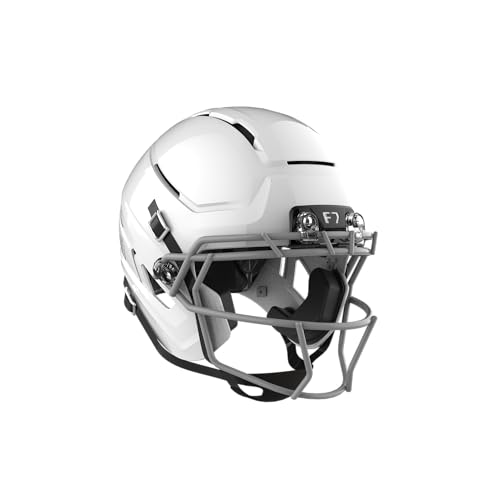
Schutt F7 AiR Youth
- Virginia Tech's published youth data rates this model 5 stars
- Attached carbon steel facemask, no assembly required
- Inflatable Air Liner plus HSS jaw pads for a tool-free fit adjustment
- About 3 lb shell weight

Schutt Youth Vengeance A11
- Virginia Tech's published youth data rates the Vengeance A11 at 4 stars
- TPU cushioning throughout with a non-inflatable liner
- Carbon steel facemask attached
- About 3.8 lb shell weight

Schutt F7 AiR Youth Elite
- Virginia Tech's published youth data rates this model 5 stars
- Titanium facemask, about 60 percent lighter than carbon steel
- Includes an Oakley Switch clear visor
- About 3.1 lb, the lightest youth shell in Schutt's current lineup

Riddell SpeedFlex Youth
- Listed as recommended for youth players through junior high
- Tru-Curve Liner System with All-Points Quick Release facemask hardware
- Riddell's SpeedFlex youth line includes Virginia Tech 4- and 5-star tested variants; this listing does not specify which exact configuration it ships, so we are not citing a star rating for it

Schutt F7 AiR Varsity
- Virginia Tech's published varsity data rates this model 5 stars
- Onboard AiR-Lock fit system adjusts without a handheld air pump
- Carbon steel facemask attached
- About 4 lb shell weight

VICIS ZERO2 Trench
- Virginia Tech's published varsity data rates this model 5 stars, the top-ranked shell in its published test group
- Built specifically for offensive and defensive linemen who take repeated, lower-speed hits
- Deformable outer shell with RFLX 2.0 cushioning
- About 4.7 lb shell weight
Fit still does more work than the model on this list. A mid-rated helmet worn snug with the air bladders topped off protects a player better than any top pick here worn loose. Have a coach or equipment manager check fit each season, not just at the original purchase.
DOT vs ECE vs Snell vs MIPS, how to pick the right lid in 60 seconds, and when to replace it. One page, no fluff.
Frequently Asked Questions
Is there a concussion-proof football helmet?
No. No helmet can prevent concussions, and the CDC says there is no concussion-proof helmet. Helmets reduce skull fractures and severe impacts, and a higher-rated model lowers concussion risk, but none of them remove it. Concussions come largely from rotational forces and brain motion that a helmet can only partly absorb.
What are the Virginia Tech STAR ratings?
They are an independent rating system from Virginia Tech that scores football helmets on how well they reduce head acceleration in lab testing. Each helmet takes dozens of impacts at different locations and energy levels; the lab measures both linear and rotational acceleration and weights the results by real-world impact frequency. Lower predicted concussion risk earns more stars, up to five.
Is NOCSAE the same as the Virginia Tech rating?
No. NOCSAE is the certification body that sets a pass or fail safety standard a helmet must meet to be sold and used. The Virginia Tech STAR rating is a separate, independent ranking that compares certified helmets against each other. A helmet can be NOCSAE certified and still earn a low STAR rating, so it helps to check both.
Does helmet fit really matter for concussions?
Yes, a great deal. Research links a proper, snug fit to a lower chance of losing consciousness during a concussion. Air bladders need regular reinflation to the manufacturer's spec, yet many players never reinflate them across a season. A well-fitted mid-rated helmet can protect a player better than a top-rated helmet worn loose with flat bladders.
What protects a player more than the helmet?
How the game is played. Banning head-first tackling, teaching proper technique, enforcing targeting rules, limiting full-contact practice, and above all removing a player from play after a suspected hit do more to protect the brain than any single helmet model. The helmet is one layer of protection, not the whole answer.
