

Affiliate disclosure As an Amazon Associate we earn from qualifying purchases, at no extra cost to you.
A genuine DOT sticker on an entry-level budget helmet from a real manufacturer protects your head just as well as one on a premium helmet costing several times more, because both had to clear the same federal impact, penetration, and retention tests. The catch is the word "genuine." DOT certification is self-certified by the manufacturer, not independently verified before the helmet reaches a shelf, and that gap is exactly where the cheapest, thinnest novelty shells slip a fake sticker onto a helmet that would fail every one of those tests. Our full breakdown of how that self-certification system works is here: What Is a DOT-Certified Helmet?
This list is not the absolute cheapest search results Amazon returns. It is a shortlist of helmets from established powersports brands, currently priced in the sub-$100 tier, each carrying DOT certification stated directly on its own product listing. We checked every listing's own text rather than assuming a brand's reputation carries over to every model, and we skipped anything where the certification claim looked vague, missing, or bundled with novelty-helmet marketing language.
Below you will find a mix of full-face, modular, 3/4 open-face, and half-helmet styles, because the right budget helmet depends heavily on how and where you ride, not just on price. The buying guide after the picks covers what DOT certification actually guarantees, how to spot a fake sticker on any helmet before you buy it secondhand or from an unfamiliar seller, and why the gap between a real budget DOT helmet and a low-cost novelty shell is a safety gap, not a marketing one.
Key Takeaways
- DOT is self-certified, not independently tested before sale - the manufacturer applies the sticker after its own internal testing; NHTSA only spot-checks helmets already on shelves and penalizes failures after the fact. A DOT sticker from a known brand is trustworthy because that brand has a track record and a factory NHTSA can trace, not because a lab checked this specific helmet first.
- Every helmet on this list is a genuine budget pick, not a novelty shell - all eight currently list under $100 from brands with an established powersports track record (GLX, AFX, ILM, Torc, TCMT, Vega), and every listing states DOT approval in its own product text.
- One pick, the AFX FX-99, carries both DOT and ECE 22.05 - dual certification at this price point is uncommon and worth knowing about if you also ride internationally or simply want a second independent standard on top of DOT's self-certification.
- Helmet type matters as much as price for a budget buyer - a full-face shell gives the most coverage for the money, a 3/4 open-face or half helmet trades protection for airflow and visibility on short, low-speed rides, and a modular helmet adds convenience at the cost of slightly more weight and moving parts.
- A real DOT sticker has a manufacturer name and model number printed on it - a sticker that just says "DOT" with no other text, on a helmet that feels unusually light or has only a thin foam liner, is the single biggest red flag of a fake. The full physical checklist is in the buying guide below.
| GLX GX11 Compact Full Face Motorcycle Helmet |  |
Best Overall Budget Full-Face | Type: Full-Face | Certification: DOT | Brand Background: GLX, a Southern California helmet brand founded in 2002 | VIEW LATEST PRICE | Read Our Analysis |
| AFX FX-99 Full Face Motorcycle Helmet |  |
Best DOT + ECE Combo | Type: Full-Face | Certification: DOT and ECE 22.05 | Finish: Clear-coat protection over paint and graphics | VIEW LATEST PRICE | Read Our Analysis |
| ILM ILM-313 Full Face Motorcycle Helmet | 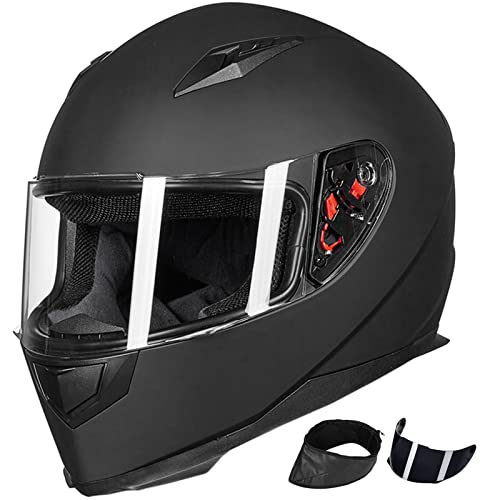 |
Best Budget Full-Face for Cold-Weather Riding | Type: Full-Face | Certification: DOT | Interior: Removable inner lining pads | VIEW LATEST PRICE | Read Our Analysis |
| ILM Model 902 Modular Flip-Up Helmet | 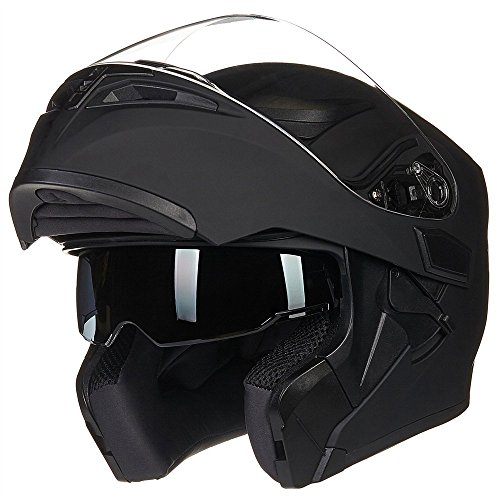 |
Best Modular Under $100 | Type: Modular (flip-up) | Certification: DOT | Interior: Removable, washable cheek pads | VIEW LATEST PRICE | Read Our Analysis |
| Torc T-50 / Del Mar Retro Open Face Helmet |  |
Best Retro 3/4 Open-Face | Type: Open-Face (3/4) | Certification: DOT | Visor: Removable 3-snap visor, detachable cheek pads | VIEW LATEST PRICE | Read Our Analysis |
| TCMT Half 3/4 Open Face Motorcycle Helmet |  |
Best 3/4 Open-Face for City Riding | Type: Open-Face (3/4) | Certification: DOT | Ventilation: Adjustable top vent with front and rear airflow | VIEW LATEST PRICE | Read Our Analysis |
| Vega Helmets Rebel Warrior Half Helmet |  |
Best Half Helmet for Cruisers | Type: Half Helmet | Certification: DOT | Included: Padded quick-release strap and storage bag | VIEW LATEST PRICE | Read Our Analysis |
| ILM Half Helmet with Drop-Down Sun Visor |  |
Best Budget Half Helmet | Type: Half Helmet | Certification: DOT | Ventilation: Vented shell to reduce heat at the crown | VIEW LATEST PRICE | Read Our Analysis |
More Details on Our Top Picks
GLX GX11 Compact Full Face Motorcycle Helmet
The GX11 is GLX's compact full-face model, built around the idea that a budget street helmet does not need to feel bulky to do its job. The shell is sized deliberately close to the head rather than oversized, which is the main reason it reads as "compact" against other helmets in this price range, and it is one of the more affordable full-face options that still lists a real DOT certification on its own product page.
Ventilation is the GX11's strongest practical feature at this price: three adjustable intake vents on the chin and brow feed four exhaust ports at the rear, a wind-tunnel-tested layout GLX says is tuned for both airflow and reduced noise. For stop-and-go city riding or short summer commutes, a helmet that actually moves air matters more than most riders expect once temperatures climb.
The shield uses a quick-change mechanism, so swapping in a spare or a different tint does not require tools, and the interior liner is fully removable and washable, which matters for anyone using this as a daily rider rather than an occasional weekend helmet. The EPS liner is described by GLX as multi-density, meaning different zones of foam are engineered to manage impact energy differently rather than using one uniform density throughout the shell.
GLX does not publish Snell or ECE certification for the GX11, only DOT, so riders who want a second independent standard on top of self-certification should look at the AFX FX-99 or another dual-certified pick on this list instead. For a rider who mainly wants a legitimate, comfortable, well-ventilated full-face helmet for city and short highway use without paying a premium-brand markup, the GX11 is a reasonable starting point.
- Type:Full-Face
- Certification:DOT
- Weight:Not specified by manufacturer
- Ventilation:3 adjustable intake vents, 4 rear exhaust vents
- Shield:Tinted visor with quick-change mechanism
- Interior:Removable, washable, multi-density EPS liner
- Brand Background:GLX, a Southern California helmet brand founded in 2002
AFX FX-99 Full Face Motorcycle Helmet
AFX is an established powersports helmet brand (part of the same corporate family as Fly Racing) with a long history of building budget-tier street and dirt helmets, and the FX-99 is one of its more affordable full-face street models. What sets it apart on this list is certification: AFX states the FX-99 meets or exceeds both DOT FMVSS 218 and ECE 22.05, the European standard, on the same product listing.
Having two certifications matters specifically because of how DOT works. DOT is self-certified by the manufacturer with no mandatory independent lab test before the helmet reaches a shelf. ECE 22.05 requires third-party testing by an accredited lab before a helmet can carry the mark. A helmet that has cleared both means an independent lab has actually put this shell through impact testing, not just the manufacturer's own internal process. Our full explainer on what each standard actually requires is here: DOT vs ECE vs Snell, explained.
The retention system uses a titanium double D-ring, a race-style closure that is generally considered more secure under load than the micrometric buckles common on cheaper helmets, and the shell is available across a wide XS-to-XXL size range, so fit is less of a gamble than on brands that only stock two or three sizes.
At just over 1.3kg for a large shell, per AFX's own published figure, the FX-99 sits in a normal weight range for a budget full-face helmet, neither unusually light (a red flag on unknown novelty brands) nor heavy enough to cause fatigue on longer rides. For a rider who wants the extra confidence of an independently tested standard without stepping outside the sub-$100 budget tier, this is the strongest certification story on this list.
- Type:Full-Face
- Certification:DOT and ECE 22.05
- Weight:About 1.37kg / 3.0lb in a large shell, per AFX
- Size Range:XS to XXL
- Retention System:Titanium double D-ring chin strap
- Shield Options:3 tinted shields available for the model
- Finish:Clear-coat protection over paint and graphics
ILM ILM-313 Full Face Motorcycle Helmet
ILM is one of the higher-volume budget helmet brands sold on Amazon, and the ILM-313 is its straightforward full-face street model. The listing states the shell meets or exceeds FMVSS 218 and DOT safety standards, and the ABS shell construction is named directly in ILM's own product text rather than left vague.
What separates the ILM-313 from most helmets in this price tier is that it ships with two shields (clear and smoked) plus a removable neck scarf, aimed at riders who want one helmet that works across more of the year rather than swapping shells seasonally. The smoked shield is a genuine daytime-sun option rather than a drop-down internal sun visor, so riders who need clear night vision should keep the clear shield installed after dark.
The closure is a simple quick-release clasp and strap rather than a D-ring, which is faster to operate one-handed but generally considered a step down in ultimate retention security compared to a D-ring system like the one on the AFX FX-99 above. For a commuter helmet used mostly in daylight and moderate speeds, this is a reasonable tradeoff for the convenience.
The interior lining pads are removable for washing, which matters for hygiene on a helmet used for daily commuting. As with most helmets in this budget tier, ILM does not publish Snell or ECE certification for the 313, only DOT, so riders who specifically want the independent-lab reassurance of ECE should look at the AFX FX-99 or check current ECE-rated options directly.
- Type:Full-Face
- Certification:DOT
- Weight:Not specified by manufacturer
- Shell Material:ABS
- Shields Included:Clear shield, smoked shield, and a neck scarf for winter use
- Closure:Quick-release clasp and strap
- Interior:Removable inner lining pads
ILM Model 902 Modular Flip-Up Helmet
Modular helmets are the convenience play in this list: the chin bar flips up so you can talk, drink, or answer a toll-booth window without removing the whole helmet, then locks back down for full-face coverage while riding. The ILM 902 is one of the few genuinely sub-$100 modular helmets that still lists DOT certification directly in its own product text ("meets or exceeds FMVSS-218 and DOT safety standards"), which is not true of most budget modular listings.
The shell is described by ILM as a high-resistance ABS construction paired with a micrometrically adjustable strap, a ratchet-style closure that lets you fine-tune tightness in small increments rather than the fixed snap points of a basic D-ring. The dual visor system pairs the main flip-down shield with a separate anti-fog, anti-scratch drop-down sun visor, so you are not stuck swapping shields for daytime glare.
Modular helmets carry an inherent tradeoff worth understanding before buying at this price: the chin-bar hinge is a moving mechanical part, and on any modular helmet (budget or premium) it is worth periodically checking that the locking latch fully engages before riding. This is not specific to the ILM 902; it is true of the modular category generally, and it is one reason full-face helmets remain the safety-first default recommendation for riders who do not specifically need the flip-up convenience.
For riders who want the talk-without-removing-the-helmet convenience of a modular design but do not want to pay premium-modular prices, the 902 is a legitimate, DOT-labeled way to get there. It ships in six colorways, and the cheek pads are removable and washable for regular cleaning.
- Type:Modular (flip-up)
- Certification:DOT
- Weight:Not specified by manufacturer
- Shell Material:ABS (high-resistance shell)
- Visor System:Dual visor: main shield plus drop-down sun visor
- Colors Available:6
- Interior:Removable, washable cheek pads
Torc T-50 / Del Mar Retro Open Face Helmet
Torc built its reputation on retro-styled helmets at accessible prices, and the T-50 (also sold as the Del Mar) is its open-face 3/4 model. The listing states DOT approval directly, meeting the FMVSS 218 standard, on a shell that leaves the face open for the classic cafe-racer or scrambler look rather than covering the chin and jaw like a full-face or modular helmet.
An open-face 3/4 helmet is a genuine tradeoff, not a compromise-free option: it covers the top, sides, and back of the skull but leaves the face and jaw exposed, which is why full-face helmets are the safety-first recommendation for higher-speed or highway riding. The T-50 is best suited to lower-speed cruiser or in-town riding, where its wide field of view and open airflow are the point, not a limitation.
Construction-wise, the T-50 uses a multi-density EPS impact liner under a removable suede comfort liner, and the closure is a D-ring chin strap, generally considered more secure under load than a snap or micrometric buckle. A removable 3-snap visor and detachable cheek pads let riders customize the look or swap in a bubble shield.
Because this is an open-face design, buyers should treat it as a style-and-comfort choice for slower riding rather than a like-for-like substitute for a full-face helmet at the same DOT rating; DOT certification confirms the shell and liner passed federal impact tests, it does not change the amount of the head and face the design physically covers.
- Type:Open-Face (3/4)
- Certification:DOT
- Weight:Not specified by manufacturer
- Impact Liner:Multi-density EPS
- Interior:Removable suede comfort liner
- Closure:D-ring chin strap
- Visor:Removable 3-snap visor, detachable cheek pads
TCMT Half 3/4 Open Face Motorcycle Helmet
TCMT's 3/4 open-face helmet is built around the same tradeoff as the Torc T-50 above: a wider field of view and better peripheral awareness for city riding, in exchange for less facial coverage than a full-face or modular shell. The listing states DOT certification directly and gives an explicit head-circumference size chart in centimeters, which is more precise sizing information than most budget listings publish.
The shell is stated as ABS over an EPS foam liner, and the helmet ships with three shields total: a clear outer visor for daily use, a built-in drop-down sun visor for glare, and a spare tinted shield for full sun protection without the drop-down. That is a genuinely useful set at this price, since buying replacement shields separately for a novelty-brand helmet is often difficult or impossible.
Top ventilation is adjustable, with front and rear vents working together, which the listing states is intended to reduce fogging on the inner sun visor without adding excessive wind noise. Speaker recesses are built in for aftermarket Bluetooth communication units, though none is included.
Like the Torc T-50, this is a style-and-visibility choice for lower-speed, urban riding rather than a substitute for full-face protection at highway speed. Riders deciding between this and a full-face helmet should weigh how much of their riding happens at higher speeds, where facial and jaw coverage matters most in a crash.
- Type:Open-Face (3/4)
- Certification:DOT
- Weight:Not specified by manufacturer
- Size Range:S to XL, head circumference 55cm to 62cm (21.65in-24.41in)
- Shell:ABS outer shell with EPS foam liner
- Visors:Clear outer visor, drop-down sun visor, plus a spare tinted shield
- Ventilation:Adjustable top vent with front and rear airflow
Vega Helmets Rebel Warrior Half Helmet
Vega Helmets is a long-running budget helmet brand, and the Rebel Warrior is its half-shell "skull cap" style, aimed squarely at cruiser, chopper, and scooter riders who want minimal coverage rather than a full-face or 3/4 shell. The listing states it meets or exceeds US DOT FMVSS 218 regulations and is built with a thick, fully vented EPS liner.
Half helmets are the least protective DOT-legal category: they cover only the top of the skull and leave the face, jaw, ears, and back of the head exposed. That coverage gap is real regardless of certification, and it is the primary reason full-face and modular helmets are the safety-first recommendation for anyone riding at higher speeds or on the highway. A half helmet is a legal, DOT-rated choice for slow cruiser riding, not a lower-cost equivalent to a full-face shell.
The Rebel Warrior's practical features stand out for the category: a size-adjustment dial lets the rider fine-tune fit without buying multiple shell sizes, and the optically correct drop-down sun shield avoids the distortion cheaper flip-down visors sometimes introduce. The moisture-wicking, channeled EPS liner is aimed at reducing heat buildup, a common half-helmet complaint in direct sun.
Buyers considering a half helmet purely to save money over a full-face option should weigh the coverage tradeoff carefully; it is not simply a cheaper version of the same protection; it protects a smaller area of the head by design.
- Type:Half Helmet
- Certification:DOT
- Weight:Not specified by manufacturer
- Fit System:Adjustable size-dial for custom fit
- Sun Shield:Optically correct drop-down inner sun shield
- Liner:Channeled, moisture-wicking EPS
- Included:Padded quick-release strap and storage bag
ILM Half Helmet with Drop-Down Sun Visor
ILM's open-face half helmet rounds out the budget end of this list, listed with an ABS shell and DOT and FMVSS 218 approval stated directly on the product page. Like the Vega Warrior above, it is a minimal-coverage design built for cruiser, scooter, or short-trip riding rather than highway use.
The built-in drop-down sun visor is removable and replaceable, a practical detail since visors on inexpensive half helmets are typically the first part to scratch or crack with regular use. The closure is a quick-release buckle rather than a D-ring, prioritizing speed of use over the marginal extra retention security a D-ring provides.
Ventilation is built into the shell to reduce heat buildup at the crown, a genuine concern on any half helmet since so much of the head is otherwise exposed to open air and sun. As with all half-shell designs, the coverage tradeoff is real: no amount of certification changes the amount of the head and face that remains unprotected.
This is the most minimal, most affordable option on the list, appropriate for riders who specifically want that style and coverage level and understand the tradeoff versus a full-face or modular helmet. It is not a recommended starting point for a first-time rider or anyone riding regularly at higher speeds.
- Type:Half Helmet
- Certification:DOT
- Weight:Not specified by manufacturer
- Shell Material:ABS
- Visor:Integrated drop-down sun visor, removable and replaceable
- Closure:Quick-release buckle
- Ventilation:Vented shell to reduce heat at the crown
How to Choose a Cheap DOT-Approved Helmet Without Getting a Fake
Every helmet on this list currently sits in the sub-$100 budget tier, and every one of them states DOT certification directly on its own product listing. That is a meaningfully different shopping list than "the cheapest motorcycle helmets on Amazon," which routinely includes novelty shells with fake or meaningless safety stickers. Here is what actually separates the two, and how to check any helmet yourself before you buy it.
What DOT Actually Guarantees (and What It Does Not)
DOT stands for the US Department of Transportation, and a DOT sticker means the manufacturer has declared that the helmet meets FMVSS 218, the federal minimum safety standard covering impact attenuation, penetration resistance, chin-strap retention, and peripheral vision. The key detail is that DOT is self-certified: there is no mandatory independent lab test before a helmet goes on sale. NHTSA runs a spot-check program that pulls helmets from shelves after the fact and can fine or force a recall on manufacturers whose helmets fail, but that enforcement happens after consumers have already been buying the helmet.
That is exactly why brand matters as much as the sticker itself in the budget tier. A DOT sticker from GLX, AFX, ILM, Torc, TCMT, or Vega carries real weight because these are established powersports brands with a traceable manufacturing history and an incentive to avoid an NHTSA recall. A DOT sticker on an unbranded novelty shell with no manufacturer name printed on it carries essentially none. Our full breakdown of the DOT system, and how it compares to ECE and Snell, is here: What Is a DOT-Certified Helmet? DOT vs ECE vs Snell, Explained.
How to Spot a Fake DOT Sticker
Because DOT is self-certified, it is also cheap and easy to counterfeit, and novelty helmets (the thin, costume-style shells sold at rallies and gas stations) routinely carry fake DOT stickers that mean nothing. Before you buy any cheap helmet from an unfamiliar seller, check these:
- Sticker format: a real DOT sticker includes the manufacturer's name and a model designation below the word "DOT." A sticker that just says "DOT" in isolation, with no other text, is a common tell on a fake.
- Weight as a clue, not a guarantee: a genuine DOT helmet typically weighs several times more than a costume shell, because a real EPS liner and shell have mass. A helmet that feels suspiciously light for its size is a red flag, even if it carries a DOT sticker.
- Interior foam depth: peel back the comfort liner if you can. A real EPS liner is at least an inch thick. Novelty helmets often have thin decorative padding with no structural foam underneath at all.
- Chin strap construction: a genuine DOT helmet has a properly sewn, reinforced strap with a D-ring or a solid buckle mechanism, not a flimsy strap that looks the part but was never load-tested.
Every helmet on this list passes those checks based on its own manufacturer listing text, because we specifically avoided unbranded or generic listings with vague safety claims. For the complete physical inspection walkthrough, including how to check secondhand and swap-meet helmets, see our dedicated guide: How to Spot a Fake Motorcycle Helmet.
Full-Face, Modular, Open-Face, and Half: What Each One Actually Trades Off
Price is not the only variable that matters on a budget helmet purchase; coverage does too, and the four styles on this list trade coverage for cost, convenience, or airflow in different ways.
- Full-face (the GLX GX11, AFX FX-99, and ILM-313 on this list) covers the entire head, including the chin and jaw, and is the safety-first recommendation for highway speeds and daily commuting. It is also the coverage-per-dollar leader in the budget tier.
- Modular (the ILM 902) covers the same area as a full-face helmet when the chin bar is locked down, and flips up for convenience at stops. The tradeoff is a mechanical hinge and latch that needs to be checked before every ride, and typically a bit more weight than an equivalent full-face shell.
- 3/4 open-face (the Torc T-50 and TCMT) leaves the chin and jaw exposed in exchange for a wider field of view and more airflow, suited to lower-speed cruiser and in-town riding rather than highway use.
- Half helmet (the Vega Rebel Warrior and ILM half helmet) is the minimum-coverage, DOT-legal option, protecting only the top of the skull. It is a legitimate legal choice for slow, in-town cruiser riding, but it is not a cheaper equivalent to full-face protection; it is a different, smaller amount of coverage by design.
None of these tradeoffs are about certification quality; a half helmet with a real DOT sticker is exactly as certified as a full-face helmet with a real DOT sticker. The difference is purely how much of the head each design physically covers. Our detailed comparison of budget and premium helmet construction covers this same coverage-versus-cost question from a different angle: Cheap Helmet vs Nice Helmet: What You Actually Get.
Cheap But Safe vs Novelty: The Line That Actually Matters
The real safety line in the budget helmet market is not entry-level pricing versus premium pricing. It is a genuine DOT helmet from an established brand versus a novelty shell wearing a fake sticker. A budget helmet from GLX, AFX, ILM, Torc, TCMT, or Vega has passed the same FMVSS 218 impact, penetration, and retention tests as a helmet costing several times more; the extra money at higher price points buys lighter shell materials, quieter ventilation, more refined fit, and sometimes an added independent certification like ECE or Snell, not a fundamentally different level of baseline crash protection.
A rock-bottom novelty helmet with a fake or unverifiable DOT sticker, on the other hand, has typically not passed any of those tests. Its thin shell and decorative foam liner exist to satisfy a visual checkpoint, not to absorb impact energy in a crash. The price difference between a genuine budget DOT helmet and a novelty shell is often small in dollar terms and enormous in actual protection. When in doubt, buy from a brand with a real manufacturing history and a listing that states DOT certification in its own text, not just a picture of a sticker.
Cheapest DOT-Approved Motorcycle Helmets Under $100 Comparison
| Helmet | Type | Certification | Weight | Best For |
|---|---|---|---|---|
| GLX GX11 Compact Full Face Motorcycle Helmet | Full-Face | DOT | Not specified by manufacturer | Best Overall Budget Full-Face |
| AFX FX-99 Full Face Motorcycle Helmet | Full-Face | DOT and ECE 22.05 | About 1.37kg / 3.0lb in a large shell, per AFX | Best DOT + ECE Combo |
| ILM ILM-313 Full Face Motorcycle Helmet | Full-Face | DOT | Not specified by manufacturer | Best Budget Full-Face for Cold-Weather Riding |
| ILM Model 902 Modular Flip-Up Helmet | Modular (flip-up) | DOT | Not specified by manufacturer | Best Modular Under $100 |
| Torc T-50 / Del Mar Retro Open Face Helmet | Open-Face (3/4) | DOT | Not specified by manufacturer | Best Retro 3/4 Open-Face |
| TCMT Half 3/4 Open Face Motorcycle Helmet | Open-Face (3/4) | DOT | Not specified by manufacturer | Best 3/4 Open-Face for City Riding |
| Vega Helmets Rebel Warrior Half Helmet | Half Helmet | DOT | Not specified by manufacturer | Best Half Helmet for Cruisers |
| ILM Half Helmet with Drop-Down Sun Visor | Half Helmet | DOT | Not specified by manufacturer | Best Budget Half Helmet |
Frequently Asked Questions
Are cheap DOT-approved motorcycle helmets actually safe?
A genuine DOT-approved helmet from an established brand, cheap or expensive, has passed the same FMVSS 218 impact, penetration, and retention tests. Price above the certification floor mostly buys lighter materials, better ventilation, and refined fit, not a fundamentally different level of baseline crash protection. The safety risk in the budget tier is not the price; it is buying a novelty helmet with a fake or unverifiable DOT sticker instead of a genuine one.
How can I tell if a DOT sticker on a budget helmet is real?
Check that the sticker includes a manufacturer name and model designation, not just the word "DOT" alone. Check the helmet's weight and interior foam depth; a real EPS liner is at least an inch thick and adds real mass, while novelty shells are often suspiciously light with thin decorative padding. Also check that the chin strap is properly sewn with a D-ring or solid buckle. Our full physical inspection guide covers every check in detail: How to Spot a Fake Motorcycle Helmet.
Is a budget DOT helmet as safe as a premium DOT helmet?
At the moment of impact, both must pass the same FMVSS 218 tests to legally carry the DOT mark, so the baseline crash protection is the same. Premium helmets typically add lighter shell materials, more refined EPS engineering, quieter ventilation, and sometimes an additional independent standard like ECE or Snell on top of DOT. Those are real improvements in comfort and, in some cases, in impact performance beyond the DOT minimum, but they do not mean a genuine budget DOT helmet is unsafe.
What is the difference between a novelty helmet and a real DOT helmet?
A genuine DOT helmet has an EPS foam liner engineered to absorb impact energy, a shell built to resist penetration, and a chin strap tested under dynamic load, all verified by the manufacturer against FMVSS 218 before the sticker is applied. A novelty helmet is built to look like a motorcycle helmet without the internal structure to back it up; some carry fake DOT stickers with no manufacturer name or model number, which is one of the clearest warning signs.
Should I buy a full-face or half helmet on a tight budget?
Full-face helmets give the most coverage per dollar and are the safety-first recommendation for highway speeds and daily commuting. Half helmets and 3/4 open-face helmets trade chin and jaw coverage for airflow and visibility, and are better suited to slower, in-town cruiser riding. Budget is rarely the deciding factor between these styles, since genuine DOT-certified options exist under $100 in every category; the choice should come down to how and where you actually ride.
DOT vs ECE vs Snell vs MIPS, how to pick the right lid in 60 seconds, and when to replace it. One page, no fluff.
