
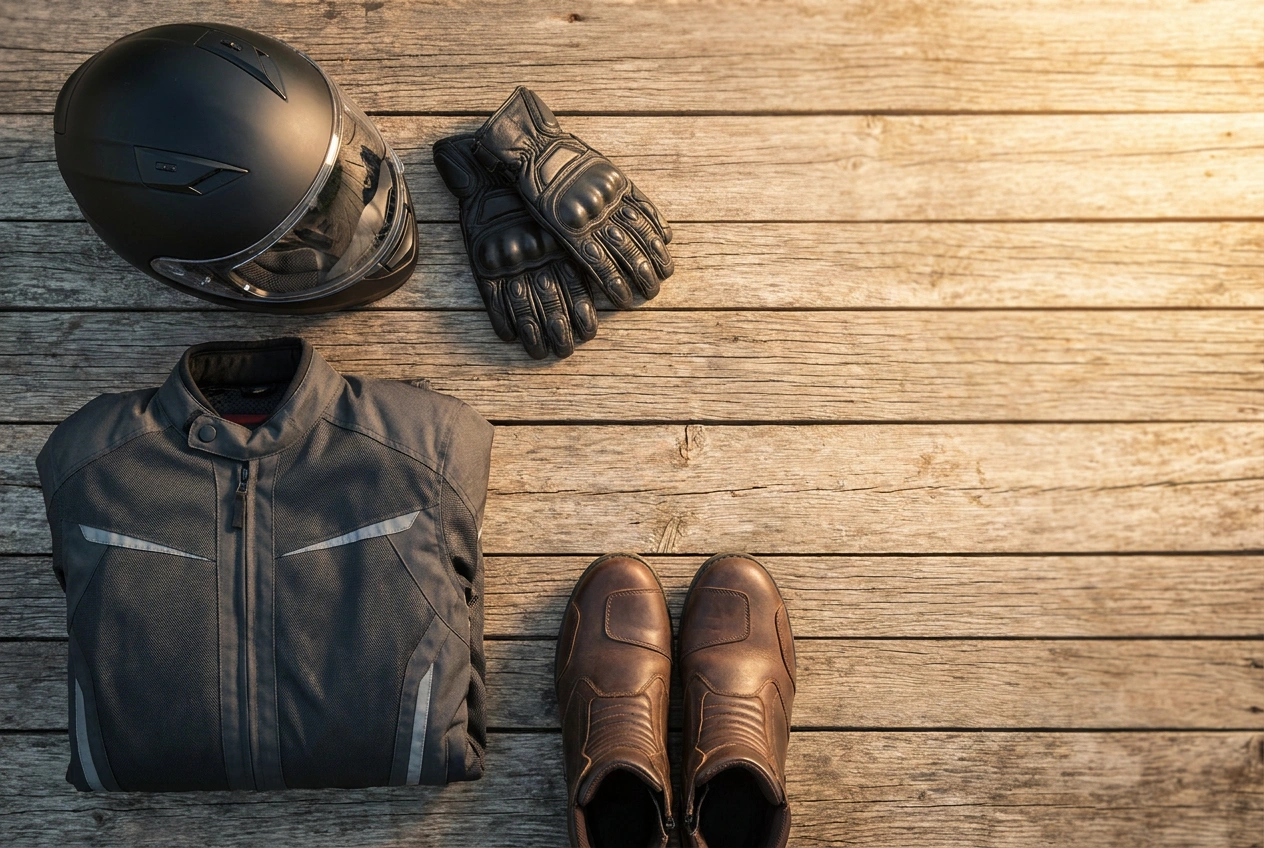
Do not ride in shorts, sneakers or sandals, loose flapping clothing, melt-prone synthetics, dangling scarves or drawstrings, dark gear at night, or any novelty helmet that is not safety-certified. Wear a certified full-face helmet, an abrasion-resistant jacket with armor, riding jeans or trousers, over-ankle boots, and gloves on every ride.
A short trip to the store does not lower the cost of a slide on asphalt. The same road that feels harmless at low speed will take skin, bone, and confidence the moment a tire lets go. We spend our days testing helmets and reading crash-injury data, and the pattern is consistent: the riders who walk away are not the lucky ones, they are the geared ones.
This guide covers the gear mistakes that turn a survivable spill into a hospital stay, and the safer choice for each one. The framing riders use for this is ATGATT, short for all the gear, all the time. The opposite is the rider who skips protection to look casual, and the road does not grade on effort.
Do not ride bare-headed or in a novelty helmet
The single most dangerous choice is no helmet, and the second is a helmet that only looks like one. Novelty lids, the thin shells sold to skirt the look of a real helmet, have no impact liner that meets a safety standard. They pass for protection in a mirror and fail in a crash. A real helmet carries a certification mark inside or on the back: DOT in the United States, ECE in Europe, and the optional Snell or FIM marks on top of those.
- Look for a DOT, ECE, Snell, or FIM label, not a sticker that just says "novelty"
- A full-face shell protects the chin and jaw, the area most riders strike first
- Replace any helmet after an impact, even if it looks fine outside
- A helmet that moves when you shake your head is too loose to work
Do not ride in shorts, sneakers, or sandals
Bare legs and exposed ankles are the most common gap we see. A slide on pavement does to skin what a belt sander does to wood, and a foot trapped under a fallen bike with no ankle support twists in ways a sneaker cannot stop. Sandals are worse: they leave the foot open and they fall off in the first slide, exactly when you need traction to push the bike off your leg.
- Wear riding jeans with aramid (Kevlar) lining, or proper textile or leather trousers
- Choose over-ankle boots with a stiff sole and a reinforced toe and heel
- Add hip and knee armor for any riding faster than a slow neighborhood pace
- Skip canvas sneakers, slip-ons, and anything that comes off when you shake your foot
Do not wear loose clothing or melt-prone fabric
Loose clothing is two problems at once. It flaps in the wind, which tires you and steals attention, and it can catch on a lever, a footpeg, or a chain when you mount or dismount. The fabric itself matters just as much. Cheap synthetics like untreated polyester and nylon melt under friction heat and fuse to a wound, which makes the burn worse and the cleanup harder. Cotton, leather, and purpose-built riding textiles abrade instead of melting.
- Pick a snug, abrasion-resistant jacket built for riding, not a fashion shell
- Look for CE-rated armor at the shoulders, elbows, and back
- Avoid thin synthetic athletic wear as an outer layer against the road
- Tuck or remove anything that flaps, dangles, or can snag on the bike
Do not skip gloves or ride with dangling accessories
When a rider falls, the hands go out first. That reflex is automatic, which is why bare palms are one of the most common injuries and one of the easiest to prevent. Gloves with a hard knuckle and a reinforced palm turn a degloving injury into a scuff. Dangling items are a separate trap: a long scarf, an open jacket drawstring, or a loose strap can blow into a wheel or catch on a moving part. Backpack straps that shift can also pull you off balance under braking.
- Wear gloves on every ride, even the short ones, with knuckle and palm protection
- Remove or tuck scarves, ties, lanyards, and loose drawstrings before you set off
- Cinch backpack straps tight, or use a chest strap so the load cannot swing
- Check that nothing on your body or bag can reach a wheel or chain
Do not wear all-dark gear at night
Most riders dress in black, and at night a black jacket on a dark road is close to invisible to a tired driver. Being right about the right of way does not help if the car never saw you. Visibility is gear too, and it costs nothing in safety to add a bright layer or reflective panels.
- Add a hi-viz vest or a jacket with reflective panels for low light and night riding
- Choose helmets and gear with reflective trim at the shoulders and back
- Keep a bright or light-colored layer in the bag for unplanned late returns
- Treat conspicuity as a safety system, not a fashion choice
Do not wear vs wear instead
| Do not wear | Wear instead | Why it matters |
|---|---|---|
| No helmet or a novelty lid | Certified full-face helmet (DOT, ECE, or Snell) | Protects the head and chin, the areas riders strike first |
| Shorts or bare legs | Riding jeans with aramid lining or armored trousers | Stops road rash and adds knee and hip protection |
| Sneakers or sandals | Over-ankle boots with stiff sole and reinforced toe | Supports the ankle and stays on in a slide |
| Loose flapping clothing | Snug, fitted riding jacket | Will not snag on levers, pegs, or the chain |
| Synthetic non-abrasion fabric | Leather or purpose-built riding textile | Abrades instead of melting into the wound |
| Bare hands | Gloves with knuckle and palm protection | Hands hit first in almost every fall |
| Scarves, drawstrings, loose straps | Tucked or removed, backpack cinched tight | Nothing can blow into a wheel or pull you off balance |
| All-dark gear at night | Hi-viz layer or reflective panels | Lets drivers actually see you in low light |
DOT vs ECE vs Snell vs MIPS, how to pick the right lid in 60 seconds, and when to replace it. One page, no fluff.
Frequently Asked Questions
Can I ride a motorcycle in shorts and sneakers?
You can, but it is one of the riskiest gear choices. A slide on pavement strips bare skin in seconds, and sneakers give no ankle support and can come off in a crash. Wear riding jeans with aramid lining and over-ankle boots instead.
What is ATGATT?
ATGATT stands for all the gear, all the time. It is the habit of wearing a certified helmet, an armored jacket, gloves, riding trousers, and proper boots on every ride, not just long trips. The opposite is the under-geared rider who skips protection to look casual.
Are novelty helmets safe to ride in?
No. Novelty helmets have a thin shell and no impact liner that meets a safety standard, so they fail in a real crash. Look for a DOT, ECE, or Snell certification mark, which a true novelty lid will not carry.
Why are synthetic fabrics dangerous for riding?
Untreated synthetics like cheap polyester and nylon melt under the friction heat of a slide and can fuse to a wound, making burns worse. Leather, cotton, and purpose-built riding textiles abrade instead of melting, which protects the skin better.
Do I really need gloves for a short ride?
Yes. The hands shoot out automatically in a fall, even at low speed, so bare palms are one of the most common and most preventable injuries. Gloves with a hard knuckle and a reinforced palm turn a serious hand injury into a scuff.
