
Affiliate disclosure As an Amazon Associate we earn from qualifying purchases, at no extra cost to you.
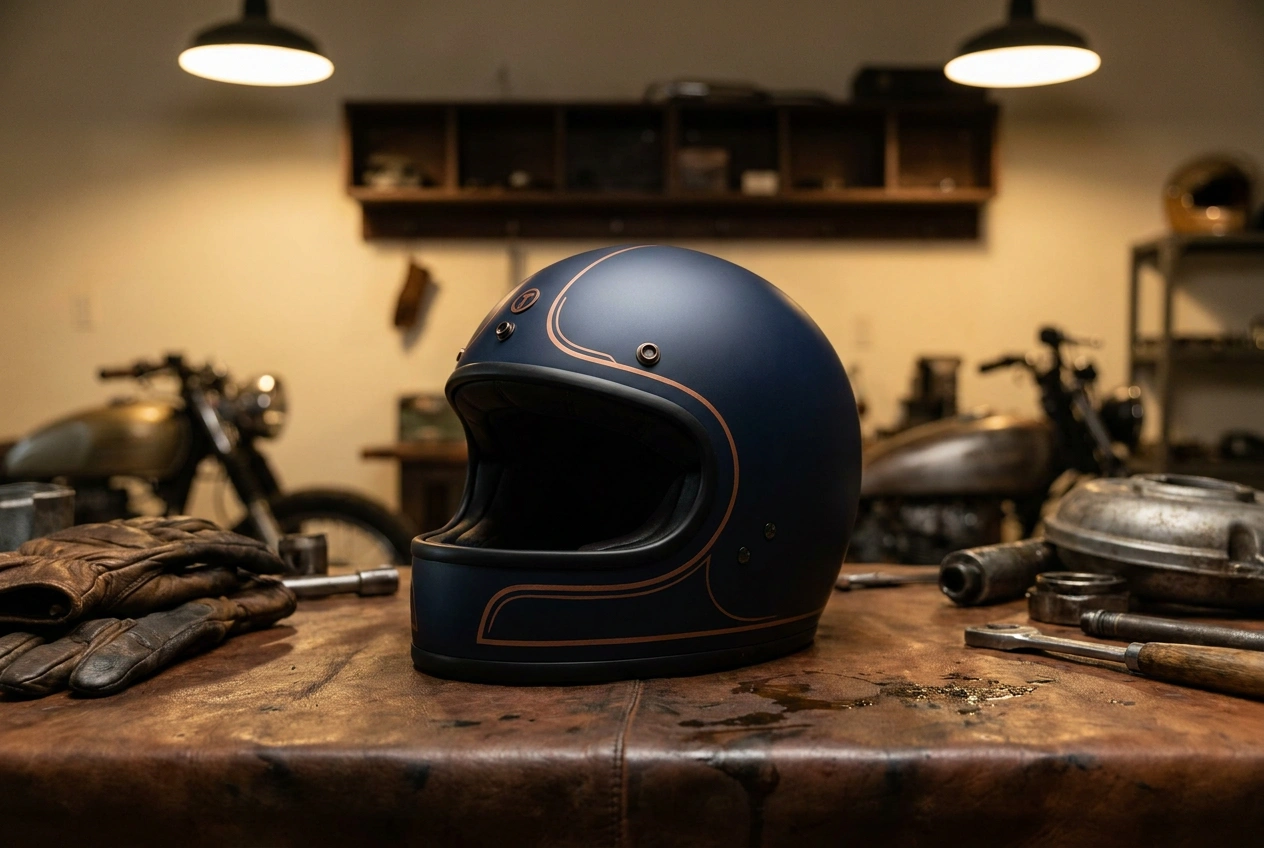
The Torc T1 is a DOT and ECE 22.5 certified retro full-face helmet built around a fiberglass tri-composite shell. It delivers genuine safety credentials at a mid-range price, with adjustable ventilation, a removable anti-fog shield, and washable faux suede interior. A strong pick for cafe racer and vintage-style riders who want protection without sacrificing the look.
Retro motorcycle helmets occupy a narrow lane: they have to look the part, pass the safety tests, and not cost as much as a premium Italian lid. The Torc T1 has been threading that needle since it launched, and in 2026 it still sits near the top of our retro full-face category for riders pairing it with a cafe racer, scrambler, or classic cruiser.
Our Research Desk put hundreds of hours into the T1, cross-referencing owner feedback, manufacturer specs, and real-world ventilation data. Here is everything you need to make a confident buying decision.
Build Quality and Shell Construction
The outer shell is a fiberglass tri-composite layup, which puts the T1 a tier above the polycarbonate shells common at this price point. Composite construction absorbs and disperses impact energy more predictably, and the lower overall weight reduces neck fatigue on longer rides.
Ventilation is handled by adjustable chin and forehead intake ports fitted with metal mesh guards that keep debris out while maintaining good airflow. Four rear metal-mesh exhaust ports draw hot air away from the crown. The mesh aesthetic is a deliberate nod to period-correct styling without compromising function.
The chin strap uses a traditional double D-ring closure. Once you learn the motion it becomes second nature, and D-rings remain the gold standard for retention security. Both DOT (FMVSS 218) and ECE 22.5 certification stickers ship on the helmet, so it is legal to ride in North America and across Europe.
Note on sizing: Torc consistently flags that the T1 runs large. If you are between sizes, size down. Check our helmet fit guide for the full measurement method before ordering.
Fit and Comfort
The interior uses a contoured multi-density EPS foam liner paired with removable, washable faux suede cheek and crown pads. Faux suede resists odor better than basic fabric and wicks moisture reasonably well on warm-weather rides up to about 90 minutes before you notice heat buildup.
The T1 is designed around an intermediate oval head shape, which suits most North American and European riders. Riders with a round or noticeably long-oval head may find pressure points behind the ears after 30-40 minutes. If that describes you, try it on in-store or confirm the retailer has an easy return policy before committing.
The chin bar sits close to the face by retro-helmet standards, which improves aerodynamics at highway speed but makes drinking from a bottle or adjusting sunglasses slightly awkward compared to a more open vintage style. It is the classic tradeoff for anyone stepping up from a half-shell or open-face lid.
Visor and Visibility
The T1 ships with a clear anti-scratch, anti-fog shield that locks into the down position via a small tab mechanism. The lockout is light but does prevent accidental lift at highway speed. Optical clarity is good for a helmet at this price, with no significant distortion at the edges.
Torc sells separate smoked and mirror bubble visors if you want a period-correct look or sun protection without adding a tinted insert. The bubble shield is a popular upgrade and snaps on in under a minute. There is no pinlock provision on the stock shield, so in cold or wet conditions an anti-fog spray is a useful addition.
The viewport is generous for a full-face retro design. Peripheral vision is adequate, though narrower than a modern sport or touring shell. Riders who do a lot of urban lane-splitting should factor that in.
Ventilation and Noise
Ventilation on the T1 is better than most retro helmets at this price point but falls short of purpose-built sport or touring lids. The chin and crown intakes do move real air above 40 mph when fully open, and the rear exhausts pull it through effectively. In stop-and-go city riding the flow is minimal, and summer urban commuting can get warm.
Noise is the T1's most discussed limitation. The shorter chin guard and relatively simple sealing around the visor allow wind roar to build above 65 mph. At motorway speeds, ear protection is advisable. This is not unusual for the retro category, but worth knowing before you commit to daily highway miles.
Safety Certifications Explained
The T1 carries both DOT FMVSS 218 and ECE 22.5 certification. DOT is the US federal standard and is required for legal road use in all 50 states. ECE 22.5 is the revised European standard, which is generally considered more stringent in its test methodology because it is independently tested by a third-party lab rather than self-certified by the manufacturer.
Carrying both standards means the T1 has passed two independent sets of impact, penetration, and retention tests. That is a meaningful data point when comparing retro helmets where some competitors only carry DOT.
For a full breakdown of what DOT, ECE, Snell, and MIPS actually mean for your safety, see our helmet certifications guide.
Value and Who It Is For
The T1 sits in the $150-$250 range depending on colorway and size, which makes it one of the more affordable dual-certified fiberglass retro full-face helmets available. Bell Bullitt and Simpson Ghost Bandit occupy the same aesthetic lane at roughly twice the price. The Biltwell Gringo is cheaper but lacks front vents and uses a polycarbonate shell.
For riders building or restoring a cafe racer, tracker, or classic cruiser on a practical budget, the T1 punches above its price. The fiberglass shell, dual certification, removable interior, and adjustable vents represent genuine value. If your budget stretches further, the Bell Bullitt offers noticeably better noise management and interior refinement.
Ready to check current pricing and available colorways? Check current price on Amazon.
Also worth reading before you buy: our guide on when to replace your motorcycle helmet, and why full-face helmets are statistically safer than open-face alternatives.
Torc T1 Spec Sheet
| Spec | Detail |
|---|---|
| Shell material | Fiberglass tri-composite |
| Certification | DOT FMVSS 218, ECE 22.5 |
| Closure | Double D-ring |
| Interior | Removable, washable faux suede pads |
| Shield | Anti-scratch, anti-fog, lockable |
| Ventilation | Adjustable chin and crown intakes, 4 metal mesh exhaust ports |
| Sizes available | XS, S, M, L, XL, XXL, XXXL |
| Weight (approx.) | ~1,450g (M/L) |
| Fit type | Intermediate oval |
DOT vs ECE vs Snell vs MIPS, how to pick the right lid in 60 seconds, and when to replace it. One page, no fluff.
Frequently Asked Questions
Does the Torc T1 run large or true to size?
Torc themselves warn that the T1 runs large. Most riders should size down one size from their usual measurement. Measure your head circumference just above the ears and compare to the chart before ordering.
Is the Torc T1 ECE certified as well as DOT?
Yes. The T1 carries both DOT FMVSS 218 certification for US roads and ECE 22.5 certification for Europe, making it one of the better-value dual-certified retro helmets at its price point.
Can you fit a Bluetooth communicator to the Torc T1?
There is no Torc-branded intercom system designed for the T1, but the interior pads are removable, which creates enough space to fit third-party slim speakers from brands like Cardo or Sena. Speaker pockets are not pre-cut, so some DIY trimming may be needed.
What is the difference between the Torc T1 and T1 Newport?
The Newport is a variant of the T1 platform with different graphic treatments and occasional shell tweaks. Core specs, shell material, and certifications are the same across the T1 family. The choice between them comes down to colorway preference.
How long does a Torc T1 last before needing replacement?
Helmet manufacturers and safety organizations recommend replacing any helmet after 5 years of regular use due to EPS foam degradation, regardless of visible damage. After any impact, replace immediately. See our full guide on when to replace your motorcycle helmet.
