

Affiliate disclosure As an Amazon Associate we earn from qualifying purchases, at no extra cost to you.
Karting sits in an awkward spot for helmet shopping. The kart looks like a toy until you are doing 60 mph an inch off the tarmac with no roll cage and no seatbelt, at which point your helmet stops being an accessory and becomes the only thing between your skull and the asphalt. The catch most newcomers miss is that the helmet aisle at the local powersports shop is full of motorcycle helmets, and most clubs will turn those away at scrutineering.
What competition karting actually wants is a Snell rating built for cars and karts: Snell SA (auto racing) or Snell K (karting-specific), with Snell-FIA CMR for drivers under 15. Our Research Desk pulled the helmets worth knowing about, sorted the genuine race-ready Snell SA options from the motorcycle helmets that only work for casual rec laps, and flagged exactly what each one is rated for so nobody buys the wrong lid twice.
Key Takeaways
- Snell SA or K is the rule for competition. Most karting clubs and CIK-FIA events require a Snell SA (auto) or Snell K (karting) helmet, not a motorcycle DOT or ECE lid. Check your club's regs before buying.
- SA adds fire resistance and a roll-bar impact test. Snell SA helmets pass a flammability test and a roll-bar impact test that the M (motorcycle) and K (karting) standards skip, which is why SA is accepted at nearly every kart track.
- Snell K skips the fire interior on purpose. Karts have no enclosed cockpit and far lower fire risk, so K-rated helmets match SA testing minus the fire-retardant lining. Both are valid for karting where the club accepts them.
- Youth under 15 needs Snell-FIA CMR. Junior racers must run a CMR2016 (or recognized CMR) helmet built to strict weight limits to reduce neck load. A standard adult SA helmet is not a substitute for sanctioned youth events.
- Check the sticker and the date. The Snell or FIA homologation label lives behind the lining and must be intact. Snell standards run on a roughly 10-year cycle and many tracks reject helmets more than 10 years past their manufacture date.
| ILM Snell SA2025 Model 760 |  |
Best Overall | Rating: Snell SA2025 | Type: Full-face auto racing | Sizes: S-XL | VIEW LATEST PRICE | Read Our Analysis |
| ILM Snell SA2025 Model 890 |  |
Lightest SA Pick | Rating: Snell SA2025 | Type: Full-face auto racing | Sizes: Per ILM sizing chart | VIEW LATEST PRICE | Read Our Analysis |
| Conquer Snell SA2025 Full Face |  |
Best Value Snell SA | Rating: Snell SA2025 | Type: Full-face auto racing | Sizes: Check listing | VIEW LATEST PRICE | Read Our Analysis |
| Bell Qualifier Full-Face |  |
Best for Rec Karting | Rating: DOT / ECE 22.06 (motorcycle) | Type: Full-face motorcycle | Sizes: Per Bell sizing | VIEW LATEST PRICE | Read Our Analysis |
| ILM 313 Full-Face Motorcycle | 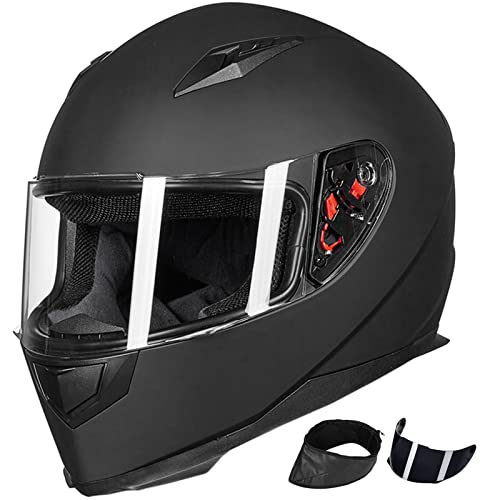 |
Budget Rec Option | Rating: DOT / FMVSS 218 (motorcycle) | Type: Full-face motorcycle | Sizes: Per ILM sizing | VIEW LATEST PRICE | Read Our Analysis |
| ILM Snell SA2025 Model 760 (White) |  |
Best in White | Rating: Snell SA2025 | Type: Full-face auto racing | Sizes: S-XL | VIEW LATEST PRICE | Read Our Analysis |
| TTMiku Kids Full-Face Helmet |  |
Youth Rec Only | Rating: DOT / FMVSS 218 (not Snell CMR) | Type: Full-face youth | Sizes: S-XL (49-56cm) | VIEW LATEST PRICE | Read Our Analysis |
More Details on Our Top Picks
ILM Snell SA2025 Model 760
This is the helmet to beat for club karting because it does the one thing the motorcycle lids cannot: it carries a current Snell SA2025 homologation. That is the rating most kart tracks list by name, and it means the helmet has passed the flammability and roll-bar impact tests that separate genuine race gear from a street helmet with a sticker.
The shell is fiber-reinforced plastic with a fire-retardant EPS liner and a double D-ring retention strap, which is the closure scrutineers expect and quick-release buckles cannot replace at most events. M6 threaded inserts are built in for a HANS or HNR head-and-neck restraint, so the helmet grows with you if you move from arrive-and-drive karts toward faster wheel-to-wheel racing.
Detail touches show this was designed for a cockpit, not a commute: a 40mm sun shade film along the top of the visor cuts glare on bright days, and tear-off posts let you stack film for muddy or wet sessions. None of that exists on a motorcycle helmet because motorcyclists do not need it.
The honest caveats: an FRP shell is heavier than a true carbon lid, so it is not the lightest helmet on this list, and it is explicitly not DOT approved for public roads. Use it on track only. For most club karters that trade-off is fine, because you are buying certification and value, not the last 200 grams.
- Rating:Snell SA2025
- Type:Full-face auto racing
- Shell:Fiber Reinforced Plastic (FRP)
- Fire-resistant interior:Yes
- Best for:Competition karting and auto racing
- Sizes:S-XL
ILM Snell SA2025 Model 890
The 890 is the 760's lighter cousin: same current Snell SA2025 homologation, but a glass-fiber-reinforced composite shell that ILM positions as the lighter of its two race lids. In karting, where every G in a long stint loads your neck with no roll cage to share the work, shaving shell weight is the kind of upgrade your trapezius muscles notice after twenty laps.
It keeps the competition-spec hardware: fire-retardant EPS padding, double D-ring strap, and M6 inserts ready for a HANS or HNR device. So you lose nothing on the certification side by choosing the lighter build, which is the rare case where the comfort option is not also the compromise option.
The visor setup mirrors the 760, with a 40mm sun-shade band and tear-off posts. That makes it a sensible choice for endurance karting events and long practice days where glare and grime accumulate over a session rather than a quick sprint.
The same boundaries apply: it is an auto racing helmet, not street legal, and a fiberglass composite still is not carbon, so riders chasing the absolute minimum weight will look higher up the price ladder. As a do-everything SA2025 helmet for karting it is hard to fault, though the visor seal can let in more wind noise than a sealed motorcycle lid.
- Rating:Snell SA2025
- Type:Full-face auto racing
- Shell:Fiberglass composite (GFRP)
- Fire-resistant interior:Yes
- Best for:Long sessions, neck comfort
- Sizes:Per ILM sizing chart
Conquer Snell SA2025 Full Face
If the goal is to pass scrutineering for the least money, the Conquer is the entry point. It carries a current Snell SA2025 certification, which is the part that actually matters at the gate, on a lightweight fiberglass composite shell. For a first season of arrive-and-drive or club karting, that is the box that needs ticking.
The interior is fire-retardant and padded, with airflow venting to keep a clear head over a session, and the visor is a flame-resistant anti-scratch shield with tear-off posts. A soft carry bag is included, which sounds minor until you have hauled a bare helmet around a paddock and watched it pick up scratches.
Conquer is upfront that this is an auto racing helmet certified to SA2025 and not intended for motorcycle road use or FMVSS 218 street compliance. That honesty is worth more than it looks, because the budget end of this market is where mislabeled gear hides.
Where it gives ground to the ILM lids is the extras: there is no built-in provision for HANS inserts on every configuration, so confirm before you buy if a head-and-neck restraint is in your future, and the finish quality is closer to functional than premium. For getting on track legally without overspending, it does the job.
- Rating:Snell SA2025
- Type:Full-face auto racing
- Shell:Fiberglass composite
- Fire-resistant interior:Yes
- Best for:First-time club racers on a budget
- Sizes:Check listing
Bell Qualifier Full-Face
Read the rating line carefully before you get excited: the Bell Qualifier is a motorcycle helmet, DOT and ECE 22.06 certified, with no Snell SA or K homologation. That means it is a strong pick for casual rental karting or backyard rec laps where the venue only asks for a full-face helmet, and a non-starter for any club event that specifies Snell.
Within that lane it is a genuinely good helmet. Bell offers it in three shell sizes rather than padding out one shell, so the fit is closer to right across head shapes, and the moisture-managing interior padding fights sweat and odor over a hot session better than the no-name budget lids.
It meets FMVSS 218 and is street legal, which is a bonus if you also ride, and the build quality from an established brand is a step above the generic full-face crowd. For a rec karter who wants one helmet that covers casual track days and the road, it is a sensible buy.
The hard limit is certification. It has no fire-retardant interior and no roll-bar impact rating, so it should never be taken to a competition kart event expecting to pass tech. If there is any chance you will race for real, skip straight to one of the Snell SA helmets above and avoid buying twice.
- Rating:DOT / ECE 22.06 (motorcycle)
- Type:Full-face motorcycle
- Shell:Polycarbonate, 3 shell sizes
- Fire-resistant interior:No
- Best for:Casual rec karting, not competition
- Sizes:Per Bell sizing
ILM 313 Full-Face Motorcycle
This is the cheapest way to put a full-face shell on your head for casual karting, and the honest framing is that cheap is exactly what it is for. The ILM 313 is a DOT-certified motorcycle helmet with an ABS shell, two visors (clear and smoked), and a winter neck scarf. It has no Snell rating and no business at a competition kart event.
For rental karts, fun runs, and rec laps where the only requirement is a closed-face helmet, it covers the basics. The dual-visor setup is genuinely handy for switching between bright and overcast conditions without buying extra parts, and the removable lining washes out the inevitable sweat.
An ABS shell is heavier and less protective than the fiberglass and FRP shells on the Snell helmets above, and the fit and finish are budget-grade. It is comfortable enough for short sessions but not built for the heat load or impact energy of serious racing.
Treat it as a starter or spare lid, not a race helmet. The moment a club asks for Snell SA or K, this one stays in the bag. If your karting is purely recreational and the budget is tight, it gets you covered without pretending to be more than it is.
- Rating:DOT / FMVSS 218 (motorcycle)
- Type:Full-face motorcycle
- Shell:Lightweight ABS
- Fire-resistant interior:No
- Best for:Cheap rec laps, not competition
- Sizes:Per ILM sizing
ILM Snell SA2025 Model 760 (White)
Mechanically this is the same Snell SA2025 Model 760 that tops the list, in a white shell. That is not a cosmetic footnote in karting: outdoor kart sessions bake you in an open seat with no air conditioning, and a white shell reflects noticeably more heat than a black one over a long stint in the sun.
Everything that makes the 760 a strong overall pick carries over: FRP shell, current SA2025 homologation, fire-retardant EPS liner, double D-ring strap, M6 inserts for a HANS or HNR device, and the 40mm sun-shade visor band with tear-off posts. You get the full competition spec, just cooler under midday sun.
White also shows scuffs and bug strikes more readily and needs more cleaning to stay looking sharp, which is the trade for the thermal benefit. For drivers in hot climates or summer race series, that is a fair exchange.
The constraints are identical to the black version: auto racing only, not DOT street legal, and an FRP shell that is not the lightest available. Choose this one over the black 760 purely on heat management and color preference, since the safety story is the same.
- Rating:Snell SA2025
- Type:Full-face auto racing
- Shell:Fiber Reinforced Plastic (FRP)
- Fire-resistant interior:Yes
- Best for:Hot-weather competition karting
- Sizes:S-XL
TTMiku Kids Full-Face Helmet
For a child doing rec laps, go-karts, or backyard fun, a properly fitted youth full-face beats an oversized adult helmet every time, and this TTMiku covers that need with DOT/FMVSS 218 certification and sizes from 49cm to 56cm. The lightweight build is the point: less mass on a young neck means less load in a knock.
It is built for the casual end of youth riding, with a clear visor, a one-hand quick-release buckle, and a fit range that spans most kids. For driveway karts, electric quads, and rental venues that just want a closed-face helmet on a child, it is a reasonable, affordable choice.
Here is the line that matters: this is not a Snell-FIA CMR helmet. Sanctioned youth karting for drivers under 15 requires a CMR2016 (or recognized CMR) helmet built to strict weight limits, and a DOT youth motorcycle helmet does not satisfy that rule. Do not bring this to a club race expecting it to pass tech.
So the verdict is narrow but clear: excellent for getting a kid safely into rec karting on a budget, wrong for the day they want to actually compete. When that day comes, a Snell-FIA CMR youth helmet is the only correct answer, and it is worth the step up.
- Rating:DOT / FMVSS 218 (not Snell CMR)
- Type:Full-face youth
- Shell:Lightweight youth shell
- Fire-resistant interior:No
- Best for:Kids' rec karts, not sanctioned racing
- Sizes:S-XL (49-56cm)
How to Choose a Karting Helmet
The single biggest mistake in karting helmet shopping is treating it like motorcycle helmet shopping. A kart has no cage, no belts, and an open seat, but it also sits in a different safety-standard world than a motorcycle, and the helmet that is perfect for one will get you turned away from the other. Get the rating right first, then worry about fit, weight, and looks.
Snell SA vs K vs M
Three Snell standards matter here, and they are not interchangeable. Snell M is the motorcycle standard, which is what most DOT and ECE full-face helmets effectively map to, and it is generally not accepted for competition karting. Snell K is the karting-specific standard: it matches SA-level impact testing but skips the fire-retardant interior, because an open kart has far lower fire risk than an enclosed cockpit. Snell SA is the auto racing standard and the one most kart tracks list by name; it adds a flammability test and a roll-bar impact test on top of K-level protection, which is why an SA helmet is accepted almost everywhere karts run. If you want one helmet that works across the widest range of clubs, an SA2025 helmet is the safe default. SA2025 helmets also clear tech at autocross events - if you do both karts and cones, see our autocross helmet roundup for the overlap. To go deeper on how these stack up against road standards, see our guides to helmet certifications and DOT vs ECE vs Snell.
What your track requires
Before you spend a cent, read your club or series regulations. Most karting clubs and CIK-FIA-sanctioned events require Snell SA or Snell K, and many will accept either. Drivers under 15 are a separate case: sanctioned youth karting requires a Snell-FIA CMR helmet (CMR2016 and other recognized CMR standards), which sets strict weight limits to reduce rotational load on a young neck. A DOT youth motorcycle helmet does not meet that rule no matter how well it fits. When in doubt, email the race director and ask which standards pass tech at your venue, because the rules vary by series and country.
Fit and expiry
A correctly rated helmet that fits badly is still a bad helmet. It should be snug enough that the cheek pads move your skin when you shift the shell, with no pressure hot spots after ten minutes. For competition gear, check the certification label, which usually sits behind the inner lining: the Snell or FIA homologation sticker must be present and intact, and on FIA-spec helmets a tamper-proof holographic sticker is part of the deal. Watch the dates too. Snell standards run on a roughly 10-year cycle, and many tracks will not allow a helmet more than 10 years past its manufacture date, so a cheap used helmet can turn out to be unusable at scrutineering. Buy current, check the sticker, and replace after any real impact.
Karting Helmet Comparison
| Helmet | Rating | Type | Fire-resistant interior | Best For |
|---|---|---|---|---|
| ILM Snell SA2025 Model 760 | Snell SA2025 | Full-face auto racing | Yes | Best Overall |
| ILM Snell SA2025 Model 890 | Snell SA2025 | Full-face auto racing | Yes | Lightest SA Pick |
| Conquer Snell SA2025 Full Face | Snell SA2025 | Full-face auto racing | Yes | Best Value Snell SA |
| Bell Qualifier Full-Face | DOT / ECE 22.06 (motorcycle) | Full-face motorcycle | No | Best for Rec Karting |
| ILM 313 Full-Face Motorcycle | DOT / FMVSS 218 (motorcycle) | Full-face motorcycle | No | Budget Rec Option |
| ILM Snell SA2025 Model 760 (White) | Snell SA2025 | Full-face auto racing | Yes | Best in White |
| TTMiku Kids Full-Face Helmet | DOT / FMVSS 218 (not Snell CMR) | Full-face youth | No | Youth Rec Only |
DOT vs ECE vs Snell vs MIPS, how to pick the right lid in 60 seconds, and when to replace it. One page, no fluff.
Frequently Asked Questions
Can I use a motorcycle helmet for karting?
For casual rec or rental karting where the venue only asks for a full-face helmet, a DOT or ECE motorcycle helmet is usually fine. For competition karting it is not: most clubs require a Snell SA or Snell K helmet, and a motorcycle lid will be rejected at scrutineering because it lacks the roll-bar impact and (for SA) fire tests.
What is the difference between Snell SA and K helmets for karting?
Snell K is the karting-specific standard and matches SA-level impact testing but omits the fire-retardant interior, since open karts carry low fire risk. Snell SA is the auto racing standard and adds a flammability test plus a roll-bar impact test. Both are valid for karting where the club accepts them; SA is accepted at the widest range of tracks.
What helmet does a child need for karting?
For sanctioned youth karting, drivers under 15 need a Snell-FIA CMR helmet, such as CMR2016, which is built to strict weight limits to protect a young neck. A DOT youth motorcycle helmet only works for casual rec laps and will not pass tech at a sanctioned event.
How do I know if my karting helmet is still legal?
Find the Snell or FIA homologation label, usually behind the inner lining, and confirm the sticker is present and undamaged; FIA-spec helmets carry a tamper-proof holographic sticker. Snell standards run on a roughly 10-year cycle, and many tracks reject helmets more than 10 years past their manufacture date, so check the date stamp before you travel to an event.
Are Snell SA auto racing helmets street legal?
No. Snell SA helmets like the ILM and Conquer models here are certified for auto and kart racing, not for public roads, and the manufacturers state they are not DOT approved for street use. Use them on track only. If you want one helmet for both karting and road riding, that does not exist as a single legal product, which is why dedicated race helmets and motorcycle helmets are sold separately.
