
Affiliate disclosure As an Amazon Associate we earn from qualifying purchases, at no extra cost to you.
Wind noise has no official decibel test. There is no ISO certification you can look up, no lab number printed on the shell, and no regulator who has decided that a helmet must be rated for acoustic comfort before it can be sold. That gap in the standards world is frustrating, but it also means the whole conversation about quiet helmets comes down to design fundamentals rather than marketing badges: full-face shell, aerodynamic profile, tight visor gasket, chin curtain, neck roll. Get those right and the helmet is quieter. Get them wrong and you can hear the wind arguing with your visor from about 40 mph onward.
Our research desk pulled together eight touring and sport-touring full-face helmets that actually list the noise-reduction hardware in their spec sheets, not just in a press release. The Shoei RF-1400 has Vortex Generators and a purpose-engineered aero skirt. The ScorpionEXO T520 ships with a chin curtain, breath deflector, and AirFit inflation cheek pads that tighten the fit on the fly. The HJC RPHA 71 uses a Premium Integrated Matrix EVO Carbon shell shaped to reduce drag. We also include a budget option (ScorpionEXO R330, dual-certified DOT and ECE 22.06) for riders who want independently tested safety without a premium-flagship price. One spoiler: the best helmet for you is still the one that fits your head, because even a premium quiet helmet leaks wind noise if the cheek pads are not sealing properly.
All eight picks are full-face helmets. If you are wondering whether a modular helmet can be as quiet as a full-face, the short answer is: close but usually not equal. The chin-bar hinge is always a potential leak point. We include one modular (HJC RPHA 91) for riders who need the flip-up convenience but want to minimize the acoustic compromise. Earplugs stay on the list no matter which helmet you choose.
Key Takeaways
- There is no standardized dB rating for motorcycle helmets - quietness is a product of shell aerodynamics, visor seal quality, chin curtain, and neck roll design, not a number you can look up in a spec sheet.
- The Shoei RF-1400 is the benchmark quiet full-face: Vortex Generator technology, airtight window beading, voluminous cheek pads, and removable ear pads targeting wind noise specifically. Snell M2020D + DOT certified.
- The ScorpionEXO T520 is the touring workhorse: chin curtain, breath deflector, AirFit inflation cheek pads, and ECE 22.06 certification at a lower price point than Shoei.
- Fit is the most important noise variable - a full-face with a poor cheek-pad seal will be louder than a well-fitted mid-range helmet. Measure your head and use the brand sizing chart.
- Earplugs matter regardless of helmet choice - above about 80 mph, sustained wind noise from any helmet reaches hearing-damage levels over a long ride. A good helmet reduces the problem; earplugs solve it.
| Shoei RF-1400 |  |
Best Overall Quiet Helmet | Type: Full-face | Certification: Snell M2020D + DOT FMVSS 218 | Best for: Highway and sport-touring riders who prioritize wind noise reduction | VIEW LATEST PRICE | Read Our Analysis |
| HJC RPHA 71 |  |
Best Sport-Touring Quiet Helmet | Type: Full-face | Certification: DOT FMVSS 218 | Best for: Sport-touring riders who want a lightweight aero shell | VIEW LATEST PRICE | Read Our Analysis |
| ScorpionEXO T520 |  |
Best Touring Helmet for Noise Reduction | Type: Full-face, touring | Certification: DOT FMVSS 218 + ECE 22.06 | Best for: Touring riders who want ECE certification and adjustable fit for noise sealing | VIEW LATEST PRICE | Read Our Analysis |
| ScorpionEXO R1 Air |  |
Best Performance Quiet Helmet | Type: Full-face, sport | Certification: DOT FMVSS 218 + ECE 22.06 | Best for: Sport riders who want a fiber-composite shell with ECE certification | VIEW LATEST PRICE | Read Our Analysis |
| HJC RPHA 91 | 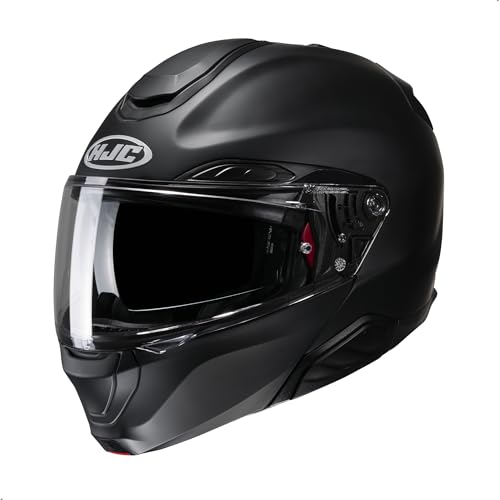 |
Best Modular for Low Noise | Type: Modular (flip-up) | Certification: DOT FMVSS 218 | Best for: Riders who want modular convenience with reduced acoustic compromise | VIEW LATEST PRICE | Read Our Analysis |
| ScorpionEXO Ryzer |  |
Best Budget Touring Quiet Helmet | Type: Full-face, touring | Certification: DOT FMVSS 218 + ECE 22.06 | Best for: Riders who want dual ECE certification and chin curtain at a mid-range price | VIEW LATEST PRICE | Read Our Analysis |
| ScorpionEXO R330 | 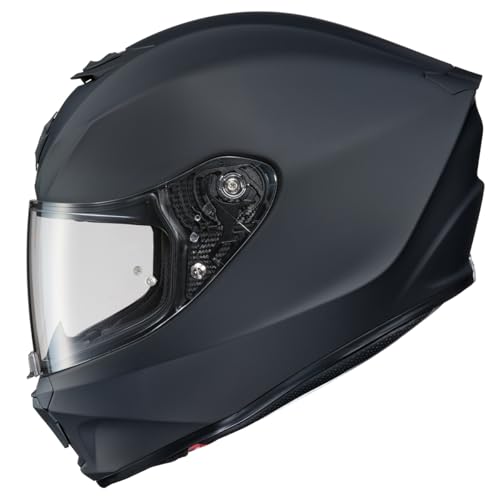 |
Best Value Quiet Helmet | Type: Full-face | Certification: DOT FMVSS 218 + ECE 22.06 | Best for: Budget-conscious riders who want dual certification and acoustic basics | VIEW LATEST PRICE | Read Our Analysis |
| LS2 Stream II |  |
Best ECE-Certified Quiet Helmet | Type: Full-face | Certification: DOT FMVSS 218 + ECE 22.06 (AREM rotational management) | Best for: Value-seekers who want ECE certification with rotational energy management | VIEW LATEST PRICE | Read Our Analysis |
More Details on Our Top Picks
Shoei RF-1400
Shoei has been refining the RF line since 1984, and the RF-1400 is the iteration where they made noise reduction a stated engineering priority rather than a side effect. The Vortex Generator technology on the shield reduces turbulence at the visor edge, and the airtight window beading system creates a seal tight enough that Shoei felt confident describing it with the pickle-jar metaphor in their marketing copy. The voluminous cheek pads and removable ear pads are designed to block noise through fit and absorption rather than relying entirely on shell geometry.
The shell is Shoei's AIM+ construction (Advanced Integrated Matrix Plus), a hand-laid combination of fiberglass and organic fibers that results in a compact, lightweight profile. A compact shell tracks better in crosswinds and produces less lift at speed, both of which contribute to quieter, more stable highway miles. The RF-1400 carries both Snell M2020D and DOT FMVSS 218 certification, making it one of the few helmets on this list with an independent Snell lab-test on file.
The 3D Max-Dry interior system is moisture-wicking and removable for cleaning. The CWR-F2 shield system with Pinlock EVO compatibility and Vortex Generator side pieces is designed for both aerodynamic and optical performance. If the shield leaks air around the gasket, none of the Vortex Generator work matters, which is why the seal design gets as much attention as the aero geometry in Shoei's engineering notes.
The honest limitation is price. The RF-1400 sits at the premium end of the market, and the riders most likely to notice the noise-reduction work are those doing sustained highway miles rather than urban riding. Riders curious about Shoei’s previous flagship can also see our Shoei RF-1200 review for a comparison point. For commuters or casual weekend riders, the ScorpionEXO T520 lower on this list returns most of the quiet at a lower outlay.
- Type:Full-face
- Certification:Snell M2020D + DOT FMVSS 218
- Shell:AIM+ (fiberglass + organic fibers)
- Noise features:Vortex Generators, airtight window beading, voluminous cheek pads, removable ear pads
- Weight:Approx. 3.26 lbs (size medium)
- Best for:Highway and sport-touring riders who prioritize wind noise reduction
HJC RPHA 71
The RPHA 71 is HJC's sport-touring flagship, and the Premium Integrated Matrix EVO Carbon shell is doing most of the quiet work here. A carbon-aramid hybrid construction lets HJC optimize the shell profile for minimal aerodynamic drag, and a lower-drag shell means less turbulent air hitting the visor and helmet sides at speed. The included chin curtain and breath deflector handle the lower-face seal that budget helmets often skip.
The 3-step sun shield is integrated, so you are not adding acoustic gaps by running a separate tinted visor. The push-release shield lock pulls the visor into the eye port gasket under positive mechanical pressure, which is relevant for noise: a visor that seals tightly against the eye port does not flutter or leak air at highway speed the way a loosely latched one does.
Two intake vents and two exhaust vents keep airflow moving without creating wind-noise apertures the way large open vents can. The cheek and crown pads are removable and washable, and the interior uses HJC's moisture-wicking quick-dry fabric. DOT certification only in the US version, which is the standard self-certification; no independent ECE lab test on this listing.
The RPHA 71 fits round-to-intermediate oval, which is HJC's typical geometry. Riders with a long oval head shape may find a slight pressure point at the forehead. The sizing guide is accurate, so measure before ordering rather than estimating.
- Type:Full-face
- Certification:DOT FMVSS 218
- Shell:Premium Integrated Matrix EVO Carbon (carbon-aramid hybrid)
- Noise features:Aerodynamic shell reduces drag; chin curtain and breath deflector included
- Weight:Approx. 3.3 lbs (size medium)
- Best for:Sport-touring riders who want a lightweight aero shell
ScorpionEXO T520
The ScorpionEXO T520 is designed around touring use, and the noise-reduction hardware is listed plainly in the spec sheet rather than implied. The Aero Skirt (chin curtain) seals the lower chin-bar gap that is one of the main wind-noise entry points in full-face helmets. A breath deflector is included as standard. The AirFit Inflation System lets riders inflate the cheek pads to a custom fit, which directly affects both comfort and noise sealing: looser cheek pads allow more air movement around the face.
The T520 carries DOT FMVSS 218 and ECE 22.06 dual certification, making it one of the stronger safety credentials on this list. ECE 22.06 is tested by an independent lab and includes rotational impact assessment that DOT does not require. For riders who want independent verification rather than manufacturer self-certification, dual-cert helmets like the T520 are the right category.
The closeable intake vents on top allow riders to shut down airflow that also carries wind noise. The SpeedView drop-down sun visor handles glare without requiring a second visor swap, and the Everclear no-fog shield is coated on both surfaces. Three shell sizes across the XS to 3XL range mean the fit geometry does not have to stretch as far as single-shell designs, which contributes to more consistent cheek-pad contact.
The polycarbonate shell is heavier than a fiber-composite option. Riders who want a lighter touring helmet at the cost of some dollars should look at the HJC RPHA 71 above. The T520's AirFit inflation cheek pads are its real differentiator for noise control, and that system justifies the weight tradeoff on long rides.
- Type:Full-face, touring
- Certification:DOT FMVSS 218 + ECE 22.06
- Shell:Advanced Polycarbonate (3 shell sizes)
- UV protection:95% UV-A and UV-B protection
- Noise features:Aero Skirt (chin curtain), breath deflector, AirFit inflation cheek pads, closeable intake vents
- Weight:Not specified by manufacturer
- Best for:Touring riders who want ECE certification and adjustable fit for noise sealing
ScorpionEXO R1 Air
The ScorpionEXO R1 Air is where ScorpionEXO uses their Ultra-TCT composite shell (fiberglass, aramid, and poly-resin fibers) rather than the polycarbonate that appears on the T520 and R330. The multi-layer composite is lighter and allows a more precisely sculpted aero profile, which is the foundation of shell-based noise reduction. Aerodynamic drag on the shell generates turbulence; less drag means less turbulent air colliding with the helmet at speed.
The venturi-effect channeling ventilation links dual ram-air intakes to spoiler-integrated exhaust, designed for high-velocity air movement. The AirFit inflation cheek pads (the same system on the T520) allow on-the-fly fit adjustment that tightens the facial seal. The aero skirt (chin curtain) and EllipTec II shield mechanism, which pulls the visor into a superior shield-to-gasket seal, both reduce acoustic leakage at the lower face and visor boundary.
DOT FMVSS 218 and ECE 22.06 dual certification. The MaxVision Pinlock-ready shield and included dark smoke shield mean fog resistance and sun control are covered without adding secondary accessories. Emergency quick-release cheek pads are also included for safety-personnel access.
The R1 Air fits sport-touring geometry rather than the more upright touring-relaxed position. Riders spending most of their time on highway touring at modest lean angles will be more comfortable in the T520. The R1 Air earns its spot as the performance-oriented quiet option, where shell quality and aerodynamics matter more than ergonomic adjustability.
- Type:Full-face, sport
- Certification:DOT FMVSS 218 + ECE 22.06
- Shell:Ultra-TCT (fiberglass, aramid, poly-resin multi-layer)
- Noise features:Aero-tuned venturi ventilation, AirFit inflation cheek pads, aero skirt (chin curtain), shield-to-gasket seal
- Weight:Approx. 3.05 lbs (size medium)
- Best for:Sport riders who want a fiber-composite shell with ECE certification
HJC RPHA 91
The honest statement about modular helmets and noise is that the chin-bar hinge is always a potential acoustic leak point compared to a one-piece full-face. The HJC RPHA 91 earns a spot here because it minimizes that compromise more than most: the carbon and carbon-glass hybrid fiber shell is stiffer and lighter than polycarbonate, which helps seal the chin-bar joint more consistently, and HJC includes a chin curtain and breath deflector in the package to seal the lower face gap when the chin bar is down.
The ventilation architecture of five intake and seven exhaust vents is unusually thorough for a modular, and the advanced airflow system uses channeling rather than large open ports, which keeps noise generation from the vents themselves lower. The integrated dark-smoke sun visor and Pinlock 120-ready HJ-37 shield handle light conditions without requiring secondary visor hardware.
SmartHJC 21B and 50B Bluetooth compatibility means speaker pockets are placed without compromising the cheek pad contact area, which matters for noise sealing. Removable and washable cheek and crown pads with quick-dry fabric are standard on the RPHA line.
The RPHA 91 is DOT-certified only in its US listing, no ECE. Riders who specifically need the independent ECE lab certification alongside modular convenience should look at the ScorpionEXO AT960 from the glasses-riders guide, which carries ECE 22.06. For most North American riders who want a well-engineered quiet modular at a reasonable price, the RPHA 91 is the research desk's pick.
- Type:Modular (flip-up)
- Certification:DOT FMVSS 218
- Shell:Carbon + carbon-glass hybrid fiber
- Noise features:Aerodynamic carbon-hybrid shell; 5 intakes, 7 exhaust vents; chin curtain and breath deflector
- Weight:Not specified by manufacturer
- Best for:Riders who want modular convenience with reduced acoustic compromise
ScorpionEXO Ryzer
The ScorpionEXO Ryzer shares its core architecture with the T520 (the aero skirt chin curtain, breath deflector, and closeable vents are present on both), but the Ryzer sits at a lower price point by dropping the AirFit inflation cheek pad system. For riders who are not planning to fine-tune cheek pad inflation on every long ride, the Ryzer delivers the noise-reduction hardware that matters most at a more accessible entry point.
DOT FMVSS 218 and ECE 22.06 dual certification confirms the independent lab test. The Ellip-Tec ratchet system pulls the visor securely against the eye-port gasket, which is the mechanical seal that keeps wind out at the visor boundary. The Everclear SpeedView drop-down sun visor is the same system found on ScorpionEXO's touring lineup, delivering in-ride sun control without visor swaps.
Three shell sizes across XS to 3XL mean the Ryzer is available with consistent cheek-pad geometry across the size range, which matters for acoustic sealing. The KwikWick C moisture-wicking liner is removable and washable. Speaker pockets are compatible with most Bluetooth communication systems.
The polycarbonate shell does not produce the same shell stiffness or lightweight aerodynamic profile as the R1 Air's composite construction. For riders who are doing primarily touring and highway miles rather than performance riding, the weight and shell material are a reasonable trade against the lower price. The chin curtain is the feature that earns the Ryzer its noise-reduction credentials at this price.
- Type:Full-face, touring
- Certification:DOT FMVSS 218 + ECE 22.06
- Shell:Advanced Polycarbonate (3 shell sizes)
- UV protection:95% UV-A and UV-B protection
- Noise features:Aero Skirt (chin curtain), breath deflector, closeable intake vents, SpeedView drop-down sun visor
- Weight:Not specified by manufacturer
- Best for:Riders who want dual ECE certification and chin curtain at a mid-range price
ScorpionEXO R330
The ScorpionEXO R330 is the entry point for buyers who want dual DOT and ECE 22.06 certification without paying touring-flagship prices. ScorpionEXO describes the R330 as a redesign with aerodynamics and wind noise reduction as specific goals: the shell minimizes drag and wind noise, the breath deflector and aero skirt (chin curtain) are included as standard, and the Ellip-Tec ratchet system provides a firm shield-to-gasket seal.
The large eye port design creates a wider visual field, and the shield carries anti-scratch coating and 95% UV protection. Pinlock anti-fog inserts are available separately for riders dealing with cold or wet conditions. The KwikWick 2 moisture-wicking liner is removable and washable, and the emergency release system on the cheek pad tabs is a practical safety feature.
What the R330 gives up compared to the T520 and Ryzer is the AirFit inflation pad system and the drop-down sun visor. Riders who want on-the-fly cheek-pad adjustment or an integrated sun visor will need to step up. For the rider who wants a reliable full-face with proper noise-reduction hardware at the lowest dual-certified price on this list, the R330 is the most efficient choice.
The integrated reflective piping in the cheek pads is a small practical touch for visibility. The dual homologation note in the spec sheet confirms the helmet is tested in both DOT and ECE configurations, which is not universal on entry-level full-face helmets. Sizes run XS to 4XL, with 3XL and 4XL in DOT only.
- Type:Full-face
- Certification:DOT FMVSS 218 + ECE 22.06
- Shell:Advanced Polycarbonate
- UV protection:95% UV protection
- Noise features:Aerodynamic shell, breath deflector, aero skirt (chin curtain), Ellip-Tec seal
- Weight:Not specified by manufacturer
- Best for:Budget-conscious riders who want dual certification and acoustic basics
LS2 Stream II
The LS2 Stream II earns its spot in the quiet-focused lineup through the AREM (Advanced Rotational Energy Management) system, which meets ECE 22.06 standards by addressing rotational-impact testing directly in the liner design rather than the shell alone. LS2 describes the Kinetic Polymer Alloy shell as high-tech and aerodynamic, and the sport-oriented profile trades the bulkier adventure or cruiser silhouette for a shape built around reduced drag.
Ventilation is dynamic, flow-through - continuous airflow by design rather than adjustable open-close ports. That is a plus in warm weather, but for cold-weather touring, where closing vents helps cut wind noise, the lack of closeable ports is a real limitation next to the ScorpionEXO T520 or Ryzer covered elsewhere on this list.
The Stream II ships with a clear shield only; the tinted option shown in the product photos is not included. Pinlock compatibility is not explicitly listed on LS2's spec sheet, so riders who need anti-fog performance should confirm before buying rather than assume it. The integrated sun shield handles routine glare management without needing a separate shield swap.
LS2 is a Spanish brand with a strong presence in the European market, and ECE 22.06 reflects that region's independent testing standard rather than manufacturer self-certification. For riders who specifically want an independently-tested ECE helmet at this price and can live with fewer dedicated noise-reduction features (no chin curtain listed) than the ScorpionEXO lineup, the Stream II remains a credible pick.
- Type:Full-face
- Certification:DOT FMVSS 218 + ECE 22.06 (AREM rotational management)
- Shell:Kinetic Polymer Alloy
- Noise features:High-tech aerodynamic shell, dynamic flow-through ventilation
- Weight:Not specified by manufacturer
- Best for:Value-seekers who want ECE certification with rotational energy management
How to Choose a Quiet Motorcycle Helmet
If you are looking for a helmet with a certified dB rating, you will not find one. No organization currently mandates noise testing for motorcycle helmets, which means the claim "quietest helmet" on any product listing is marketing, not a measured specification. What can be evaluated is the design hardware that demonstrably reduces wind noise. Here is what actually matters.
Why There Is No Standardized Noise Rating
Wind noise in a motorcycle helmet is highly dependent on three variables that vary with every rider: head shape, riding position (upright touring vs. sport crouch), and wind speed. A helmet that is quiet on a narrow upright rider at 70 mph may be loud on a wider oval head or on a sport bike where the rider leans into a different airflow angle. The same shell geometry produces different turbulence patterns on different heads. Because a single lab dB number would be meaningless without specifying all three variables, no standardization body has produced one. What you can do is look for the design features that all quiet helmets share: a tight visor seal, an aerodynamic shell profile, a chin curtain, and a snug neck roll. For more on how long a helmet remains effective, those liner components degrade over time and affect both fit and noise sealing.
Aerodynamic Shell and Tight Visor Seal
The shell does two jobs for noise: it shapes the airflow around the helmet, and it provides the rigid housing for the visor seal. A compact, sculpted shell (like the AIM+ construction on the Shoei RF-1400, or the Ultra-TCT composite on the ScorpionEXO R1 Air) tracks straighter in crosswinds and produces less aerodynamic lift, both of which reduce the turbulent separation that generates noise. The visor seal is equally important: a visor that is pulled mechanically into the gasket under positive pressure (Shoei's airtight window beading, ScorpionEXO's Ellip-Tec ratchet) seals tighter than one that simply presses lightly against a rubber strip. Visor seals that leak air at 80 mph are one of the main sources of high-frequency wind noise inside a helmet. If you wear glasses while riding, the cheek pad seal around the temple arms is also a noise leak point worth checking. Shell material affects more than noise, too: the same composite and carbon shells that track cleanly in crosswinds also tend to be the lightest ones available, which matters if neck fatigue on long rides is as much a concern as wind noise - see our lightest full-face motorcycle helmet picks for that angle.
Chin Curtain and Neck Roll
The gap between the bottom of the chin bar and the rider's neck is one of the most productive paths for wind to enter a full-face helmet. A chin curtain (called an aero skirt in ScorpionEXO's terminology) seals that gap with a foam or neoprene barrier. A neck roll seals the lower edge of the helmet against the jacket collar. Both components show up regularly in the spec sheets of helmets described as quiet, and their absence is worth flagging: the LS2 Stream II on this list, for example, does not list a chin curtain. It is one of the reasons it ranks lower on the noise-reduction hierarchy despite its aerodynamic shell. The ScorpionEXO T520, Ryzer, R330, and R1 Air all explicitly include the chin curtain as standard equipment.
Full-Face vs. Modular Noise Performance
A full-face helmet is acoustically better than a modular at equivalent price points because the one-piece shell and chin bar eliminate the hinge joint that is always a potential acoustic leak. Understanding what a modular helmet actually is helps set realistic expectations: the chin-bar mechanism adds complexity that a full-face avoids. The HJC RPHA 91 on this list minimizes the gap with a carbon hybrid shell, a chin curtain, and an unusually thorough vent layout, but it does not eliminate the hinge. For pure noise reduction, choose a full-face. For commuting convenience with an acceptable noise compromise, a well-designed modular is a workable answer.
Earplugs Still Matter
Above approximately 80 mph, sustained wind noise from any helmet, including the quietest ones on this list, reaches levels that can cause cumulative hearing damage over multi-hour rides. A good quiet helmet reduces the dose; it does not reduce it to safe levels. Foam earplugs with a high NRR (Noise Reduction Rating) are legal in most US states when riding, and they are cheap, effective, and easier to replace than a helmet. The research desk considers them standard equipment for any highway touring rider, regardless of how well the helmet is designed. For riders who wear hearing aids, shell noise matters even more, since it competes directly with whatever hearing remains; our guide to motorcycle helmets for hearing aid wearers covers the feature side of that specifically.
Quietest Motorcycle Helmet Comparison
| Helmet | Type | Certification | Noise features | Best For |
|---|---|---|---|---|
| Shoei RF-1400 | Full-face | Snell M2020D + DOT FMVSS 218 | Vortex Generators, airtight window beading, voluminous cheek pads, removable ear pads | Highway and sport-touring riders who prioritize wind noise reduction |
| HJC RPHA 71 | Full-face | DOT FMVSS 218 | Aerodynamic shell reduces drag; chin curtain and breath deflector included | Sport-touring riders who want a lightweight aero shell |
| ScorpionEXO T520 | Full-face, touring | DOT FMVSS 218 + ECE 22.06 | Aero Skirt (chin curtain), breath deflector, AirFit inflation cheek pads, closeable intake vents | Touring riders who want ECE certification and adjustable fit for noise sealing |
| ScorpionEXO R1 Air | Full-face, sport | DOT FMVSS 218 + ECE 22.06 | Aero-tuned venturi ventilation, AirFit inflation cheek pads, aero skirt (chin curtain), shield-to-gasket seal | Sport riders who want a fiber-composite shell with ECE certification |
| HJC RPHA 91 | Modular (flip-up) | DOT FMVSS 218 | Aerodynamic carbon-hybrid shell; 5 intakes, 7 exhaust vents; chin curtain and breath deflector | Riders who want modular convenience with reduced acoustic compromise |
| ScorpionEXO Ryzer | Full-face, touring | DOT FMVSS 218 + ECE 22.06 | Aero Skirt (chin curtain), breath deflector, closeable intake vents, SpeedView drop-down sun visor | Riders who want dual ECE certification and chin curtain at a mid-range price |
| ScorpionEXO R330 | Full-face | DOT FMVSS 218 + ECE 22.06 | Aerodynamic shell, breath deflector, aero skirt (chin curtain), Ellip-Tec seal | Budget-conscious riders who want dual certification and acoustic basics |
| LS2 Stream II | Full-face | DOT FMVSS 218 + ECE 22.06 (AREM rotational management) | High-tech aerodynamic shell, dynamic flow-through ventilation | Value-seekers who want ECE certification with rotational energy management |
DOT vs ECE vs Snell vs MIPS, how to pick the right lid in 60 seconds, and when to replace it. One page, no fluff.
A quiet helmet is also what makes helmet audio usable, which is why our helmet speaker picks lean on the same wind-noise reasoning.
Frequently Asked Questions
What makes a motorcycle helmet quiet?
Quietness comes from four design elements working together: an aerodynamic shell profile that reduces turbulent air separation, a tight visor-to-gasket seal that prevents wind from entering around the shield, a chin curtain that seals the lower chin-bar gap, and a snug neck roll that blocks airflow at the helmet's lower edge. There is no standardized dB certification for motorcycle helmets, so these design features are the only reliable indicators in a spec sheet.
Is there a certified quiet motorcycle helmet?
No. No regulatory body currently mandates noise testing for motorcycle helmets, and no helmet carries an independent acoustic certification the way ECE 22.06 certifies impact performance. Wind noise is too dependent on head shape, riding position, and speed to produce a single meaningful lab number. The closest you can get is a helmet that explicitly lists noise-reduction hardware: chin curtain, airtight visor seal, aerodynamic composite shell.
Are touring helmets quieter than sport helmets?
Generally yes, because touring helmets are designed for highway comfort over long distances and that design goal prioritizes noise reduction. They typically have tighter lower-face seals, more complete chin curtain and neck roll coverage, and aerodynamic profiles optimized for stability rather than extreme speed. Sport helmets optimize for downforce and cooling at racing speeds, which can introduce different airflow patterns at touring speeds. The Shoei RF-1400 is an exception: it uses racing-derived Vortex Generator technology but is engineered for noise reduction as a primary goal.
I wear ear plugs. Do I still need a quiet helmet?
Yes. Earplugs reduce the acoustic dose at your ear, but they do not address the fatigue and distraction caused by wind turbulence and vibration transmitted through the helmet shell. A quieter helmet reduces the turbulence and the structural noise entering the liner; earplugs reduce what reaches your eardrum. Both together produce a materially more comfortable long-distance ride than either alone.
When should I replace my motorcycle helmet?
Replace the helmet immediately after any crash that involved a head impact, even if the shell looks undamaged. EPS foam is a one-time crush material. Absent a crash, most manufacturers recommend replacement every five years as foam, cheek pad foam, and liner fabric age and degrade. An older helmet with compressed cheek pads is also louder than a new one, because the seal between pad and face has degraded.
