
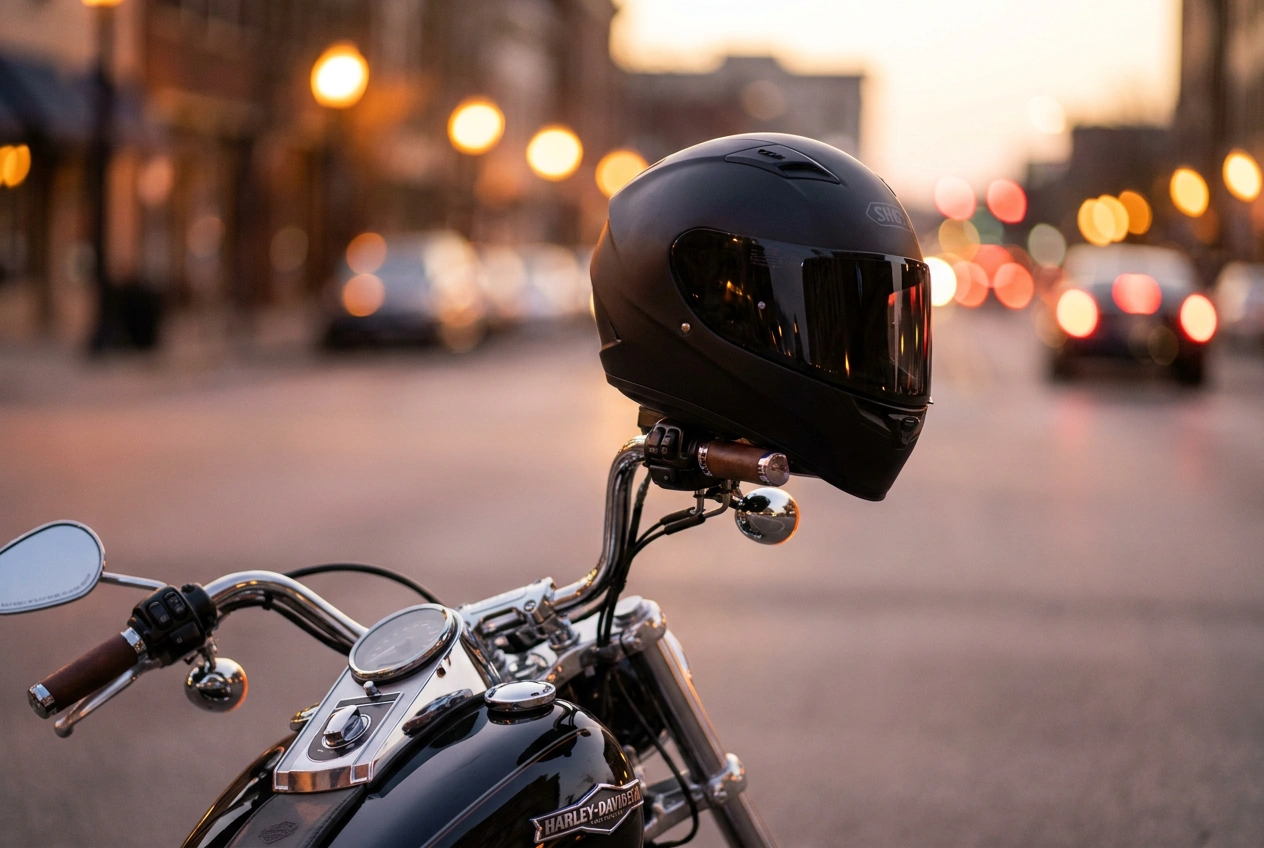
More Harley riders pick full-face helmets because the chin bar covers the part of the face most often hurt in a crash, and the sealed shell cuts wind blast, road noise, weather, and bugs on long rides. The old half-helmet cruiser look is fading as attitudes shift and injury data gets harder to ignore.
For decades the Harley image came with a half-shell lid or no helmet at all, sunglasses, and an open face to the wind. That picture is still out there, but on group rides and at rallies we now see far more full-face helmets in the mix, including on classic baggers and cruisers.
The shift is not about looking like a sportbike racer. It comes down to comfort over distance, real protection for the jaw and chin, and a quieter cabin for the Bluetooth and touring crowd. Here we walk through the reasons riders give, the data behind them, and where helmet laws still shape the choice.
The chin bar covers the spot half-helmets miss
The single biggest reason is coverage. A half-helmet protects the top and back of the skull but leaves the face wide open. Crash studies have long pointed to the chin and jaw area as one of the most frequently struck points in a motorcycle impact, and that is exactly what a half-shell cannot guard.
A full-face shell wraps the chin, jaw, and the sides of the head in one piece. For a rider who goes down at speed, that bar is the difference between a scare and a reconstructive surgery. Once a rider has seen or heard about a face injury up close, the styling argument tends to lose its weight.
- Chin bar guards the lower face, the area open on half and three-quarter helmets
- Full shell spreads impact force across the whole head, not just the crown
- Closed visor protects the eyes without relying on glasses staying on
Less wind, less noise, less fatigue on long days
Harley riders cover distance. Cruisers and baggers are built for highway miles, rallies hundreds of miles away, and multi-day trips. On an open face, the rider takes constant wind blast to the head and a wall of noise that wears down focus by the afternoon.
A sealed full-face helmet calms all of that. The shell and visor cut buffeting, and the closed design lowers sustained wind noise, which is a known contributor to long-term hearing loss for riders. Less wind and less noise means a rider arrives sharper and less drained, which matters as much for safety as the chin bar does.
Weather and bug protection
Open-face riding is fine on a warm, dry evening. It is far less fun in cold morning air, a sudden rain band, or a stretch of road thick with insects. A full-face helmet closes the rider off from all of it.
The visor keeps rain, grit, and bugs out of the eyes, which is both a comfort issue and a safety one, since a face full of debris at speed is a real hazard. In cold weather the sealed shell keeps the rider warmer and steadier, which extends the riding season for anyone who does not want to park the bike at the first cold snap.
Bluetooth and the quiet touring setup
Modern touring leans on intercom and audio. Riders want clear turn-by-turn navigation, music, and group chat through a Bluetooth headset, and a full-face helmet is simply the better cabin for that. The quieter interior lets the rider actually hear the audio without cranking the volume to dangerous levels.
For couples riding two-up and for groups that stay in contact mile after mile, a sealed helmet makes the whole system work. This is a practical pull toward full-face that did not exist in the half-helmet heyday, and it has changed a lot of habits.
Attitudes are changing, and the data is hard to argue with
The culture around helmets has softened over the years. What once read as breaking the cruiser code now reads as a personal call, and plenty of long-time riders have moved to full-face without losing any standing in their circle. Younger riders coming in often start there by default.
The numbers support the move. Federal crash research credits helmets with saving thousands of rider lives a year and finds them strongly effective at preventing fatal head injuries. Full coverage adds the face protection that those figures do not even capture. None of this requires preaching; most riders who switch did so after weighing the trade-offs themselves.
- Helmets are credited with preventing a large share of rider head-injury deaths
- Full-face adds jaw and chin protection on top of that baseline
- Switching no longer carries the social cost it once did in cruiser circles
Helmet laws still shape the choice
Where a rider lives matters. Some states require a helmet for every rider, some only for younger or newer riders, and a few have no general requirement at all. In universal-helmet-law states, the question is which helmet, not whether to wear one, and many riders in those states decide that if they have to wear something, it may as well be the one that covers their face.
In states with looser rules, the half-helmet and open-face crowd stays larger, but even there the comfort and protection arguments are pulling riders toward full coverage. Laws set the floor; comfort and crash awareness do the rest.
Half-helmet vs full-face for Harley riders
| Factor | Half-helmet | Full-face |
|---|---|---|
| Face and jaw protection | None, fully exposed | Chin bar covers the lower face |
| Wind and noise on the highway | High buffeting and noise | Calmer, quieter, less fatigue |
| Weather and bugs | Eyes and face exposed | Visor seals out rain, grit, insects |
| Bluetooth and audio | Hard to hear over wind | Quieter cabin, clearer sound |
| Classic cruiser look | Strongest match | Increasingly accepted |
DOT vs ECE vs Snell vs MIPS, how to pick the right lid in 60 seconds, and when to replace it. One page, no fluff.
Frequently Asked Questions
Do Harley riders have to wear full-face helmets?
No. Helmet rules depend on the state, and where a helmet is required, a half-helmet or open-face that meets the standard is usually legal too. Full-face is a personal choice that many riders make for the extra protection and comfort, not a Harley-specific rule.
Why are more cruiser riders switching to full-face?
The main pulls are chin and jaw protection, less wind and noise fatigue on long rides, better weather and bug protection, and a quieter helmet for Bluetooth audio and intercoms. Changing attitudes and crash data have made the switch feel normal rather than out of place.
Are full-face helmets too hot for cruiser riding?
Modern full-face helmets use vents and channels to move air through the shell, and many touring models add a drop-down sun visor. In very hot, slow conditions some riders still feel warmer than in an open face, but at highway speed airflow usually keeps it manageable.
Does a full-face helmet hurt the classic Harley look?
It used to be seen that way, but the look has become common enough that it no longer stands out. Many riders pick matte or retro-styled full-face helmets that sit comfortably with cruiser styling while still covering the face.
Is a half-helmet ever the better call?
A half-helmet is lighter and matches the traditional cruiser image, and for short, low-speed, warm-weather rides some riders prefer it. For highway miles, long days, bad weather, and the most face protection, a full-face is the stronger choice.
