
Affiliate disclosure As an Amazon Associate we earn from qualifying purchases, at no extra cost to you.
The helmet on your head does not weigh much sitting on a shelf. The trouble starts at speed. At 60 or 70 mph, wind pressure and any lift the shell generates get added on top of the static weight, and your neck muscles are the only thing holding all of it in place. A helmet that feels fine in the driveway can leave you with a sore neck after an hour on the highway, and the cause is rarely a single number on a spec sheet. It is the combination of weight, how that weight is balanced front to back, how the shell behaves in the airflow, and whether the helmet fits your head correctly in the first place.
Our research desk went through the listings, owner reports, and shell construction notes on the helmets below to sort them by what actually matters for neck strain: low weight, a clean aerodynamic profile, and a fit you can dial in. We want to be straight about what this list is. These are mostly budget DOT-certified helmets built from ABS or polycarbonate, not premium carbon-fiber touring lids. For neck comfort that is not the handicap it sounds like, because at this price tier the lightest, best-balanced shell that fits your head snugly will beat a heavier, pricier helmet that sits wrong. Weight and fit do more for your neck than any brand name on the box.
Key Takeaways
- Weight and fit matter more than brand. The lightest helmet that fits your head snugly puts the least load on your neck. A heavier helmet that sits wrong will strain your neck no matter whose logo is on it.
- Dynamic load is the real enemy, not static weight. At highway speed, wind force and lift add to the helmet's resting weight, so a clean aerodynamic profile reduces how hard your neck works.
- Balance counts as much as total weight. A well-balanced heavier helmet can feel lighter on the neck than a poorly balanced light one. Weight carried forward of your neck joint strains muscles faster.
- A correct fit prevents pressure and bad posture. Too loose and the helmet shifts and lifts at speed; too tight and you get pressure points. Either forces your neck into compensating positions over a long ride.
- Modular helmets are heavier, so factor that in. The flip-up chin bar adds hardware and weight. If your neck is the priority, a lightweight full-face or open-face shell is the lower-strain choice.
| Yesmotor Half Shell Open Face Helmet | 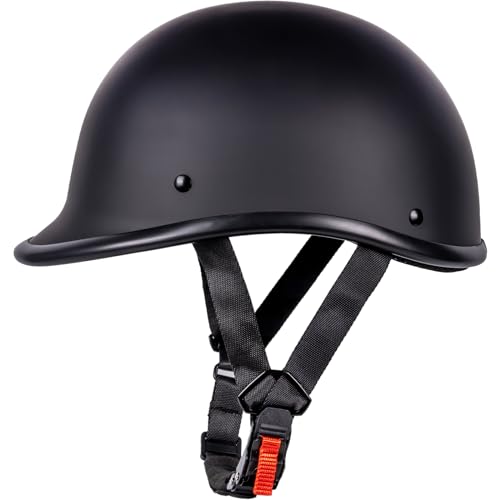 |
Lightest Overall | Weight: Very light (compact half shell) | Shell: ABS | Sizes: S-XL | VIEW LATEST PRICE | Read Our Analysis |
| AUBOA AU-T801 Full Face Helmet |  |
Best Balanced Full-Face for Long Rides | Weight: Light (integrated fin design) | Shell: ABS | Sizes: S-XL | VIEW LATEST PRICE | Read Our Analysis |
| GLX GX11 Compact Full Face Helmet |  |
Best Fit and Stability at Speed | Weight: Light (compact shell) | Shell: Polycarbonate (GLX shell molding) | Sizes: S-XL | VIEW LATEST PRICE | Read Our Analysis |
| ILM 313 Full Face Helmet | 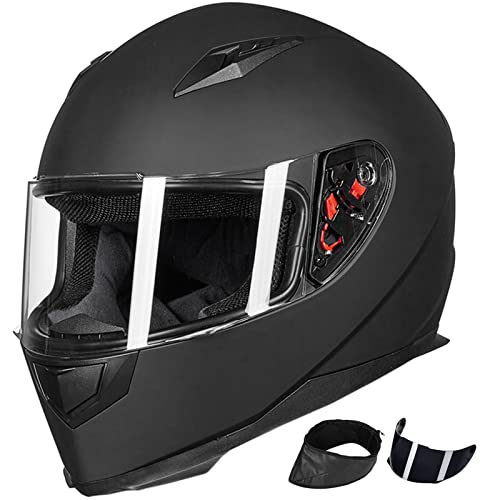 |
Best Lightweight Aero Shape | Weight: Light (lightweight ABS shell) | Shell: ABS | Sizes: S-XL | VIEW LATEST PRICE | Read Our Analysis |
| TRIANGLE Full Face Racing Helmet |  |
Best Ventilated Aero Profile | Weight: Light (ABS shell) | Shell: ABS | Sizes: S-XL | VIEW LATEST PRICE | Read Our Analysis |
| VEVOR Full Face Dual-Visor Helmet | 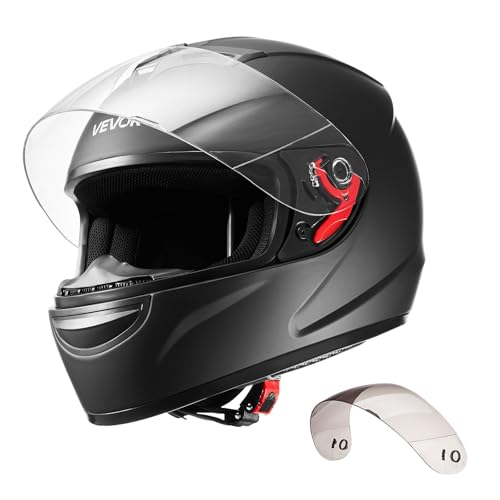 |
Best Weight Distribution | Weight: Light (ABS shell, balanced) | Shell: ABS | Sizes: S-XL | VIEW LATEST PRICE | Read Our Analysis |
| ILM 902 Modular Flip-Up Helmet | 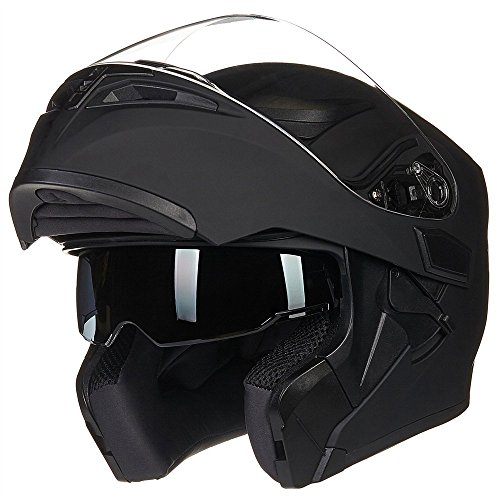 |
Lightest Modular Option | Weight: Heavier (modular hardware) | Shell: ABS | Sizes: M-XL | VIEW LATEST PRICE | Read Our Analysis |
| CYRIL Modular Flip-Up Helmet | 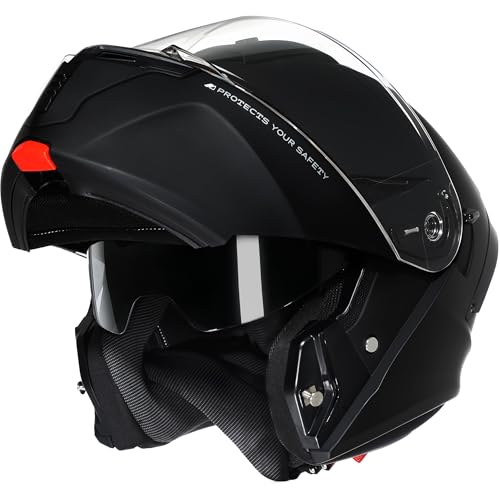 |
Most Feature-Packed Modular | Weight: Heaviest (modular, high-strength ABS) | Shell: ABS | Sizes: S-XL | VIEW LATEST PRICE | Read Our Analysis |
More Details on Our Top Picks
Yesmotor Half Shell Open Face Helmet
If pure weight on the neck is the metric, a compact half shell is the lightest thing you can legally ride in. The Yesmotor Hawk-style helmet has almost nothing to it: a small ABS shell that sits above the ears with no chin bar, no full-face cavity, and no extra hardware. For riders whose neck pain comes from hauling a heavy full-face lid around town, dropping to a half shell can be the single biggest weight reduction available.
The compact profile also keeps the helmet close to your head, which limits the leverage wind can apply at the speeds this helmet is built for. There is no large visor or peak to catch air, so the shape stays clean in the wind. For cruiser and moped riders who spend their time at moderate speeds, that combination of low weight and a small frontal area is genuinely easy on the neck.
The honest tradeoff is protection. A half shell leaves your face, chin, and jaw exposed, and it does nothing for impact in a face-forward crash. This is the least protective category of helmet on the list, and it is a deliberate compromise riders make for comfort and airflow at low speeds. At highway pace the lack of a visor also means wind hits your face directly, which some riders find tiring in its own way.
Treat this as the right answer only if your riding is genuinely low-speed and you accept the reduced coverage. If you want neck relief but ride faster or on highways, one of the lightweight full-face options below protects far more while still keeping weight reasonable. The half shell wins on weight and loses on everything that happens above town speeds.
- Weight:Very light (compact half shell)
- Shell:ABS
- Type:Half shell / open face
- Certification:DOT FMVSS 218
- Best for:Low-speed cruising and the lightest possible load
- Sizes:S-XL
AUBOA AU-T801 Full Face Helmet
Auboa builds the AU-T801 around an integrated fin and shell design, which keeps the full-face shape compact and the weight down. The listing makes the long-ride case directly: the lighter shell is meant to keep your neck and shoulders relaxed over extended time in the saddle, and that is exactly the problem this whole list is trying to solve. For a budget full-face, the low weight is the headline feature for neck comfort.
The integrated fin is not just styling. A shell that flows the air cleanly over the top generates less lift and less buffeting than a boxy one, and less lift means your neck is fighting smaller forces at speed. The visor locks down to cut wind noise and the multiple vents move air through without forcing you into a large, draggy shell. The shape is doing real work for the neck here, not just the weight number.
Two visors come in the box, a tinted shield plus a clear replacement, so you are covered for day and night without swapping helmets. The liners are removable and washable, which matters more than it sounds: a clean, intact liner keeps the fit consistent, and a consistent fit is what stops the helmet from shifting and pulling on your neck mid-ride.
The limits are the usual budget-DOT caveats. ABS is not the lightest shell material available, so a premium polycarbonate-composite or carbon helmet would shave more grams if your budget stretches that far. DOT is self-certified by the manufacturer with no independent lab check, and there is no ECE stamp. As a low-weight, well-shaped full-face for the money, though, it is one of the better neck-friendly picks here.
- Weight:Light (integrated fin design)
- Shell:ABS
- Type:Full-face
- Certification:DOT FMVSS 218
- Best for:Long rides where neck and shoulder fatigue add up
- Sizes:S-XL
GLX GX11 Compact Full Face Helmet
The GX11 is built around a snug, compact fit, and fit is half the neck-pain equation. GLX designed the shell to sit close and tight, with a fully removable and adjustable interior so you can tune the fit to your head. A helmet that does not shift around is a helmet that does not lift and tug at your neck strap every time the wind catches it, which is one of the more overlooked sources of neck fatigue.
Aerodynamics get specific attention here. GLX says the ventilation and shell were wind-tunnel tested, with three adjustable intakes and four exhausts, and the interior is designed for stability at high speeds. That stability claim is the relevant one for necks: a shell that stays planted in the airflow transmits less buffeting and lift into your neck muscles than one that wanders. The reinforcing ribs on the shield add rigidity so the visor does not flex and catch air.
The multi-density EPS liner and GLX shell molding give it a real safety construction story for the price, and the quick-change shield with its wide field of view is genuinely convenient. The compact polycarbonate shell keeps weight down while the snug fit keeps it from moving, and that pairing is close to the ideal recipe for a low-strain helmet on a budget.
The cautions are familiar. Polycarbonate is light but not as light as composite or carbon, so this is not the absolute lightest option, only a well-balanced one. DOT-only certification means manufacturer self-declaration with no independent testing. And the snug fit that helps your neck can press if you size it wrong, so measure your head carefully and read our fit guide before ordering. If shedding grams is the top priority rather than budget or fit, our lightest full-face motorcycle helmet picks cover carbon and composite shells that go lighter still, each with a manufacturer-stated weight to check.
- Weight:Light (compact shell)
- Shell:Polycarbonate (GLX shell molding)
- Type:Full-face
- Certification:DOT FMVSS 218
- Best for:Riders who need a snug, stable fit to stop helmet lift
- Sizes:S-XL
ILM 313 Full Face Helmet
ILM has produced affordable DOT helmets for a long time, and the 313 leans on two things that help the neck: a lightweight ABS shell and a streamlined aerodynamic profile that the listing says is designed to reduce wind noise and drag. Drag reduction is not just about noise. A shell that slips through the air with less buffeting hands less work to your neck at speed, which is precisely where neck pain tends to build.
The lightweight shell keeps the resting load low, and the aerodynamic shape keeps the dynamic load from spiking when you hit highway speeds. The quick-release strap and clasp let you cinch the helmet down consistently, and a strap set at the right tension and position is part of keeping the helmet from lifting. A loose or poorly positioned chin strap lets the helmet ride up and pull, so the secure clasp here is a small neck-comfort detail that adds up.
Practical extras include two visors, clear and smoked, plus a removable winter neck scarf, and the inner lining pads pull out for washing. The removable pads matter for fit consistency over time, since compressed or dirty foam changes how the helmet sits and can let it shift on your head.
The honest notes are the budget-DOT ones. ABS is durable but heavier than premium shell materials, so this is light for the category rather than light in absolute terms. DOT certification is self-declared with no third-party lab involved, and ILM quality control can vary between production runs per owner reports. For a clean-shaped, genuinely lightweight full-face at this price, it still earns its place on a neck-comfort list.
- Weight:Light (lightweight ABS shell)
- Shell:ABS
- Type:Full-face
- Certification:DOT FMVSS 218
- Best for:Riders who want a clean aero profile to cut buffeting
- Sizes:S-XL
TRIANGLE Full Face Racing Helmet
The TRIANGLE full-face puts its emphasis on airflow, with four intakes and exhaust vents arranged to minimize wind resistance and fogging. Lower wind resistance is the part that helps the neck. A helmet designed to cut drag rather than fight it transfers less force into your neck muscles at speed, and the listing frames the design as reducing resistance on the move rather than just venting heat.
The ABS shell keeps weight in the budget-light range, and the helmet is pitched for long-distance trips with moisture-wicking, machine-washable padding. Comfort over distance is the use case where neck strain shows up most, so a light shell with a stable fit and clean airflow is the right priority. The snug fit the maker describes, combined with the washable interior, helps keep the helmet from shifting as the padding settles.
A quick-release dual-visor system gives you a pre-installed tinted shield plus a bonus clear one, tool-free to swap, and a carrying bag is included to keep the shell from getting scratched in storage. Four sizes from S to XL mean you can get reasonably close on fit, which you should take seriously, since the right size is what keeps this helmet planted and off your neck.
The drawbacks are the category standards. ABS is not a featherweight material, so the helmet is light for a budget full-face rather than a true lightweight champion. DOT is the only certification and it is self-certified. And as with any helmet sold across several color and size variants, confirm you are ordering the exact size you measured for, because a fit that is off will undo the aerodynamic and weight advantages on your neck.
- Weight:Light (ABS shell)
- Shell:ABS
- Type:Full-face
- Certification:DOT FMVSS 218
- Best for:Long-distance riders who want airflow without a bulky shell
- Sizes:S-XL
VEVOR Full Face Dual-Visor Helmet
VEVOR makes a point about balance that the others mostly skip. The listing specifically credits the helmet's balanced weight distribution with avoiding discomfort and shoulder strain on long rides, and balance is the variable that separates a helmet that feels light from one that just is light. Weight carried forward of your neck joint forces your muscles to work harder to hold your head level, so a shell that distributes its mass evenly is doing the neck a real favor.
The shell is designed with aerodynamics in mind, with front and top vents meant to reduce both wind noise and drag. That puts it in the same low-buffeting category as the other aero-focused picks here, and paired with the balance claim it makes a coherent neck-comfort case. The ABS shell keeps the resting weight in the light budget range, so you get low static load and even distribution together.
Practical features are solid for the price: a clear and a dark-tinted visor for quick switching, a wide-angle design that cuts blind spots, and a detachable, washable liner that keeps the fit clean and consistent. A skin-friendly liner that snugs up properly is part of what stops the helmet from sliding and tugging on your neck over a long day.
The limits are the budget-DOT ones again. ABS is heavier than composite or carbon, so the balance is the real selling point rather than an exceptionally low absolute weight. DOT is self-certified with no independent lab, and there is no ECE rating. As a well-balanced, aerodynamically considered full-face for riders who feel front-heavy strain, it makes the cut.
- Weight:Light (ABS shell, balanced)
- Shell:ABS
- Type:Full-face
- Certification:DOT FMVSS 218
- Best for:Riders who feel front-heavy strain on long rides
- Sizes:S-XL
ILM 902 Modular Flip-Up Helmet
We are including the ILM 902 with a clear caveat: modular helmets are heavier than full-face or open-face shells, and weight is exactly what strains your neck. The flip-up chin bar requires a hinge, a locking mechanism, and reinforcement, and all of that adds mass compared with a fixed shell. If your neck is the priority, a modular is not the obvious answer. We list it for riders who genuinely want the flip-up convenience and are willing to manage the weight tradeoff.
Within the modular category, the 902 is one of the lighter and more streamlined options. ILM describes a sleek, lightweight design that reduces wind noise, and the ABS shell is not the heaviest in its class. The flip-up function is the real draw, letting you raise the chin bar at stops without removing the helmet, which is a comfort feature even if it is not a weight-saving one.
The dual-visor setup pairs a wide-view clear shield with anti-scratch and anti-fog coatings, and the cheek pads and liner are lightweight, removable, and washable. The micrometrically adjustable strap lets you set a consistent, secure fit, which matters more on a heavier helmet: the more the lid weighs, the more a loose strap lets it lift and pull on your neck.
The honest assessment is the weight. This is the heaviest style on the list by design, and even a light modular asks more of your neck than a light full-face. If you ride mostly at speed and your neck already complains, look at the Auboa, GLX, or ILM 313 above instead. Choose the 902 only if flip-up access is worth the extra grams to you. DOT-only, self-certified, with ILM's usual variable quality control.
- Weight:Heavier (modular hardware)
- Shell:ABS
- Type:Modular (flip-up)
- Certification:DOT FMVSS 218
- Best for:Riders who want flip-up convenience and accept extra weight
- Sizes:M-XL
CYRIL Modular Flip-Up Helmet
The CYRIL modular goes in with the same caveat as the ILM 902, only more so: this is the most feature-loaded and likely the heaviest helmet on the list, and that weight is the opposite of what an aching neck wants. The high-strength ABS shell, the hinge hardware, the intercom-ready housing, and the triple-visor setup all add mass. We include it for riders who want the full modular feature set and have decided the convenience outweighs the neck cost, not as a neck-first recommendation.
On its own terms it is a capable helmet. The aerodynamic, streamlined profile is meant to keep the ride quiet, and a clean shape does at least limit how much buffeting the extra weight gets amplified by at speed. The one-handed flip-up mechanism is smooth, and the helmet is built to be intercom-compatible out of the box, which is a genuine draw for touring and group riders.
The visor package is the most generous here: a clear shield, an inner drop-down sun visor, and a bonus smoke shield, all on a tool-free quick-release system. The high-elasticity foam padding is moisture-wicking, removable, and replaceable, and it is even shaped to sit comfortably around glasses. A carrying bag is included. For features per dollar, it is hard to beat.
The bottom line for this list is weight. A heavier modular makes your neck work harder all day, full stop, and a secure strap and good fit only partly offset that. If neck comfort is your actual goal, the lighter full-face picks above are the smarter buy. Choose the CYRIL only if the feature set genuinely matters more to you than shaving load off your neck. DOT-certified, self-declared, and from a newer brand with a shorter track record than the established names, so confirm fit before committing.
- Weight:Heaviest (modular, high-strength ABS)
- Shell:ABS
- Type:Modular (flip-up)
- Certification:DOT FMVSS 218
- Best for:Feature-focused riders who accept modular weight
- Sizes:S-XL
How to Choose a Helmet for Neck Pain
Neck pain from a helmet is almost never about one thing. It is the sum of how much the helmet weighs, where that weight sits, how the shell behaves in the wind, and whether the helmet fits your head. Get those four right and even a budget DOT helmet will sit comfortably for hours. Get them wrong and an expensive lid will still leave you sore. Here is how to weigh each factor when you buy.
Weight and balance
Start with weight, because it is the simplest lever. Most riders are comfortable with a helmet around 2.8 to 3.2 pounds, and anything under three pounds counts as genuinely light for full-face protection. A lighter shell means your neck holds up less mass on every ride. But the raw number is only half the story. Balance matters just as much: a well-balanced heavier helmet can feel lighter on the neck than a poorly balanced light one, because weight carried forward of your neck joint forces your muscles to work harder to keep your head level. When you can, favor a helmet whose mass sits evenly and close to your head rather than out front. This is also why a half shell is the lightest option but not always the most comfortable at speed, and why a modular, with its flip-up hardware, is the heaviest style and the one we flag for neck-conscious riders to think twice about.
Fit and pressure points
A helmet that does not fit feeds neck pain from both directions. Too loose, and the helmet shifts and lifts at speed, tugging on the chin strap and forcing small constant corrections from your neck. Too tight, and you get pressure points that make you tense your neck and shoulders without realizing it. The target is snug but even: firm contact all the way around with no hot spots, and no movement when you shake your head. Removable, washable liners help here, because clean intact padding keeps the fit consistent over months instead of slowly loosening as foam compresses. Measure your head circumference before you order and compare it against the maker's size chart rather than guessing. Our guide on how a helmet should fit walks through the checks. If a helmet is close but a touch tight in one spot, you can often stretch a tight helmet rather than living with the pressure.
Aerodynamics and beyond the helmet
At highway speed the static weight is only part of the load. Wind pressure and any lift the shell generates get added on top, so a clean aerodynamic profile directly reduces how hard your neck works. Look for a streamlined shell, a visor that locks flush, and venting designed to cut drag rather than just move heat. Helmets that lift at speed, the ones that pull the chin strap tight as the wind catches them, are the worst offenders for neck strain. A snug fit and a stable, low-drag shape are the fix. Beyond the helmet itself, your riding position and neck strength matter. A more upright posture loads the neck differently than a forward crouch, and simple neck-strengthening exercises off the bike make the muscles more resilient to a long day's load. And remember that a helmet has a service life: an old shell with compressed liner foam no longer fits the way it did when new, which quietly reintroduces the shifting and pressure that cause pain. See our guide on when to replace a motorcycle helmet so a worn-out fit is not the hidden cause of your neck trouble.
Helmet for Neck Comfort Comparison
| Helmet | Weight | Shell | Type | Best For |
|---|---|---|---|---|
| Yesmotor Half Shell Open Face Helmet | Very light (compact half shell) | ABS | Half shell / open face | Low-speed cruising and the lightest possible load |
| AUBOA AU-T801 Full Face Helmet | Light (integrated fin design) | ABS | Full-face | Long rides where neck and shoulder fatigue add up |
| GLX GX11 Compact Full Face Helmet | Light (compact shell) | Polycarbonate (GLX shell molding) | Full-face | Riders who need a snug, stable fit to stop helmet lift |
| ILM 313 Full Face Helmet | Light (lightweight ABS shell) | ABS | Full-face | Riders who want a clean aero profile to cut buffeting |
| TRIANGLE Full Face Racing Helmet | Light (ABS shell) | ABS | Full-face | Long-distance riders who want airflow without a bulky shell |
| VEVOR Full Face Dual-Visor Helmet | Light (ABS shell, balanced) | ABS | Full-face | Riders who feel front-heavy strain on long rides |
| ILM 902 Modular Flip-Up Helmet | Heavier (modular hardware) | ABS | Modular (flip-up) | Riders who want flip-up convenience and accept extra weight |
| CYRIL Modular Flip-Up Helmet | Heaviest (modular, high-strength ABS) | ABS | Modular (flip-up) | Feature-focused riders who accept modular weight |
DOT vs ECE vs Snell vs MIPS, how to pick the right lid in 60 seconds, and when to replace it. One page, no fluff.
Frequently Asked Questions
Why does my motorcycle helmet hurt my neck?
Usually it is a combination of weight, balance, aerodynamics, and fit rather than one cause. A heavy helmet, or one whose weight sits forward of your neck joint, makes your muscles work harder to hold your head level. At speed, wind pressure and lift add to that load. A loose fit lets the helmet shift and tug on the strap, while a tight fit creates pressure points that make you tense your neck. Lightening any of those factors helps, and fixing the fit often helps the most.
Does a lighter helmet really reduce neck pain?
Yes, lower weight reduces the static load your neck carries, and most riders are comfortable around 2.8 to 3.2 pounds. But weight is not the whole answer. Balance matters too: a well-balanced heavier helmet can feel lighter on the neck than a poorly balanced light one. And at highway speed, aerodynamics and a stable fit can matter as much as the weight number, because they control how much extra force the wind adds. Aim for light, balanced, aerodynamic, and well-fitted together rather than chasing the lowest weight alone.
Are modular helmets worse for neck pain?
Generally yes, because the flip-up chin bar adds a hinge, a locking mechanism, and reinforcement, which makes modular helmets heavier than full-face or open-face shells of similar quality. More weight means more load on your neck over a long ride. That does not make them a bad choice, but if neck comfort is your top priority, a lightweight full-face or open-face helmet is the lower-strain option. Choose a modular when the flip-up convenience genuinely matters more to you than shaving weight off your neck.
What shell material is lightest for neck comfort?
Among the budget helmets here, ABS and polycarbonate are the common materials. Both are durable and reasonably light, with polycarbonate often a touch lighter than ABS. If your budget stretches further, premium polycarbonate-composite and carbon-fiber shells are lighter still and can meaningfully reduce neck load. That said, a lighter shell only helps if the helmet also fits well and has a clean aerodynamic shape, so do not buy on material alone.
Can neck exercises help with helmet neck pain?
Yes, stronger neck muscles tolerate a helmet's load better, especially over long rides and at speed where wind adds to the weight. Gentle neck-strengthening and stretching done off the bike build the resilience that keeps a full day in the saddle from leaving you sore. They work alongside the right gear, not instead of it: pair the exercises with a light, balanced, well-fitted helmet, and if your neck pain is sudden or severe, see a medical professional rather than assuming it is only the helmet.
