
Affiliate disclosure As an Amazon Associate we earn from qualifying purchases, at no extra cost to you.
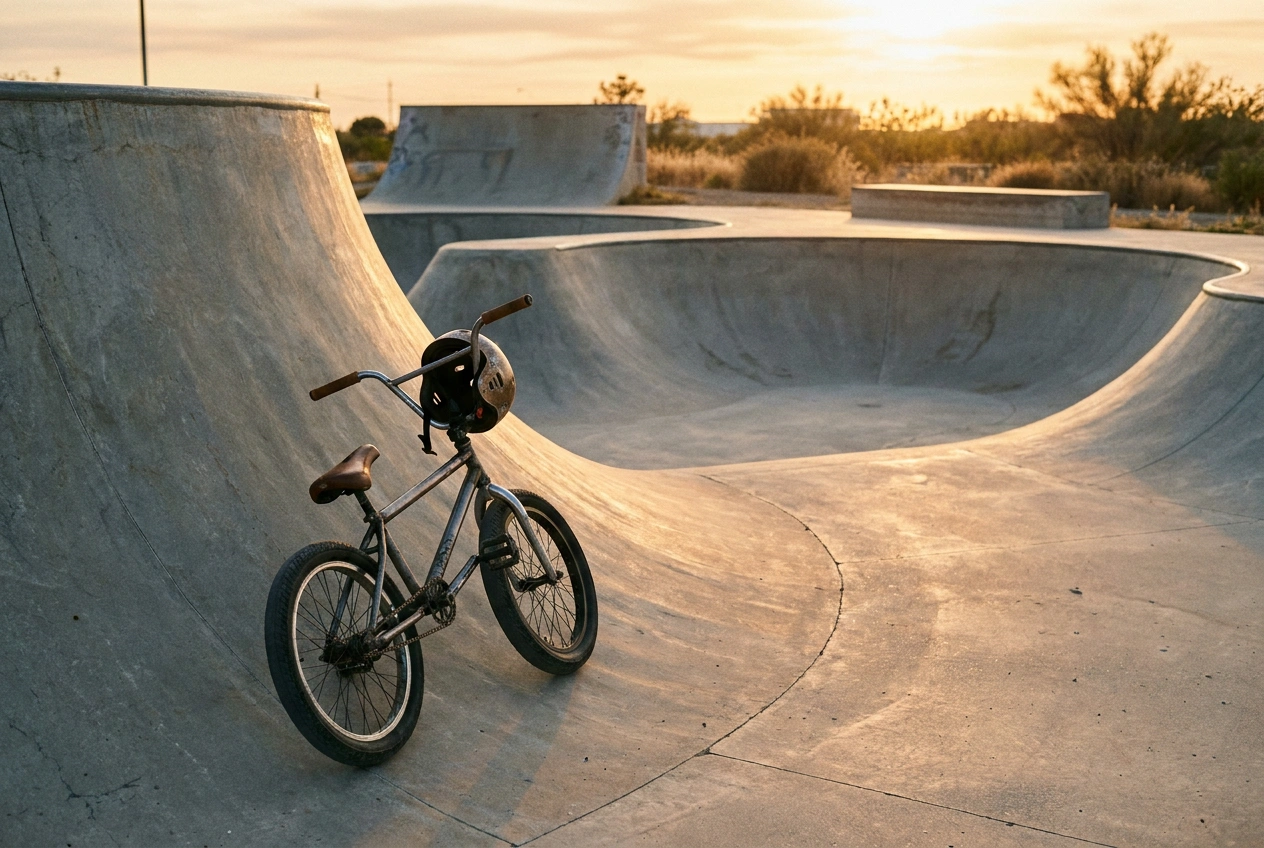
BMX riding puts a helmet through a different kind of stress test than road cycling. You are not worried about a single high-speed crash so much as repeated small impacts: bailing off a rail, clipping a curb at the skatepark, eating dirt on a jump line, all in the same afternoon. That changes what actually matters in a lid. Certification needs to cover skate-park-style falls, not just standard bicycle impacts. The foam needs to survive more than one hit. And the shell style, open-face for street and park visibility or full-face for dirt jump and race protection, depends entirely on where you actually ride.
The Research Desk worked through the Amazon catalog looking specifically for helmets built or certified for this kind of riding, rather than generic bike helmets that happen to be cheap. We prioritized CPSC-certified helmets that also carry ASTM F1492 (the skateboarding and BMX-relevant standard) or ASTM F1952 (downhill/gravity), multi-impact foam where the listing actually states it, and a spread of open-face and full-face options so park riders and dirt jumpers both have a real pick. If you also ride a longboard or skate around town on the same helmet, our best helmet for skate and bike guide and our best longboarding helmet roundup cover the crossover multi-sport lids in more depth.
One certification question comes up constantly in BMX and skate circles: is ASTM F1952 actually different from F1492, and does it matter whether your helmet is built for downhill or skate-style falls? We break that down fully in our ASTM F1952 vs F1492 standard comparison, which is worth a read before you buy if you split time between BMX and other wheeled sports. Below are seven helmets worth your attention, with honest notes on where each fits and where it falls short.
Key Takeaways
- CPSC is the mandatory US baseline; ASTM F1492 adds BMX/skate-specific coverage - CPSC certification is legally required for bike helmets sold in the US, but it is tested around standard bicycle falls. ASTM F1492 is written specifically for skateboarding and trick roller skating impacts, which more closely resemble a BMX park or street bail. Dual or triple-certified helmets (CPSC + ASTM F1447 + ASTM F1492) give you both bases covered.
- Multi-impact foam matters if you fall often - Helmets built around ASTM F1492 typically use foam designed to take more than one moderate hit, which suits BMX and skatepark riding where small spills happen repeatedly in a single session. Single-impact EPS foam (the standard in most road and motorcycle helmets) is engineered to absorb one serious hit and then be retired, which is a mismatch for the repeated-fall reality of park and street riding.
- Open-face vs full-face is a real style decision, not just a safety one - Street and park riders often prefer open-face helmets for peripheral vision and airflow during technical, lower-speed riding. Dirt jump and race riders more often choose full-face designs because face and chin protection matters more at jump-line speeds and on falls where you go over the bars.
- MIPS is available on the full-face side of this list - Multi-directional Impact Protection System (MIPS) is a slip-plane liner designed to reduce rotational forces on angled impacts, which are common in falls where the head does not hit straight-on. It is more commonly found on full-face gravity/downhill-style helmets than on classic open-face BMX shells.
- Certification standards printed on a helmet are only meaningful if the model you buy actually lists them - Some multi-sport helmets are marketed as suitable for BMX without carrying BMX-relevant certification. Check the specific model's listed standards rather than assuming a generic "bike helmet" label covers park or street riding.
| Triple Eight Certified Sweatsaver Helmet |  |
Best Overall | Style: Open-face, rounded skate/BMX shell | Certifications: CPSC (bicycle), ASTM F1447 (recreational bicycling/roller skating), ASTM F1492 (skateboarding/trick roller skating) | Best For: Street and park riders who want the widest certification coverage in an open-face shell | VIEW LATEST PRICE | Read Our Analysis |
| Bell Sanction 2 Adult Full-Face Bike Helmet |  |
Best Full-Face for Park & Dirt Jump | Style: Full-face, gravity/BMX shell | Certifications: CPSC (bicycle), ASTM F1952 (Downhill), ASTM F2032 (BMX Cycling) | Best For: Dirt jump and full-face park riders who want dedicated BMX and downhill certification | VIEW LATEST PRICE | Read Our Analysis |
| Bell Sanction 2 DLX MIPS Bike Helmet |  |
Best with MIPS | Style: Full-face, gravity/BMX shell (DLX trim) | Rotational protection: MIPS (Multi-directional Impact Protection System) | Best For: Riders who want rotational-impact protection layered on top of the Sanction 2 full-face platform | VIEW LATEST PRICE | Read Our Analysis |
| Fly Racing Rayce MTB/BMX Bicycle Helmet |  |
Best Lightweight Full-Face | Style: Full-face, poly-alloy shell | Certifications: ASTM F1952-15 (Downhill), CPSC 1203, CE EN1078 | Best For: Riders who want a lighter full-face shell for longer bike-park or dirt-jump sessions | VIEW LATEST PRICE | Read Our Analysis |
| Pro-Tec Classic Certified BMX/Skate Helmet |  |
Best Classic Open-Face BMX | Style: Open-face, classic BMX/skate shell | Certifications: CPSC, ASTM F1447, ASTM F1492 (triple-certified) | Best For: Riders who want a purpose-built, traditional open-face BMX/skate shell with documented multi-standard certification | VIEW LATEST PRICE | Read Our Analysis |
| 80SIX Triple-Certified Multisport Helmet |  |
Best for Teens and Younger Riders | Style: Open-face, classic bike helmet shell | Certifications: CPSC (age 5+), ASTM F1447 (recreational bicycling/roller skating), ASTM F1492 (skateboarding/trick roller skating) | Best For: Younger riders and teens who need triple-certified protection at BMX-relevant standards | VIEW LATEST PRICE | Read Our Analysis |
| OutdoorMaster Skateboard Cycling Helmet |  |
Best Budget Open-Face | Style: Open-face, skate/BMX rounded shell | Shell: Reinforced ABS shell with thickened shock-absorbing EPS core | Best For: Budget-conscious riders who want an explicitly BMX-listed multi-sport shell | VIEW LATEST PRICE | Read Our Analysis |
More Details on Our Top Picks
Triple Eight Certified Sweatsaver Helmet
The Triple Eight Certified Sweatsaver is the pick here because it is explicitly triple-certified: CPSC for standard bicycle use, ASTM F1447 for recreational biking and roller skating, and ASTM F1492 for skateboarding and trick roller skating. That last standard is the one most directly relevant to the kind of low-to-moderate speed, repeated-fall riding that happens at a skatepark or on a street BMX session, and it is not something every bike helmet marketed toward BMX riders actually carries.
The dual-density foam construction pairs a hard EPS impact layer with a softer inner foam, a combination common in skate-oriented helmets built to handle more than one significant knock over a session. The Sweatsaver fabric liner is genuinely useful for anyone doing multiple runs in a row, since it wicks moisture rather than just absorbing it.
Fit comes from two included sets of Sweatsaver pads rather than a dial-adjust system, which is standard for this style of skate/BMX helmet. Triple Eight notes the pads fit snug out of the box and break in with wear, so expect an adjustment period rather than an out-of-the-box perfect fit.
The open-face, rounded shell shape is built for street and park riding where peripheral vision and ventilation matter more than chin protection. If your riding leans toward dirt jump lines or anything where you are more likely to go over the bars, look at the full-face options further down this list instead.
- Style:Open-face, rounded skate/BMX shell
- Certifications:CPSC (bicycle), ASTM F1447 (recreational bicycling/roller skating), ASTM F1492 (skateboarding/trick roller skating)
- Foam:High-impact-absorbing EPS foam with dual-density soft foam liner
- Liner:Sweatsaver moisture-wicking fabric, two pad size sets included
- Sizing:XS/S through XL/XXL (51-63 cm)
- Best For:Street and park riders who want the widest certification coverage in an open-face shell
Bell Sanction 2 Adult Full-Face Bike Helmet
The Bell Sanction 2 is one of the few helmets on this list that lists both ASTM F1952 (Downhill) certification and ASTM F2032 (BMX Cycling) certification alongside CPSC, according to the manufacturer's listing. That combination is exactly what a dirt jump or full-face park rider should be looking for: coverage built around gravity riding and BMX-specific fall patterns, not a generic road bike standard.
Bell built the Sanction 2 with 14 vents and what it calls a Flying Bridge visor, a design that avoids a traditional center-post visor mount so more energy-absorbing material can sit in the high-impact zone above the visor line. The Ventilated DH Air padding and removable, washable cheek pads make repeated hot, sweaty sessions at the park more manageable than a helmet with a fixed liner.
Sizing runs from XX-Small (48-51 cm) up through X-Large (59-61 cm), a wide range that Bell explicitly frames as suitable from young riders through adults, though as always you should measure your own head circumference rather than guessing from age alone.
This is a full-face shell, so it trades the open-face visibility and airflow of the Triple Eight above for chin and face protection. If your riding is street and park technical lines rather than dirt jumps, the open-face option above will likely feel less restrictive; if you are jumping or riding anything where a face-first fall is a real possibility, the Sanction 2's chin bar is the safer call.
- Style:Full-face, gravity/BMX shell
- Certifications:CPSC (bicycle), ASTM F1952 (Downhill), ASTM F2032 (BMX Cycling)
- Ventilation:14 vents with Flying Bridge visor design for improved airflow
- Liner:Ventilated DH Air padding, removable/washable cheek pads
- Sizing:XX-Small (48-51 cm) through X-Large (59-61 cm)
- Best For:Dirt jump and full-face park riders who want dedicated BMX and downhill certification
Bell Sanction 2 DLX MIPS Bike Helmet
The DLX MIPS trim of the Sanction 2 adds Multi-directional Impact Protection System technology, a slip-plane liner designed to let the helmet rotate slightly relative to your head on an angled impact, reducing the rotational force transmitted to your brain. Angled, glancing falls are common in BMX and park riding, where you rarely land square, so this is a meaningful upgrade over a standard foam-only liner for riders who fall at odd angles regularly.
Bell pairs the MIPS layer with a Fidlock magnetic buckle, a closure system that slides shut laterally instead of requiring you to line up a traditional buckle one-handed while wearing gloves. It is a small detail, but one that matters mid-session when you are re-strapping between runs.
The quick-drying, odor-resistant interior padding is a practical addition for anyone using this helmet multiple times a week; sweat management matters more on a full-face shell than an open one because there is less airflow reaching the padding directly.
This is the same Flying Bridge visor and full-face shell shape as the standard Sanction 2 above, so the fit and style tradeoffs are identical. The DLX MIPS costs more for the rotational-impact technology alone; if that is not a priority for you, the standard Sanction 2 covers the same certifications at a lower price point.
- Style:Full-face, gravity/BMX shell (DLX trim)
- Rotational protection:MIPS (Multi-directional Impact Protection System)
- Closure:Fidlock magnetic buckle
- Liner:Quick-drying, odor-resistant interior padding
- Visor:Flying Bridge design for improved airflow
- Best For:Riders who want rotational-impact protection layered on top of the Sanction 2 full-face platform
Fly Racing Rayce MTB/BMX Bicycle Helmet
The Fly Racing Rayce stands out on weight. At approximately 930 grams in a size Medium per the manufacturer's listing, it is noticeably lighter than most full-face BMX and downhill helmets, which reduces neck fatigue over a long day of bike-park laps or repeated dirt-jump runs.
Certification-wise, the Rayce lists ASTM F1952-15, the standard written for downhill mountain biking and gravity-style riding, alongside CPSC 1203 and CE EN1078. That combination puts it in a similar certification tier to the Bell Sanction 2 above, though it leans toward the downhill/gravity end of BMX-adjacent riding rather than a BMX-specific standard.
The TFV ventilation system uses multiple intake and exhaust ports, which the brand positions as keeping temperature manageable during warm-weather riding, a real consideration on a full-face shell where airflow is naturally more restricted than an open-face design. The removable, washable liner and cheek pads make it practical to keep clean between sessions.
The adjustable visor uses aluminum hardware for quick repositioning, useful if you switch between riding styles or lighting conditions during a session. If your priority is BMX-specific certification language over downhill certification, the Bell Sanction 2 above may be the more directly relevant choice; if lighter weight for long sessions is the priority, the Rayce is worth the tradeoff.
- Style:Full-face, poly-alloy shell
- Certifications:ASTM F1952-15 (Downhill), CPSC 1203, CE EN1078
- Weight:Approx. 930 g (size M) per listing
- Ventilation:TFV (True Functional Ventilation) system with multiple intake/exhaust ports
- Liner:Removable, washable liner with cheek pads
- Best For:Riders who want a lighter full-face shell for longer bike-park or dirt-jump sessions
Pro-Tec Classic Certified BMX/Skate Helmet
The Pro-Tec Classic replaces the Servo as our pick for a purpose-built, classic open-face BMX shape. Pro-Tec has made this exact skate/BMX shell for decades, and the rounded, low-profile silhouette is the shape most BMX track and street riders will recognize immediately.
Unlike the model it replaces, the Classic carries triple certification: CPSC (the mandatory US bicycle helmet standard), plus ASTM F1447 for recreational bicycling and roller skating, and ASTM F1492 for skateboarding and trick roller skating. That's the documented multi-standard layer that BMX-specific riders often look for - no need to look elsewhere on this list for it.
A high-impact ABS outer shell pairs with an EPS foam liner and compression-molded interior padding for impact protection, and 11 open vents keep airflow moving during longer sessions - useful on BMX track days that run hot.
Sizing runs X-Small (52-54 cm) through Large (58-60 cm), which covers most adult and older-teen heads but tops out a touch lower than some adult-only BMX helmets. Riders with heads larger than 60 cm should look at the Triple Eight or 80SIX picks above instead.
- Style:Open-face, classic BMX/skate shell
- Certifications:CPSC Safety Standard, ASTM F1447 (recreational bicycling/roller skating), ASTM F1492 (skateboarding/trick roller skating)
- Fit:X-Small (52-54cm) to Large (58-60cm)
- Interior:EPS foam liner with compression-molded padding
- Extras:11 open vents for airflow
- Best For:Riders who want a purpose-built, traditional open-face BMX/skate shell with documented multi-standard certification
80SIX Triple-Certified Multisport Helmet
The 80SIX carries the same triple-certification combination as the Triple Eight above, CPSC plus ASTM F1447 plus ASTM F1492, which makes it one of the better-documented options for younger riders specifically. Where it differs is sizing: 80SIX offers dedicated 5+ Youth, 8+ Youth, and 14+ Small/Medium ranges, rather than a single adult-oriented size run.
The ABS outer shell paired with an EPS liner and inner foam pads is standard, dependable construction for this category. The brand notes the interior foam gradually conforms to the rider's head shape with use, so expect a slightly firmer fit in the first few sessions that loosens up as the padding breaks in.
The classic bike helmet shell shape keeps things simple and unintimidating for a younger or newer rider, without the aggressive styling some adult BMX or gravity helmets carry. The adjustable chin strap with a side-release buckle is easy for a younger rider to manage independently once shown how.
If you are shopping for a teen or younger BMX or skatepark rider and want documented triple certification rather than a generic "multi-sport" claim with no standard listed, the 80SIX is a solid, size-appropriate choice. Adult riders should look at the Triple Eight or Bell options above instead, since the largest 80SIX size tops out around 58 cm.
- Style:Open-face, classic bike helmet shell
- Certifications:CPSC (age 5+), ASTM F1447 (recreational bicycling/roller skating), ASTM F1492 (skateboarding/trick roller skating)
- Sizing:5+ Youth (49-52 cm), 8+ Youth (52-56 cm), 14+ Small/Medium (55-58 cm)
- Shell:ABS outer shell with EPS liner and inner foam pads
- Closure:Adjustable chin strap with side-release buckle
- Best For:Younger riders and teens who need triple-certified protection at BMX-relevant standards
OutdoorMaster Skateboard Cycling Helmet
The OutdoorMaster is the value pick on this list. The manufacturer's own feature list specifically calls out BMX and MTB alongside skating and cycling, which is more direct than some competitors that only mention generic "biking" without naming BMX in their marketing copy.
Construction is a reinforced ABS shell over a thickened, shock-absorbing EPS core, a straightforward and proven combination at this price tier. The two included removable liners let you fine-tune fit across different head sizes or as padding compresses over time, which is a nice inclusion at this price point.
The adjustment dial paired with an adjustable chin strap gives a more dialed-in fit than helmets relying on pad swaps alone, and it is quicker to adjust mid-session if you are sharing the helmet across riders or sizes change slightly with different liner thicknesses.
The tradeoff for the lower price is a shorter certification and feature list compared to the Triple Eight or Bell Sanction 2 above; this listing does not call out an ASTM F1492 or F1447 certification specifically, so riders who want that documented BMX/skate-specific standard should treat this as a solid everyday, budget-friendly option rather than the most rigorously certified pick on this list.
- Style:Open-face, skate/BMX rounded shell
- Shell:Reinforced ABS shell with thickened shock-absorbing EPS core
- Liner:Two removable liners for different head sizes, washable
- Adjustment:Adjustment dial plus adjustable chin strap
- Sizing:Multiple sizes for kids, youth, and adults per listing
- Best For:Budget-conscious riders who want an explicitly BMX-listed multi-sport shell
How to Choose a BMX Helmet
BMX riding, whether that means street, park, or dirt jump, puts different demands on a helmet than road or commuter cycling. The falls tend to happen at lower speeds but more frequently, and they often involve rotational or off-angle impacts rather than a single straight-on hit. That changes what you should actually be looking for on the spec sheet.
CPSC vs ASTM F1492: why the certification label matters
CPSC certification is the mandatory US standard for any helmet sold as a bicycle helmet, and every legitimate helmet on the market will carry it. But CPSC testing is built around standard bicycle impact scenarios, not the repeated, lower-speed falls typical of skatepark or street BMX riding. ASTM F1492 is a separate standard written specifically for skateboarding and trick roller skating, and it is widely considered more relevant to BMX park and street riding because the fall patterns it tests for are closer to what actually happens on a ramp or rail. A helmet that carries both CPSC and ASTM F1492 (sometimes alongside ASTM F1447, a related recreational bicycling and roller skating standard) is giving you broader, more directly applicable coverage than a helmet with CPSC alone. Riders focused specifically on BMX should also look for ASTM F2032, the standard titled "Helmets Used for BMX Cycling," which some full-face BMX and gravity helmets on this list carry alongside CPSC and ASTM F1952. Dual or triple-certified helmets are generally the better choice for anyone riding park, street, or skate-adjacent BMX regularly.
Multi-impact vs single-impact foam
Most motorcycle and road cycling helmets use single-impact EPS (expanded polystyrene) foam, which is engineered to absorb the energy of one serious crash and then be replaced, even if the shell looks undamaged afterward. BMX and skate-oriented helmets, particularly those built around ASTM F1492 certification, more often use foam formulations designed to survive multiple smaller impacts across a session or over time, which fits the reality of BMX riding where you might take several minor spills in an afternoon rather than one major crash. If you ride park or street BMX regularly and expect to fall often, a helmet with multi-impact-rated foam is a better long-term fit than a single-impact design, even though you should still replace any helmet after a hard hit regardless of foam type.
Open-face vs full-face BMX helmet styles
Open-face helmets are the traditional BMX shape: a rounded shell that covers the top, back, and sides of the head without a chin bar. They offer better peripheral vision and airflow, which matters for technical street and park riding where you are constantly scanning your line and adjusting to obstacles. Full-face helmets add a chin bar and typically wrap further down the sides of the face, offering meaningfully more protection in falls where you go over the bars or land face-first, which is a more common risk profile on dirt jump lines, race tracks, or bigger bike-park features. Neither style is universally correct: match the helmet to where you actually ride. A street or flatland rider doing technical tricks at moderate speed is often better served by an open-face shell's visibility, while a dirt jumper or downhill-adjacent BMX rider is usually better served by full-face chin protection.
MIPS and rotational impact protection
MIPS (Multi-directional Impact Protection System) is a low-friction liner layer inside a helmet that allows a small amount of rotational movement between the liner and the outer shell on an angled impact. The idea is to reduce the rotational force transmitted to the brain during a glancing or angled fall, which research suggests is a meaningful contributor to head injury severity beyond straight-line impact force alone. MIPS is more commonly found on full-face gravity and downhill-oriented helmets than on classic open-face BMX shells, so if rotational protection is a priority for you, expect to be choosing from the full-face side of the market. It is an added layer of protection on top of, not a replacement for, appropriate certification and correctly fitted foam.
BMX Helmet for Park, Street & Dirt Comparison
| Helmet | Style | Certifications | Best For |
|---|---|---|---|
| Triple Eight Certified Sweatsaver Helmet | Open-face, rounded skate/BMX shell | CPSC (bicycle), ASTM F1447 (recreational bicycling/roller skating), ASTM F1492 (skateboarding/trick roller skating) | Street and park riders who want the widest certification coverage in an open-face shell |
| Bell Sanction 2 Adult Full-Face Bike Helmet | Full-face, gravity/BMX shell | CPSC (bicycle), ASTM F1952 (Downhill), ASTM F2032 (BMX Cycling) | Dirt jump and full-face park riders who want dedicated BMX and downhill certification |
| Bell Sanction 2 DLX MIPS Bike Helmet | Full-face, gravity/BMX shell (DLX trim) | CPSC + ASTM F1952 (Downhill) + ASTM F2032 (BMX) | Riders who want rotational-impact protection layered on top of the Sanction 2 full-face platform |
| Fly Racing Rayce MTB/BMX Bicycle Helmet | Full-face, poly-alloy shell | ASTM F1952-15 (Downhill), CPSC 1203, CE EN1078 | Riders who want a lighter full-face shell for longer bike-park or dirt-jump sessions |
| Pro-Tec Classic Certified BMX/Skate Helmet | Open-face, classic BMX/skate shell | CPSC, ASTM F1447, ASTM F1492 (triple-certified) | Riders who want a purpose-built, traditional open-face BMX/skate shell with documented certification |
| 80SIX Triple-Certified Multisport Helmet | Open-face, classic bike helmet shell | CPSC (age 5+), ASTM F1447 (recreational bicycling/roller skating), ASTM F1492 (skateboarding/trick roller skating) | Younger riders and teens who need triple-certified protection at BMX-relevant standards |
| OutdoorMaster Skateboard Cycling Helmet | Open-face, skate/BMX rounded shell | CPSC | Budget-conscious riders who want an explicitly BMX-listed multi-sport shell |
Frequently Asked Questions
Do I need a special BMX helmet, or will a regular bike helmet work?
A regular CPSC-certified bike helmet is legal and provides baseline protection, but it is tested around standard cycling falls rather than the repeated, lower-speed, often angled falls typical of BMX park and street riding. A helmet that also carries ASTM F1492 or ASTM F1447 certification, or is explicitly designed and marketed for BMX and skate use, is a better match for that riding style.
What is the difference between ASTM F1492 and ASTM F1447?
ASTM F1447 covers recreational bicycling and roller skating, while ASTM F1492 is written specifically for skateboarding and trick roller skating, which includes more aggressive, park-style falls. Many BMX and skate helmets carry both alongside CPSC certification. For a full breakdown of how these standards differ and which matters more for your riding, see our ASTM F1952 vs F1492 comparison.
Should I get an open-face or full-face BMX helmet?
It depends on your riding style. Open-face helmets suit street and park riders who value peripheral vision and airflow for technical, lower-speed riding. Full-face helmets add chin and lower-face protection that matters more for dirt jump lines, race tracks, and bigger bike-park features where over-the-bars falls are a real risk.
Is MIPS worth it for BMX riding?
MIPS reduces rotational force on angled impacts, which are common in BMX falls that are not straight-on. It is a genuine added layer of protection, most commonly available on full-face gravity and downhill-style BMX helmets. It is not a substitute for correct certification or a properly fitted helmet, but it is a worthwhile upgrade if you can find it on a helmet that also meets your certification and style needs.
How often should I replace a BMX helmet?
Replace a helmet immediately after any hard impact, even if the shell shows no visible damage, since the foam's energy-absorbing capacity may be compromised. Even without a crash, most manufacturers recommend replacing a helmet every 3 to 5 years as foam and strap materials degrade with UV exposure, sweat, and general wear.
Can I use a skateboard helmet for BMX, or a BMX helmet for skating?
Many helmets are certified and marketed for both, since ASTM F1492 covers skateboarding and trick roller skating and the fall patterns overlap significantly with BMX park and street riding. Check that the specific model carries the certifications relevant to your primary activity rather than assuming any multi-sport label covers every standard.
DOT vs ECE vs Snell vs MIPS, how to pick the right lid in 60 seconds, and when to replace it. One page, no fluff.
