
Affiliate disclosure As an Amazon Associate we earn from qualifying purchases, at no extra cost to you.
A climbing helmet has one job that a bike or ski helmet does not: protecting you from objects falling from above, not just from your own head hitting something on the way down. Rockfall, dropped gear, and ice chunks kicked loose by a leader are the real threats on rock and alpine routes, and that changes what a helmet needs to prioritize. Weight matters more here than in almost any other helmet category, because you may be wearing the thing for eight or ten hours on a multi-pitch route, not the twenty minutes of a gym session.
Every climbing helmet worth considering is built to EN 12492, the European standard for mountaineering helmets, which is also referenced as UIAA 106 in climbing-specific literature. Interestingly, this is the same base standard that shows up in chainsaw helmet shells, since arborists and climbers face a similar overhead-impact problem. If you want the full technical breakdown of what EN 12492 actually tests for, our EN 397 vs EN 12492 comparison covers the standard in more depth than we can fit here.
The Research Desk worked through the Amazon climbing-helmet catalog looking for genuine rock and alpine helmets, not repurposed work-site hard hats. We prioritized certified EN 12492 / UIAA 106 construction, foam type (hard-foam EPS shells versus hybrid EPP designs versus hardshell-ABS-with-foam-liner builds), weight, ventilation, and headlamp compatibility. For a broader primer on what certification labels actually mean across helmet categories, see our helmet certifications explainer. Below are seven picks worth your attention, with honest notes on where each one fits and where it falls short.
Key Takeaways
- EN 12492 / UIAA 106 is the standard to look for - it specifically tests top-impact protection from falling rock and ice, a scenario general-purpose helmets are not designed around.
- Foam construction defines the weight-versus-durability trade-off - hardshell-ABS-with-foam-liner builds are tougher against day-to-day dings; in-mold EPS or hybrid EPP designs shave significant weight for multi-pitch and alpine days.
- Weight compounds over a long day - the lightest helmets here weigh under 250 g, roughly half of some hardshell designs; that difference is noticeable by hour six of a multi-pitch route.
- Ventilation prevents overheating on approaches - large vent holes matter as much on the hike in as on the route itself, especially for alpine and ski-touring crossover use.
- Headlamp clips are a practical necessity - alpine starts happen in the dark; front and rear clips that securely hold a headlamp without a strap sliding around are a baseline feature, not a bonus.
| Petzl BOREO Durable Helmet |  |
Best Overall | Shell Type: Hardshell ABS with dual-foam liner | Foam: EPP + EPS hybrid liner | Best For: All-around rock, caving, and canyoning use | VIEW LATEST PRICE | Read Our Analysis |
| Black Diamond Half Dome | 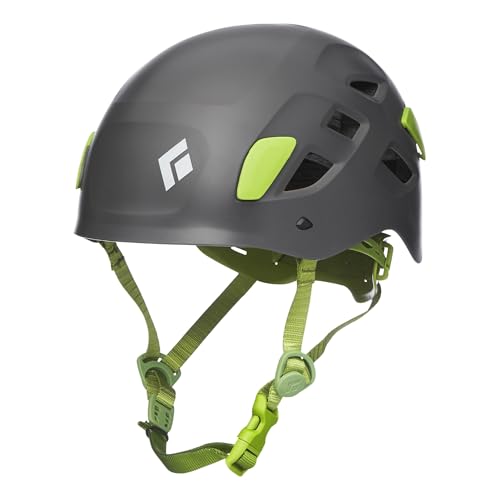 |
Best Value All-Purpose | Shell Type: Tough outer shell with impact-absorbing foam liner | Foam: Impact-absorbing foam liner (hardshell construction) | Best For: Beginners and gym-to-crag climbers wanting one dependable helmet | VIEW LATEST PRICE | Read Our Analysis |
| Petzl Meteor Lightweight Helmet |  |
Best Lightweight for Multi-Pitch | Shell Type: In-mold construction | Weight: 240 g (Size M/L, per listing) | Best For: Long multi-pitch days and ski-touring crossover use | VIEW LATEST PRICE | Read Our Analysis |
| OutdoorMaster Rock Climbing Helmet |  |
Best Budget Pick | Shell Type: PC shell with EPS core (in-mold construction) | Weight: 290 g, per listing | Best For: Budget-conscious climbers who still want certified EN 12492 protection | VIEW LATEST PRICE | Read Our Analysis |
| Black Diamond Capitan |  |
Best Dual-Foam Construction | Shell Type: Hard ABS outer shell | Foam: Dual foam construction | Best For: Climbers who want precise dial-in fit and rugged big-wall durability | VIEW LATEST PRICE | Read Our Analysis |
| Petzl BOREA Women's Helmet |  |
Best Women's Fit | Shell Type: Hard ABS outer shell | Certification: Designed to Petzl's Top and Side Protection standard | Best For: Women climbers wanting a dedicated, properly proportioned fit | VIEW LATEST PRICE | Read Our Analysis |
| Petzl BOREO Men's Helmet |  |
Best for Caving & Via Ferrata Crossover | Shell Type: Hard ABS shell with EPP + EPS foam liner | Protection Coverage: Top, side, and rear impact protection (Petzl label) | Best For: Climbers who move between rock, ice, caving, and via ferrata in the same season | VIEW LATEST PRICE | Read Our Analysis |
More Details on Our Top Picks
Petzl BOREO Durable Helmet
The Petzl BOREO earns the overall pick because it covers the widest range of climbing use cases without asking you to compromise on durability. The thick, hard ABS outer shell is built to shrug off the scratches and impacts that come from repeated use on rock, in caves, or during canyoning descents, and it holds up to gear-bag abuse better than a lighter in-mold shell would.
Inside that tough shell sits a dual-foam liner combining EPP and EPS, which spreads impact absorption more evenly across the whole helmet rather than concentrating protection at the crown alone. Petzl's own "Top and Side Protection" design extends the shell lower at the rear, which is a meaningful detail if you are climbing terrain where a fall could mean hitting the back of the head on rock.
Large ventilation holes keep the BOREO from turning into a sweatbox on the approach, and the soft headband is genuinely comfortable folding flat into the shell when you are not wearing it, useful for stuffing into a already-full pack. Four headlamp clips (two front, one rear) mean an alpine start is a non-issue.
The trade-off for that hardshell durability is weight: this is not the lightest helmet on this list, and multi-pitch climbers doing back-to-back long days may prefer the Meteor below for pure weight savings. For the majority of climbers who want one helmet that handles cragging, multi-pitch, and the occasional caving trip, the BOREO is the safer default.
- Shell Type:Hardshell ABS with dual-foam liner
- Foam:EPP + EPS hybrid liner
- Certification:EN 12492 (mountaineering/climbing helmet standard)
- Protection Coverage:Top and side protection (Petzl label), extends lower at rear
- Ventilation:Large ventilation holes
- Headlamp Clips:4 clips (front and rear)
- Fit:M/L (53-61 cm), soft headband folds into shell for storage
- Best For:All-around rock, caving, and canyoning use
Black Diamond Half Dome
Black Diamond built the Half Dome as the helmet most climbing gyms recommend to people buying their first lid, and that reputation is earned. It is designed explicitly for cragging, gym use, and alpine missions without specializing too hard in any one direction, which makes it a sensible first purchase before you know exactly what kind of climbing you will end up doing most.
The tough outer shell and impact-absorbing foam liner are built to withstand the day-to-day knocks of rock, gym walls, and mountaineering terrain, not just a single worst-case impact. That durability matters for a helmet that is going to get tossed in a gear bag, dropped on approach trails, and generally treated less carefully than a summit-day-only piece of kit.
The low-profile suspension system and adjustable chin strap make dialing in fit quick, which is a real advantage if the helmet gets passed between climbing partners or rented out to guests. Large ventilation ports keep it from overheating on warm-weather approaches, and the integrated headlamp clips handle early starts without extra straps.
This is a hardshell design, so it will not match the ultra-light weight of the Meteor below, and climbers doing serious alpine mileage may eventually want a dedicated lightweight helmet. For everything from a first gym session to a weekend cragging trip, though, the Half Dome is the Research Desk's value pick.
- Shell Type:Tough outer shell with impact-absorbing foam liner
- Foam:Impact-absorbing foam liner (hardshell construction)
- Certification:EN 12492 / UIAA 106 (mountaineering/climbing helmet standard)
- Weight:~350 g
- Fit System:Low-profile suspension with adjustable chin strap
- Ventilation:Large ventilation ports
- Headlamp Clips:Integrated clips
- Sizing:Small/Medium and Medium/Large available
- Best For:Beginners and gym-to-crag climbers wanting one dependable helmet
Petzl Meteor Lightweight Helmet
The Meteor is the pick for climbers who feel every extra gram by the third pitch of a long day. At 240 g in the M/L size per the manufacturer listing, it is dramatically lighter than the hardshell designs on this list, a difference that becomes very noticeable over eight-plus hours on a multi-pitch route or a long alpine approach.
That weight saving comes from in-mold construction rather than a separate hard ABS shell, which is the lighter-weight foam-construction approach in climbing helmets. The Meteor still carries Petzl's Top and Side Protection design, so the weight reduction is not simply a matter of shrinking coverage, it comes from the shell-and-foam engineering itself.
A detail that stands out here: the Meteor is CE-certified specifically for ski touring in addition to climbing use, with goggle-integration features built in. That dual certification makes it a genuinely useful crossover piece for anyone who alpine climbs in summer and ski tours in winter, rather than needing two separate helmets.
The trade-off for that light weight is generally a less rugged shell than a full hardshell design, so climbers who regularly bash their helmet against rock in chimneys or offwidths may prefer the added shell toughness of the BOREO or Half Dome above. For pure multi-pitch and alpine weight savings, the Meteor is hard to beat.
- Shell Type:In-mold construction
- Weight:240 g (Size M/L, per listing)
- Certification:CE-certified, including specific ski touring certification (PCSR-002)
- Protection Coverage:Top and Side Protection label, lateral/front/rear coverage
- Ventilation:Large vents for airflow on approaches
- Headlamp Clips:Two front clips plus rear elastic band
- Fit:M/L (53-61 cm); a lighter S/M (48-58 cm) size is also available at ~225 g
- Best For:Long multi-pitch days and ski-touring crossover use
OutdoorMaster Rock Climbing Helmet
The OutdoorMaster is the entry point for climbers who want genuine EN 12492:2012 certification without paying premium-brand pricing. The polycarbonate shell over an EPS foam core is the same fundamental in-mold construction approach used by more expensive climbing helmets, just packaged at a lower price point.
The listing highlights a 1.7-inch top thickness, a thicker-than-average crown design intended specifically to improve protection against falling rock and dropped gear, the exact scenario EN 12492 is built around. That thicker top does make the helmet sit slightly taller on the head, which is a reasonable trade for the added protection margin it is designed to provide.
At 290 g, it lands in a similar weight class to several premium hardshell designs, and the one-hand adjustable sizing system is a genuinely useful feature for climbers who share a helmet between partners or rent gear to beginners. Four headlamp clips (two front, two rear) match the attachment options found on much pricier helmets.
The honest caveat: this is a newer entrant without the decades of field reputation that Petzl and Black Diamond carry in the climbing community, and OutdoorMaster is better known for ski and snow-sport gear than technical climbing equipment. For gym-to-crag climbers on a budget who still want a certified EN 12492 helmet, it is a reasonable choice.
- Shell Type:PC shell with EPS core (in-mold construction)
- Weight:290 g, per listing
- Certification:EN 12492:2012
- Top Thickness:1.7 inches (thickened crown design)
- Ventilation:Designed for smooth airflow via thickened-top shape
- Headlamp Clips:2 front and 2 rear clips
- Fit:Adjustable, 20.86 in to 24 in head circumference
- Best For:Budget-conscious climbers who still want certified EN 12492 protection
Black Diamond Capitan
The Capitan sits a step up from the Half Dome in Black Diamond's lineup, built around a dual-foam construction that layers different foam densities to manage impact absorption more precisely than a single-foam liner. Combined with the hard ABS outer shell, it is designed to take repeated impact from rockfall and wall contact without the protection degrading over a season of use.
The rear adjustment dial on the suspension system is the standout usability feature here. Rather than fiddling with strap-based sizing, a dial lets you fine-tune fit with one hand, useful when you are already gloved up or need to make an adjustment mid-approach without taking off your pack.
Black Diamond markets the Capitan explicitly toward sport climbing, trad routes, and big wall objectives, which tracks with the helmet's durability-first design philosophy. Big wall climbing in particular means the helmet lives on your head or clipped to a haul bag for days at a time, and the tougher shell construction is built for that kind of extended abuse.
The dual-foam, hardshell approach means the Capitan will weigh more than the Meteor's in-mold design, so climbers optimizing purely for grams on a fast-and-light multi-pitch day may look elsewhere. For big wall and trad climbers who prioritize long-term shell durability and a precise, one-hand-adjustable fit, the Capitan is a strong choice.
- Shell Type:Hard ABS outer shell
- Foam:Dual foam construction
- Certification:EN 12492 / UIAA 106 (mountaineering/climbing helmet standard)
- Fit System:Suspension system with rear adjustment dial
- Durability:Resists dings and abrasion from rockfall and wall contact
- Ventilation:Ventilated shell design
- Headlamp Clips:Integrated headlamp clips
- Use Cases:Sport climbing, trad routes, big wall objectives
- Best For:Climbers who want precise dial-in fit and rugged big-wall durability
Petzl BOREA Women's Helmet
The BOREA addresses a genuine gap in a category where most helmets are sized and shaped around a unisex or male-average head profile. Petzl built it with women's-specific sizing (52-58 cm) and smoother shell lines, without cutting any of the protective coverage found in the brand's other climbing helmets.
The standout feature is the OMEGA headband's large rear notch, which lets the helmet sit properly on the head when worn with a ponytail or bun instead of forcing an awkward, unstable fit the way most helmets do when worn over long hair pulled back. That is a small-sounding detail that makes a real difference in how securely the helmet stays put during a fall or hard scramble.
Underneath the styling differences, the construction is the same rigorous approach as Petzl's other climbing lids: a thick, hard ABS shell built for caving, climbing, and group use durability, with the brand's Top and Side Protection design extending coverage lower at the rear. Large ventilation holes and interior air channels manage temperature on hot approaches.
There is no meaningful protection trade-off here, the BOREA is a proper climbing helmet built to the same standards as the men's BOREO line, simply cut and sized differently. For women climbers who have struggled with ill-fitting unisex helmets, this is the more sensible starting point.
- Shell Type:Hard ABS outer shell
- Certification:EN 12492 / UIAA 106, plus Petzl's Top and Side Protection design
- Fit:Women's-specific sizing, 52-58 cm
- Ponytail Compatibility:OMEGA headband with rear notch for ponytail or bun
- Ventilation:Large ventilation holes with interior air channels
- Protection Coverage:Extends lower at rear for all-direction impact protection
- Best For:Women climbers wanting a dedicated, properly proportioned fit
Petzl BOREO Men's Helmet
This is the same BOREO model as our overall pick above, offered here in an alternate colorway for climbers who want the identical protection and feature set but a different look on the rack. We are including it separately because Petzl explicitly markets the BOREO's versatility across rock climbing, ice climbing, mountaineering, caving, via ferrata, and canyoneering, and that breadth deserves its own callout for climbers whose season spans more than one discipline. Climbers whose season centers specifically on via ferrata routes, rather than general rock and alpine climbing, may want to compare this pick against helmets selected for that use case in our via ferrata helmet roundup.
The interior is completely lined with EPP and EPS foam, which Petzl notes provides consistent impact absorption across the entire helmet rather than concentrating protection at the crown. Combined with the durable ABS shell, that hybrid construction is built to handle the wider range of impact scenarios that via ferrata and caving introduce compared to pure rock cragging.
The soft headband folding into the shell for storage is a practical touch for anyone packing this helmet alongside crampons, an ice axe, or caving gear where every liter of pack space is contested. Two front clips and a rear elastic band keep a headlamp secure through scrambling and awkward caving squeezes alike.
Since the underlying helmet is identical to our top overall pick, the honest reason to choose this colorway over another is purely preference, there is no functional difference. If you have already read the BOREO review above, there is nothing new to learn here beyond color choice and availability.
- Shell Type:Hard ABS shell with EPP + EPS foam liner
- Protection Coverage:Top, side, and rear impact protection (Petzl label)
- Use Cases:Rock climbing, ice climbing, mountaineering, caving, via ferrata, canyoneering
- Fit:M/L, soft headband folds into shell for storage
- Headlamp Attachment:Two front clips plus rear elastic band
- Durability:Thick, hard shell resists scratches and impacts
- Best For:Climbers who move between rock, ice, caving, and via ferrata in the same season
How to Choose a Climbing Helmet
Climbing helmets solve a different problem than bike, ski, or moto helmets. The dominant threat on a rock or alpine route is not your own head hitting the ground in a fall, it is rockfall, dropped gear, and ice from above landing on your head while you are stationary at a belay. That changes what actually matters when you are comparing helmets.
EN 12492 and UIAA 106 Certification
EN 12492 is the European standard specifically written for mountaineering and climbing helmets, and UIAA 106 is the equivalent certification issued by the International Climbing and Mountaineering Federation, often tested alongside or referencing the EN standard. Unlike general-purpose helmet standards, EN 12492 places heavy emphasis on top-impact protection, since a falling rock or dropped carabiner hitting the crown of the head is the realistic accident scenario at a crag or on an alpine face. Interestingly, arborist and chainsaw helmet shells are frequently built to this same EN 12492 standard, since tree work involves a similar overhead-falling-object risk. For a full breakdown of how EN 12492 testing actually works and how it compares to other head-protection standards, read our EN 397 vs EN 12492 deep dive.
Foam Construction: Hardshell-ABS, In-Mold EPS, and Hybrid EPP
There are three general construction approaches in climbing helmets. Hardshell-ABS-with-foam-liner designs (like the Petzl BOREO and Black Diamond Half Dome and Capitan) use a tough outer plastic shell over an impact-absorbing foam liner, which prioritizes long-term durability against dings, drops, and repeated abuse, at the cost of some weight. In-mold construction (like the OutdoorMaster and Petzl Meteor) bonds a thin polycarbonate shell directly to an EPS foam core during molding, producing a lighter helmet that is somewhat less tolerant of repeated hard knocks over its lifespan. Hybrid designs combine EPP (expanded polypropylene, which recovers its shape somewhat after minor impacts) with EPS (expanded polystyrene, which compresses permanently to absorb energy) in the same liner, aiming for a middle ground between durability and weight. None of these approaches is universally "better", the right choice depends on whether you prioritize all-day weight savings or years of rough handling.
Weight: Why Lighter Matters More Here Than in Most Helmet Categories
A climbing helmet gets worn for the entire duration of a route, which on a long multi-pitch day or an alpine push can mean eight to twelve hours with the helmet on your head. The weight difference between the lightest in-mold helmets (in the 240-290 g range per manufacturer listings) and heavier hardshell designs is real and cumulative, contributing to neck fatigue over a long day in a way that a twenty-minute gym session never reveals. Climbers who mostly stick to single-pitch cragging or gym sessions will notice this less than those doing sustained multi-pitch or alpine days.
Ventilation for Approaches, Not Just the Route
Climbing helmets need to manage heat on the hike in as much as on the technical terrain itself. Large ventilation holes, and in some designs interior air channels, keep the head cooler on a warm approach, which matters because overheating before you even reach the base of the route affects performance and judgment on the climb itself. Ski-touring crossover helmets like the Petzl Meteor place extra emphasis on this, since ski touring involves sustained uphill effort under a helmet.
Headlamp Clips and Attachment Points
Alpine starts routinely happen well before sunrise, and long routes sometimes finish well after dark. Every helmet on this list includes some form of headlamp attachment, typically two front clips plus either two rear clips or a rear elastic band. This is not a nice-to-have feature for anyone doing routes longer than a few pitches, it is a baseline requirement. Check that the clip spacing matches your specific headlamp model before assuming compatibility, since headlamp band width varies between brands. For a broader look at how helmet certification labels work across categories including climbing, see our certifications explainer.
Fit and Adjustment
A climbing helmet that shifts or rocks on the head during a fall is not doing its job, regardless of certification. Look for a wide adjustable range (most helmets here cover roughly 52-61 cm depending on size), a suspension or headband system that conforms to head shape rather than relying purely on strap tension, and, for climbers with long hair, a rear notch or channel that lets the helmet sit properly over a ponytail or bun, a detail the Petzl BOREA specifically addresses. Measure around the largest part of your head, about one inch above the eyebrows, and try to verify fit against the manufacturer's stated range before buying rather than guessing from general S/M/L labels.
Climbing Helmet for Rock & Alpine Comparison
| Helmet | Shell Type | Certification | Best For |
|---|---|---|---|
| Petzl BOREO Durable Helmet | Hardshell ABS with dual-foam liner | EN 12492 (mountaineering/climbing helmet standard) | All-around rock, caving, and canyoning use |
| Black Diamond Half Dome | Tough outer shell with impact-absorbing foam liner | EN 12492 / UIAA 106 (mountaineering/climbing helmet standard) | Beginners and gym-to-crag climbers wanting one dependable helmet |
| Petzl Meteor Lightweight Helmet | In-mold construction | CE-certified, including specific ski touring certification (PCSR-002) | Long multi-pitch days and ski-touring crossover use |
| OutdoorMaster Rock Climbing Helmet | PC shell with EPS core (in-mold construction) | EN 12492:2012 | Budget-conscious climbers who still want certified EN 12492 protection |
| Black Diamond Capitan | Hard ABS outer shell | EN 12492 / UIAA 106 (mountaineering/climbing helmet standard) | Climbers who want precise dial-in fit and rugged big-wall durability |
| Petzl BOREA Women's Helmet | Hard ABS outer shell | EN 12492 / UIAA 106, plus Petzl's Top and Side Protection design | Women climbers wanting a dedicated, properly proportioned fit |
| Petzl BOREO Men's Helmet | Hard ABS shell with EPP + EPS foam liner | - | Climbers who move between rock, ice, caving, and via ferrata in the same season |
Frequently Asked Questions
What is the difference between EN 12492 and UIAA 106?
EN 12492 is the official European Union standard for mountaineering and climbing helmets, and it is the certification that legally allows a helmet to be sold as climbing-specific equipment in the EU. UIAA 106 is a certification issued by the International Climbing and Mountaineering Federation that generally references and builds on the same core testing, particularly for top-impact absorption. In practice, most serious climbing helmets carry EN 12492 certification, and some also carry the UIAA label as an additional endorsement. Neither standard is interchangeable with bike helmet standards (like CPSC or EN 1078), which test for a completely different accident scenario.
Can I use a bike or ski helmet for climbing instead?
No. Bike and ski helmets are engineered around a single, forward-falling impact against the ground, and their foam liners are typically designed to absorb one significant hit before needing replacement. Climbing helmets built to EN 12492 are specifically tested for top-of-head impacts from falling objects, a completely different loading scenario, and are generally designed to tolerate smaller repeated impacts (like glancing rockfall) without needing immediate replacement the way a bike helmet does after a single crash. Wearing a bike helmet on a climbing route means you are not protected against the most likely real-world hazard.
Is a lighter climbing helmet less protective?
Not necessarily. Weight differences between climbing helmets mostly come down to construction method (in-mold EPS versus hardshell ABS with a foam liner) rather than a direct trade-off in protective capability. Both approaches can meet the same EN 12492 certification. The practical difference is durability over repeated use and impacts, hardshell designs generally tolerate more day-to-day abuse before needing replacement, while lighter in-mold designs may need more careful handling and more frequent inspection for damage.
How do I know when to replace a climbing helmet?
Follow the manufacturer's stated lifespan guidance first, foam liners degrade with UV exposure and age even without a visible impact. Beyond that, inspect the shell for cracks, dents, or delamination before every season, and replace the helmet immediately after any significant impact, even if no damage is visible, since foam liners can be compressed internally without external signs. If you climb frequently and the helmet sees regular rockfall or gear drops, expect a shorter practical lifespan than the manufacturer's general estimate.
Do I need a different helmet for ice climbing or mountaineering versus rock cragging?
Not necessarily a different helmet, but some helmets are better suited to crossover use. Alpine and ice climbing tend to favor lighter helmets with good ventilation for long approaches and multi-pitch days, and some, like the Petzl Meteor, carry additional certification for related activities like ski touring. Pure cragging at a roadside sport climbing area places less emphasis on all-day weight and more on durability against a helmet that gets dropped, clipped to a harness, and generally handled less carefully between climbs.
Are women's-specific climbing helmets meaningfully different?
Yes, in fit rather than protection. Women's-specific helmets like the Petzl BOREA use a smaller size range calibrated to average female head dimensions and often include features like a rear notch for a ponytail or bun, which affects how securely the helmet sits on the head. The underlying shell material, foam construction, and certification are typically identical to the brand's other climbing helmets, there is no protection compromise, only a different fit profile.
DOT vs ECE vs Snell vs MIPS, how to pick the right lid in 60 seconds, and when to replace it. One page, no fluff.
