
Affiliate disclosure As an Amazon Associate we earn from qualifying purchases, at no extra cost to you.
A climbing arborist and a ground-based chainsaw operator need two different helmets, not the same helmet in a different color. The gear that protects a worker standing on the ground is built around a threat model where the helmet is supposed to come off if it snags on something; the gear built for someone thirty feet up on a rope system is built around the opposite requirement, that the helmet stays on through a fall. Most "arborist helmet" listings on Amazon blur that line, which is why we built this list specifically around climbing-rated systems, with a clearly separated tier for the ground-crew kits that do a different job well.
The standard that decides which category a helmet belongs to is printed in small type on the box: EN 397 is the industrial hard-hat standard, and its chin strap is engineered to release under 150 to 250 newtons of force so the helmet cannot strangle a ground worker if it snags on a branch. EN 12492 is the mountaineering and climbing standard, and its retention system has to hold at least 500 newtons without stretching more than 25 mm, because a helmet that comes off mid-fall protects nobody. We cover that distinction in full, with sourcing, in our EN 397 vs EN 12492 explainer - read that first if you only take one thing from this page, take that one. In the US, the parallel system is ANSI Z89.1, which we also break down below since most American listings quote that instead of the European standard.
This list is not a rerun of our best chainsaw helmet roundup, which covers ground-level felling and bucking kits built around EN 397 hard hats. Here we prioritize helmets that state a climbing-relevant certification on their own listing, and we are explicit about the ones that do not, so you are not guessing. For a side-by-side of the two best-known climbing-capable systems, see our Pfanner Protos vs Husqvarna comparison, and if your work is closer to general mountaineering than forestry, our best climbing helmet guide covers that adjacent category.
Key Takeaways
- Climbing arborists need a helmet certified to EN 12492 (or the ANSI equivalent chin-strap retention behavior), not a ground-crew EN 397 hard hat - the EN 397 strap is designed to release under load, which is the wrong behavior at height.
- The Pfanner Protos Integral is the only helmet in this list whose own listing states both EN 397 and EN 12492 certification, and it is the same platform (in a different colorway) that topped our chainsaw helmet roundup as the climbing pick.
- Two Kask models - the Zenith X2 Air and Superplasma HD - state both ANSI Z89.1 and EN 12492 on their listings, giving you dual-standard coverage without the Protos price.
- "ANSI Z89.1 Type I Class C" on a US listing means top-impact-only protection with no electrical/dielectric rating - Class C is not a step up from Class E, it is a different (lower) protection category for a different hazard.
- Not every helmet marketed toward arborists states a climbing certification on its own listing. We flag those honestly below rather than assuming the certification because of the brand or category.
| Pfanner Protos Integral Arborist Helmet (Stars & Stripes) |  |
Best Overall - Dual-Certified Climbing Benchmark | Type: Climbing arborist helmet | Certification: EN 397 and EN 12492 (dual-certified, stated on listing) | Best for: Professional climbing arborists who want the dual-certified benchmark helmet | VIEW LATEST PRICE | Read Our Analysis |
| Petzl Strato Vent Hi-Viz Helmet |  |
Lightest Option - Verify Certification Before Climbing | Type: Ultralight ventilated helmet | Certification: Not specified by manufacturer on this listing | Best for: Climbers prioritizing minimum weight who will confirm certification directly with Petzl before buying | VIEW LATEST PRICE | Read Our Analysis |
| Petzl Vertex Vent Helmet (ANSI Z89.1 Type I Class C) |  |
Best Ventilated Ground-Crew Pick | Type: Ventilated ground-crew safety helmet | Certification: ANSI Z89.1 Type I Class C (stated in title) | Best for: Ground-crew work needing adjustable ventilation and modular Petzl accessories | VIEW LATEST PRICE | Read Our Analysis |
| Kask Zenith X2 Air Helmet (Light Grey) |  |
Best ANSI + EN 12492 Dual-Standard Pick | Type: Dual-standard climbing/industrial helmet | Certification: ANSI Z89.1 Type I, Type II, and EN 12492, Class C (all stated on listing) | Best for: Arborists who want ANSI and EN 12492 dual compliance with a fine-tune fit dial | VIEW LATEST PRICE | Read Our Analysis |
| Kask Superplasma HD Helmet (ANSI, Orange) |  |
Best Value Dual-Standard Pick | Type: Dual-standard climbing/industrial helmet | Certification: ANSI Z89.1, CSA Z94.1, and EN 12492, Type 1 Class C (all stated on listing) | Best for: Buyers wanting Kask's dual ANSI/EN 12492 certification at a lower price than the Zenith X2 Air | VIEW LATEST PRICE | Read Our Analysis |
| NoCry ANSI Z89.1 Arborist Helmet Kit | 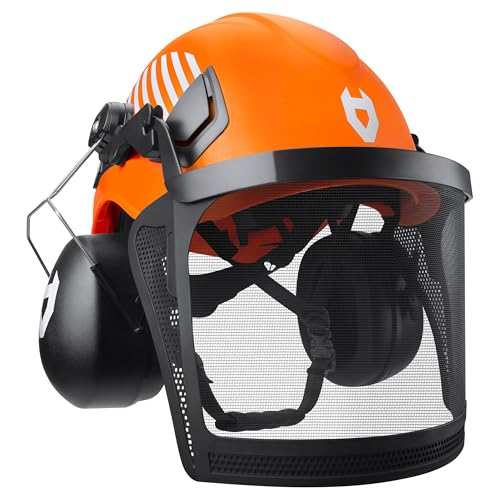 |
Best Budget Complete Ground-Crew Kit | Type: Ground-crew helmet kit (helmet, face shield, and ear muffs) | Certification: ANSI/ISEA Z89.1 Type 1 Class C (stated); face shield ANSI/ISEA Z87.1-rated (stated) | Best for: Budget ground-level chainsaw and forestry work needing a complete kit out of the box | VIEW LATEST PRICE | Read Our Analysis |
| UM ULTRAMAXX 6-in-1 Chainsaw Helmet Kit |  |
Best Budget 6-in-1 Kit | Type: Ground-crew helmet kit (helmet, mesh visor, anti-fog goggles, earmuffs, cooling liner, carry bag) | Certification: ANSI Z89.1-2014 Type I Class C (stated); face shield and goggles ANSI Z87.1-2015 compliant (stated) | Best for: Budget buyers who want the most accessories bundled into one ground-crew kit | VIEW LATEST PRICE | Read Our Analysis |
| GREEN DEVIL Forestry Helmet with Bluetooth Ear Muffs | 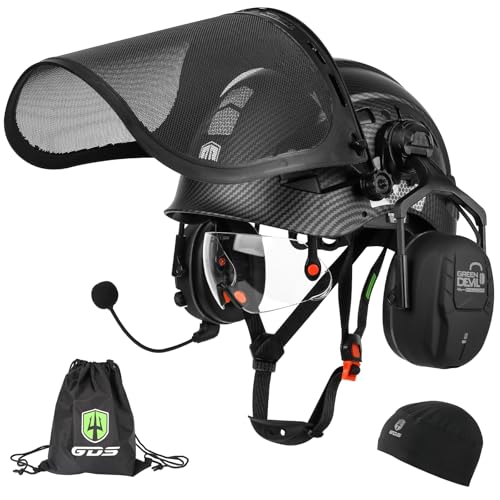 |
Best Bluetooth-Equipped Ground-Crew Kit | Type: Ground-crew helmet kit with Bluetooth hearing protection | Certification: ANSI/ISEA Z89.1-2014 Type I Class C (stated); face shield and visor ANSI Z87.1-2015 / CE EN 1731 compliant (stated) | Best for: Ground-crew users who want Bluetooth audio built into their hearing protection | VIEW LATEST PRICE | Read Our Analysis |
More Details on Our Top Picks
Pfanner Protos Integral Arborist Helmet (Stars & Stripes)
This is the same Protos Integral platform that topped our best chainsaw helmet roundup as the climbing pick, in this listing's Stars & Stripes colorway rather than the orange and grey shell we featured there. We are saying that plainly rather than presenting a different color as a different helmet - the shell, certification, and feature set are the Protos Integral system either way, and the colorway is a cosmetic choice, not a spec difference.
What makes it stand out in a climbing-specific list is the listing's own claim: "Certified to EN 397 and EN 12492", and "one of the only arborist helmets offering side and rear impact protection." EN 12492 already requires front, side, and rear impact testing beyond the top-only zone EN 397 covers, so a helmet that states both certifications on its own listing, plus explicit side/rear protection language, is doing more than the minimum either standard requires alone.
The listing also describes a "discrete channel for the chin strap" designed to keep the strap from slipping under the ear protector, which addresses a specific failure mode: a chin strap that migrates under the ear defenders during a fall can lose retention exactly when it matters. Combined with the EN 12492 requirement that the retention system hold to at least 500 N without excessive stretch, that is a meaningfully different engineering brief than a ground-crew hard hat.
The tradeoff is price and overkill for pure ground work. If your job never leaves the ground, this is more helmet than the task requires, and our ground-crew picks below cost a fraction as much. For anyone working aloft on a rope system with a running saw, the dual certification stated directly on this listing is the reason it sits at the top of this list.
- Type:Climbing arborist helmet
- Certification:EN 397 and EN 12492 (dual-certified, stated on listing)
- Chin Strap:EN 12492 retention (holds to at least 500 N per the standard; discrete channel keeps strap from slipping under the ear protector)
- Hearing Protection:Integrated, low-profile (built into shell, per listing)
- Face/Eye Protection:Integrated face-shield control (listing states face shield is one of the helmet's two-finger-operated functions)
- Weight:Not specified by manufacturer
- Best for:Professional climbing arborists who want the dual-certified benchmark helmet
Petzl Strato Vent Hi-Viz Helmet
The standout spec here is weight: the listing states 415 g, achieved with a hybrid EPP/EPS foam liner instead of a traditional suspension cradle, which is a genuinely different construction approach from every other helmet on this list. For long days aloft, shell weight adds up, and this is the lightest system we found with the dual work-at-height/ground-work chin strap Petzl builds into its Vertex and Strato lines.
That dual-strength chin strap is worth explaining, because it is the one feature on this listing that speaks directly to climbing use: it lets the wearer switch between a higher-retention setting intended for work at height and a lower-retention setting for ground work. That is functionally the same idea EN 12492 versus EN 397 chin straps represent, but the listing text does not cite a certification number or standard alongside it.
We are flagging that gap deliberately rather than assuming a certification because of the brand or the "work at height" language. Petzl is a mountaineering-equipment company and this helmet's dual-mode strap is a strong signal it is built for aerial work, but our rule on this site is to state a certification only when the ASIN's own title or feature text says so, and this one does not. If certification paperwork matters for your employer's compliance documentation, confirm the specific standard directly with Petzl or the seller before ordering this exact listing.
For a climber who has already verified the certification independently, or whose job does not require documented compliance paperwork, the weight savings here are real and the ventilation is generous. For anyone who needs the standard printed on the product page itself, the Protos above or either Kask model below state it directly.
- Type:Ultralight ventilated helmet
- Certification:Not specified by manufacturer on this listing
- Chin Strap:Dual-strength adjustable (listing describes switching between a higher-strength "work at height" setting and a lower-strength "ground work" setting; exact retention force is not stated)
- Hearing Protection:Compatible via side slots (ear defenders sold separately)
- Face/Eye Protection:Compatible with Petzl VIZIR face shields (sold separately)
- Weight:415 g (stated on listing)
- Best for:Climbers prioritizing minimum weight who will confirm certification directly with Petzl before buying
Petzl Vertex Vent Helmet (ANSI Z89.1 Type I Class C)
The Vertex Vent shares the same dual-mode chin strap and modular-accessory system as the Strato Vent above, but this listing's own title states a specific certification: ANSI Z89.1 Type I Class C. Type I means the shell is tested for top-impact only, and Class C means no electrical/dielectric rating - useful context if you are choosing between this and a Class E helmet for work near power lines (see our buying guide below on what Type and Class actually mean).
Ventilation is the headline feature: sliding shutters over the vent holes let you dial airflow up in hot conditions and closed for dust or cold, adjustable from the outside without removing the helmet. Combined with the six-point textile suspension and CenterFit dual side-wheel adjustment, it is built for long shifts rather than occasional use.
The same dual-strength chin strap language appears here as on the Strato Vent, but because this specific ASIN's certification is stated as ANSI Type I Class C rather than a climbing standard, we are treating it as a ground-crew pick rather than a verified climbing helmet. That is not a knock on the hardware; it is an accurate read of what this particular listing certifies.
If your work stays on the ground and you want Petzl's accessory ecosystem (PIXA/DUO headlamps, VIZIR face shields, standard hearing-protection mounts) with better airflow than a sealed hard hat, this is a strong pick. If you need a climbing certification on paper, look at the Protos or either Kask model above and below.
- Type:Ventilated ground-crew safety helmet
- Certification:ANSI Z89.1 Type I Class C (stated in title)
- Chin Strap:Dual-strength adjustable (listing describes work-at-height/ground-work modes; no EN 12492 or equivalent climbing certification is stated for this listing)
- Hearing Protection:Compatible via side slots (ear defenders sold separately)
- Face/Eye Protection:Compatible with Petzl VIZIR face shields (sold separately)
- Weight:Not specified by manufacturer
- Best for:Ground-crew work needing adjustable ventilation and modular Petzl accessories
Kask Zenith X2 Air Helmet (Light Grey)
This is the widest certification spread on this list: the listing states ANSI Z89.1 Type I and Type II (meaning it passes both top-only and top-plus-lateral impact tests) alongside EN 12492, all under Class C. Type II lateral-impact coverage on top of a climbing certification is a meaningfully broader impact envelope than most helmets here offer.
The Adaptive Fit System is the other detail worth calling out: a double-diameter dial adjusts from 52 to 63 cm, and the listing describes a "Self Adaptive Live Hinge" that continues adjusting as the wearer moves rather than requiring a re-tighten mid-shift. For a helmet worn for hours aloft, a fit system that does not need constant readjustment is a genuine comfort and safety detail, not just a marketing line.
The listing calls out a color-coded fastener specifically to indicate EN 12492 compliance, which is a useful visual check in the field, though we would still confirm the specific certification marking against Kask's own documentation before relying on it for compliance paperwork rather than the Amazon listing text alone.
Between this and the Superplasma HD below, the Zenith X2 Air is the more climbing-oriented of the two Kask picks, with the broader Type I/Type II ANSI spread. The Superplasma is the better choice if moisture management and a lower price matter more than the extra lateral-impact certification.
- Type:Dual-standard climbing/industrial helmet
- Certification:ANSI Z89.1 Type I, Type II, and EN 12492, Class C (all stated on listing)
- Chin Strap:EN 12492 retention (holds to at least 500 N per the standard); listing notes a color-coded fastener that indicates EN 12492 compliance
- Hearing Protection:30mm EURO slots for KASK earmuffs (sold separately)
- Face/Eye Protection:Easy Click visor adapter for visors/face shields (sold separately)
- Weight:Not specified by manufacturer
- Best for:Arborists who want ANSI and EN 12492 dual compliance with a fine-tune fit dial
Kask Superplasma HD Helmet (ANSI, Orange)
The Superplasma HD states three standards on its listing at once: ANSI Z89.1, CSA Z94.1 (the Canadian equivalent, useful if you work across the US/Canada border), and EN 12492, all Type 1 Class C. That is a genuinely broad compliance footprint for a helmet priced below the Zenith X2 Air.
The 2DRY liner fabric is the comfort feature the listing leads with: a quick-drying technical fabric designed to move sweat and moisture to the surface of the padding rather than letting it sit against the scalp. Paired with the Up&Down 2.0 fit system (three components working together as the wearer moves), it is built for the same all-day-wear use case as the Zenith X2 Air, in a lighter-featured, lower-cost package.
Unlike the Zenith X2 Air, this listing's feature text does not mention earmuff attachment slots or a visor adapter, so we are marking those as not specified rather than assuming compatibility. If integrated hearing and face protection matter to your workflow, check the Zenith X2 Air above or one of the complete ground-crew kits below, which bundle those components.
For a climber who wants documented EN 12492 and ANSI compliance without paying for the Zenith X2 Air's Type II lateral-impact rating or its more elaborate fit dial, this is the more budget-conscious of the two Kask picks on this list.
- Type:Dual-standard climbing/industrial helmet
- Certification:ANSI Z89.1, CSA Z94.1, and EN 12492, Type 1 Class C (all stated on listing)
- Chin Strap:EN 12492 retention (holds to at least 500 N per the standard)
- Hearing Protection:Not specified by manufacturer on this listing
- Face/Eye Protection:Not specified by manufacturer on this listing
- Weight:Not specified by manufacturer
- Best for:Buyers wanting Kask's dual ANSI/EN 12492 certification at a lower price than the Zenith X2 Air
NoCry ANSI Z89.1 Arborist Helmet Kit
This is a complete ground-crew system for well under what a bare climbing-certified shell costs alone: an ABS helmet, a steel mesh face shield with side guards, and integrated ear muffs rated 22 dB NRR under ANSI S3.19, all in one purchase. For someone doing ground-level bucking, limbing, or firewood processing rather than climbing, that is a reasonable amount of coverage for the price.
The listing is explicit about what it certifies and does not overstate it: ANSI/ISEA Z89.1 Type 1 Class C for the shell, and ANSI/ISEA Z87.1 for the face shield. There is no climbing certification claimed here, which is accurate for the product - this is a ground-level hard hat system, not a fall-rated helmet, and it should not be used as one.
The rear vent with a slide-open/slide-shut control is a practical detail for anyone running a saw through a full shift: open it when the work heats up, close it when sawdust starts flying. The ratchet knob and quick-release chin strap are standard ground-crew fare, adequate for the anti-snag behavior EN 397-style hard hats are built around, without the retention force a climbing standard requires.
If your work never leaves the ground, this is a sensible, inexpensive way to cover head, eye, and hearing protection in one order. If any part of the job involves a rope system, this is the wrong category of helmet entirely - see the Protos or either Kask pick above instead.
- Type:Ground-crew helmet kit (helmet, face shield, and ear muffs)
- Certification:ANSI/ISEA Z89.1 Type 1 Class C (stated); face shield ANSI/ISEA Z87.1-rated (stated)
- Chin Strap:Adjustable quick-release, ground-level retention (no EN 12492 or equivalent climbing certification stated)
- Hearing Protection:Integrated ear muffs, ANSI S3.19, 22 dB NRR (stated)
- Face/Eye Protection:Steel mesh visor with side guards (included)
- Weight:Not specified by manufacturer
- Best for:Budget ground-level chainsaw and forestry work needing a complete kit out of the box
UM ULTRAMAXX 6-in-1 Chainsaw Helmet Kit
Six pieces in one listing: an ABS hard hat, adjustable earmuffs rated at 31 dB SNR, a mesh visor, a separate pair of anti-fogging goggles, a cooling helmet liner, and a drawstring carry bag. The 31 dB SNR figure matters here because it is the European-style rating rather than the US NRR figure most of the other kits here quote - see our buying guide below on why the two numbers are not directly interchangeable.
The cooling liner is the feature that separates this from a generic hard-hat-plus-visor bundle: a moisture-wicking layer under the shell designed to evaporate sweat rather than just absorb it, on top of the top-mounted ventilation holes. For hot-climate ground work over a full shift, that combination matters more than most spec sheets suggest.
The listing states ANSI Z89.1-2014 Type I Class C for the shell and ANSI Z87.1-2015 for the face and eye protection, with no climbing-rated certification claimed anywhere in the feature text. Treat it accordingly: a well-equipped ground-crew kit, not a substitute for a certified climbing helmet.
For sheer accessory count per dollar, this is the most kit you can buy in this list, and the separate anti-fog goggles are a nice addition most bundles skip. The tradeoff for a kit this inexpensive is that none of the individual components are likely to match the durability of the Husqvarna or NoCry systems over years of professional use.
- Type:Ground-crew helmet kit (helmet, mesh visor, anti-fog goggles, earmuffs, cooling liner, carry bag)
- Certification:ANSI Z89.1-2014 Type I Class C (stated); face shield and goggles ANSI Z87.1-2015 compliant (stated)
- Chin Strap:Adjustable, ground-level retention (no EN 12492 or equivalent climbing certification stated)
- Hearing Protection:Adjustable/removable earmuffs, 31 dB SNR (stated)
- Face/Eye Protection:Mesh visor plus separate anti-fogging goggles (both included)
- Weight:Not specified by manufacturer
- Best for:Budget buyers who want the most accessories bundled into one ground-crew kit
GREEN DEVIL Forestry Helmet with Bluetooth Ear Muffs
The distinguishing feature is Bluetooth 5.3 built directly into the ear muffs, with the listing stating an 80 ft wireless range and 27 dB NRR noise reduction. That NRR figure is close to the top of what any kit in this list states, so this is not a case of trading hearing protection for the wireless convenience.
The listing describes two separate eye/face layers: a metal mesh face shield for branch and wood-chip impact, and a built-in visor that slides independently, letting a worker adjust eye coverage separately from face coverage depending on the task. Both are included rather than sold separately, which is worth factoring into a price comparison against bare-shell climbing helmets that require buying accessories on top.
As with the other ground-crew kits here, the certification stated is ANSI/ISEA Z89.1-2014 Type I Class C for the shell, with the face shield and visor separately rated to ANSI Z87.1-2015 and CE EN 1731. No climbing certification is claimed, and the molded chin-cup strap is built for ground-level anti-snag behavior, not fall retention.
If hands-free phone calls and music matter as much as noise reduction during a long day of ground work, this is the most feature-complete way to get both in one purchase. It is not a helmet to bring up into a tree on a rope system.
- Type:Ground-crew helmet kit with Bluetooth hearing protection
- Certification:ANSI/ISEA Z89.1-2014 Type I Class C (stated); face shield and visor ANSI Z87.1-2015 / CE EN 1731 compliant (stated)
- Chin Strap:Adjustable with molded chin cup, ground-level retention (no EN 12492 or equivalent climbing certification stated)
- Hearing Protection:Bluetooth 5.3 ear muffs, 27 dB NRR (stated)
- Face/Eye Protection:Metal mesh face shield plus separate built-in visor, both adjustable (included)
- Weight:Not specified by manufacturer
- Best for:Ground-crew users who want Bluetooth audio built into their hearing protection
How to Choose an Arborist Helmet
The single question that decides which helmet on this list is right for you is whether your feet leave the ground during the work. Everything else - price, ventilation, accessory ecosystem - is a secondary decision once that first one is settled.
Do You Need a Climbing-Certified Helmet or a Ground-Crew Hard Hat?
If you climb on a rope system, you need a helmet whose own listing states a climbing-relevant certification, typically EN 12492 in Europe or an ANSI-documented equivalent retention behavior in the US. If your work stays on the ground, an EN 397 or ANSI Z89.1 ground-crew hard hat is the correct and legally standard choice, and its anti-snag chin strap is a safety feature for ground work, not a shortcoming. We cover the full standards breakdown, with sourcing, in our EN 397 vs EN 12492 explainer; the short version is that EN 397 tests top impact only and its optional chin strap is designed to release between 150 and 250 N so a snagged helmet cannot strangle a ground worker, while EN 12492 tests front, side, and rear impact and requires the retention system to hold to at least 500 N without stretching more than 25 mm, because a helmet that comes off mid-fall protects nobody.
The trap our research turned up repeatedly: a climbing arborist buying a combination forestry kit because it looks the part, when the kit is built on an EN 397 platform whose strap is engineered to let go at exactly the moment a climber needs it most. Read the certification stated on the specific listing, not the category the product is marketed under.
What Do ANSI Z89.1 Type and Class Actually Mean?
Most US listings quote ANSI Z89.1 with a Type and a Class, and the two numbers answer different questions. Type describes impact zones: Type I is tested for top-impact only, Type II adds lateral (side) impact testing. Class describes electrical/dielectric protection and is independent of Type: Class G (General) is proof-tested to 2,200 volts, Class C (Conductive) provides no electrical protection at all, and Class E (Electrical) is proof-tested to 20,000 volts phase-to-ground. Class C is not a lesser version of Class E - it is a different category built for work with no electrical exposure, often prioritizing ventilation and weight over dielectric insulation. Most helmets on this list are Class C; if your work brings you near power lines or overhead utility conductors, that distinction should change your shortlist.
NRR vs SNR: Comparing Hearing Protection Across US and European Listings
US listings rate ear defenders with NRR (Noise Reduction Rating, tested to ANSI S3.19), while European listings use SNR (Single Number Rating, tested to EN 352). The two figures are not directly interchangeable - SNR values typically run a few decibels higher than NRR for comparable real-world protection, and OSHA's standard practice is to halve the labeled NRR to estimate effective field protection. A chainsaw typically produces 100 to 115 dB(A) at the operator's ear; at a 25 dB NRR halved to roughly 12.5 dB effective, you land in the 88 to 103 dB range, which is within the zone where prolonged exposure causes hearing damage at the higher end. For multi-hour professional days, prioritize the highest documented rating within whichever system (NRR or SNR) the listing quotes, and replace ear-cup seals once they compress or crack, since a degraded seal does not deliver the NRR printed on the box.
What a Climbing Certification Does Not Cover
None of the helmets on this list, including the dual-certified ones, are rated to stop a running chainsaw chain. Cut protection for the body comes from separate PPE - chainsaw chaps and gloves rated to ASTM F1897 or EN ISO 11393 - not from anything a helmet certification tests for. A climbing or ground-crew helmet's job is falling-object, impact, and (for climbing helmets) fall-retention protection, plus whatever hearing and face protection is bundled with it.
What We Did and Did Not Test
Our research desk did not physically climb, fell timber, or wear any of these helmets on the job. What we did: pulled the certification language directly from each product's own Amazon listing (title and feature text, via the Amazon Creators API), cross-checked the EN 397 and EN 12492 chin-strap retention figures and ANSI Type/Class definitions against manufacturer and safety-standards documentation independent of any single listing, and read the standards documents ourselves rather than repeating what other gear sites claim about them. Where a listing did not state a certification, we said so rather than inferring one from the brand or category - that happened once in this list, for the Petzl Strato Vent Hi-Viz. Prices, star ratings, and review counts change too often to print reliably here, so none appear in this article; check current figures on the retailer's page before buying.
Arborist and Forestry Helmet System Comparison
| Helmet | Type | Certification | Chin Strap | Hearing Protection | Weight | Best For |
|---|---|---|---|---|---|---|
| Pfanner Protos Integral Arborist Helmet (Stars & Stripes) | Climbing arborist helmet | EN 397 and EN 12492 (dual-certified, stated on listing) | EN 12492 retention (holds to at least 500 N per the standard; discrete channel keeps strap from slipping under the ear protector) | Integrated, low-profile (built into shell, per listing) | Not specified by manufacturer | Professional climbing arborists who want the dual-certified benchmark helmet |
| Petzl Strato Vent Hi-Viz Helmet | Ultralight ventilated helmet | Not specified by manufacturer on this listing | Dual-strength adjustable (listing describes switching between a higher-strength "work at height" setting and a lower-strength "ground work" setting; exact retention force is not stated) | Compatible via side slots (ear defenders sold separately) | 415 g (stated on listing) | Climbers prioritizing minimum weight who will confirm certification directly with Petzl before buying |
| Petzl Vertex Vent Helmet (ANSI Z89.1 Type I Class C) | Ventilated ground-crew safety helmet | ANSI Z89.1 Type I Class C (stated in title) | Dual-strength adjustable (listing describes work-at-height/ground-work modes; no EN 12492 or equivalent climbing certification is stated for this listing) | Compatible via side slots (ear defenders sold separately) | Not specified by manufacturer | Ground-crew work needing adjustable ventilation and modular Petzl accessories |
| Kask Zenith X2 Air Helmet (Light Grey) | Dual-standard climbing/industrial helmet | ANSI Z89.1 Type I, Type II, and EN 12492, Class C (all stated on listing) | EN 12492 retention (holds to at least 500 N per the standard); listing notes a color-coded fastener that indicates EN 12492 compliance | 30mm EURO slots for KASK earmuffs (sold separately) | Not specified by manufacturer | Arborists who want ANSI and EN 12492 dual compliance with a fine-tune fit dial |
| Kask Superplasma HD Helmet (ANSI, Orange) | Dual-standard climbing/industrial helmet | ANSI Z89.1, CSA Z94.1, and EN 12492, Type 1 Class C (all stated on listing) | EN 12492 retention (holds to at least 500 N per the standard) | Not specified by manufacturer on this listing | Not specified by manufacturer | Buyers wanting Kask's dual ANSI/EN 12492 certification at a lower price than the Zenith X2 Air |
| NoCry ANSI Z89.1 Arborist Helmet Kit | Ground-crew helmet kit (helmet, face shield, and ear muffs) | ANSI/ISEA Z89.1 Type 1 Class C (stated); face shield ANSI/ISEA Z87.1-rated (stated) | Adjustable quick-release, ground-level retention (no EN 12492 or equivalent climbing certification stated) | Integrated ear muffs, ANSI S3.19, 22 dB NRR (stated) | Not specified by manufacturer | Budget ground-level chainsaw and forestry work needing a complete kit out of the box |
| UM ULTRAMAXX 6-in-1 Chainsaw Helmet Kit | Ground-crew helmet kit (helmet, mesh visor, anti-fog goggles, earmuffs, cooling liner, carry bag) | ANSI Z89.1-2014 Type I Class C (stated); face shield and goggles ANSI Z87.1-2015 compliant (stated) | Adjustable, ground-level retention (no EN 12492 or equivalent climbing certification stated) | Adjustable/removable earmuffs, 31 dB SNR (stated) | Not specified by manufacturer | Budget buyers who want the most accessories bundled into one ground-crew kit |
| GREEN DEVIL Forestry Helmet with Bluetooth Ear Muffs | Ground-crew helmet kit with Bluetooth hearing protection | ANSI/ISEA Z89.1-2014 Type I Class C (stated); face shield and visor ANSI Z87.1-2015 / CE EN 1731 compliant (stated) | Adjustable with molded chin cup, ground-level retention (no EN 12492 or equivalent climbing certification stated) | Bluetooth 5.3 ear muffs, 27 dB NRR (stated) | Not specified by manufacturer | Ground-crew users who want Bluetooth audio built into their hearing protection |
Frequently Asked Questions
Do I need an EN 12492-certified helmet for arborist work, or is EN 397 enough?
It depends entirely on whether you leave the ground. EN 397 is the industrial hard-hat standard: it tests top impact only and its optional chin strap is designed to release between 150 and 250 N so the helmet cannot strangle a ground worker if it snags. EN 12492 is the climbing standard: it tests front, side, and rear impact and requires the retention system to hold to at least 500 N without stretching more than 25 mm, because the helmet has to stay on through a fall. If any part of your work involves being suspended on a rope system, you need EN 12492 (or a helmet whose listing states an equivalent climbing-relevant certification) - an EN 397 hard hat is the wrong tool for that job even though it looks similar.
What does ANSI Z89.1 Type I Class C mean on a US helmet listing?
Type and Class describe two separate things. Type I means the shell is tested for top-impact protection only; Type II adds lateral (side) impact testing on top of that. Class describes electrical protection and is independent of Type: Class C (Conductive) means no electrical/dielectric protection at all, Class G (General) is proof-tested to 2,200 volts, and Class E (Electrical) is proof-tested to 20,000 volts phase-to-ground. A "Type I Class C" helmet is not a lesser Class E helmet - it is built for a different hazard profile, typically prioritizing ventilation and lower weight over electrical insulation, which is fine for most forestry work away from power infrastructure.
Can I use a ground-crew chainsaw helmet kit for climbing?
No. The ground-crew kits in this list, including the NoCry, UM ULTRAMAXX, and GREEN DEVIL Bluetooth systems, state ANSI Z89.1 Type I Class C certification with no climbing-rated chin strap or side/rear impact testing. Their chin straps are built for the anti-snag behavior appropriate to ground work, which is the opposite retention behavior a climbing fall requires. If your job includes rope work, choose a helmet whose own listing states EN 12492 or an equivalent climbing certification, such as the Pfanner Protos Integral or either Kask model in this list.
Does an arborist helmet protect against a running chainsaw chain?
No, and this applies to every helmet on this list regardless of price or certification. Head, face, and hearing protection standards (EN 397, EN 12492, ANSI Z89.1, EN 1731, ANSI S3.19) do not test for chain-contact resistance. Cut protection comes from separate PPE worn on the body and legs: chainsaw chaps and gloves rated to ASTM F1897 or EN ISO 11393. A complete forestry PPE kit needs both a certified helmet system and separate chain-rated body protection.
Why does one helmet on this list not have a certification listed?
The Petzl Strato Vent Hi-Viz's Amazon listing describes a dual-strength chin strap that switches between "work at height" and "ground work" settings, which strongly suggests it is built with aerial use in mind, but the listing's title and feature text do not state a specific certification number or standard. Rather than assume a climbing certification because of the brand or the feature description, we flagged it as unstated. If that helmet interests you, confirm the exact certification directly with Petzl or the seller before relying on it for compliance documentation.
What is the difference between NRR and SNR hearing-protection ratings on these helmets?
NRR (Noise Reduction Rating) is the US rating system, tested to ANSI S3.19. SNR (Single Number Rating) is the European system, tested to EN 352. They are not directly interchangeable - SNR figures typically run a few decibels higher than NRR for comparable real-world protection - and OSHA's standard practice is to halve the labeled NRR to estimate effective field protection. When comparing ear defenders across the kits in this list, compare within the same rating system rather than treating an NRR number and an SNR number as equivalent.
DOT vs ECE vs Snell vs MIPS, how to pick the right lid in 60 seconds, and when to replace it. One page, no fluff.
