
Affiliate disclosure As an Amazon Associate we earn from qualifying purchases, at no extra cost to you.
A helmet built only for biking and a helmet built only for skateboarding are not interchangeable, even though they look similar on a shelf. Bike helmets are engineered around a single hard impact: a fall, then the ride is over. Skateboard helmets are built around the reality that a skater falls repeatedly in one session, often from a lower height but onto the same spot on the shell. If you commute by bike, skate the same pavement on weekends, or ride a BMX ramp one day and pedal to work the next, the helmet you actually want is one certified for both use cases, not just badged for one.
The Research Desk went through the Amazon catalog specifically looking for helmets that carry both the CPSC bicycle standard and the ASTM F1492 skateboarding standard, since that dual certification is the clearest signal a helmet was engineered for multi-impact use rather than a single hard hit. We prioritized genuine dual or triple certification, ventilated shell designs that hold up across biking, BMX, and skating, and brands with a track record in the action-sports helmet space. Below are seven picks worth a look, with honest notes on where each one fits and where it comes up short.
If your priority leans more toward one activity, our best longboarding helmet guide covers downhill-specific picks, and our best Onewheel helmet guide covers full-face options for higher-speed board riding. For a plain-language breakdown of what CPSC, ASTM, and other helmet certifications actually test for, see our helmet certifications guide.
Key Takeaways
- Dual certification is the real differentiator - a helmet stamped CPSC-only is engineered and tested for a single bike-style impact. Look for CPSC plus ASTM F1492 (skateboarding) if you split time between biking and skating.
- Single-impact vs. multi-impact foam matters - CPSC-only bike helmets use EPS foam optimized to crush once and absorb a hard hit; some skate-focused designs use denser, thinner foam that tolerates smaller repeated impacts better, which is why genuine dual-cert models matter for skaters who fall often.
- MIPS adds rotational-impact protection - a small number of dual-certified helmets in this category include MIPS, which helps reduce the twisting forces on the brain during an angled fall. Worth the upgrade if you can find it in your size.
- Commuters and BMX riders benefit most from crossover helmets - if a single helmet needs to handle a bike commute, a skate session, and the occasional scooter or longboard ride, dual certification means you are not under-protected in any of those settings.
- Fit still matters more than the certification sticker - even a triple-certified helmet does nothing if it sits loose or tilts back off the forehead. Measure head circumference and check the manufacturer's size chart before ordering.
| Triple Eight Gotham MIPS Helmet |  |
Best Overall | Shell: Vented ABS | Certifications: CPSC + ASTM F1447 + ASTM F1492 | Best For: Commuters who bike and skate on the same helmet | VIEW LATEST PRICE | Read Our Analysis |
| 80Six Dual Certified Multisport Helmet |  |
Best Value | Shell: ABS with EPS liner | Certifications: CPSC + ASTM F1447 + ASTM F1492 | Best For: Budget-conscious multi-activity riders and skaters | VIEW LATEST PRICE | Read Our Analysis |
| Triple Eight Sweatsaver Helmet |  |
Best for Frequent Falls | Shell: ABS with dual-density foam | Certifications: CPSC + ASTM F1447 + ASTM F1492 | Best For: Skaters and BMX riders who crash often and need a durable everyday lid | VIEW LATEST PRICE | Read Our Analysis |
| Retrospec Dakota Bicycle/Skateboard Helmet | 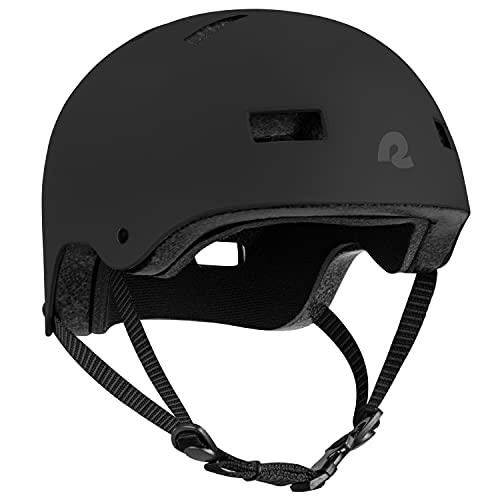 |
Best Ventilation | Shell: ABS with EPS foam | Certifications: CPSC | Best For: Riders who prioritize airflow across bike, skate, and scooter use | VIEW LATEST PRICE | Read Our Analysis |
| Findway Pro Bike Helmet |  |
Best for Commuting | Shell: ABS with EPS foam | Certifications: ASTM + CPSC + CE + EN1078 (per listing) | Best For: Urban commuters who also skate or scooter around town | VIEW LATEST PRICE | Read Our Analysis |
| OUWOER Multi-Sport Helmet |  |
Best for Families | Shell: ABS with EPS foam | Certifications: CPSC | Best For: Households outfitting kids, teens, and adults with one helmet line | VIEW LATEST PRICE | Read Our Analysis |
| OutdoorMaster Skateboard Cycling Helmet |  |
Best for Easy Sizing | Shell: Reinforced ABS with EPS core | Certifications: CPSC (per listing) | Best For: Riders who want one helmet to fit across a size range without buying two shells | VIEW LATEST PRICE | Read Our Analysis |
More Details on Our Top Picks
Triple Eight Gotham MIPS Helmet
The Gotham is the standout pick here because it is one of the few genuinely triple-certified helmets in this category that also includes MIPS. That combination matters: the CPSC and ASTM F1492 certifications confirm the shell and foam were tested for both a single hard bike-style impact and the smaller, more frequent impacts typical of skateboarding, while MIPS adds a low-friction layer that lets the helmet slide slightly on angled impacts to cut down rotational force on the brain.
The vented ABS shell keeps a subtle brim rather than a full skate-bowl profile, which makes it look at home on a bike commute as much as at a skatepark. The adjustable fit dial with a reflective accent is a genuinely useful commuter detail, since it lets you dial in fit without swapping pads and adds a little visibility in low light.
Two sets of fit pads are included, which is the right call for a helmet meant to serve as your one and only lid across activities: swap in the thicker pads for a snugger fit as they compress over time, or size between head shapes without buying a different shell size.
The main trade-off is price relative to single-purpose bike helmets. You are paying for the MIPS layer and the multi-sport certification testing, and if you only ever ride a bike on paved bike paths, a CPSC-only helmet costs less. For anyone splitting time between biking, BMX, and skating, the Gotham is worth the premium.
- Shell:Vented ABS
- Certifications:CPSC + ASTM F1447 + ASTM F1492
- Rotational Protection:MIPS
- Fit System:Adjustable dial with reflective trim
- Padding:Two swappable fit-pad sets
- Best For:Commuters who bike and skate on the same helmet
80Six Dual Certified Multisport Helmet
80Six built its reputation making pads for Triple 8, and this helmet reflects that lineage: it carries the same triple-certification stack (CPSC, ASTM F1447 for recreational biking or roller skating, and ASTM F1492 for skateboarding) at a noticeably lower price than most name-brand competitors.
The shell keeps a classic rounded bike-helmet shape rather than a low-profile skate bowl, which some riders will prefer for the extra coverage at the back of the head and better ventilation during longer bike rides. It is well-suited to scooters, inline skating, and longboarding as well, per the product's own use-case list.
Sizing runs by age bracket (5+, 8+, 14+) rather than pure head circumference, so measure first and check the chart carefully before ordering, particularly for teenagers who may fall between the 8+ and 14+ ranges.
There is no MIPS and no premium fit-dial system here, and the finish is more basic than the Triple Eight Gotham above. For a first dual-certified helmet, or a second helmet dedicated to skating and casual biking, it is a genuinely solid value pick.
- Shell:ABS with EPS liner
- Certifications:CPSC + ASTM F1447 + ASTM F1492
- Rotational Protection:Not equipped
- Fit System:Adjustable chin strap with side-release buckle
- Padding:Inner foam pads, classic bike-helmet shape
- Best For:Budget-conscious multi-activity riders and skaters
Triple Eight Sweatsaver Helmet
The Sweatsaver is Triple Eight's flagship skate-first design, and it shows in the details: a lower, rounder profile than a typical bike helmet, thick dual-density foam under the shell, and a moisture-wicking liner built to be worn hard, session after session, without breaking down.
Triple-certification (CPSC, ASTM F1447, ASTM F1492) means it is just as legitimate a bike helmet as it is a skate helmet, and the brand markets it explicitly for BMX and roller derby as well, both activities with a similar repeated-fall impact profile to skateboarding.
Two sets of Sweatsaver pads let you fine-tune fit, and the brand is upfront that the padding runs snug out of the box and breaks in after a few hours of wear, something worth knowing before assuming a size is wrong on day one.
There is no rotational-impact technology and no ventilation system beyond the basic shell, so on a hot bike commute it will run warmer than a vented design like the Gotham above. For skatepark and BMX use where repeated smaller impacts are the norm, the extra foam density is the more relevant spec than airflow.
- Shell:ABS with dual-density foam
- Certifications:CPSC + ASTM F1447 + ASTM F1492
- Rotational Protection:Not equipped
- Fit System:Two size sets of Sweatsaver pads
- Padding:Moisture-wicking Sweatsaver fabric
- Best For:Skaters and BMX riders who crash often and need a durable everyday lid
Retrospec Dakota Bicycle/Skateboard Helmet
The Dakota leans into a genuine bike-helmet shell shape with ten vents positioned for 360-degree airflow, which makes it noticeably cooler on a summer commute than the lower-profile skate-style shells above. Retrospec markets it across BMX, skating, scooters, and bikes, and the shell shape works reasonably well for all four.
The ABS shell and EPS foam construction is straightforward and impact-resistant, and the removable, washable interior padding is a genuine convenience for anyone using this helmet several times a week across different activities.
One honest caveat: Retrospec's own listing cites CPSC compliance but does not advertise an ASTM F1492 skateboarding certification the way the Triple Eight and 80Six helmets above do. It is marketed for skating, and the shell and foam are broadly similar in construction, but if a documented dual-certification stamp matters to you specifically, this is the one pick here without it confirmed in the listing.
Three shell sizes (S/M/L) rather than one shell with multiple pad thicknesses is a nice touch, since it means smaller heads are not stuck under an oversized shell. Best suited to riders for whom ventilation and bike-style comfort matter more than a documented skate certification.
- Shell:ABS with EPS foam
- Certifications:CPSC
- Rotational Protection:Not equipped
- Fit System:Three shell sizes (S/M/L)
- Padding:Removable, washable interior padding
- Best For:Riders who prioritize airflow across bike, skate, and scooter use
Findway Pro Bike Helmet
The Findway Pro is built with an urban commuter first in mind: 14 vents, a built-in visor to cut glare without needing sunglasses, and a rear adjustment dial that lets you tighten fit on the fly without removing the helmet.
The listing states compliance with ASTM and CPSC standards alongside CE and EN1078, the latter two being European bike-helmet standards rather than US skate-specific ones. That combination reads as a helmet designed primarily for road and commuter biking that the brand also positions for skating and scootering, rather than a helmet purpose-built and lab-tested specifically against ASTM F1492's skateboarding impact protocol the way the Triple Eight models above are.
The commuter-oriented features are genuinely useful day to day: the built-in visor beats squinting into low sun on an evening ride home, and quick-drying pads matter if you are sweating through a helmet on a daily commute rather than an occasional weekend ride.
If skating is a small part of your routine and biking is the main use case, this is a reasonable dual-purpose pick. If skating and repeated-impact falls are the bigger part of your week, the Triple Eight Gotham or Sweatsaver above carry the more specifically relevant certification testing.
- Shell:ABS with EPS foam
- Certifications:ASTM + CPSC + CE + EN1078 (per listing)
- Rotational Protection:Not equipped
- Fit System:Rear adjustment dial
- Padding:Removable, washable, quick-drying pads
- Best For:Urban commuters who also skate or scooter around town
OUWOER Multi-Sport Helmet
OUWOER's helmet is sized across a genuinely wide range, from small children through adult, which makes it a practical pick for a family buying several helmets at once and wanting a consistent look and fit system across ages.
The two-thickness liner system (5mm and 8mm) is a smart, low-cost way to fine-tune fit for growing kids without needing a different shell size, and the 360-degree adjustable knob adds a second layer of fit control on top of that.
Twelve top and side vents keep it reasonably cool for warm-weather riding and skating, and the shell is explicitly marketed across biking, skateboarding, scootering, and rollerblading.
The listing documents CPSC compliance for bicycle helmets but does not cite a separate ASTM F1492 skate certification, so treat this as a solid general-purpose youth and family helmet rather than a lab-verified dual-impact skate helmet. For a dedicated teen or adult skater who falls often, the Triple Eight options above carry the more specific testing.
- Shell:ABS with EPS foam
- Certifications:CPSC
- Rotational Protection:Not equipped
- Fit System:360-degree adjustable knob plus side straps
- Padding:Two detachable liner thicknesses (5mm/8mm)
- Best For:Households outfitting kids, teens, and adults with one helmet line
OutdoorMaster Skateboard Cycling Helmet
OutdoorMaster's approach to sizing is the headline feature: two removable liners of different thickness mean one shell size can comfortably fit a wider range of head circumferences than a single fixed liner, which is useful if you are buying for a teenager who is still growing or if your own head size sits between standard increments.
The shell is explicitly marketed across skating, cycling, BMX, and MTB, with a described ventilation system aimed at keeping the multi-sport use case comfortable rather than optimized purely for one activity.
The adjustment dial plus swappable liners gives a genuinely dialed-in fit once you find the right liner thickness, and the washable liners are a practical touch for a helmet that is going to see sweat from both bike rides and skate sessions.
As with several other budget options here, the listing centers CPSC bicycle-helmet language rather than documenting a separate ASTM F1492 skateboard test. Treat it as a well-built, easy-to-size multi-sport helmet rather than a lab-verified dual-certified skate helmet, and reach for the Triple Eight Gotham or 80Six above if that specific certification is a requirement for you.
- Shell:Reinforced ABS with EPS core
- Certifications:CPSC (per listing)
- Rotational Protection:Not equipped
- Fit System:Adjustment dial plus two removable liners
- Padding:Two liner thicknesses for different head sizes
- Best For:Riders who want one helmet to fit across a size range without buying two shells
How to Choose a Helmet for Both Skating and Biking
Most helmet buying guides treat biking and skateboarding as the same activity with different scenery. They are not, and the certification testing behind each sport reflects that difference.
CPSC vs. ASTM F1492: What Each Standard Actually Tests
The US Consumer Product Safety Commission's bicycle helmet standard (CPSC 16 CFR 1203) is built around a single, hard impact scenario: the assumption that a bike crash happens once, at speed, and the helmet's job is to absorb that one hit and then be replaced. ASTM F1492, the skateboarding and trick roller-skating standard, is built around a different reality: skaters fall repeatedly in a single session, often from a lower height, and the foam and shell need to tolerate smaller impacts without failing on the first one. A helmet certified to both standards has been tested against both impact profiles, not just one. If a listing only mentions CPSC, treat it as primarily a bike helmet that may work adequately for occasional skating, not a helmet engineered and tested specifically for repeated-fall use.
Why Multi-Impact Foam Matters for Skaters
EPS foam engineered purely for a single hard impact is designed to crush completely on that one hit, which is why bike helmets are discarded after any real crash. Foam engineered for ASTM F1492 compliance is tested differently, to a degree, to hold up across smaller repeated hits typical of skateboard falls. This is the core reason a serious skater should look past a CPSC sticker alone and confirm the ASTM F1492 mark is present too, especially if falls are a routine part of the sport rather than a rare event.
MIPS: Worth the Upgrade If You Can Find It
MIPS (Multi-directional Impact Protection System) is a low-friction layer inside the helmet that allows a small amount of slip between the liner and the shell during an angled impact, reducing the rotational force transmitted to the brain. Most falls, whether off a bike or a skateboard, are not perfectly perpendicular hits; they come in at an angle. MIPS is still relatively rare in the dual-certified skate/bike category at accessible prices, which is part of why the Triple Eight Gotham stands out above. If you can find a dual-certified helmet with MIPS in your size and budget, it is a genuine upgrade, not a marketing gimmick.
Fit Comes Before Certification
A triple-certified helmet that sits loose or tips back off the forehead is not doing its job. Measure head circumference with a soft tape measure or string, and compare it against the manufacturer's specific size chart rather than assuming sizes are standardized across brands. A properly fitted helmet sits level, low on the forehead (about one to two finger-widths above the eyebrows), and does not shift when you shake your head with the strap buckled.
Ventilation and Shell Shape Trade-Offs
Skate-first shells tend to run lower profile with less ventilation, which suits repeated falls and skatepark use but runs warmer on a long bike ride. Bike-first shells tend to have more venting and a rounder profile, which is more comfortable for extended pedaling but may not carry documented skate certification. If you split time roughly evenly between the two activities, prioritize the dual-certification stamp first and treat ventilation as a secondary comfort factor.
Skate & Bike Helmet Comparison
| Helmet | Shell | Certifications | Rotational Protection | Best For |
|---|---|---|---|---|
| Triple Eight Gotham MIPS Helmet | Vented ABS | CPSC + ASTM F1447 + ASTM F1492 | MIPS | Commuters who bike and skate on the same helmet |
| 80Six Dual Certified Multisport Helmet | ABS with EPS liner | CPSC + ASTM F1447 + ASTM F1492 | Not equipped | Budget-conscious multi-activity riders and skaters |
| Triple Eight Sweatsaver Helmet | ABS with dual-density foam | CPSC + ASTM F1447 + ASTM F1492 | Not equipped | Skaters and BMX riders who crash often and need a durable everyday lid |
| Retrospec Dakota Bicycle/Skateboard Helmet | ABS with EPS foam | CPSC | Not equipped | Riders who prioritize airflow across bike, skate, and scooter use |
| Findway Pro Bike Helmet | ABS with EPS foam | ASTM + CPSC + CE + EN1078 (per listing) | Not equipped | Urban commuters who also skate or scooter around town |
| OUWOER Multi-Sport Helmet | ABS with EPS foam | CPSC | Not equipped | Households outfitting kids, teens, and adults with one helmet line |
| OutdoorMaster Skateboard Cycling Helmet | Reinforced ABS with EPS core | CPSC (per listing) | Not equipped | Riders who want one helmet to fit across a size range without buying two shells |
Frequently Asked Questions
Can I use a regular bike helmet for skateboarding?
You can, but it is not ideal for frequent skating. A CPSC-only bike helmet is engineered around a single hard impact, while skateboarding tends to involve smaller, repeated falls in the same session. If you skate only occasionally and casually, a CPSC bike helmet is better than no helmet. If you skate regularly or ride a skatepark, look for a helmet that also carries the ASTM F1492 skateboarding certification, like the Triple Eight or 80Six models above.
What does dual certified actually mean on a helmet label?
It means the helmet's shell and foam have been tested and passed two separate impact-testing protocols, typically CPSC (bicycle) and ASTM F1492 (skateboarding and trick roller skating). Some helmets add a third, ASTM F1447, which covers recreational biking and roller skating more broadly. Genuine dual or triple certification is stamped on the helmet itself and listed in the manufacturer's specs, not just implied by marketing copy that lists multiple activities.
Is MIPS necessary for a skate and bike helmet?
It is not required for basic safety compliance, but it is a meaningful upgrade. MIPS reduces rotational force during angled impacts, which are common in both bike falls and skate falls. It adds cost and is less common in the dual-certified budget segment, so treat it as a nice-to-have rather than a must-have unless it fits your budget comfortably.
How do I know if a helmet fits correctly for skating and biking?
Measure your head circumference with a soft tape measure at the widest point, roughly one inch above the eyebrows, then match that number against the specific brand's size chart rather than assuming sizes are universal. The helmet should sit level and low on the forehead, feel snug without pinching, and not shift when you shake your head with the strap fastened. See our full-face and general helmet fit guides for a step-by-step check.
Do I need a different helmet for BMX than for street skating?
Not necessarily, if the helmet is dual or triple certified. BMX falls share more in common with skateboarding falls (repeated, lower-height impacts) than with typical road-bike crashes, which is why several of the helmets above explicitly market themselves across BMX, skating, and biking. A dual-certified helmet is a reasonable single choice for someone who does both.
How often should I replace a skate/bike crossover helmet?
Replace it immediately after any hard impact, even if the shell looks undamaged, since the foam may be compromised in ways that are not visible from the outside. Without a crash, most manufacturers recommend replacing a helmet every 3 to 5 years as foam and strap materials degrade with UV exposure and sweat over time.
DOT vs ECE vs Snell vs MIPS, how to pick the right lid in 60 seconds, and when to replace it. One page, no fluff.
