
Affiliate disclosure As an Amazon Associate we earn from qualifying purchases, at no extra cost to you.
Skiing with music or hands-free calls used to mean fighting with earbuds that pop out under a helmet, or wires tangled through your jacket. The fix that actually works is an audio-ready ski helmet, either one with drop-in Bluetooth speakers already built in, or a shell with audio-compatible ear pads that accept a separate wireless module. Either way, the goal is the same: clear sound at speed, glove-friendly controls, and a helmet that still does its actual job of protecting your head to ASTM F2040 and CE EN 1077 standards.
The Research Desk went through the Amazon ski and snowboard catalog looking specifically for helmets and audio modules built for this use case, not generic Bluetooth earbuds people happen to wear under a beanie. We prioritized certified helmets with audio-ready ear pockets, drop-in speaker modules from brands that specialize in this exact product category, glove-friendly button controls, and cold-weather battery performance. Below are seven picks, helmets and modules both, with honest notes on what each is actually built for.
If you are shopping for snowmobiling instead of resort skiing, our 509 vs Klim snowmobile helmet comparison and best modular snowmobile helmets guide cover that higher-speed, colder-weather category. And for background on what ski helmet certifications actually test, see our helmet certifications guide.
Key Takeaways
- ASTM F2040 and CE EN 1077 are the certifications to check - these are the dedicated ski and snowboard helmet standards, distinct from bike or motorcycle certs, and the complete helmets on this list carry them.
- Audio-ready means the ear pads are removable, not that speakers are built in - many helmets ship audio-ready but require a separate drop-in Bluetooth module like the Doohoeek or ALECK Snow Series to actually play sound.
- Some helmets now integrate speakers from the factory - models from Sena and LIVALL build Bluetooth speakers, microphones, and intercom directly into the shell, skipping the separate-module step entirely.
- Glove-friendly buttons matter more than the spec sheet suggests - oversized, tactile controls that work through thick ski gloves are the difference between a helmet you actually use hands-free and one you keep pulling your glove off for.
- Cold-weather battery performance varies - look for modules rated to at least -20°C, since lithium batteries lose real-world capacity fast in chairlift-line cold, and a module that dies by lunch defeats the purpose.
| LIVALL RS1 Smart Bluetooth Ski Helmet |  |
Best Overall | Certification: Meets CPSC and CE standards | Audio: Built-in Bluetooth speakers and microphone | Best For: Skiers who want built-in audio plus real safety tech in one helmet | VIEW LATEST PRICE | Read Our Analysis |
| Sena Latitude Snow Helmet |  |
Best Built-In Intercom | Audio: Built-in speakers and microphone | Intercom: Four-way Bluetooth intercom, no smartphone required | Best For: Ski groups who want hands-free group intercom without pairing through phones | VIEW LATEST PRICE | Read Our Analysis |
| Smith Descend MIPS Helmet | 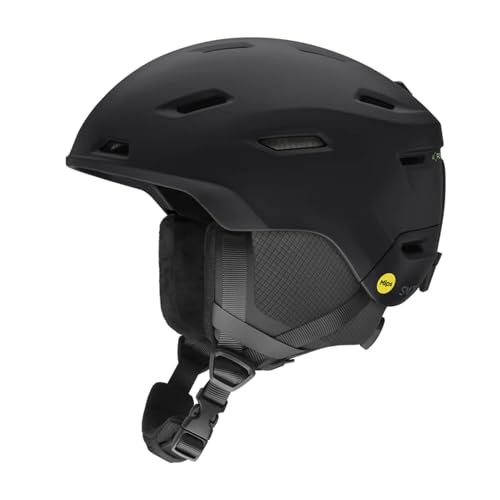 |
Best Certified Shell (Audio-Ready) | Certification: ASTM F2040 and CE EN 1077:2007 | Safety Tech: MIPS with zonal Koroyd coverage | Best For: Riders who want a top-tier certified shell and plan to add their own audio module | VIEW LATEST PRICE | Read Our Analysis |
| OutdoorMaster Update Ski Helmet Headphones |  |
Best Drop-In Audio Module | Bluetooth: 5.3 with true wireless stereo, charging case | Drivers: 40mm HD speaker chip | Best For: Adding true wireless Bluetooth audio to any audio-ready helmet you already own | VIEW LATEST PRICE | Read Our Analysis |
| Doohoeek 2025 Ski Helmet Speaker |  |
Best Battery Life | Bluetooth: 5.3, true wireless | Battery: 50 hours total with the charging case, per listing | Best For: Multi-day trips where charging access is limited and battery life is the top priority | VIEW LATEST PRICE | Read Our Analysis |
| ALECK Snow Series Core Wireless Speakers |  |
Best for Situational Awareness | Drivers: 40mm open-ear speakers | Design: Open-ear format for full situational awareness | Best For: Riders who want music without losing awareness of surroundings on shared runs | VIEW LATEST PRICE | Read Our Analysis |
| Smith Method Helmet |  |
Best Lightweight Audio-Ready Shell | Certification: ASTM F2040 and CE EN 1077:2007 Class B | Safety Tech: MIPS with zonal Koroyd coverage | Best For: Riders who want a lighter, simpler certified shell that still takes a drop-in audio module | VIEW LATEST PRICE | Read Our Analysis |
More Details on Our Top Picks
LIVALL RS1 Smart Bluetooth Ski Helmet
The LIVALL RS1 is the most fully-featured helmet on this list because it does not stop at audio. Built-in Bluetooth speakers and a windproof microphone handle music and calls, while a patented fall-detection system paired with the LIVALL riding app sends a real-time SOS with GPS location if the helmet registers an impact.
The ABS shell over an in-mold EPS layer is a standard, proven ski helmet construction, and the company states it meets CPSC and CE safety standards, which puts it in the certified tier alongside the Smith models below rather than in the uncertified novelty-helmet category.
The app integration goes further than most competitors, tracking mileage, speed, altitude, and slope data, and offering push-to-talk walkie-talkie style communication between paired riders, which is a genuinely different feature set from a simple drop-in Bluetooth speaker.
The honest trade-off is complexity: this is a smart helmet with a companion app and a proximity alarm that alerts you if your phone drifts more than 50 feet away, which some riders will love and others will find is more system than they wanted. If you just want simple built-in audio, the Sena Latitude below is more straightforward.
- Certification:Meets CPSC and CE standards
- Audio:Built-in Bluetooth speakers and microphone
- Safety Tech:Patented fall detection with SOS alert via app
- Weight:Approx. 1.54 to 1.65 lb depending on size
- Shell:ABS outer shell, in-mold EPS impact layer
- Best For:Skiers who want built-in audio plus real safety tech in one helmet
Sena Latitude Snow Helmet
Sena built its name on motorcycle intercom systems, and the Latitude brings that same expertise to the slopes. Up to four Latitude helmets can connect directly via Bluetooth for group intercom conversation, without routing through anyone's phone, which is a real advantage for ski groups that split up and regroup all day.
One-to-one HD intercom mode gives a paired rider especially clear audio, useful for instructing a beginner or coordinating with a ski partner across a run. The helmet also pairs to a smartphone independently for music, GPS navigation audio, and phone calls, so it is not purely an intercom device.
Eight hours of talk time with a 3-hour recharge is a reasonable full-day budget for most resort sessions, and the active ventilation system with 18 vents is there to manage both temperature and fogging during high-output runs.
Working range is rated up to 1 km in open terrain, which will be shorter on a tree-lined run or with terrain in the way, so treat that figure as a best-case number. If group intercom is not a priority and you mainly want music and calls, the LIVALL RS1 above or a drop-in module paired with a cheaper helmet may suit you better.
- Audio:Built-in speakers and microphone
- Intercom:Four-way Bluetooth intercom, no smartphone required
- Range:Up to 1 km (0.6 miles) in open terrain
- Battery:Up to 8 hours talk time, 3-hour recharge
- Ventilation:Active system with 18 vents
- Best For:Ski groups who want hands-free group intercom without pairing through phones
Smith Descend MIPS Helmet
The Smith Descend leads with protection first: MIPS technology combined with zonal Koroyd coverage is a genuinely advanced impact-management system, and the helmet is ASTM F2040 and CE EN 1077:2007 certified, the two standards that actually matter for ski and snowboard helmets.
Audio compatibility comes through the removable Snapfit SL2 ear pads, which are built to accept a drop-in Bluetooth chip. That means the Descend does not ship with speakers installed, but it is designed from the factory to take one, which is exactly what a module like the Doohoeek or ALECK Snow Series (both reviewed below) needs to work well.
Sixteen vents with dual regulator climate control let you adjust airflow front and rear with one hand, and the AirEvac system is designed to integrate with Smith goggles specifically to keep lenses clear, a detail that matters more on a powder day than most spec sheets convey.
The trade-off versus the LIVALL or Sena above is that you are buying a helmet and a separate audio module as two purchases, not one integrated product. For riders who want best-in-class protection and are willing to add audio themselves, that is the right trade to make.
- Certification:ASTM F2040 and CE EN 1077:2007
- Safety Tech:MIPS with zonal Koroyd coverage
- Audio Compatibility:Removable Snapfit SL2 ear pads, audio-chip compatible
- Ventilation:16 vents with dual regulator climate control
- Fit:Adjustable dial fit system
- Best For:Riders who want a top-tier certified shell and plan to add their own audio module
OutdoorMaster Update Ski Helmet Headphones
This is a drop-in module, not a complete helmet, and it is aimed at anyone who already owns an audio-ready ski or snowboard helmet, like the Smith Descend above, and wants to add sound without buying a new lid. The 40mm driver chip and Bluetooth 5.3 connection deliver noticeably fuller sound than older-generation wired drop-in speakers.
The true wireless design with its own charging case is the headline upgrade over previous OutdoorMaster generations. Ten hours of playback per charge plus two additional 10-hour charges from the case adds up to roughly 30 hours of total listening between full recharges, which comfortably covers a multi-day trip.
Big, glove-friendly buttons handle volume, track changes, calls, and voice assistant activation, and the module is explicitly built to fit most audio-ready helmet ear pockets across major brands, not just OutdoorMaster's own helmets.
The honest limitation of any drop-in module, this one included, is that fit and sound quality depend partly on your specific helmet's ear pocket shape and depth. Check that your helmet is genuinely audio-ready with removable ear pads before buying, since a helmet without that cutout will not seat the module properly.
- Bluetooth:5.3 with true wireless stereo, charging case
- Drivers:40mm HD speaker chip
- Controls:Glove-friendly big buttons
- Compatibility:Fits most audio-ready helmets: Giro, Smith, Burton, K2, POC, Anon
- Battery:Up to 30 hours total with charging case
- Best For:Adding true wireless Bluetooth audio to any audio-ready helmet you already own
Doohoeek 2025 Ski Helmet Speaker
Doohoeek builds this one around the charging case rather than a single long charge. The listing states 50 hours of total battery life across the case and the speakers, the largest stated figure of any module on this list, and the practical effect is what a long single charge buys you: a multi-day cabin trip where you top up in a jacket pocket instead of hunting for an outlet.
The speakers are true wireless rather than a corded pair, and the pads are described as ultra-slim so they sit in an audio-ready ear pocket without pressing on your ears. Bluetooth 5.3 handles the connection, and built-in microphones with noise reduction cover calls and Siri or Google Assistant, so the gloves stay on.
One large multifunction button per side is the whole control scheme. That is less flexible than a three-button module when you want to skip a track and change volume without thinking, but it is the layout that survives thick winter gloves best. The IPX5 rating covers snow, splashes and sweat, and the listing is explicit that it is not rated for submersion.
Two things to know before buying. Like any drop-in module it needs an audio-ready helmet with removable ear pads, which the Smith Descend and Method both provide, so factor in that second cost. And the listing states no cold-weather operating range, unlike the OutdoorMaster and ALECK modules here: battery capacity does drop in deep cold, so treat the 50-hour figure as a mild-day number.
- Bluetooth:5.3, true wireless
- Battery:50 hours total including the LED-display charging case, per listing
- Water Resistance:IPX5, not rated for submersion
- Controls:One large glove-friendly multifunction button
- Compatibility:Most audio-ready ski and snowboard helmets, per listing
- Cold Rating:Not specified by manufacturer
- Best For:Multi-day trips where charging access is limited and battery life is the top priority
ALECK Snow Series Core Wireless Speakers
ALECK positions the Snow Series Core around a specific design choice: open-ear speakers rather than sealed in-ear buds, so you hear music and calls clearly while still hearing other skiers, lift announcements, and terrain warnings around you. That is a real safety consideration on crowded resort runs.
As a listed audio partner for Smith helmets, ALECK designs its modules to slide into standard ear pocket cutouts without creating pressure points, which the brand notes is worth double-checking against your specific helmet's ear pad design before buying.
Dual-side tactile buttons and a built-in microphone support hands-free calls and voice assistant access without removing gloves, and the module is rated for mountain use down to -20°C, in line with the other drop-in options on this list.
Twelve hours of continuous playtime covers most single-day sessions comfortably via USB-C charging, though the Doohoeek's charging case carries more total runtime if multi-day battery stretch without recharging is your top priority.
- Drivers:40mm open-ear speakers
- Design:Open-ear format for full situational awareness
- Controls:Dual-side tactile buttons, hands-free mic
- Compatibility:Fits ear pockets on Smith, Giro, Anon, Bolle audio-ready helmets
- Battery:Up to 12 hours continuous playtime, USB-C charging
- Best For:Riders who want music without losing awareness of surroundings on shared runs
Smith Method Helmet
The Smith Method is a step down in complexity from the Descend above, trading some venting sophistication for a lighter, more streamlined shell that is still built on the same MIPS and Koroyd safety foundation and carries the same ASTM F2040 and CE EN 1077:2007 Class B certification.
Audio compatibility works the same way as the Descend: removable Snapfit SL2 ear pads are audio-chip compatible, ready to accept a drop-in module like the OutdoorMaster, Doohoeek, or ALECK options reviewed above. The helmet itself does not include speakers out of the box.
Eight fixed vents paired with the AirEvac system, which integrates with Smith goggles, keep airflow and fog control simple rather than adjustable, which suits riders who do not want to fuss with vent sliders mid-run. The self-adjusting fit system flexes to head shape rather than relying purely on a dial.
It is also noted as beanie-compatible, a small but genuinely useful detail for cold-day layering. The honest trade-off versus the Descend is fewer adjustable features overall, so riders who want maximum climate control should size up to the Descend instead.
- Certification:ASTM F2040 and CE EN 1077:2007 Class B
- Safety Tech:MIPS with zonal Koroyd coverage
- Audio Compatibility:Removable Snapfit SL2 ear pads, audio-chip compatible
- Ventilation:8 fixed vents with AirEvac system
- Fit:Self-adjusting lifestyle fit system
- Best For:Riders who want a lighter, simpler certified shell that still takes a drop-in audio module
How to Choose an Audio Ski Helmet
"Audio ski helmet" actually covers two different products, complete helmets with speakers built in, and audio-ready helmets that need a separate drop-in module. Here is how the Research Desk sorts through that decision.
Built-In Audio vs. Drop-In Modules
Helmets like the LIVALL RS1 and Sena Latitude ship with speakers and a microphone already integrated into the shell, which is simpler if you are buying a helmet from scratch and want audio as part of the package. Audio-ready helmets, like the Smith Descend and Smith Method, ship without speakers but include removable ear pads designed to accept a separate drop-in Bluetooth module, such as the OutdoorMaster, Doohoeek, or ALECK Snow Series reviewed above. If you already own an audio-ready helmet, a drop-in module is the cheaper upgrade path. If you are buying new, a built-in option removes a step.
Certification Still Comes First
Audio features do not replace the need for a properly certified ski helmet. ASTM F2040 is the US standard for recreational snow-sports helmets, and CE EN 1077 is its European counterpart; several models here carry both. Never treat a helmet's audio capability as a substitute for checking its safety certification. See our helmet certifications guide for how these standards are actually tested.
Glove-Friendly Controls
Every audio module reviewed above emphasizes oversized, tactile buttons for a reason: fumbling with a small button through a ski glove in cold weather is a real annoyance that turns people off hands-free audio entirely. Before buying, check that button size and placement are described as glove-friendly, not just present.
Battery Life in Cold Weather
Lithium batteries lose real-world capacity in cold conditions faster than their rated specs suggest, and chairlift lines and exposed ridgelines can be brutally cold even on a mild day at the base. Look for modules explicitly tested down to around -20°C, like the OutdoorMaster and ALECK Snow Series, rather than modules with no stated cold-weather rating.
Open-Ear vs. Sealed Audio
Open-ear designs, like the ALECK Snow Series, trade some audio isolation for better awareness of your surroundings, other skiers, lift operators, avalanche control announcements. On busy resort terrain, that awareness is a genuine safety consideration, not just a preference. Sealed designs generally deliver richer bass and clearer calls in loud wind, at the cost of some situational awareness.
Group Communication vs. Solo Listening
If you regularly ski or ride with a group and want to talk to each other on the mountain, a built-in intercom system like the Sena Latitude's four-way Bluetooth connection is worth the premium over a solo audio setup. If you are mostly listening to music or taking occasional calls solo, any of the drop-in modules or the LIVALL RS1 will cover that need without the added complexity of managing group pairing.
Audio Ski Helmet for 2026 Comparison
| Helmet | Audio Type | Certification | Battery | Best For |
|---|---|---|---|---|
| LIVALL RS1 Smart Bluetooth Ski Helmet | Built-in Bluetooth speakers and microphone | Meets CPSC and CE standards | Not specified by manufacturer | Skiers who want built-in audio plus real safety tech in one helmet |
| Sena Latitude Snow Helmet | Built-in speakers, four-way Bluetooth intercom | Not stated on this listing | Up to 8 hours talk time, 3-hour recharge | Ski groups who want hands-free group intercom without pairing through phones |
| Smith Descend MIPS Helmet | Audio-ready ear pads, module not included | ASTM F2040 and CE EN 1077:2007 | Not applicable, no built-in audio | Riders who want a top-tier certified shell and plan to add their own audio module |
| OutdoorMaster Update Ski Helmet Headphones | Drop-in module, true wireless | Not applicable, audio module | Up to 30 hours total with charging case | Adding true wireless Bluetooth audio to any audio-ready helmet you already own |
| Doohoeek 2025 Ski Helmet Speaker | Drop-in module, true wireless | Not applicable, audio module | 50 hours total with the charging case | Multi-day trips where charging access is limited and battery life is the top priority |
| ALECK Snow Series Core Wireless Speakers | Drop-in open-ear speakers | Not applicable, audio module | Up to 12 hours continuous playtime, USB-C charging | Riders who want music without losing awareness of surroundings on shared runs |
| Smith Method Helmet | Audio-ready ear pads, module not included | ASTM F2040 and CE EN 1077:2007 Class B | Not applicable, no built-in audio | Riders who want a lighter, simpler certified shell that still takes a drop-in audio module |
Frequently Asked Questions
What does audio-ready mean on a ski helmet?
Audio-ready means the helmet has removable ear pads with a cutout designed to accept a drop-in Bluetooth speaker module, like the ones from OutdoorMaster, Doohoeek, or ALECK reviewed above. It does not mean the helmet has speakers built in. Complete audio helmets, like the LIVALL RS1 or Sena Latitude, integrate the speakers and microphone directly into the shell instead of relying on a separate module.
Are audio ski helmets safe, or does the tech compromise protection?
The audio components themselves do not compromise protection when the base helmet is properly certified. The complete helmets on this list carry ASTM F2040 and CE EN 1077 certification just like non-audio helmets, since the ear pad cutouts and integrated speaker housings are engineered into the shell design rather than bolted on afterward. Always confirm certification independently of the audio feature set, since not every audio-branded helmet on the market carries a documented certification.
Can I add Bluetooth audio to a helmet I already own?
Only if your helmet has audio-ready ear pockets, meaning removable ear pads with a cavity sized for a drop-in module. Check your helmet's product listing or manual for that spec before buying a module like the Doohoeek or OutdoorMaster Update. If your current helmet does not have that cutout, you would need to size up to an audio-ready model like the Smith Descend or Smith Method.
How long do ski helmet Bluetooth modules last on a charge?
It varies by product. The modules reviewed here range from about 12 hours of continuous playtime (ALECK Snow Series) to about 30 hours total for the OutdoorMaster Update once you include its charging case, and 50 hours total for the Doohoeek with its case. Cold weather reduces real-world battery life below the rated spec, so budget some margin on a full-day or multi-day trip.
Do these helmets work for snowboarding as well as skiing?
Yes, every helmet and module on this list is built for both skiing and snowboarding; ASTM F2040 and CE EN 1077 certification cover both disciplines under the same standard, and the audio hardware itself has no ski-specific or snowboard-specific limitation.
What is the difference between this and a snowmobile helmet with intercom?
Ski helmets are open-face or half-shell designs built for chairlift and resort use at moderate speeds, while snowmobile helmets are typically full-face and rated for much higher-speed impacts and harsher, colder exposure. If you are cross-shopping for sledding instead of resort skiing, see our 509 vs Klim snowmobile helmet comparison and best modular snowmobile helmets guide, both of which cover integrated-communication options built for that different use case.
DOT vs ECE vs Snell vs MIPS, how to pick the right lid in 60 seconds, and when to replace it. One page, no fluff.
