
Affiliate disclosure As an Amazon Associate we earn from qualifying purchases, at no extra cost to you.
Medieval helmets occupy a different category from anything else on this site. This is not safety gear, and it is not certified to any modern impact standard. What you are buying here is a piece of wearable history, hand-formed from mild steel, built for the Society for Creative Anachronism (SCA) circuit, Renaissance faires, LARP battles, theatrical productions, or a mantel display that actually looks the part instead of a hollow plastic prop.
The Research Desk went through the Amazon armor catalog looking specifically at steel gauge, liner quality, and which historical helmet type each piece is actually modeled on, since sellers in this niche routinely mix terminology. Great helms, barbutes, sallets, and bascinets are distinct 13th to 15th century designs with different coverage and different weight distribution on your head. We picked seven helmets that span those types, cover a range of budgets, and are honest about steel thickness (18 gauge is standard for costume-grade pieces; anything lighter is decorative only).
One thing to be clear about upfront: none of these are rated for combat contact the way a hockey helmet or a motorcycle helmet is rated. If you are doing full-contact SCA heavy combat, your local group's marshals will have specific armor standards you need to meet, and you should verify any helmet against those rules before you swing a rattan sword at someone wearing it.
If your combat interest runs toward Historical European Martial Arts rather than SCA rattan sparring, a great helm or barbute replica is not the right face protection either. HEMA clubs sparring with blunted steel typically require masks rated well above the sport-fencing floor - see our guide to HEMA fencing masks and their 350N vs 1600N ratings for what that discipline actually calls for.
Key Takeaways
- This is a decorative and reenactment category, not certified protective gear - there is no DOT, ECE, or ASTM standard for medieval helmet replicas. Treat these as costume and display pieces first.
- 18 gauge steel is the standard for wearable costume helmets - it holds its shape and looks authentic without being so heavy it strains your neck during a full day at a faire.
- Helmet type affects coverage and visibility differently - a great helm fully encloses the head with narrow eye slits, a barbute has an open T-shaped face opening, and a sallet sits lower with a separate bevor for the chin. Pick based on how much peripheral vision you need.
- Check your SCA or LARP group's combat rules before buying for full-contact use - decorative-grade steel helmets are not automatically approved for heavy weapons combat; verify against your local marshal's equipment standard.
- Fit is all one-size-with-a-liner in this category - almost every helmet here relies on a leather or foam liner and an adjustable chin strap rather than shell sizing, so a snug liner fit matters more than the shell size printed on the listing.
| Armory Replicas Medieval Great Helm with Iron Cross |  |
Best Overall | Helmet Type: Great helm (13th-16th century style) | Steel Gauge: 18 gauge hand-forged mild steel | Best For: Full-coverage historical look for display or reenactment | VIEW LATEST PRICE | Read Our Analysis |
| THOR INSTRUMENTS Templar Crusaders Barbuta Helmet |  |
Best for Reenactment Wear | Helmet Type: Barbuta (visored, Italian 15th century style) | Steel Gauge: 18 gauge steel | Best For: Extended wear at Renaissance fairs and LARP events | VIEW LATEST PRICE | Read Our Analysis |
| FOLSSON Bascinet Helmet with Chainmail Aventail |  |
Best for Historical Accuracy | Helmet Type: Bascinet with aventail | Steel Gauge: Steel shell, chainmail neck guard | Best For: 14th century accuracy and combat-silhouette costuming | VIEW LATEST PRICE | Read Our Analysis |
| SAIM Armory Gothic Sallet Helmet with Bevor |  |
Best Gothic Style | Helmet Type: Gothic sallet with bevor | Era Modeled: 15th century European Gothic armor | Best For: German Gothic armor costuming with full chin coverage | VIEW LATEST PRICE | Read Our Analysis |
| German Sallet Helmet with Visor | 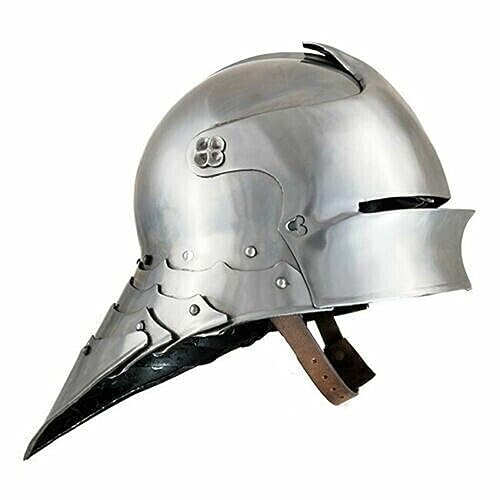 |
Best Value | Helmet Type: German sallet with visor | Steel Gauge: 18 gauge solid steel | Best For: Budget-conscious buyers who still want real 18 gauge steel | VIEW LATEST PRICE | Read Our Analysis |
| AnNafi Greek Spartan Helmet with Wooden Stand |  |
Best for Ancient/Spartan Costuming | Helmet Type: Greek Corinthian-style (Spartan/300 movie style) | Steel Gauge: 18 gauge mild steel | Best For: Spartan, Greek, and "300" style costuming and display | VIEW LATEST PRICE | Read Our Analysis |
| THOR INSTRUMENTS Viking Visored Barbuta Helmet |  |
Best Viking-Style Crossover | Helmet Type: Visored barbuta, Viking-styled finish | Steel Gauge: 18 gauge steel | Best For: Viking or Norse-adjacent costuming with medieval barbuta construction | VIEW LATEST PRICE | Read Our Analysis |
More Details on Our Top Picks
Armory Replicas Medieval Great Helm with Iron Cross
The great helm is the helmet most people picture when they think "medieval knight", and this Armory Replicas version delivers that silhouette with real 18 gauge steel rather than the thin costume-shop metal common at this price point. The flat-topped, fully enclosing shape is accurate to the 13th and 14th century heavy cavalry helmets that inspired it.
Coverage is total: the face guard, eye slits, and ventilation holes are all cut into a single continuous shell, so there is no gap at the neck or jaw the way there is with an open-face barbute. That makes it the strongest visual statement of anything on this list, and it photographs well for reenactment events or as a display piece on a stand.
The leather lining and adjustable chin strap make it wearable for short stretches, and the ventilation holes help with the airflow problem that plagues fully enclosed helmet designs. The narrow eye slits are historically accurate but genuinely limit peripheral vision, which is worth knowing before you commit to wearing it all day at an event.
The honest caveat: full head enclosure means heat builds up fast, and the restricted field of view is not something everyone adjusts to comfortably. If you want the same era's look with better visibility, the barbute below is the more practical alternative.
- Helmet Type:Great helm (13th-16th century style)
- Steel Gauge:18 gauge hand-forged mild steel
- Liner:Fitted leather interior
- Closure:Adjustable chin strap with brass buckle
- Visibility:Narrow eye slits, ventilated face guard
- Best For:Full-coverage historical look for display or reenactment
THOR INSTRUMENTS Templar Crusaders Barbuta Helmet
The barbuta is a genuinely practical choice for anyone planning to wear a medieval helmet for hours rather than minutes. Its distinctive T-shaped face opening, a design historically associated with 15th century Italian armorers, leaves your eyes, nose, and mouth exposed while still protecting the top, sides, and back of the head.
That open-face layout solves the two biggest complaints with fully enclosed helmets: heat buildup and restricted vision. You can talk, drink, and see your surroundings without lifting the helmet off, which matters a lot at an all-day Renaissance faire or LARP event where you are wearing the thing for six-plus hours.
18 gauge steel with a chrome finish gives it a cleaner, more polished look than the matte black options on this list, which suits Templar and Crusader-themed costuming specifically. The rugged visored shape holds up to repeated packing and travel between events better than thinner stamped-metal alternatives.
One thing to flag: chrome finishes show fingerprints and scuffs more visibly than matte or antiqued finishes, so it needs more upkeep if you want it looking sharp for photos. If a worn, battle-used aesthetic is what you are going for, one of the antiqued or black-finish options elsewhere on this list will need less maintenance.
- Helmet Type:Barbuta (visored, Italian 15th century style)
- Steel Gauge:18 gauge steel
- Finish:Chrome
- Closure:Adjustable liner and strap
- Visibility:T-shaped open face
- Best For:Extended wear at Renaissance fairs and LARP events
FOLSSON Bascinet Helmet with Chainmail Aventail
The bascinet with an attached chainmail aventail is one of the more historically specific pieces here. This design, a rounded or slightly pointed steel skull cap with a mail curtain hanging from the rim to protect the neck and shoulders, was the dominant knight's helmet of the 14th century, sitting between the earlier great helm and the later, more articulated sallet.
The perforated visor is a functional nod to the pivoting visors real bascinets used, and it gives the wearer considerably more airflow than a solid great helm while still projecting the classic pointed-dome knight silhouette. The chainmail aventail is the standout detail: it is genuinely linked ring mail, not a printed fabric approximation, and it moves the way real mail does when you turn your head.
That authenticity comes with weight. A steel shell plus a hanging mail curtain is heavier and shifts differently on your neck than a single rigid shell, so expect a noticeably different wearing experience than the other helmets on this list, closer to how a real man-at-arms would have experienced it.
If your reenactment group or the event you are attending cares about period accuracy down to the neck protection, this is the most defensible choice here. If you just want a knight-shaped helmet for a costume and do not want the added weight and packing bulk of mail, the barbute or sallet options are simpler to live with.
- Helmet Type:Bascinet with aventail
- Steel Gauge:Steel shell, chainmail neck guard
- Dimensions:9 in wide, 19 in tall, 7 in aventail drop
- Visor:Perforated visor
- Neck Protection:Riveted chainmail aventail
- Best For:14th century accuracy and combat-silhouette costuming
SAIM Armory Gothic Sallet Helmet with Bevor
German Gothic armor from the 15th century is instantly recognizable for its fluted, angular plates and the tall, swept-back crest on the sallet helmet, and this piece captures that look with articulated plate construction rather than a single stamped shell.
The integrated bevor, the separate plate that wraps up from the chest to guard the chin and throat, is what separates a Gothic sallet from a plain open sallet. Combined with the helmet's neck plates, it gives near-complete lower-face coverage while the sallet's visor opening still leaves your eyes clear, a genuinely clever piece of period engineering that this replica reproduces reasonably faithfully.
The polished silver finish is closer to how these helmets would have looked new, in contrast to the antiqued or blackened finishes common on Crusader-themed pieces elsewhere on this list. That makes it a strong match for German Gothic or Landsknecht-adjacent costuming specifically, less so for a generic "knight" look.
Because the bevor and neck plates are separate articulated pieces rather than one rigid shell, expect a bit more assembly and adjustment to get the fit right around your jaw and shoulders than with a one-piece barbute or great helm. It rewards patience with a more convincing period silhouette.
- Helmet Type:Gothic sallet with bevor
- Era Modeled:15th century European Gothic armor
- Construction:Articulated steel plates
- Finish:Polished silver
- Neck Protection:Integrated bevor (chin and throat guard)
- Best For:German Gothic armor costuming with full chin coverage
German Sallet Helmet with Visor
The plain German sallet is the most affordable genuinely wearable steel helmet on this list, and it does not cut the corner that matters most: it is still 18 gauge steel, not the thin decorative-only metal you find on some novelty pieces at this price.
The sallet shape, a rounded bowl that extends into a pointed tail at the back of the neck, is one of the most recognizable German and Central European helmet profiles of the late 15th century. This version pairs it with a fixed visor rather than the bevor-and-visor combination on the Gothic pick above, which keeps the design simpler and lighter.
Standard adult one-size fit with an interior liner means it will work for most head sizes without the tailored assembly the articulated Gothic sallet needs. That simplicity is the appeal here: unbox it, adjust the strap, and it is ready for a faire or photo shoot.
At this price point, do not expect the finish quality or articulated detailing of the pricier Gothic sallet or the bascinet's chainmail aventail. This is the pick if your priority is getting a real steel sallet silhouette on a tight budget, not competition-grade historical detailing.
- Helmet Type:German sallet with visor
- Steel Gauge:18 gauge solid steel
- Fit:Standard adult, one size
- Dimensions:26 in circumference
- Use Case:Reenactment, LARP, costume
- Best For:Budget-conscious buyers who still want real 18 gauge steel
AnNafi Greek Spartan Helmet with Wooden Stand
This one is technically ancient Greek rather than medieval, and we are including it here because it consistently shows up in the same buyer searches and reenactment communities as the true medieval helmets on this list, especially among LARP and cosplay shoppers looking for a King Leonidas or "300" movie look.
The antique brass finish and horsehair plume are a deliberate callback to popular-culture Spartan imagery rather than to a specific archaeological find, so treat it as a stylized costume piece rather than a museum-accurate Corinthian helmet replica. It is genuinely 18 gauge steel underneath the brass finish, so it holds up the same as the medieval pieces on this list.
The included wooden display stand is a nice touch if you are buying primarily to display rather than wear; it lets the helmet sit at an angle that shows off the crest and face opening rather than lying flat on a shelf.
If you are specifically after a medieval European knight look for an SCA or Renaissance faire event, one of the barbute, sallet, or bascinet picks above will be the more period-correct choice. This is the pick if your costuming project is Greek or Spartan themed instead.
- Helmet Type:Greek Corinthian-style (Spartan/300 movie style)
- Steel Gauge:18 gauge mild steel
- Finish:Antique brass
- Included:Flux leather liner, horsehair plume, wooden display stand
- Era Modeled:Ancient Greek, not medieval Europe
- Best For:Spartan, Greek, and "300" style costuming and display
THOR INSTRUMENTS Viking Visored Barbuta Helmet
Vikings predate the true medieval barbute by several centuries, and a historian would rightly point out this is a stylistic mashup rather than an accurate 9th or 10th century Norse helmet. We are listing it because it is a popular and reasonably well-built option for buyers building a Viking-adjacent costume who still want the coverage and visibility of a barbuta-style visor.
Construction is the same 18 gauge steel used across the more historically precise picks on this list, so build quality is not the compromise here, only the specific historical labeling. The black and polished two-tone finish gives it a darker, more weathered look than the chrome or brass finishes elsewhere in this roundup.
It is well suited to SCA events, LARP battles, and medieval festivals where a Norse or Viking Age persona is common alongside true medieval knights, and the visored design offers the same T-shaped visibility advantage as the true barbute pick above.
If historical accuracy to a specific century matters for your event or your reenactment group's judging criteria, be upfront that this is a Viking-styled interpretation of a later medieval helmet shape, not a museum reproduction of an actual Viking Age find like a Gjermundbu helmet.
- Helmet Type:Visored barbuta, Viking-styled finish
- Steel Gauge:18 gauge steel
- Finish:Black and polished
- Dimensions:Approx. 8 x 9 x 12 in, 26 in circumference
- Use Case:SCA, LARP, medieval festivals, theatrical productions
- Best For:Viking or Norse-adjacent costuming with medieval barbuta construction
How to Choose a Medieval Helmet for Reenactment or Display
Medieval helmet shoppers usually fall into one of two very different groups: people buying a display piece for a shelf or a themed room, and people buying something to actually wear at an SCA event, Renaissance faire, or LARP battle. What matters shifts depending on which group you are in.
Decorative Display vs. Wearable Reenactment Piece
If the helmet is going on a stand in your living room, steel gauge and liner comfort barely matter, appearance and finish quality do. If you plan to wear it for hours at an event, steel gauge, liner padding, strap adjustability, and ventilation become the deciding factors. Every helmet in this roundup is genuinely wearable, but some, like the great helm, trade comfort and airflow for a more dramatic fully enclosed silhouette.
Steel Gauge: What the Numbers Actually Mean
Lower gauge numbers mean thicker steel. 18 gauge (roughly 1.2 mm) is the standard for costume-grade wearable helmets in this price range, thick enough to hold its shape and take minor bumps without denting, but not remotely equivalent to real forged plate armor or to any certified protective helmet. A handful of premium pieces use 14 or 16 gauge for extra rigidity, at the cost of more weight.
Helmet Type and Field of Vision
Great helms and full-enclosure styles offer the most dramatic look but the narrowest eye slits and the worst airflow. Barbutes and open sallets trade some coverage for a wider T-shaped or open face opening that lets you see, talk, and breathe more easily during a long event. Bascinets with an aventail add neck coverage via chainmail rather than solid steel, which changes the weight distribution. Pick based on how long you plan to actually wear it versus how often you will just be posing for photos.
SCA, LARP, and Reenactment Group Rules
If you plan to use any of these helmets for full-contact SCA heavy combat or a similarly regulated LARP combat system, check your local group's equipment standards before you buy. Many groups require helmets to pass an inspection by an armor marshal, and requirements for padding, coverage, and construction vary by kingdom or organization. A helmet that looks the part is not automatically approved for contact use.
What This Category Is Not
None of the helmets in this roundup carry a DOT, ECE, ASTM, or CPSC safety certification, because no such certification exists for medieval helmet replicas. If you are shopping for a helmet that needs to meet a real, modern impact standard, whether for motorcycling, cycling, or skiing, see our helmet certifications guide instead. This page is strictly about costume, reenactment, and display-grade armor.
Medieval Helmet for Reenactment and Display Comparison
| Helmet | Helmet Type | Steel Gauge | Visibility | Best For |
|---|---|---|---|---|
| Armory Replicas Medieval Great Helm with Iron Cross | Great helm (13th-16th century style) | 18 gauge hand-forged mild steel | Narrow eye slits, ventilated face guard | Full-coverage historical look for display or reenactment |
| THOR INSTRUMENTS Templar Crusaders Barbuta Helmet | Barbuta (visored, Italian 15th century style) | 18 gauge steel | T-shaped open face | Extended wear at Renaissance fairs and LARP events |
| FOLSSON Bascinet Helmet with Chainmail Aventail | Bascinet with aventail | Steel shell, chainmail neck guard | - | 14th century accuracy and combat-silhouette costuming |
| SAIM Armory Gothic Sallet Helmet with Bevor | Gothic sallet with bevor | - | - | German Gothic armor costuming with full chin coverage |
| German Sallet Helmet with Visor | German sallet with visor | 18 gauge solid steel | - | Budget-conscious buyers who still want real 18 gauge steel |
| AnNafi Greek Spartan Helmet with Wooden Stand | Greek Corinthian-style (Spartan/300 movie style) | 18 gauge mild steel | - | Spartan, Greek, and "300" style costuming and display |
| THOR INSTRUMENTS Viking Visored Barbuta Helmet | Visored barbuta, Viking-styled finish | 18 gauge steel | - | Viking or Norse-adjacent costuming with medieval barbuta construction |
Frequently Asked Questions
Are these medieval helmets safe to wear in actual combat?
No, not in the sense of a certified safety standard. These are costume and reenactment-grade steel helmets with no DOT, ECE, ASTM, or CPSC certification behind them, because no such certification exists for this category. If you plan to use one in SCA heavy combat, LARP battles, or any other contact activity, check with your specific group's armor marshal first; many organizations have their own inspection standards for coverage, padding, and construction that a helmet needs to pass before you are allowed to fight in it.
What is the difference between a great helm, a barbute, and a sallet?
A great helm fully encloses the head with narrow eye slits and minimal airflow, historically worn by mounted knights in the 13th and 14th centuries. A barbute has a T-shaped open face opening that leaves your eyes, nose, and mouth exposed, a 15th century Italian design that trades some coverage for much better visibility and ventilation. A sallet sits lower and often pairs with a separate bevor plate to guard the chin and throat, a shape common in 15th century Germany. Each is a genuine historical type, not interchangeable marketing terms, even though some sellers use them loosely.
What steel gauge should I look for?
18 gauge mild steel (about 1.2 mm thick) is the standard for wearable costume and reenactment helmets and is what most of the picks on this list use. It holds its shape, takes minor knocks without denting, and keeps weight manageable for a full day of wear. Thinner metal is fine for a pure display piece you never plan to wear, but for reenactment or LARP use, stick with 18 gauge or heavier.
Can I wear a medieval helmet all day at a Renaissance faire?
Open-face designs like a barbute or sallet are far more comfortable for extended wear than a fully enclosed great helm, because airflow and peripheral vision matter a lot over six or eight hours outdoors. A quality leather or foam liner also makes a bigger comfort difference than most buyers expect. If you are planning to wear a helmet the whole day, prioritize an open-face style and read the liner description closely before buying.
Do these helmets come in different sizes?
Most are marketed as one-size-fits-most adults, relying on an adjustable interior liner and chin strap rather than multiple shell sizes. Head circumference specs (typically around 26 inches for the products on this list) are listed by the manufacturer, so measure your head circumference and compare it against the listing before ordering, especially if you are on the larger or smaller end of average.
Is a Spartan or Viking-style helmet the same thing as a medieval helmet?
Not historically. Greek Corinthian-style (Spartan) helmets predate the medieval period by well over a thousand years, and true Viking Age helmets looked quite different from the Viking-styled barbutes sold today. We include a couple of these crossover styles in this roundup because they are popular with the same reenactment and cosplay shoppers, but if historical accuracy to a specific century matters for your event, stick to the true medieval picks: the great helm, barbute, bascinet, and sallet styles.
DOT vs ECE vs Snell vs MIPS, how to pick the right lid in 60 seconds, and when to replace it. One page, no fluff.
