
Affiliate disclosure As an Amazon Associate we earn from qualifying purchases, at no extra cost to you.
For most onewheel and EUC riders the TSG Pass Pro is the maximum-coverage pick: a sealed, fiberglass full-face that the PEV crowd trusts for face-down slams. The Fox Proframe RS wins for anyone who overheats, climbs hills, or rides in hot weather, because it adds MIPS and far more airflow at a lighter weight. Speed, climate, and how much you sweat decide it.
If you spend time on r/onewheel or r/ElectricUnicycle, you already know how this argument ends: someone posts a crash photo, two camps appear, and the thread becomes Pass Pro versus Proframe for the next 80 comments. Both are real answers. The fight is about what you give up.
We did not test-crash either lid. What follows is the Research Desk reading the safety standards each helmet actually carries, then cross-checking that against years of owner reports from the personal electric vehicle (PEV) communities who ride these things at speeds skateboarders never dreamed of. The short version: one helmet feels like a tank, the other lets you breathe.
TSG Pass Pro: the coverage pick
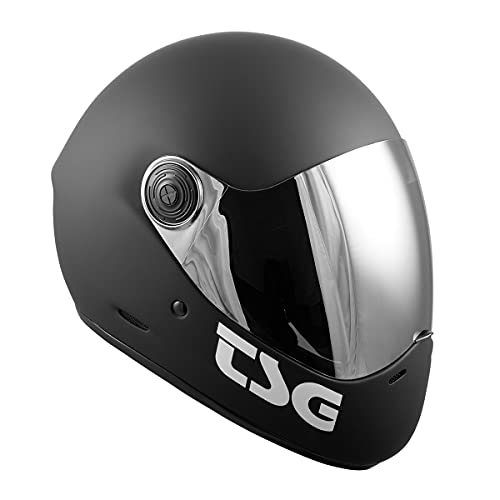
The Pass Pro is the helmet that turned downhill skate gear into the default onewheel uniform. It uses a fiberglass hardshell over an EPS liner, a fixed (non-removable) chin bar, and a sealed spherical visor (clear plus mirrored in the box). At a claimed 980 g it is not light for the category, and you feel the chin bar and the full wrap when you put it on. That heft is the point. Riders pick it because in a face-first slam at PEV speeds there is solid shell and foam between pavement and your jaw, not a vented gap.
It carries ASTM F1952 (US downhill MTB) and EN 1078 (European bike and skate). Worth being precise here: those are bicycle and skate standards, not a motorcycle rating like DOT or ECE. No helmet sold as a skate or bike lid is moto-rated, and the Pass Pro does not use MIPS. What it does carry is years of owner crash reports from the onewheel and EUC forums, which is why it keeps its cult status there.
The trade-off is heat. The Air Flow vents move some air, but this is a comparatively sealed helmet, and on a slow climb or a hot day it gets warm. Riders who run hot tend to migrate away from it for exactly that reason.
- You want the most face and jaw coverage of the two
- You ride faster onewheel or EUC and worry about face-down slams
- You ride in cool weather, or do not mind running warm
- You want a sealed visor and quiet ride over airflow
- You value a long track record of PEV owner crash reports
Fox Proframe RS: the ventilation pick

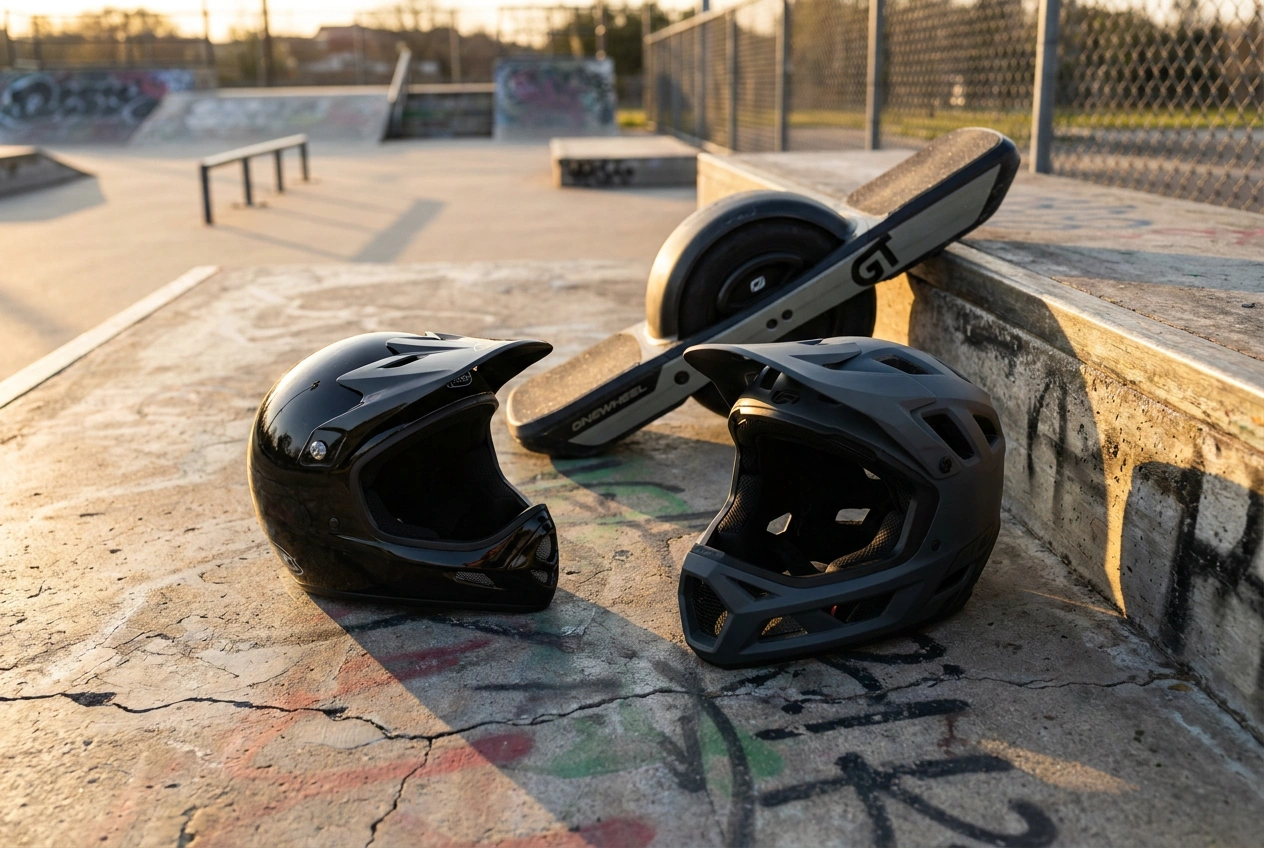
The Proframe RS is an enduro mountain bike full-face built around the opposite priority: stay cool and stay light. It weighs roughly 820 g in a medium, runs a big array of open vents, and adds the things the Pass Pro skips. It uses MIPS Integra Split (an EPP layer bonded to the EPS to manage rotational forces), a BOA dial for fine fit adjustment, and a Fidlock magnetic buckle that snaps shut one-handed. The chin bar is fixed, like the TSG, but the whole helmet feels airier on your head.
On certification it actually covers more ground. The Proframe RS meets ASTM F1952 and F2032 (downhill MTB), EN 1078, AS/NZS 2063, and CPSC 1203. Same caveat as the TSG: these are bicycle standards, not motorcycle, so do not read it as a moto lid. But it is a downhill-certified full-face with rotational-impact tech, which is more than most vented helmets in its weight class offer.
The reason PEV riders reach for it is simple: it does not cook you. Riders who climbed out of a Pass because they were dripping sweat on every ride tend to land here. The trade-off runs the other way: it is an open, ventilated design, so the coverage feels less like a sealed bunker, and a sealed visor is not part of the package the way it is on the TSG.
- You overheat in a sealed full-face or ride in hot climates
- You want MIPS rotational protection in the mix
- You climb hills or pedal and need real airflow
- You prefer a lighter helmet on your neck for long sessions
- You like BOA fit dial and a one-handed magnetic buckle
Which should you buy?
This is a climate and sweat question disguised as a safety question. If you ride a onewheel or EUC in cool weather, push higher speeds, and want the most shell and foam wrapped around your face, the Pass Pro is the answer the community keeps landing on. If you live somewhere warm, climb, or have ever finished a ride with a puddle inside your last full-face, the Proframe RS keeps your head cooler, weighs less, and throws MIPS into the deal.
Neither is a motorcycle-rated lid, so do not buy either expecting DOT or ECE protection at 40 mph. Both are bicycle and skate certified full-faces, and both clear that bar. Pick the one whose trade-off you can live with on every single ride, because the best helmet is the one you actually keep wearing.
TSG Pass Pro vs Fox Proframe RS
| Feature | TSG Pass Pro | Fox Proframe RS |
|---|---|---|
| Best for | Maximum coverage, faster PEV riders, cooler weather | Hot climates, climbing, riders who overheat |
| Ventilation | Sealed feel, modest Air Flow vents, runs warm | High-flow open vent design, runs cool |
| Weight | Heavier, claimed 980 g | Lighter, roughly 820 g in medium |
| Certification | ASTM F1952 and EN 1078 (bike/skate, not moto) | ASTM F1952/F2032, EN 1078, AS/NZS 2063, CPSC 1203 |
| Chin bar | Fixed, fiberglass hardshell, no MIPS | Fixed, with MIPS Integra Split rotational protection |
| Community favorite for | Crash-coverage purists on r/onewheel | Riders who fled the Pass to stop overheating |
DOT vs ECE vs Snell vs MIPS, how to pick the right lid in 60 seconds, and when to replace it. One page, no fluff.
Frequently Asked Questions
Is the TSG Pass Pro or Fox Proframe RS safer for onewheel?
Both are bicycle and skate certified full-faces, not motorcycle helmets. The Pass Pro gives you more sealed coverage and a long history of PEV owner crash reports. The Proframe RS adds MIPS rotational protection and carries more standards on paper, including CPSC and AS/NZS. Neither is rated for moto-speed impacts, so the safer pick is the one you wear on every ride.
Which one is cooler to ride in hot weather?
The Fox Proframe RS, clearly. It is an open, high-flow vented design built for enduro climbing, while the Pass Pro is a more sealed helmet that traps heat. Riders who overheat in a Pass are the main reason the Proframe shows up in onewheel and EUC threads at all.
Does either helmet have MIPS?
Only the Fox Proframe RS. It uses MIPS Integra Split, an EPP layer bonded to the EPS to help manage rotational forces in a crash. The TSG Pass Pro does not use MIPS; it relies on its fiberglass shell and EPS liner.
Are these motorcycle-rated for EUC at high speed?
No. Both carry bicycle and skate standards (ASTM F1952, EN 1078, and on the Fox also F2032, AS/NZS 2063, and CPSC 1203). Neither is DOT or ECE rated. If you ride a fast EUC at motorcycle speeds, understand that no skate or MTB full-face is tested for those impacts, and weigh a moto-certified option.
Why do onewheel riders keep arguing about these two?
Because both are genuinely good and they solve opposite problems. The Pass Pro maximizes coverage and feels like a tank but runs warm and heavy. The Proframe RS maximizes airflow and drops weight but feels less sealed. The right pick depends on your speed, your climate, and how much you sweat, which is exactly why the thread never ends.
