
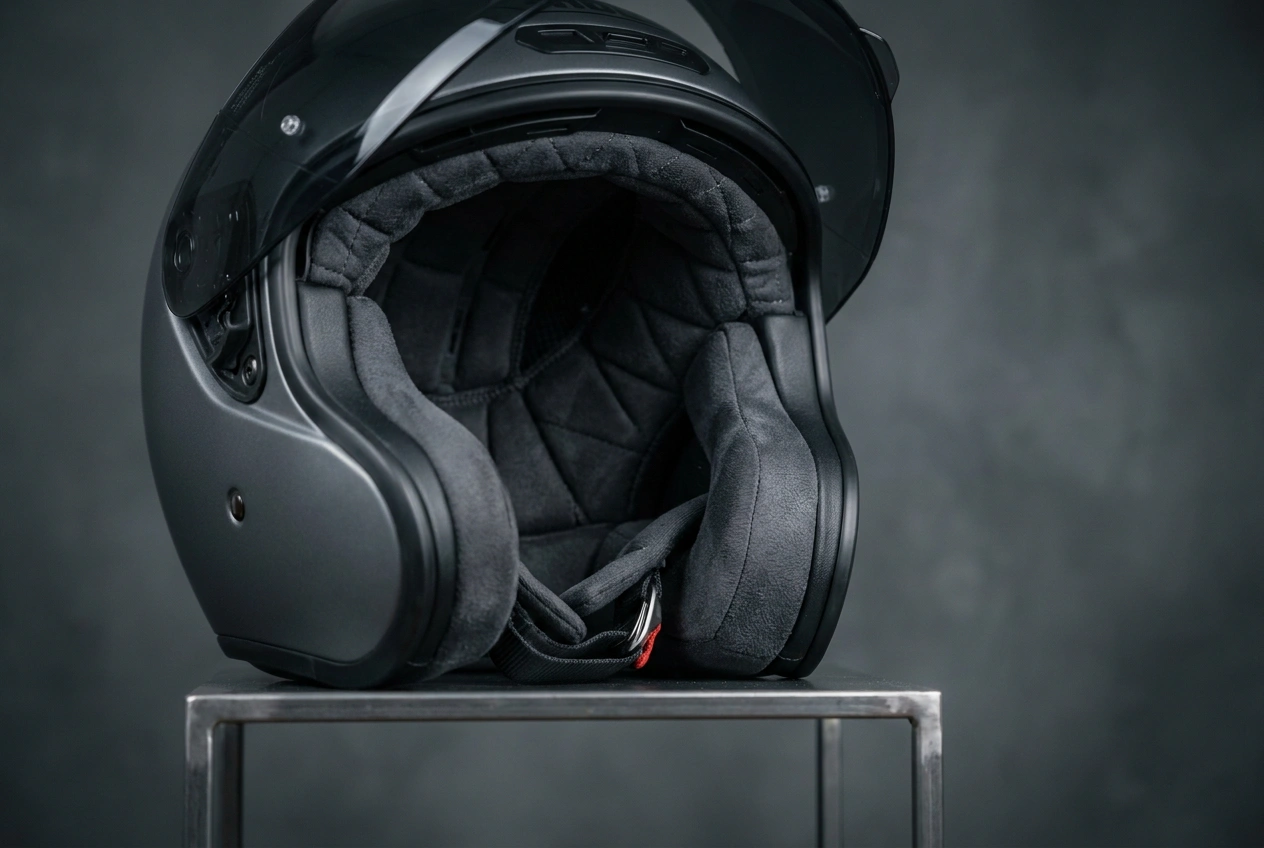
Most of the time a motorcycle helmet hurts because the shell shape does not match your head shape, not because it is the wrong size. A round helmet on a long-oval head presses the front and back; a long-oval helmet on a round head squeezes the sides. The result is concentrated pressure points and the so-called helmet headache. Below we walk through how to diagnose the cause and fix it.
A helmet that aches across the forehead, throbs at the temples, or leaves a sore band after an hour is one of the most common complaints we see in owner reports, and almost everyone reaches for the same wrong conclusion: that the helmet is simply too small. Sometimes it is. More often the circumference is correct and the real problem is shape. Our research desk pulled together the usual causes and the fixes that actually resolve them, ranked roughly by how often each one is the real culprit.
The key idea to hold onto: size and shape are two separate things. A helmet can match your head measurement exactly and still hurt, because the interior is moulded to an oval profile that is wrong for your skull. Get the shape right and most helmet headaches disappear on their own.
The usual culprit: head shape mismatch
Helmet interiors are moulded around one of three head-shape templates, and the brand that fits your friend perfectly may be the wrong template for you. The three standard profiles, viewed from the top of the head, are:
- Round oval: width and length are nearly equal. HJC, Bell and many Shoei models tend to run rounder.
- Intermediate oval: slightly longer front to back than side to side. This is the most common head shape and the default profile for most helmet lines.
- Long oval: noticeably longer front to back with a narrower width. Arai builds specifically for this profile, which is a frequent reason for returns elsewhere.
The mismatch produces a predictable pattern. Put a round-shaped helmet on a long-oval head and the shell is too short front to back, so it presses on the forehead and the back of the skull while leaving gaps at the sides. Put a long-oval helmet on a round head and the opposite happens: the shell pinches the temples and the sides while feeling loose front and back. Either way you get sharp, localised pressure rather than the even snugness a correct fit gives you.
Other reasons a helmet hurts
Shape is the most common cause, but it is not the only one. Work through these next, because several of them can stack on top of a shape problem and make a borderline fit feel much worse:
- Too small, or a brand that runs small. A genuinely undersized helmet hurts evenly all over, especially at the crown. Brands also size differently, so the same number can run a half-size tight in one line and fine in another.
- Not broken in yet. Cheek pads and the comfort liner compress over the first 15 to 40 hours of use. A new helmet that is firm but not painful usually settles, while a brand-new ache fixed to one spot will not.
- Cheek pad or crown pad pressure. Over-thick cheek pads clamp the jaw and can radiate into a headache; a high crown pad can dig into the top of the head even when the circumference is fine.
- Chin strap too tight. Cinching the strap up under the jaw to compensate for a loose fit loads the temples and can trigger tension-style pain and even sinus pressure.
- Glasses arms with no channel. Frames with no eyewear channel in the liner get pinned against the temples, creating a sore line above the ears that feels like a helmet fault but is really a clearance problem.
How to fix the pressure points
Diagnose first, then fix. Press a finger where it hurts, note whether the pain is front-and-back, side-to-side, all over, or fixed to one spot, and match it to the cause above. Then work through these fixes:
- Identify your head shape and match the brand. Photograph the top of your head and compare front-to-back length against side-to-side width. Buy from a brand whose oval profile matches. This is the single highest-impact fix for front/back or side pressure.
- Re-check the size by circumference. Measure about an inch above the eyebrows, in centimetres, and read the specific brand chart rather than assuming your usual size carries across.
- Swap pad thickness. Most quality helmets offer cheek pads and crown liners in multiple thicknesses. Going one step thinner on the pad over a hot spot often clears a borderline pressure point without changing the helmet.
- Give it a proper break-in. If the pressure is even and mild, wear the helmet in short sessions over the first few rides before judging it.
- Loosen and reposition the strap. The strap holds the helmet down, not on. If you are tightening it hard to stop movement, the helmet is too big rather than under-strapped.
- Stretch a localised hot spot carefully. For a single stubborn pressure point on an otherwise correct helmet, targeted padding adjustment or careful stretching can relieve it. Do this gradually and never on the EPS safety liner itself.
- Get a professional fitting. A dealer fitter can read pressure points, swap pads, and confirm shape far faster than trial and error by mail order.
Helmet headache: cause and fix
| Symptom | Likely cause | Fix |
|---|---|---|
| Front and back pressure, loose at the sides | Round-shaped helmet on a long-oval head | Switch to a long-oval brand such as Arai; re-check head shape before buying |
| Side and temple pressure, loose front and back | Long-oval helmet on a round head | Switch to a rounder-profile brand such as HJC or Bell |
| Even ache all over, worst at the crown | Size too small or brand runs small | Size up one step and re-measure circumference against that brand's chart |
| Sore after about an hour, no single sharp spot | Not broken in, or cheek/crown pad pressure | Wear in over a few short rides; swap to thinner pads over the hot spot |
| Tension or sinus pressure, sore temples | Chin strap cinched too tight to stop movement | Loosen the strap; if the helmet then moves, it is too big, so size down |
| Sore line above the ears with glasses on | No eyewear channel, frame arms pinned | Use a helmet with a glasses channel or thinner frame arms |
DOT vs ECE vs Snell vs MIPS, how to pick the right lid in 60 seconds, and when to replace it. One page, no fluff.
Frequently Asked Questions
Why does my motorcycle helmet hurt my head?
Most often the shell shape does not match your head shape rather than the size being wrong. A round-profile helmet on a long-oval head presses the forehead and back of the skull, while a long-oval helmet on a round head squeezes the temples and sides. Both create concentrated pressure points. A genuinely too-small helmet, an un-broken-in liner, thick pads, or an over-tight strap can also cause pain.
How do I know if my helmet is the wrong shape or just too small?
Check the pattern of the pain. An even ache all around, worst at the crown, usually means the helmet is too small in circumference. A sharp pressure fixed front-and-back means a round helmet on a long-oval head, and fixed at the temples and sides means a long-oval helmet on a round head. Pain tied to specific spots points to shape; pain everywhere points to size.
Will the pain go away once I break the helmet in?
Only if the pain is even and mild. Cheek pads and the comfort liner compress over the first 15 to 40 hours, so firm-but-not-painful pressure usually settles. A sharp, localised ache from the first minute is a shape mismatch and will not break in. If the pattern is wrong-shape pressure, no break-in period will fix it.
Can I fix a painful helmet without buying a new one?
Sometimes. If the circumference is correct and the pain is a single hot spot, swapping to thinner cheek or crown pads, loosening the chin strap, or carefully relieving that spot can work. But if the pain is the wrong-shape pattern across the whole front-and-back or both sides, the only real fix is a helmet built for your oval profile.
Why does my helmet give me a headache after an hour?
A helmet headache after a while usually comes from steady pressure on the same spot: a slight shape mismatch, a crown or cheek pad that is fractionally too thick, or a chin strap cinched too tight to mask a loose fit. Identify where the pressure sits, swap the pad over that area or loosen the strap, and confirm the helmet matches your head shape and circumference.
