

Affiliate disclosure As an Amazon Associate we earn from qualifying purchases, at no extra cost to you.
Putting on a full-face helmet when you wear glasses is a ritual that goes something like: fold temple, tuck left arm, pray the pad doesn't knock your frames sideways, attempt to reseat nose bridge while your arm is still half-inside the helmet, give up, repeat. Riders who wear corrective lenses have been quietly suffering through this for decades while helmet marketing pretends everyone has perfect vision and a symmetrical skull.
Our research desk dug through spec sheets, owner forums, and the actual padding geometry on the models below to find eight helmets that actually cooperate with eyewear. The short version: modular and open-face designs win by default because you flip the chin bar up (or there isn't one) and slide your glasses on before the foam meets your face. Full-face helmets can work too - but only the ones with genuine eyeglass channels cut into the cheek pad foam, not just a marketing claim on the box.
Certification note: DOT (FMVSS 218) is the US minimum and is self-certified by the manufacturer - nobody independent checks it. ECE 22.06 is the European standard and requires third-party lab testing plus rotational impact assessment. Where a helmet carries both, we say so. All eight picks below are at minimum DOT-certified; several carry ECE as well.
Key Takeaways
- Modular helmets are the easiest fit with glasses - flip the chin bar up, put your frames on, lower the bar. No contortion required.
- Look for eyeglass channels (grooves) in the cheek pads - a specific foam cutout lets the temple arm pass without pressure. HJC and ScorpionEXO explicitly include these.
- Open-face (3/4) helmets offer total unrestricted access - the tradeoff is chin protection; worth it for urban commuters and low-speed riding.
- Removable and interchangeable cheek pads matter - thinner pads can solve a tight-temple-arm problem when the groove alone is not enough.
- DOT-only is self-certified; ECE 22.06 is independently tested - for helmets you plan to wear daily, dual certification (DOT + ECE) is worth seeking out.
| HJC i91 Modular Motorcycle Helmet |  |
Best Overall for Glasses Wearers | Type: Modular (flip-up) | Glasses-friendly feature: Dedicated eyeglass channels in cheek pads | Best for: Daily commuters and touring riders who wear glasses | VIEW LATEST PRICE | Read Our Analysis |
| HJC C91 Modular Motorcycle Helmet |  |
Best Value Modular with Eyeglass Grooves | Type: Modular (flip-up) | Glasses-friendly feature: Eyeglass grooves in cheek pads + interchangeable pads | Best for: Glasses wearers on a mid-range budget | VIEW LATEST PRICE | Read Our Analysis |
| ScorpionEXO AT960 Modular Adventure Helmet |  |
Best Dual-Certified (DOT + ECE 22.06) | Type: Modular (flip-up), adventure-touring | Glasses-friendly feature: KwikFit 3D sculpted cheek pads designed for eyeglasses | Best for: Adventure-touring riders who want independent certification | VIEW LATEST PRICE | Read Our Analysis |
| Sena Outrush 2 Modular Smart Helmet |  |
Best Modular with Built-in Bluetooth | Type: Modular (flip-up) | Glasses-friendly feature: Flip-up chin bar for easy glasses donning; P/J dual homologation | Best for: Tech-forward riders who want intercom built in and wear glasses | VIEW LATEST PRICE | Read Our Analysis |
| Sena Outrush R Bluetooth Modular Helmet |  |
Best Entry-Level Sena Modular | Type: Modular (flip-up) | Glasses-friendly feature: Flip-up chin bar; retractable sun visor | Best for: Glasses wearers who want Bluetooth intercom without the Outrush 2 price | VIEW LATEST PRICE | Read Our Analysis |
| CYRIL Modular Motorcycle Helmet | 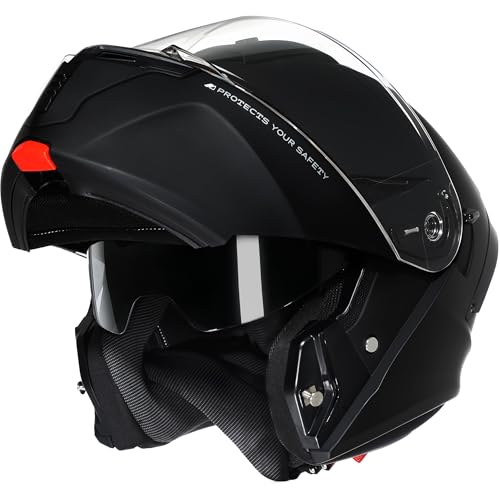 |
Best Budget Pick - Eyewear Friendly Foam | Type: Modular (flip-up) | Glasses-friendly feature: High-elasticity foam engineered for glasses comfort | Best for: Budget-conscious glasses wearers who want a dedicated glasses-compatible modular | VIEW LATEST PRICE | Read Our Analysis |
| ILM Modular Flip-Up Full Face Helmet | 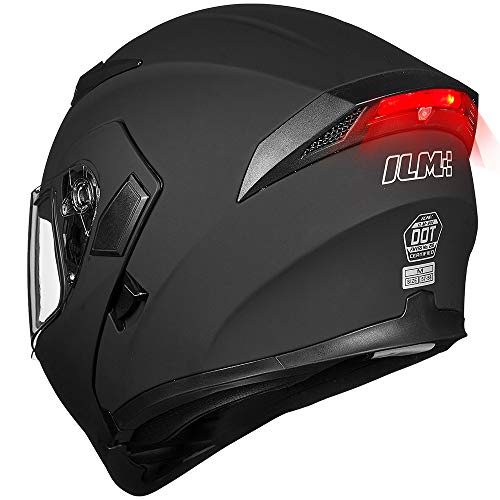 |
Best Entry Modular with Removable Cheek Pads | Type: Modular (flip-up) | Glasses-friendly feature: Removable and washable cheek pads + flip-up chin bar | Best for: Riders who want an affordable entry-level modular for glasses use | VIEW LATEST PRICE | Read Our Analysis |
| TCMT 3/4 Open Face Dual Visor Helmet |  |
Best Open-Face Option for Glasses Wearers | Type: Open-face (3/4) | Glasses-friendly feature: Open 3/4 layout with no chin bar; built-in drop-down sun visor plus an extra tinted visor | Best for: Urban commuters and warm-weather riders who prioritize glasses comfort over chin protection | VIEW LATEST PRICE | Read Our Analysis |
More Details on Our Top Picks
HJC i91 Modular Motorcycle Helmet
The HJC i91 earns the top slot because HJC did something most brands talk about and few actually deliver: they cut proper glasses grooves into the cheek pad foam. The feature is listed plainly in the spec sheet - not buried in a marketing PDF - which matters when you are about to spend real money. The flip-up chin bar handles the donning problem, and the interchangeable cheek pads (same fit across all shell sizes) mean you can swap to a thinner pad if your frames are on the wider side.
The polycarbonate composite shell is lighter than it looks, and the Advanced Channeling Ventilation System does a credible job moving air. The HJ-33 Pinlock-ready shield comes with UV protection and an anti-scratch coating. An integrated dark-smoke sun visor rounds things out so you are not fumbling with separate sunglasses over your prescription frames - one of the underrated perks of the drop-down visor for glasses wearers.
For connectivity, the i91 is SmartHJC 21B and 50B Bluetooth-ready (systems sold separately). The speaker pockets sit in the right place without adding foam bulk that could press against your frames. Worth checking if you commute with music or want intercom capability.
The main con: DOT-only certification in the US version. If you want the added assurance of independent ECE testing, the ScorpionEXO AT960 lower on this list carries ECE 22.06. The i91 is still a well-regarded helmet from a brand with a long track record, but the certification point is worth flagging.
- Type:Modular (flip-up)
- Glasses-friendly feature:Dedicated eyeglass channels in cheek pads
- Certification:DOT FMVSS 218
- Weight:Approx. 3.5 lbs (polycarbonate composite shell)
- Shell material:Advanced polycarbonate composite
- Best for:Daily commuters and touring riders who wear glasses
HJC C91 Modular Motorcycle Helmet
The HJC C91 is the C-series sibling of the i91 and carries the same eyeglass-groove feature in the cheek pads at a lower price point. The RapidFire shield replacement system lets you swap visors tool-free, and the integrated dark-smoke sun visor means you can lose the prescription sunglass layer on bright days.
Removable and washable cheek and crown pads are a standard expectation at this price - the C91 delivers them, and importantly the cheek pads are interchangeable across all shell sizes. That cross-size compatibility is not universal in the category and it means you can order thinner pads directly from HJC if the standard foam is pressing on your temple arm.
The Advanced Channeling Ventilation System is the same core design found on more expensive HJC models. The polycarbonate composite shell is not the lightest material, but the C91 does not feel punishingly heavy on long rides. Speaker pockets accommodate the SmartHJC 10B and 20B Bluetooth systems if you want built-in audio.
Honest limitation: like the i91, this is DOT-certified only in its standard US listing. There is no ECE 22.06 stamp. For riders who want independent certification rather than manufacturer self-declaration, treat this as a starting point and cross-check the current listing before purchase.
- Type:Modular (flip-up)
- Glasses-friendly feature:Eyeglass grooves in cheek pads + interchangeable pads
- Certification:DOT FMVSS 218
- Weight:Approx. 3.5 lbs
- Shell material:Polycarbonate composite
- Best for:Glasses wearers on a mid-range budget
ScorpionEXO AT960 Modular Adventure Helmet
The ScorpionEXO AT960 is the pick when certification depth matters to you. DOT is self-certified by the manufacturer. ECE 22.06 is tested by an independent lab and includes rotational impact assessment that DOT does not require. The AT960 carries both, which puts it in a smaller subset of helmets on this list. The KwikFit 3D sculpted cheek pads are explicitly designed to accommodate most eyeglasses - ScorpionEXO uses that language in the spec sheet, not just in a press release.
The flip-up chin bar operates with a single lever, raiseable with either hand - useful when you are wearing gloves and trying to get your glasses on before a stop-and-go commute. The Everclear fog-free shield with anti-scratch coating and 95% UV protection is one of the better stock visors in this price range. A retractable Speedview drop-down sun visor handles bright conditions without requiring a second pair of glasses.
The removable peak visor is an adventure-touring design feature. On a highway, removing it reduces aerodynamic noise. On gravel, it keeps debris out of your face. The included breath deflector and chin curtain add comfort on cold rides. KwikWick C moisture-wicking liner fabric is removable and washable.
Weight is the honest tradeoff here - at roughly 4.09 lbs it is heavier than a carbon-shell helmet. Adventure-touring helmets carry more hardware. If you are primarily a urban commuter and weight matters more than the ECE stamp, the HJC i91 above is lighter. If you are logging miles and want the full certification package, the AT960 justifies the weight. For a roundup built specifically around helmet weight, see our guide to the lightest modular motorcycle helmets.
- Type:Modular (flip-up), adventure-touring
- Glasses-friendly feature:KwikFit 3D sculpted cheek pads designed for eyeglasses
- Certification:DOT FMVSS 218 + ECE 22.06
- Weight:Approx. 4.09 lbs (size medium)
- Shell material:Advanced polycarbonate
- Best for:Adventure-touring riders who want independent certification
Sena Outrush 2 Modular Smart Helmet
The Sena Outrush 2 solves a specific annoyance that non-Bluetooth modular helmets quietly create for glasses wearers: after you flip the chin bar up and get your frames settled, you still have to reach back and pair your phone before lowering the bar again. The Outrush 2 has Mesh Intercom 3.0 and smartphone Bluetooth built directly into the shell, so there is one less step in the pre-ride ritual.
The P/J dual homologation means the helmet is certified safe with the chin bar both up and down - not all modular helmets can claim that, and it matters if you regularly ride with the bar elevated in traffic. The 2nd-generation HD speakers are positioned to avoid adding foam bulk near the cheek pad area where your frames will sit. Intelligent Power Management automatically powers the unit down when accelerometers detect no movement, which is a detail oriented toward forgetful riders.
WAVE Intercom compatibility extends range beyond normal Bluetooth limits by operating over cellular networks - useful for group touring where riders separate. The Outrush 2 is WAVE-compatible with any brand headset, which avoids lock-in to the Sena ecosystem.
The con worth flagging: Sena does not publish detailed interior padding specifications the way HJC does. There is no explicit mention of dedicated eyeglass-groove channels in the cheek pads. The flip-up mechanism handles the donning problem well, but riders with very wide frames or thick temple arms may want to confirm fit in person before committing. DOT certification only - no ECE.
- Type:Modular (flip-up)
- Glasses-friendly feature:Flip-up chin bar for easy glasses donning; P/J dual homologation
- Certification:DOT FMVSS 218
- Weight:Not specified by manufacturer
- Shell material:Not specified
- Best for:Tech-forward riders who want intercom built in and wear glasses
Sena Outrush R Bluetooth Modular Helmet
The Outrush R is the previous generation of the Outrush line and carries 4-way Bluetooth intercom (Bluetooth 5.0) at a lower price than the Outrush 2's Mesh Intercom upgrade. For riders who mostly communicate one-on-one rather than in larger groups, the range and functionality is more than sufficient. The three-button control on the left side is operable with gloves on.
The retractable sun visor is the same convenience story as the other modular picks - you flip up the chin bar, put on your glasses, and the drop-down visor handles sun exposure on the fly without requiring a separate pair of tinted prescription lenses. Quick pairing via QR code through the Sena Utility App reduces setup friction.
As with the Outrush 2, Sena does not publish granular cheek pad specs, so there is no confirmed eyeglass-channel cutout. The modular design handles the donning challenge, but riders with particularly wide or heavy frames should test fit if possible. DOT-rated; no ECE certification on this model.
The honest trade against the newer Outrush 2: the R uses 4-way Bluetooth intercom rather than Mesh Intercom 3.0, and the speakers are first-generation rather than the HD upgrade. For most daily riders that distinction is academic. Where the Outrush R wins is price - same Sena brand and modular convenience, less outlay.
- Type:Modular (flip-up)
- Glasses-friendly feature:Flip-up chin bar; retractable sun visor
- Certification:DOT FMVSS 218
- Bluetooth version:Bluetooth 5.0
- Weight:Not specified by manufacturer
- Shell material:Not specified
- Best for:Glasses wearers who want Bluetooth intercom without the Outrush 2 price
CYRIL Modular Motorcycle Helmet
The CYRIL modular is unusual at its price point for making an explicit glasses-compatibility claim in the product listing rather than just implying it through a flip-up design. The interior padding description references high-elasticity foam engineered to accommodate glasses without pressure - a different approach from the HJC groove system, but a documented one. The flip-up mechanism uses a one-handed operation that the manufacturer calls smooth for quick transitions.
The dual visor system includes a clear outer shield, an inner sun visor, and a bonus smoke shield in the package. A quick-release shield system means you can swap visors without tools. The ABS shell construction is the standard choice at this price tier - not the lightest material but serviceable for everyday riding.
Moisture-wicking removable pads and a replaceable liner are included. The carrying bag bundled with purchase is a minor but practical touch for storage. DOT certified.
What we do not know: the CYRIL is a newer and less-reviewed brand compared to HJC, ScorpionEXO, or Sena. The eyewear-compatibility claim has less community verification behind it. The glasses-groove or high-elasticity foam approach is promising, but we would recommend confirming fit for wider prescription frames before committing. Treat this as a solid option for narrower budgets while recognizing the brand track record is shorter.
- Type:Modular (flip-up)
- Glasses-friendly feature:High-elasticity foam engineered for glasses comfort
- Certification:DOT
- Weight:Not specified
- Shell material:High-strength ABS
- Best for:Budget-conscious glasses wearers who want a dedicated glasses-compatible modular
ILM Modular Flip-Up Full Face Helmet
ILM has been producing affordable DOT helmets for a long time, and the 902 series modular is probably the most reviewed budget flip-up helmet in that category. The cheek pads are removable and washable - standard for a modular at any price - but the relevant detail for glasses wearers is that you can source thinner replacement pads to buy yourself extra clearance for wider frames, something not always obvious from the listing but confirmed by owners in forum discussions.
The dual visor system provides an outer clear shield plus an inner sun visor, and the anti-fog, anti-scratch coatings are functional if not premium. The flip-up mechanism is the core glasses-donning solution here: chin bar up, frames on, chin bar down. The micrometrically adjustable strap adds a secure fit once everything is settled.
ABS shell construction is appropriate for the price point. The lightweight and sleek design reduces wind noise, which is a real benefit for riders whose prescription lenses already add a slight fit complication at speed. The aerodynamic profile is creditable for a budget helmet.
The honest assessment: ILM does not publish eyeglass-specific groove data, and community reports note variable quality control across production runs. For riders with a tighter budget, this is a workable modular that handles the flip-up donning convenience. For riders with specific thick-temple or wide-frame needs, step up to the HJC C91 or the ScorpionEXO AT960 where the cheek pad geometry is documented.
- Type:Modular (flip-up)
- Glasses-friendly feature:Removable and washable cheek pads + flip-up chin bar
- Certification:DOT FMVSS 218
- Weight:Not specified
- Shell material:ABS
- Best for:Riders who want an affordable entry-level modular for glasses use
TCMT 3/4 Open Face Dual Visor Helmet
If modular helmets are the smart compromise for glasses wearers, open-face helmets are the more direct solution: with no chin bar to work around, the open 3/4 layout leaves room around the face, so putting glasses on and taking them off is simpler than with a closed shell. The TCMT earns its spot here because it pairs that layout with a built-in drop-down sun visor. As an editorial point rather than a listing claim, that means you do not have to swap your prescription glasses for sunglasses (or ride in tinted lenses) to deal with glare.
Per the listing, the helmet also ships with a clear outer visor and an additional tinted visor, three visors in total, so you can adjust for day, night and changing light. The listing does not say anything about eyewear fit, so check the fit with your own frames. The interior is a non-woven fabric liner that is removable and washable, which keeps maintenance simple for anyone wearing glasses all day.
The listing describes an adjustable top vent switch with front and rear vents, and says the airflow is meant to reduce fogging. It also lists speaker recesses for most Bluetooth communication systems (the device is not included), and a helmet bag in the box. The manufacturer states the helmet is DOT-certified, with an ABS shell over EPS foam; as with all DOT labels, verification is by self-certification.
The tradeoff with any open-face helmet is chin and lower-face protection. At highway speeds or in a crash with face-forward contact, a 3/4 shell leaves the chin exposed. For urban riding, short commutes, or warm-weather touring at moderate speeds, this is an acceptable tradeoff that many glasses wearers make deliberately. For highway-primary riders, a modular is the better answer.
- Type:Open-face (3/4)
- Glasses-friendly feature:Open 3/4 layout with no chin bar; built-in drop-down sun visor plus an extra tinted visor
- Certification:DOT
- Visors:Clear outer visor, built-in drop-down sun visor, extra tinted visor (3 total)
- Weight:Not specified
- Shell material:ABS with EPS foam
- Best for:Urban commuters and warm-weather riders who prioritize glasses comfort over chin protection
How to Choose a Motorcycle Helmet for Glasses
The helmet industry spent decades designing cheek pads around the assumption that everyone wearing a motorcycle helmet has perfect vision. Roughly 60% of adults wear corrective lenses. The math on that oversight is left as an exercise for the reader. Here is what actually matters when you are buying a helmet as a glasses wearer.
Why Modular and Open-Face Helmets Help
The core problem with full-face helmets is the donning sequence: you push your head into a foam cavity and the cheek pads apply inward pressure from both sides before your frames are seated. If the pads do not have eyeglass-channel grooves, the temple arm either bends, digs in, or gets stuck partway through. Modular helmets solve this mechanically - flip the chin bar up, position your glasses on your face, then lower the chin bar. The temple arms are seated before foam touches them. Open-face helmets remove the chin bar entirely; same outcome, less hardware. For most glasses wearers, this is the most reliable path to a comfortable fit without relying on specific pad geometry.
Eyeglass Channels in Cheek Pads
In full-face and modular helmets (chin bar down), the cheek pads are the main pressure point for glasses wearers. Eyeglass channels - also called eyeglass grooves - are foam cutouts engineered to let the temple arm pass without compression. HJC is explicit about including these on the C91 and i91. ScorpionEXO uses the term "KwikFit 3D sculpted cheek pads" to describe pad geometry that accommodates most eyeglasses. If a helmet listing does not mention grooves or channels specifically, assume there are none - a claim this useful does not get left off a spec sheet by accident.
Removable and Interchangeable Cheek Pads
Removable cheek pads serve two purposes for glasses wearers. First, you can order thinner replacement pads from the manufacturer to gain additional temple-arm clearance without buying a different helmet. Second, HJC (and a few others) offer interchangeable pads across shell sizes, so if you run into a fit issue you have options short of returning the helmet. The interchangeability detail is rarely advertised prominently but is worth verifying before purchase - it effectively gives you an adjustable fit dimension that most helmets lack. For more on helmet longevity and when to replace protective gear, see our guide on when to replace a motorcycle helmet. The same adjustable-pad logic applies to riders who wear a behind-the-ear hearing aid instead of glasses; our guide to motorcycle helmets for hearing aid wearers covers which liner and cheek-pad features keep an aid from getting knocked loose.
Managing Fogging When Wearing Glasses
Glasses wearers face a compounded fogging problem: the visor can fog, and the lenses can fog. A Pinlock-ready shield (available on the HJC i91, C91, and others) addresses visor fogging with an anti-fog insert. Helmet ventilation does the rest - warm exhaled air needs a route out before it reaches both surfaces. The breath deflectors and chin curtains included with the ScorpionEXO AT960 specifically channel exhaled air away from the face, which reduces lens fogging on cold mornings. For a full walkthrough on the practical mechanics, see how to wear glasses with a motorcycle helmet.
DOT vs ECE: A Quick Orientation
DOT (FMVSS 218) is US law minimum. The manufacturer self-certifies - no independent lab tests the helmet before it ships. ECE 22.06 (European) requires third-party lab testing and includes rotational impact assessment that DOT does not mandate. Where you see both certifications, the ECE stamp is the one backed by independent verification. The ScorpionEXO AT960 on this list carries both; the HJC models are DOT-only in their US listings. Neither certification makes a helmet indestructible - fit and correct sizing matter more than the sticker for everyday protection.
Motorcycle Helmet for Glasses Wearers Comparison
| Helmet | Type | Glasses-friendly feature | Certification | Best For |
|---|---|---|---|---|
| HJC i91 Modular Motorcycle Helmet | Modular (flip-up) | Dedicated eyeglass channels in cheek pads | DOT FMVSS 218 | Daily commuters and touring riders who wear glasses |
| HJC C91 Modular Motorcycle Helmet | Modular (flip-up) | Eyeglass grooves in cheek pads + interchangeable pads | DOT FMVSS 218 | Glasses wearers on a mid-range budget |
| ScorpionEXO AT960 Modular Adventure Helmet | Modular (flip-up), adventure-touring | KwikFit 3D sculpted cheek pads designed for eyeglasses | DOT FMVSS 218 + ECE 22.06 | Adventure-touring riders who want independent certification |
| Sena Outrush 2 Modular Smart Helmet | Modular (flip-up) | Flip-up chin bar for easy glasses donning; P/J dual homologation | DOT FMVSS 218 | Tech-forward riders who want intercom built in and wear glasses |
| Sena Outrush R Bluetooth Modular Helmet | Modular (flip-up) | Flip-up chin bar; retractable sun visor | DOT FMVSS 218 | Glasses wearers who want Bluetooth intercom without the Outrush 2 price |
| CYRIL Modular Motorcycle Helmet | Modular (flip-up) | High-elasticity foam engineered for glasses comfort | DOT | Budget-conscious glasses wearers who want a dedicated glasses-compatible modular |
| ILM Modular Flip-Up Full Face Helmet | Modular (flip-up) | Removable and washable cheek pads + flip-up chin bar | DOT FMVSS 218 | Riders who want an affordable entry-level modular for glasses use |
| TCMT 3/4 Open Face Dual Visor Helmet | Open-face (3/4) | Open 3/4 layout with no chin bar; built-in drop-down sun visor plus an extra tinted visor | DOT | Urban commuters and warm-weather riders who prioritize glasses comfort over chin protection |
DOT vs ECE vs Snell vs MIPS, how to pick the right lid in 60 seconds, and when to replace it. One page, no fluff.
If glare rather than prescription lenses is the problem, see the helmets in our built-in sun visor roundup.
Frequently Asked Questions
Can I wear glasses with a full-face motorcycle helmet?
Yes, but it requires either a full-face helmet with dedicated eyeglass channels (groove cutouts) in the cheek pads, or a willingness to fold the temple arm before donning and reseat your frames afterward. Most riders who wear glasses daily find modular helmets significantly easier - the flip-up chin bar lets you seat your glasses first, then close the helmet around them.
What are eyeglass channels in a motorcycle helmet?
Eyeglass channels (also called eyeglass grooves) are foam cutouts engineered into the cheek pads along the path the temple arm travels. They reduce or eliminate the pressure a straight-foam pad puts on the arm of your glasses. HJC lists this feature explicitly on the C91 and i91. ScorpionEXO calls their version KwikFit 3D sculpted cheek pads. If a listing does not mention channels, assume the pads are flat foam.
Are modular helmets safe?
When certified with P/J dual homologation (like the Sena Outrush 2), a modular helmet is certified safe with the chin bar both up and down. DOT and ECE 22.06 both certify modular helmets as a separate category. The flip mechanism adds a potential failure point compared to a one-piece full-face shell, which is why P/J certification matters - it tests both positions. A modular without dual homologation should be treated as a full-face helmet with the chin bar locked down.
I wear progressive or bifocal lenses - is there a best helmet type?
Open-face helmets are often the most comfortable option for progressive or bifocal wearers because the larger eye opening and absence of a chin bar reduce fit complications. Modular helmets are a close second. The main concern with progressives in full-face helmets is that the reading zone of the lens ends up covered by cheek foam if your head position inside the helmet shifts the frame upward - an eyeglass channel helps but does not fully solve the fit geometry. Trying the helmet on with your glasses before purchase is the reliable approach.
How do I stop my glasses from fogging inside a motorcycle helmet?
There are two fog surfaces to manage: the visor and your lenses. For the visor, a Pinlock insert (Pinlock-ready shields are available on the HJC C91, i91, and others) virtually eliminates fogging by trapping an air gap between layers. For your lenses, good helmet ventilation is the main tool - exhaled air needs a path out before it saturates the space around your face. A breath deflector (included in the ScorpionEXO AT960) channels breath downward rather than directly at the lens surface. Anti-fog lens sprays work as a secondary measure but are not a substitute for ventilation.

2 comments