
Affiliate disclosure As an Amazon Associate we earn from qualifying purchases, at no extra cost to you.
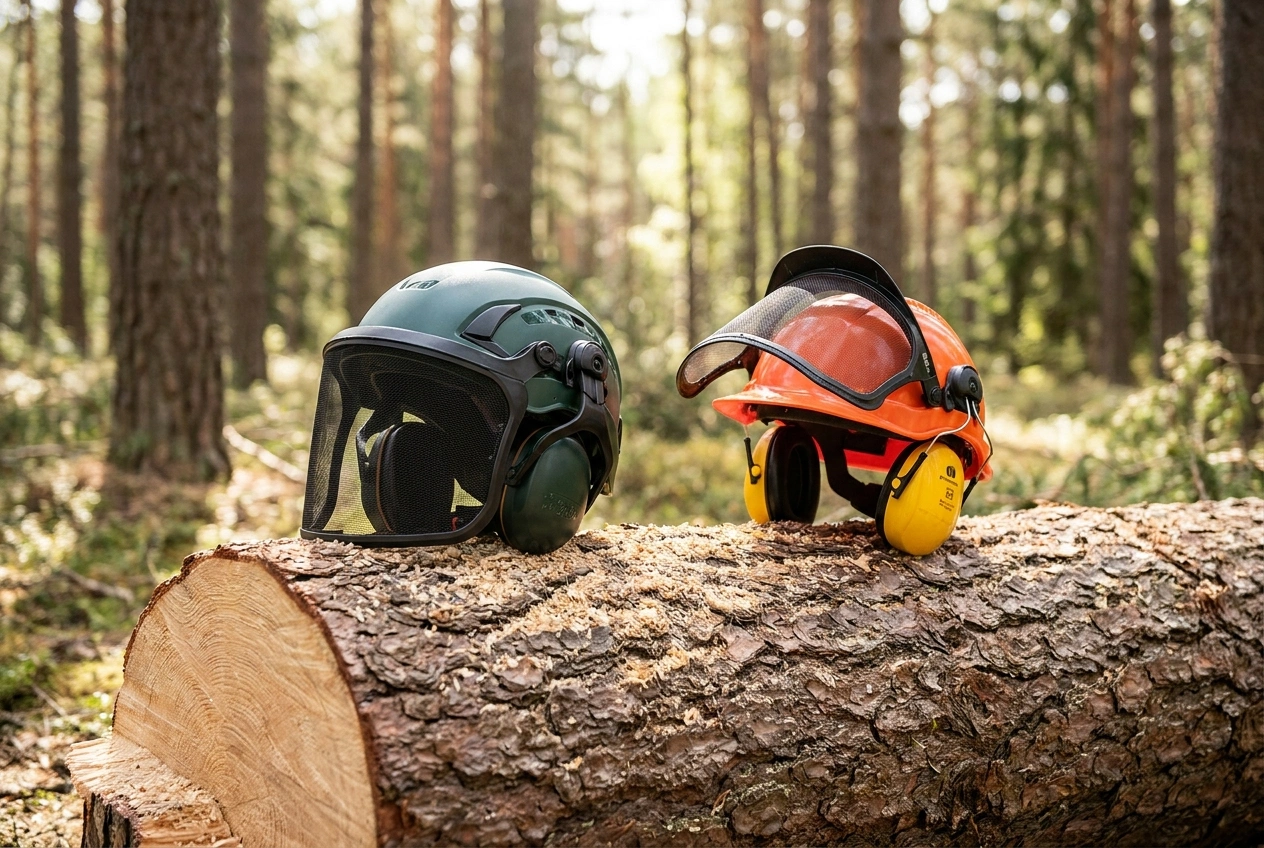
Both are professional forestry lids, but they aim at different buyers. The Pfanner Protos Integral is a premium Austrian system with hearing, face shield, and shell fused into one piece, plus side and rear impact protection most forestry helmets skip. The Husqvarna Technical Forest is the well-priced ground-crew default with a ratchet harness, mesh visor, and ear muffs included, now offered in a MIPS version too.
Walk onto any tree job and you will see both of these helmets on heads, usually on very different heads. The Pfanner Protos Integral tends to sit on the climber who treats gear like a religion. The Husqvarna Technical Forest tends to sit on everyone else doing the ground work, because it costs a fraction as much and ships ready to run.
Our Research Desk does not strap these to crash sleds. What we do is read the published standards, the manufacturer documentation, and the long trail of arborist and logging feedback, then lay out what actually separates the two so you can match the helmet to the work. The short version: one is an integrated comfort and protection system, the other is the value workhorse that has earned its spot through availability and a no-drama feature set.

The Protos Integral is what happens when a company decides a helmet, hearing protection, and a face shield should be one designed object rather than three parts bolted together. The shell, the integrated ear defenders, the visor, and the vents all live in a single low-profile system, and the standout selling point is genuine side and rear impact protection. Most forestry helmets are tested almost entirely for a vertical blow from above. The Protos is built to spread horizontal and rear impacts too, which is the kind of hit a climber can take swinging into a stem or a trunk.
Pfanner certifies the arborist Protos Integral to both EN 397 (industrial forestry) and EN 12492 (mountaineering and climbing), which is the dual rating a working climber actually wants. The integrated hearing protection runs around SNR 26 dB, the vents open and close for hot or cold conditions, and Pfanner makes a point that the hearing protection, face shield, fit dial, and vents can each be worked with two fingers, gloves on. The swept-back shape keeps your upward field of view clear, which matters when you are looking up a tree all day.
The catch is the price tag and the buy-in. It is one of the most expensive helmets in the category, and the modular accessory ecosystem (comms, mesh visors, communication headsets) can add up fast.
- You climb, and you want EN 12492 climbing-rated protection plus EN 397 forestry protection in one lid
- You want true side and rear impact coverage, not just top-impact
- You wear the helmet all day and comfort plus low profile justify the spend
- You like an integrated system you can run with gloves on, no fumbling separate ear muffs
Husqvarna Technical Forest: the value default

The Technical Forest is the helmet you reach for when the job is on the ground and the budget is real. It ships as a complete kit: HDPE shell, a free-view mesh steel visor that gives full vision in the raised position, adjustable ear defenders, a neck protector, and mesh-covered vents that keep your head cool without letting debris through. A one-hand ratchet harness lets you size it on the move with gloves on, and a UV-expiry indicator tells you when sun exposure has aged the shell past its useful life.
On standards, the Technical Forest is built to EN 397 in Europe and ANSI Z89.1 Class C in the US, which is the right rating for chainsaw and ground forestry work. It is a top-impact forestry helmet, not a climbing helmet, so it is not the lid to hang from a rope on. Husqvarna now also sells a Technical MIPS version that adds the MIPS low-friction layer to help manage rotational forces in angled impacts, with toolless visor swaps, for buyers who want that extra slip layer without leaving the price-friendly Husqvarna line.
What it lacks is the integrated, sculpted feel of the Protos. The ear muffs and visor are excellent but they are still assembled parts on a conventional shell, and there is no built-in side-impact story. For most ground crews, that is a trade they happily make to save serious money and to grab a helmet that is stocked basically everywhere.
- Your work is on the ground (felling, processing, brushing), not up a rope
- You want a complete visor plus ear muff plus neck guard kit out of the box at a fair price
- You want the MIPS rotational-impact option without paying premium-system money
- You value wide availability and easy replacement parts over an integrated design
Which should you buy?
If you climb, the decision is close to made for you: the Pfanner Protos Integral carries the EN 12492 climbing rating alongside EN 397, adds side and rear impact protection, and wears like a system rather than a stack of parts. That is what you are paying the premium for, and for a full-time arborist living in the helmet, it tends to earn it.
If your work stays on the ground, the Husqvarna Technical Forest is the smarter buy for most people. It meets EN 397 (ANSI Z89.1 Class C in the US), arrives as a complete visor and ear-defender kit, and the new Technical MIPS variant covers you if you want a rotational-impact layer without the Pfanner outlay. Spending Protos money on a helmet you only use for felling and processing is hard to justify unless comfort over very long days is your top priority.
Pfanner Protos Integral vs Husqvarna Technical Forest
| Feature | Pfanner Protos Integral | Husqvarna Technical Forest |
|---|---|---|
| Best for | Climbing arborists wanting an all-in-one premium system | Ground crews and chainsaw operators on a budget |
| Standard | EN 397 + EN 12492 (arborist version, ground and climbing) | EN 397 / ANSI Z89.1 Class C (ground work only) |
| Integration | Shell, hearing, face shield and vents are one designed system | Conventional shell with visor, ear muffs and neck guard assembled on |
| MIPS option | No MIPS layer (relies on its own side and rear impact design) | Yes, Technical MIPS variant available |
| Comfort / side protection | Side and rear impact protection, low-profile, two-finger operation | Top-impact protection, comfortable 6-point ratchet harness, no side-impact claim |
| Price tier | Premium | Value |
DOT vs ECE vs Snell vs MIPS, how to pick the right lid in 60 seconds, and when to replace it. One page, no fluff.
For the wider field beyond these two brands, our arborist helmet systems roundup compares eight options by certification.
Frequently Asked Questions
Is the Pfanner Protos Integral certified for tree climbing?
The arborist version of the Protos Integral is dual-certified to EN 397 (industrial forestry) and EN 12492 (climbing and mountaineering), which is the combination a working climber wants. Always confirm the exact model and its printed certification label before trusting any helmet to a rope, since Pfanner sells several Protos configurations.
Can I climb in the Husqvarna Technical Forest helmet?
No. The Technical Forest (and the Technical MIPS) is built to EN 397 in Europe and ANSI Z89.1 Class C in the US, both of which are forestry and ground-work standards focused on top impact. It is not certified to EN 12492 for climbing, so use it for felling, processing, and ground tasks, not for working off a rope.
What does MIPS add on the Husqvarna Technical MIPS?
MIPS is a low-friction layer inside the helmet designed to let the shell move slightly relative to your head, which can help redirect rotational forces in an angled impact. The Pfanner Protos takes a different route, building side and rear impact management into the shell and liner itself rather than using a MIPS layer.
Do both helmets include hearing protection and a face shield?
Yes. The Pfanner integrates hearing protection (around SNR 26 dB) and a face shield into the system itself. The Husqvarna Technical Forest ships with adjustable ear defenders, a free-view mesh steel visor, and a neck protector as a complete kit. The difference is integration: the Pfanner is one designed unit, the Husqvarna is well-made parts on a conventional shell.
Is the Pfanner Protos worth the extra money over the Husqvarna?
For a full-time climbing arborist who lives in the helmet all day, the comfort, low profile, integrated operation, and EN 12492 plus side-impact protection often justify the premium. For ground-only work, the Husqvarna Technical Forest delivers EN 397 protection and a full visor and ear-muff kit for far less, which makes it the better value for most users.
