
Affiliate disclosure As an Amazon Associate we earn from qualifying purchases, at no extra cost to you.
Downhill and enduro riding put a full-face mountain bike helmet through a completely different set of demands than a trail or XC lid ever sees. You are pointing a bike down rock gardens and root sections at speed, your chin is exposed to the same impact risk as your forehead, and a crash at bike-park velocity is not the same event a half-shell helmet was ever designed to absorb. That is why full-face MTB helmets exist as their own category, certified to their own standard, built with their own chin-bar geometry.
The Research Desk worked through the Amazon catalog to find full-face helmets that genuinely fit the DH and enduro use case, not repurposed BMX lids or motocross crossovers with a bicycle sticker slapped on. We prioritized ASTM F1952 downhill certification, MIPS rotational-impact protection where the listing confirms it, honest weight figures from the manufacturer's own spec sheet, and ventilation design suited to gravity riding. If you are still deciding whether you need a full-face helmet at all, our full-face vs half-shell MTB helmet comparison walks through that decision in more depth, and our helmet certifications guide breaks down what ASTM, CPSC, and CE labels actually mean.
Below are seven picks worth your attention, ranging from race-oriented convertible designs to budget-friendly MIPS options. If your riding is closer to cross-country or all-mountain and you are not committed to a full-face lid, our best MTB helmets under $100 roundup covers half-shell options instead, and our TSG Pass Pro vs Fox Proframe comparison is a useful side read if you are cross-shopping the Proframe below against a gravity-specific alternative.
Key Takeaways
- ASTM F1952 is the downhill certification to look for - it is a distinct standard from general bicycle certifications (CPSC 1203, CE EN1078) and tests for higher-speed impact scenarios specific to gravity riding.
- MIPS is common but not universal at this price tier - only confirm a helmet has MIPS if the listing explicitly states it; several solid full-face helmets on this list skip it in favor of other impact-management systems like Koroyd or dual-density foam.
- Ventilation is a real tradeoff, not just a comfort feature - DH-focused shells often run fewer, smaller vents to prioritize structural protection, while enduro-oriented helmets add more airflow for the climbs between descents.
- Weight ranges vary more than you would expect - manufacturer-listed weights on this list span from roughly 690 g to over 900 g; that difference matters over a long day of laps.
- Convertible chin bars solve the enduro problem - a removable chin bar lets you pedal climbs in half-shell mode and lock in full-face protection before a timed descent, without carrying two helmets.
| Fox Racing Proframe Mountain Bike Helmet | 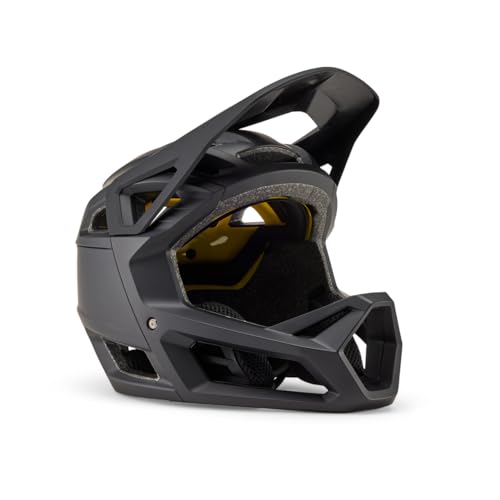 |
Best Overall | Certification: ASTM F1952 Downhill MTB | Impact System: MIPS | Best For: Riders who want a proven, race-pedigree DH shell with MIPS | VIEW LATEST PRICE | Read Our Analysis |
| Smith Mainline MTB Helmet with Koroyd + MIPS |  |
Best Premium Pick | Certification: CPSC bicycle standard, CE EN 1078, NTA8776 E-Bike, ASTM F1952 Downhill | Impact System: Koroyd + MIPS | Best For: Riders who want the widest certification stack and a dialed-in fit | VIEW LATEST PRICE | Read Our Analysis |
| Troy Lee Designs Stage MIPS Helmet |  |
Best Lightweight Full-Face | Weight: Approx. 690 g | Impact System: MIPS + dual-density EPP/EPS foam | Best For: Riders who want the lowest weight on this list without dropping MIPS | VIEW LATEST PRICE | Read Our Analysis |
| Leatt MTB Enduro 2.0 Convertible Helmet | 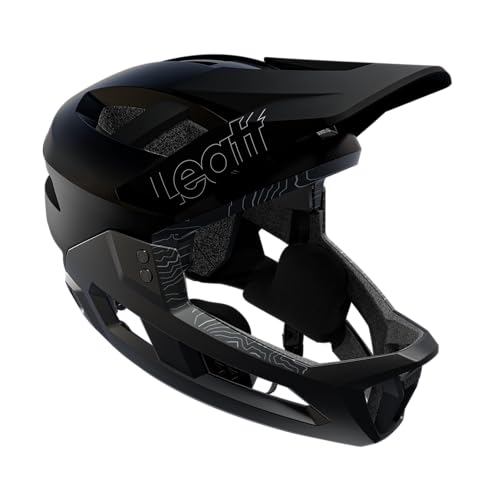 |
Best Convertible Chin Bar | Shell: Lightweight polymer shell | Impact System: 360 Turbine Technology + in-molded impact foam | Best For: Enduro riders who want full-face protection only when they need it | VIEW LATEST PRICE | Read Our Analysis |
| Leatt Gravity 1.0 Downhill Helmet | 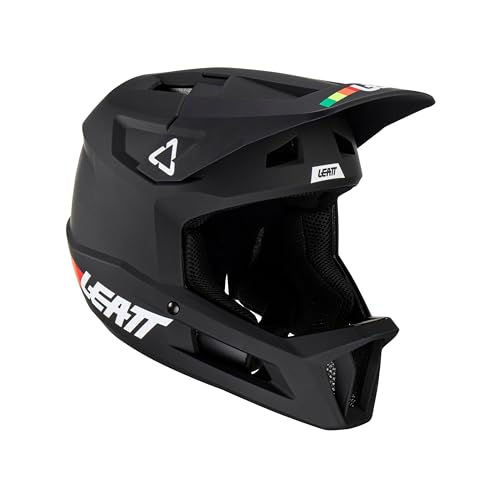 |
Best Value DH-Certified | Certification: AS/NZS 2063:2008, ASTM F1952-10, EN1078, CPSC 1203 | Shell: Downhill-certified ASTM polymer shell | Best For: Riders who want dedicated DH certification without the premium price | VIEW LATEST PRICE | Read Our Analysis |
| POC Otocon Full-Face Enduro Helmet |  |
Best for Enduro Racing | Certification: Certified for downhill and enduro racing | Shell: PC outer shell, EPP lower / EPS upper foam | Best For: Enduro racers who want adjustable ventilation between stages | VIEW LATEST PRICE | Read Our Analysis |
| OutdoorMaster MIPS Full Face Mountain Bike Helmet |  |
Best Budget MIPS Pick | Impact System: MIPS | Weight: Just under 750 g | Best For: Riders who want MIPS protection without a premium-tier price | VIEW LATEST PRICE | Read Our Analysis |
More Details on Our Top Picks
Fox Racing Proframe Mountain Bike Helmet
The Fox Racing Proframe is the pick most riders will recognize on sight, and for good reason. It carries the ASTM F1952 downhill certification alongside MIPS, the rotational-impact liner system designed to reduce the twisting forces that a straightforward crash-test dummy impact does not capture. That combination alone puts it ahead of a lot of the field at this price point.
The 3-position adjustable visor is built to work with goggles rather than around them, which matters more than it sounds. A visor that fights your goggle strap on rough sections becomes a distraction exactly when you need to be looking at the trail, not fixing your gear. Fox also includes a removable under-visor GoPro mount, a small but genuinely useful detail for riders who film runs.
Ventilation is described as increased airflow with decreased surface contact area, which is Fox's way of balancing cooling against the more enclosed shell shape that gravity-focused helmets tend toward. It will not breathe like a trail helmet, and it is not meant to.
The listing does not include a specific weight figure, so riders sensitive to helmet mass should confirm sizing and weight directly before buying. If MIPS and a DH certification are non-negotiable and you want a widely proven shell, the Proframe is the Research Desk's top overall pick here.
- Certification:ASTM F1952 Downhill MTB
- Impact System:MIPS
- Visor:3-position adjustable, goggle compatible
- Accessory Mount:Removable under-visor GoPro mount included
- Ventilation:Increased venting, decreased surface contact area for cooling
- Best For:Riders who want a proven, race-pedigree DH shell with MIPS
Smith Mainline MTB Helmet with Koroyd + MIPS
Smith positions the Mainline as its pinnacle downhill-certified helmet, and the spec sheet backs that framing up. It stacks four separate certifications: the baseline CPSC bicycle standard, CE EN 1078, the NTA8776 e-bike standard, and ASTM F1952 for downhill. That is a wider certification net than most competitors on this list bother to test against.
The headline technical feature is complete Koroyd coverage combined with MIPS. Koroyd is a welded-tube structure that crushes consistently on impact to absorb energy, and pairing it with MIPS's rotational-force reduction gives the Mainline two distinct impact-management systems working together rather than relying on foam density alone.
With 21 fixed vents and a hybrid X-Static/Ionic+ liner built for sweat-activated odor control, Smith is clearly targeting riders who will wear this helmet hard across multiple days of racing or bike-park laps, not just the occasional weekend run. The included 3 cheek pad kits, 2 crown liners, and 2 neck rolls mean you can actually dial in a precise fit rather than living with whatever ships in the box.
This is a premium-tier helmet and priced accordingly. If you are looking for the deepest certification coverage and a fit system built for repeat, multi-day use, the Mainline earns its position as the step-up pick over the Proframe above.
- Certification:CPSC bicycle standard, CE EN 1078, NTA8776 E-Bike, ASTM F1952 Downhill
- Impact System:Koroyd + MIPS
- Ventilation:21 fixed vents
- Liner:Hybrid X-Static/Ionic+ lining, sweat-activated odor control
- Padding:3 washable cheek pad kits, 2 crown liners, 2 neck rolls included
- Best For:Riders who want the widest certification stack and a dialed-in fit
Troy Lee Designs Stage MIPS Helmet
At an approximate 690 g, the Troy Lee Designs Stage is the lightest full-face helmet in this roundup by a meaningful margin, and it still ships with MIPS. That combination, low weight plus rotational-impact protection, is genuinely hard to find at this end of the market, where lightweight construction and added safety systems often trade off against each other.
The dual-foam approach pairs EPP for lower-speed impacts with EPS for higher-speed impacts, which is a more nuanced impact strategy than a single foam density. The chin bar itself uses polyacrylite injection with what Troy Lee Designs calls EXO-Skeleton reinforcement, plus break-away visor screws designed to release under load rather than transmit force into the shell.
With 25 strategically placed intake and exhaust ports, the Stage leans toward the enduro end of the spectrum, more airflow than a pure DH-only shell, which suits riders pedaling between descents rather than only shuttling. The FIDLOCK magnetic buckle is also worth calling out on its own: it is faster to operate one-handed than a D-ring, a real advantage with gloved hands.
Troy Lee Designs backs the Stage with a 3-year limited manufacturer warranty and includes 2 liners, 3 cheek pad sets, and 2 neck rolls in the box. If low weight is your top priority and you still want MIPS, this is the pick.
- Weight:Approx. 690 g
- Impact System:MIPS + dual-density EPP/EPS foam
- Ventilation:25 intake and exhaust ports
- Chin Bar:Polyacrylite-injected with EXO-Skeleton reinforcement, break-away visor screws
- Closure:FIDLOCK magnetic buckle
- Best For:Riders who want the lowest weight on this list without dropping MIPS
Leatt MTB Enduro 2.0 Convertible Helmet
The Leatt MTB Enduro 2.0 solves a problem specific to enduro racing: you climb in half-shell comfort, then need full-face protection for a timed descent, and carrying two separate helmets is not practical. The removable chin bar lets this one helmet do both jobs, converting between an open-face climbing configuration and a full-face descending configuration.
Leatt describes the impact strategy as a 3-in-1 safety system: 360 Turbine Technology (small turbine-shaped inserts designed to move slightly on impact and reduce rotational force) working alongside in-molded impact foam to address low-speed impacts, high-speed impacts, and additional rotational forces separately rather than relying on one mechanism for all three.
20 vents that the manufacturer specifically notes remain effective even at low speeds address a common complaint with full-face helmets: airflow that only really works once you are moving fast enough to force air through the shell. That matters on the climbs where a convertible helmet is meant to earn its keep.
The moisture-wicking, anti-odor liner and Fidlock magnetic closure round out a helmet clearly built around real enduro race-day logistics rather than pure downhill shuttle laps. If your riding includes both climbing and descending in the same session, this is the most purpose-built option on this list.
- Shell:Lightweight polymer shell
- Impact System:360 Turbine Technology + in-molded impact foam
- Ventilation:20 vents, effective even at low speeds
- Chin Bar:Removable/detachable, converts to open-face
- Closure:Fidlock magnetic closure
- Best For:Enduro riders who want full-face protection only when they need it
Leatt Gravity 1.0 Downhill Helmet
The Leatt Gravity 1.0 strips the enduro convertibility of the Enduro 2.0 above down to a fixed, dedicated downhill shell, and picks up a broader certification stack in return: AS/NZS 2063:2008, ASTM F1952-10, EN1078, and CPSC 1203 all listed on the same helmet. That is a genuinely wide net of independently tested standards for a helmet positioned at a lower price point than the Proframe or Mainline.
The 360 Turbine Technology carries over from Leatt's enduro model, again aimed at reducing peak acceleration and rotational force at impact speeds, paired with impact foam for direct-force absorption. The acceleration breakaway visor is a specific detail worth flagging: it is designed to detach under load, reducing the chance the visor itself transmits force or catches during a crash.
Ventilation is described simply as good ventilation on a downhill-certified polymer shell, without a specific vent count listed, which suggests this shell prioritizes structural protection over maximizing airflow. That is a reasonable tradeoff for a helmet built around shuttle-lap and bike-park use rather than pedaled enduro stages.
The washable inner liner is a baseline feature worth having, and combined with the certification breadth, the Gravity 1.0 is a strong choice for riders who want a dedicated, well-tested DH helmet without paying for convertibility or a MIPS liner they may not need for pure gravity riding.
- Certification:AS/NZS 2063:2008, ASTM F1952-10, EN1078, CPSC 1203
- Shell:Downhill-certified ASTM polymer shell
- Impact System:360 Turbine Technology + impact foam
- Size:Size L fits 59-60 cm head circumference
- Visor:Acceleration breakaway visor
- Liner:Washable inner liner
- Best For:Riders who want dedicated DH certification without the premium price
POC Otocon Full-Face Enduro Helmet
POC built the Otocon specifically around the enduro racing format, where a rider needs a certified full-face helmet that still works during long climbing transitions between timed stages. The removable cheek pads and a removable grill over the mouth are the key mechanism here: you can open the helmet up for airflow on a fire-road climb, then reinstall the pads and grill before a descent.
The shell construction splits duties by zone: a polycarbonate outer shell for durability, EPP foam in the lower part of the helmet for durability and sustainability, and an EPS upper to keep overall weight down. The lower liner includes an injection-molded cage described as adding extra strength and stability, a detail aimed at keeping the chin bar area rigid without piling on foam mass.
The breakaway peak is a genuinely thoughtful safety detail: it is designed to snap off in a fall rather than catch on terrain and transmit torque to the neck, and the smooth underside left behind is shaped to accept a GoPro mount without an aftermarket bracket.
POC markets this as exceptionally lightweight, though the listing does not include a specific gram figure, so riders should confirm actual weight against their current helmet before assuming it beats the Troy Lee Stage above. For riders whose enduro race days genuinely alternate between long climbs and certified descents, the Otocon's adjustable ventilation system is the most purpose-built answer on this list.
- Certification:Certified for downhill and enduro racing
- Shell:PC outer shell, EPP lower / EPS upper foam
- Cheek Pads:Removable, plus removable mouth grill for ventilation control
- Fit:Race Lock integrated adjuster
- Visor:Breakaway peak, snaps off in a fall; smooth underside for GoPro mount
- Best For:Enduro racers who want adjustable ventilation between stages
OutdoorMaster MIPS Full Face Mountain Bike Helmet
MIPS liners are common on the premium end of this list, but they get much rarer once you move toward budget-friendly full-face helmets. The OutdoorMaster MIPS is the clearest exception here: it includes the rotational-impact system at a price point well below the Fox Proframe or Smith Mainline, which makes it worth a serious look for riders on a tighter budget who still want that specific protection layer.
At just under 750 g, it sits in the middle of the weight range covered in this roundup, heavier than the Troy Lee Stage but lighter than some ABS-shell competitors. The 27-vent injection-molded channel design is aimed squarely at keeping the helmet breathable despite the more enclosed full-face shape, which matters if your rides mix climbing with descending rather than pure shuttle laps.
The two removable chin pads and two sets of D-rings in different thicknesses are practical fit-tuning details rarely seen at this price tier. It also includes an EPP collarbone impact system and chin-bar shock pads as part of the broader impact strategy, on top of the MIPS liner itself.
The honest caveat: OutdoorMaster does not carry the same racing pedigree or third-party brand recognition as Fox, Smith, Leatt, POC, or Troy Lee Designs, and the listing does not call out a specific ASTM F1952 downhill certification the way several other helmets on this list do. Riders prioritizing brand-verified DH certification above all else should look to the Proframe, Mainline, or Gravity 1.0 instead. But for MIPS on a budget, this is the pick.
- Impact System:MIPS
- Weight:Just under 750 g
- Ventilation:27 vents, injection-molded high-flow channels
- Chin Pads:Two removable chin pads included
- Closure:Two sets of D-rings, different thicknesses
- Best For:Riders who want MIPS protection without a premium-tier price
How to Choose a Full-Face MTB Helmet
Full-face mountain bike helmets are not simply half-shell helmets with a chin bar bolted on. They are built and certified around a different crash scenario: higher speeds, rockier terrain, and a real chance of direct chin and jaw impact that a trail helmet is never tested against. Here is what actually matters when narrowing down a full-face pick for DH or enduro.
ASTM F1952 vs ASTM F2032: Know Which Standard Applies
ASTM F1952 is the standard specifically written for downhill mountain bike helmets, covering the higher-speed impact scenarios of gravity riding. ASTM F2032 is a related but distinct standard covering BMX and dirt-jump helmets, which involve different, generally lower-speed but higher-frequency impact patterns. Some helmets carry both certifications, which signals the manufacturer tested against a broader range of impact scenarios; others are certified to only one. If your riding is exclusively DH and enduro, F1952 is the certification to confirm is present. Do not assume a general CPSC or CE bicycle certification alone covers the same ground; those are baseline standards for bicycle helmets generally, not gravity-specific testing. Our helmet certifications guide covers how these standards differ in more detail.
MIPS: What It Adds, and Why It Is Not Universal
MIPS (Multi-directional Impact Protection System) is a thin low-friction layer inside the helmet designed to let the shell rotate slightly relative to your head during an angled impact, reducing the rotational force transmitted to the brain. It addresses a type of impact that straight-on crash testing does not fully capture. MIPS is common on premium full-face helmets like the Fox Proframe, Smith Mainline, and Troy Lee Designs Stage in this list, but it is genuinely absent from several capable budget and mid-tier options. Do not assume a helmet has MIPS unless the listing explicitly says so; some brands use alternative rotational-protection systems, like Leatt's 360 Turbine Technology, that address similar physics through a different mechanism.
Ventilation Tradeoffs: DH vs Enduro
A dedicated downhill helmet, ridden mostly on chairlifts and shuttle runs, can afford to prioritize a more enclosed shell with fewer, smaller vents, because the rider is rarely pedaling hard enough to overheat between runs. An enduro helmet has to solve a different problem: the same rider needs to climb under their own power, often for long fire-road stretches, wearing the same helmet they will descend in minutes later. That is why enduro-oriented helmets on this list, like the Leatt Enduro 2.0 and POC Otocon, add more vents or removable ventilation panels, while DH-focused shells like the Gravity 1.0 lean toward a more closed design. Neither approach is wrong; it depends on how much climbing your riding actually involves.
Weight: Why the Numbers on This List Vary So Much
Manufacturer-listed weights across this roundup range from roughly 690 g (Troy Lee Designs Stage) to just under 750 g (OutdoorMaster MIPS) up toward 900+ g depending on shell material and size. That is not a small difference over a full day of laps; extra grams on your head compound as fatigue over hours, particularly through rough, high-frequency terrain where your neck is absorbing constant small impacts along with the big ones. Where a listing does not specify weight, as with the Fox Proframe, POC Otocon, and Smith Mainline here, it is worth checking directly with the retailer or manufacturer spec sheet before buying if weight is a deciding factor for you.
Removable/Convertible Chin Bar Designs
A growing number of enduro helmets, like the Leatt MTB Enduro 2.0 on this list, use a removable or detachable chin bar. The idea is straightforward: pedal the climb in a lighter, better-ventilated open-face configuration, then lock the chin bar back on before a timed descent, all with a single helmet rather than carrying two. The tradeoff is usually a small weight and complexity penalty versus a helmet with a permanently molded chin bar, plus the discipline of actually reattaching it correctly before every descent. If your race format or riding style genuinely alternates between long climbs and certified full-face descents, a convertible design is worth the extra mechanism. If you are riding lift-served or shuttle-only terrain, a fixed full-face shell like the Fox Proframe or Leatt Gravity 1.0 is simpler and has one less failure point.
Full-Face MTB Helmet for DH & Enduro Comparison
| Helmet | Certification | Impact System | Ventilation | Best For |
|---|---|---|---|---|
| Fox Racing Proframe Mountain Bike Helmet | ASTM F1952 Downhill MTB | MIPS | Increased venting, decreased surface contact area for cooling | Riders who want a proven, race-pedigree DH shell with MIPS |
| Smith Mainline MTB Helmet with Koroyd + MIPS | CPSC bicycle standard, CE EN 1078, NTA8776 E-Bike, ASTM F1952 Downhill | Koroyd + MIPS | 21 fixed vents | Riders who want the widest certification stack and a dialed-in fit |
| Troy Lee Designs Stage MIPS Helmet | - | MIPS + dual-density EPP/EPS foam | 25 intake and exhaust ports | Riders who want the lowest weight on this list without dropping MIPS |
| Leatt MTB Enduro 2.0 Convertible Helmet | - | 360 Turbine Technology + in-molded impact foam | 20 vents, effective even at low speeds | Enduro riders who want full-face protection only when they need it |
| Leatt Gravity 1.0 Downhill Helmet | AS/NZS 2063:2008, ASTM F1952-10, EN1078, CPSC 1203 | 360 Turbine Technology + impact foam | - | Riders who want dedicated DH certification without the premium price |
| POC Otocon Full-Face Enduro Helmet | Certified for downhill and enduro racing | - | - | Enduro racers who want adjustable ventilation between stages |
| OutdoorMaster MIPS Full Face Mountain Bike Helmet | - | MIPS | 27 vents, injection-molded high-flow channels | Riders who want MIPS protection without a premium-tier price |
Frequently Asked Questions
What is the difference between ASTM F1952 and ASTM F2032 certification?
ASTM F1952 is the standard written specifically for downhill mountain bike helmets, testing for the higher-speed impact scenarios typical of gravity riding. ASTM F2032 covers BMX and dirt-jump helmets, a related but distinct standard built around different impact patterns. For DH and enduro riding specifically, look for F1952 on the product listing or manufacturer spec sheet; some helmets, like several on this list, are certified to F1952 alongside general bicycle standards such as CPSC 1203 or CE EN1078.
Do I need MIPS in a full-face MTB helmet?
MIPS adds a rotational-impact layer designed to reduce the twisting force transmitted to your head during an angled crash, which is a real and common impact type in DH and enduro riding. It is not universal at every price point, however. Several capable helmets on this list, like the Leatt Gravity 1.0 and Leatt Enduro 2.0, use an alternative system (360 Turbine Technology) instead of MIPS specifically, addressing similar physics through a different mechanism. Confirm what a given helmet actually includes rather than assuming MIPS is standard across the category.
Why do some full-face MTB helmets have so few vents compared to others?
It usually comes down to whether the helmet is built for pure downhill shuttle-lap riding or for enduro racing that includes pedaled climbs. A dedicated DH helmet can prioritize a more enclosed shell because the rider is rarely working hard enough to overheat between lift-served runs. An enduro helmet has to keep the same rider cool while climbing under their own power, so enduro-oriented designs on this list add more vents or removable ventilation panels, like the POC Otocon's removable mouth grill.
What is a convertible or removable chin bar, and do I need one?
A convertible full-face helmet, like the Leatt MTB Enduro 2.0 on this list, lets you detach the chin bar for a lighter, more open configuration while climbing, then reattach it before a certified full-face descent. It solves the problem of needing two different helmets for one enduro race day. If your riding is lift-served or shuttle-only, with little or no pedaling involved, a fixed full-face shell is simpler and has one fewer mechanism to check before each run.
How much does a full-face MTB helmet typically weigh?
Across this roundup, manufacturer-listed weights range from approximately 690 g for the Troy Lee Designs Stage up to just under 750 g for the OutdoorMaster MIPS, with several other helmets on this list not listing a specific gram figure. Weight matters more than it might seem over a long day of laps, since a heavier helmet compounds neck fatigue through rough terrain. If a listing does not specify weight and that is a deciding factor for you, check directly with the manufacturer's spec sheet before buying.
Is a full-face helmet overkill for enduro racing, or should I use a half-shell?
That depends on your specific race format and terrain. Enduro racing typically certifies timed descents where full-face protection is either required or strongly recommended, while transfer stages and climbs are usually done at a slower pace where a half-shell would be more comfortable. Convertible helmets like the Leatt Enduro 2.0 exist specifically to bridge that gap. For a deeper look at when full-face protection is worth the tradeoff versus a half-shell, see our full-face vs half-shell MTB helmet comparison.
DOT vs ECE vs Snell vs MIPS, how to pick the right lid in 60 seconds, and when to replace it. One page, no fluff.
