
Affiliate disclosure As an Amazon Associate we earn from qualifying purchases, at no extra cost to you.
A good ski helmet is a different piece of equipment from a bike helmet or a motorcycle lid, even though they all protect the same organ. Alpine skiing and snowboarding bring their own crash profile: falls on hardpack or ice, tree wells, chairlift mishaps, and impacts from other skiers on crowded groomers. That is why ski helmets are built and certified against a different standard, ASTM F2040 in the US and CE EN 1077 in Europe, and why the features that matter most (goggle integration, venting you can actually adjust with gloves on, and a fit dial that works over a beanie) look nothing like what you would want on a road bike.
The Research Desk went through the current Amazon ski and snowboard helmet catalog looking for all-mountain picks: helmets built for groomed runs, moderate off-piste, and everyday resort skiing rather than race-specific or park-specific niches. We prioritized MIPS availability, dual ASTM/CE certification, adjustable venting, goggle compatibility, and audio-ready ear pads for riders who want to add a speaker system later. Below are seven helmets worth a look, with honest notes on where each one is strongest.
If you specifically want built-in speakers or Bluetooth audio, see our best audio ski helmet guide instead, this page covers general all-mountain protection first. Riders who also need eyeglass compatibility on the snowmobile side should check our best snowmobile helmet for glasses roundup, and anyone still learning how helmet standards work should start with our helmet certifications explainer.
Key Takeaways
- ASTM F2040 and CE EN 1077 are the two certifications that matter - ASTM is the US snow-sports standard, EN 1077 is its European counterpart. Look for at least one; several picks below carry both.
- MIPS adds rotational-impact protection - a low-friction layer inside the shell that lets the head slide slightly on impact, reducing rotational force transmitted to the brain. It is a meaningful upgrade over a standard EPS-only liner, not a marketing sticker.
- A dial-adjust fit system beats foam-pad sizing - ratchet or BOA-style rear dials let you fine-tune fit over a thin hat and adjust mid-day as your head warms up or cools down, something fixed foam pads cannot do.
- Adjustable venting controls fogging as much as temperature - a helmet with a closeable vent system lets you seal up on a cold lift ride and open up on a warm spring afternoon, which also helps keep your goggles from fogging.
- Audio-ready ear pads future-proof the helmet - even if you do not want built-in speakers today, ear pads designed for aftermarket audio chips mean you are not locked out of adding them later.
| SMITH Descend MIPS Snow Helmet | 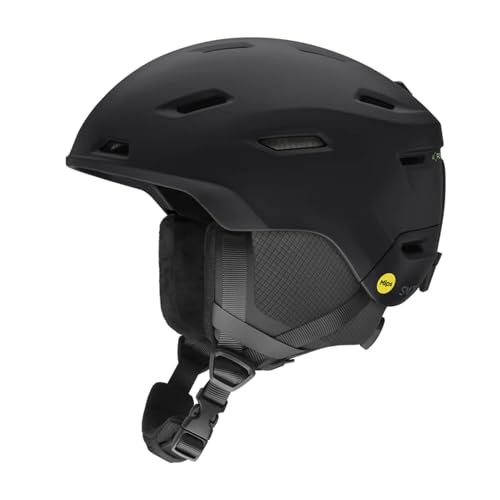 |
Best Overall | Certifications: ASTM F2040, CE EN 1077:2007 Class B | Rotational Protection: MIPS + Zonal Koroyd coverage | Best For: All-mountain skiers wanting current-generation rotational protection | VIEW LATEST PRICE | Read Our Analysis |
| Smith Method MIPS Snowsports Helmet |  |
Best MIPS Value | Certifications: ASTM F2040, CE EN 1077:2007 Class B | Rotational Protection: MIPS + Zonal Koroyd coverage | Best For: Riders who want MIPS and Zonal Koroyd at a lower price than the Descend | VIEW LATEST PRICE | Read Our Analysis |
| DKONI Ski Helmet with Goggles |  |
Best Certified Budget Pick | Certifications: ASTM F2040, CE EN 1077 | Shell: Reinforced PC (polycarbonate) with in-mold EPS core | Best For: Budget-conscious skiers who want dual certification with goggles included | VIEW LATEST PRICE | Read Our Analysis |
| OutdoorMaster Kelvin Ski Helmet |  |
Best for Everyday Resort Skiing | Certifications: ASTM F2040, CE EN 1077 | Venting: 14 individual vents | Best For: Casual to intermediate resort skiers wanting broad color choice and comfort | VIEW LATEST PRICE | Read Our Analysis |
| DKONI Three-Stage Ventilation Ski Helmet (with Goggles) |  |
Best Ventilation Control | Certifications: ASTM and CE EN safety standards | Shell: High-impact PC outer shell, USA-made EPS liner, in-mold construction | Best For: Skiers who want adjustable venting and goggles in one purchase | VIEW LATEST PRICE | Read Our Analysis |
| RIOROO Ski Helmet | 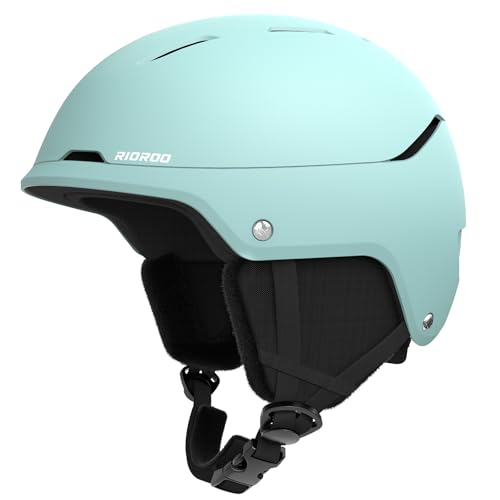 |
Best Lightweight Shell | Certifications: CE EN 1077, ASTM F2040-18 | Shell: Shockproof ABS hard shell with EPS core | Best For: Multi-sport snow riders wanting one certified helmet for several activities | VIEW LATEST PRICE | Read Our Analysis |
| ILM Convertible Bike & Ski Helmet |  |
Best Multi-Sport Crossover Pick | Certifications: CPSC, ASTM and CE bike-helmet standards (not snow-specific) | Shell: ABS shell with high-density EPS foam | Best For: Riders who want one helmet for biking and casual skiing rather than a dedicated snow-certified helmet | VIEW LATEST PRICE | Read Our Analysis |
More Details on Our Top Picks
SMITH Descend MIPS Snow Helmet
The Smith Descend is the newest helmet in this lineup and it shows in the construction details. Zonal Koroyd coverage, a honeycomb-structured material that crushes progressively on impact, is layered into the shell alongside the MIPS liner. That combination targets both direct and rotational impact forces in a single lightweight in-mold shell, which is the design direction most premium ski helmets have moved toward over the last several seasons.
Sixteen vents with a dual regulator system means you can adjust front and rear airflow independently and with one hand, useful when you are managing poles and a lift bar at the same time. The AirEvac venting is designed to work with Smith goggles specifically to pull fog-causing moisture away from the lens, though it will also work reasonably well with other brands' eyewear.
The adjustable dial fit system lets you fine-tune tension on the fly, and the removable Snapfit SL2 ear pads are built to accept audio chips if you want to add sound later without buying a different helmet. Smith has built snow-sports gear since 1965, and the Descend reflects that experience in the small details, like how the buckle and vent sliders are shaped to work with ski gloves on.
The tradeoff is price: this is a premium helmet, not a budget one. If you are an occasional skier who does a handful of days a season, the DKONI or OutdoorMaster picks below deliver certified protection for meaningfully less. The Descend earns its place at the top of this list for riders who want the latest rotational-protection technology and plan to use the helmet for many seasons.
- Certifications:ASTM F2040, CE EN 1077:2007 Class B
- Rotational Protection:MIPS + Zonal Koroyd coverage
- Venting:16 vents, dual regulator front/rear control
- Fit System:Adjustable dial, one-hand fine-tune
- Ear Pads:Removable Snapfit SL2, audio-chip compatible
- Goggle Integration:AirEvac system pairs with Smith eyewear
- Best For:All-mountain skiers wanting current-generation rotational protection
Smith Method MIPS Snowsports Helmet
The Method is Smith's more accessible MIPS helmet, and it is the pick for skiers who want rotational-impact protection and Zonal Koroyd coverage without stepping up to the Descend's higher price. Both ASTM F2040 and CE EN 1077:2007 Class B certification are present, which is the same certification tier as the Descend, so you are not giving up regulatory testing to save money here.
Eight fixed vents are less flexible than the Descend's sixteen-vent adjustable system, but they are positioned to work with the AirEvac channel that pulls warm, moist air away from goggle lenses, a detail that matters more for fog control than raw vent count. The self-adjusting lifestyle fit system flexes to match head shape rather than relying purely on a rear dial, which some riders find more comfortable over a full day.
Like the Descend, the ear pads are Snapfit SL2 and audio-chip compatible, and the helmet is described as beanie-compatible, meaning the internal padding accommodates a thin hat underneath without the fit becoming uncomfortably tight. That is a small but real consideration on cold lift-served days.
The honest tradeoff versus the Descend is ventilation and adjustability, not rotational protection: the Method has fewer vents and no adjustable regulator. For most recreational and intermediate all-mountain skiers, that difference will not be noticeable; for aggressive skiers logging long days in variable conditions, the Descend's added adjustability is worth the step up.
- Certifications:ASTM F2040, CE EN 1077:2007 Class B
- Rotational Protection:MIPS + Zonal Koroyd coverage
- Venting:8 fixed vents
- Fit System:Self-adjusting lifestyle fit, flexes to head shape
- Ear Pads:Removable Snapfit SL2, audio-chip compatible
- Goggle Integration:AirEvac system for Smith eyewear
- Best For:Riders who want MIPS and Zonal Koroyd at a lower price than the Descend
DKONI Ski Helmet with Goggles
DKONI's ski helmet is notable for listing both ASTM F2040 and CE EN 1077 certification at a price well below the premium brands on this list. The in-mold construction, where the polycarbonate outer shell and EPS foam core are fused during manufacturing rather than glued afterward, is the same basic construction method used in far more expensive helmets, and it produces a lighter, more structurally consistent shell than glued construction.
The adjustable ventilation handle is a genuinely useful feature at this price point: closed, it keeps your head warm on a cold chairlift; opened, twelve vents move air through and help keep goggles from fogging on a warmer descent. That kind of user-controlled venting is common on premium helmets but less consistent on budget ones.
The fleece liner and ear pads are removable and washable, which matters more than it sounds for anyone skiing multiple days in a row, sweat and moisture buildup in a fixed liner is a real comfort and hygiene issue over a season. The rear goggle holder keeps your goggles secured to the helmet when you pull them up on the chairlift rather than resting loose around your neck, and this listing now bundles a pair of matching goggles with the helmet.
What you do not get here is MIPS or an audio-ready ear pad system, this is a straightforward protective helmet rather than a technology showcase. For a skier who wants certified, comfortable protection and goggles included without paying for extras they may not use, the DKONI is a reasonable and honest pick.
- Certifications:ASTM F2040, CE EN 1077
- Shell:Reinforced PC (polycarbonate) with in-mold EPS core
- Venting:12 vents, adjustable open/close handle
- Fit System:Adjustment dial
- Liner:Removable, washable fleece liner and ear pads
- Goggle Integration:Rear goggle holder; matching goggles included
- Best For:Budget-conscious skiers who want dual certification with goggles included
OutdoorMaster Kelvin Ski Helmet
The OutdoorMaster Kelvin has been a consistently popular entry-level ski helmet for a reason: it covers the fundamentals (ASTM F2040 and CE EN 1077 certification, reinforced ABS shell, shock-absorbing EPS core, fourteen vents, and a dial-adjust fit system) at an accessible price, with an unusually wide 22-color selection that lets buyers actually match their kit rather than settling for whatever shell colors happen to be in stock.
The removable, washable ear pads and fleece liner are a practical touch for anyone skiing regularly through a season, and the dial adjustment system means the helmet can be fine-tuned rather than relying on foam-pad swaps. OutdoorMaster is explicit that the helmet runs a size small due to the internal cushioning, so buyers should measure head circumference and add roughly 2 cm when choosing a size rather than guessing from typical hat sizing.
Fourteen vents is a reasonable middle ground for ventilation, more than a bare-bones budget shell, though fewer than the Smith Descend's sixteen with adjustable regulation. There is no adjustable open-close vent mechanism here, so airflow is fixed rather than tunable across conditions.
This is not a helmet built around MIPS or premium goggle integration, it is a straightforward, well-reviewed shell aimed at casual and intermediate skiers who want comfort, color choice, and a snug adjustable fit without paying for technology they may not need on groomed resort runs.
- Certifications:ASTM F2040, CE EN 1077
- Shell:Reinforced ABS shell with shock-absorbing EPS core
- Venting:14 individual vents
- Fit System:Size adjustment dial
- Liner:Removable, washable ear pads and inner fleece liner
- Colors:22 color combinations, matte finish
- Sizing Note:Runs small per brand; measure head circumference plus 2 cm
- Best For:Casual to intermediate resort skiers wanting broad color choice and comfort
DKONI Three-Stage Ventilation Ski Helmet (with Goggles)
This second DKONI model is the helmet-and-goggles set in the brand's range, with a focus on ventilation control: a three-stage adjustable vent system at the top, operated by a simple sliding mechanism, lets you step airflow up or down as conditions change through the day rather than living with a fixed vent configuration.
Per the listing, the build is a high-impact PC outer shell with a USA-made EPS liner and in-mold construction, and the manufacturer states that it meets ASTM and CE EN safety certification standards. The listing does not name the specific standard numbers, so buyers who want that level of documentation should check the current listing before purchase.
A dial fit adjuster handles sizing (M 54-58 cm, L 58-62 cm), the goggle clip at the back holds goggles in place when you are not wearing them, and the inner lining and ear pads are removable for washing. The set ships with goggles included, and seven color options are offered.
There is no MIPS system listed, so riders specifically wanting rotational-impact protection should look to the Smith models above. For a certified-per-the-listing helmet with adjustable venting and goggles in the same purchase, this DKONI model is a solid, unglamorous choice.
- Certifications:ASTM and CE EN safety standards
- Shell:High-impact PC outer shell, USA-made EPS liner, in-mold construction
- Venting:Three-stage adjustable top vent system (sliding)
- Fit System:Adjustable dial (M 54-58 cm, L 58-62 cm)
- Colors:7 color options
- Goggle Integration:Rear goggle clip, goggles included
- Best For:Skiers who want adjustable venting and goggles in one purchase
RIOROO Ski Helmet
RIOROO's helmet lists both CE EN 1077 and ASTM F2040-18 certification, the dual-standard combination worth prioritizing regardless of budget tier. The ABS hard shell over an EPS energy-absorbing core is standard, well-proven construction for recreational snow-sports helmets.
The thermal liner and ear pads are removable and washable, and twelve individual vents provide reasonable airflow for warmer days without the complexity of an adjustable regulator system. The size adjustment dial handles fit rather than relying on foam-pad swapping.
One thing that stands out in the product listing is explicit multi-sport framing: the brand markets this helmet for skiing, snowboarding, sledding, and snowmobiling alike. For a rider who splits time between resort skiing and casual snowmobiling and does not want to own two separate certified helmets, that versatility is a genuine practical benefit, provided the fit and venting suit both use cases.
This is not a technology-forward pick, there is no MIPS and no adjustable vent mechanism, but the dual certification and washable liner cover the essentials cleanly at a reasonable price for riders who want one dependable helmet across several snow activities.
- Certifications:CE EN 1077, ASTM F2040-18
- Shell:Shockproof ABS hard shell with EPS core
- Venting:12 individual vents
- Fit System:Size adjustment dial
- Liner:Removable, washable thermal liner and ear pads
- Suitable For:Skiing, snowboarding, sledding, snowmobiling
- Best For:Multi-sport snow riders wanting one certified helmet for several activities
ILM Convertible Bike & Ski Helmet
ILM's current ski-and-snowboard listing runs on its bike-helmet platform rather than a dedicated snow-helmet mold, and the S1-17 model previously reviewed here has been discontinued. The ABS shell and high-density EPS foam liner follow standard bike-helmet construction, and the listing states it meets CPSC, ASTM and CE safety standards, the certifications used for bicycle helmets rather than the snow-specific ASTM F2040 or CE EN 1077 standards carried by the dedicated ski and snowboard helmets elsewhere on this list.
Removable earmuffs are the feature that makes winter use practical: they snap on for warmth on the lift and come off for three-season biking. A fixing strap holds goggles against the shell, and a removable visor blocks glare and debris without interfering with glasses. The listing describes multiple vents for airflow but does not publish an exact count the way the discontinued S1-17 did.
Sizing runs Medium through XX-Large across three colorways (Matte Black, White, Matte Titanium).
For someone who bikes most of the year and wants one helmet that also covers casual, low-speed skiing, the ILM is a reasonable crossover choice. It is not a substitute for a dedicated snow helmet on days that call for real snow-sport certification, riders who want that should choose one of the ASTM F2040/CE EN 1077-rated picks above instead.
- Certifications:CPSC, ASTM and CE bike-helmet standards (not snow-specific ASTM F2040 or EN 1077)
- Shell:ABS shell with high-density EPS foam
- Venting:Multiple vents (exact count not published)
- Sizing:Medium to XX-Large, three colorways
- Liner:Removable earmuffs for winter warmth
- Goggle Integration:Fixing strap for goggles; removable visor included
- Best For:Riders who want one helmet for biking and casual skiing rather than a dedicated snow-certified helmet
How to Choose a Ski Helmet
A ski helmet buying decision comes down to a handful of factors that matter more on snow than they would for other helmet types. Here is what to actually weigh.
Certification: ASTM F2040 and CE EN 1077
ASTM F2040 is the primary US standard for recreational snow-sports helmets, developed and maintained by ASTM International, a standards organization that also certifies bike and equestrian helmets. CE EN 1077 is the equivalent European standard, required for helmets sold in the EU. Both standards test impact attenuation, retention system strength, and field-of-vision requirements specific to skiing and snowboarding, not a repurposed bike or motorcycle standard. A helmet carrying only one certification is not necessarily inferior, but dual-certified helmets have been validated against two independent testing regimes rather than one. See our certifications explainer for how these standards compare to certifications used on other helmet types.
MIPS and Rotational-Impact Protection
MIPS (Multi-directional Impact Protection System) is a low-friction layer built into the helmet's liner that allows a small amount of rotational movement between the helmet and the head on an angled impact. Most falls on snow are not straight-on drops, they involve some rotational component from a tumble or a glancing hit, which is exactly the force MIPS is designed to address. It is not a certification requirement, ASTM F2040 and CE EN 1077 do not mandate it, but it is a genuine engineering addition rather than a marketing label, and the Smith Method and Descend on this list both include it.
Fit Dial vs. Foam Pad Sizing
A rear adjustment dial (sometimes called a ratchet or BOA-style system, depending on brand) lets you fine-tune the fit continuously rather than choosing between a few fixed foam-pad thicknesses. This matters on snow specifically because your head's effective size changes slightly depending on whether you are wearing a thin beanie underneath, and because your preferred tightness may shift over a long day as you warm up or cool down. Nearly every helmet in this roundup uses a dial system for that reason.
Venting and Goggle Fog Control
Ventilation on a ski helmet does double duty: it manages head temperature and it manages moisture that would otherwise fog your goggles. Fixed-vent helmets (like the OutdoorMaster Kelvin or ILM) provide a set amount of airflow regardless of conditions. Adjustable-vent systems (like the Smith Descend's dual regulator or the DKONI three-stage system) let you close vents on a cold lift ride and open them on a warm descent, which is a real comfort and anti-fog advantage for riders who ski in variable conditions or across a full season.
Goggle Integration and Audio-Ready Ear Pads
A helmet and goggle combination without a gap at the forehead is both warmer and safer, since an exposed gap is an area without impact protection. Brand-matched systems, like Smith's AirEvac channel, are designed to work with that brand's own goggles specifically, though most helmets accommodate goggles from any brand reasonably well. Ear pads described as audio-chip compatible are shaped to accept aftermarket Bluetooth audio inserts, meaning you are not locked out of adding sound later even if the helmet does not include speakers out of the box. If built-in audio is a priority now rather than a future option, our best audio ski helmet guide covers that segment specifically.
Ski Helmet for the Slopes Comparison
| Helmet | Certifications | Rotational Protection | Venting | Best For |
|---|---|---|---|---|
| SMITH Descend MIPS Snow Helmet | ASTM F2040, CE EN 1077:2007 Class B | MIPS + Zonal Koroyd coverage | 16 vents, dual regulator front/rear control | All-mountain skiers wanting current-generation rotational protection |
| Smith Method MIPS Snowsports Helmet | ASTM F2040, CE EN 1077:2007 Class B | MIPS + Zonal Koroyd coverage | 8 fixed vents | Riders who want MIPS and Zonal Koroyd at a lower price than the Descend |
| DKONI Ski Helmet with Goggles | ASTM F2040, CE EN 1077 | - | 12 vents, adjustable open/close handle | Budget-conscious skiers who want dual certification with goggles included |
| OutdoorMaster Kelvin Ski Helmet | ASTM F2040, CE EN 1077 | - | 14 individual vents | Casual to intermediate resort skiers wanting broad color choice and comfort |
| DKONI Three-Stage Ventilation Ski Helmet (with Goggles) | ASTM and CE EN safety standards | - | Three-stage adjustable top vent system (sliding) | Skiers who want adjustable venting and goggles in one purchase |
| RIOROO Ski Helmet | CE EN 1077, ASTM F2040-18 | - | 12 individual vents | Multi-sport snow riders wanting one certified helmet for several activities |
| ILM Convertible Bike & Ski Helmet | CPSC, ASTM, CE (bike-helmet standards) | - | Multiple vents (count not published) | Riders who want one helmet for biking and casual skiing rather than a dedicated snow-certified helmet |
Frequently Asked Questions
What certification should a ski helmet have?
Look for ASTM F2040 if you primarily ski in the US, or CE EN 1077 if you are in Europe, both are snow-sports-specific standards distinct from bike or motorcycle helmet certifications. A helmet carrying both, like several picks on this list, has been validated against two independent testing regimes rather than one, which is a reasonable extra margin of confidence for frequent or aggressive skiers.
Is MIPS worth paying extra for in a ski helmet?
For most skiers, yes. MIPS specifically addresses rotational impact forces, which are common in falls on snow that involve any tumbling or glancing component rather than a purely straight-on hit. It is not required by ASTM or CE EN certification, so a non-MIPS helmet is not uncertified or unsafe, but MIPS is a genuine engineering addition rather than a marketing feature, and the Smith Method and Descend on this list both include it at different price points.
How should a ski helmet fit?
It should sit level on your head, not tilted back, with the front edge roughly one to two finger-widths above your eyebrows. Use the rear adjustment dial to snug the fit until the helmet does not shift when you shake your head side to side, and test the fit with your goggles and, if you wear one, a thin liner beanie in place, since both change how the helmet sits. Most brands publish a head-circumference size chart, measuring with a soft tape rather than guessing from hat size is the more reliable method, and a couple of the picks above explicitly note their sizing runs small.
Do I need built-in audio in a ski helmet, or can I add it later?
You do not need it built in. Several helmets on this list, including both Smith models, use ear pads specifically designed to accept aftermarket Bluetooth audio chips, so you can add sound later without replacing the helmet. If built-in speakers and audio controls are a priority from day one, our best audio ski helmet guide covers helmets designed around that feature specifically.
Is this list different from a snowboard helmet guide?
Not meaningfully. ASTM F2040 and CE EN 1077 cover both skiing and snowboarding, and every helmet on this list is marketed for both activities. The features that matter, certification, MIPS, fit dial, venting, and goggle integration, are the same regardless of which board or skis you are using. Riders who also want eyeglass compatibility for a snowmobile helmet specifically should see our best snowmobile helmet for glasses guide instead.
DOT vs ECE vs Snell vs MIPS, how to pick the right lid in 60 seconds, and when to replace it. One page, no fluff.
