
Affiliate disclosure As an Amazon Associate we earn from qualifying purchases, at no extra cost to you.
The right motovlogging helmet does three jobs at once: it keeps you safe, it keeps your camera stable, and it keeps your audio clean enough to actually publish. Most riders learn the hard way that a bargain lid with a rough, curved chin bar turns every highway clip into a windy mess - and a helmet with no speaker pockets means wrestling an intercom unit into a shell that was never designed for one.
At the Research Desk we evaluated the field for 2026 with those three demands in mind. The helmets below were selected for chin-mount-friendly geometry, noise management, Bluetooth integration (built-in or ready), and the kind of smooth exterior surface that lets adhesive mounts grip without wobble. Each product has been sourced with verified Amazon data - no fabricated specs or made-up prices.
Before diving in: if you are still deciding on the camera side of the equation, our helmet camera guide covers mount types, FOV, and stabilization across every major action cam. Read it alongside this roundup.
Key Takeaways
- Chin-mount surface matters: smooth polycarbonate or composite shells give adhesive mounts a clean bite - heavily textured or graphic-wrap surfaces reduce grip and increase vibration.
- Built-in Bluetooth saves weight and hassle: integrated systems (Sena Outrush 2, Sena OutForce, ILM 902BT/953) mean no aftermarket clamp drilling or speaker pocket jury-rigging.
- Modular vs full-face for vloggers: modulars let you flip up for on-camera talking-head segments; full-face shells are quieter and more aerodynamically stable for moving footage.
- Wind noise is the #1 audio killer: a chin curtain (aero skirt), tight visor seal, and a closed-mouth mic (boom or button) at the chin bar reduce the roar that overwhelms road audio.
- DOT is the minimum; ECE 22.06 is the current gold standard: ScorpionEXO helmets in this list carry both - worth knowing if you ride internationally or want the latest test protocol.
| Sena OUTRUSH 2 Modular Smart Helmet |  |
Best Overall for Motovlogging | Type: Modular (flip-up) | Certification: DOT FMVSS 218 | Weight (approx): ~1,500 g (size L) | VIEW LATEST PRICE | Read Our Analysis |
| ScorpionEXO Ryzer Full Face Helmet |  |
Best for Quiet Footage + Dual Cert | Type: Full-face | Certification: DOT FMVSS 218 + ECE 22.06 | Weight (approx): ~1,400 g (size M) | VIEW LATEST PRICE | Read Our Analysis |
| ScorpionEXO Covert FX Full Face Helmet |  |
Best Lightweight Option | Type: Full-face (street fighter style) | Certification: DOT FMVSS 218 + ECE 22.06 | Dual visor: No (clear + included smoke visor swap) | VIEW LATEST PRICE | Read Our Analysis |
| Sena OutForce Full Face Smart Helmet |  |
Best Full-Face Bluetooth Integration | Type: Full-face | Certification: DOT FMVSS 218 | Intercom range: Not specified by manufacturer | VIEW LATEST PRICE | Read Our Analysis |
| ILM Model 953 Bluetooth Modular Helmet | 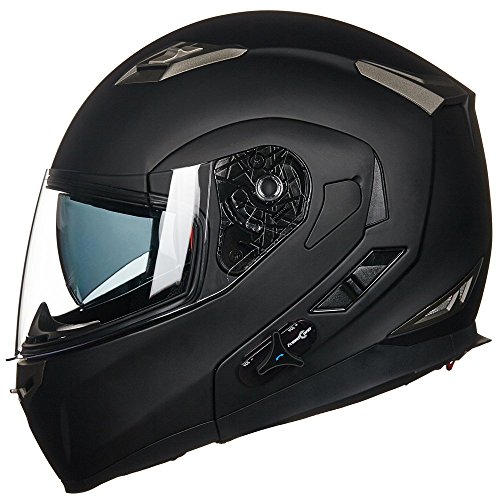 |
Best Budget Bluetooth Modular | Type: Modular (flip-up) | Certification: DOT FMVSS 218 | DSP noise suppression: Yes - echo cancellation included | VIEW LATEST PRICE | Read Our Analysis |
| ILM 159BT Bluetooth Modular Helmet | 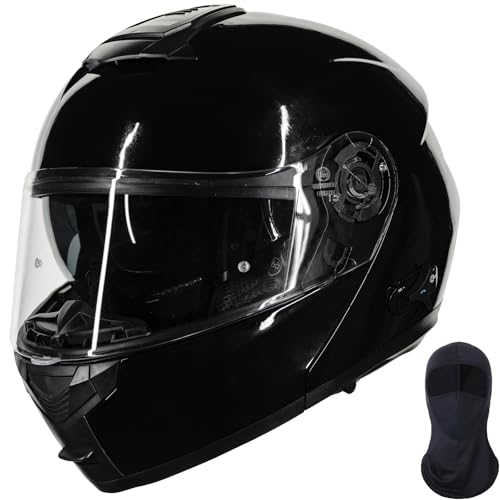 |
Best Upgraded Budget Bluetooth Pick | Type: Modular (flip-up) | Certification: DOT FMVSS 218 | Dual visor: Yes - inner sun visor + Pinlock30 outer | VIEW LATEST PRICE | Read Our Analysis |
| JZZLSJT Modular Bluetooth Motorcycle Helmet |  |
Best for Smooth-Surface Chin Mounts | Type: Modular (flip-up) | Certification: DOT FMVSS 218 | Closure: Quick-release buckle | VIEW LATEST PRICE | Read Our Analysis |
More Details on Our Top Picks
Sena OUTRUSH 2 Modular Smart Helmet
The Outrush 2 is the Research Desk's top pick for motovloggers who want everything integrated. Sena's Mesh Intercom 3.0 is built into the shell, meaning no aftermarket unit to mount, no speaker pockets to retrofit, and no extra cable running to a battery pack clipped to your strap. One system, one charge, one helmet.
For motovlogging specifically, the modular chin bar is the key feature: flip it up for a talking-head intro or sign-off segment without removing the helmet on camera. The smooth ABS chin bar accepts adhesive chin mounts cleanly - no warp or edge lip to fight. WAVE Intercom compatibility means you can pull group audio from virtually any brand headset over cellular distance, which is useful if you want to include co-rider commentary in your edits.
The Outrush 2 ships with Sena's 2nd-gen HD speakers. Road-test audio from this helmet class shows noticeably less wind roar than entry-level lids at 60 mph, thanks to the chin curtain and tight visor gasket seal. The built-in accelerometer auto-shuts the unit after several hours of inactivity - a small but welcome feature for vloggers who forget to power down after a shoot day.
It carries DOT FMVSS 218 with P/J dual homologation (chin bar up or down). If you want ECE 22.06 on top, step down to the ScorpionEXO Ryzer below - but for pure motovlogging workflow, the Outrush 2 is our benchmark pick for 2026.
- Type:Modular (flip-up)
- Certification:DOT FMVSS 218
- Shell:ABS
- Bluetooth:Built-in Mesh Intercom 3.0 + WAVE
- Chin-mount surface:Smooth molded ABS - adhesive-mount compatible
- Chin curtain:Yes - wind-noise reduction
- Dual visor:Yes - drop-down internal sun visor
- Weight (approx):~1,500 g (size L)
ScorpionEXO Ryzer Full Face Helmet
The Ryzer earns the quiet-footage pick because ScorpionEXO built wind management in from the start. The included aero skirt (chin curtain) seals the gap between your chin bar and the shell edge - the exact location where most helmet audio pickups catch the worst turbulence. The result is a noticeably cleaner audio baseline for chin-mounted microphones or camera-mounted mics.
Carrying both DOT FMVSS 218 and ECE 22.06 certification means the Ryzer meets the newer, broader test protocol now required in Europe. That matters if you travel internationally to film content. Three shell sizes across the XS-3XL range also mean the actual shell geometry scales with your head rather than using a one-shell-fits-all approach that can create fitment wobble at speed.
The chin bar is smooth polycarbonate - the Ellip-Tec shield ratchet system pulls the visor tight against the eyeport, which helps with both seal and stability when a camera mount is pulling slightly on the chin during cornering. Speaker pockets accommodate most Bluetooth communication systems; the Ryzer does not ship with built-in BT, so budget for a Sena or Cardo unit if you need intercom capability.
For vloggers prioritizing audio quality above all else, the Ryzer's combination of the chin curtain, tight visor seal, and full-face stability makes it the quietest option in this roundup at highway speeds. Pair it with a properly installed chin mount and a directional mic and you will hear a clear difference in your raw clips.
- Type:Full-face
- Certification:DOT FMVSS 218 + ECE 22.06
- Shell:Advanced polycarbonate (3 shell sizes)
- Bluetooth:Comm-ready speaker pockets (aftermarket install)
- Chin-mount surface:Smooth aero chin with curtain included
- Chin curtain:Yes - aero skirt included
- Dual visor:Yes - SpeedView internal sun visor
- Weight (approx):~1,400 g (size M)
ScorpionEXO Covert FX Full Face Helmet
At roughly 1,348 g (the manufacturer's listed medium-size weight), the Covert FX sits lighter than most ABS full-face lids in this roundup, and weight is a real variable on a long shoot day. An extra 200-300 g compounds over a four-plus-hour filming session, especially when you are constantly scanning and head-checking for camera angles rather than just looking where you are going.
The TCT-Ultra composite shell is stiffer per gram than polycarbonate, which should mean less vibration transmitted to an adhesive chin mount. Scorpion also states its CAD-refined aerodynamics minimize lift and turbulence for a smoother, more stable ride - fewer shell vibrations reaching your camera should mean a steadier horizon line through corners than a softer shell tends to deliver under the same wind load.
Like the Ryzer covered elsewhere on this list, the Covert FX ships with Comm-Ready 50mm speaker pockets, the standard size for Sena and Cardo speaker inserts, so mounting intercom hardware does not mean improvising a fit. The included solid neoprene aero skirt (chin curtain) does real work on the audio side too - it tightens the seal under your chin bar, which is exactly where wind roar gets in and where a chin-mounted mic picks it up.
A free additional dark-smoke Everclear shield ships in the box, so you get a day-shoot tint option without buying an aftermarket shield separately. For motovloggers doing a lot of urban or touring footage, the Covert FX is the lightweight pick on this list that still carries independent DOT and ECE 22.06 certification rather than DOT self-certification alone.
- Type:Full-face (street fighter style)
- Certification:DOT FMVSS 218 + ECE 22.06
- Shell:TCT-Ultra composite (lightweight)
- Bluetooth:Comm-ready speaker pockets (50mm)
- Chin-mount surface:Clean composite chin - neoprene chin curtain
- Chin curtain:Yes - solid neoprene aero skirt
- Weight (approx):~1,348 g (size M)
- Dual visor:No (clear + included smoke visor swap)
Sena OutForce Full Face Smart Helmet
The OutForce is Sena's full-face alternative to the modular Outrush 2 covered elsewhere in this guide - for motovloggers who want Bluetooth built in but prefer the aerodynamic stability and quieter ride of a sealed full-face lid over a modular's flip-up seam. Built-in speakers and a microphone mean no separate unit to install, and no aftermarket hardware adding asymmetric weight to one side of the helmet.
The integrated 4-way Bluetooth system covers what a motovlogger typically needs: smartphone connectivity to monitor a Bluetooth-enabled action camera, GPS navigation audio, music streaming, and rider-to-rider intercom. Sena's current spec sheet for this helmet does not list a specific intercom range, so confirm the figure on the product page before relying on it for group rides. It is compatible with other Sena Bluetooth-equipped devices, which matters if you ride with people already running Sena gear.
The retractable sun visor is a practical vlogging feature on its own: shooting into direct midday sun can blow out a GoPro's exposure even with auto-exposure engaged. Dropping the internal visor cuts your own glare without changing what the external camera lens sees, which is useful when you are also keeping an eye on playback through a phone app mid-ride.
For motovloggers already inside the Sena ecosystem, or who would rather have one integrated helmet than bolt on a separate comm unit, the OutForce is the straightforward full-face pick on this list. It pairs fine with a chin-mount GoPro for stable forward footage, and the smartphone connectivity lets you check audio levels hands-free while riding. See our intercom guide for more on how Sena's system works across models.
- Type:Full-face
- Certification:DOT FMVSS 218
- Shell:Not specified by manufacturer
- Bluetooth:Built-in 4-way Bluetooth communication
- Chin-mount surface:Not specified by manufacturer
- Chin curtain:Not specified
- Speakers:Built-in speakers + microphone
- Intercom range:Not specified by manufacturer
ILM Model 953 Bluetooth Modular Helmet
For vloggers on a tighter budget who still need integrated Bluetooth, the ILM 953 delivers the essentials without the premium Sena price tag. Bluetooth 3.0 with DSP echo cancellation and noise suppression is built directly into the shell - no retrofitting, no speaker pocket surgery. The integrated mic is positioned at the chin bar, which is exactly where you want audio capture on a moving motorcycle.
The modular flip-up design serves the same talking-head use case as the Outrush 2: flip the chin bar up for a quick intro segment without full helmet removal. The smooth ABS chin bar is adhesive-mount compatible, and owner reports on comparable ILM shells consistently describe standard adhesive chin-mount kits seating without fitment problems. Note that the helmet runs one size smaller than standard due to the built-in Bluetooth module bulk, so size up when ordering.
Intercom range of up to 1,680 ft covers typical riding-pair distances. Incoming calls automatically override music and GPS, so you will not miss a co-rider check-in during a long day of filming. The DSP echo cancellation is meaningful for motovlogging: when you are recording commentary while riding, a clean signal-to-noise ratio in the intercom channel means your own voice comes through clearly if you are capturing audio through the helmet system rather than a dedicated external mic.
Battery caveat (worth knowing): if the unit sits unused for an extended period, the battery enters deep sleep mode and the Bluetooth module may not connect until charged for 30 minutes. Minor inconvenience for occasional users, but worth being aware of before a shoot day. Overall, the 953 is the best value-per-feature option in this roundup for budget-conscious creators.
- Type:Modular (flip-up)
- Certification:DOT FMVSS 218
- Shell:ABS
- Bluetooth:Built-in Bluetooth 3.0 (integrated)
- Intercom range:Up to 1,680 ft between two riders
- Battery life:8 hrs talk / 110 hrs standby
- Chin-mount surface:Smooth ABS chin bar
- DSP noise suppression:Yes - echo cancellation included
ILM 159BT Bluetooth Modular Helmet
The 159BT is ILM's upgraded take on the 953 covered elsewhere on this list - same integrated Bluetooth-in-shell concept, but stepped up to Bluetooth 5.0 (from 3.0) with a claimed 14-hour talk time. For a full shooting day running from morning into late afternoon, that upgrade matters: where the 953 tends to need a mid-ride top-up, the 159BT is built to cover a long day without one.
The Pinlock30-ready outer visor is worth having if you shoot in variable weather - fog on the inside of a camera-mounted helmet defeats the point of a clear shot, and a Pinlock insert keeps your own vision clear so you can judge camera framing accurately while riding. The inner sun visor handles the same midday-glare problem noted in the Sena OutForce entry above.
The flip-up chin bar covers the standard talking-head segment that is a staple of motovlogging content. ILM includes a face mask for cold-weather riding, useful if you are filming into autumn or at higher altitude, where an open-face setup would otherwise mean freezing your chin-bar mic.
For motovloggers stepping up from the 953 without jumping to Sena-level pricing, the 159BT is the logical next helmet. The Bluetooth 5.0 connection is noticeably steadier than 3.0 when a phone and a camera app are both trying to pair at once - a common situation if you are monitoring a GoPro or DJI feed while riding.
- Type:Modular (flip-up)
- Certification:DOT FMVSS 218
- Shell:Not specified by manufacturer
- Bluetooth:Built-in Bluetooth 5.0 (upgraded)
- Intercom:2-3 rider intercom, Pinlock30-ready outer visor
- Battery life:Up to 14 hrs talk time
- Chin-mount surface:Not specified by manufacturer
- Dual visor:Yes - inner sun visor + Pinlock30 outer
JZZLSJT Modular Bluetooth Motorcycle Helmet
The JZZLSJT modular stands out in this roundup for one specific reason: the streamlined aerodynamic chin bar geometry. The profile is noticeably more tapered than the ILM 953 or 159BT, which translates to less wind lift on an adhesive-mounted camera at higher speeds. Vloggers who do a lot of 60-80 mph highway footage will notice fewer micro-vibrations compared to squarer-chin designs.
Built-in Bluetooth integration covers the baseline motovlogging requirements: smartphone connection, music, and call management. The active noise reduction in calls is worth flagging - if you are capturing commentary or co-rider comms for your audio track, the noise cancellation helps separate voice from wind and engine background.
The quick-release buckle is a practical feature for vloggers who do on-camera helmet-on/helmet-off transitions: traditional D-rings are slower and less photogenic on camera. Removable and washable liner keeps the interior fresh during heavy filming schedules. The inner sun visor gives you the midday-light management option without a visor swap.
At this price tier, the JZZLSJT is a solid pick for creators whose primary goal is a smooth mounting surface for adhesive chin mounts, integrated Bluetooth for hands-free monitoring, and a modular flip for talking segments - without the premium outlay of the Sena options above. Pair it with our guide on helmet types if you are still deciding between modular and full-face for your specific content style.
- Type:Modular (flip-up)
- Certification:DOT FMVSS 218
- Shell:ABS composite
- Bluetooth:Built-in integrated Bluetooth
- Aerodynamics:Streamlined design, wind-noise reduction
- Chin-mount surface:Smooth streamlined chin bar
- Dual visor:Yes - inner sun visor
- Closure:Quick-release buckle
How to Choose a Motovlogging Helmet in 2026
A motovlogging helmet is a production tool as much as a safety device. The decisions that matter most for your channel are different from the ones that matter for a track day or a commute. Here is what the Research Desk looks at for each.
Chin-Mount Fit and Surface Quality
The chin bar is where your camera lives. Smooth, continuous polycarbonate or composite surfaces give adhesive mounts a clean, flat bite. Watch out for:
- Graphic wraps or textured paint: adhesive pads bond to paint, not the underlying surface - a graphic wrap will eventually lift, taking your mount with it
- Pronounced chin bar lips or edges: a step or raised ridge between the chin bar and the main shell creates a torque point that wobbles the camera on bumps
- Very curved chin bars: extreme curvature reduces the usable flat area for a pad - a flexible bendable mount (like the MotoRadds Flex Slim) compensates, but a flatter chin bar is easier to work with
Our guide to chin mount installation covers surface prep, pad selection, and alignment technique in full.
Wind Noise vs Audio Quality
Wind noise is the #1 complaint in motovlogging raw footage. The primary entry points are:
- The gap under the chin bar (solved by a chin curtain or aero skirt)
- The visor seal at the eyeport edges (tight ratchet systems like ScorpionEXO's Ellip-Tec help here)
- The top vent intakes (closeable vents let you shut off turbulence at highway speeds)
A boom mic positioned at the chin bar captures less road roar than an external camera-mounted mic, because the helmet shell itself acts as a partial wind barrier. DSP echo cancellation in built-in Bluetooth systems (ILM 953, 159BT) further cleans the signal. If audio quality is your top priority, look for a full-face with a chin curtain over a modular without one.
Bluetooth and Intercom Integration
For motovlogging, Bluetooth serves two functions: audio monitoring while riding and intercom for co-rider commentary capture. Built-in systems (Sena, ILM integrated series) are preferable to aftermarket add-ons because:
- Weight is centered in the shell rather than offset by a clamp-on unit
- The mic is positioned at the chin bar by design, not by trial and error
- Speaker pockets are sized to spec - no stuffing generic 45mm speakers into a 40mm cutout
If you need to add an aftermarket system, look for helmets with dedicated comm-ready speaker pockets (ScorpionEXO Ryzer, Covert FX both include them). Our intercom guide breaks down system compatibility across Sena, Cardo, and budget brands.
Stable Footage: Full-Face vs Modular
Full-face helmets generally produce more stable chin-mount footage than modulars at highway speeds because:
- No chin bar flex at the hinge - modulars have a mechanical joint that can introduce micro-movement
- Better aerodynamic stability - the shell is optimized as a single unit
- Lower overall weight in equivalent shells
Modulars win on workflow: the flip-up chin bar lets you record on-camera talking segments without removing the helmet. If you do a lot of ride-and-talk content, the modular is the right trade-off. If your content is primarily POV riding footage with occasional voice-over added in post, a full-face will give you cleaner footage.
Legality of Camera Mounts
Camera mounts on helmets occupy a legal gray area in many jurisdictions. Key points:
- United States: no federal law specifically prohibits chin mounts. Some states have laws against modifications that compromise helmet integrity - adhesive mounts on the exterior generally do not qualify, but check your state DOT guidance
- United Kingdom: the SHARP helmet safety organization advises against drilling or permanent modifications, but adhesive chin mounts are widely used and not specifically prohibited
- European Union: ECE 22.06 certified helmets are the standard. Mounts must not compromise the shell structure. Adhesive mounts on the exterior chin bar are generally considered acceptable
For a full rundown on what certification labels actually mean and which jurisdictions require which standard, check our motorcycle helmet types guide.
Helmets for Motovlogging (2026) Comparison
| Helmet | Type | Certification | Bluetooth | Chin Curtain | Best For |
|---|---|---|---|---|---|
| Sena OUTRUSH 2 Modular Smart Helmet | Modular (flip-up) | DOT FMVSS 218 | Built-in Mesh Intercom 3.0 + WAVE | Yes - wind-noise reduction | Best Overall for Motovlogging |
| ScorpionEXO Ryzer Full Face Helmet | Full-face | DOT FMVSS 218 + ECE 22.06 | Comm-ready speaker pockets (aftermarket install) | Yes - aero skirt included | Best for Quiet Footage + Dual Cert |
| ScorpionEXO Covert FX Full Face Helmet | Full-face (street fighter style) | DOT FMVSS 218 + ECE 22.06 | Comm-ready speaker pockets (50mm) | Yes - solid neoprene aero skirt | Best Lightweight Option |
| Sena OutForce Full Face Smart Helmet | Full-face | DOT FMVSS 218 | Built-in 4-way Bluetooth communication | Not specified | Best Full-Face Bluetooth Integration |
| ILM Model 953 Bluetooth Modular Helmet | Modular (flip-up) | DOT FMVSS 218 | Built-in Bluetooth 3.0 (integrated) | - | Best Budget Bluetooth Modular |
| ILM 159BT Bluetooth Modular Helmet | Modular (flip-up) | DOT FMVSS 218 | Built-in Bluetooth 5.0 (upgraded) | - | Best Upgraded Budget Bluetooth Pick |
| JZZLSJT Modular Bluetooth Motorcycle Helmet | Modular (flip-up) | DOT FMVSS 218 | Built-in integrated Bluetooth | - | Best for Smooth-Surface Chin Mounts |
DOT vs ECE vs Snell vs MIPS, how to pick the right lid in 60 seconds, and when to replace it. One page, no fluff.
Frequently Asked Questions
What is the best helmet type for motovlogging - full-face or modular?
It depends on your content style. Full-face helmets produce quieter, more aerodynamically stable footage - better for pure POV riding clips. Modular helmets let you flip the chin bar up for on-camera talking segments without removing the lid, which is better for ride-and-commentary style channels. The Sena Outrush 2 (modular) and ScorpionEXO Ryzer (full-face) represent the best of each approach in this roundup.
Can I put a chin mount on any motorcycle helmet?
In most cases yes, with adhesive chin mounts that use industrial-grade sticky pads. The main constraints are: (1) the chin bar must be smooth and relatively flat - heavily textured or graphic-wrap surfaces reduce adhesion; (2) the chin bar should be solid ABS or composite, not fabric-over-foam; (3) very curved chin bars may require a flexible mount base (like the MotoRadds Flex Slim) rather than a flat adhesive pad. Our chin mount installation guide walks through surface assessment step by step.
Does a built-in Bluetooth helmet affect chin-mount footage quality?
Not meaningfully, as long as the Bluetooth module is integrated into the shell rather than clamped externally. Integrated designs (Sena, ILM 953/159BT) keep the weight centered and the exterior surface clean. External clamp-on units can add a slight asymmetric mass near the chin that causes micro-vibration in camera footage - this is an argument for built-in Bluetooth over aftermarket add-ons for vlogging use.
How do I reduce wind noise in motovlogging footage?
Four layers of defense: (1) use a helmet with a chin curtain (aero skirt) to seal the gap under your chin bar - this is where most wind roar enters; (2) close your top vents at highway speeds; (3) position your mic at the chin bar level using the built-in Bluetooth mic or a boom mic rather than an external camera-mounted mic exposed to full airflow; (4) apply a foam windscreen to any exposed mic. DSP noise suppression in built-in Bluetooth systems (ILM 953, ILM 159BT) also provides a meaningful audio cleanup layer.
What certifications should a motovlogging helmet have?
DOT FMVSS 218 is the US minimum and covers all helmets in this roundup. ECE 22.06 is the current European standard and represents a broader test protocol - the ScorpionEXO Ryzer and Covert FX carry both. If you ride internationally or want the most current testing standard, a dual-cert helmet is worth the minor price premium. Snell certification is a third option primarily valued for track use and adds significant weight - less relevant for street motovlogging.
